
Whines. Smokes. Jumps timing. Then locks solid. The BMW N20 breaks fast and deep in the wallet. BMW ditched the old six for a downsized turbo 4-cylinder that hits peak torque at 1,250 rpm. But plastic chain guides, brittle cooling parts, and long oil intervals make early builds a minefield.
We’ll break down what fails, which years are worst, what the Gelis lawsuit actually changed, and how to keep the N20 from seizing before 150,000 miles.
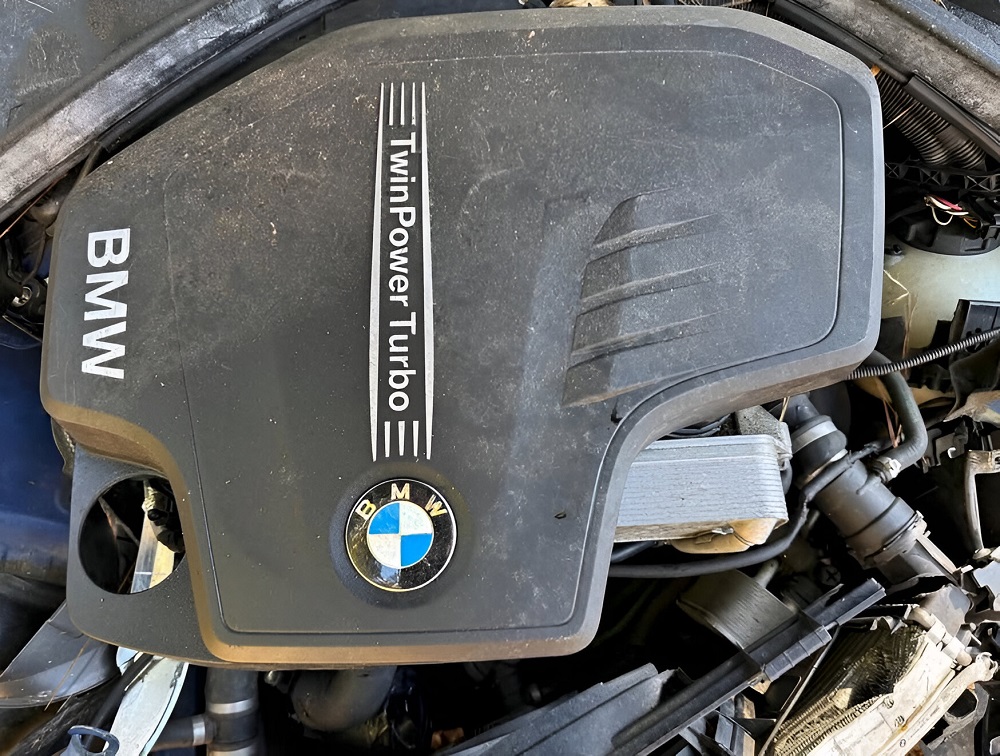
1. How BMW’s N20 was built to run hot, light, and on borrowed time
What’s inside the N20 and why it wears fast
The N20 runs a 2.0L aluminum block with direct injection, twin-scroll turbo, Double VANOS, and Valvetronic. Torque hits hard at 1,250 rpm. That early pull slams the timing set and oil pump drive from the bottom of the rev range, even under light throttle.
Everything’s tuned for efficiency and weight savings. Long oil intervals. Plastic guides. Tight packaging. But lean combustion and high combustion pressure bring serious heat.
That heat bakes guides, softens seals, and ages the oil before the maintenance light ever blinks. The internals stay strong; crank and rods hold up; but the chain and cooling hardware can’t take the cycle count.
N26 emissions gear and what actually changes
The N26 was built to meet emissions targets, not to last longer. It added stainless fuel lines, tighter vapor control, an electronic wastegate, and catalyst warm-up tuning to qualify for SULEV in the U.S.
But the timing chain, oil pump drive, and cooling system? Same design. Same failures. What changes is coverage. In some states, emissions warranties go longer, and that’s saved a few owners from paying full price for evaporative and wastegate-related repairs. The chain still fails at the same mileage.
Where the N20 shows up and which ones cook themselves first
BMW spread the same core engine across five output levels. Internals stayed mostly the same. The higher the output and the heavier the vehicle, the harder that core setup gets pushed. X3 and Z4 models run hotter and wear faster than a base 320i that sees highway miles.
N20 variants and typical applications
| Variant | Output (hp / lb-ft) | Years | Common Models |
|---|---|---|---|
| N20B16 | 168 / 184 | 2013–2016 | 316i, 518i (select markets) |
| N20B20 low | 154 / 177 | 2013–2017 | Z4 sDrive18i, X3 sDrive18i |
| N20B20 mid | 181 / 199 | 2011–2017 | 320i, 520i, X1 xDrive20i |
| N20B20 high | 215 / 229 | 2012–2017 | 125i, regional variants |
| N20B20 top | 241 / 258 | 2011–2017 | 328i, 528i, X3 xDrive28i, Z4 28i |
Heat and weight are the tipping points. An early 328i on factory tune can survive if the oil gets changed at 5,000 miles and the cooling system’s been refreshed. A tuned X3 with no maintenance records? High odds the chain’s already grooved its guides and the pump drive isn’t far behind.
2. Timing chain and oil pump drive failures that end the N20 early
Chain layout, plastic guides, and how this engine eats itself
The N20 uses two chains: a main chain that runs both cams, and a smaller secondary chain that drives the oil pump. Both are routed around plastic guides buried at the front of an interference engine. If either chain slips, valves hit pistons. If the oil pump chain fails, oil pressure disappears in seconds.
BMW used these lightweight guides to save weight and meet emissions targets with lower rotating mass and tighter packaging. But under real-world heat cycles, that plastic cracks, flakes, and eventually shatters. Once it does, the chain starts grinding against the aluminum, tension fades, and stretch builds fast.
The sounds and symptoms that show up before it fails
Timing problems don’t stay silent for long. These chains whine, rattle, and throw codes. Ignore the noise, and you’re risking a $6,000 rebuild.
Timing and oil pump drive symptoms vs. likely damage
| Symptom | When it shows up | Likely Cause | Risk Level |
|---|---|---|---|
| High-pitched whine | 1,500–2,500 rpm, light load | Chain sawing into worn guide | Imminent failure |
| 1–5 second rattle at cold start | First startup of the day | Slack chain, weak tensioner | Early warning |
| Rough idle or random stall | Cold or hot | Timing jumped, valve events off | High |
| P0011, P0012, P0016, P0017, P0340 | With or without noise | Chain stretch or guide fracture | Needs teardown |
| Plastic bits or metal in oil | Oil change or inspection | Guide fragments or chain contact | Crank/cam damage likely |
Plastic debris doesn’t just stay in the pan. It gets sucked into the pickup tube, blocks oil flow, and wipes out bearings before the chain ever jumps. Chain slack also throws cam timing off by several degrees, enough to trigger misfires and cam/crank correlation faults even if the engine still runs.
The oil pump chain failure most owners never see coming
The smaller chain behind the main timing set runs the oil pump. Same brittle plastic. Same failure risk. But fewer symptoms, until it’s too late.
The whine often sounds identical to a stretched timing chain. But if oil pressure starts dipping, or the engine seizes without ever throwing timing codes, odds are the pump drive snapped or derailed.
Techs tore down seized N20s thinking timing jumped, only to find the oil pump chain off the sprocket or the pickup screen choked with orange plastic shards.
This failure doesn’t always set a warning light. If the tensioner lets go and the chain skips, oil flow can vanish instantly.
Why 2012–2014 builds are the riskiest
BMW revised the timing set around March 2015. Updated guides, new tensioner spec, better chain metallurgy. But early N20s got the short end: brittle plastics, soft ramps, and oil change intervals that let debris accumulate.
Guide color is useless for dating parts. They all start white and darken with age. The only reliable way to know you’ve got the updated parts is production date plus full service records.
2012 to early 2015 engines carry the highest failure rate. Later engines improved, but still suffer if oil changes were skipped or cheap filters used. Any car with original chains past 80,000 miles is running on borrowed time.
3. Legal fallout and coverage for N20 timing failures
The Gelis lawsuit and how BMW ended up covering chains
The N20 timing failures didn’t stay in the shop; they ended up in court. In Gelis v. BMW, owners of 2012–2015 N20 and N26 engines filed a class action over defective timing chain and oil pump drive modules.
The claim was simple: these engines weren’t built to last a normal service life. Chains stretched. Guides shattered. Oil pumps failed. Engines seized.
BMW settled. The agreement didn’t admit fault, but it extended coverage and refunded owners who already paid out of pocket. That lawsuit locked in real-world repair thresholds for when BMW would help and when they’d walk.
Warranty coverage by mileage and what owners actually got
Gelis settlement contribution schedule
| Age / Mileage at Failure | BMW Share (Parts + Labor) | Owner Share |
|---|---|---|
| <7 years / ≤70,000 miles | 100% | 0% |
| 7–8 years / ≤80,000 miles | 75% | 25% |
| 7–8 years / 80–90,000 miles | 55% | 45% |
| 7–8 years / 90–100,000 miles | 40% | 60% |
| >8 years or >100,000 miles | 0% | 100% |
Coverage only applied to repairs done at a BMW dealer with new OEM parts. No used parts. No aftermarket kits. Salvage titles were excluded.
Some owners got one-time “prospective” coverage if their car was under 100,000 miles during the first year of the settlement window, even if it was older.
Once that window closed, it was full freight.
When paperwork makes or breaks a used N20
A clean title and a quiet idle aren’t enough. If there’s no proof of updated timing parts, walk. Many sellers tried to offload cars just outside the 70,000-mile window, right when BMW stopped paying full freight.
A documented chain and oil pump job with revised parts turns an N20 into a decent bet. Without it, you’re staring at $4,000–$6,000 in repairs or a totaled car if the guide fails at speed. Late 2015–2017 builds have better odds, but they still need tight oil change records.
4. Turbocharger, oil control, and boost-side failures
Blue smoke on cold start from turbo oil drainback
Cold start, 20 seconds of blue haze, then clean exhaust. Classic N20. That smoke means the turbo’s turbine seal is leaking overnight. Oil drains back and pools inside the housing. On startup, it burns off straight into the cat.
BMW issued SIB 11 16 15 to address the problem. The fix was an updated oil feed line with a built-in check valve. It keeps oil from leaking into the turbo when the engine’s off. Without it, carbon cooks the seal, ruins the turbo, and stresses the catalytic converter.
Wastegate rattle, limp mode, and lost boost
Wastegate arms on early N20 turbos wear out. The bushing gets sloppy. You hear a metallic rattle at idle, decel, or shutoff. Then the codes come: underboost, throttle pullback, reduced power. Eventually, limp mode.
Tuning and heat speed it up. The factory actuator can’t hold boost when the arm’s worn, and power drops fast. Some try DIY tweaks to tighten the arm. It buys time, but only a rebuilt or new turbo fixes it for good.
Late N26 models used an electronic wastegate that’s slightly more durable, but still not bulletproof.
Cracked charge pipes and weak intercooler couplers
Pressurized boost doesn’t mix well with plastic. The factory charge pipe, plastic with rubber ends, often splits under load. Tuned cars break it early. Even stock ones blow out with age.
Symptoms are instant: loud whoosh, sudden power loss, no throttle response. But no internal damage unless debris enters the intake. Boost leaks also show up as whistling under load or inconsistent torque delivery.
Upgrading to an aluminum charge pipe and stronger couplers is standard procedure on any N20 running more than factory boost. Heat-soaked intercoolers also need attention, higher intake temps spike detonation and strain the turbo.
Induction and turbo issues
| Symptom | Likely Issue | Short-Term Risk | Long-Term Damage |
|---|---|---|---|
| Blue smoke at startup | Worn turbine seal, bad oil feed | Catalyst stress | Turbo seal failure, cat damage |
| Metallic rattle on decel | Wastegate arm/bushing wear | Mild | Boost loss, limp mode |
| Sudden whoosh, no power | Cracked charge pipe | Low | Rich/lean spikes, performance |
| Whistling under boost | Loose coupler or intercooler leak | Mild | Turbo overspeed, heat soak |
5. Cooling system plastics, “Mickey Mouse” flange, and belt ingestion
Why heat turns N20 cooling parts into liabilities
The N20 runs hot by design. Tight emissions targets, early torque tuning, and turbo boost load the cooling system hard. Thermostats are mapped for fuel economy, not longevity. Operating temps hover near 230°F in traffic. Every plastic fitting near the head sees repeated heat soak with nowhere to vent.
Expansion tanks split at the seams. Junctions hairline and weep. Caps vent early. Most of these failures show up between 60,000 and 90,000 miles, often right after CPO or extended warranties run out.
Mickey Mouse flange and what happens when it cracks
BMW’s coolant inlet flange sits on the cylinder head and routes coolant toward the radiator. It’s glass-reinforced nylon, shaped like mouse ears, hence the name. When it cracks, it doesn’t leak slowly. It dumps coolant fast, often while driving.
The flange sits above the serpentine belt. Coolant sprays the belt, which slips, walks, and can get dragged past the crank seal into the timing cover. Once inside, the belt shreds. Fibers clog the oil pickup screen. Oil pressure drops. Engine locks.
This failure path shows up often. Multiple N20 engines have locked up after going through this exact sequence.
Why smart owners upgrade instead of just replacing plastic
The factory fix for a cracked flange is another plastic flange. Shops started swapping in aluminum units with reinforced hoses. Some kits come anodized, others bare metal, but all outlast the factory design.
Same logic applies to junctions, tank caps, and the water pump. At higher mileage, it’s smarter to replace the full system than chase leaks one by one.
High-risk cooling parts vs. preferred replacements
| Component | OEM Material | Common Failure | Preferred Fix |
|---|---|---|---|
| Coolant inlet flange | Glass-filled nylon | Cracks, leaks, belt contamination | Aluminum flange + reinforced hose |
| Expansion tank | Plastic | Seam splits, early venting | New tank (OE or heavy-duty aftermarket) |
| Plastic hose junctions | Composite plastic | Hairline cracks, low-level leaks | Replace with updated connectors |
Cooling refresh kits bundle these with a new thermostat and pump. For engines past 60,000 miles, especially in hot climates or stop-and-go traffic, it’s preventative maintenance, not just repair.
6. Valvetronic, carbon buildup, and fueling issues that feel like “engine is dying”
When Valvetronic hardware starts pulling throttle response
Valvetronic replaces the traditional throttle blade by adjusting valve lift through an eccentric shaft and motor. When it fails, the car doesn’t stumble; it falls flat.
Worn motors hesitate under load or lag on throttle blips. Bad eccentric shafts create uneven lift, rough idle, and power dropouts. The system logs specific faults, but some failures only show up when the engine’s hot and the lift maps shift.
Old oil and long intervals don’t help. Sludge builds up in the shaft channel and drags on the gear teeth. Running outdated software raises load demand on the motor and accelerates wear.
Why carbon strangles airflow and misfires under load
Direct injection keeps fuel out of the intake valves. That means nothing washes away crankcase vapor or oil mist from the PCV system. It bakes on.
Carbon buildup hits throttle response, top-end pull, and cold-start stability. Misfires show up around 30,000–50,000 miles in city-driven cars. Hesitation and stumbling often feel like timing issues, but the airflow loss is the problem, not valve events.
Walnut blasting clears the ports. Shops use crushed walnut shells to clean carbon without damaging the valves. It’s the only reliable method. On tuned cars or short-trip commuters, blasting becomes routine maintenance.
Leaky injectors and weak HPFP symptoms that mimic chain failure
The N20’s high-pressure fuel pump and piezo injectors rarely fail clean. They drop pressure, leak internally, or flood a cold cylinder with raw fuel. The car starts rough, logs misfires, and sets trims that bounce all over the map.
Many owners chase timing parts first. But a scan shows the truth. If fuel rail pressure drops on throttle or the same cylinder misfires cold and cleans up hot, odds are the issue’s fuel, not timing. Injectors also carbon up and spray poorly, especially with low-quality fuel or long change intervals.
Without a full diagnostic, it’s easy to spend thousands fixing chains when the issue is sitting on the rail.
7. “Side systems” that cause big scares: vacuum pump, brake booster, and grounds
Vacuum pump leaks that ruin the brake booster from the inside
The N20 uses a cam-driven vacuum pump to feed the brake booster. When that pump leaks internally, oil gets drawn into the vacuum line. From there, it runs straight into the booster and softens the diaphragm.
You don’t smell it. You don’t see it. Then the brake pedal stiffens up. Boost assist fades. By the time it’s obvious, the booster’s done, and so is the replacement if the leaking pump isn’t changed at the same time.
The failure cycle can repeat in under 10,000 miles if only the booster is swapped.
Ground strap corrosion that makes the whole system glitch
A braided copper ground strap runs from engine block to chassis, usually on the driver’s side. In salt belt states, it corrodes fast. Once it’s gone green or split, all bets are off.
No-starts. Clicks. Random warning lights. Limp mode. Fuel pump faults. Most aren’t real; they’re voltage instability across modules. The strap costs less than $50. It’s one of the cheapest insurance jobs you can do on an aging N20.
Flaky idle, random cluster resets, or codes that vanish without a trace all point to bad grounding, not a failed sensor.
How these problems get misdiagnosed as timing or engine failure
Plenty of N20s got scrapped for “engine failure” when the real issue was vacuum or electrical. No crank? Could be a ground. Long pedal, no braking force? Could be a booster soaked in oil.
Shops have pulled timing covers chasing rough idle, only to find a misfiring injector. Dealers replaced long blocks when a clogged pickup screen caused momentary oil pressure drop, triggered by a shredded belt from a cracked flange.
These aren’t minor issues, but they aren’t always bottom-end failures. On a platform this fragile, chasing the wrong problem costs more than the right fix.
8. Maintenance strategy, upgrade paths, and realistic N20 life expectancy
Oil, filters, and intervals that the chain guides can actually survive
BMW’s factory oil interval, 10,000 to 15,000 miles, ruins these engines. Timing guides don’t last under oxidized oil, and long intervals let acid buildup shred seals and plastic.
Indie BMW techs cut that number in half. Stick to 5,000 miles or 12 months. Use synthetic oil that meets BMW LL-01 spec, typically 5W-30 or 5W-40.
Stock plugs hold to 60,000 miles. Tuned cars wear them faster. Direct injection makes coolant and intake service critical, too. No part of the N20 benefits from stretching fluids.
Suggested N20 service intervals vs BMW CBS
| Item | BMW CBS Interval | N20 Survival Interval (Indie Advice) |
|---|---|---|
| Engine oil + filter | 10–15,000 mi | 5,000 mi or 12 months |
| Spark plugs | ~60,000 mi | 60,000 mi stock, 30,000 mi tuned |
| Coolant | “Lifetime”/100k | Every 2–3 years |
| Walnut blasting | Not specified | 30–50,000 mi, city/high-idle use |
Preventative replacement kits that actually matter
Proactive jobs move the needle. Wait for symptoms, and it’s already expensive. Done early, they’re life-extension for the platform.
High-impact preventative jobs
| Package | Major Components | Typical Indie Cost | Risk Reduction |
|---|---|---|---|
| Timing/oil pump set | Chains, guides, tensioners, crank seal, gaskets | High | Stops chain jump, pump failure |
| Cooling refresh | Flange, hoses, pump, thermostat, tank | Moderate | Avoids overheat, belt ingestion |
| Turbo oil feed update | Updated feed line w/ check valve, gaskets | Low–moderate | Stops blue smoke, protects cat/turbo |
| Ground/vacuum kit | Ground strap, vacuum pump reseal or replacement | Low–moderate | Fixes hard brake pedal, electrical bugs |
Early N20 builds need timing sets by 80,000–100,000 miles if original. Post-2015 engines last longer but still need tight service. Skipped oil changes ruin even the revised chains.
When the N20 still makes sense and when it doesn’t
A well-documented, post-2015 N20 with timing work done and a cooling refresh can go 150,000+ miles. Cars used for highway commuting, with stock tuning and regular service, tend to hold up.
But once chains whine, boost drops, and cooling parts crack, all without paperwork, walk. Stacked failures turn this from a maintenance car into a money pit.
If you’re picking between an early N20 and a later B48, the smart bet is usually the newer engine. If you’re buying or keeping an N20, it has to be sorted. Guesswork here gets expensive.
Sources & References
- N20 BMW Engine Guide in Houston – TMJ Bimmers
- BMW N20 – Wikipedia
- BMW N20 Engine: Pros, Cons, Reliability, Tuning, and Maintenance …
- BMW N20: Pioneering Powerhouse | Miami Engines BMW Repair Shop
- BMW N20 Engine – Everything You Need To Know – CarBuzz
- All About BMW N20 Engine Reliability, Issues, and Tuning | BimmerTech
- BMW N20 Timing Chain Issues Explained – Carlsbad Auto Service
- The BMW N20 Timing Chain Issue: Unveiling a Common Concern – Bavarian Auto Werke
- Best mods & Upgrades for tuning the BMW N20 engine – Torque Cars
- BMW N20 Timing Chain Repair | Guide to Failure Symptoms & Costs – Motronix
- 3 Signs of BMW N20 Timing Chain Problems You Can’t Ignore – Apexx Engines
- BMW Timing Chain Issues in X1, X3, & 3 Series (N20 Engine) – CG Motorsports
- N20 Timing Chain Guide Replacement through the Valve Cover – Bimmerpost
- class action settlement: n20/n26 timing/oil pump drive chain … – NHTSA
- Bmw N20 Engine Issues – Page 2 – XBimmers | BMW X1 Forum
- N20 / N26 Timing Chain Failure Log – Page 10 – Bimmerpost
- TIMING CHAINS IN N20/N26 ENGINES : r/F30 – Reddit
- class action settlement: n20/n26 timing/oil pump drive chain diagnosis/repair – NHTSA
- BMW N20 reliability and Carbon buildup? – Reddit
- anybody knows what is going on with the BMW N20 AND N26 ENGINE LAWSUIT right now? – Page 5 – XBimmers | BMW X3 Forum
- Timing Chain Lawsuit Update w/ Links (N20 & N26) : r/BmwTech – Reddit
- Timing Chain Lawsuit Update with Links (N20 & N26) : r/F30 – Reddit
Was This Article Helpful?