
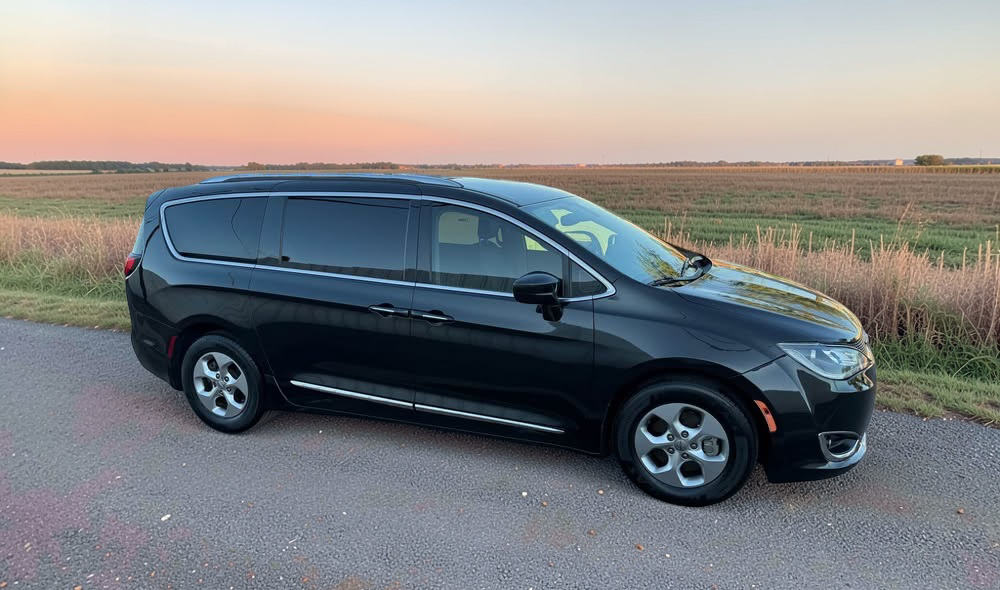
Traffic moves. The Pacifica hesitates, then thumps into gear as cars close in behind.
On gas-powered minivans, the 948TE 9-speed can hesitate, slam through shifts, or bump just before stopping. Some faults come from software. Others involve worn clutches, converter bushings, or internal damage that can cost thousands to repair.
The plug-in hybrid faces a different threat. Its eFlite transaxle has a documented wiring defect linked to sudden power loss, with extended factory coverage for certain 2017–2023 models. The older 2004–2008 crossover has its own hydraulic failures.
This guide covers the symptoms, mechanical causes, recalls, repair options, and costs, including when a software update helps and when the transmission needs major work.
1. One Pacifica Name, Four Very Different Transmissions
Know Which Gearbox You’re Dealing With
A 2007 Pacifica and a 2017 Pacifica share a badge, but their transmissions have little in common. Even the newer gas and hybrid minivans use different hardware. That changes which parts fail, what the shop should test, and how much repairs cost.
| Pacifica version | Engine and model years | Transmission | Main trouble spots |
|---|---|---|---|
| Older crossover | 2004–2008, 3.5L or 3.8L V6 | 41TE/41AE 4-speed | Valve body wear, sticking solenoids, hydraulic leaks, worn clutches |
| Older crossover | 2007–2008, 4.0L V6 | 62TE 6-speed | Compounder clutch wear, damaged seals, pressure loss |
| Gas minivan | 2017 onward, 3.6L V6 | 948TE 9-speed | Harsh shifts, hesitation, converter faults, internal wear |
| Plug-in hybrid minivan | 2017–2026, 3.6L hybrid | eFlite Si-eVT | Internal wiring shorts, motor feedback faults, bearing damage |
The gas minivan’s 948TE uses friction clutches and mechanical dog clutches to manage 9 forward gears. Its shift timing depends on hydraulic pressure and electronic control. A harsh shift can come from calibration, pressure loss, or damaged hardware.
The hybrid’s eFlite works differently. It uses 2 electric motors and planetary gears to vary its effective drive ratio. There’s no belt-and-pulley CVT or conventional 9-speed shift sequence. A valve-body diagnosis meant for the 948TE doesn’t apply to this hybrid transaxle.
Older crossovers need their own diagnosis. The 41TE family uses conventional hydraulic clutch control, while the 62TE adds a compounder assembly. Both can lose clutch pressure as seals and internal parts wear.
The Build Date Can Change Which Repair Applies
Model year alone can mislead you. Chrysler introduced AWD on the gas Pacifica with the 2020 AWD Launch Edition, before the 2021 refresh. Those vans use the 948TE with extra driveline hardware, including a power transfer unit and rear drive assembly.
The plug-in hybrid remained front-wheel drive. Chrysler discontinued that version in 2026, but existing factory coverage still depends on the vehicle’s eligibility. A discontinued model doesn’t automatically lose an active warranty extension.
Build dates also determine which software updates and mechanical repairs apply. Chrysler’s transmission bulletins often specify a model year, engine, controller calibration, and production cutoff. Two vans sold as the same model year may qualify for different work.
Before approving repairs, have the shop confirm the VIN, engine, drive layout, transmission sales code, and build date. Complaint totals alone can’t establish which year has the highest failure rate. They don’t account for production volume or time on the road.
For the hybrid, XE1 extended transmission coverage has a particularly strict cutoff. Qualifying 2017–2023 vans must have been built between August 12, 2016, and December 27, 2022, with coverage confirmed in dealer records.
2. Why the Gas Pacifica’s 9-Speed Hesitates and Slams Into Gear
A Hard Shift and a Slipping Clutch Tell Different Stories
A Pacifica can pause when you press the gas, slam into the next gear, or bump while slowing to a stop. These symptoms feel similar, but they don’t always share a cause.
The 948TE uses 4 friction clutches and 2 mechanical dog clutches to manage 9 forward gears. Friction clutches engage through controlled hydraulic pressure. Dog clutches lock teeth together and need precise speed matching before engagement.
The transmission control module (TCM) coordinates clutch pressure and shift timing with engine torque. A delay in that timing can produce a hard engagement. Dog-clutch synchronization matters during certain gear changes, but it doesn’t explain every harsh 1–2 shift.
Actual clutch slip leaves another clue. Engine RPM rises without a matching gain in road speed, sometimes followed by a harsh engagement. The shop should compare commanded gear, input and output shaft speeds, fluid level, and clutch slip data.
Chrysler’s Software Bulletins Target Different Model Years
Early 2017 gas Pacificas had enough shift complaints for Chrysler to revise their transmission software. TSB 21-008-21, issued March 12, 2021, addresses harsh 1–2, 2–3, 3–4, and 4–5 upshifts. It also covers hard downshifts while braking near a stop.
The bulletin lists several fault codes, including P0732-00, which means an incorrect 2nd-gear ratio. That code can point toward clutch slip or faulty gear engagement. Chrysler specifically revised the software to better address this fault, so a code alone doesn’t prove internal damage.
Newer Pacificas received their own updates. TSB 18-027-26, dated February 26, 2026, covers specified 2021 gas models. Its PCM update addresses symptoms that include rough shifts and low-speed bumps. Engine torque control affects shift quality, so checking only the TCM can miss an applicable correction.
For 2024 gas Pacificas, TSB 21-031-24 targets transmission shift quality through a TCM update. It applies to vans built on or before April 5, 2024, with the 948TE transmission.
These bulletins have strict vehicle requirements. A 2024 calibration doesn’t automatically apply to a 2021 van. The VIN, build date, engine sales code, and current software version determine which update the shop can install.
Why a Software Update Sometimes Needs a Relearn
Installing new software changes how the TCM commands shifts. It doesn’t always clear the clutch adaptations learned under the old calibration.
The 948TE adjusts clutch control as it operates. Those learned values can affect how quickly pressure builds and releases during shifts. After certain software updates, the transmission needs a scan-tool adaptation procedure to establish the correct behavior.
Chrysler’s TSB 21-008-21 specifically requires a Quick Learn after the TCM flash. The technician should record which shifts improved and check whether fault codes return.
An ignition-and-accelerator trick circulating online isn’t a substitute for Chrysler’s factory relearn procedure. Proper adaptation requires capable scan equipment and the correct service instructions.
Even a successful relearn has limits. It cannot rebuild worn clutch friction material, tighten a damaged bushing, or seal an internal hydraulic leak. If RPM still flares under acceleration or P0732-00 returns, the transmission needs further mechanical and hydraulic testing.
3. Gas Pacifica Transmission Faults That Software Can’t Fix
A Torque Converter Code Can Point to a Worn Bushing
A check engine light paired with P1DB7-00 can signal trouble inside the 948TE. The code means torque converter clutch performance has fallen outside its expected range. Chrysler linked some cases to a mechanical fault.
TSB 21-040-25, dated October 2, 2025, identifies reaction-shaft misalignment as a cause of premature bushing wear. It covers specified 2017–2025 gas Pacificas built through December 1, 2024.
The worn bushing can disrupt the converter clutch’s controlled slip. The transmission computer compares actual slip against its target. When the difference exceeds its calibrated limit, the system can store P1DB7-00.
Chrysler introduced reaction-shaft service kit 68732959AB to address qualifying cases. The kit offers a targeted internal repair instead of replacing the entire transmission.
There’s a strict measurement requirement. The bulletin specifies the kit when input-shaft side-to-side movement exceeds 0.027 mm (0.0010 inch). A stored code without the required measurement doesn’t establish eligibility for that repair.
Delayed Engagement and Lost Drive Can Mean Internal Damage
Shift into Drive, wait several seconds, then feel the van engage with a thump. That delay can signal low hydraulic pressure, a leaking seal, or poor clutch control.
Fluid loss is one possible cause. A leak can reduce available pressure and slow clutch engagement. If the transmission keeps running low, friction plates can overheat and wear.
Slipping after the van starts moving points toward another fault. Engine RPM rises, but road speed barely follows. Worn clutch packs, pressure-control faults, or damaged internal parts can produce that behavior.
A shop should check fluid level, stored codes, commanded gears, and shaft-speed readings before recommending replacement. Pressure testing and internal inspection may follow if the readings indicate clutch slip. A generic transmission fault code cannot identify a failed clutch pack by itself.
One rare manufacturing defect did cause a direct loss-of-drive risk. Recall U85 / 18V-492 covered certain 2018 non-hybrid Pacificas and 2019 Jeep Cherokees with an incomplete transmission weld.
NHTSA describes a transmission component that may not have been welded properly. If the weld fails, power can stop reaching the wheels. Chrysler identified only 5 vehicles across both models. The recall required transmission replacement for affected vehicles.
An Unexpected Shift Into Park or AWD Noise Can Mislead Diagnosis
Some 2024 gas Pacificas can unexpectedly enter AutoPark during an engine stop/start event. The Drive indicator flashes 3 times before the transmission shifts into Park.
TSB 18-083-24, issued November 12, 2024, linked this behavior to PCM software. Chrysler prescribed a software update rather than replacing the internal parking hardware. The shop should check for the latest applicable PCM calibration.
AWD models add another source of noise and vibration. Their power transfer unit (PTU), driveshaft, and rear drive assembly sit outside the main transmission. Wear or binding in those parts can feel like a failing gearbox.
A vibration that changes with vehicle speed may point toward the driveshaft or its joints. Binding during turns can require inspection of the AWD driveline. These symptoms need separate checks before anyone condemns the 948TE.
The technician should locate the noise, inspect the driveline, and scan the transmission and AWD controllers. A PTU repair bulletin written for a Jeep Cherokee or Chrysler 200 doesn’t automatically apply to a Pacifica.
4. Why the Pacifica Hybrid Can Suddenly Lose Power on the Highway
A Wiring Short Can Shut Down the Hybrid Drive
A Pacifica Hybrid cruises at highway speed, then suddenly loses acceleration. The dash flashes a warning, the van slows, and the driver has little time to react.
Chrysler linked some of these failures to defects inside the eFlite Si-eVT transaxle. TSB 21-025-25, dated March 18, 2025, identifies 2 separate faults. Both can affect hybrid propulsion, but they don’t always occur together.
The first involves a short in an internal transmission wiring connector. This can disrupt electric motor feedback and trigger a shutdown response. The van may enter reduced-power mode or display “Stop Safely – Vehicle Will Shut Off Soon.”
The second fault involves machining burrs on the Motor A bearing support. These sharp edges can damage the bearing and cause premature failure. Chrysler identifies this as a separate mechanical cause in the same bulletin.
Normal hybrid operation can also change engine speed and sound without warning. A sudden loss of acceleration, warning chime, or shutdown message requires a different response. The shop needs stored hybrid-controller codes to identify the fault.
If the van loses power, pull over somewhere safe and arrange recovery. Don’t repeatedly test acceleration in traffic. The next shutdown could leave the van without enough power to reach a safe stopping place.
Recall 03A Added Warnings but Left the Defective Hardware in Place
In January 2023, Chrysler announced Safety Recall 03A / 23V-010 for certain 2017–2023 Pacifica Plug-in Hybrids. NHTSA’s 2024 recall query listed 67,177 affected vehicles.
The recall addressed an internal transmission wiring connector that could short and cause an unexpected shutdown. Losing drive power at highway speed increases crash risk, especially when traffic leaves little room to pull over.
Chrysler’s remedy relied on software updates. These changes introduced warning messages, a chime, and reduced-power operation to give drivers time to stop safely.
The update didn’t replace the defective connector. A van could complete recall 03A and still experience the underlying transmission fault.
On February 27, 2024, NHTSA opened Recall Query RQ24004 to examine whether that remedy was adequate. Investigators had received 132 reports alleging loss of motive power among the recalled vehicles.
NHTSA noted that the warning messages in those reports suggested the recall software had likely been installed. The 132 reports don’t establish a fleet-wide failure rate. They raised questions about whether the software gave drivers enough protection.
A completed recall entry therefore doesn’t prove the transaxle received new hardware. The repair order must show whether the dealer installed software, rebuilt the transmission, or replaced the assembly.
The recall query described vehicles produced through January 9, 2023. Chrysler’s separate XE1 transmission warranty extension uses an earlier cutoff of December 27, 2022. Those dates determine which factory repair coverage may apply.
5. Chrysler’s XE1 Warranty Can Cover a Major Hybrid Transmission Repair
Which Pacifica Hybrids Qualify for Unlimited Coverage?
A failed eFlite transaxle can leave a Pacifica Hybrid facing a major repair bill. Chrysler’s XE1 warranty extension covers certain internal transmission defects, with no stated mileage limit in its U.S. warranty bulletin.
Warranty Bulletin D-23-07 Rev. B, dated March 18, 2025, identifies the eligible vehicles. Coverage applies to certain 2017–2023 Pacifica Plug-in Hybrids with the 3.6L V6 hybrid engine.
The vehicle must have engine sales code EH3 and transmission sales code DFQ. Its production date must fall between August 12, 2016, and December 27, 2022. A 2023 model built after that cutoff falls outside the published XE1 scope.
The U.S. warranty bulletin and owner letter specify unlimited years and unlimited miles for the covered condition. However, TSB 21-014-26, dated February 5, 2026, uses different wording: 25 years or unlimited miles.
That conflict matters if a dealer disputes coverage. Ask the service department to confirm the warranty terms in writing against your VIN. Dealer records must show XE1 eligibility, and coverage applies only to the specified transmission faults.
Four Fault Codes Determine Whether the Repair Qualifies
A “Service Hybrid Electric Vehicle System” warning doesn’t automatically qualify the transmission for XE1 repair. Chrysler’s current bulletin requires an illuminated malfunction indicator lamp (MIL) and at least 1 specified diagnostic trouble code.
| DTC | Reported fault |
|---|---|
| P0A3F-00 | Drive Motor A position sensor 1 circuit |
| P0A43-00 | Intermittent Drive Motor A position sensor circuit |
| P0A45-00 | Drive Motor B position sensor 1 circuit |
| P0C1A-00 | Drive Motor B delivered torque performance |
These codes help identify faults tied to the internal wiring connector or motor operation. The dealer must confirm the stored codes and follow Chrysler’s diagnostic procedure before approving the covered repair.
Other faults can produce similar warnings. A weak 12-volt battery, hybrid cooling fault, or controller communication problem may prevent the van from entering Drive. Those conditions require their own diagnosis.
The distinction can become expensive. A qualifying code may support an XE1 claim, while an unrelated hybrid fault won’t automatically receive the same coverage.
Chrysler Switched From Replacing Transaxles to Rebuilding Them
Chrysler’s original repair called for replacing the complete eFlite transmission. TSB 21-042-24, dated June 12, 2024, instructed dealers to install a replacement assembly when the required conditions were met.
That repair approach changed in 2025. Chrysler introduced a transmission rebuild procedure to address the internal connector and Motor A bearing defects. The current TSB 21-014-26 specifies electric transmission rebuild kit 68729719AB.
The repair also requires updated hybrid-control software. The Auxiliary Hybrid Control Processor (AHCP) must be programmed before the Hybrid Control Processor (HCP). Chrysler warns against connecting the vehicle to a high-voltage charger during programming.
This work requires a shop equipped for high-voltage transmission service. The technician must follow Chrysler’s repair instructions, clear stored faults, and verify the required software versions.
Chrysler allows 8.1 labor hours for the principal warranty rebuild operation. That figure excludes some related operations and doesn’t guarantee the van will be ready the same day.
A qualifying XE1 repair no longer guarantees a complete replacement transaxle. The repair order should identify the rebuild procedure, installed kit 68729719AB, and completed AHCP/HCP programming.
6. Older Pacificas Have Their Own Hydraulic Transmission Failures
P1776 Can Send You After the Wrong Part
A 2004–2005 Pacifica with the 3.5L V6 can trigger a check engine light and P1776. The code reports that the solenoid switch valve is latched in the low/reverse position.
Chrysler addressed this fault in TSB 21-001-13. The bulletin separates a shift-linkage fault from a sticking valve inside the transmission. Both can set the same code, but they need different repairs.
The key lies in the transmission range sensor event data. A TR2 reading means the manual valve wasn’t fully in Overdrive when the fault occurred. The technician should check shift-cable adjustment, binding, and cable routing.
An OD reading points toward a sticking solenoid switch valve. That valve sits inside the valve body, separate from the external solenoid pack. Contamination or a sticking valve can prevent proper hydraulic switching.
Replacing the solenoid pack based on P1776 alone can waste money. Chrysler directs technicians to inspect the valve body and check for debris around the switch valve and its plugs.
The 62TE Can Lose Clutch Pressure Inside Its Compounder
The 2007–2008 Pacifica crossover with the 4.0L V6 uses Chrysler’s 62TE 6-speed automatic. It adds a compounder assembly with low and direct clutch functions. Those extra clutches help produce 6 forward ratios.
One common failure starts in the low-clutch drum. Its sealing-ring grooves wear, allowing pressurized transmission fluid to escape. As clutch pressure falls, engagement becomes less reliable.
You may feel engine RPM rise during a shift before the next gear takes hold. Severe pressure loss can leave the clutch slipping under load. Continued slip generates heat and wears the friction plates.
The direct-clutch piston presents another weak point. Its bonded rubber seal can crack or separate from the piston, allowing hydraulic pressure to leak. This can cause poorly timed shifts or slipping when the direct clutch applies.
ATRA’s 62TE training material warns that a piston with slight seal damage may still pass a basic compressed-air test. That can hide the defect during diagnosis.
A proper rebuild inspection must include the low-clutch drum’s sealing-ring grooves and the direct-clutch piston seal. A successful air check alone cannot rule out a damaged piston.
7. The Wrong Transmission Fluid Can Turn a Small Repair Into a Major One
ATF+4 Belongs in the Older Pacifica, Not the 9-Speed
Pouring the wrong transmission fluid into a Pacifica can cause shifting trouble and premature clutch wear. The correct fluid depends on which gearbox the van uses.
The 2004–2008 crossover requires Mopar ATF+4, meeting Chrysler specification MS-9602. This applies to its 41TE-family 4-speed and 62TE 6-speed transmissions. Chrysler’s 2007 owner’s manual confirms that requirement.
The newer gas minivan uses Mopar ZF 8 & 9 Speed ATF, or the specified equivalent. Its 948TE needs the correct fluid friction properties for controlled clutch engagement. ATF+4 doesn’t meet that requirement.
The plug-in hybrid’s eFlite transaxle also specifies Mopar ZF 8 & 9 Speed ATF, or an approved equivalent. Despite its electrically variable drive, it doesn’t use generic belt-CVT fluid. Its internal hardware also differs from the gas model’s 948TE.
Fluid color tells you little about compatibility. Check the exact specification and application before filling the transmission. Mixing ATF+4 into a 948TE service introduces fluid Chrysler doesn’t approve for that gearbox.
Chrysler Calls the Fluid Lifetime, but ZF Gives a Mileage Limit
Chrysler doesn’t require routine transmission fluid and filter changes on newer Pacifica minivans under normal driving conditions. The factory fill is intended to last the transmission’s service life.
The owner’s manual still calls for service when fluid becomes contaminated or the transmission is disassembled. A leak also requires attention, even when no scheduled fluid change is due.
ZF takes a different approach to long-term maintenance. Its LifeguardFluid 9 guidance recommends changing transmission oil after 150,000 km (about 93,200 miles). Heavy loads, high temperatures, or severe driving can justify earlier service.
That recommendation applies to ZF transmission lubricant maintenance. It isn’t Chrysler’s mandatory service interval, and it shouldn’t be applied to the hybrid eFlite without separate guidance.
Checking fluid level on the 948TE also takes more work than pulling a dipstick. The transmission has no conventional owner-accessible dipstick. Technicians use the specified measuring equipment and fluid-temperature readings to establish the correct level.
An incorrect level can affect hydraulic pressure and clutch engagement. Adding fluid without checking its temperature and the required level specification risks overfilling the transmission.
Fresh Fluid Won’t Repair Burned Clutches or Worn Bearings
A fluid change can correct contaminated fluid or help restore proper operation when the level is wrong. It cannot repair a worn clutch pack, damaged bearing, or leaking internal seal.
Chrysler warns against chemical transmission flushes and supplemental additives. Those products can alter the fluid’s friction properties or introduce contamination. A shop should use the approved fluid and the correct fill procedure.
Filter service also differs between generations. Older 41TE and 62TE transmissions have serviceable filters beneath their oil pans. The 948TE’s internal filter requires further transmission disassembly, so a routine drain-and-fill doesn’t replace it.
Before approving service, ask the shop to identify the fluid specification, level-check procedure, and filter access. If the transmission already slips, the technician should inspect the drained fluid for friction debris or metal.
Fine metallic particles can signal internal wear. Larger fragments or heavy clutch debris demand closer inspection of the damaged parts. Fresh ATF cannot restore a burned clutch lining or a bearing that’s shedding metal.
8. What a Pacifica Transmission Repair Should Actually Cost
A $4,000 Transmission Price Doesn’t Include the Full Repair
A Pacifica transmission replacement can cost thousands before the mechanic turns a wrench. Labor, fluid, programming, and core charges can push the final bill well above the advertised parts price.
Published U.S. listings on November 17, 2026, show how much prices vary between factory parts and used assemblies.
| Repair or part | Published price | What’s included |
|---|---|---|
| Eligible safety recall | $0 | Covered recall repair only |
| Mopar 948TE transmission kit 68595373AA | $4,362.30 | Gas transmission kit with torque converter; labor and refundable core charge excluded |
| Mopar torque converter 68304202AA | $580.82 | Converter only; labor, fluid, and core charge excluded |
| Used 2023 hybrid transaxle, 97,000 miles | $1,593 + $299 shipping | Used assembly; installation and programming excluded |
The Mopar prices come from All Mopar Parts. The used hybrid example comes from Car Part Planet. These are retailer listings, not installed repair quotes, and prices can change.
A used transaxle also carries unknown wear. Its mileage doesn’t confirm the condition of its internal bearings, wiring, or seals. The seller’s interchange listing and part number must match the van’s VIN before purchase.
Compare Repair Quotes Before Paying for a Complete Gearbox
A harsh-shifting 948TE doesn’t always need replacement. A shop might correct the fault through software, a relearn, or targeted internal work.
The repair becomes more expensive when worn clutch packs, damaged bearings, or pressure leaks require transmission removal. Chrysler’s reaction-shaft repair kit offers another option for qualifying converter-clutch faults. The shop must confirm the bulletin’s measurement requirements before using it.
A written quote should separate diagnosis, parts, labor, transmission fluid, software programming, and adaptation. Taxes and refundable core charges also belong on separate lines. That makes it easier to compare a targeted repair against a complete replacement.
Check whether the torque converter comes with the replacement transmission. Mopar kit 68595373AA already lists the converter. Charging for another converter without a clear reason could add $580.82 in parts alone.
Older 41TE and 62TE crossovers need a different comparison. A local rebuild may reuse the transmission case while replacing worn clutches, seals, and damaged hard parts. A remanufactured unit should come with a written list of replaced parts and warranty terms.
For the hybrid, check XE1 eligibility before approving any out-of-pocket transaxle work. Qualifying repairs may be covered by Chrysler. The warranty bulletin also provides a reimbursement route for certain repairs owners already paid for, subject to its claim requirements.
A Cheap Replacement Can Leave You Paying Labor Twice
A replacement transmission warranty can look generous until the unit fails again. Some warranties cover the defective assembly but exclude labor to remove and reinstall it.
That matters on a Pacifica. Replacing the transmission requires substantial disassembly, and a second failure can mean another major labor bill. Shipping costs, fluid, seals, and programming may also fall outside parts-only coverage.
Used transmissions deserve particular attention. A donor unit with 90,000 miles may still have its original clutch packs, bearings, and internal wiring. Its mileage doesn’t prove Chrysler’s updated parts were installed.
Ask the seller to identify the exact transmission, donor VIN, mileage, and warranty coverage. The repair invoice should also record the installed unit, completed programming, and adaptation work.
For rebuilt hybrids, the repair order should identify the factory procedure and rebuild kit 68729719AB, where applicable. It should also document the required hybrid-controller updates.
Car Part Planet’s listed used-unit warranty for newer personal vehicles provides 1 year or 12,000 miles of parts-only coverage. Labor reimbursement is excluded under those stated terms.
If that used transmission fails, the replacement part may be covered while the second removal and installation bill remains your responsibility.
Sources & References
- NHTSA TSB 21-008-21: Flash Transmission Control Module (TCM) Updates, 2017 Chrysler Pacifica (March 12, 2021)
- NHTSA TSB 18-027-26: Flash Powertrain Control Module (PCM) Updates, 2021 Chrysler Pacifica (February 26, 2026)
- NHTSA TSB 21-031-24: Flash Transmission Control Module (TCM) Updates, 2024 Chrysler Pacifica (May 15, 2024)
- NHTSA TSB 21-040-25: 948TE Transmission Reaction Shaft Service Bushing Kit (October 2, 2025)
- NHTSA TSB 18-083-24: Flash Powertrain Control Module (PCM) Updates, Auto Park Mode, 2024 Chrysler Pacifica (November 12, 2024)
- NHTSA TSB 21-042-24: Pacifica Hybrid Internal Transmission Wiring Connector Short and Motor A Bearing Failure, Warranty Extension XE1 (June 12, 2024)
- NHTSA TSB 21-025-25: Pacifica Hybrid Internal Transmission Wiring Connector Short and Motor A Bearing Failure, Warranty Extension XE1 (March 18, 2025)
- NHTSA TSB 21-014-26: Pacifica Hybrid Internal Transmission Wiring Connector Short and Motor A Bearing Failure, Warranty Extension XE1 (February 5, 2026)
- Chrysler Warranty Bulletin D-23-07 Rev. B (XE1): eFlite Si-eVT Transmission Repair, Certain 2017-2023 Chrysler Pacifica Plug-in Hybrid
- NHTSA TSB 21-001-13: MIL Illumination, DTC P1776 Solenoid Switch Valve Latched in LR Position (January 31, 2013)
- NHTSA Recall 18V-492 (Chrysler U85): Loss of Drive from Incomplete Transmission Weld, 2018 Chrysler Pacifica and 2019 Jeep Cherokee
- NHTSA ODI Recall Query RQ24004 Opening Resume: Loss of Motive Power Due to an Internal Wiring Connector Short, 2017-2023 Pacifica Hybrid (February 27, 2024)
- ATRA: ZF9HP48 / 948TE Introduction Webinar Handout
- ATRA: 62TE Update, Front Wheel Drive 6 Speed Webinar Handout
- ZF Friedrichshafen AG Product Data Sheet: ZF LifeguardFluid 9
- 2007 Chrysler Pacifica Owner’s Manual (Mopar)
- 2025 Chrysler Pacifica Owner’s Manual (Mopar)
- 2025 Chrysler Pacifica Hybrid Owner’s Manual (Mopar)
- All Mopar Parts: Transmission Assembly Catalog, 2026 Chrysler Pacifica 3.6L V6 Gas
- Mopar: 68595373AA With Torque Converter Transmission Kit, 948TE
- Mopar: 68304202AA Torque Converter, 948TE
- Car Part Planet: Used 2023 Chrysler Pacifica Hybrid Transaxle, Warranty and Shipping Terms
- PR Newswire: All-Wheel Drive Arrives, Ordering Opens for 2020 Chrysler Pacifica AWD Launch Edition
- Car and Driver: Stellantis Axes Its Traditional Plug-In Hybrid Models for 2026 (January 2026)
- Chrysler: Pacifica Hybrid, Discontinued Chrysler Vehicles
- Wikipedia: Chrysler Pacifica (crossover), 2004-2008 Powertrains
- Wikipedia: Chrysler Pacifica (minivan), 2017-Present Powertrains