
Cranks once. Dies. Horn blasts at 2 a.m. Wipers swipe with no rain. Then it stalls in traffic and won’t restart.
That’s the chain of weirdness that’s haunted thousands of Dodge, Jeep, and Chrysler owners since Chrysler rolled out the TIPM-7, a single box that handles everything from fuel pumps to airbags. When it fails, it fails hard.
This guide cuts through the noise. What recalls actually cover, which models are still left out, why the TIPM-7’s sealed relay was a built-in failure point, and how to tell if yours is about to quit at highway speed.
1. Why Dodge’s all-in-one fuse box became a failure point
Chrysler ditched serviceable relays for sealed circuit control
Mid-2000s FCA vehicles dropped traditional fuse boxes for the TIPM, a plastic command center that powered everything from the fuel pump to airbag sensors. No plug-in relays. No easy swaps. Just soldered boards and logic gates bolted under the hood.
One fault meant system-wide chaos. Fuel, ignition, safety; gone in one glitch.
TIPM-7 trapped the fuel pump relay inside the board
The TIPM-7 hardwired the fuel pump relay deep into its PCB. No socket. No swap. Just heat, vibration, and moisture hammering a mechanical relay with no escape plan.
Dealers couldn’t replace the relay; only the whole module or a clunky external workaround.
Vapor, heat, and arcs cooked the relay from inside
Silicone vapor stuck to contacts, turned into insulation, and burned under load. The relay built resistance, dropped voltage, then failed.
Sometimes it stuck open and blocked fuel. Other times it stuck closed and ran the pump dry. Failures started intermittent, then left drivers cold.
Common TIPM/TIPM-7 symptoms and likely internal causes
| Driver-facing symptom | What the truck/van actually does | Likely TIPM-related cause |
|---|---|---|
| Crank, no-start | Starter turns, engine never fires | Fuel pump relay stuck open / high-resistance contacts |
| Random stalling while driving | Cuts out with no misfire history or fuel gauge warning | Fuel pump relay dropping out under heat/vibration |
| Dead battery after sitting overnight | Battery new, goes flat with no lights left on | Fuel pump relay stuck closed, pump running with key off |
| Wipers, horn, lights operate on their own | “Possessed” behavior, especially in wet/humid weather | Internal shorts or logic faults on TIPM circuit board |
| Airbag / ABS warning lights, intermittent | Safety lights cycling on/off with no sensor fault found | Power interruptions to control modules through TIPM |
2. How fuel relay failures spiraled into federal recalls
First wave hit Durango and Grand Cherokee under P54 and R09
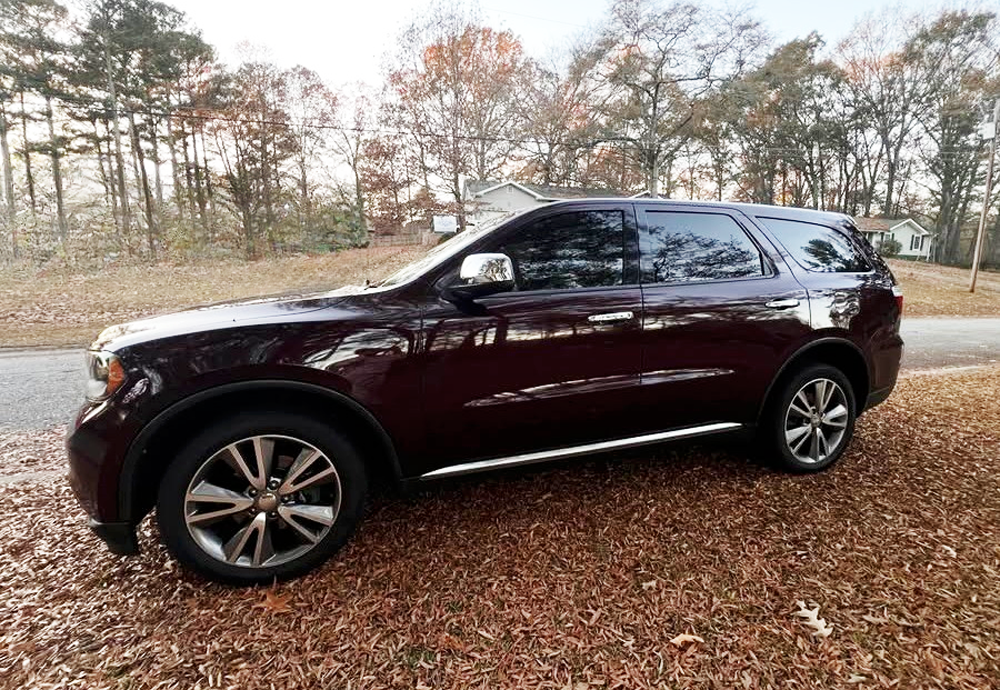
In 2014, NHTSA flagged stalling in 2011 Dodge Durangos and Jeep Grand Cherokees tied to failed fuel pump relays inside the TIPM. The official recall; P54 / 14V-530; called it a safety risk. By early 2015, complaints kept stacking. FCA expanded the recall to cover 2012–2013 models under R09 / 15V-115.
The fix didn’t replace the TIPM. Dealers cut the fuel pump circuit, added an external relay, and tied it into the TIPM’s power supply. Crude, but cheaper than swapping a sealed module.
The second hit: V62 recall dragged fixed trucks back in
That external relay wasn’t bulletproof. Same heat. Same silicon vapors. Same carbon buildup. By 2019, failures were back. NHTSA forced FCA into a recall redo; V62 / 19V-813; covering over 528,000 SUVs already “fixed” under P54 or R09.
This time, dealers swapped in a redesigned relay kit (CSZDV621AA) and bracket (CSZDV622AA) with improved sealing. Older kits were pulled from shelves. Some trucks had gone through three fuel relay versions in five years; two of them faulty.
Safety complaints outpaced what NHTSA would act on
Owners pushed for broader action. The DP14-004 petition asked regulators to investigate full TIPM failures; random wipers, dead batteries, false ABS alarms, doors unlocking on their own. NHTSA declined. They focused only on the fuel pump relay failures that caused stalls or no-starts.
Electrical chaos didn’t always meet the bar for recall. If it didn’t stop the engine or pose a crash risk, it got logged as “non-safety related.” Annoying wasn’t enough.
Major Dodge/Jeep TIPM-related recall campaigns
| Recall ID (NHTSA / FCA) | Years / models primarily hit | Root issue | Basic remedy path |
|---|---|---|---|
| 14V-530 / P54 | 2011 Durango, Grand Cherokee | Internal TIPM fuel pump relay failure | Add external fuel pump relay kit |
| 15V-115 / R09 | 2012–2013 Durango, Grand Cherokee | Same relay failure expanded | Same external relay fix |
| 19V-813 / V62 | 2011–2013 Durango, Grand Cherokee (prior recall) | External remedy relay contamination | Replace external relay + updated hardware |
3. What failure looks like behind the wheel
Engines stall without warning, not mercy
Some drivers lost power mid-turn. Others rolled into intersections and coasted dead. TIPM fuel relay failures don’t limp; they stop spark and fuel in one move. No codes, no check engine light, just a hard shutoff.
Crank-no-start complaints followed the same pattern. Truck ran fine. Next day, silence. Pump never primed. Battery charged, starter spun, but no fuel made it forward.
Heat made it worse. Warm-day restarts became a coin flip. The relay would arc, fail to close, and leave the system dry.
Electrical chaos kicks in before the hard shutoff
Before stalling, many trucks acted strange. Wipers flipped on. Horns blared. Headlights flashed in park. Doors locked and unlocked at random. Some owners said the van felt haunted. Others pulled the battery just to make it stop.
These weren’t glitches; they were signs the TIPM had started to short internally. Water seeped into seams, logic faults stacked up, and voltage leaked across circuits that were never meant to meet.
Safety lights cycled too. ABS, airbag, traction control randomly flashing without sensor codes. Modules lost power, then came back confused.
Pumps ran after shutdown and drained new batteries overnight
On some builds, the relay failed closed. The fuel pump ran with the key out, buzzing nonstop until the battery gave out. Next morning, no start. Replace the battery, and it happened again.
In hotter climates, pumps overheated and failed from running dry. In cold ones, drivers noticed the faint hum from the rear long after shutdown, until it stopped cold one day, fried by constant load.
Parasitic draw wasn’t always spotted right away. Some owners threw in alternators and batteries before checking if the TIPM was sending power 24/7.
4. Who got the recall and who Dodge left hanging
The main recall hit Durango and Grand Cherokee only
The 2011–2013 Dodge Durango and Jeep Grand Cherokee were the focus. All trims. All engines. The 3.6, 5.7, and 6.4 HEMIs shared the same faulty internal fuel relay and circuit path. If the TIPM failed, the engine cut or refused to start.
These were the trucks FCA called back under P54, R09, and V62. Dealers used VINs to check eligibility and install the relay fix. But the campaign stopped there. No other models got the same treatment.
Same guts, same relay: no help for other models
The Ram 1500 (2007–2012), Grand Caravan (2011–2012), Town & Country (2010–2014), and Wrangler JK (2007–2015) all used variants of the TIPM-7. Same fuel pump relay. Same no-start and stall symptoms.
No official fuel pump recall covered them. No dealer fix. A few models got TSBs or limited warranty extensions like X75, but most owners were stuck paying out-of-pocket unless they joined a class-action or pushed through a lemon claim.
Failures looked the same; fuel pump dropouts, random stalling, parasitic drain. But FCA drew a hard line at the Grand Cherokee and Durango.
VIN exclusions turned into owner backlash
Drivers with identical issues were told “not covered.” One family’s SUV got a free relay kit. Another’s van stalled in traffic and got denied. Same TIPM. Same fault. Different badge.
Used buyers caught on. TIPM-era trucks took a hit on resale. Carfax notes about electrical work or warranty repairs triggered buyer drop-off. Even fixed vehicles stayed flagged.
Some owners went legal. Others wired in their own bypasses. But Dodge never expanded the campaign; no matter how many reports matched the defect.
Selected TIPM-7 Dodge/Chrysler/Jeep models and recall status
| Model | Typical TIPM-7 years | Fuel pump relay recall? | Common reported TIPM symptoms |
|---|---|---|---|
| Dodge Durango | 2011–2013 | Yes (P54/R09, V62) | Stall, crank/no-start, battery drain |
| Jeep Grand Cherokee | 2011–2013 | Yes (P54/R09, V62) | Stall, crank/no-start, random electrical faults |
| Ram 1500 | 2007–2012 | No | No-start, erratic lighting, fuel pump issues |
| Dodge Grand Caravan | 2011–2012 | No | Wiper/lock issues, intermittent no-start |
| Chrysler Town & Country | 2010–2014 | No | Sliding door faults, fuel pump anomalies |
| Jeep Wrangler (JK) | 2007–2015 | No | Random accessories cycling, intermittent stalling |
5. What the Velasco lawsuit gave and what it didn’t
Chrysler faced the music in federal court
In 2013, a group of owners sued under Velasco v. Chrysler Group LLC, targeting the TIPM-7 as inherently defective. The case documented no-starts, stalls, parasitic drains, and electrics firing on their own. FCA pushed back, calling the failure rates normal. The court didn’t buy it.
Discovery forced Chrysler to release complaint data, relay specs, and internal fix memos. The plaintiffs had evidence. The relay was failing early, often, and dangerously.
What owners actually got from the settlement
Durango and Grand Cherokee owners (2011–2013) received a 7-year/70,000-mile warranty extension tied to fuel pump relay failure. Coverage included towing, diagnostics, and rental cars when the TIPM knocked out driveability.
The agreement also covered misdiagnosed repairs. Owners who had swapped batteries, alternators, or fuel pumps chasing no-starts could get reimbursed, if they proved it traced back to the TIPM.
Claims had deadlines. No second shot if you missed the filing window. But for many, it meant $1,000–$3,000 back in their pocket.
Everyone else got left out and left to patch it themselves
Ram, Caravan, Wrangler, and Town & Country owners with the same TIPM-7 were excluded. Their stalling complaints matched. So did the wiring diagrams. Didn’t matter. The court settlement locked relief to two models only.
Some dealers helped off the record. Most didn’t. Rebuilders and bypass kits took over where Chrysler bailed out. In a few cases, small-claims suits worked, especially with paper trails of repeat failures.
But for the rest, there was no safety net; just a fuse box that might stop again tomorrow.
6. Which fix actually works and what just buys time
Dealer relay kits patch the pump circuit but leave the rest exposed
The official FCA fix for recalled vehicles was a cut-and-splice relay reroute. Techs clipped the pump control wire, crimped in a new external cube relay, and fed it power straight from the TIPM’s main B+ terminal.
Done right, it solved no-starts and stalls tied to the original sealed relay. But the job had a weak spot; early installs skipped proper heat-shrink seals or used soft crimps that loosened over time. Even the replacement relays failed again in the V62 recall.
It fixed one circuit. Nothing else inside the TIPM changed.
Fuse-taps and plug-in kits are quick, dirty, and often just enough
The cheapest workaround was a bypass cable, a jumper that fed fuse power to the pump when the key turned. No cuts, no solder, no scan tool. But it broke features like remote start, and skipped safety checks the TIPM normally handled.
A step above were plug-in relay modules. These units plugged into TIPM fuse slots and routed pump control through an external relay with built-in LEDs for status. Some even had test points for voltage and continuity.
Both types worked best for no-start issues. But neither addressed random stalls, drain problems, or logic faults deep in the board.
Full TIPM rebuilds fix more, but depend on who builds them
When failures stacked; wipers, locks, airbags, or multiple relay faults, owners went for full TIPM rebuilds. Reputable shops pulled the module, opened the case, desoldered relays, and replaced them with high-spec parts.
The best rebuilders cleaned the board, reinforced traces, sealed the housing, and backed it with multi-year warranties. Turnaround took days, but the module came back stronger than factory.
New OEM TIPMs were still available for $1,100–$1,500, but often carried the same original weaknesses. No upgraded components. No sealed boards. No protection against repeat failure.
TIPM repair paths and pros/cons for a Dodge owner
| Repair path | Typical cost range | What it fixes well | Key drawbacks / risks |
|---|---|---|---|
| Recall external relay kit | Dealer/warranty (low) | Fuel pump stall/no-start on recalled VINs | Only on covered VINs; early kits later recalled |
| Fuse-tap bypass cable | Low ($30–$80) | No-start from failed relay | Crude, can disable remote start, not OEM logic |
| Plug-in external relay module | Low–mid ($100–$200) | Easier diagnosis + pump power management | Still a band-aid on an aging TIPM |
| Rebuilt TIPM module | Mid ($400–$800) | Multi-system electrical faults, long-term fix | Downtime/shipping; quality varies by rebuilder |
| New OEM TIPM replacement | High ($1,100–$1,500+) | Complete refresh of module hardware | Expensive; same base design, programming needed |
7. How to spot a failing TIPM before it drains your wallet
Simple checks that catch the relay before it leaves you stuck
Start with key-on fuel pump prime. No hum at the rear means the relay likely failed open. Then turn the key off. If the pump keeps running, the relay’s stuck closed. Both will leave you guessing until it’s too late.
Try a jump-start. If it fires on 14.0 volts from the donor but not on your own battery at 12.5 volts, the relay contacts are cooked. High resistance breaks the circuit under normal load but passes just enough juice when boosted.
Pop the TIPM cover. Check for green corrosion at the connectors, burnt plastic, or cracked seams. Smell for melted insulation. All are signs of deeper internal damage, not just a bad relay.
What shop-level diagnostics reveal that multimeters miss
Hook up a scan tool. Lost comms with the ABS, airbag, or fuel system often point back to the TIPM. No direct codes for the relay, but voltage loss and module dropout tell the story.
Backprobe the pump feed. If voltage spikes, drops, or pulses on a steady key-on command, the relay’s arcing or hanging open. Some techs tap the TIPM case with a non-conductive probe while watching live data to trigger an intermittent cut.
Voltage drop across key circuits, fuel, ignition, wipers, can confirm internal resistance. That means solder fatigue or trace damage inside the board.
The most common misdiagnoses and how to avoid them
Most TIPM failures get mistaken for bad batteries, alternators, or fuel pumps. The shop throws in parts, the no-start comes back, and the bill climbs.
No pump output doesn’t always mean the pump’s dead. Check if it’s getting voltage first. If not, the TIPM’s relay isn’t feeding it, or worse, it’s stuck and cooking it.
Bad grounds or loose terminals also mask TIPM faults. If a new battery drains overnight or the pump sounds weak, trace power both ways, into and out of the module.
Document voltage, test results, and part failures. If you end up filing a claim, the paper trail wins the argument.
8. What changed after TIPM and what owners can still control
FCA backed off the one-box risk after too many failures
By 2013, newer Ram trucks began phasing out the TIPM-7 in favor of modular Power Distribution Centers (PDCs). These kept basic plug-in relays for fuel, ignition, and lights. The sealed relay-on-board model didn’t survive.
FCA engineers split loads across smaller modules and brought back parts you could replace without pulling the dash or the battery tray. It wasn’t a full retreat; but it showed where the line finally snapped between compact design and service access.
Bad grounds and weak batteries still wipe out good modules
Every failed alternator or jump-start with a loose ground stacks stress into the TIPM. Arcing at connectors. Relay chatter. Voltage swings that cook solder joints and logic chips.
Old batteries with low reserve draw higher current across the same relay. That’s how you get heat spots and pitted contacts. TIPMs that last are usually paired with clean terminals and stable voltage.
High-draw gear; aftermarket winches, lights, or audio amps should never pull juice straight from TIPM circuits. Always go fused and direct to the battery. Feeding 40 amps through a trace meant for 15 damages the board, not just the fuse.
Used buyers and DIY owners still have tools to stay ahead
Run the VIN through Mopar and NHTSA portals. Even late campaigns or quiet warranty extensions pop up if they apply. Don’t wait for a postcard that never comes.
When the TIPM fails, skip the “$40 fix” trap. Some patch jobs stop safety features or fry wiring after a month. Either go rebuild with warranty, or replace the unit with new and code it properly.
If you’re buying a used 2011–2013 Durango, Grand Cherokee, or anything with the TIPM-7, pull the relay records. Ask for invoices. If it had the V62 update, verify it wasn’t installed twice. If it didn’t, plan your budget like it will fail again; because odds are, it will.
Sources & References
- What is TIPM Failure? – Apollo Off-Road
- Dodge Ram TIPM Failure Symptoms, Repair, and Replacement – Circuit Board Medics
- 1200 New Jersey Avenue SE Washington, DC 20590 March … – nhtsa
- TIPM Class Action Settlement Approved With Rental Car & Full Repair Reimbursment
- Peter Velasco et al v. Chrysler Group LLC, No. 2:2013cv08080 – Document 46 (C.D. Cal. 2014) – Justia Law
- National Highway Traffic safety Administration | NHTSA
- Tackling TIPM Failure: A Step-by-Step Guide For Dodge Grand Caravan 2011 Owners
- TIPM Failure Symptoms and Repair Options Explained Simply for You
- Chrysler Totally Integrated Power Module Class Action – The Center for Auto Safety
- TIPM Fuel Pump Relay Solutions – Vertical Visions
- Chrysler/Dodge TIPM fuel pump relay bypass : r/mechanic – Reddit
- TIPM Problems! Intermittent Fail Safe, Codes, Related Concerns and Solutions
- Fuel pump relay issues in the TIPM for MOPAR: – MAKS TIPM Rebuilders
- Safety Recall V62 / NHTSA 19V-813 Fuel Pump Relay
- Safety Recall V62 – Fuel Pump Relay – 2011-2013 Dodge Durango & Jeep Grand Cherokee
- New Safety Recall Advanced Communication – V62 – OEMDTC
- 1200 New Jersey Avenue SE Washington, DC 20590 November 20 …
- What Causes a TIPM to Fail? Understanding and Solving Issues by Upfix
- Fit for 08-16 Chrysler Town and Country TIPM Repair Fuel Pump Relay Bypass Cable
- What Are The Signs Of A Faulty Fuel Pump Relay? – MAKS TIPM Rebuilders
- DEPARTMENT OF TRANSPORTATION National Highway Traffic Safety Administration Denial of Motor Vehicle Defect Petition AGENCY – Federal Register
- Part 573 Safety Recall Report 19V-813 | NHTSA
- NHTSA 14V-530 Fuel Pump Relay – Safety Recall P54
- DOT NHTSA ODI Document
- Dodge Jeep Recall: Engine Stalls Without Warning – RepairPal
- Safety Recall V62 Fuel Pump Relay: Remedy Available | PDF | Electrical Connector – Scribd
- Chrysler TIPM Class Action Lawsuit | Totally Integrated Power …
- Dodge, Jeep Faulty Fuel Pump Class Action Settlement
- Signs Of a Troubled TIPM – MAKS TIPM Rebuilders | Rebuilt TIPMs …
- Dodge RAM 2011 – 2012 TIPM Module Exchange Service – Circuit Board Medics
- Jeep TIPM Module Repair Service – No Programming Required – Circuit Board Medics
- TIPM test bypass cables – Vertical Visions
- Basics of Bypassing & Testing Relays – Vertical Visions
- Fuel pump TIPM external relay bypass : r/ram_trucks – Reddit
- Totally Integrated Power Module (TIPM) Chrysler Dodge Jeep (2007-2016) Rebuild
- Scanned Document – nhtsa
- Look for Vehicle Recalls | Official Mopar® Site
Was This Article Helpful?