
Spot coolant loss. Smell sweet haze. Hear a rough idle on cold start. That’s the 1.5L EcoBoost tipping its hand. Behind the boost and good mileage, this small turbo four runs tight tolerances, thin deck bridges, and high heat through an open-deck block. When the cooling system slips or the oil breaks down, the whole thing folds fast.
This guide breaks down the block’s real weak points, coolant intrusion, LSPI piston hits, turbo wear, and GDI valve sludge, plus Ford’s TSBs, warranty plays, and what makes the Dragon 3-cylinder better.
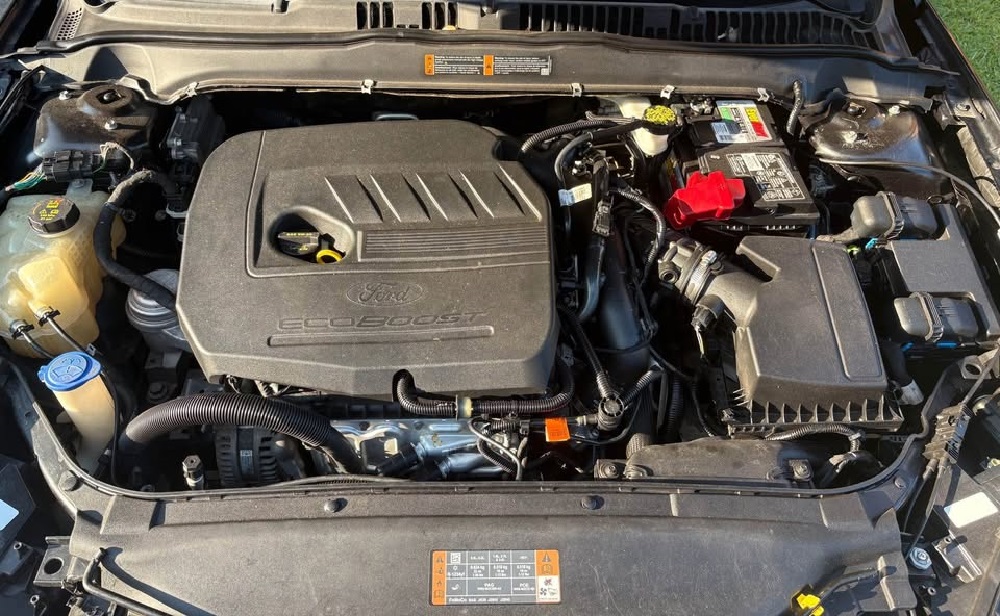
1. Why this engine runs hot, cracks under pressure, and doesn’t forgive
Aluminum block, thin bridges, and a cooling design that bites back
The 1.5 EcoBoost uses an open-deck aluminum block with cast-in liners. Between the cylinders, Ford machined narrow cooling slits into the bridges to pull heat from the thinnest, hottest sections.
On paper, that keeps wall temps in check. In practice, those slits weaken the only material holding the fire rings in place.
The head is dual-overhead cam with an integrated exhaust manifold baked right into the casting. That keeps turbo lag down but pushes serious heat into the head and block deck. The turbo bolts on just inches from the combustion chambers. Good for spool, rough on aluminum.
Those bridge zones, already thin, flex under boost and high cylinder pressure. Over time, that flex distorts the gasket seal. It doesn’t take a full overheat to start the damage. Enough heat cycling with marginal coolant is enough to start the breach.
Where the 1.5 I‑4 shows up and which models are built on the risk
This engine went global. In the U.S., it’s most common in the 2014–2020 Fusion and 2017–2019 Escape. Europe got it in the Mondeo, Kuga, Focus, and C-Max. All use the same core design: I-4 EcoBoost with a slotted-deck block.
1.5L EcoBoost Inline-Four Applications
| Model | Years | Market | Notes on 1.5 I‑4 Use |
|---|---|---|---|
| Fusion | 2014–2020 | North America | High volume, main coolant-intrusion complaints |
| Escape | 2017–2019 | North America | Same block design, pump/head issues common |
| Kuga / Mondeo | ~2014–2022 | Europe/China | Same casting, different tunes |
| Focus / C-Max | Mid-2010s | Europe/APAC | Smaller platforms, same engine at heart |
This guide covers the inline-four 1.5, not the newer Dragon 3-cylinder that replaced it in North America after 2020.
Decent on paper, fragile in the real world
The turbo response is sharp. The 1.5 I‑4 delivers solid torque off the line and sheds weight from the nose compared to the old 2.5 NA. Fuel economy stays strong cruising at steady speeds. But none of that masks the structural limits.
Thin aluminum bridges, no port injection to clean the valves, hot spots under the integrated manifold, and a cooling system with no margin for error. This block doesn’t give second chances. One missed coolant check, one bad thermostat, one hard pull with dirty oil, and it’s already on the way down.
2. Coolant intrusion and the open‑deck bridge failure
How the bridge slits deform and open a path past the gasket
Ford cut cooling slits into the aluminum bridges between cylinders to pull heat from the tightest spots. Those slits also carve away the material that resists combustion pressure. Add boost, heat soak from the integrated manifold, and daily hot‑cold cycles, and the bridges start to move.
That movement doesn’t look dramatic at first. The deck goes slightly out of flat around the fire rings, most often between cylinders 2 and 3. The gasket loses clamp load in that zone. Coolant pressure wins the standoff, especially after shutdown when the system stays pressurized and the cylinders sit quiet.
How the failure shows up from mild seep to locked motor
The slide usually starts quietly. Coolant drops with no puddles. A cold start shakes for a few seconds. White vapor fades once warm. Keep driving and the seep becomes a stream, pooling overnight and fouling plugs on restart.
Coolant Intrusion Progression on the 1.5 I‑4
| Stage | What the driver notices | What’s happening inside |
|---|---|---|
| Early seep | Slow coolant loss, rough cold idle | Gasket losing seal at bridge area |
| Active leak | White exhaust, misfire codes on cold start | Coolant entering cylinders overnight |
| Advanced | Overheat, hard starts, pressurized hoses cold | Deck distortion, gasket collapse |
| Catastrophic | No crank or sudden stall | Hydrolock, bent rod or seized piston |
Once liquid coolant sits in a bore, the next crank bends hardware. At that point, compression checks and gasket swaps don’t save it.
Updated castings reduce odds, not consequences
Ford revised later short blocks with altered slit geometry and more support around the bridges. The change lowers the failure rate. It doesn’t add forgiveness. Any overheat, pump issue, or chronic low coolant can still distort aluminum enough to reopen the seal.
Used cars complicate this further. Many predate the change. Others received replacement engines without clear paperwork on which casting went in. Without documentation, the risk profile stays the same, and the block still depends on perfect cooling to survive.
3. Overheating, water pumps, and thermal runaway
How pump leaks and weak cooling parts start the spiral
The 1.5 EcoBoost uses a belt-driven water pump with a sealed bearing and weep port. Most failures start as small drips, pink crust at the housing, or slow-running warm-up. That leak drops system pressure. Lower pressure means a lower boiling point. Even if the gauge looks fine, the head’s already cooking.
The thermostat, hoses, and tank don’t get a pass either. Cheap clamps leak under load. Plastic tanks split at the seam. Thermostats stick just long enough to spike temps and warp the deck.
This system needs pressure and flow to keep the block alive. It doesn’t tolerate air pockets, low fill, or sticky parts.
What warps the head and ruins sealing for good
During an overheat, the head and block expand faster than the bolts and gasket can follow. That expansion shoves metal sideways near the integrated manifold, the hottest zone. Once the head loses flatness, the gasket never fully seals again. Even after machining, that zone remains a weak point.
Shutdown after a hard drive makes it worse. Coolant stops flowing. Oil stops moving. But the turbo and manifold keep radiating heat into the head. That post-run heat soak is where the real warping often starts.
Aluminum remembers heat. One bad overheat can shift the deck forever, even if it doesn’t crack.
Repair tiers and where the costs jump
Cooling faults don’t stay cheap for long. A basic pump service might stall the spiral early. But if the gasket fails or coolant hits the bores, the bill spikes fast.
Typical Repair Costs for 1.5 EcoBoost Cooling Failures
| Repair | Ballpark cost (USD) | When it applies |
|---|---|---|
| Water pump + hoses | $900–1,200 | Leaks present, no misfire or overheat yet |
| Head gasket job | $1,500–3,000 | Warpage caught early, no bore damage |
| Short block/engine | $7,000–10,000 | Hydrolock, bent rods, coolant-scored bores |
Dealers rarely risk gasket-only repairs. If it’s already misfiring or smoked a plug, they go straight to full replacement.
4. LSPI, piston damage, and why oil spec isn’t optional
When low-speed pre-ignition punches holes in the bottom end
LSPI hits when fuel and oil droplets ignite before the spark plug fires. It happens at low rpm under high load, heavy throttle in 3rd or 4th at 1,800 rpm, climbing a hill or merging without a downshift. The piston’s still rising when detonation kicks in.
That pressure spike cracks ring lands, bends rods, and smashes bearings. No knock sensor can stop it. This isn’t detonation the ECU can pull timing from; it’s a mechanical event the second it starts.
The 1.5 EcoBoost is one of the worst-hit GDI turbos for LSPI. Cases show up even in well-maintained engines with no signs of overheating or oil starvation.
Oil chemistry that fuels the fire, or calms it
Older oils with high calcium detergent loads make LSPI worse. That’s why Ford shifted specs as failures climbed. API SN was too volatile. SN Plus helped. API SP with the Ford WSS-M2C960-A1 spec cut the risk the most by rebalancing magnesium and zinc levels.
Oil Spec Comparison and LSPI Risk
| Oil spec | Detergent balance | LSPI risk on 1.5 EcoBoost |
|---|---|---|
| API SN | High calcium | High |
| API SN Plus | Lower calcium, some magnesium | Moderate |
| API SP (Ford spec) | Optimized magnesium and zinc | Low (when fresh) |
Buying “any full synthetic 5W-30” off the shelf doesn’t cut it. Unless the bottle meets Ford’s exact spec, LSPI protection isn’t guaranteed.
Driving habits that protect, or wreck, these engines
Rolling into the throttle in a high gear loads the engine right into the LSPI zone. Manual downshift or using “S” mode drops the load and saves the bottom end. Flooring it at 1,500 rpm in 5th sends a different message.
Premium fuel gives the ECU more room to pull timing and dodge knock, especially when ambient temps are high or altitude drops air density. It’s not required, but it helps.
And forget the 10,000-mile oil change idea. Run full synthetic with the right spec every 5,000. Skip it, and you’re risking a piston set against a $40 jug of oil.
5. Valve coking, cold misfires, and the limits of GDI
Why these valves gunk up and airflow drops
The 1.5 EcoBoost injects fuel straight into the chamber. That skips the intake valves entirely. So when oil vapor from the PCV system or mist from worn turbo seals flows past those hot valves, nothing washes it off. Instead, it bakes on.
Each shutdown cooks a bit more. Short trips where the engine never fully heats up make it worse. The carbon layers thicken until airflow drops and valves stop sealing cleanly.
This buildup doesn’t spread evenly. One valve may coke harder than the next, sending misfires across different cylinders over time.
How real-world symptoms show up, and why additives don’t touch it
Early signs are soft: stumble on cold start, hesitation just off idle, random misfires with no clear pattern. Once buildup worsens, the idle goes rough even hot. Compression can fall if the valves can’t fully seat.
Fuel system cleaners won’t fix it. They never reach the back of the valves. On a GDI-only engine, the fuel’s already downstream by the time it sprays.
Misfire codes like P0301–P0304 often lead to injector swaps or coil chases, but if it returns after a few hundred miles, check the valves.
What fixes it, and how later engines dodge the mess
Shops pull the intake, plug the ports, and walnut-blast the valves back to bare metal. That’s the only consistent fix once misfires start.
Catch cans help if emissions rules allow them. Otherwise, frequent oil changes with quality synthetic reduce the mist that feeds coking. Some owners do periodic pro-grade induction cleanings just to stay ahead.
Later EcoBoosts added dual injection, with port injectors upstream of the valves, to scrub them clean during light load. The 1.5 Dragon I‑3 uses that setup. This I‑4 doesn’t. If it cokes, cleaning is mechanical or nothing.
6. Turbo heat, oil breakdown, and why shutdown habits matter
How this turbo layout runs hotter than most
Ford bolted the turbo straight to the integrated exhaust manifold. That keeps spool time short and throttle response sharp. It also cooks everything around it. The manifold and turbine housing sit inches from the head, soaking it in exhaust heat after every hard pull or long highway run.
The center housing gets the worst of it. That’s where the oil and coolant meet to cool the shaft bearings. Once those fluids slow down, or stop entirely at shutdown, temperatures spike fast.
What happens when oil thins, cokes, or stops flowing
The signs start subtle: faint high-pitched whine, sluggish spool, and oily smoke under boost. Then power drops. Boost disappears. The turbine housing may crack. The center seal lets go. Blue smoke pours out and the oil level nosedives.
If the coolant intrusion has already started, the turbo’s feeding on the same bad oil. It won’t last long.
Ford’s after-run cooling doesn’t save sloppy shutdowns
Ford added a software routine to run the electric water pump after shutdown. That pulls some heat out of the head and turbo. It works, but only if the coolant and oil are clean and full.
That system doesn’t help if the engine’s shut off right after a hill climb or trailer pull with thinned oil and low pressure. That’s how oil bakes into carbon inside the turbo bearings and starts the failure chain.
Last mile should be easy driving. After hard use, let the engine idle 30 seconds before shutdown. That habit protects more than the turbo; it helps keep the head from warping under residual heat.
7. Ford’s TSBs, extended coverage, and why many still pay out of pocket
Dealer bulletins that point straight to a short block
Ford issued TSB 19-2139 and TSB 20-2100 to guide techs on coolant loss, misfires, and white smoke in the 1.5 EcoBoost I‑4. Both lay out the same path: verify the leak, check for signs of intrusion, then replace the short block, not just the gasket.
Build-date cutoffs matter. Fusions built before June 10, 2019, and Escapes before April 8, 2019, are the primary targets. Later engines got revised castings. On paper.
In practice, cars outside those dates still show the same failures. If you’re not in the covered VIN range, you’re fighting uphill, even with identical symptoms.
Software patches and limited repair coverage with strings attached
Customer Satisfaction Program (CSP) 19B37 rolled out first. It reflashes the PCM to run the electric water pump longer after shutdown, trying to reduce head temps and slow block warpage. No hardware, just software.
Then came CSP 21N12, a one-time short block replacement for affected Fusions and Escapes that pass Ford’s checklist and show verified coolant intrusion. Coverage runs 7 years or 84,000 miles, but only if 19B37 was installed beforehand.
Quick Reference: Ford’s Programs for 1.5 EcoBoost I‑4
| Program | Action | Helps most when… |
|---|---|---|
| 19B37 | PCM update for post-shutdown cooling | Engine hasn’t failed yet |
| 21N12 | One-time short block replacement | Engine already shows intrusion |
Plenty of owners missed the CSP window, bought used, or found out too late. If the car’s past the time or mileage cap, they’re on the hook.
Lawsuits, stopgap criticism, and wins in small claims court
Class actions like Miller v. Ford and Nelson v. Ford allege the block design itself was defective from launch. Plaintiffs argue Ford knew about the weak bridges and slotted decks, and the TSBs and software updates didn’t fix the underlying issue.
Many call 19B37 a Band-Aid. It cools the head slightly after shutdown but doesn’t change the slit geometry or add material to the bridges. The same conditions that caused failures before still exist after.
One Colorado owner won $7,000 in small claims by proving the engine failed within reasonable use and Ford didn’t fix it. The judge cited breach of implied warranty. It’s not a class payout, but it shows there’s legal ground, even if you’re outside Ford’s program limits.
8. How to keep a 1.5 EcoBoost I‑4 alive and when to walk
Factory intervals take these engines out
Ford’s book says 10,000 miles between oil changes. That number doesn’t belong anywhere near this engine. The block runs thin, the turbo runs hot, and the oil sees high load even in daily traffic. Stick to that interval and you’re asking for LSPI, coked bearings, or worse.
Change the oil every 5,000 miles, synthetic only, with the right WSS-M2C960-A1 spec. Don’t guess. The wrong detergent mix can trigger knock hard enough to shatter a piston.
Pop the coolant cap cold, once a week. If it’s dropped, don’t just top it off. Start digging. Most of these engines fail slow, not suddenly, so when the jug’s half-empty and there’s no puddle under the car, the leak’s already internal.
Cold misfires, rough startup, or a white haze in the mirror aren’t quirks. That’s the bridge starting to let go. Catch it early and maybe you get by with a gasket. Wait, and it’s a short block.
What matters when shopping used
Service history decides whether the engine’s got a shot. The only green lights are a full short block replacement or documented coverage under CSP 21N12. Look for records showing 19B37 was done; without it, Ford won’t cover anything later. A good seller will know those terms and have the receipts to back it up.
Skip anything with misfire codes in the ad or stories about coolant loss that “went away.” If it’s had a head gasket and nothing else, the block’s likely still warped. Cars that need regular top-offs or ran hot “just once” are already cooked, whether the CEL’s on or not.
Clean title doesn’t mean clean motor. Most of these for sale cheap are dodging something. If there’s no paperwork and too many answers start with “I think,” walk.
When this engine makes sense, and when to walk to something else
If the car’s been babied, mostly does highway miles, and the engine’s already been swapped with documentation, it can be a fine commuter. Light loads, no towing, and an owner who treats oil like a wear item, not a fluid, that’s the right match.
But if you’re climbing grades, hauling gear, or just want something you don’t have to babysit, skip it. A naturally aspirated four, larger EcoBoost with dual injection, or even the later Dragon 3-cylinder with valve cleaning and tighter thermal control handles abuse better.
This engine drives well. It just dies fast when cooling or oil fall out of spec. And the warning signs don’t give you much time.
Sources & References
- Ford EcoBoost engine – Wikipedia
- Every Ford Model Built With The 1.5L EcoBoost I-4 Engine – SlashGear
- Faulty EcoBoost Engines Bring Ford To Court – Autoblog
- TECHNICAL SERVICE BULLETIN 1.5L EcoBoost – Low Coolant, White Exhaust Smoke And/Or Illuminated MIL – Built On Or Before 06-Apr-2019 19-2139 – NHTSA
- Ford 1.5L EcoBoost Dragon Engine: Specs, Reliability, and Performance Review
- Ford Eco Boost Motor Failure… Some questions on next steps… – Reddit
- Real talk people, tell me about the 1.5L EcoBoost problems : r/fordfusion – Reddit
- Design flaw in the 2017–2020 Ford EcoBoost engine – FAQ | CarsGuide
- Ford Sued Over ‘Band-Aid’ Fix For Alleged Defective Engines – Carscoops
- Ford Eco Boost Engine Defects – California Lemon Law
- Ford Coolant Engine Defective Class Action Lawsuit | Sacramento Attorney
- Common Problems With The Ford EcoBoost engine – ClickMechanic Blog
- Ford EcoBoost Engine Problems: Issues & Solutions – CarBrain
- Ford – Expert Carbon Cleaning
- Ford EcoBoost Engine Problems | John’s Auto Care Center
- Controlling Low-Speed Pre-Ignition in Modern Automotive Equipment – ResearchGate
- PSA: 1.5T / 2.0T Octane Ratings & Why You Probably Don’t Want 87oct : r/Honda – Reddit
- How prevalent is the “ecoboom” head gasket issue? : r/ecoboostmustang – Reddit
- Motor Oil – 2018 Ford Escape – 75K miles : r/fordescape – Reddit
- Capacities and Specifications – 1.5L EcoBoost
- Ford Escape Oil and Lubricants | Advance Auto Parts
- Engine oil requirements vs. recommended : r/fordescape – Reddit
- The 3 Most Common Ecoboost Problems – GT Automotive Parts
- Has Ford resolved the carbon issues on the Ecoboost engines? If so when? – Reddit
- Dissecting Ford’s EcoBoost Engine – MOTOR Information Systems
- Ecoboost fuel system cleaner : r/fordescape – Reddit
- Ford EcoBoost Engines: The Power and Efficiency Advantage
- U.S. Ford and Lincoln Dealers SUBJECT: Customer Satisfaction Program 19B37 – NHTSA
- Customer Satisfaction Program 21N12 : r/fordescape – Reddit
- I’m a Ford Bronco Sport Owner, and I’m On My Way to My Fifth Water Pump – Torque News
- 21N12 : r/Ford – Reddit
- Customer Satisfaction Program 21N12 Certain 2017–2019 Model Year Fusion/Escape – NHTSA
- 1.5 ecoboost with a manufacturer defect causing coolant intrusion. : r/fordescape – Reddit
- 1.5L EcoBoost® Engine Overview – Dorian Ford
- Ford class action claims EcoBoost engines a fire risk
- I Successfully Sued Ford in Small Claims Court in Colorado over the Coolant Intrusion Issue : r/fordescape – Reddit
- Should I worry about carbon buildup on 2.3? – Bronco6G
Was This Article Helpful?