
Coolant drops. Oil turns milky. Wrench light flashes mid-merge. That’s how some Ford 3.7 V6 stories begin. Under the hood sits Ford’s 3.7L Cyclone, built to replace the old 4.0 Cologne and 3.8 Essex with more power and less weight.
Aluminum block, forged crank, 6-bolt mains, 10.5:1 compression. Ti-VCT swings intake cams up to 60 degrees and exhaust up to 50. Port injection keeps intake valves clean, no direct-injection carbon mess. In a Mustang or F-150, many of these engines clear 200,000 miles with basic care.
Flip the engine sideways in an Explorer, Edge, or Taurus, and the risk shifts. Internal, chain-driven water pump sits inside the timing cover. When its seal fails, coolant dumps into the oil instead of the driveway. Bearings wipe fast, and the long block can be done in minutes.
This guide breaks down what fails, which layouts are safer, and how to keep a 3.7 alive past 250,000.
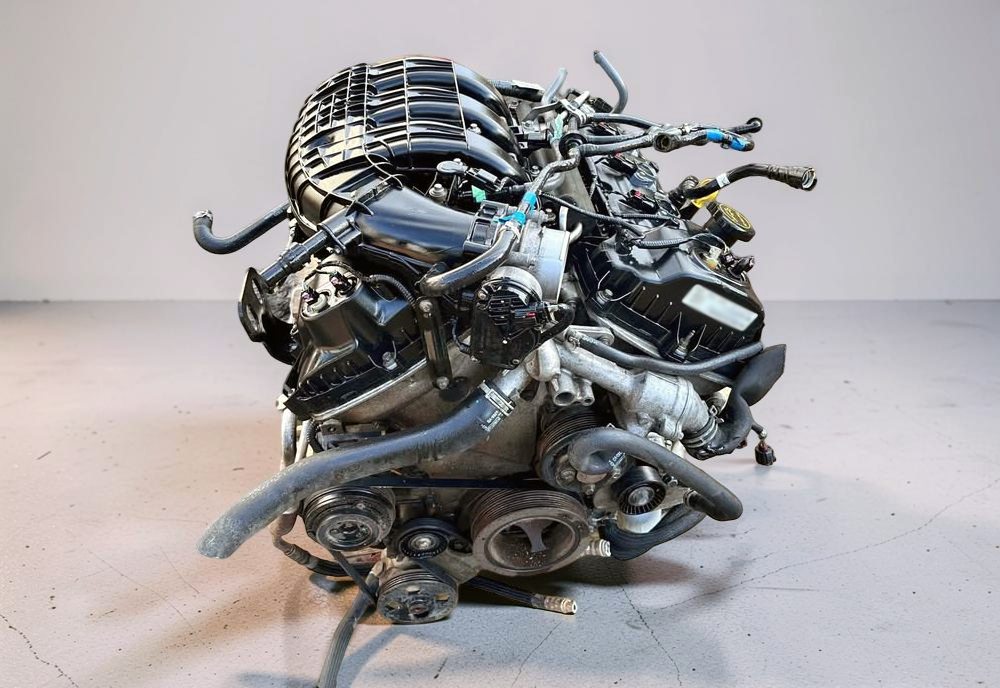
1. 3.7L Cyclone architecture and the layout decision that changes everything
Built strong on paper, stressed hard in service
Cast the block from 319 aluminum and drop in iron liners. Bore measures 95.5 mm. Stroke runs 86.7 mm. That oversquare layout lets the 3.7 spin to 7,000 rpm in a Mustang.
Bolt the forged steel crank down with six bolts per main cap. Four vertical. Two cross-bolts. Bottom-end rigidity isn’t the weak link here.
Hang dual overhead cams on each bank. Add Ti-VCT with up to 60 degrees intake swing and 50 degrees on exhaust. Hydraulic phasers move constantly, loading the primary chain every time throttle angle changes.
Drive everything off long chain runs and plastic guides. In transverse models, that same primary chain also spins the water pump. Extra load lives in the timing set from day one.
Transverse versus longitudinal splits the failure path
Mount the engine sideways in an Explorer, Edge, Flex, or Taurus. Package space gets tight. Ford tucks the water pump inside the V and drives it off the timing chain.
Mount the same 3.7 longitudinally in a Mustang, F-150, or Transit. Water pump moves outside. A serpentine belt handles it. A failed seal leaves coolant on the ground, not in the crankcase.
Internal pump failure dumps coolant straight into engine oil. Oil film collapses fast under load. Rod and main bearings can wipe in minutes at highway speed.
External pump failure leaves the truck unable to move. Internal pump failure can scrap the long block. Engine replacement after coolant contamination commonly runs $6,000 to $8,000 installed in SUVs.
Applications and baseline mechanical risk
| Platform / Model | Layout | Water Pump Type | Primary Mechanical Risk |
|---|---|---|---|
| Explorer / Edge / Flex / Taurus | Transverse | Internal, chain-driven | Coolant-in-oil, timing chain overload |
| Mustang V6 | Longitudinal | External, belt-driven | ETB limp mode, coils, normal timing wear |
| F-150 3.7 | Longitudinal | External, belt-driven | Chain wear if oil neglected, cooling plastics |
| Transit 3.7 | Longitudinal | External, belt-driven | High idle timing wear, cooling fatigue |
High idle hours in Transit vans accelerate chain and tensioner wear. Odometer may show 120,000 miles. Engine hours often equal 180,000-mile stress.
AWD crossovers add load and heat. Short trips keep oil diluted and tensioners soft on cold starts. Internal pump plus stretched intervals pushes many transverse engines into failure between 100,000 and 170,000 miles.
2. Internal water pump failures and the oil milkshake wipeout
Buried pump, chain drive, zero mercy
Hide the water pump behind the front cover inside the V. Spin it off the primary timing chain. Coolant seal and bearing live inches from engine oil.
Bearings wear first. Shaft starts to wobble. Seal face chews up and lets coolant pass into the timing cavity.
Coolant drains straight into the oil pan. Oil turns tan and foamy. Bearing clearance disappears fast once glycol hits the journals.
Run it hot and loaded, and rod bearings smear within minutes. Tear-downs show wiped mains and metal flakes in the pickup screen.
Warning signs most drivers miss
Watch the degas bottle drop with no puddle under the car. Smell sweet vapor at idle with no visible leak. Hear a low growl from the front cover on cold start.
Weep hole sits behind the alternator on many models. Leak often evaporates before it hits the ground. No drip doesn’t mean no failure.
Check the dipstick. Rising oil level with thin texture signals coolant dilution. Milky film under the oil cap means shutdown now.
Pressure test at 16 psi and monitor overnight. Oil analysis showing sodium and potassium flags early coolant entry before bearings wipe.
| Symptom | Mechanical Meaning | Urgency Level |
|---|---|---|
| Unexplained coolant loss | Seal breach beginning | Immediate inspection |
| Low-pitched front cover growl | Pump bearing wear | Immediate inspection |
| Milky oil cap residue | Coolant mixing with oil | Shut engine off |
| Rising oil level on dipstick | Active coolant contamination | Tow only |
Repair math and the preventive risk
Support the engine. Drop mounts. Remove the front cover. Chains, guides, and tensioners must come off to reach the pump.
Most shops quote 8 to 14 labor hours. Parts and labor in SUVs often land between $2,400 and $4,700 for pump plus timing set.
Ignore it and drive through contamination, and the long block usually dies. Engine replacement in a transverse Explorer commonly runs $6,000 to $8,000 installed.
Preventive pump and timing overhaul around 125,000 to 150,000 miles costs less than a replacement engine. Internal pump failure offers no safe limp mode once coolant hits the oil.
3. Timing chain stretch, guide wear, and jumped-time carnage
Long chains, plastic guides, constant phaser load
Run a primary chain from crank to both banks. Add secondary chains on some variants. Plastic guides and hydraulic tensioners keep slack in check.
Ti-VCT moves intake cams up to 60 degrees. Exhaust cams swing up to 50. Each adjustment loads the chain pins and rollers.
In transverse engines, the same primary chain drives the water pump. Extra drag lives in the system full time. Oil quality now decides how long those guides survive.
Stretch shows as wear at the pins, not elastic length. Effective chain length grows. Tensioners reach their limit and can’t hold preload.
Cold start rattle and correlation codes
Listen for a sharp rattle at cold start. Noise lasts 1 to 3 seconds until oil pressure builds. Worn guides let the chain slap the cover.
Scan for cam/crank correlation codes like P0016, P0017, or P0018. Data stream may show cam timing stuck retarded at idle. Fuel trims drift as valve events move out of spec.
Ignore the noise and drive hard. Chain can jump a tooth under load. The 3.7 is an interference engine.
Valves and pistons share space at different times. Jump timing and they collide. Bent valves and broken guides send debris through the oiling system.
When timing service becomes unavoidable
Pull the front cover to service chains. Replace primary and secondary chains, guides, and hydraulic tensioners as a set. Reuse of worn components invites repeat failure.
Longitudinal trucks and Mustangs often see 150,000 to 250,000 miles with clean oil. Stretch shows sooner in high-idle Transit vans and short-trip crossovers. Extended 10,000-mile oil intervals shorten guide life.
RepairPal estimates timing tensioner jobs in F-150 models around $1,200 to $1,600. Full timing set overhauls in transverse SUVs commonly land between $2,400 and $4,700. Jumped timing usually means head work or a full engine replacement.
4. Electronic throttle body failures and the 16B32 rapid decel scare
When the throttle plate quits listening
Bolt an electronic throttle body to the intake. Small DC motor moves the blade. Dual position sensors report angle back to the PCM.
Internal motor contacts wear and build resistance. Signal drops out under load. PCM sees mismatch between commanded and actual throttle.
System throws P2111 or P2112. Yellow wrench light pops on. Engine falls into Failure Mode Effects Management.
Throttle locks at a fixed angle. Power drops hard at highway speed. Drivers describe sudden decel from 70 mph with no warning.
Customer program 16B32 and what still slips through
Ford issued Customer Satisfaction Program 16B32 for ETB replacement on many 2011–2016 vehicles. Affected models included Mustang, F-150, Explorer, and Transit. Dealers replaced throttle bodies with updated units.
High-mile examples often sit outside program coverage now. Many used vehicles still run the original ETB. Replacement parts age the same way.
A failing ETB doesn’t always set codes right away. Intermittent limp events can occur without a stored DTC. No recall coverage means out-of-pocket repair.
Cleaning buys time, replacement fixes it
Inspect live data for throttle angle mismatch. Look for lag between pedal input and blade response. Voltage spikes in sensor signals point to internal wear.
Carbon buildup at the blade can cause sticking. Cleaning may smooth idle for a while. Worn motor contacts won’t recover.
OEM replacement ETBs usually run $250 to $400 for the part. Installed cost often lands near $500 to $800. Limp mode at highway speed leaves no power reserve for passing or grade climbs.
5. Coolant chemistry mistakes that quietly end the pump
Orange coolant breakdown and seal erosion
Fill early 3.7 engines with Ford Specialty Orange coolant. Heat cycles and time break down its additive pack. Silicate dropout and sludge start forming in neglected systems.
Abrasive particles circulate through the pump seal. Shaft surface wears. Seal lip loses tension against the rotating hub.
Internal pumps in transverse engines sit in the timing cavity. Any seal wear now risks coolant entering the crankcase. External pumps leak outside and give warning.
Coolant left unchanged past 5 years or 100,000 miles accelerates seal wear. Internal pump seal failure becomes more likely past 120,000 miles on original Orange coolant.
Yellow P-OAT conversion and realistic service windows
Ford moved to Yellow P-OAT coolant in later service updates. Additive package resists silicate dropout. Seal and bearing life improve under high heat.
Full flush removes old Orange chemistry. System must be drained from block and radiator. Mixing Orange and Yellow reduces additive stability.
Technician practice favors 50,000-mile or 4-year coolant service. Shorter intervals help in hot climates and towing use. Factory “lifetime” language doesn’t protect internal pump seals.
Plastic cooling parts that crack and overheat engines
Thermostat housings use plastic bodies. Quick-connect fittings age and warp. Degas bottles crack at seams under repeated heat cycles.
Small leaks drop coolant level below pump inlet. Air pockets form near the cylinder heads. Overheat events spike head temps past 240°F.
Overheat combined with thin oil speeds timing chain wear. Repeated heat soak hardens front cover seals. Cooling system neglect feeds directly into pump and timing failure costs that can exceed $4,000 in transverse SUVs.
6. How application and duty cycle decide whether the 3.7 lives or ends
Crossovers and sedans carry the highest mechanical risk
Mount the 3.7 sideways in Explorer, Edge, Flex, and Taurus. Internal pump sits in the timing cavity. Chain load increases and failure risk follows.
Most catastrophic pump failures show between 100,000 and 170,000 miles. Neglected coolant shortens that window. AWD models add heat and load under towing and city use.
Short trips keep oil diluted. Tensioners lose pressure overnight. Cold start rattle becomes common past 120,000 miles.
Repair costs add up quickly in these platforms. Internal pump plus timing overhaul often lands between $2,400 and $4,700 before any bearing damage.
Mustang and F-150 run the safer configuration
Turn the engine longitudinally in Mustang and F-150. External belt-driven pump handles coolant flow. Seal failure leaves a visible leak.
Most common issues here center on ETB, coils, and normal chain wear. Spark plugs and coils usually need service near 100,000 miles. Cooling plastics crack with age but don’t contaminate oil.
Owners report 200,000 to 300,000 miles with steady 5,000 to 7,500-mile oil changes. Light-duty F-150 models towing under 6,000 pounds rarely stress the bottom end. Engine replacement remains uncommon in well-maintained longitudinal trucks.
Transit vans rack up hours faster than miles
Install the 3.7 in a Transit and let it idle all day. Engine hours climb faster than odometer miles. Oil degrades long before 10,000-mile intervals.
High idle increases chain and tensioner wear. Cooling systems collect debris from commercial duty. Fleet neglect shows up in stretched timing sets around 150,000 equivalent miles.
Many Transits still clear 200,000 miles with disciplined maintenance. Poorly maintained vans see timing service before 160,000 miles. Hour-based wear doesn’t show on the dash, but it shows in the chain slack and tensioner travel.
7. Maintenance strategy that actually keeps a 3.7 alive
Short oil intervals protect chains and phasers
Run 5W-20 full synthetic and change it every 5,000 to 7,500 miles. Ignore the 10,000-mile marketing interval. Ti-VCT phasers depend on clean, stable oil pressure.
Dirty oil shears down and loses film strength. Hydraulic tensioners lose pressure overnight. Cold start rattle grows louder as slack increases.
Cut open the filter at 100,000 miles. Metal glitter signals guide wear. Used oil analysis showing rising iron flags timing wear before correlation codes appear.
Chain and guide life improves sharply under shorter intervals. Stretch shows sooner in engines pushed past 8,000-mile oil cycles.
Coolant service decides pump survival in transverse engines
Flush Orange coolant out completely. Refill with Yellow P-OAT and bleed air carefully. Trapped air spikes head temps and warps plastic housings.
Service coolant every 50,000 miles or 4 years. Hot climates and towing demand closer to 40,000 miles. Internal pump seals fail more often in neglected systems past 120,000 miles.
Pressure test annually once past 100,000 miles. Any unexplained loss warrants inspection behind the alternator. Coolant contamination repair often exceeds $6,000 if ignored.
Small parts that prevent big bills
Replace spark plugs around 100,000 miles. Worn plugs stress coils and overheat catalytic converters. Misfires throw P0300-series codes and mask deeper issues.
Clean or replace the throttle body before limp events start. Voltage below 12.4 at rest causes erratic ETB behavior. Weak batteries trigger false throttle faults.
Inspect plastic thermostat housings and degas bottles at every service. A $60 cracked fitting can lead to a 240°F overheat event. One severe overheat can warp heads and push repair costs past $3,000.
8. How the 3.7 compares against 3.5 EcoBoost and 5.0 Coyote
3.7 versus 3.5 EcoBoost under real ownership
Bolt on twin turbos and direct injection in the 3.5 EcoBoost. Cylinder pressure and heat climb fast. Turbo bearings rely on clean oil at high temperature.
EcoBoost adds high-pressure fuel pumps and DI injectors. Intake valves collect carbon over time. Misfires and rough idle often originate from valve deposits.
The 3.7 sticks with port fuel injection. Fuel washes intake valves every cycle. No walnut blasting service at 80,000 miles.
Turbo replacement on a 3.5 can run $2,000 to $3,000 per side. The 3.7 avoids that bill but gives up towing torque over 9,000 pounds.
3.7 versus 5.0 Coyote in trucks and Mustangs
Run the 5.0 Coyote with 4 cams and VCT on each. Early versions saw water pump and VCT solenoid complaints. Tick noises and oil consumption debates follow some years.
Coyote delivers more torque and better tow ratings. Fuel economy drops 1 to 2 mpg compared to the 3.7 in similar F-150 trims. Insurance and purchase price often sit higher.
The 3.7 carries fewer moving parts than the EcoBoost. No turbo plumbing. No high-pressure DI system.
Well-maintained longitudinal 3.7 engines routinely cross 250,000 miles. Internal-pump transverse models remain the outlier, where one seal failure can total the engine in under 10 miles of driving.
Sources & References
- Ford 3.7-Liter Engine Teardown Reveals Its Questionable Design
- Ford Cyclone engine – Wikipedia
- Nautilus Performance Group (NPG) – Cyclone V6
- Ford Mustang V6 3.7L – KMS Racing Engines
- 2011 Ford F-150 XLT SuperCrew 4×2 3.7 V6 – Car and Driver
- Tips on preventing water pump failure on 3.7 and 3.5l Duratec Engines? : r/Ford – Reddit
- Warning if you have a Ford 3.5 Duratec engines. | Glamisdunes
- Why did Ford put the water pump here? : r/Justrolledintotheshop – Reddit
- 3.7 V6 internal water pump. Worth it to fix? : r/Ford – Reddit
- Ford Water Pump Replacement Prices & Cost Estimates | Kelley Blue Book
- FORD 3.5 AND 3.7 WATER PUMP REPLACEMENT DIY – NIGHTMARE JOB MADE SIMPLE EXPLORER TAURUS EDGE & OTHER
- 3.5 and 3.7 Duratec water pump weep hole location – YouTube
- Mustang 3.7 reliability : r/Ford – Reddit
- Purchasing a 3.7l 2012 : r/Mustang – Reddit
- Understanding the Issues with Ford Timing Chains: A Look at Affected Years and Problems
- Signs That a Timing Chain Needs Replacement – eBay
- Ford F-150 Timing Chain Tensioner Replacement Cost Estimate – RepairPal
- FORD 3.5 3.7 JUMPED TIMING CHAIN. FORD EDGE, FLEX, EXPLORER, FUSION, F150, TAURUS – YouTube
- Quoted over $3k for water pump replacement – seems way overpriced? Vehicle is a 2013 ford Taurus : r/AskMechanics – Reddit
- WHICH FORD ENGINES HAVE INTERNAL WATER PUMP – Durango Ford
- Estimator Ford Explorer Water Pump Replacement Cost – RepairPal
- Ford F-150 Water Pump Replacement Cost Estimate – RepairPal
- 2020 Ford F-150 Water Pump Replacement Cost Estimate – RepairPal
- Ford Mustang Timing Chain Tensioner Replacement Cost Estimate – RepairPal
- All U.S. Ford and Lincoln Dealers SUBJECT: NEW VEHICLE DEMONSTRATION / DELIVERY HOLD – OEMDTC
- Rapid Unintended Deceleration – Ford, Lincoln, Mercury – Kehoe Law Firm
- Diagnosing Throttle Body Issues: Signs & Repairs – SIMON’S AUTOMOTIVE SERVICE CENTER
- 4 Alarming Throttle Body Symptoms You Shouldn’t Ignore | Fix Now or Pay Later – YouTube
- Recall Information – Ford Recalls | Ford Owner Support
- Ford Electronic Throttle Body Failure EBT Fault (2011-2017) – YouTube
- The Difference Between GDI and PFI Engines – Flash Lube Oil
- Understanding the difference between GDi and PFI engines. – Innospec
- Ford: How to Stop Carbon Buildup in Direct Injection Engines
- Lets have a little talk about GDI engines and carbon buildup so 2013 Fusions and newer look here : r/fordfusion – Reddit
- GDi Servicing: Don’t let carbon build-up become a big issue – Delphi
- Ford Transit Reliability: Long-Term Vanlife Pros & Cons – The …
- Do people really hate the 3.7 V6 in the F150 – Reddit
- 3.7 V6 Mustang Ownership Review 60,000 miles later |4K| – YouTube
- Cooling Sist – Ford Mustang | PDF | Rotating Machines | Electromechanical Engineering – Scribd
- CAN You MIX Ford Engine COOLANTS? Here’s Your Answer! – YouTube
- Typical water pump replacement interval on 3.7? : r/FordEdge – Reddit
- Which engines have an external water pump? : r/FordExplorer – Reddit
- SYMPTOMS OF A BAD IGNITION COIL – YouTube
- What is the Best Ford Truck Engine?
- 3.7L vs 5.0L vs Ecoboost : r/f150 – Reddit
- 3.5L Ecoboost vs 5.0L V8 : r/f150 – Reddit
- Ford 3.5 or 5.0? V6 EcoBoost Vs V8 Coyote #ford #f150 #shorts – YouTube
- 12 Common Problems With The Ford Transit Van Engine – Volksmaster
- Ford Transit Reliability: Problems, Recalls & Complaints | autopom!
Was This Article Helpful?