Smell coolant. Hear a tick. Watch the temp climb past normal. That’s how many Ford Explorer engine problems begin.
Since 2011, this SUV has cycled through the 3.5L V6, 2.3L EcoBoost, 3.0L twin-turbo, and 3.3L hybrid. One hides a water pump inside the engine. Another fights coolant intrusion and exhaust heat. A newer one runs an oil pump off a belt soaked in oil.
Some years cruise past 150,000 miles with routine care. Others turn one failed seal into a full engine job. Let’s sort the safe bets from the mechanical traps.
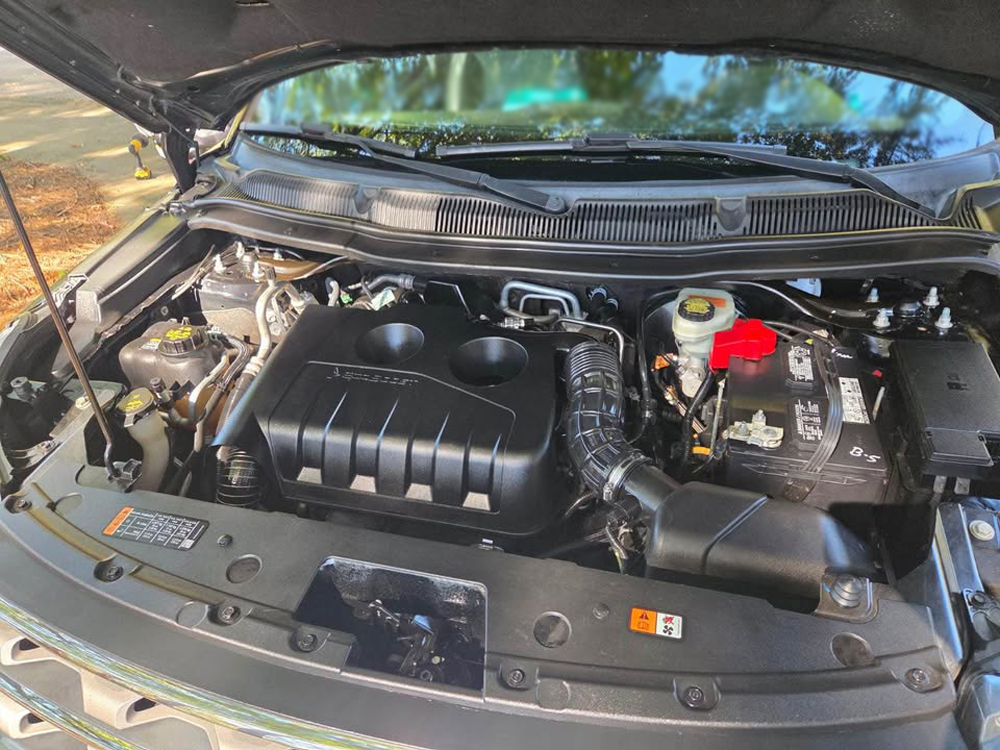
1. The engine lineup changed, and each era left a different weak point
2011–2019 3.5L V6 packed sideways and hiding its biggest liability
Launch the fifth-generation Explorer and you’ll find the 3.5L Cyclone V6 mounted transverse. Both the naturally aspirated Ti-VCT and the twin-turbo GTDI share the same basic block. The architecture is strong. The packaging is the problem.
Ford buried the water pump behind the timing cover and drove it off the primary chain. That choice shortened the engine for a front-wheel-drive layout. It also turned a routine pump into a 10 to 15 hour front-cover job. Labor alone often crosses $1,500 before parts.
Heat piles up on the timing side. Chain guides, tensioners, and cam phasers age in the same oil that cools the pump bearings. By 100,000 to 130,000 miles, many engines need more than a pump. They need a timing stack overhaul that can exceed $3,000.
2020–2026 smaller turbos, higher pressure, tighter thermal margins
Shift to 2020 and the Explorer moves to the CD6 rear-drive platform. The base engine becomes the 2.3L EcoBoost rated at 300 hp and 310 lb-ft. Upper trims carry the 3.0L twin-turbo pushing up to 400 hp and 415 lb-ft in ST form.
Cylinder pressure climbs. Boost rises fast under load. Towing ratings reach 5,000 lbs when equipped, which means sustained heat in summer traffic. Turbo bearings and exhaust hardware live in 1,500°F gas streams.
The 10R60 and 10R80 transmissions chase fuel economy with early upshifts. Lugging under 1,500 rpm at moderate throttle raises the risk of low-speed pre-ignition. LSPI events can crack ring lands or bend rods in boosted engines.
Packaging, heat, and oil control decide who survives
Each generation fails where space and heat collide. The 3.5L drowns its own bearings when coolant breaches the timing cavity. The 2.3L can push coolant past the head gasket under high load and thermal cycling. The 3.0L runs an oil pump off a belt that depends on clean oil chemistry.
Direct injection coats intake valves with carbon by 60,000 to 80,000 miles in many city-driven trucks. Hybrid models add electric pumps, valves, and extra cooling loops that multiply failure points. Complexity rises. Service access shrinks.
Severe repair probability sits near 14 percent, slightly above segment average, while annual visit frequency stays lower at about 0.24 per year. When these engines fail, they often require timing cover removal, turbo replacement, or full long-block swaps costing $5,000 to $10,000.
| Model Years | Engine | Output | Main Mechanical Risk |
|---|---|---|---|
| 2011–2019 | 3.5L Cyclone V6 | 290–365 hp | Internal water pump coolant contamination |
| 2020–2026 | 2.3L EcoBoost I4 | ~300 hp | Coolant intrusion, exhaust manifold warping |
| 2020–2026 | 3.0L EcoBoost V6 | 400 hp | Wet oil-pump belt degradation |
| 2020–2026 | 3.3L Hybrid V6 | 318 hp combined | cooling complexity, rod-bearing recall |
2. The 3.5L water pump trap that turns coolant into bearing poison
Internal pump, chain-driven, buried behind the timing cover
Crack the front cover on a 2011–2019 Explorer and the problem becomes obvious. The 3.5L water pump sits inside the engine. The primary timing chain drives it. When the seal fails, coolant has a direct path into the crankcase.
A small weep hole is supposed to warn you. Many times it clogs or can’t keep up with leak volume. Coolant slips past the secondary seal and mixes with oil. Once that happens, hydrodynamic film strength drops fast and bearings wipe in minutes.
Milky oil on the dipstick means the damage already started. Low oil pressure warnings often follow. At highway speed, rod bearings can seize before the temp gauge ever pegs.
Failure pattern, coolant loss first, then chain noise and low pressure
Most cases start with unexplained coolant loss. No puddle on the ground. No obvious hose leak. The reservoir drops a few ounces each week.
Next comes a faint chain rattle on cold start. Coolant thins the oil and tensioners lose control. DTCs like P0016 or P0017 may set as cam timing drifts. Oil pressure can fall below 10 psi at hot idle.
Ignore it and the crank journals score. Spun bearings send metal through the oiling system. At that point, the engine needs a full teardown or replacement.
Why the repair bill climbs fast once the cover comes off
Access drives the cost. The front timing cover must come off. In many shops, the engine cradle drops for clearance.
Labor runs 10 to 15 hours. Smart techs replace the pump, primary and secondary chains, guides, tensioners, and cam phasers together. Parts and labor often land between $2,500 and $4,000, and that’s before any bottom-end damage.
| Symptom | Likely Engine | Common Cause | Typical Repair |
|---|---|---|---|
| Coolant loss with no leak | 3.5L V6 | internal water pump seal failure | timing cover teardown, $2k–$3.5k |
| Cold start misfire, white smoke | 2.3L EcoBoost | coolant intrusion into cylinder | long-block replacement |
| Ticking noise cold start | 2.3L EcoBoost | warped exhaust manifold or broken studs | manifold repair $600–$1.2k |
| Sudden oil pressure loss | 3.0L EcoBoost | wet oil-pump belt failure | engine rebuild |
3. The 2.3L EcoBoost, high boost, thin margins, and a history of coolant intrusion
Coolant in the cylinders and cold-start misfire codes
Fire up a 2.3L after it sat overnight and feel the stumble. That rough idle often points to coolant seeping into a cylinder. Early open-deck block designs left narrow sealing bridges between bores. Under high boost and heat, the head gasket can lose clamp load.
Coolant pools in the combustion chamber during cool-down. On restart, the engine burns it off. White smoke trails from the tailpipe and DTCs like P0300, P0301, or P0302 log in the PCM.
Ignore it and the cylinder walls score. In severe cases, hydro-lock bends a rod. Long-block replacement can run $6,000 to $9,000 installed.
Exhaust manifold warping and broken studs on the turbo side
Listen for a sharp tick on cold start that fades warm. The 2.3L mounts the turbo to the exhaust manifold. Exhaust temps can exceed 1,500°F under load.
Heat cycles warp the manifold flange. Rear studs snap first. An exhaust leak slows spool and melts nearby wiring or plastic.
Backpressure drops and boost control skews. Left alone, warped hardware and broken studs push repair costs into the $800 to $1,500 range once drilling and extraction enter the job.
Later block revisions and what changed after 2022
Ford revised the cooling passages in later production blocks. The inter-cylinder slit design gave way to stronger support around the head gasket surface. Complaint rates dropped in 2022 and newer builds.
The 2.3L still runs 20 psi or more under load. Oil quality and cooling system health remain critical. Extended 10,000-mile oil intervals in turbo service invite fuel dilution and turbo bearing wear before 100,000 miles.
4. The 3.0L EcoBoost V6, big torque, stout block, and a belt buried in oil
Twin turbos, CGI block, and real performance load
Step into an Explorer ST and the 3.0L answers hard. Output hits 400 hp and 415 lb-ft. The block uses Compacted Graphite Iron, not aluminum. CGI resists bore distortion under high boost.
Cylinder pressure stays high under wide-open throttle. Twin turbos pack heat into tight engine bays. Oil temps can exceed 230°F during sustained pulls. That load demands clean oil and tight cooling control.
The oil-pump wet belt and why techs don’t trust it long term
Drop the oil pan and you’ll find the oil pump driven by a belt soaked in engine oil. Ford rates service near 150,000 miles. Field experience tells a different story.
Fuel dilution from direct injection thins oil. Gasoline attacks belt material over time. Swelling or tooth shear can strip drive to the pump in seconds.
Even partial belt degradation sheds debris. Rubber fragments clog the pickup screen. Oil pressure can fall below 5 psi at idle once the screen loads up, and a seized bottom end follows fast.
Replacement requires front cover and pan removal. Labor runs 12 to 16 hours. A proactive belt service often lands between $2,000 and $3,000.
Oil control, PCV faults, and blue smoke on newer builds
Ford issued TSB 25-2361 for 2024–2025 Explorers with 3.3L and hybrid variants. The bulletin cites oil consumption and blue smoke from PCV baffle sealing defects. The valve cover assembly requires replacement to correct crankcase flow.
Oil pulled through the intake leaves residue in the charge air path. Excess consumption can trigger low-oil warnings before 5,000 miles on some units. Left unchecked, low oil level in a boosted V6 accelerates turbo bearing wear and rod journal scoring under 20 psi of boost.
5. The 3.3L hybrid, extra cooling loops and a recall that targets the rotating assembly
Three cooling circuits and more parts that can leak or fail
Open the hood on a 3.3L hybrid and the plumbing multiplies fast. One loop cools the engine. Another cools the high-voltage battery. A third often handles power electronics and the electric motor.
Each loop uses electric pumps and control valves. Fail one pump and the system can overheat without a traditional belt-driven backup. Fleet units that idle for hours stress these pumps hard.
Coolant leaks at radiators and hose junctions show up in service data for 2020–2022 builds. Hybrid battery cooling faults can log wrench lights and power-reduction messages before 100,000 miles.
PCV and oil consumption faults in recent production
Ford’s TSB 25-2361 lists 2024–2025 Explorers with 3.3L and 3.3L hybrid engines. Blue smoke from the tailpipe ties back to PCV baffle sealing defects in the valve cover. Oil gets pulled into the intake tract under vacuum.
Owners report low oil levels between services. Some units burn a quart in under 3,000 miles. Replace the valve cover assembly to correct the baffle design.
Run low on oil in a hybrid that cycles the engine on and off, and rod journals lose protection during restart events. Bearing damage follows once oil film strength drops below spec.
Campaign 25V344 and the rod-bearing defect
NHTSA campaign 25V344 covers certain 2025 Explorers. Manufacturing defects in connecting rods and rod bearings can lead to sudden failure. A spun bearing can throw a rod through the block.
Symptoms include knocking under load and sudden stall. Oil pressure may drop to zero without warning. In worst cases, oil sprays onto hot exhaust parts and creates a fire risk.
The fix involves inspection and engine replacement where required. A thrown rod leaves no partial repair path and no safe restart.
6. Carbon buildup, turbo heat, and oil choice that slowly shape every EcoBoost
Direct injection coats the intake valves in carbon
Pull the intake manifold at 70,000 miles and the valves tell the story. EcoBoost engines through 2024 rely on direct injection only. Fuel sprays into the chamber, not over the valves.
Oil vapor from the PCV system bakes onto hot valve stems. Deposits thicken and disrupt airflow. Cold starts trigger stumble and misfire codes like P0300 or P0316.
Power drops and throttle response dulls. Heavy buildup can cost 10 to 20 horsepower and require manual cleaning once deposits harden past 1/8 inch.
Walnut blasting fixes what chemicals can’t
Intake cleaner sprays won’t touch heavy crust. Shops remove the manifold and blast crushed walnut shells at each valve. The shells remove carbon without scoring metal.
Labor runs 3 to 5 hours. Cost typically falls between $400 and $800. Skip it long enough and misfires return within 10,000 miles once deposits bridge across valve faces.
Engines used for short city trips build carbon fastest. Long highway runs slow the rate but don’t stop it.
2025 dual injection cuts the carbon cycle
Ford added port injectors to 2025 and newer Explorers. Dual injection sprays fuel over the intake valves under certain loads. That wash reduces oil film buildup.
The change addresses a decade of GDI complaints. Earlier engines have no retrofit path. Without port injection, carbon service remains part of long-term ownership beyond 60,000 to 80,000 miles.
7. Recalls that can destroy an engine fast
Loose cylinder-head ball plug and rapid oil loss on 2026 models
Ford issued campaign 25SD3 for certain 2026 Explorers. A cylinder-head ball plug may not seat correctly during manufacturing. If the plug loosens, engine oil can dump out fast.
Oil can spray onto hot exhaust components. Drivers may see a sudden low-oil warning or smoke from the hood. Oil pressure can fall to zero in seconds at highway speed.
Run even one minute without oil pressure at 2,500 rpm and rod bearings wipe. A seized bottom end follows once journals overheat past safe clearance.
Fuel injector support-disc defect and under-hood fire risk
Campaign 24S54 / 24V634 covers some 2025 Explorers. Certain fuel injectors left the plant missing an O-ring support disc. Without that disc, the injector seal can distort.
Fuel may leak at the rail under pressure. Symptoms include fuel odor, hard starts, or visible vapor under the hood. Leaked fuel near a hot turbo or manifold can ignite.
Repair involves injector inspection and replacement where required. A pressurized fuel leak near 2,000 psi rail pressure leaves no margin for error.
8. Which Explorer engines age well and which ones drain wallets
Safest used bet, later 2.3L with proof of cooling health
Scan the service history before scanning the paint. A 2022 or newer 2.3L benefits from revised block machining and cooling passage updates. Complaint rates for coolant intrusion drop after those changes.
Check for clean oil reports and steady coolant level. Look for no history of P0300 cold-start misfires or white smoke complaints. Confirm oil changes around 5,000 miles in turbo use.
Expect turbo service or carbon cleaning past 80,000 miles. Budget $500 to $800 for walnut blasting once deposits build.
Highest financial risk, 2011–2019 3.5L without timing-side work
Open the hood on a fifth-generation 3.5L and the water pump question looms. No record of pump or timing chain replacement means risk stays high past 100,000 miles. Coolant loss with no external leak is the red flag.
A full timing-side job can hit $3,000 to $4,000. Catch it late and a seized engine pushes replacement past $6,000. Market value of many early Explorers sits near that same number.
Performance pick with a maintenance tax, the 3.0L twin turbo
Choose the 3.0L and accept higher service cost. Oil changes need to stay tight at 5,000 miles or less. Wet-belt oil pump service may come well before 150,000 miles in real use.
Twin turbos add heat and parts count. Turbo replacement can run $1,500 to $2,500 per side once out of warranty. A neglected wet belt that sheds debris can take out the entire bottom end in seconds.
Sources & References
- 2026 Ford Explorer® Engine & Towing Options in Shorewood, IL
- 2025 Ford Explorer® Engine & Tow Specs | Near La Grange, IL – Westfield Ford
- Every Ford EcoBoost Engine Ranked Worst To Best – SlashGear
- 3.5 TT (13-19) vs 3.0 TT (2020+) Engine differences : r/FordExplorer – Reddit
- Ford Explorer Water Pump : r/FordExplorer – Reddit
- How common is the water pump issue in the 3.5? : r/FordExplorer – Reddit
- Why does the Ford Taurus, Explorer, Edge 3.5L water pump cost over $1400? – YouTube
- Anyone with experience dealing with the Water Pump Failure issue …
- Water Pump Replacement : r/FordExplorer – Reddit
- 2026 Ford Explorer® Engines & Towing | Bainbridge, GA
- Why Ford Ecoboost Engines Fail! 2 0L Turbo Teardown – YouTube
- 2018 Ford Mustang EcoBoost 2.3L Coolant leak caused by bad head gasket – Reddit
- Ford Ecoboost Head Gasket Replacement 2.0L – PART 1 of 2: Removal – YouTube
- What’s the consensus on the Ford Explorer? : r/whatcarshouldIbuy – Reddit
- Screeching Noise From Broken Exhaust Stud, 2011-2016 F150 and 2015-2017 Expedition
- How long do Ford EcoBoost engines last? – Quora
- Can you drive with an Exhaust Manifold Leak? – YouTube
- TECHNICAL SERVICE BULLETIN Oil Consumption And Blue Smoke From Tailpipe 25-2361 – nhtsa
- 2025 Platinum: 2.3L or 3L? : r/FordExplorer – Reddit
- “How much to replace my oil pump belt?!!?” – The customer probably : r/cars – Reddit
- Does anyone know of a conversion kit that converts a wet oil pump belt to a chain on the new 2.7 ecoboost : r/Ford – Reddit
- Who knew a rubber belt in oil was a bad idea? 90K on a 150K service interval, and the belt chunks blocked the pickup tube. : r/Justrolledintotheshop – Reddit
- Why So Many People Hate Wet Timing Belts – The Autopian
- 2025 Ford Explorer: 2.3L EcoBoost vs 3.0L EcoBoost Engine
- EcoBoost Challenges pt. 3: Navigating Internal Issues: Carbon …
- The ONLY Safe Way to Remove Carbon From Ford Engines (DON’T Try This WRONG!)
- Has Ford resolved the carbon issues on the Ecoboost engines? If so when? – Reddit
- 2020–2025 Ford Explorer Maintenance Schedule FCAC – Vehicle Service at Firestone Complete Auto Care
- 6 Ford 3.3 V6 Engine Problems & How to Fix Them – The Lemon Law Experts
- National Highway Traffic Safety Administration Makes/Models/Model Years: Mfr’s Report Date: May 23, 2025 NHTSA Campaign Number
- 2025 Ford Explorer Specs: Power, Precision, And Performance
- TECHNICAL SERVICE BULLETIN 3.3L FHEV – Illuminated MIL And/Or Powertrain Malfunction (Wrench) Indicator With P084B Stored In PCM – nhtsa
- Recall Information – Ford Recalls | Ford Owner Support
- Find Existing Ford Explorer Car Recalls – DealerRater
- Ford Explorer Engine Recall – Asbury Automotive
- 2016 Ford Explorer Engine Recall – Asbury Automotive Group
- Ford Explorer TSBs – N/A
- Ford Explorer Reliability – 2026 Ratings | RepairPal
- 2011 Ford Explorer Consumer Reviews & Ratings | Kelley Blue Book
- 2011 Ford Explorer Consumer Reviews | Cars.com
Was This Article Helpful?