
Coolant spikes. White smoke rolls out the tailpipe. The shop drops a $5,000 quote on the counter. Head gasket jobs aren’t light repairs. They mean full top-end teardown, precise timing resets, and often machine work. On late-model F-150s, that’s 20+ hours of labor before the parts even come out of the box.
This guide shows where the money actually goes; by engine, year, and job complexity. We’ll dig into labor splits, machine shop charges, reman vs repair math, and the cooling habits that keep you out of this hole in the first place.
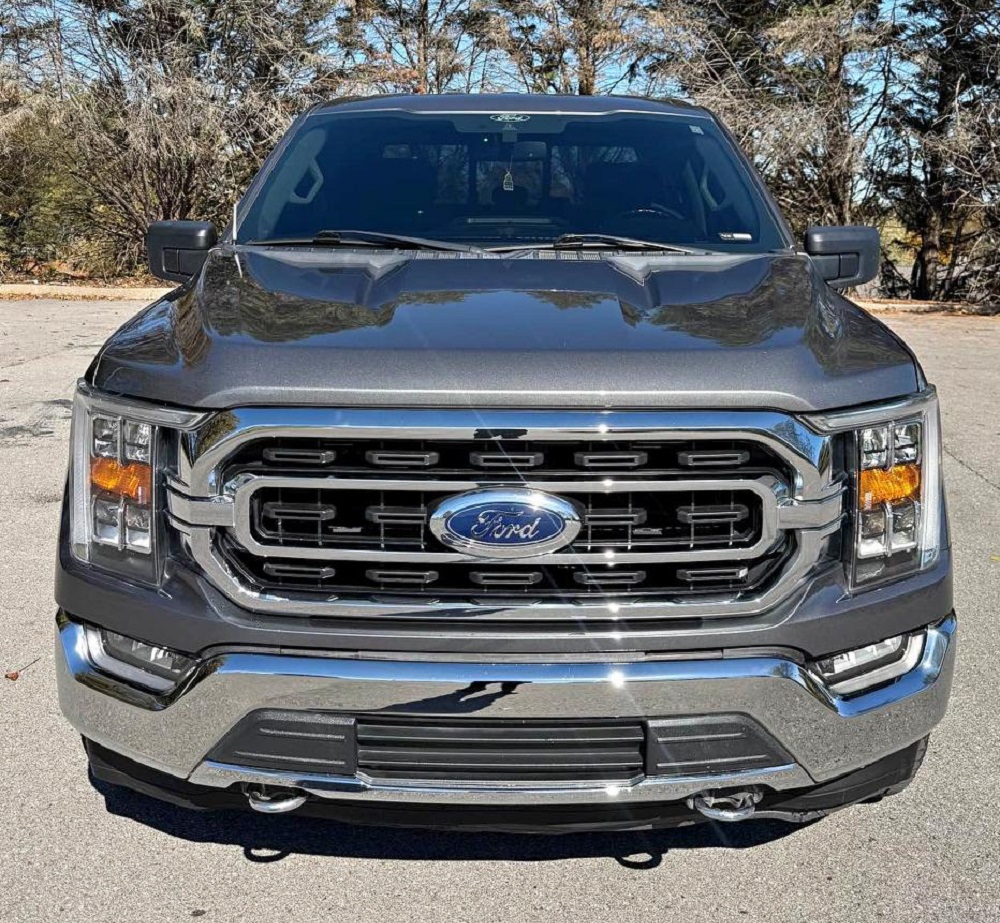
1. What a real F‑150 head gasket job costs
How prices climbed from 1990s to now
Labor used to be the cheap part. On early 4.9L and 5.0L trucks, a full head gasket job could run under $2,000. But every generation since has stacked more plumbing, sensors, and teardown hours on top. By the 2011–2015 models, average totals jumped past $5,000 in many markets.
RepairPal’s platform-wide averages show most head gasket jobs land between $3,195 and $4,183, depending on engine layout and regional labor rates. That number spikes fast on turbocharged models or engines needing timing service at the same time.
Cost by Model Year
| Model year | Cost range |
|---|---|
| 1990–1995 | $1,590 – $2,080 |
| 1996–2000 | $1,665 – $3,177 |
| 2001–2005 | $2,664 – $4,284 |
| 2006–2010 | $2,757 – $4,618 |
| 2011–2015 | $2,605 – $5,367 |
| 2016–2020 | $3,952 – $5,419 |
| 2021–2023 | $2,734 – $5,031 |
Where the bill actually goes
Labor swallows most of it, usually 65–75% of the total. Parts make up another 15–20%, with 5–10% left for machining. The rest is coolant, oil, sealant, and shop supplies.
The gasket “kit” sounds cheap at $100–$500, but it’s not just the gasket. That number doesn’t include head bolts, fluid, machining, or intake/exhaust gaskets. The real cost is tearing the engine down far enough to reach the mating surface and putting it back together without a single misstep.
Flat-rate time drives the invoice. On many F-150 engines, that’s 15–25 hours. At $150/hour, labor alone clears $3,000 before parts show up.
Real examples from different engine eras
On a 1998 5.4L Triton, parts might run $400, machine shop another $250, and labor clock in at 15 hours. Total: around $3,000, assuming no broken studs or rusty surprises.
Take a 2016 3.5L EcoBoost instead. Add turbo plumbing, high-pressure fuel lines, and front cover removal. Now labor stretches past 25 hours, parts break $1,100, and shop time for diagnosis and machining kicks in hard. That invoice climbs to $5,200–$6,000, even before adding optional timing parts.
Shops also tack on extras: intake manifold gaskets, fresh coolant and oil, shop rags, test time. Those nickel-and-dime lines still add up, especially when the whole top end’s apart.
2. Why your engine layout decides the price
EcoBoost jobs cost the most, here’s why
Start with twin turbos, a high-pressure fuel system, and a timing setup buried behind the front cover. The 3.5L and 2.7L EcoBoost engines demand full front-end teardown just to reach the heads.
Shops have to remove the intake, cooling system, fuel rails, turbos, and front timing assembly before the real work even begins.
Labor guides peg the job between 20 and 26 flat-rate hours. At $150/hour, that’s $3,000 to $3,900 in labor alone. And that’s before diagnostics, machining, or parts.
Labor Hours and Cost by Engine Family
| Engine family | Flat-rate hours | Labor at $150/hr | Notes |
|---|---|---|---|
| 4.6L / 5.4L Triton | 13–15 | $1,950–$2,250 | Older layout, easier access |
| 5.0L Coyote | 13.5–16 | $2,025–$2,400 | Four cams, VCT, tight timing |
| 3.5L EcoBoost | 20–26 | $3,000–$3,900 | Turbos, HP fuel, front cover |
Coyote and Modular V8s aren’t simple either
The 5.0L Coyote and 4.6L/5.4L Modular engines use dual overhead cams with long chains and phasers. Timing these engines takes special tools and patient hands. A shop’s not just bolting on a gasket, they’re aligning four cams across two heads with phasers that must lock in phase.
Many techs recommend updating the timing set while it’s open. That adds $500–$1,500, depending on what’s swapped. But skipping it means you’ll pay again when the chain stretches or a tensioner lets go.
Pushrods and older OHCs are cheaper, but still bite
Older F-150 engines like the 4.9L inline-six or early 4.6L V8s offer faster access and fewer timing headaches. Book time might be under 14 hours.
But rusted exhaust studs, brittle hoses, or corroded fasteners turn “easy” jobs expensive fast. Even a seized manifold bolt can tack $200–$500 onto the job if a tech has to drill and extract it. Older trucks don’t always mean cheaper repairs, they just fail in different ways.
3. Diagnose before tearing down, or waste thousands
Symptoms that point to a blown gasket
White smoke out the tailpipe usually means coolant’s hitting the chamber. A bubbling reservoir or a dipstick full of milkshake backs that up. Hard starts after sitting overnight? That’s likely a cylinder filling with coolant.
But those same signs can come from other failures. A cracked head can mimic a blown gasket. So can an intake leak, a bad EGR cooler, or even a chain-driven water pump leaking into the crankcase. Trusting symptoms alone costs people engines.
The tests that catch it before the teardown
Shops start with a chemical block test. The tech draws air from the radiator into a blue fluid, yellow means combustion gases made it into the coolant. That flags a breach between cylinder and water jacket.
Next comes a leak-down test. Each cylinder gets pressurized at top-dead center. If air escapes into the radiator, that’s your breach. Borescope shots through the spark plug hole can confirm it, clean pistons mean they’re being steam-washed by coolant.
None of these tests alone seals the case. Together, they paint the failure clearly.
Guess wrong and you just lit $4,000 on fire
Skip proper diagnostics and a $200 coolant leak becomes a $5,000 mistake. Shops that go straight to tear-down without pressure testing or leak-down checks leave owners paying for parts that weren’t the issue.
Even if diagnostics cost $150–$300 up front, it’s the cheapest part of the process. The real waste starts when the head’s off and the failure’s still unproven.
4. Machine shop results can make or break the repair
Aluminum heads demand inspection, skip it and they’ll warp again
Every modern F‑150 engine runs aluminum heads. Once they overheat, the metal expands unevenly, lifting across bolt holes and scrubbing the gasket surface. Drop a fresh gasket on that without resurfacing, and the leak comes right back.
Shops send heads to a machine shop for cleaning, pressure testing, and milling. That confirms there are no cracks and brings the surface back into spec. It’s not optional on overheated engines, it’s mandatory.
Machine shop prices and when they spike
Expect to spend $40–$65 for hot tank cleaning, $75–$125 for pressure testing, and $75–$110 to resurface each head. Valve jobs run much higher, $225–$450 per head, but they’re often skipped unless compression was already low.
Machine Shop Service Costs
| Service | Purpose | Typical price (per head) |
|---|---|---|
| Hot tank cleaning | Carbon, sludge, and debris removal | $40–$65 |
| Pressure testing | Crack detection | $75–$125 |
| Resurfacing | Restore flat sealing surface | $75–$110 |
| Valve job | Seat and guide restoration | $225–$450 |
Cracks or deep warps blow the budget wide open. A new or reman head for modern F‑150s runs $2,300–$2,600 per side, before installation.
When the block’s damaged, the fix becomes a swap
Once coolant hits the oil and circulates long enough, bearings start to wipe out. Journals get scored, rings lose tension, and cylinder walls wear unevenly.
If the shop finds bearing glitter in the pan or deep cylinder wall scuffing, you’re not rebuilding the top, you’re rebuilding the whole motor. By the time you resurface heads, polish the crank, re-ring the pistons, and button it up, a reman long block starts to look like the smarter play.
5. Parts, hardware, and what really rides along
Head gaskets aren’t the only parts that matter
Modern F-150 engines use MLS (multi-layer steel) gaskets designed to hold serious pressure. But even the best gasket fails if the clamping force drops. That’s why every head job on a Ford needs new torque-to-yield (TTY) bolts, one-time-use hardware that stretches during install.
Skip the new bolts and you’re risking bolt stretch, uneven torque, and blow-by under boost. Boosted EcoBoost engines especially need high-quality gaskets and fresh hardware.
OEM Ford gaskets are solid, but premium aftermarket sets from Fel-Pro and others often include better sealing beads and extra coverage for older surfaces. Prices range from $100 to $500, depending on engine and quality.
The full list of gaskets and parts behind the quote
A proper head job replaces more than the head gaskets. Most shops also swap intake and exhaust manifold gaskets, valve cover gaskets, injector seals, fuel rail O-rings, timing cover and coolant crossover seals, plus front cover sealant. Fresh coolant and oil finish the list.
Individually, these are cheap. Together, they add up fast. On EcoBoost or Coyote engines, the full top-end reseal can run $400–$800, not counting the head set or bolts.
Overlap repairs that save money down the line
With the engine open, smart shops go after overlap work. That includes timing chains and tensioners on Coyote, Triton, and EcoBoost engines. They’ll also push for phaser replacement, especially on 3.5L and 5.0L trucks with high mileage.
Internal water pumps on chain-driven 3.5Ls are another weak link, and valve cover reseals or spark plug tube gaskets are often brittle by the time the heads come off.
These parts drive the bill up by $500 to $1,500, depending on what’s done. But ignoring them means you’ll be paying full labor again in 30,000 to 60,000 miles when the timing set starts ticking or the pump fails and fills the oil pan.
6. Labor rates, region, and warranty shift the whole quote
Zip code and shop type change the math
A head gasket job in Los Angeles doesn’t cost the same as one in Baltimore. Big metro areas carry higher overhead and tech demand, which pushes hourly rates past $180. In rural shops, that same job might cost 20–30% less.
Dealer service departments often charge more, $180–$220/hour in major cities, but they’ve got the tools, access to OE parts, and workflow to finish faster. Strong independent shops charge less, but they vary more in parts used and machine shop quality.
Estimated Range by Location (Late-Model EcoBoost)
| Location | Estimated range (late-model EcoBoost) |
|---|---|
| Los Angeles, CA | $4,759 – $6,458 |
| Houston, TX | $5,075 – $6,922 |
| Baltimore, MD | $4,443 – $5,994 |
What warranty coverage actually gets you
Repairs done at a Ford dealer come with a 2-year, unlimited mileage service parts warranty. That includes parts, labor, and even towing if the failure was covered. But it only applies if the shop uses OEM parts and does the work in-house.
Independents may offer 12-month/12,000-mile coverage, or up to 3-year/36,000-mile protection if they’re in a national network like NAPA AutoCare. The issue? If something fails on a road trip, your coverage depends on where you are and which parts were used.
Dealer parts installed at a dealer are the only ones that guarantee Ford will back the labor and hardware no matter where the truck ends up.
Quote comparisons that show what’s missing
Line-by-line quotes tell the truth. Two shops might quote $3,800, but one uses aftermarket gaskets, skips machining, and reuses TTY bolts. The other includes machine shop receipts, new timing chains, and premium hardware.
Always read past the total. Check how many labor hours are billed, whether a machine shop charge is listed, which gasket brand they’re using, and if timing chains or phasers are included. Look for hardware kits and whether the shop includes new TTY bolts. Most of all, pin down the warranty, both parts and labor.
Cheap quotes cut corners. That’s how trucks end up back on the hook.
7. When the numbers say stop and swap the engine
Repair total vs. reman engine, where the lines cross
Head gasket repairs don’t always stop at the gasket. Add in timing parts, water pump, machine shop work, and turbo plumbing, and the bill climbs toward full engine replacement money. On a 3.5L EcoBoost, that number can break $10,000 fast.
Reman long blocks come fully assembled and include bottom-end parts that a head job skips. Prices vary by engine, but the installed totals below show how close things can get.
Reman Engine Installed Ballpark by Engine Type
| Engine type | Reman long block | Installed ballpark |
|---|---|---|
| 4.6L V8 | ≈ $4,000 | $5,500 – $6,500 |
| 5.4L Triton V8 | ≈ $5,100 | $6,500 – $8,000 |
| 5.0L Coyote V8 | ≈ $6,300 | $8,500 – $10,000 |
| 3.5L EcoBoost V6 | ≈ $7,300 | $10,000 – $15,000 |
Once your quote creeps near those installed prices, a reman becomes the smarter move. You get new internals, fresh sensors, and usually a better warranty.
Age and mileage push the decision one way or the other
Trucks with high mileage, worn-out phasers, stretched chains, and boost history rarely benefit from top-end-only repairs. Fix the gasket and the bottom end still knocks? Now you’re out both the labor and the core.
A lower-mileage F‑150 that’s been well maintained, though? That’s the truck worth fixing. A clean head job, fresh timing parts, and a resealed front cover can buy you another 100,000 miles, if the rest of the engine’s solid.
Resale value and warranty strength favor reman routes
A documented reman engine with a solid 3‑year warranty shows up on the next buyer’s radar. Most reman units from top-tier suppliers include coverage that beats any repair warranty. For fleet trucks or daily workhorses, that peace of mind often justifies the higher upfront cost.
8. How to avoid the next head gasket bill
Overheating wrecks gaskets, fast
Most head gasket failures don’t start at the gasket. They start when coolant breaks down, fans stop pulling heat, or a weak pump can’t keep up under load. Cylinder heads run hotter than the block. Once temps spike, aluminum heads expand, bolts stretch, and the gasket scrubs itself to failure.
MLS gaskets can hold pressure, but they can’t fix warped metal. One overheat can be enough to ruin the seal, and set you up for a second teardown if the cause isn’t fixed.
Coolant, pump, and thermostat service that holds the line
Coolant breaks down with age. After 30,000 miles, check freeze point and pH. Don’t trust “lifetime” coolant claims, acidic coolant eats the same aluminum the gasket’s trying to seal.
Internal water pumps, like those on the 3.5L EcoBoost, are especially dangerous. They can leak into the oil pan with zero external signs. If your oil turns milky, the damage is already happening. Replacing the pump early, along with the thermostat, saves engines.
Drive habits that protect the gasket
Watch the temp gauge. Back off throttle under heavy load if the needle climbs. Use tow/haul mode when hauling, especially on grades. It keeps engine speed up and cooling flow high.
For tuned or worked trucks, upgrades matter. Radiator flushes, fan clutch replacements, and auxiliary coolers all help. Even a $200 electric fan setup can prevent the one heat cycle that blows the head gasket.
Was This Article Helpful?