
Bucks off the line, flares the revs, then dumps a “Transmission Overheating” message on the dash. That’s the PowerShift signature. Ford’s DPS6 dual-clutch gearbox wasn’t recalled in one clean stroke; it was dissected, patched, denied, and dragged through court.
This guide breaks down what most dealers still won’t: how Ford’s “transmission recall” splinters into safety campaigns, warranty extensions, legal settlements, and flat-out stalling failures.
You’ll see how 14M01, 14M02, 19N08, and the Vargas v. Ford lawsuit actually play out on real 2012–2018 Focuses, and how to check if your car still qualifies for a free repair or buyback today.
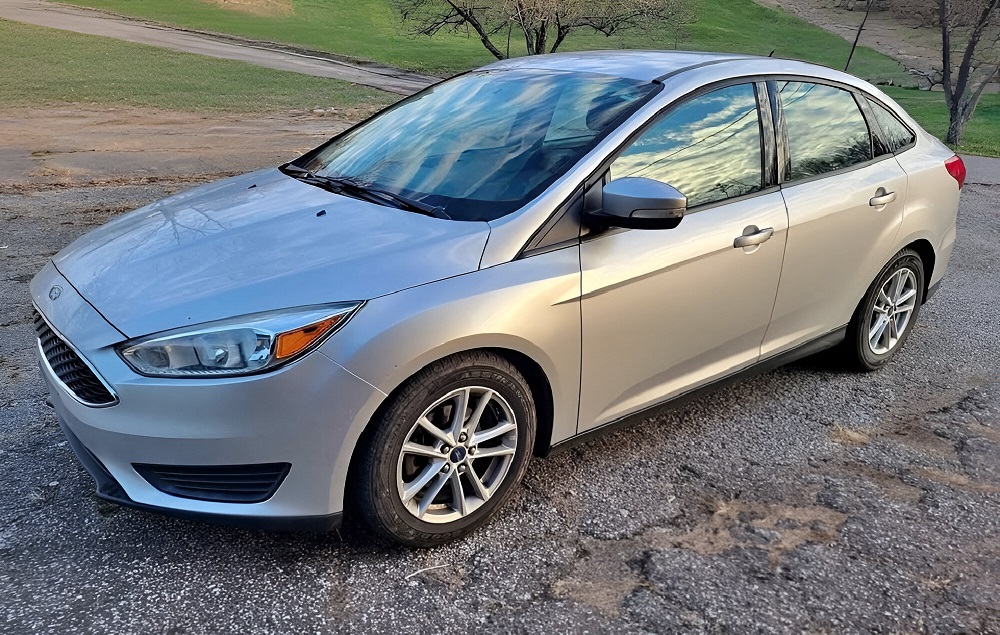
1. What “Ford Focus transmission recall” actually covers
Why most Focus owners never saw a real recall
The DPS6 crisis never got a single sweeping safety recall. Instead, Ford split it into warranty extensions (14M01, 14M02, 19N08), voluntary field actions, and civil settlements. Each one had strict cutoffs.
NHTSA only forced full recalls for rare cases, like fractured clutches on 1.0L manuals leaking fluid near the exhaust. Everything else came as a Customer Satisfaction Program (CSP) or a lawsuit response.
Ford logged millions of complaints but framed most issues as “quirks,” not safety faults. That legal distinction let them dodge mandatory repairs for years. If the transmission slipped, bucked, or stalled at a light but didn’t leave you stuck on the highway, Ford called it a characteristic.
Focus years and setups with the biggest targets on their backs
Most complaints center on the 2012–2016 Focus with the DPS6 dry dual-clutch automatic. Those are the cars folded into the Vargas class action. By 2017, Ford quietly swapped to revised clutch materials, new TCM calibrations, and hardened input seals, but didn’t escape the failures.
2017–2018 Focus models kept the DPS6 gearbox but were left out of Vargas. They now fall under separate Lemon Law cases or firm-led opt-out campaigns. Focus ST and base-model manuals use conventional clutch systems. Same with non-DPS6 automatics from the late run, those use a 6F35 or 8F35.
Symptoms that send owners hunting for “recall” help
The search usually starts with a jolt. Owners feel a violent shudder from 1st to 2nd, a slam into neutral, or a refusal to start after parking hot. Most complaints trace to three categories: worn clutch hardware, TCM failure, or actuator faults.
Other symptoms sneak in. A few 1.0L EcoBoost manuals dropped fluid on the cat. Some 1.6L engines stalled during coasting. From the driver’s seat, they all feel transmission-related.
That’s why engine, clutch, and controller issues often get lumped into one “Focus recall” in online forums, even when the fix lives in a different program, bulletin, or lawsuit file.
2. Inside the DPS6 PowerShift and why it keeps breaking
Dry dual‑clutch hardware built for lab conditions, not traffic
The DPS6 is an automated manual stuffed into commuter cars expected to crawl every morning. Two dry clutches handle odd and even gears, squeezed by electric actuators under computer command.
No fluid bath cushions engagement. No oil loop pulls heat away. In stop‑and‑go driving, the clutches slip constantly, building heat faster than the housing can shed it.
That heat cooks friction material, warps surfaces, and shortens service life. City use turns normal launches into controlled clutch burn. By 30,000 to 60,000 miles, many units show wear patterns normally seen much later in wet systems.
The failure trio that fueled complaints and lawsuits
Most breakdowns trace to three parts failing in sequence. Input‑shaft seals wear early and let gear oil creep into the dry clutch cavity. Oil on friction plates triggers shudder, chatter, and delayed takeoff. As heat climbs, the clutch material glazes and loses bite.
Then the electronics stumble. Actuators lose position accuracy. The TCM misjudges engagement timing and drops gears. Drivers feel a lurch, then neutral, sometimes in traffic. Hardware, heat, and software failures stack, not scatter.
TCM failures that crossed into safety territory
When the Transmission Control Module goes unstable, the car can refuse to start or abandon drive without warning.
Stalls hit at red lights, on-ramps, even while coasting. Some cars locked in gear. Failures showed up across years and mileages, no narrow pattern.
That pattern pushed 14M02, the long TCM warranty extension issued by Ford Motor Company. Coverage stretched to 10 years or 150,000 miles, later reopened with a one‑time replacement window.
Without that program, a failed TCM often meant a dead car with no recall backing and a repair bill owners couldn’t ignore.
3. Factory fixes, TSBs, and long-tail warranty coverage
Ford’s shudder process: TSBs 13-9-4 and 16-0109
When shudder complaints exploded, Ford issued technical bulletins to guide dealers on what to check and when to replace. TSB 13-9-4 and 16-0109 walked through leak inspections, clutch pack condition, and how to spot oil on dry plates.
But before swapping parts, techs had to run a “pinpoint test,” a diagnostic that scored shudder severity by RPM rise during launch.
If the numbers stayed under Ford’s threshold, dealers called it normal and sent the car out. Owners who felt the violent lurch had to fight the spec sheet. Many lost.
14M01: clutch and seal coverage with a tight clock
Program 14M01 extended warranty coverage for clutch packs, input shaft seals, and software updates to 7 years or 100,000 miles. It aimed to catch oil-soaked clutches and cracked seals before they left drivers stuck. In theory, it worked. In practice, many cars aged out before owners ever heard about the program.
Salvaged titles and out-of-spec test results were kicked out automatically. Some dealers denied coverage even with visible fluid leaks, citing Ford’s internal limits. Once the odometer ticked past the window, the clutch became the owner’s bill.
14M02 and Supplement #7: the TCM program that actually held
14M02 gave the TCM a longer leash: 10 years or 150,000 miles, with diagnostics and rental car often included. That program alone prevented thousands of cars from getting towed at owner expense. But once time or mileage ran out, it was over, unless you caught Supplement #7.
In 2023, Ford opened a one-time TCM replacement offer that ran through June 30, 2025, even if the original window had expired. That supplement became a lifeline for early-build Focuses still on the road in 2026 with the same stalling and no-start problems.
19N08: later hardware, same architecture, limited gains
Program 19N08 gave some 2014–2016 Focuses an extra shot at clutch and TCM repair. It applied to cars that got updated parts but still showed repeat failures. The revised clutches had better heat resistance. TCMs got fresh calibration.
Complaint volume dropped, but shudder didn’t vanish. If the clutch slipped and the pinpoint test flunked, the dealer replaced it again. If it passed, the line was, “They all do that.” The underlying dry-clutch setup never changed.
Major Focus DPS6 programs
| Program | Component focus | Typical coverage window* | Main goal |
|---|---|---|---|
| 14M01 | Clutches + input seals | ~7 yrs / 100k miles | Address shudder from leaks/wear |
| 14M02 | TCM module | 10 yrs / 150k miles | Reduce sudden loss of drive/no-start |
| 19N08 | Clutch/TCM (select MYs) | Extra years/miles beyond base CSP | Calm repeat-repair owners on late cars |
*Exact dates vary by warranty start date and VIN.
4. Vargas settlement: what 2012–2016 Focus owners actually got
Who qualified, and when the window closed
The Vargas v. Ford settlement locked in coverage for 2012–2016 Focus and 2011–2016 Fiesta models with DPS6 transmissions. The court gave final approval in March 2020, with an effective date of April 7, 2020.
Claims had to be filed fast. Most deadlines hit in October and November 2020, and the repurchase request window ended 6 years after each car’s original sale date.
Late filings got nothing. Newer models were excluded. The class stopped at 2016, leaving 2017–2018 Focus owners to fight solo.
How payouts worked based on repair history
Cash was tied to how many qualifying repairs you logged. Three clutch or TCM visits unlocked the first tier, $200. Hit eight repairs, and the payout maxed at $2,325. Owners could also choose discount certificates worth up to $4,650 toward a new Ford instead of cash.
Each TCM flash past the third added $50, up to a $600 total. But you had to match the dealer’s part numbers and repair codes. No paperwork, no payment.
Buybacks under the Settlement Default Rule
Owners with four or more hardware replacements in the first 5 years or 60,000 miles could request a full vehicle buyback, even if their state’s Lemon Law wouldn’t normally qualify them. This was called the Settlement Default Rule.
Buybacks went through CAP-Motors arbitration, not a courtroom. If the panel sided with the owner, Ford had to refund the vehicle price minus mileage deductions and cover up to $6,000 in attorney fees.
What’s expired and what still carries weight in 2026
The cash and repurchase deadlines are over. No new Vargas claims can be filed. But the settlement documents remain critical. They confirm Ford knew the DPS6 had baked-in defects, and that certain patterns of failure triggered compensation.
Those records still help in post-2020 claims, state Lemon Law cases, and dealer pushback. Even if a Focus no longer qualifies for payment, it may still qualify for 14M02 TCM repairs or be part of broader litigation still active in 2026.
5. 2017–2018 Focus owners: outside Vargas, still in the fight
Why Ford left the last two years out
Ford claimed the 2017–2018 Focus had improved clutches, better actuator tuning, and revised TCM calibration. That hardware change cut complaint volume, but problems still showed up. Owners kept reporting shudder, hesitation, hard shifts, and repeat clutch failures even on cars with low mileage.
The Vargas settlement line was drawn at 2016. Everything after that was pushed into a new legal lane: individual claims, state-level actions, or separate class filings.
Lemon Law attorneys pushed the opt-out route
Law firms tracking these later builds urged owners to avoid class membership and file independent Lemon Law or breach-of-warranty claims. That gave more leverage; no settlement caps, no forced arbitration, no waiting on mass claim timelines.
Firms used Ford’s own internal documents, now unsealed, to show that the updated parts still failed. They matched service visits, part numbers, and repair intervals to prove the defect was not fixed, just dressed up with a new calibration ID.
How the wider transmission scandal bolstered these cases
The PowerShift fight did not happen in a vacuum. Ford’s 10R80 10-speed used in 2017–2020 F-150s faced its own backlash; O’Connor v. Ford is still live in federal court. In both cases, Ford was caught using the phrase “normal characteristic” to deny coverage for hard shifts, hesitation, and gear hunting.
The pattern helps newer Focus owners. It undercuts Ford’s defense that DPS6 failures were driver error or “within spec.” Judges reviewing PowerShift cases now have a stack of prior rulings, internal memos, and nationwide repair data pointing to systemic faults across multiple gearboxes.
6. The real recalls you can still pull by VIN
1.0L clutch fracture recall with fluid leak and fire risk
Ford issued Recall 18V845 / Field Service Action 18S07 for certain 2016–2018 Focus models with the 1.0L EcoBoost and manual transmission. These cars could suffer clutch pressure plate fractures under heat and torque, which cracked the bellhousing and let fluid spray onto hot components.
Symptoms included burning smells, slipping gears, or complete loss of drive. NHTSA forced the recall after reports of engine fires tied to fluid leakage. Dealers had to inspect the clutch and replace it with a reinforced version.
Global three-cylinder clutch recall with overlapping failures
Separate from the U.S. campaign, Ford issued a global recall on 1.0L three-cylinder Focuses for clutch slip and fluid leaks due to pressure plate failures. The overlap with 18S07 varied by market, but some North American owners found their VINs fell into both buckets.
If the car showed delayed engagement or leaked near the bellhousing, it flagged both recalls. Some owners had the clutch replaced twice, once under a U.S. action, once under international dealer service.
Engine stalls that felt like transmission failure
NHTSA Investigation PE 25-001, announced in late 2025, targeted 1.0L EcoBoost Focus and Fiesta models after dozens of stall complaints. The issue traced to timing belts disintegrating inside the oil system, clogging the oil pump, and cutting engine power.
Drivers experienced it as sudden propulsion loss, often mistaken for a transmission failure. That symptom overlap pushed many owners to link it to the ongoing PowerShift complaints.
What gets done for free and what doesn’t
Recalls never expire. If a VIN shows a safety recall, the dealer must repair it, free, no matter the mileage. Customer Satisfaction Programs (CSPs), on the other hand, carry mileage and time limits. Most end quietly unless a specific symptom shows up within the window.
That split causes confusion. A Focus might show zero open recalls but still qualify for 14M02 TCM replacement or 19N08 clutch repair if the odometer’s under the cap.
Selected Focus transmission-related campaigns
| ID / Program | Model/Years | Core Issue | Type |
|---|---|---|---|
| 18V845 / 18S07 | 2016–2018 1.0L Focus | Clutch fracture, fluid leak, fire risk | Recall |
| 14M01 | 2011–2016 DPS6 | Clutch and input-seal failures | CSP |
| 14M02 (+Supp. #7) | 2011–2016 DPS6 | TCM failure, loss of drive/no-start | CSP |
| 19N08 | Selected DPS6 builds | Extra clutch/TCM coverage | CSP |
7. How to check your Focus and fight dealer pushback
Run your VIN through both recall portals
Start with the 17-digit VIN, stamped on the lower driver-side windshield and inside the door jamb. Plug it into both the NHTSA recall lookup tool and Ford’s CSP tracker.
NHTSA shows safety recalls only. Ford’s tool includes Customer Satisfaction Programs like 14M01, 14M02, and 19N08, but only if they’re still open.
Programs like 14M02 Supplement #7 won’t show up on either site unless your car qualifies and the dealer loads the claim correctly. You may need to call for confirmation.
Match your repair history to payout triggers
Print your service records. Look for key repair types: clutch replacement, TCM replacement, actuator service, and specific software flashes.
These map directly to eligibility for past Vargas cash, buyback claims, and current goodwill repairs. Watch the dates and mileage; many CSPs cut off at 100,000 or 150,000 miles, or 7–10 years from in-service date.
If records are missing, ask the dealership for a full RO (Repair Order) history. You’ll need it for Lemon Law filings, legal firm intake, or arbitration.
Watch for the “within spec” script
When symptoms resurface, dealers often repeat phrases like “operating as designed,” “dual clutch feel is normal,” or “shudder within threshold”. That’s pulled from Ford’s internal “Operating Characteristics” document. Dealers were trained to frame mild judder, delay, or noise as expected behavior.
If the clutch slips hard or the TCM misfires, record the behavior. Bring a video. Cite TSB 13-9-4 or TSB 16-0109. Push past the desk script and force a real test drive or recheck.
When to hire a specialist or attorney
If the car fails to start, drops into neutral, or shows repeat transmission errors with no fault found, bring in a transmission shop. Pay for a full written diagnosis that documents the failure pattern. That report often carries more weight than the dealer’s canned notes.
If the car qualifies under Lemon Law or 14M02 expired just months ago, hand the file to an attorney. Ford has a paper trail. Lawyers know where to point. Arbitration, small claims, or state-level action can land a repurchase or reimbursement without needing a full class action.
8. Life with a used Focus: what risk looks like after coverage ends
DPS6 cars sell cheaper, and buyers know why
Used Focus values show the split clearly. Manual-transmission cars hold stronger resale. DPS6-equipped models, especially early-build 2012–2014 units, drop thousands below Blue Book when the transmission history’s unclear.
Dealers discount them fast. Private buyers hesitate if the car’s been through more than one clutch or TCM.
A DPS6 car with documented repairs, open CSP coverage, and updated parts can still hold value, but it’s a risk every time the shudder comes back.
Repair paths once warranty clocks run out
If 14M01 and 14M02 are closed, options shrink fast. One path is the “G-series” clutch kit, F1FZ-7B546-B, paired with new seals and a full relearn using Ford IDS software. Skip the calibration steps, and the new clutch can fail before break-in.
Another route is full reman transmission replacement, often topping $3,500 to $4,200 with labor. Some shops can rebuild in-house, but few match the cost of a clean used trans with a known TCM.
When to cut losses and move on
Multiple clutch jobs, a TCM that died after 150,000 miles, and repeat no-start conditions all stack against keeping the car. If Supplement #7 is closed and the car’s outside Lemon Law limits, you’re driving on borrowed time.
Some owners run the numbers and bail after the second or third hardware failure. Others squeeze out more years if the last dealer fix took. Either way, once the Ford goodwill ends, the next failure lands on your wallet.
Sources & References
- 2017 and 2018 Ford Focus Transmission Claims — Ford …
- Ford Expands Warranty Coverage for Focus and Fiesta Transmission Issues – MotorVero
- Ford knowingly sold Focus, Fiesta models with flawed transmissions: Report – ABC10
- US government investigates Ford over stalled cars – MotorSafety.org
- NHTSA Investigating 1.3 Million Ford F-150s with Faulty Transmissions – Car and Driver
- MEMORANDUM Opinion and Order Signed by the Honorable Jeffrey I Cummings on 2/4/2026 for O’Connor v. Ford Motor Company :: Justia Dockets & Filings
- The Brief History Of Ford Focus Transmission Problems – Car From Japan
- Ford Transmission Settlement Update 2022-2024 – The Lemon Law Experts
- Ford Settles Lawsuit over Focus, Fiesta PowerShift Transmission – Car and Driver
- Diagnosing the DPS6: Knowing the Good Helps You Identify the Bad! – Gears Magazine
- U.S. Ford and Lincoln Dealers SUBJECT: Customer Satisfaction Program 14M01 – Supplement #6 Certain 201 – nhtsa
- INTERMITTENT TRANSMISSION CLUTCH SHUDDER TSB 13-9-4 DPS6 AUTOMATIC TRANSMISSION AND/OR TRANSMISSION FLUID LEAK
- DPS6 – AUTOMATIC TRANSMISSION – EXCESSIVE TRANSMISSION CLUTCH SHUDDER AND/OR TRANSMISSION FLUID LEAK TSB 16-0109 – nhtsa
- U.S. Ford and Lincoln Dealers SUBJECT: Customer Satisfaction Program 14M02 – Supplement #6 Certain 2011 – nhtsa
- Common Ford Focus Dual Clutch Transmission Issues | Explained By Ford Tech – YouTube
- U.S. Ford and Lincoln Dealers SUBJECT: Customer Satisfaction Program 14M02 – Supplement #7 Certain 2011 thro – nhtsa
- Why Did Ford Extend Its Warranty On My Ford Focus Or My Ford Fiesta?
- Consumer Class Action Lawsuit Against Ford | Ford Focus and Fiesta Powershift Transmission Settlement
- Ford PowerShift Transmission Settlement
- Buyback/Repurchase – Ford PowerShift Transmission Settlement
Was This Article Helpful?