
Fires up cold, rattles for 2 seconds, then drops a P0008. That’s how many GM 3.6 stories start. Since 2004, this High Feature V6 has powered everything from family crossovers to Camaros. Aluminum block, DOHC heads, variable valve timing, strong numbers on paper.
Early versions chew up timing chains when oil goes long. Direct injection adds carbon on intake valves by 60,000 miles in heavy city use. Later LGX engines fix some chain drama but bring AFM lifter failures that wipe cam lobes.
This guide sorts LY7, LLT, LFX, LGX, and LGZ by real failure patterns. It tracks how heat and oil break them, what the warning signs sound like, and what repairs actually cost.
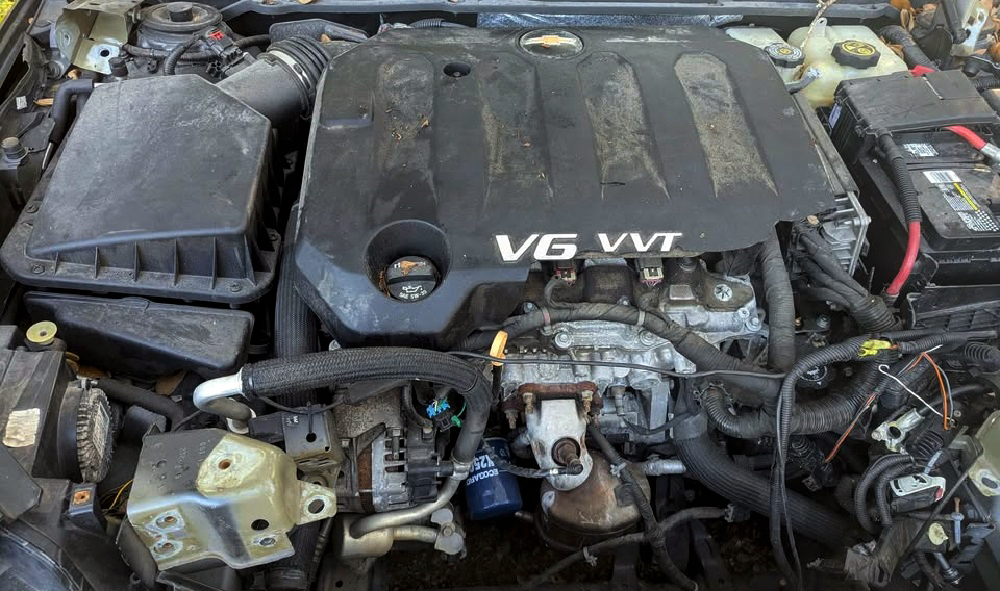
1. HFV6 family map: identify your exact 3.6 before chasing problems
RPO codes decoded: what changed inside the block and heads
Spot the RPO code on the underhood sticker or VIN build sheet. LY7 starts the line in 2004. LLT brings direct injection in 2008. LFX refines materials around 2012. LGX and LGZ launch a clean-sheet redesign in 2016.
All share a 60-degree aluminum block with cast-iron liners. Bore and stroke measure 94 mm x 85.6 mm for the LY7, LLT, and LFX engines. The LGX and LGZ variants feature an increased bore of 95 mm and a stroke of 85.8 mm (though some sources cite 85.6 mm), resulting in a displacement of 3.649 liters.
While the fundamental architecture of four cams, four phasers, and a three-chain drive remained consistent through Gen III, the LGX (Gen IV) introduced revisions to the chain drive’s geometry and components.
LLT raises compression to 11.3:1 with high-pressure GDI. LFX integrates exhaust manifolds into the heads, cutting weight and warm-up time.
LGX widens bore spacing to 106 mm, stiffens bulkheads, adds a dual-stage oil pump, and introduces AFM. Chain drive geometry changes on LGX, reducing slack sensitivity at low oil pressure.
| RPO | Generation | Induction | Bore x Stroke | Key Hardware Shift | Known Mechanical Risk |
|---|---|---|---|---|---|
| LY7 | Gen I | Port (MFI) | 94 x 85.6 mm | Early VVT, 2-stage intake | Chain wear, OLM sludge |
| LLT | Gen II | GDI | 94 x 85.6 mm | High-pressure DI | Severe chain elongation, carbon |
| LFX | Gen III | GDI | 94 x 85.6 mm | Integrated exhaust, lighter valvetrain | Carbon, PCV oil use |
| LGX | Gen IV | GDI + AFM | 95 x 85.8 mm | New block, dual-stage pump | AFM lifter failure |
| LGZ | Gen IV | GDI + AFM | 95 x 85.8 mm | Truck calibration | AFM under load cycles |
LY7 avoids intake carbon because fuel washes the valves. LLT and later lose that protection. LGX improves oil control and cooling but adds cylinder deactivation hardware that can destroy a cam lobe in under 5,000 miles once a lifter sticks.
Platform layout: transverse heat vs. longitudinal airflow
Mount it sideways in an Acadia or Traverse and Bank 1 cooks. The rear bank sits inches from the firewall and catalytic converter. Oil temps spike locally, especially in traffic and short trips. Sludge forms first in the rear cam galleries.
Mount it longitudinally in a Camaro or CTS and airflow improves. Heat disperses better. Rear-bank chain wear trends lower in RWD layouts with identical mileage and oil history. Towing in a Colorado LGZ pushes oil temps past 230°F under load, which accelerates oxidation.
Cooling flow stays series on early engines. LGX switches to a parallel-flow head design, balancing temperature across banks. Uneven head temps on LLT correlate with higher P0008 and P0009 events in transverse SUVs before 100,000 miles.
Generation failure pattern: what breaks first and when
LY7 failures cluster around chain wear past 80,000 miles with long oil intervals. Early Oil Life Monitor calibrations allowed 10,000 to 12,000 mile changes. Sludge blocks tensioner feed passages, then chains slap on cold start.
LLT shows the highest chain failure rate between 60,000 and 100,000 miles. P0008 and P0009 codes trigger once cam correlation drifts 4 to 6 degrees. Carbon buildup starts affecting cold idle by 60,000 miles in heavy city cycles.
LFX improves chain metallurgy and guide coating. Failures shift later, often 90,000 to 130,000 miles if oil stayed fresh. PCV restriction and oil consumption start rising around 75,000 miles on crossover duty.
LGX and LGZ hold chains better past 120,000 miles with clean oil. AFM lifter collapse emerges between 70,000 and 120,000 miles in some applications. Once a roller flattens, cam lobe damage spreads metal through the oiling system, often requiring a $5,000 to $7,000 engine replacement.
2. Timing chain elongation: the failure that built the 3.6’s reputation
Three chains, four cams, hundreds of wear points
Spin the crank and three chains move at once. One primary runs from crank to two idler sprockets. Two secondary chains drive four cam phasers, intake and exhaust on both banks. Every link pin wears a few microns at a time.
Multiply that wear across more than 150 links per chain. Total length grows enough to shift cam timing several degrees. The ECM watches crank and cam signals constantly. Once correlation drifts past about 4 to 6 degrees, it flags hard faults.
| Code | What the ECM sees | Bank or cam |
|---|---|---|
| P0008 | Engine position system performance | Bank 1 overall |
| P0009 | Engine position system performance | Bank 2 overall |
| P0016 | Crank/cam correlation fault | Bank 1 intake |
| P0017 | Crank/cam correlation fault | Bank 1 exhaust |
| P0018 | Crank/cam correlation fault | Bank 2 intake |
| P0019 | Crank/cam correlation fault | Bank 2 exhaust |
P0008 and P0009 usually mean primary chain elongation. By then, phasers have hit their correction limit.
Oil Life Monitor logic that pushed chains past their limit
Early calibrations allowed 10,000 to 12,000 mile oil changes. In city duty, oil temp cycles hard between 180°F and 240°F. Direct injection adds fuel dilution and soot. Oxidized oil loses film strength at the chain pins.
Hydraulic tensioners depend on clean, stable pressure. Sludge narrows feed passages and slows tensioner response on cold start. Chains slap guides for 1 to 3 seconds before pressure builds. That repeated impact accelerates elongation.
Rear bank oil cooks hotter in transverse SUVs. Bank 1 sits near the firewall and catalytic converter. Local heat thickens deposits in those galleries first. Many 2007 to 2009 models received special coverage up to 10 years or 120,000 miles for chain wear.
Mileage bands and what the repair really costs
LLT crossovers show the highest failure rate between 60,000 and 100,000 miles with long oil intervals. LFX pushes that window closer to 90,000 to 130,000 miles when serviced properly. LGX holds up better but still fails past 120,000 miles if oil runs low.
Chain service means full front cover removal. Most shops replace primary and both secondary chains, guides, tensioners, and often the water pump. Labor runs 12 to 16 hours in tight transverse bays. Total cost typically lands between $2,500 and $4,500 at current labor rates.
How it warns you before valves meet pistons
Cold start rattle lasts 1 to 3 seconds after sitting overnight. Noise fades once oil pressure rises above 40 psi. Power feels soft in the midrange as phasers struggle to track commanded advance. Fuel trims may drift while cam timing hunts.
Once P0008 or P0009 sets, cam correction has maxed out. Keep driving hard and the chain can jump a tooth. Bent valves follow within a single over-rev event. Valve-to-piston contact on this engine usually means a $5,000 to $7,000 replacement long block.
3. Direct injection carbon buildup: rough idle, random misfires, real labor bills
Port fuel washed the valves, GDI leaves them dirty
Switch from LY7 port injection to LLT direct injection changed valve life. Fuel no longer sprays on the back of the intake valves. Injectors now fire straight into the combustion chamber at high pressure. Intake valves see only air, oil mist, and exhaust residue.
PCV vapor carries atomized oil into the intake stream. Valve overlap during VVT pulls soot back into the port. Hot valve stems bake that mix into hard carbon. By 60,000 miles, deposits can measure several millimeters thick on LLT and LFX engines.
How carbon-loaded 3.6 engines behave on the street
Cold starts stretch into long cranks at 30°F to 50°F. Idle shakes for 30 to 60 seconds, then smooths once heat builds. Random misfire codes like P0300 or cylinder-specific P0302 and P0305 appear with clean plugs and coils.
Fuel trims swing positive at idle as airflow drops. Compression can fall 20 to 40 psi on affected cylinders when valves fail to seat fully. Severe buildup triggers extended crank or rough idle bulletins under GM TSB 16-NA-383.
Chemical cleaning versus walnut blasting under the intake
GM’s top engine cleaner procedure runs at about 2,000 rpm. Cleaner soaks deposits, then burns them off through the exhaust. Light to moderate buildup may respond after one or two treatments.
Heavy deposits don’t dissolve evenly. Large flakes can break loose and foul plugs or scratch cylinder walls. Walnut shell blasting requires intake removal and closed-valve positioning per cylinder. Labor runs 4 to 6 hours, with typical shop pricing between $600 and $1,200.
What actually slows carbon on a daily driver
Short oil intervals reduce vapor load entering the intake. Catch cans trap part of that oil mist before it hits the valves. Highway runs at sustained load raise valve temperature and burn off lighter deposits.
Urban duty cycles under 5 miles per trip build carbon fastest. Expect major cleaning by 60,000 to 90,000 miles on GDI-heavy use. Ignoring rough idle and misfires long term risks burnt valves and compression loss below 150 psi.
4. PCV restriction and oil consumption: pressure builds, seals fail
Tiny PCV orifice, big crankcase pressure
Focus on the rear valve cover on LLT and LFX engines. A fixed metal PCV orifice meters crankcase vapor through three small drilled holes. Original passages measure roughly 0.04 to 0.06 inches in diameter. Sludge and carbon clog them fast when oil runs long.
Restricted flow traps blow-by gases in the crankcase. Pressure rises under load and high rpm. Oil mist then pushes through the clean-air side into the intake tube. Many owners find oil pooled in the throttle body by 70,000 miles.
Oil in the intake, rear main seal on the floor
Pooled oil feeds carbon buildup on GDI valves. Consumption climbs to a quart every 1,000 miles in some crossovers. Dipstick drops faster after highway runs at 2,500 rpm and above.
Excess pressure also stresses crank seals. Rear main seals begin to seep, then leak steadily. Misdiagnosed as oil pan leaks, they often require transmission removal. Rear main replacement typically runs $900 to $1,500 in labor alone.
| Symptom | Likely source | What’s happening internally |
|---|---|---|
| Oil in intake snorkel | PCV orifice restriction | Crankcase pressure forces oil vapor upstream |
| Blue smoke on decel | Oil drawn past rings | High manifold vacuum pulls excess oil |
| Rear main seal leak | Elevated crankcase pressure | Seal lip can’t hold back pressure spikes |
| Rising oil use | PCV + ring wear | Blow-by increases with heat cycles |
High crankcase pressure also contaminates oil faster. Acidic blow-by gases thin additives and accelerate chain wear. Oil analysis often shows elevated fuel dilution and oxidation when PCV ports clog.
Drill mod, updated covers, and real airflow gains
Technicians enlarged the vertical port to 7/64 inch. Horizontal ports typically opened to 5/64 inch. Metal shavings must be flushed with brake cleaner before reinstalling the cover.
Later revised valve covers incorporate larger passages from the factory. Pairing the updated cover with a baffled catch can cuts oil vapor significantly. Engines that receive the mod and 5,000 mile oil changes often reduce consumption by half within one service interval.
Ignoring PCV restriction long term leads to repeated seal failures and oil use above 1 quart per 800 miles.
5. LGX and LGZ redesign: stronger bottom end, fragile AFM hardware
What GM reinforced inside the Gen IV block
LGX launched in 2016 with a new casting. Bore spacing widened to 106 mm. Bulkheads thickened to control crank flex at high rpm. Oil passages were revised to feed tensioners faster at low pressure.
A dual-stage oil pump now varies displacement. Low rpm oil pressure stays steadier than LLT and LFX. Cooling switched to a parallel-flow head design. Bank-to-bank temperature spread narrowed under load.
Chain layout simplified slightly, with revised guides and tensioners. Real-world chain failures dropped compared to LLT. With 5,000 mile oil changes, many LGX engines pass 120,000 miles without correlation codes.
AFM lifters and cam lobes under constant stress
LGX and LGZ use Active Fuel Management. Cylinders 3 and 6 deactivate under light load. Special collapsible hydraulic lifters unlock using oil pressure from the LOMA manifold.
Repeated lock and unlock cycles fatigue the lifter internals. A stuck lifter can remain collapsed. The affected cylinder misfires and the valvetrain ticks loudly at idle. Misfire codes often target cylinders 3 or 6 first.
Flat-spotted rollers grind the cam lobe surface. Hardened steel debris enters the oil stream. Oil filter media often shows metallic flakes once failure starts. Continued driving wipes the cam and contaminates bearings in under 2,000 miles.
| Failure mode | What breaks | Driver symptom | Repair scope |
|---|---|---|---|
| Stuck AFM lifter | Locking pin jammed | Persistent misfire, loud tick | Head removal, lifter replacement |
| Roller flat spot | Lifter roller fails | Ticking grows louder with rpm | Camshaft and lifters |
| Cam lobe wear | Lobe surface destroyed | Loss of power, metal in oil | Cam, lifters, possible long block |
Repair cost and why many disable AFM
AFM repair requires cylinder head removal. Lifters, trays, and often the camshaft get replaced as a set. Labor runs 15 to 20 hours in most chassis. Total cost typically lands between $3,500 and $6,500.
Metal contamination sometimes forces a full engine replacement. Reman long blocks with updated components run $4,500 to $7,000 installed. Many owners install AFM disablers or tune the ECM to keep all six cylinders active.
Fuel economy drops about 1 to 3 mpg in mixed driving. AFM hardware remains in place but stops cycling. Repeated lifter collapse after repair often occurs within 30,000 to 60,000 miles if AFM stays active.
6. Cooling and heat control: one overheat can warp it
Rear bank heat soak and aluminum head distortion
Mount the 3.6 sideways in a Traverse or Acadia and Bank 1 traps heat. The rear head sits inches from the firewall and catalytic converter. Under traffic, oil temp can exceed 240°F locally. Coolant temp may still read normal at 210°F on the dash.
Aluminum heads expand fast when coolant drops. A brief overheat event can distort sealing surfaces. Head gasket sealing weakens around the rear cylinders first. Misfire codes and coolant loss often show weeks after the initial spike.
Cylinder wall scuffing can follow severe heat cycles. Some TSBs reference bore wear patterns after overheating. Once compression drops below 150 psi on a hot engine, head removal becomes mandatory.
Water pump leaks and tight transverse access
The water pump sits at the front of the engine, belt-driven. Weep hole seepage leaves white or orange crust on the block. Bearing noise can rise above 2,000 rpm under load.
Access in transverse SUVs is tight. Labor often requires engine mount support and accessory removal. Pump replacement alone typically runs $500 to $900. Combine it with timing chain service and labor overlaps significantly.
Thermostats can stick closed after high heat cycles. Coolant flow stalls and temp climbs fast under highway load. A stuck thermostat can push coolant above 230°F within minutes.
Cooling service that protects the long block
Dex-Cool degrades when exposed to air pockets. Low coolant levels introduce oxygen and sludge formation. Air trapped at the rear bank creates localized hot spots. Proper bleeding after service is critical.
Coolant change intervals of 5 years or 100,000 miles assume perfect sealing. Older LY7 and LLT engines benefit from 60,000 mile coolant exchanges. Pressure testing after any overheating event reveals small gasket breaches early.
One severe overheat can warp both heads. Head machining and gasket replacement often exceed $2,500. If cylinders show scoring or coolant intrusion into oil, full engine replacement approaches $6,000 to $8,000 installed.
7. What the noise means and where it’s breaking
Cold start sounds, oil trends, and scan data
Hear a 1 to 3 second rattle after sitting overnight. That points toward chain slack or a bleeding tensioner. A light tick that fades in seconds often traces to a lifter. A deep metallic slap that lingers suggests chain guide wear.
Track oil level every 1,000 miles. Rising consumption plus oil in the intake tube flags PCV restriction. Fuel trims above +10 percent at idle with random misfires lean toward intake carbon. Cam correlation drift on a scan tool confirms chain elongation before hard codes set.
Monitor misfire counters cylinder by cylinder. Cylinders 3 and 6 misfiring on an LGX raise AFM suspicion. Oil pressure below 25 psi hot idle worsens lifter and chain survival. Metal in the filter demands teardown, not guesswork.
Cross-generation failure breakdown
| Symptom | Most common on | Probable cause | First diagnostic move |
|---|---|---|---|
| 1–3 sec cold rattle + P0008/P0009 | LLT, early LFX SUVs | Chain elongation, weak tensioner | Check cam correlation, inspect guides |
| Rough cold idle, clears warm | LLT, LFX, LGX | Intake valve carbon | Borescope valves, review misfire data |
| Oil in intake snorkel, high use | LLT, LFX crossovers | PCV restriction | Inspect rear valve cover ports |
| Loud tick, steady misfire cyl 3 or 6 | LGX, LGZ | AFM lifter collapse | Pull valve cover, inspect rocker lift |
| Overheat then coolant loss | All gens | Head gasket breach | Pressure test, leak-down test |
Chain codes paired with low oil history point to extended intervals. Misfire without codes after heavy load can precede AFM cam damage. Coolant loss with no external leak often traces to rear bank gasket failure.
When a reman long block makes financial sense
Stack chain wear, oil use, carbon, and AFM tick together. Repair costs escalate fast. Chains at $3,500, AFM repair at $5,000, valve cleaning at $1,000. Add a rear main leak and the bill crosses $8,000.
Reman 3.6 long blocks often include updated chains and revised PCV hardware. Installed pricing runs $4,500 to $7,000 depending on chassis. High-mileage crossovers over 150,000 miles rarely justify piecemeal repair once multiple systems fail.
8. Survival protocol: keeping the 3.6 alive long term
Oil strategy built around chains and lifters
Change oil every 4,000 to 5,000 miles, no matter what the OLM says. Use full synthetic meeting Dexos1 Gen 3. That spec includes tighter oxidation and timing chain wear limits than older Dexos blends. API SP alone doesn’t guarantee the same chain protection.
Check oil level every 1,000 miles on LLT and LFX crossovers. Running one quart low drops hot idle pressure below 25 psi in some engines. Low pressure starves tensioners and AFM lifters first. One low-oil event can trigger chain rattle within a few hundred miles.
Replace the oil filter with a quality cartridge every service. Cheap filters bypass early under cold pressure spikes. Bypass flow sends unfiltered debris to chain pins and cam journals. Repeated bypass events shorten chain life below 80,000 miles.
PCV, intake, and induction service cadence
Inspect the rear valve cover PCV ports every 15,000 miles on LLT and LFX. Clean or replace if residue blocks the orifice. Install updated covers where available to restore airflow. Catch cans help, but they don’t fix clogged passages.
Schedule light induction cleaning around 20,000 to 30,000 miles on GDI engines. Use walnut blasting once deposits thicken beyond 2 to 3 mm. Urban duty cycles under 5 miles per trip demand earlier service. Skipping valve cleaning past 90,000 miles often results in persistent P0300 misfires.
Spark plugs should be replaced by 60,000 miles on DI models. Carbon-fouled plugs worsen cold start misfires. Coil output weakens under oil contamination. Misfire counters above 50 events per drive cycle demand action.
Pre-purchase checks that expose hidden wear
Start the engine cold after an overnight sit. Listen for chain rattle longer than 2 seconds. Scan for stored P0008, P0009, or historic misfire codes. Check oil level and inspect the intake tube for pooled oil.
Review service records for oil intervals under 6,000 miles. Look for prior PCV updates or valve cleaning receipts. On LGX and LGZ, verify AFM operation and listen for tick at hot idle. Compression below 160 psi on any cylinder signals internal wear that can push repair costs past $5,000.
Sources & References
- Under The Hood: The GM 3.6L V6 — A Modern Workhorse With …
- GM High Feature engine – Wikipedia
- GM 3.6L Timing Chain Problems — Symptoms, Codes & Fix – GoTech
- Is the GM 3.6L V6 a Good Engine? Facts & Common Issues – CarInterior
- 3.6-Liter Engines | GM, Chevy, Cadillac, Saturn, GMC Buick Motors For Sale
- TRIFECTA: The next generation of V6s from GM (RPO: LGW, LGX …
- How to keep your GM 3.0 or 3.6 V6 running forever – **High Feature V6 LY7 LLT LFX LGX LGZ** – YouTube
- Common Problems and Known Issues with GM 3.6 V6 Engine – Newparts.com
- 3.6L LFX PCV Valve Breather Mod – Oil in intake Tube, All GM Vehicles – YouTube
- Idiot’s Guide to the GM 3.6L Engine: Is It Worth It? : r/AskAMechanic – Reddit
- 3 GM 3.6 Engine Problems You Should Be Aware Of – Haynes Manuals
- GM 3.6 with just a tad over 60,000 miles. Was running in limp mode. Timing chains need to be replaced since they’re stretched : r/Justrolledintotheshop – Reddit
- Service Bulletin INFORMATION – nhtsa
- Chevy Equinox Engine Oil Specification and Volume | Oil Changers
- CSC-10043857-7523 – nhtsa
- Service Bulletin – nhtsa
- Special Coverage Adjustment – Timing Chain Wear – nhtsa
- Alright, help me settle this once and for all: what are the long term effects of disabling AFM/DFM? : r/Silverado – Reddit
- Oil Consumption issue, pcv system fail GM V8 – YouTube
- Service Bulletin TECHNICAL – nhtsa
- May-2017 Subject: Information on Rough Idle, Crank No Start, Extended Crank or Misfire Due to Exce – nhtsa
- What are some popular problems car brands have? – Reddit
- Chevy Equinox/GMC Terrain PCV Orifice Cleaning – YouTube
- GM 3.6 LFX V6 Intake Valve Cleaning (Part 2 of 4) – YouTube
- Chevy Traverse/Buick Enclave/GMC Acadia 2009 2015 burning oil quick fix! – YouTube
- GM 3.6L V6 LLT PCV valve modification – GM Camaro – YouTube
- Service Bulletin TECHNICAL – nhtsa
- 3.6L LLT PCV Valve Breather Mod – Oil in intake tube GM Buick Enclave, Travers, Outlook, Terrain
- Optimizing Engine Performance: A Comprehensive Guide to Managing Cylinder Deactivation in GM Vehicles – Simi Valley Chrysler Dodge Jeep Ram Blog
- How to Tell If Your GM Vehicle Has Active Fuel Management – Newparts.com
- Cylinder Deactivation Explained: AFM, DFM, and MDS Problems & Fixes – Holley Motor Life
- Lifter Failure and Active Fuel Management Problems in Chevrolet and General Motors Vehicles – Attorney for Lemon Law
- Common GM Lifter Failure — Would You Fix It or Delete DOD? : r/ChevyTrucks – Reddit
- GM’S Active Fuel Management: Camshaft and Valve Lifter Failures – Mighty Auto Parts
- How do I disable GM cylinder deactivation – CarKiller
- For cars with timing chain driven engines do you still need to change their water pump regularly? – Reddit
- Do most engines drive the water pump with the timing chain/belt? – Reddit
- Service Bulletin TECHNICAL – nhtsa
- Do the timing chains have anything to do with the water pump? : r/AskAMechanic – Reddit
- GM 3.6 Timing Chain Replacement – Full replacement how to – Equinox, Impala, CTS, LaCrosse, Colorado – YouTube
- What is Dexos Oil? Complete GM Engine Oil Guide 2025 URL – HVI App
- What Is Dexos Oil? Differences, Uses & Requirements – Cadence
- Dexos1 Gen 3 is Here | Chevron Lubricants (US)
- Help w/ GM 3.6L LFX Engine Noise Diagnosis : r/AskAMechanic – Reddit
Was This Article Helpful?