
Skip diesel, grab the gas 6.6, and you expect fewer headaches. Then the oil starts disappearing.
This engine’s built like a throwback, cast-iron block, no turbos, no DEF, no AFM. Just old-school displacement meant to haul without electronic second-guessing. That’s the appeal.
But problems creep in. Oil drops fast under load. Hot starts drag. Some 2024s flash transmission warnings that hit confidence harder than the engine ever does. It’s not a failure parade, but owners are paying attention.
This guide cuts straight to it, what the engine gets right, where GM’s tolerances fall short, and which problems relate to the motor versus what’s bolted behind it.
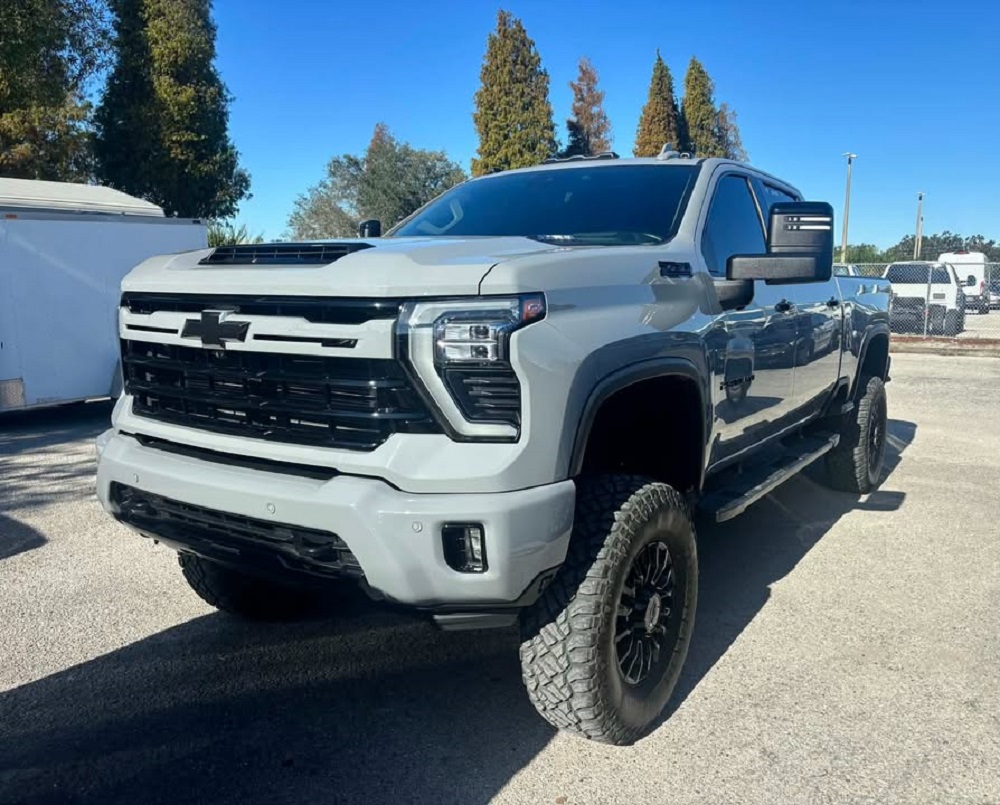
1. Old-school strength meets modern strain
Heavy block, simple valvetrain, no surprises
The 6.6L L8T sticks to brute strength. Deep-skirt cast-iron block. Cross-bolted mains. Forged steel crank. The bottom end’s built to hold together under 4,000 rpm for hours. Oil squirters under each piston keep temps in check so it won’t shake itself loose under load.
Up top, GM kept the valvetrain deliberately simple. No AFM. No DFM. Just 16 old-school hydraulic lifters doing their job. That choice matters. The 6.6 sidesteps the lifter-collapse issues that plague the 5.3 and 6.2. Tear-downs back it up, no wiped lobes, no cam carnage, even after heavy miles.
High compression tightens the margin for error
The engine runs 10.8:1 compression with direct injection pushing around 2,200 psi. That setup boosts throttle response and cold starts but raises the stakes everywhere else. Combustion stays hot. Knock sensors stay active. And small fueling quirks don’t stay hidden.
Oil control takes the hit. Low-tension rings cut friction and help mileage, but they also let more oil slip past, especially during engine braking or long grades. Blowby feeds the PCV system, which dumps vapor back into the intake.
With no port injection to scrub the valves, carbon builds slowly but steadily. It’s not a defect. It’s accumulation, consumption, deposits, and growing sensitivity to fuel quality over time.
Block stays solid, the rest gets tested
The short block holds up. You won’t see rod knock or piston cracks flooding owner forums. But the pieces around it start sweating. Fuel hardware runs hot. PCV pulls oil. Transmission wear accelerates since the torque lands higher in the rev range than a diesel.
That split, bulletproof core, overstressed support, explains the pattern. The engine itself survives. The systems keeping it fed, cooled, and in check are what start to feel the load.
2. Oil loss isn’t a defect, until it feels like one
When towing shows what the spec sheet hides
Oil use ramps up doing exactly what this engine’s made for, long grades at 3,500–5,000 rpm, steady engine braking, and heavy tow loads. The low-tension rings let some oil through under pressure and vacuum. At 7–8 mpg, that adds up fast.
Owners don’t see smoke or puddles. Just a warning light mid-haul while the oil-life monitor still looks fine. That mismatch, engine seems happy, oil’s missing, throws people off. Some engines barely use a drop. Others go down a quart before the trailer crosses state lines.
GM calls it normal, but the math stings
For HD trucks over 8,600 lb GVWR, GM doesn’t track oil use by miles. It tracks it by fuel. The official line: 1 quart per 100 gallons burned. At 7–8 mpg while towing, that’s 1 quart every 700–800 miles. Push it harder, say 5 mpg in steep terrain, and you’re looking at a quart every 500 miles. Still “normal.”
There’s no separate threshold for extreme use. But the hard math doesn’t lie. The worse the mileage, the faster you burn oil, and GM’s spec still covers it.
GM Oil Consumption Limits for 6.6L Gas (L8T HD Trucks)
| Use case | GVWR context | GM guideline | What it looks like in use |
|---|---|---|---|
| Light / mixed driving | Under 8,600 lb | ~1 qt per 2,000 miles | Occasional top-off between oil changes |
| Heavy towing / HD duty | 8,600 lb and above | 1 qt per 100 gal fuel | ~1 qt every 700–800 mi at 7–8 mpg |
| Max load, steep grades | 8,600 lb and above | Same fuel-based limit | 1 qt every 500 mi is still “normal” |
| Break-in period | Any | No test before 4,000 mi | Early use often dismissed as seating phase |
Tests don’t win fights, tracking does
Dealer oil tests follow a strict script: fresh oil, sealed cap, drive 2,000 miles, then measure. If it stays inside GM’s limits, case closed, even if the owner added a quart mid-trip to stay out of the red.
That leaves most drivers adjusting instead of fixing. Shorter intervals. Level checks every fill-up. Written logs. It doesn’t solve the issue, but it stops oil loss from turning into something worse.
3. Fuel system issues that build quiet, then punch hard
High-pressure pump wear shows up in hot starts, not codes
The 6.6L’s cam-driven high-pressure fuel pump doesn’t get a break. It feeds the injectors at around 2,200 psi and lives right in engine heat, not off on a cooler rail.
As seals wear, pressure drops and the signs stay subtle. Long cranks after shutdown, soft throttle coming out of parking lots, and random fuel-pressure codes that vanish without a fix.
The bigger risk is what you don’t feel. Fuel can slip into the crankcase, thinning the oil. Bearings lose protection. Metal starts to wear without noise or warning. Most owners catch it by smell, raw fuel on the dipstick, before they catch it by feel. Once power falls off, damage is usually already in motion.
Injector issues often point back to rail pressure
Direct injectors rarely fail clean. A single one drifting rich or lean can throw the whole engine off balance. You’ll feel surging on a grade, a stall at the light, or hesitation that mimics an ignition problem. But scan data often flags unstable rail pressure, not a specific injector.
Techs start with basics, low-side fuel supply, sensors, wiring, because they fail more often than the injectors. When injectors do cause the issue, it’s usually imbalance, not total failure. Long idle time and regular towing make that more likely.
Common L8T Fuel-System Symptoms and What They Usually Mean
| Driver symptom | Likely GDI issue | Why it matters fast |
|---|---|---|
| Long crank after hot shutdown | HPFP internal leak or pressure loss | Fuel dilution of engine oil |
| Hesitation or surge under load | Unstable rail pressure | Lean events raise combustion temps |
| Random stalls at low speed | Sensor or pump pressure drop | Loss of power assist and control |
| Fuel odor in oil | HPFP or injector leakage | Bearing and cam wear accelerates |
Valve carbon sneaks in until cold starts turn rough
With direct injection, fuel never touches the intake valves. Oil vapor from the PCV system settles there instead. Over time, it bakes into carbon. GM added baffling to slow it down, but on a big engine that sees regular load, buildup’s still a given.
It shows up slow. Cold starts lose smoothness. Idle wobbles. Misfires appear on cold mornings, then vanish warm. Early on, induction cleanings help. Later, it takes walnut blasting to clean the ports. It’s not a defect, it’s baked into how the engine breathes and burns.
4. Oil control depends on habits, not just hardware
Rings designed for mpg, not for containment
GM gave the L8T low-tension rings to cut drag and help this 400-inch motor hit passable fuel numbers. That works under steady load. But run it hard, ride the brakes on descents, or hit high vacuum on long pulls, and the rings let more oil through than older 6.0s ever did.
The difference? Vortecs weren’t worked this hard. The L8T gets leaned on longer, at higher rpm. Oil control doesn’t collapse, it just loses edge when heat and pressure build hour after hour.
Spec or not, running low invites real damage
Trouble starts when owners assume the monitor’s enough. No checks. Multiple drivers. Long trips without watching the stick. That’s when “normal” consumption turns risky.
A quart low on a hard pull means hotter oil, thinner film, and lower pressure. Bearings don’t complain. They wear until they don’t work. By the time there’s a sound or a drop in power, the damage is already banked.
What careful owners do differently
The ones who keep these engines alive don’t wait for lights. They check oil at every fuel stop, especially under load. They cut intervals short even if the monitor says wait. They go easy on engine braking when towing heavy.
They also log usage. That paper trail matters later if consumption creeps up or a warranty fight starts. This engine won’t stop using oil, but it’ll last if you treat that use as routine, not random.
5. Transmission failures that follow the 6.6 gas, by gear count
The 6L90 fades slow, starts with heat and ends with clutches
From 2020 to 2023, the L8T paired with GM’s 6L90, a known quantity, but one that doesn’t love heat. Towing’s where the cracks show. Light-throttle shudder. Soft 1–2 flare. Both are early signs of converter clutch slip once fluid temps climb.
Let it slide too long, and you’ll get more than poor shifts. The converter sheds material into the pan. That junk clogs the pump, glazes the clutch packs, and drags line pressure down until everything feels late or rough. Once harsh shifts start showing up, damage has already made the rounds.
The 10L1000 hits harder, and the recall proves it
In 2024, GM upgraded gas HD trucks to the 10L1000. On paper, it’s better. Tighter gear spread, smarter control. But early units showed a dangerous mechanical flaw.
Wear in the feed-limit valve bore cuts pressure to key solenoids. When that happens mid-drive, the transmission can apply a clutch out of sequence and bind.
Some trucks lock up hard. Others show it as a violent downshift or drop into reduced propulsion mode with no warning. GM’s fix started as a software band-aid.
Later models got a Gen 3 valve body with updated internals to stop the bore wear. If your truck was built before that update, it’s living under a safety recall.
How each failure feels behind the wheel
The difference between the two boxes is obvious. The 6L90 fades slow, shudder, flare, then shift delay over tens of thousands of miles. The 10L1000 hits fast, harsh downshifts, sudden lockup, dash warnings with no build-up.
Knowing which one’s in your truck matters. The 6L90 benefits from early fluid service and converter work. The 10L1000 needs a recall check and possibly a hardware swap. You can’t drive around this one.
Transmission Failure Patterns on 6.6 Gas HD Trucks
| Transmission | Typical mileage window | What the driver feels | Common flags | Usual fix path |
|---|---|---|---|---|
| 6L90 | 80,000–150,000 (towed hard) | TCC shudder, flare into 2nd, delayed shifts | P0741, heat-related | Converter, pump, valve body, fluid |
| 10L1000 | Can be low miles (recall) | Harsh downshift, bind-up, reduced propulsion | Recall events, P0747 | Software update, Gen 3 valve body replacement |
6. Sensor faults that quietly ruin performance
P00F4, when a humidity sensor turns into a fuel problem
GM uses an intake humidity sensor to help dial in fueling and spark. But when its signal drops, often from wiring wear near the fuel composition connector, the ECM stops trusting the air model. Power drops slightly. Mileage slips. The check-engine light glows, even though the truck still pulls.
There’s no stumble or surge. Just a vague sense that something’s off. Most owners ignore it because it feels minor. But running rich over time adds carbon, boosts oil dilution, and creates long-haul damage that doesn’t show until later.
MAP and MAF faults throw off everything downstream
Lose a MAP signal, and the engine loses track of load. Timing jumps, fuel goes rich, and idle gets choppy. No boost here to hide the gaps, just raw airflow. At altitude, where barometric pressure matters, the problem grows faster. Black smoke and sudden power loss aren’t rare.
MAF issues show up slower. Contamination dulls throttle, causes surging, and buries deeper fueling problems instead of exposing them. These faults don’t leave trucks stuck. They just rot performance until repairs get forced by bigger failures.
Warning lights you don’t wait on
Some codes can wait. These can’t. Rich-running faults damage converters and wash cylinders. Intake sensor codes skew fueling every mile. Transmission limp modes? They’re tied to real failures, not flukes.
Ignore them because the truck “feels fine,” and you’ll pay later. This engine doesn’t tolerate bad inputs, it just hides the pain with torque and extra fuel.
Common L8T Sensor Faults and What They Trigger
| Code or fault | What’s failing | What the driver notices | Why it escalates |
|---|---|---|---|
| P00F4 | Intake humidity sensor / wiring | CEL, slight power loss, poor MPG | Rich bias, added deposits |
| Bad MAP signal | MAP sensor or harness | Rough idle, black smoke, limp | Timing errors, catalyst stress |
| MAF drift or fouling | Contaminated MAF element | Hesitation, surging | Masks deeper fueling problems |
7. Where the 6.6 gas starts losing ground
Torque that asks for revs, not throttle
The L8T makes its torque high. Unloaded, it feels sharp. But hitch up real weight, and that smoothness turns busy. Every incline means a downshift. Fan noise rises. Fuel economy tanks. This engine needs rpm to hold power, not boost, not low-end grunt.
Throttle stays responsive, but keeping momentum costs revs. Once trailer loads creep past 12,000 lb, the gas engine spends its time in the right lane, climbing grades near redline.
Altitude doesn’t care what the dyno says
Naturally aspirated engines lose about 3% of power for every 1,000 feet of elevation. That’s 60 hp gone at 5,000 feet. Double it at 10,000. The L8T still runs clean, but holding speed means more throttle, more rpm, and more heat dumped into oil and trans fluid.
Turbo diesels barely flinch in comparison. At elevation, that gap isn’t theoretical, it shows up in gear holds, cooler temps, and quieter climbs. Calibration won’t fix it. Air density always wins.
Approximate Power Loss With Elevation
| Engine type | Elevation | Power loss | What it feels like |
|---|---|---|---|
| 6.6L L8T gas (N/A) | Sea level | 0% | Full pull available |
| 6.6L L8T gas (N/A) | 5,000 ft | ~15% | Frequent downshifts, higher rpm |
| 6.6L L8T gas (N/A) | 10,000 ft | ~30% | Long pulls in lower gears |
| 6.6L Duramax (turbo) | 5,000 ft | ~5–10% | Minor change in pull |
| 6.6L Duramax (turbo) | 10,000 ft | ~15% | Still holds speed under load |
Paper ratings vs. what feels sustainable
GM rates the L8T up to serious tow numbers. But anything north of 12,000 lb starts grinding in practice. The engine holds the load, but it works for it, high revs, low mpg, cooling fans on full blast. You’ll feel it in the seat before anything breaks.
For jobsite runs, midweight trailers, or flat-ground hauls, the gas engine makes sense. But if you’re pulling heavy through hills or at elevation, the diesel’s torque curve and thermal buffer show their worth every single mile.
8. Heat, service, and the hidden cost of staying gas
Transmission temps matter more than engine cooling
The L8T doesn’t usually overheat. The transmission does. Towing hard at high rpm stacks heat into the fluid fast, and it doesn’t always show in real time. Clutches wear quietly. Shifts get sloppy. By the time anything feels wrong, damage is already baked in.
Part of the blame? Thermostatic bypass valves. They hold back cooler flow to help mpg, but that delay builds heat early, right when you need cooling the most. Drivers who watch temps see it clearly: steep grade, quick heat rise, slow cooldown.
GM’s schedule assumes a life your truck doesn’t live
GM’s factory intervals expect mixed use. But long idles, heavy tows, and dusty job sites blow past those assumptions fast. Oil gets dirty quicker. Fluid breaks down sooner. Filters load up long before the schedule says they should.
That’s why two trucks with the same mileage can age so differently. One pulls, one cruises. One needs fluid swaps now, the other doesn’t blink.
Service Intervals That Actually Match L8T Workloads
| Component | Standard interval | Severe-duty interval | Why it matters under load |
|---|---|---|---|
| Engine oil & filter | 7,500 miles | 5,000–7,500 miles | Oil use and heat thin margins |
| 10L1000 transmission | 45,000 miles | ~30,000 miles | Heat accelerates valve wear |
| 6L90 transmission | 97,500 miles | ~45,000 miles | Converter debris spreads fast |
| Transfer case | 97,500 miles | ~45,000 miles | Towing loads shear fluid |
| Spark plugs | 97,500 miles | ~60,000 miles | GDI and heat stress electrodes |
| Engine air filter | 45,000 miles | ~30,000 miles | Airflow matters at high rpm |
Who the 6.6 gas actually works for
This engine rewards involvement. It holds up for fleets, regional tow rigs, and owners who check fluids like they check mirrors. The block stays solid. The cost is in attention, not parts.
But if you want set-and-forget durability, or diesel-grade torque at elevation, this isn’t your motor. The L8T can do the job, it just doesn’t coast through it.
Sources & References
- L8T Long Block – IN STOCK !!: GM Performance Motor
- 5 Ways to Fix GMC’s 6.6 Gas Engine Problems – The Lemon Law Experts
- Low-speed torque producer – GM Powered Solutions
- Chevy 2500 6.6L L8T V8 Review | GM’s MOST RELIABLE Engine They Still Build – YouTube
- GM 6.6L L8T Performance Assembly – Michigan Motorz
- Chevy L8T Engine Specs – Help Center
- 6.6 Chevy gas engine | Good Sam Community
- Consider considering a 6.6 L gas. What are the pros and cons? : r/gmcsierra
- GM Engine Lifter Defect – What You Need to Know – Lemon Law
- Are there new problems with GM V-8 engine lifters lurking?
- What NEW Silverado do you recommend? – r/Silverado
- High Pressure Fuel Pump Symptoms | Diagnose HPFP Issues – Hot Shot’s Secret
- What are the symptoms of a high-pressure fuel pump failure? – Osiaspart
- Do You Have A Chevy Fuel Pump Issue: 5 Signs To Know | Sarchione Chevrolet
- Carbon buildup on a 2017 Silverado – Accelerated Diagnostic & Automotive
- Bad MAP Sensor Symptoms:Diagnose and Fix – Foxwell
- Service Bulletin – NHTSA
- 9 Symptoms Of A Bad Map Sensor – Kynix
- Chevy 6.6 Gas Problems – CoPilot for Car Shopping
- GM 6.6 Gas Engine Problems: Troubleshooting And Solutions – Haynes Manuals
- Oil use 6.6 gas : r/Silverado
- Chevrolet 6.6 burning oil | Good Sam Community
- Service Bulletin INFORMATION – OEMDTC
- TECHNICAL – NHTSA
- New 2026 Chevrolet Silverado 2500 HD ZR2 Crew Cab – George Weber Chevy
Was This Article Helpful?