
Hit the gas. Feel a shiver through the seat. The next shift snaps harder than it should. That’s how GMC Canyon transmission trouble shows up.
Since 2015, this truck has run three very different automatics. Early models use the 6L50, a simple 6-speed that mainly struggles with heat and heavy loads. Then 2017 brings the 8L45, where shudder, worn converters, and fluid issues start stacking up across real-world trucks.
The newest TurboMax models switch to a revised 8-speed with more torque behind it. Problems don’t vanish. They move into pressure control, harsh shifts, and wiring faults that can trigger limp mode without warning.
Some years hold up fine with care. Others eat parts early and keep coming back. Let’s sort out which is which before the repair bill does it for you.
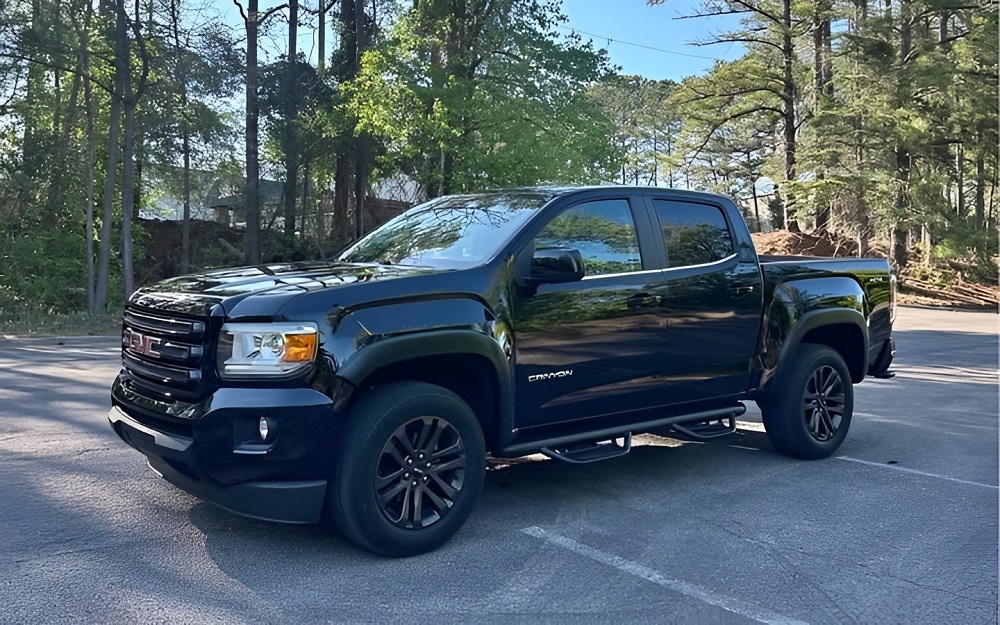
1. Canyon transmission timeline and hardware shifts
6L50, simple build, heat-driven wear
The 6L50 is a compact 6-speed with a Lepelletier gearset and a single torque converter clutch. It runs lower line pressure than heavy-duty GM units. That keeps shifts smooth but raises clutch slip under load.
Heat is the trigger. Tow in hot weather and fluid temps climb past 220°F. Viscosity drops. Clutch packs glaze. You start to feel delayed engagement and soft 2–3 shifts.
Common failures stay mechanical. Worn 3–5–R clutch packs and pressure loss at the valve body show up first. Rebuilds land around $2,800–$4,200 depending on hard-part damage.
8L45, shudder and converter breakdown
The 8L45 adds two extra ratios and a tighter converter lockup strategy. It cycles the torque converter clutch in slip mode during light throttle. That creates heat inside the converter lining.
Fluid breakdown follows. Early Dexron VI shears down fast under that slip cycle. The clutch lining sheds material. You feel a steady shudder at 35–55 mph under light load.
GM tracked this with fluid updates and TSBs. Many trucks needed triple fluid exchanges with updated Mobil 1 LV ATF HP. If ignored, the converter fails and spreads debris through the valve body.
DTCs often include P0741 and P0796. Full repair means converter plus valve body cleaning or replacement. Typical cost runs $3,500–$5,000.
8-speed (TurboMax), higher load, tighter control
The newer 8-speed pairs with the 2.7L TurboMax. Torque jumps to 430 lb-ft. That loads the clutch packs harder during low-speed shifts.
Control strategy runs tighter shift timing and higher pressure ramps. Small errors show up fast. Harsh 1–2 shifts and flare between 3–4 are common early complaints.
Electrical faults show up more than before. Internal harness issues and solenoid response delays can trigger limp mode. Codes like P0700, P2714, and P0746 appear without full mechanical failure.
Valve body replacement is common in early cases. Parts and labor land around $1,800–$2,600. Full unit replacement crosses $6,000 once internal damage starts.
2. Shudder, slip, and harsh shifts, what drivers feel first
Light throttle shudder at 35–55 mph
You hold steady speed. The truck starts to buzz through the seat and floor. It feels like driving over fine grooves in the road.
This comes from the torque converter clutch slipping instead of locking clean. The TCC cycles in partial lock to save fuel. Heat builds inside the lining.
Fluid shear makes it worse. Friction modifiers break down around 200–220°F. The clutch grabs, releases, then grabs again in rapid cycles.
Left alone, the lining sheds material into the fluid. That debris moves into the valve body and solenoids. Converter replacement plus fluid service runs $2,200–$3,200.
Delay into Drive or Reverse after startup
Cold start. You shift into Drive. The truck pauses before it moves. Engagement can take 2–4 seconds.
Pressure loss is the trigger. Fluid drains back from clutch circuits after shutdown. Worn seals or valve body wear slow pressure rebuild.
Low line pressure shows up first at idle. The pump needs time to refill circuits before clutches apply. You may feel a soft bump once it finally engages.
If pressure drops further, clutch slip starts under load. Internal wear follows fast. Pump or valve body repair lands near $1,500–$2,500.
Hard 1–2 or 2–3 shifts under light load
You ease into the throttle. The next gear hits harder than expected. It feels like a quick jolt through the driveline.
Shift timing runs off. The TCM commands pressure spikes to protect clutches. Solenoids react late or stick, causing an overshoot in line pressure.
Adaptive learning can drift. If fluid is degraded, clutch fill times change. The module overcorrects, then repeats the cycle every shift.
Codes like P0796 or P2714 may store. Solenoid or valve body replacement runs $800–$1,800 before deeper damage sets in.
Gear hunting and unstable cruising
Cruise at 45 mph on light throttle. The transmission can’t hold a steady gear. It shifts up, then down, then up again.
Throttle input and load signals don’t match expected values. The TCM keeps searching for the right ratio. Converter lock and unlock cycles add more heat.
This pattern shows up early in 8-speed units with worn fluid or early valve body wear. It often pairs with small RPM swings of 200–400 rpm.
If ignored, clutch wear accelerates across multiple gears. Full rebuild costs climb past $4,000 once multi-pack damage spreads.
3. What actually fails inside these transmissions
Torque converter clutch lining breaks down under heat
The converter clutch runs in controlled slip during light throttle. It never fully locks in many drive cycles. That keeps RPM smooth but builds heat inside the friction layer.
Temperatures climb past 200°F during steady cruising. Friction material starts to glaze, then sheds. Fine debris mixes into the fluid and moves through the system.
Once lining loss starts, slip increases. The TCM raises pressure to compensate. That adds more heat and speeds up wear.
Failed converters send debris into the cooler and valve body. Replacement plus flush runs $2,500–$4,000 depending on contamination level.
Valve body wear and pressure control faults
The valve body routes fluid through narrow passages and spool valves. Wear opens up clearances. Fluid leaks past valves instead of building pressure.
Pressure control solenoids struggle to hold steady output. Commands don’t match actual pressure. Shifts come late, then hit hard.
Common codes include P0796, P2714, and P0746. These point to pressure control circuits or stuck solenoids.
Worn valve bodies can’t be machined in most cases. Replacement with updated parts costs $900–$2,200 installed.
Clutch pack glazing and burn-through
Each gear uses a specific clutch pack. These packs rely on precise pressure and clean fluid. Slip for even a short time creates heat spots.
Friction plates glaze first. You get soft shifts and delayed engagement. Continued slip burns the friction layer and exposes steel plates.
Once metal-to-metal contact starts, debris spreads fast. Multiple clutch packs can fail within a few hundred miles.
Full rebuild with new frictions and steels runs $3,500–$5,500 depending on hard-part damage.
Internal harness and solenoid response failure
Modern units route wiring through the transmission case. Heat and fluid exposure break down insulation over time.
Signal loss or resistance changes confuse the TCM. Solenoids react late or fail to actuate. The transmission may drop into limp mode.
Intermittent faults are common. You may see P0700 paired with solenoid codes like P0751 or P2723.
Harness replacement requires pan removal and internal access. Typical repair runs $600–$1,400 before valve body work is added.
4. Fluid breakdown, heat load, and why service timing matters
Fluid shear and friction loss under load
These transmissions rely on tight friction control. The fluid carries additives that manage clutch grip and release. Those additives shear down under heat and pressure.
Sustained temps above 200°F thin the fluid. Viscosity drops. Clutch packs lose holding strength during apply.
Slip starts small. The TCM raises line pressure to compensate. That creates more heat and speeds up fluid breakdown.
Once additive packs degrade, no relearn fixes it. A full fluid exchange costs $250–$450.
Heat spikes during towing and stop-and-go driving
Towing pushes converter slip higher at low speeds. Stop-and-go traffic keeps the converter active longer. Both raise fluid temperature fast.
The stock cooler struggles in hot climates. Fluid temps can spike to 230–240°F on grades or in traffic. At that point, oxidation accelerates.
Repeated heat cycles harden seals and shrink O-rings. Internal leaks start to form in clutch circuits. Pressure loss follows.
External cooler upgrades drop temps by 20–30°F. Parts and install run $300–$800.
GM fluid updates and service bulletins
Early 8-speed units used standard Dexron VI. Field data showed rapid shudder complaints tied to fluid breakdown.
GM released updated fluid spec, Mobil 1 LV ATF HP. It holds friction stability at higher temps and reduces converter slip oscillation.
Service bulletins call for multiple drain-and-fill cycles. Old fluid trapped in the converter must be diluted over repeated exchanges.
Skipping the updated fluid leads to repeat shudder within 5,000–15,000 miles. Fluid alone costs $120–$180 per service cycle.
Real service intervals versus factory claims
Factory intervals often stretch past 45,000 miles for severe use. Real-world data shows fluid degradation much earlier under load.
Shudder cases often appear between 25,000–40,000 miles on original fluid. Trucks used for towing hit that range faster.
A 30,000-mile service interval keeps friction behavior stable. Waiting longer increases the chance of converter damage.
Once shudder starts, fluid service may only delay failure. Converter replacement becomes unavoidable past that point.
5. Diagnostics, codes, and how failures show up on a scan tool
Torque converter and slip detection codes
The TCM monitors input and output shaft speed. It compares that to expected gear ratios and converter lock status.
When slip exceeds limits, it flags P0741. That means the converter clutch fails to hold under commanded lock.
You’ll often see this after shudder complaints. Data logs show RPM variance of 50–150 rpm during steady cruise.
If slip continues, heat rises fast. Converter damage becomes permanent once friction material is lost.
Pressure control and solenoid performance faults
Pressure is controlled by PWM solenoids inside the valve body. The TCM adjusts duty cycle to hit target line pressure.
When actual pressure lags behind command, codes like P0796 and P0746 set. These point to stuck or slow solenoids.
Live data shows unstable pressure readings. You’ll see spikes during shifts or drops under load.
Continued operation burns clutch packs due to low apply pressure. Solenoid or valve body replacement runs $800–$2,000.
Gear ratio errors and clutch failure indicators
Each gear has a fixed ratio between input and output speed. The TCM checks that ratio on every shift.
If the ratio doesn’t match, it logs errors like P0732 or P0733. These indicate slip in specific clutch packs.
You’ll feel flare during shifts. Engine RPM rises without matching vehicle speed.
Once ratio errors appear, internal clutch damage is already underway. Rebuild costs start around $3,500.
Limp mode triggers and fail-safe behavior
When faults stack, the system protects itself. The TCM limits available gears and locks the transmission in a default range.
You may get stuck in 3rd or 5th gear. Throttle response feels dull. Acceleration drops hard.
Codes like P0700 act as a master flag. They signal stored faults in the transmission control system.
Driving in limp mode increases heat and stress on remaining clutches. Continued use can push repair costs past $6,000.
| DTC Code | What It Signals | Likely Failed Part | What You Feel | Typical Repair Cost |
|---|---|---|---|---|
| P0741 | TCC not locking | Torque converter clutch | Shudder at 35–55 mph | $2,500–$4,000 |
| P0796 | Pressure control stuck | Pressure control solenoid / valve body | Harsh or delayed shifts | $800–$2,000 |
| P0746 | Pressure control performance | Valve body wear | Erratic shifting, flare | $1,000–$2,200 |
| P0732 / P0733 | Gear ratio error | Burnt clutch pack | RPM flare between gears | $3,500–$5,500 |
| P0700 | General transmission fault | Multiple systems | Limp mode, stuck gear | $1,000–$6,000+ |
6. Repair paths, real costs, and what shops actually replace
Fluid service versus mechanical repair
Early shudder cases often get fluid service first. Shops run multiple drain-and-fill cycles to dilute degraded fluid.
This can smooth shifts for a short time. It does not restore worn converter lining or damaged clutch packs.
If debris is already in the system, fresh fluid spreads it further. Valve body passages and solenoids pick it up next.
A full fluid service costs $250–$450. Repeat visits are common within 5,000–10,000 miles.
Torque converter replacement and system flush
Converter failure requires removal of the transmission. Shops replace the converter and flush cooler lines.
Debris often sits inside the cooler. If not flushed, it returns into the new unit and causes repeat failure.
Most repairs include a new filter and updated fluid. Some shops also replace the valve body as a precaution.
Total cost runs $2,800–$4,500 depending on labor and parts quality.
Valve body and solenoid replacement jobs
Harsh shifts and pressure codes often lead to valve body replacement. This job can be done without full teardown.
The pan comes off. The valve body drops out as a unit with solenoids attached.
Updated designs improve pressure control and reduce sticking valves. Calibration updates may follow to reset adaptive values.
Parts and labor usually land between $1,200 and $2,200.
Full rebuild or replacement transmission
Severe slip or ratio errors require full teardown. Shops replace clutch packs, steels, seals, and worn hard parts.
If damage spreads to planetary gears or pump components, rebuild costs rise fast. Some shops choose full replacement instead.
Remanufactured units come with updated internals and tested valve bodies. Installation includes cooler flush and new fluid.
Total replacement cost ranges from $4,500 to $6,500 depending on region and parts source.
7. Which model years carry the most risk
2015–2016 lower stress but heat-sensitive
These trucks use the 6L50 with lower torque loads. Failures build slower than later units.
Heat remains the main trigger. Towing or city driving pushes fluid past 220°F. That starts clutch glazing and pressure loss.
Most issues show after 70,000–100,000 miles. Early fluid service delays wear but doesn’t stop seal aging.
Rebuild rates rise once clutch slip starts. Typical failure window lands near 90,000 miles.
2017–2019 peak shudder and converter failures
This range carries the highest complaint volume. The 8L45 runs aggressive converter slip calibration from the factory.
Shudder shows early. Many trucks report symptoms between 20,000–50,000 miles. Fluid updates reduce it but don’t eliminate it.
Repeated slip cycles damage the converter lining. Debris spreads into the valve body and cooler.
Converter replacement is common before 60,000 miles. Many units require additional valve body work within the same service window.
2020–2022 improved fluid but same hardware limits
Updated fluid reduces shudder frequency. Mobil 1 LV ATF HP holds friction stability better under heat.
Hardware stays unchanged. The same converter design and valve body layout remain in place.
Failures shift later in mileage. Shudder often shows after 50,000–80,000 miles instead of early use.
Once symptoms start, repair paths stay the same. Converter plus fluid service still dominates the fix.
2023–present early data on new 8-speed
The newer 8-speed runs higher torque loads with the 2.7L TurboMax. Early reports focus on harsh shifts and pressure faults.
Valve body issues appear at low mileage in some cases. Solenoid response delays trigger codes and limp mode events.
Shudder is less common than the 8L45. Control issues and calibration faults replace it as the main complaint.
Early valve body replacement cases show up under 30,000 miles. Full unit failures remain less common but cost exceeds $6,000 when they occur.
| Model Years | Transmission | Main Failure Pattern | When It Starts | Risk Level |
|---|---|---|---|---|
| 2015–2016 | 6L50 | Heat wear, clutch slip | 70k–100k miles | Medium |
| 2017–2019 | 8L45 | Shudder, converter failure | 20k–50k miles | High |
| 2020–2022 | 8L45 | Delayed shudder, same hardware limits | 50k–80k miles | Medium–High |
| 2023–present | New 8-speed | Valve body, control faults | <30k miles (early cases) | Unknown / Emerging |
8. What makes these transmissions fail faster in the real world
Towing loads and low-speed converter slip
Towing keeps the converter unlocked longer at low speeds. That increases internal slip and heat generation.
Climb a grade with a trailer and fluid temps spike fast. The cooler struggles to keep up under sustained load.
Repeated heat cycles break down friction modifiers. The converter clutch starts to chatter, then slip.
Trucks that tow often see converter issues before 60,000 miles. Heavy use cuts that closer to 40,000 miles.
City driving and constant shift cycling
Stop-and-go driving forces constant gear changes. The transmission cycles through multiple clutch packs every few seconds.
Each shift creates heat and wear on friction surfaces. Short trips never let fluid cool down fully.
Adaptive learning keeps adjusting shift timing in traffic. That can mask early wear until shifts suddenly turn harsh.
Urban-driven trucks show earlier valve body wear. Repair work often starts near 50,000–70,000 miles.
Delayed fluid service and long drain intervals
Factory intervals stretch too far for real use. Fluid degrades long before the scheduled service point.
Old fluid loses viscosity and friction stability. Clutch packs slip more during apply.
Debris builds in the pan and valve body. Solenoids begin to stick or respond slowly.
Skipping service pushes failure forward. Many units show damage before 80,000 miles on original fluid.
Heat soak after shutdown and internal wear
After a hard drive, fluid stays hot inside the case. Heat soak continues even after the engine stops.
Seals and internal wiring sit in that heat. Repeated exposure hardens seals and weakens insulation.
Fluid drains back into the pan as the system cools. Air pockets form in clutch circuits.
Next startup brings delayed engagement and pressure lag. Seal wear leads to permanent pressure loss within 20,000–40,000 miles of repeated heat cycles.
9. How to slow the damage and extend transmission life
Shorter fluid intervals and correct spec only
Run fluid changes every 25,000–30,000 miles under normal use. Cut that to 20,000 miles if you tow or drive in heat.
Use the updated spec fluid where required. The 8-speed units need Mobil 1 LV ATF HP to keep friction stable.
Drain-and-fill replaces only part of the fluid. Multiple cycles reduce old fluid trapped in the converter.
A full exchange uses 10–12 quarts total. Parts and labor stay under $450 per service.
Add cooling capacity where the factory system falls short
The stock cooler handles light use. It struggles once temps pass 210°F during load.
An external cooler adds surface area and airflow. It drops peak temps by 20–30°F under towing conditions.
Lower temps protect seals and keep viscosity stable. That reduces clutch slip during long pulls.
Cooler kits with lines and brackets run $200–$500 plus installation.
Reset adaptives after major service
The TCM learns clutch fill times over thousands of shifts. Worn fluid changes those values.
After fluid service or valve body work, adaptives can be off. The system may command wrong pressure during shifts.
A relearn procedure resets baseline values. It allows the TCM to recalibrate with fresh fluid behavior.
Scan tool relearn takes 30–60 minutes. Shops charge $80–$150 for the process.
Watch early warning signs before damage spreads
Shudder at steady speed shows up first. Small RPM swings and light vibration signal converter slip.
Delayed engagement after startup points to pressure loss. Harsh shifts under light throttle point to solenoid issues.
Catching these early limits internal damage. Waiting allows debris to move through the system.
Once multiple codes appear together, repair scope expands fast. Combined failures push costs past $5,000.
Sources & References
- General Motors 8L90 Transmission • Problems, Solutions & Upgrades
- Common Problems With GM’s 8 Speed Transmission (According To Owners) – SlashGear
- GM Lawsuit Over Shuddering 8-Speed Moves Forward – LSX Magazine
- Judge Grants Class-Action for GM 8-Speed Transmission: 800k Chevy, GMC trucks and SUVs
- GMC Canyon Generations: Everything You Need To Know In One Place – CarBuzz
- GMC Canyon Generations – Autolist
- Chevrolet Changed the 2024 Silverado 8-Speed Transmission: What’s Different?
- 2019 Colorado 2.8 Duramax or 2016 Colorado 3.6 : r/chevycolorado – Reddit
- 2.8L LWN Duramax Specs, Tow Ratings, and Fuel Economy – DR – Diesel Resource
- 2.8 Duramax Problems: Most Common Issues & How to Fix Them – SPEtuner
- CANYON – GMC
- 8L45 vs. 8L90: What’s the Difference and Why It Matters for Your GM Transmission Repair
- New GMC Canyon Model Comparison – Markquart Motors
- Chevrolet Colorado and GMC Canyon Problems
- Compare the 2025 Toyota Tacoma vs 2025 GMC Canyon – DCH Toyota of Oxnard’s Vehicle Comparison Tool
- 2022 GMC Savana Cargo Van in St. Louis
- Henry County 2022 GMC Savana Cargo Dealer – Bellamy Strickland Chevrolet Buick GMC in McDonough, GA
- 2.8L 4WD powertrain reliability : r/chevycolorado – Reddit
- 2020 Canyon 2.8 Duramax – transmission shudder during acceleration. Dealer wants $8800 for a full replacement. Anyone had luck with GM on this? – Reddit
- GM Shuddering Transmission and Torque Converter Issues – Lemon Law Help
- Service Bulletin INFORMATION – nhtsa
- Don’t Blame Me – 8L90/8L80/8L45 Surge – Gears Magazine
- 5 2017 GMC Canyon Transmission Problems You Should Know – Haynes Manuals
- Mobil 1™ Synthetic LV ATF HP
- Mobil 1 – Synthetic LV ATF HP (124715) – Gwatney Performance
- Mobil 1 High Performance Synthetic LV Automatic Transmission – Lordco Auto Parts
- Transmission Flush and Fluid Change Costs – Jiffy Lube
- Transmission Fluid Change Prices & Cost Estimates | Kelley Blue Book
- MC-10250254-0001.pdf – nhtsa
- Service Bulletin – nhtsa
- What’s the truth on the 10 speed transmission? I hear the 8 speed has all sorts of issues : r/Silverado – Reddit
- Bad shift 1st to 2nd gear : r/GMCcanyon – Reddit
- Transmission issue just started : r/GMCcanyon – Reddit
- Service Bulletin INFORMATION – nhtsa
- Gear shifting? : r/GMCcanyon – Reddit
- Service Bulletin INFORMATION – OEMDTC
- Build & Price: 2026 Canyon | Gmc-co
- GM 8L Gen. 2 Valve Bodies with TFPS Installed: Identification & Codes – Sonnax
- 2023 AT4 nearing 30k experienced transmission failure : r/GMCcanyon – Reddit
- 2024 GMC Canyon AT4 : r/GMCcanyon – Reddit
- Update: Welp. It was inevitable. First ’24 canyon issue. Transmission. : r/GMCcanyon
- Engine Wiring Harness Chafing Repairs – TechLink
- Engine Wire Harness Chafing / IPC Gauges Sweep / IPC Warning – nhtsa
- How Often to Change Transmission Fluid – 1 Cochran Chevrolet
- GMC Transmission Fluid Change Prices & Cost Estimates | Kelley Blue Book
- Transmission Fluid Maintenance: Ensuring Your Chevrolet’s Smooth Performance
- Chevy Dealer Quoted Me $799 For My Silverado Transmission Service, That’s Outrageous, But I Bit the Bullet and Had Them Do It Anyway If It Craps Out Later – Torque News
- How Much Does it Cost to Change Transmission Fluid? Real-world Prices, When a Flush is Worth it, and How to Avoid Overpaying – In The Garage with CarParts.com
- Average Transmission Valve Body Replacement Cost (2025) | AutoNation Mobile Service
- General Motors 8-Speed Billet Valve Body w/ PulseDelete™ – Next Gen Drivetrain, Inc.
- Fixing the Transmission Shudder GMC Canyon/Colorado | Ep. 8 | DmaxStore – YouTube
- Why is the 8 speed transmission even an offering if it’s so much worse and less reliable than the 10 speed? : r/Silverado – Reddit
- Do the 8 speed transmissions (8L45) last despite the shudder? : r/chevycolorado – Reddit
- When Should You Change Your Chevy Transmission Fluid? | Sarchione Chevrolet of Randolph Blog
- 2018-2023 Traverse, Acadia, Enclave transmission shudder, service and fix 9T65 “how to” – YouTube
- Should I Flush the Transmission Fluid in My Car – Finnegan Chevrolet
- GM Faulty Transmission Litigation | Keller Rohrback
- General Motors Litigation – Cohen Milstein
- GM Transmission Lawsuit Update
- GM wins appeal on 8-speed transmission class-action lawsuit – Pickup Truck +SUV Talk
- GM Transmission Lawsuit: Eligibility and How to Join | 11/25/2025
- 2026 GMC Canyon Review, Pricing, Specs – Car and Driver
- GMC Canyon vs Toyota Tacoma: Midsize Truck Face-Off
- 2025 Toyota Tacoma Vs. Ford Ranger: Midsize Truck Showdown – Toyota of Irving
- 2025 Toyota Tacoma vs. 2025 Ford Ranger Comparison – JD Power
- 2025 GMC Canyon vs. Toyota Tacoma – Ultimate Truck Showdown
- Toyota Tacoma Or GMC Canyon: Compare Specs & Features
- 2025 Toyota Tacoma vs. Ford Ranger – Toyota of Whittier
- 2025 Toyota Tacoma Vs. 2025 Ford Ranger: Side By Side!
- Which 2025 GMC Canyon AT4 Would You Choose? – Model Comparison
- Toyota Tacoma vs Ford Ranger: Which Truck Wins in 2025?
Was This Article Helpful?