
The road stays smooth, but the Canyon starts shaking under steady throttle. On certain V6 trucks, uneven torque-converter clutch engagement can cause that rumble-strip feel. A seller might promise a fluid change will cure it. Without a diagnosis, you can’t tell whether that service will be enough.
Give 2017–2020 V6 trucks with persistent shudder close scrutiny. Earlier trouble spots include 2004–2006 engines with unresolved misfires and certain 2015 trucks with open steering recalls. Those faults can mean cylinder-head repairs or a sudden loss of steering assist. For 2023 models, check software repair records and applicable recalls.
Choosing which GMC Canyon years to avoid takes more than reading the badge and odometer. Repair records must explain the fault, and testing must confirm the fix. This guide breaks down the years, powertrains, and repairs that should shape your buying decision.
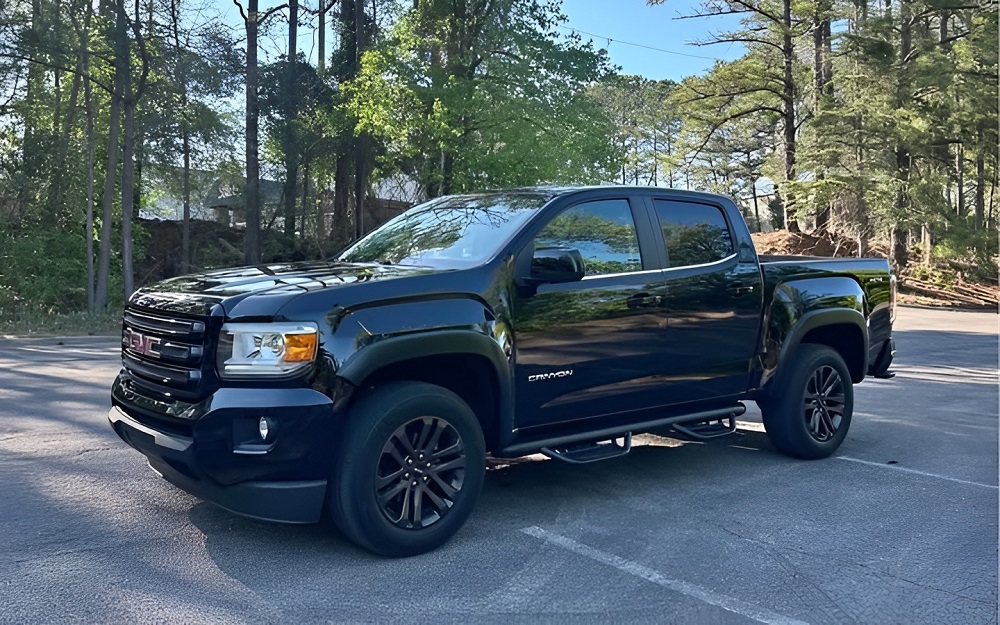
1. Which Canyon years need a closer look
Match the year to the fault
| Model years and engine | Reason for caution | Evidence to review before buying |
|---|---|---|
| 2004–2006, 2.8-liter four-cylinder or 3.5-liter five-cylinder | Some trucks may develop idle misfires associated with intake-valve-seat wear. | Compression and cylinder leak-down results. If the cylinder head was repaired, request an itemized invoice identifying the work. |
| Certain 2015 trucks | Open, VIN-specific steering recalls can leave the truck at risk of losing power assist. | Check the full VIN for both applicable steering recalls and obtain repair records for each completed campaign. |
| Specified 2017–2019 V6 trucks with the 8L45 | Steady-speed shudder may involve the torque-converter clutch (TCC). Build date affects which GM bulletin applies. | Confirm the diagnosis and, if applicable, the specified fluid-exchange procedure. Road-test the truck warm to see whether the symptom remains. |
| Specified later-built 2019 and 2020 V6 trucks | Later production does not rule out shudder; GM bulletin 21-NA-047 covers specified vehicles built from March 1, 2019. | If vibration remains, ask for diagnosis under the applicable bulletin and evidence captured while the symptom occurs. |
| 2017–2022 V6 | GM bulletin 21-NA-036 describes certain misfires involving Active Fuel Management (AFM) cylinders 2 and 5. | Review stored codes and diagnostic/repair records if the engine misfires or shakes. The bulletin is a diagnostic guide, not a recall or a measure of failure rates. |
| Certain 2023 trucks | Service update N232411313 addressed a low or discharged battery condition after an over-the-air update. | Ask a dealer to check VIN eligibility and service history. If the battery has repeatedly discharged, request separate battery and charging-system test results. |
| Certain 2023–2026 trucks, depending on campaign and trim | Recall and service-bulletin coverage varies by VIN, build date, and configuration. Recall 25V856 is limited to specified AT4X AEV trucks. | Check the VIN against current recall records and obtain repair orders for any completed campaigns. |
The engine and gearbox change the risk
The first U.S. Canyon generation ran from 2004 through 2012. GMC sold no U.S. Canyon for 2013 or 2014. The second generation covered 2015–2022; GMC describes the 2023 truck as the “next generation.”
The 2015–2016 V6 uses a six-speed automatic. For 2017–2022, GMC paired the LGZ V6 with an eight-speed. That distinction matters when identifying which transmission guidance applies. GM bulletin 18-NA-355 covers specified 2017–2019 LGZ Canyon models with the 8L45; later-built 2019 and 2020 trucks are addressed by separate guidance.
The 2.8-liter Duramax diesel was available through 2022 and uses a six-speed automatic. Its fuel system and exhaust after-treatment need separate checks. A V6 eight-speed shudder bulletin does not diagnose a diesel truck.
A later year still needs proof
The 2007–2012 trucks fall outside the early valve-seat special coverage described below. That does not make them free of age-related concerns. Inspect the frame for corrosion and check steering and suspension components; a clean idle will not reveal underbody damage. The 2009–2012 Canyon was also available with a V8 in certain configurations, so ask for engine-specific service records and inspect the truck as configured.
A 2016 V6 avoids the later V6/eight-speed pairing, but its six-speed still needs a road test. Delayed engagement, slipping, or harsh shifts require their own diagnosis; the later V6 shudder bulletins do not establish what is wrong with an earlier transmission.
A service bulletin describes a condition and gives technicians a diagnostic or repair path. It does not show what share of trucks will fail. A model year alone cannot establish cylinder sealing, torque-converter condition, or whether steering assist will cut out. Confirm a specific truck’s configuration, VIN history, and symptoms.
2. When an early Canyon misfire points inside the head
Worn valve seats can let compression escape
Some 2004–2006 Canyons with the 2.8-liter LK5 four-cylinder or 3.5-liter L52 five-cylinder may develop intake-valve-seat wear associated with a misfire, a check-engine light, and rough idle. GM addressed the condition through special coverage 07123A. The available bulletin index lists a November 2008 revision that added 2006 models; the original bulletin was not available in the NHTSA archive reviewed for this article, so confirm any prior coverage or repair directly through the truck’s VIN history.
An intake valve must seal against its seat to hold cylinder pressure. Wear at that contact can let compressed gas escape past the closed valve. The resulting misfire does not, by itself, mean the head is cracked, the head gasket has failed, or coolant is leaking.
A misfire code cannot condemn the cylinder head
Code P0300 indicates a random or multiple-cylinder misfire; it does not identify the failed part. Worn plugs, weak coils, fuel faults, intake-air leaks, and mechanical problems all need consideration. Replacing ignition parts without checking whether the misfire is gone can leave the original fault untouched. GM’s diagnostic guidance lists several possible mechanical causes and calls for testing rather than assuming the head is at fault.
Compression testing measures how much pressure each cylinder builds. A cylinder leak-down test can help locate where pressure escapes. Leakage through the intake points toward an intake-valve sealing problem, but the test method, comparison cylinders, and manufacturer limits matter.
Low compression alone does not prove valve-seat wear. Piston or ring problems, other valve faults, and head-gasket damage can also reduce cylinder pressure. The test results and leak path should support the diagnosis before cylinder-head work begins.
“Rebuilt head” needs more than a sales claim
Ask what the shop repaired when a listing advertises a rebuilt cylinder head. The invoice should identify the work and the repairer. Then check whether the misfire returned after the repair.
A tune-up receipt does not document valve-seat work. A cleared warning light does not prove that the cylinders seal properly. If the engine still shakes at idle, current test results matter.
The available 07123A bulletin listing describes this as a special coverage adjustment, not a lifetime safety recall, with an original limit of seven years or 100,000 miles, whichever came first. Those original time limits have passed for 2004–2006 vehicles. Because the source available for those specific coverage terms is an indexed bulletin listing rather than the original GM bulletin, verify coverage and prior repairs with GM by VIN. If low compression remains unresolved, get a written repair estimate before assessing the asking price.
3. The 2015 steering fault can make the wheel turn heavy
Power assist can cut out while moving
Certain 2015 Canyons can lose electric steering assist at startup or while driving. NHTSA recall 16V054 is GM recall 15595, implemented under bulletin revision 15595A. It addressed an electrical connection fault in the steering torque-sensor circuit. If the connection fails, the steering motor may stop providing assistance.
The truck remains steerable, but steering requires more effort, especially at low speeds. A sudden loss of assist can make maneuvering more difficult. Any steering warning or sudden change in effort needs diagnosis. A restart or a short test drive should not be treated as proof that an intermittent fault has been repaired.
An old recall receipt may leave work outstanding
A later recall, NHTSA 21V213 / GM N202325410, covers certain 2015 trucks with steering-gear torque-sensor connection faults associated with corrosion or manufacturing damage. GM’s remedy is to replace the steering-gear torque-sensor cover assembly. Coverage is VIN-specific; not every 2015 Canyon is included.
The specified remedy is a physical repair, not a software update. A receipt for an earlier campaign does not, by itself, establish the status of the later recall. GM said some vehicles repaired with improved steering gears under earlier campaigns may be excluded, while other owners who had previous repairs may still need additional work. Check the full VIN against each applicable campaign and match the status to the repair order.
A 2015 truck with completed applicable recall work may still be worth considering, but that is a buyer’s judgment. Confirm VIN-specific recall closure and separately diagnose any remaining warning or loss of assist before purchase. Do not rely on a seller’s verbal assurance in place of repair records.
4. The V6 eight-speed shake needs the right diagnosis
Shudder can strike without a gear change
The complaint may feel like driving over rumble strips under light throttle, even on a smooth road. GM bulletin 18-NA-355 covers specified 2017–2019 Canyon V6 trucks with the 8L45 automatic. It describes shudder at roughly 25–80 mph while the transmission is not shifting. Build date matters; GM uses March 1, 2019 as a breakpoint in its guidance.
The torque-converter clutch controls slip between the engine and transmission. Uneven clutch engagement can produce repeated vibration, but the sensation alone does not prove that the converter needs replacement. Other engine, tire, driveline, or transmission conditions can feel similar. GM’s later guidance calls for diagnostic testing to distinguish them.
| What you feel | What needs diagnosis | Evidence that helps separate the causes |
|---|---|---|
| Repeated vibration under steady throttle, without a shift | Converter-clutch shudder or another vibration source | Transmission data captured while the fault occurs, along with applicable GM diagnostic tests |
| A single bang during a gear change | Harsh upshift or downshift | The exact shift, fluid temperature, and whether the event repeats |
| Rough running with a warning light | Engine misfire | Stored codes, freeze-frame data, and cylinder misfire data |
| Vibration that rises with road speed | Tire, wheel, driveline, or powertrain fault | How it changes with road speed, engine load, and selected gear |
“Transmission serviced” leaves too much unanswered
For the specified shudder condition, GM’s procedure calls for a fluid exchange using blue-label Mobil 1 Synthetic LV ATF HP. A small drain-and-fill does not document completion of that procedure. Neither does an additive or an invoice that only says “transmission service.” The bulletin specifies a TransFlow exchange and warns against mixing other fluids or aftermarket additives.
Check the fluid specification and ask for an invoice that identifies the service performed, date, and mileage. Those details help establish what went into the transmission and when. A warm road test can then check whether the original vibration remains. These are useful buyer checks; not every detail is a separate GM documentation requirement.
GM says improvement may take up to 200 miles and at least two cold-to-operating-temperature cycles after the exchange. Persistent or returning shudder needs reassessment. The later bulletin says the exchange procedure is performed once per vehicle and directs technicians to further diagnostics for repeat complaints; repeated fluid changes without confirming the fault are not a substitute for diagnosis.
The March 2019 change did not end every complaint
March 1, 2019 is a build-date applicability boundary in GM’s guidance, not a guarantee that later-built trucks cannot shudder. Bulletin 21-NA-047 covers specified 2019–2020 Canyons built from that date through the end of production and directs technicians to use the applicable diagnostic procedure.
For a truck that still shakes, request scan or scope data captured while the vibration occurs. This can help separate converter-clutch behavior from engine misfires and other vibration sources. A fluid receipt does not establish the condition of the converter’s friction lining. Any proposed converter replacement or transmission overhaul should be tied to documented findings; the bulletin does not prescribe the same major repair for every complaint.
5. The V6 can stumble when cylinders switch back on
An engine misfire can mimic transmission shudder
A 2017–2022 Canyon V6 can shake because a cylinder is misfiring. GM bulletin 21-NA-036 addresses specified LGZ engine misfires involving Active Fuel Management (AFM), which deactivates selected cylinders under certain operating conditions. It covers certain misfires that may occur continuously or after the engine returns from AFM/V4 operation. The bulletin is diagnostic guidance, not a recall or a measure of how often the fault occurs.
The bulletin lists P0300 and cylinder-specific codes P0302 and P0305. P0302 and P0305 identify misfires in cylinders 2 and 5, the AFM cylinders addressed by the procedure. A code alone does not prove that a rocker or solenoid has failed.
GM identifies two possible fault paths: oil leakage or pressure loss at an AFM oil-control-valve solenoid, including its seals or camshaft-cover bore, and a switchable rocker/lifter assembly that fails to latch correctly. These components affect valve operation during cylinder deactivation and reactivation. Diagnosis must establish which, if either, applies to the truck.
Check ignition and fuel before opening the engine
GM’s procedure calls for checking ignition or fuel-injector concerns before pursuing the specified AFM valvetrain checks. A code naming cylinder 2 or 5 does not prove a rocker has failed. The technician needs to establish why the cylinder misfires and follow the applicable diagnostic sequence.
Misfire data can help identify which cylinders stumble as the symptom occurs. Transmission data can help assess converter-clutch behavior during the same drive. A fluid exchange will not repair a valve-control fault, and replacing a coil will not fix an oil-control-valve leak. Treat the two systems as separate diagnostic paths unless test results connect them.
A 2021 or 2022 badge does not clear the engine
A later V6 still needs investigation if it shakes, stores misfire codes, or has a history of internal engine work. Ask what testing led to any rocker, solenoid, or cylinder-head repair. The invoice should identify the fault and the work performed.
New plugs and coils do not establish that the original misfire has stopped. Where safe and relevant, post-repair testing should cover the conditions that triggered it, including return from reduced-cylinder operation. A recurring P0302 or P0305 still needs diagnosis even if the transmission shifts smoothly.
6. The diesel needs more than a low-mileage sales pitch
A fuel-pressure code does not condemn the pump
The 2016–2022 Canyon diesel pairs a 2.8-liter engine with a six-speed automatic. Its fuel-pressure faults need diagnosis specific to that engine. Failure reports about other Duramax engines do not establish which pump or repair this truck needs.
GM bulletin 20-NA-197 covers specified 2016–2021 LWN diesel applications. It describes corrosion or damage at the fuel-rail pressure-sensor connector and lists codes including P0087 and P0191. The bulletin directs technicians to inspect the connector and terminals and follow the applicable tests. A pressure-related code alone does not establish that the pump has failed.
For previous fuel repairs, ask whether the shop repaired wiring, replaced a pump, or documented contaminated fuel; those jobs have different scopes. If a shop alleges metal contamination, request the findings supporting that diagnosis before agreeing to broad fuel-system replacement. That is a buyer’s due-diligence step, not a conclusion established by bulletin 20-NA-197.
Short trips can leave the exhaust filter loaded
Repeated stop-and-go trips and extended idling can prevent the diesel particulate filter (DPF) from cleaning itself. The filter traps soot and needs suitable operating conditions to burn it off, so a low odometer reading alone does not show whether cleaning cycles completed.
GM’s 2021 diesel supplement says that a cleaning message may require sustained driving above 30 mph until it clears; the process can take about 30 minutes. Follow the exact message and the manual for the truck’s model year. Do not ignore a warning that remains on.
A persistent warning needs service. Do not assume every reduced-power event means the turbocharger has failed. DPF, diesel exhaust fluid (DEF), and fuel-pressure faults have different diagnostic paths.
Check the belt and filter records before the price
The 2021 maintenance schedule specifies timing-belt replacement at 150,000 miles. Check the exact model-year manual for the truck being considered. Near that interval, ask for an invoice showing belt replacement rather than a general engine-service receipt.
Fuel-filter service follows mileage, time limits, and driver-information messages. The 2021 supplement lists replacement at 150,000 miles, with a two-year limit or the CHANGE FUEL FILTER message taking precedence, whichever comes first; usage may require more frequent service. Review dated filter receipts and investigate active DEF or exhaust warnings. Short-trip use is a reason to ask more about DPF loading and cleaning history, not proof that the filter has failed.
7. A 2023 Canyon that keeps needing a jump needs answers
The battery update covered a small group
Certain 2023 Canyons developed a low or discharged battery condition after accepting an over-the-air update. GM addressed it through service update N232411313. The bulletin identifies approximately 235 Colorado and Canyon vehicles combined in the U.S., not every 2023 Canyon. It does not give a separate count for each model.
The update’s correction calls for reprogramming the engine control module (ECM) and serial data gateway module (SDGM). In the detailed procedure, ECM programming is conditional in a specific VIN-mismatch circumstance; do not assume every repair programs both modules identically. The bulletin does not call for universal radio-module replacement. Eligibility depends on the VIN and the service update’s terms.
A service update has different eligibility and coverage rules from a safety recall. Ask a dealer to check whether the update applied to the truck. A receipt should identify the programming performed rather than simply state “software updated.”
Fresh programming does not prove the battery is healthy
Repeated jump-starts need further investigation, even after applicable programming is complete. Battery testing, charging-system checks, and a parasitic-draw test may help identify a continuing problem. These are diagnostic suggestions; N232411313 does not require a universal post-repair battery test or establish the cause of every later discharge.
“The latest update is installed” does not establish battery capacity or explain every electrical draw. If discharge continues, test the battery and charging system, then measure current draw after the vehicle’s modules have entered their normal sleep state.
Keep frozen screens and phone-connection faults separate unless testing links them to the battery drain. Full-size GM campaign N242435631 lists Silverado/Sierra 1500, Suburban, Tahoe, Yukon, and Yukon XL applications, not Canyon. Continued discharge after programming requires diagnosis of the individual truck.
8. Newer Canyon recalls depend on the VIN and trim
Each defect calls for a different repair
| Affected Canyon models | Recall and fault | Specified repair |
|---|---|---|
| Certain 2023 trucks | 24V133: Front-camera software may trigger unwanted automatic emergency braking. | Update the front-camera module software/calibration. |
| Certain 2023 trucks | 24V237: Over-torqued front wheel-hub bolts may loosen or fracture. | Replace the affected front hub bolts on both sides as specified. |
| Certain 2024 trucks | 24V491: The fuel-tank pump-module lock ring may not be fully secured. | Inspect the lock ring and fully secure it as required. |
| Certain 2024 trucks | 24V673: Headlamp software may cause flickering. | Replace the relevant headlamp module with one containing corrected software. |
| Certain 2024–2026 Canyon AT4X AEV trucks with RPO XEV | 25V856: Incorrect calibration may cause unintended second-stage passenger-airbag deployment in specified crashes. | Update the airbag sensing and diagnostic module calibration. Other Canyon trims are not included in this campaign. |
A shared badge does not mean shared coverage
The fuel-tank lock ring holds the pump module in place and helps maintain the seal. Recall 24V491 concerns module retention and possible fuel leakage; it does not establish a high-pressure injection-pump defect.
The 25V856 airbag campaign is limited to the specified AT4X AEV configuration and excludes other Canyon trim lines. Even within the listed years, eligibility depends on the specific truck. A standard AT4 and an AT4X AEV do not share every recall simply because both carry Canyon badges.
“All recalls done” needs matching repair orders
Check the full VIN against current recall records before buying. These selected campaigns do not replace that lookup. Match each claimed repair to its campaign number and completed repair order.
A repaired defect does not automatically rule out the whole model year. An open campaign still needs attention, even on a low-mileage truck with no obvious symptoms. A quiet test drive cannot verify hub-bolt replacement or confirm the installed airbag calibration.
9. Coolant residue can expose a newer Canyon’s hose leak
The inlet-hose seal can break down
For specified 2023–2026 Canyons, GM bulletin PIT6494A describes a radiator inlet-hose quick-connector seal that can degrade and leak coolant. The bulletin is dated March 2026 and marked Version 1, modified March 5, 2026; describe it as issued or dated then, not as “revised in March 2026” unless citing a later revision.
Coolant may leave wetness or dried residue around the connection. The truck may also store P3075, which indicates low engine coolant flow. That code does not identify the leaking seal by itself; a technician must confirm the source before choosing a repair.
Ask about recent low-coolant complaints, even if the reservoir looks full during the viewing. A recent top-up can temporarily hide a falling level. Inspect the hose connection and pressure-test the cooling system when leakage is suspected.
Confirm the joint before replacing the radiator
For the confirmed connector fault, GM calls for replacing the radiator inlet-hose assembly and cleaning the radiator connection. The procedure does not automatically require a new radiator. An estimate should identify the leaking joint and explain any additional parts.
If P3075 appears without evidence of the described leak, GM directs technicians to normal diagnosis. The code alone does not justify replacing this hose. A coolant top-up does not repair a degraded connector seal.
Sources & References
- GM October 2014 U.S. sales announcement
- 2022 GMC Canyon brochure
- 2023 GMC Canyon brochure
- 2015 GMC Canyon owner’s manual
- GM bulletin 12-06-01-007A: Gen IV V8 service information
- GM special coverage 07123A: intake valve-seat wear, indexed bulletin copy
- GM bulletin 19-NA-219: misfire diagnostic guidance
- GM bulletin 19-NA-122: rough running and low compression
- NHTSA recall report 16V054
- GM recall bulletin 15595A
- NHTSA recall report 21V213
- GM/NHTSA recall bulletin N202325410
- GM owner letter for recall N202325410
- GM bulletin 18-NA-355: Canyon V6 8L45 shudder
- GM bulletin 21-NA-047: later-built Canyon shudder diagnosis
- GM bulletin 21-NA-036: LGZ V6 AFM-cylinder misfires
- GM preliminary information PIP5824: AFM-cylinder misfire diagnosis
- 2021 GMC Trailering Guide
- GM bulletin 20-NA-197: LWN diesel fuel-pressure sensor connector
- 2021 2.8L Duramax diesel supplement
- GM service update N232411313: battery discharge after OTA update
- GM campaign N242435631-01: SDGM and radio customer satisfaction program
- NHTSA recall report 24V133
- GM recall notice A232424660: unwanted automatic emergency braking
- GM repair instructions for recall 24V237
- NHTSA recall report 24V491
- NHTSA recall report 24V673
- NHTSA recall report 25V856
- GM bulletin PIT6494A: radiator inlet-hose coolant leak
- NHTSA recall lookup