
Downshifts slam. The rear jolts like it hit a curb. No warning, no slipping; just lock. That’s the 10-speed failure Sierra owners have been reporting since 2019.
Rear wheels seize during highway shifts, often after a valve body gives out under diesel torque. GM denied it at first. Then came the crashes, the lawsuits, and finally, two major recalls: 24V797 and 25V148.
This guide breaks down which GMC Sierra transmission recalls actually exist, what triggers the lock-up, why the software “fix” disables 8th gear, and how to tell if your truck qualifies for Gen 3 valve body hardware or 15-year warranty coverage.
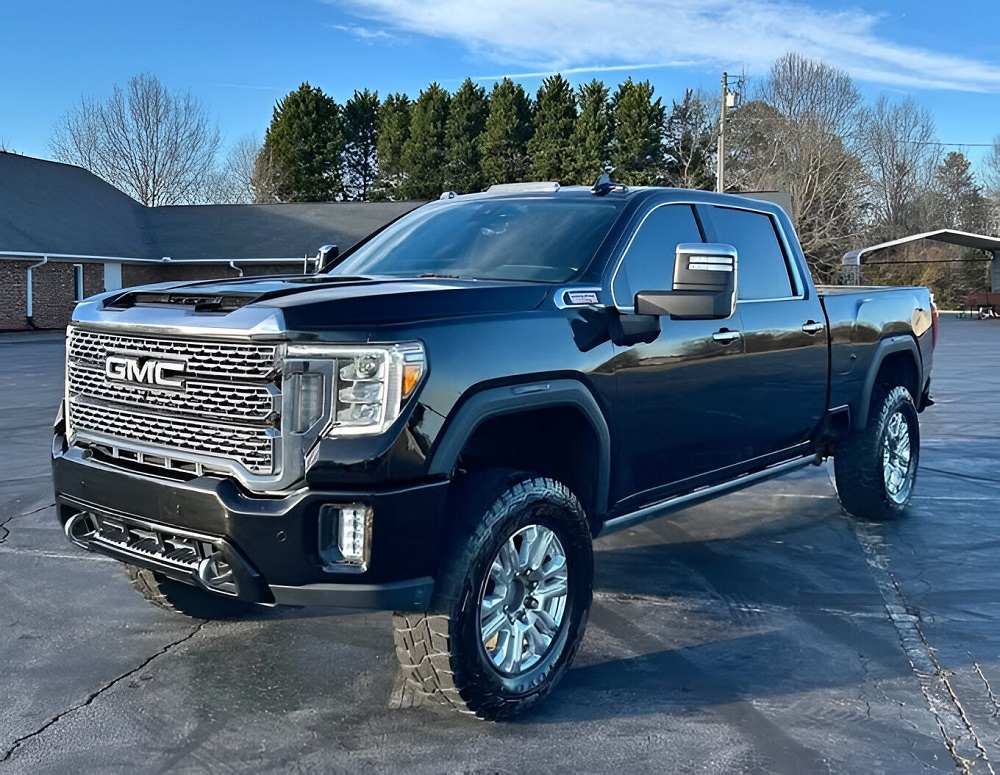
1. What GM transmissions actually qualify as recall material
Sierra’s 3 core automatics and where each one fails
GM stacked its Sierra lineup with three main transmission families since 2014: 6L80/6L90 (6-speed), 8L45/8L90 (8-speed), and 10L80/10L90/10L1000 (10-speed). Each targets a different load class and powertrain combo, but they all carry baggage.
The 6L80/6L90 showed up first, bolted to 5.3L and 6.2L gas V8s and early HD gas trucks. These six-speeds brought over their thermal baggage from the GMT900 days; burnt converters, heat soak shift flares, and an oil cooler line defect that eventually triggered Recall 14V152 for fire risk.
Next came the 8L45 and 8L90 in 2015–2019 Sierras. Built to tighten shift timing and boost fuel economy, they instead brought light-throttle “shudder” complaints that GM never formally recalled.
The problem wasn’t mechanical; it was chemistry. Early Dexron HP fluid absorbed moisture and ruined converter clutch friction.
Then there’s the 10-speed. From 2019 forward, GM leaned on its Ford co-developed 10L series to handle modern diesel and high-output gas torque.
It shifted fast, towed strong, and locked rear wheels when valve bores wore down. Those failures forced GM into back-to-back safety recalls: 24V797 and 25V148, covering over half a million trucks.
Real recalls, ghost recalls, and the blurred line between them
Only two Sierra transmission issues made it to formal NHTSA safety recalls: the 6-speed oil line fire hazard and the 10-speed wheel lock-up. The rest live in a legal gray zone; TSBs, “special coverage” programs, and goodwill fixes.
The 8-speed shudder, despite hitting hundreds of thousands of trucks, never triggered a recall. GM issued over a dozen TSBs, most anchored to 18-NA-355, which pushed a fluid flush with upgraded ATF. Lawsuits came later, but no federal action stuck.
“Special coverage” campaigns, like N242454441 for 10-speed valve body wear, act like recalls with expiration dates. They come with limits: only specific symptoms count, only some parts get covered, and only if the truck hasn’t been tuned or abused.
These programs matter, but they don’t carry the same legal weight as an open NHTSA campaign.
Sierra transmissions, years, and recall/coverage status
| Transmission family | Typical Sierra years | Common engines | Main issue type | Action level |
|---|---|---|---|---|
| 6L80 / 6L90 (6-spd) | 2014–2018 | 5.3, 6.2, some HD gas | Cooler line leak, thermal stress | Safety recall + TSBs |
| 8L45 / 8L90 (8-spd) | 2015–2019 | 5.3, 6.2 | TCC shudder from ATF chemistry | TSB 18-NA-355, no recall |
| 10L80 / 10L90 / 10L1000 (10-spd) | 2019–2025+ | 5.3, 6.2, 3.0D, 6.6D | Valve body wear, rear wheel lock-up | Safety recalls + special coverage |
2. Ten-speed lock-up recalls and what’s going wrong inside
Valve body wear triggers the whole failure chain
At the center of the 10-speed’s failures sits the valve body; an aluminum block packed with tiny bores and spool valves that control clutch timing. It’s the transmission’s hydraulic command center. But under diesel torque or towing heat, those bores wear fast.
As the surfaces erode, valves start to drag or overshoot. The transmission sees lag where it expects precision. Stroke time stretches. Pressure builds in the wrong channel. On paper, the logic holds. In the truck, it’s chaos.
GM tried to fix this through software first, claiming the stroke delays were too small to cause lock-up. But real-world failures kept stacking: rear wheels seized for less than a second at 60 mph. That jolt was enough to spark 11 crash reports and 3 injuries.
Overlapping clutches lock the driveshaft during a downshift
The most dangerous event hits during a high-speed downshift, usually from 8th to 6th. That’s when the worn valve body misfires. It lets pressure spike in two clutch circuits at once. Instead of cleanly handing off gears, it grabs both.
The result? Instant bind. The driveshaft can’t rotate. The rear wheels skid like you dropped the anchor.
These lockups didn’t trip every time. Some trucks flared, some jolted, some coasted clean. That’s what kept it quiet. But when it hit, usually on a diesel under load, it could slam the driveline hard enough to feel like a rear diff exploded.
Which Sierra models are named in the actual recall orders
GM split the lock-up recalls by engine. Recall 24V797 / N242454440 covers 3.0L and 6.6L Duramax trucks from 2020–2022, across 1500, 2500HD, and 3500HD trims.
Recall 25V148 / N242480630 came later. It targets gas-powered 1500 Sierras built between 2019–2022, but not all of them; only those with a specific calibration history tied to downshift timing.
Trucks built after March 18, 2022 usually left the plant with revised logic baked in. Earlier builds remain exposed unless the recall work has been completed.
10-speed wheel lock-up recall coverage on Sierra
| NHTSA ID | GM program | Model years | Sierra models affected | Engine focus | Approx. units |
|---|---|---|---|---|---|
| 24V797000 | N242454440 | 2020–2022 | 1500, 2500HD, 3500HD | 3.0L + 6.6L Duramax | ~461,800 |
| 25V148000 | N242480630 | 2019–2022 | Selected 1500 gas applications | 5.3 / 6.2 gas | ~90,000 |
3. What GM’s recall fix really does and what it doesn’t
Software reflash adds valve monitoring, not a repair
The first step in both 10-speed recall campaigns is a TCM reflash. It doesn’t fix the worn valve body. It just teaches the transmission to watch for failure before it binds.
The updated calibration tracks stroke time on key clutch valves. If timing slips out of spec, the system throws a code and backs off risky gear combinations. It aims to catch trouble 10,000 miles before the drivetrain locks up.
Install takes 15–30 minutes, but requires stable voltage. A brownout mid-flash can brick the TCM or ECM. GM’s own instructions call for a programming support tool and battery maintainer. This isn’t a casual update with a pocket scanner.
Fifth gear fallback locks out the danger zone
When the new software spots valve wear, it throws the truck into reduced propulsion mode. That’s GM-speak for stuck in 5th. No 6th, no 7th, no 8th, because that’s the danger zone where the downshift overlap hits hardest.
This keeps the truck drivable, barely. You’ll wind out to 3,500 rpm at 70 mph, ruin your fuel economy, and lose towing gears. Some trucks also limp at reduced throttle response. It’s not just annoying; it can make long hauls or trailer loads unsafe.
Gen 3 valve body swaps out the worn hydraulics
If the software catches wear, or the truck already slammed, dealers swap in the Gen 3 valve body. This isn’t a reflash fix. It’s a new part: GM P/N 24071206, built with tighter bores, revised clutch regulator valves, extra checkballs, and a stronger spring set.
It replaces the earlier P/N 24065353, which wore out under load. GM redesigned the separator plate too, changing hole sizes to clean up shift overlap and pressure delays.
But it’s still aluminum. Bore wear can creep back over time, especially in tuned trucks or ones that tow heavy and hot. There’s no steel sleeve in the housing. No bushing kit. Just better flow control and stronger timing to buy it more life.
Software vs hardware paths after a 10-speed recall update
| Condition after update | What the truck does | Dealer next step | Owner experience |
|---|---|---|---|
| Normal valve data | Shifts normally, no codes | No hardware change | Drives like pre-recall |
| Early wear detected | MIL on, “reduced propulsion,” stuck in 5th | Order valve body, schedule swap | Limited speed, trip to dealer |
| Severe symptom (bind, harsh slam) | Abrupt events, possible limp mode | Valve body or full unit replacement | Longer downtime, tow required |
4. Extended coverage and when GM actually pays
15-year valve body coverage under Special Coverage N242454441
GM built a long tail into its recall strategy. Special Coverage N242454441 shadows the 10-speed safety recalls, covering trucks that show valve body wear later, well past bumper-to-bumper limits.
It runs 15 years or 150,000 miles from the original in-service date, applies to both diesel and gas Sierras named in 24V797 or 25V148, and stays with the vehicle even if it’s been sold.
The coverage only applies if the valve body shows measurable wear. That means dealer diagnostics must catch slow valve strokes, set codes like P0747, or show symptoms tied directly to the lock-up condition. Anything else; burnt frictions, converter failure, cracked case, won’t qualify.
How the special coverage turns into a free repair
Here’s how it plays out: the truck throws a warning, shifts go harsh or it’s stuck in 5th. Dealer pulls codes, checks shift timing, confirms early valve wear. GM greenlights a valve body swap under the special coverage. No deductible, no fight, no age penalty.
But anything outside that failure path risks rejection. If the fluid’s cooked from heat, the converter’s worn out from tuning, or the transmission ate debris from another failure, GM can say no. Proof matters, and clean dealer documentation speeds things up.
Paid out of pocket? You can claw it back
If an owner already paid to fix a valve body tied to the lock-up issue, they can file for reimbursement. But GM wants paperwork: the repair invoice, proof of payment, and clear notes tying the repair to clutch timing, harsh downshifts, or DTCs like P0747 or P2818.
Reimbursement must go through GM’s official claims process. Dealers won’t issue checks. Owners need to file through the customer assistance portal with scanned docs and VIN match.
Warranty and coverage windows for Sierra transmissions
| Component / issue | Coverage type | Time / mileage limit | Owner cost if approved |
|---|---|---|---|
| 10-speed valve body wear | Special Coverage N242454441 | 15 years / 150,000 miles | $0 (parts + labor) |
| 10-speed lock-up recall (SW) | Safety recalls 24V797, 25V148 | No limit for recall work | $0 |
| 6-speed cooler line fire risk | Safety recall 14V152 | No limit for recall work | $0 |
| 8-speed shudder fluid flush | TSB 18-NA-355, goodwill / basic warranty | Varies by age/miles, often goodwill early | Often partial or full coverage; out-of-warranty = owner pays |
5. Eight-speed shudder: common failure, no safety recall
The light-throttle “rumble strip” that won’t go away
Drivers called it a buzz. Others said it felt like the road was grooved. What they were feeling was the torque converter clutch slipping and grabbing at low loads. The truck wouldn’t downshift. It would just shudder at 25–80 mph, especially on hills or gentle throttle.
This problem hit both 8L45 and 8L90 transmissions from 2015–2019, mostly behind 5.3L and 6.2L gas V8s. But it wasn’t a hardware defect in the converter. It was the fluid; specifically early Dexron HP, which pulled moisture and ruined the clutch surface coating inside the converter.
Moisture made the friction material swell. That wrecked the clutch’s grip curve, turning it into a slip-glide mess that couldn’t hold torque without vibration. Hot or cold, it came back. No mechanical fix would stick until the fluid got changed, and not just once.
The triple-flush ATF fix with Mobil 1 LV HP
TSB 18-NA-355 laid out the only real solution: dump the old fluid, then pump in fresh Mobil 1 Synthetic LV ATF HP, the “Blue Label” stuff. But not a drain-and-fill. That leaves too much bad fluid behind.
The correct fix uses a transmission fluid exchange machine and flushes about 20–24 quarts, with short engine runs in between cycles to keep the converter from sucking air. The process requires DT-52263 and the TransFlow cooler flush machine to avoid damage during fill.
It takes multiple heat cycles and around 200 miles of driving to clean the clutch surfaces. Some owners saw results fast. Others didn’t get full smoothness until the second flush.
8-speed shudder service per 18-NA-355
| Transmission | Sierra years | ATF spec (post-TSB) | Typical exchange volume | Result if successful |
|---|---|---|---|---|
| 8L90 | 2015–2019 | Mobil 1 Synthetic LV ATF HP | ~20–24 quarts | Shudder fades after a few drives |
| 8L45 | 2016–2019 | Mobil 1 Synthetic LV ATF HP | ~20 quarts | Smoother light-throttle shifts |
Why lawsuits failed and class actions collapsed
Class actions came fast: Speerly, Ulrich, and others accused GM of hiding a widespread defect. Internal docs showed GM priced a hardware fix at just over $300 per truck but went with fluid swaps to save cost.
The plaintiffs had momentum, 13 TSBs, over 800,000 trucks, and a defect that ruined resale value. But in June 2025, the 6th Circuit Court decertified the nationwide class. Too many variables between drivers, fluids, build dates, and conditions.
That move gutted recovery options. Now, owners can still sue, but it’s case by case. No lump payout, no automatic remedy. Just the goodwill route or a paid flush if the dealer won’t help.
6. Six-speed failures and the recall that started it all
Oil cooler line recall: fire risk from a loose fitting
The first Sierra transmission recall dropped in 2014. Trucks with the 6L80/6L90 had cooler lines that weren’t fully seated from the factory. ATF leaked down onto the exhaust, triggering smoke and, in some cases, underhood fire.
That defect led to Recall 14V152, which covered early K2XX platform trucks. The fix was quick: inspect the line connections, reseat or replace them, then road test for leaks. But the damage went beyond leaks. It exposed how heat and carelessness stacked up inside these six-speeds.
Why these converters failed and what GM changed
The real issue wasn’t always the lines. It was heat. The thermostatic bypass valve (TBV) in the early 6L80s delayed flow to the cooler until the fluid hit 190°F. That left converters running hot during short trips or light towing, especially in southern states.
Converters started slipping. Friction material shredded. Metal hit the pan. Once that happened, it was game over. ATF flow slowed, pressure dropped, and the rest of the transmission ate debris until it lost drive.
GM issued TSBs to revise the TBV opening temp to 150°F, and owners jumped on aftermarket mods that held the bypass open or used thermostats with quicker release.
Ten years on, these failures still surface
The 6L80/6L90 might feel old-school now, but thousands of these trucks are still on the road, many with 150,000+ miles and second or third owners. Converter failure is still common, and many haven’t had the recall work or TBV update.
Even worse, symptoms from these 6-speed failures; slip, flare, loss of drive, can get misread as 10-speed issues in mixed fleets or service centers not watching build dates. That mistake sends owners down the wrong repair path and ruins claim chances on newer recalls.
6L80/6L90 Sierra issues and actions
| Problem pattern | Typical years | What drivers feel | GM response |
|---|---|---|---|
| ATF leak, smoke, fire risk | ~2014 | Burning smell, fluid drips | Recall 14V152, line repair |
| Converter failure, debris | 2014–2018 | Slip, no-move, metal in pan | TSBs, updated TBV, reman units |
| Heat-soak shift flare | 2014–2018 | Worse shifts when hot, towing | Calibration updates, cooling mods |
7. When engine trouble masks or triggers transmission failures
Cylinder deactivation systems wreck shift timing
GM’s AFM and DFM systems cut cylinders during light throttle to save fuel. On paper, seamless. In real trucks, it throws off shift feel.
Every time the engine drops to 4 cylinders, torque output dips. If that happens mid-shift, the transmission can mistime clutch apply, especially in the 8- and 10-speed boxes. Shifts feel sloppy, gears hunt, throttle response lags.
Some owners fixed it without touching the trans. Just force full V8 mode with tow/haul, manual gear limits, or a disabler module. Locking out AFM/DFM stabilizes torque and clears up confusion between engine and transmission control logic.
6.2L failures now spill into the driveline
The newer 6.2L L87 V8 has its own recall crisis: debris in oil passages, failed rods, spun bearings. When that engine locks up or limps out, the transmission takes the hit.
Seizure events hammer the converter. Limp mode in the engine starves the trans of line pressure. And if metal from the motor makes it into shared cooling loops, the transmission eats that too.
GM’s current engine recall pushes 0W-40 oil as a band-aid, but field reports show failures continue even after the update. A clean oil change won’t reverse what a rod knock already did to the clutch packs.
Mistaking engine faults for trans problems ruins claims
Harsh 2-3 shifts. Loss of drive. Vibration on acceleration. Shops see these and chase transmission issues first. But when the underlying issue is a failed lifter, rod knock, or DFM misfire, it wastes time and parts, and nukes any warranty overlap.
Shops that don’t pull full powertrain codes or ignore top-end noise risk replacing good valve bodies or flashing TCMs for no gain. The better path starts with engine health, not the gear count.
Symptom vs likely issue on late-model Sierra
| What the driver feels | First suspect system | Likely issues to sort first |
|---|---|---|
| Brief slam and jolt on highway downshift | 10-speed trans, 24V797/25V148 | Valve body wear, recall not done yet |
| Constant light-throttle vibration 30–70 mph | 8-speed trans, 18-NA-355 | ATF chemistry, TCC shudder |
| Tick and misfire, then harsh shifts | Engine (lifter/rod) first | 6.2L failures spilling into driveline |
| Truck stuck in 5th, “reduced propulsion” | 10-speed valve body | Software caught wear, hardware next |
8. Which model years carry the biggest transmission risks
How Sierra generations split by drivetrain trouble
Start with 2014–2015: early K2XX trucks with 6-speed automatics. They’re recall material for fire-risk cooler lines and converter overheating, especially in tow-heavy builds without the TBV update.
From 2016–2018, GM rolled in the 8L90 and tweaked the 6L80 for its final years. These trucks see both converter failures and the start of the TCC shudder plague. Most didn’t get the flush unless the owner pushed.
2019–2020 was the crossover into the T1 platform. These Sierras mixed late-run 8-speeds with first-gen 10L80/10L90s. Early reports of hard shifts and valve body wear started here. No formal recalls yet, but patterns were forming.
2021–2024 trucks are full-on 10-speed era. That’s where the rear wheel lock-up failures peaked and where most recall and coverage actions live now: 24V797, 25V148, and N242454441.
2025–2026 units shipped with updated TCM logic and revised valve bodies, but some builds still had the old weak points. They also brought in the 6.2L engine recall, which doubled the chance of cross-system damage.
GMC Sierra model-year bands and dominant transmission actions
| Model year band | Platform / trans focus | Main risk | Key recall / campaign to check |
|---|---|---|---|
| 2014–2015 | K2XX, 6L80/6L90 | Cooler line leaks, converter debris | 14V152 + TBV/heat TSBs |
| 2016–2018 | K2XX, 6L80 + early 8L90 | Heat-soak issues, early 8-spd shudder | 18-NA-355 (8-spd), cooling updates |
| 2019–2020 | Late K2XX/T1, 8L45/8L90 + early 10-spd | Widespread 8-spd shudder, first 10-spd wear | 18-NA-355, early 10-spd TSBs |
| 2021–2024 | T1, 10L80/10L90/10L1000 | Valve body wear, rear wheel lock-up | 24V797, 25V148, N242454441 special coverage |
| 2025–2026 | T1 facelift, 10-spd + engine recalls | Newer 10-spd calibrations, 6.2L engine crisis | 10-spd recall status + engine campaigns |
Recalls done or not, the work history tells the real story
Mileage means nothing if the recall’s still open. A 30,000-mile truck with original software and a worn valve body is a worse bet than a 90,000-mile truck with the Gen 3 update already installed.
Pull the VIN report. Look for campaign codes, dealer job cards, or invoice notes tied to TCM flash, valve body, or N242454441. That’s the difference between driving and waiting for limp mode at 70 mph.
Sources & References
- GM wins appeal on 8-speed transmission class-action lawsuit – Pickup Truck +SUV Talk
- GMC Sierra Transmission Problems and Complaints | Lemon Law Help
- GM Transmission Recalls and Issues: What Drivers Need to Know
- GMC Sierra Recalls – Auto Lemon Lawyer
- GM transmission class action to proceed
- GM 10-Speed Transmission Recall: Wheels Lock Up – Lemon Law Help
- “I’m Out, It’s Just Too Risky”: Why a 2026 GMC Sierra Buyer Canceled Their Order as the 6.2L V8 Engine Crisis Takes a Dark Turn | Torque News
- GM 10-Speed Transmission Recall 2025: Silverado & Sierra Wheel Lock-Up Fix Guide
- GM 10-Speed Automatic Transmission Recall Fix: Bandaid or Reliable?
- What’s the truth on the 10 speed transmission? I hear the 8 speed has all sorts of issues : r/Silverado – Reddit
- Safety Recall N242454440 Momentary Rear Wheel Lock-Up – nhtsa
- GM Recalls 462,000 Diesel Pickups & SUVs Due to Rear Wheel Lock-Up from Transmission Valve Failure | Auto Lemon Lawyer
- Understanding ’19-Later GM 10-Speed Safety Recall – Sonnax
- Part 573 Safety Recall Report 25V-148 | NHTSA
- Part 573 Safety Recall Report 24V-797 | NHTSA
- IMPORTANT SAFETY RECALL – nhtsa
- IMPORTANT SAFETY RECALL – nhtsa
- 2025 GMC Sierra Transmission Fails at 12,500 Miles; This Owner Is Furious Over the Dealer’s ‘Weak Fix’ | Torque News
- GM Releases New Gen 3 Valve Body for 10-Speed Transmission …
- The GM 8-Speed TCC Shudder Solution – Lubegard
- Special Coverage N242454441 Momentary Rear Wheel Lock-Up – nhtsa
- GM Recalls, Field Actions, and Warranty Center
- Chevrolet Silverado Transmission Repair Guide (2014-2024) | 8-Speed Problems & Costs
- Service Bulletin TECHNICAL – nhtsa
- Service Bulletin TECHNICAL – nhtsa
- GM 8L90 & Toyota Cold Shudder – Torque Converter Fluid Fix (TSB 18-NA-355) – YouTube
- Lawsuit against GM as to 8 speed tranny moves forward | Classic Corvette Club UK
- Sixth Circuit Affirms Class Certification in Massive Defective Transmission Lawsuit Against GM – Cohen Milstein
- Consumer Class Action Lawsuit Against GM 8-Speed Transmission
- GMC Sierra 1500 Transmission Recall – Asbury Automotive
- Recall Bulletin – nhtsa
- 6L80 TSB questions : r/Silverado – Reddit
- How we Fix GM Transmission Failure (6L80 & 6L90)
- 2014 Gmc Sierra 5.3L * TRANSMISSION ISSUES* : r/gmcsierra – Reddit
- GMC Sierra 1500 Problems (2022–2025): Engine, Transmission & Reliability Issues
- 2023-2025 Chevy Silverado 1500 Known Problems – 6.2L V8 Engine Failure, Lifters, Transmission Woes
- GM Recalls | 2018-2026 – Auto Lemon Law Attorneys
- Service Bulletin – nhtsa
- GM Confirms New Silverado 1500 and Sierra 1500 Will Debut This Year
- All 2025 GMC Recalls By Model In One Place – CarBuzz
Was This Article Helpful?