
The Terrain rattles at startup, and the dipstick comes back nearly dry. Worn piston rings can burn oil between changes in early 2.4-liter engines. As the level drops, poor lubrication can turn repeated top-ups into major engine repairs.
That puts 2010–2013 four-cylinder models under close scrutiny, especially without proof of piston repairs. But the engine choice matters as much as the year. Later Terrains bring separate concerns, from lost brake assistance to transmission leaks and cold-weather power loss.
This guide identifies the GMC Terrain years to avoid, the repairs that change your odds, and the warning signs worth investigating.
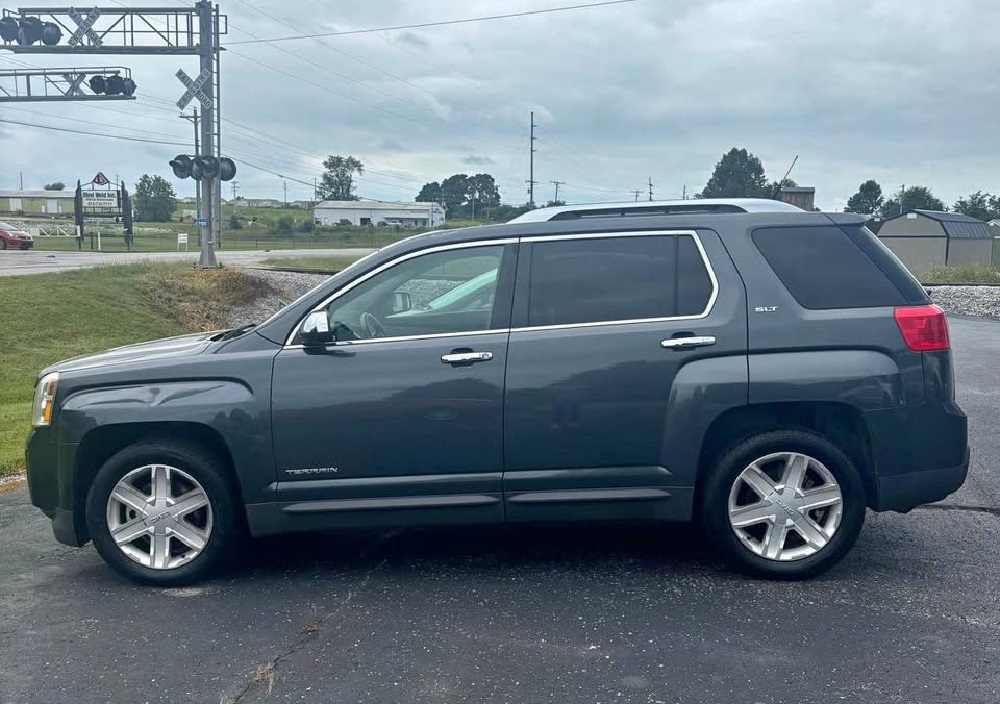
1. Which Terrain years carry the biggest repair risks
Start with the 2010–2013 four-cylinder models
An unrepaired 2010–2013 Terrain with the 2.4-liter engine deserves particular caution. GM issued year-specific special-coverage adjustments for certain vehicles in each of these model years. The documents describe excessive oil consumption associated with piston-ring wear. They do not establish that every Terrain in those years was affected, or provide comparative failure rates.
A documented piston repair can change how you judge a used Terrain. Ask for an invoice that identifies the parts replaced, along with the repair date and mileage. Oil-use measurements after the repair matter, too. A fresh oil change can leave a full dipstick while hiding how quickly the level drops.
These buying judgments reflect documented conditions and repair needs, not measured failure rates. A bulletin or special coverage identifies a condition within its listed applications; it does not show how often that condition occurs.
| Model years and engine | Buying position | Mechanical concern |
|---|---|---|
| 2010–2013, 2.4-liter | Give extra scrutiny to vehicles without documented piston repairs; GM programs were VIN-specific | Year-specific GM programs addressed excessive oil consumption associated with piston-ring wear. |
| 2014–2017, 2.4-liter | Judge each vehicle by repair history and measured oil use | Later build dates do not prove freedom from oil loss. A separate GM bulletin describes possible fuel contamination from an internally leaking high-pressure fuel pump. |
| 2018–2020, 1.5-liter turbo | Check service records, recall status, and the individual vehicle’s condition | GM diagnostic guidance addresses possible vacuum-pump failure on specified 1.5-liter vehicles. Recall 20V668 covers certain VINs and transmissions, not every Terrain in these years. |
| 2018–2020, 2.0-liter turbo | Assess separately from the 1.5-liter | Cold-weather charge-air-cooler icing guidance and applicable transmission campaigns are separate issues. The cited vacuum-pump documents list the 1.5-liter, not the 2.0-liter. |
| 2021–2024, 1.5-liter turbo | Consider with verified repair records and an inspection | Vacuum-pump guidance reaches 2022 for specified 1.5-liter vehicles. Charge-air-cooler guidance includes specified applications through 2024. Check the applicable VIN, engine code, build date, and repair history. |
| 2025–2026, 1.5-liter turbo | Too early for a firm long-term durability judgment | The third generation uses a different transmission lineup and has a shorter service record. |
Why 2013 belongs here and 2015 needs a closer look
The 2013 model belongs beside earlier 2.4-liter Terrains because GM issued a piston-ring oil-consumption special coverage for certain vehicles. A newer model year does not remove the need to check repair records. For eligible 2013 VINs, the historical program ran for 7 years and 6 months or 120,000 miles, whichever came first, measured from the original in-service date. That term does not establish current eligibility for a free repair.
The 2015 model needs an engine-specific assessment. GM bulletin 21-NA-280 lists 2010–2017 Terrain models with 2.4-liter LAF or LEA engines for a possible internal high-pressure fuel-pump leak. That application range does not support singling out 2015 for this condition.
A leaking pump can send fuel into the crankcase and contaminate the engine oil. GM lists engine run-on, rough idle, and diagnostic trouble code P0172 among possible symptoms. Those signs call for diagnosis; none confirms the pump by itself. A fuel smell in the oil or a rising dipstick level also warrants investigation but is not proof of pump failure. Replacing worn piston rings will not stop a separate internal fuel-pump leak.
2. When the 2.4-liter burns oil and the timing chain starts rattling
The oil level can fall before the next service
Worn piston rings can let oil enter the combustion chamber and burn with the fuel. You may keep adding oil and still find the dipstick low again. A measured oil-consumption test tracks the loss over a known distance.
GM’s listed repair procedures used consumption above 1 quart per 2,000 miles as a threshold for piston and ring repairs under those programs. That was a program threshold, not a guarantee of trouble-free use below that rate. Keep the oil level within the range specified in the owner’s manual.
Low oil can starve moving parts of lubrication and turn an oil-burning complaint into engine damage. The oil-life display does not measure how much oil remains. An oil-pressure warning does not replace a dipstick check. A full reading during an inspection says nothing about how quickly the level fell beforehand.
A startup rattle needs more than a chain estimate
A metallic rattle at startup warrants a timing-system check, especially if the engine has been run with low oil. Rough running and codes P0016 or P0017 are additional reasons to investigate. These codes flag a mismatch between crankshaft and camshaft position signals.
They do not prove that the timing chain has stretched. GM also documents cases in which a camshaft reluctor has shifted on an otherwise correctly timed 2.4-liter engine. The reluctor provides a position reference for the sensor, and a shifted target can produce a correlation code even when chain timing is correct.
No fixed number of seconds turns a startup rattle into a confirmed chain diagnosis. A technician should check the oil level, timing hardware, and position signals. Replacing a chain will not correct worn piston rings that continue to lower the oil supply.
“Engine serviced” leaves the costly questions open
A useful invoice names the pistons, rings, or other parts the shop replaced. It should include the repair date and mileage. Oil-use measurements afterward help show whether the work stopped the loss.
For a replacement engine, ask whether the unit was used, rebuilt, or remanufactured. Check its origin, installation mileage, and warranty terms. Do not assume every replacement contains revised pistons or rings. A used engine may have the same wear as the one it replaced.
GM’s historical special coverages had firm time and mileage limits. The 2012 and 2013 programs specified 7 years and 6 months or 120,000 miles, whichever came first, for eligible vehicles from their original in-service dates. The records support checking repair history; they do not establish current eligibility for a free repair.
3. Two oil threats a piston repair will not fix
A blocked vent can force oil past the rear main seal
In cold weather, frozen moisture can restrict the 2.4-liter engine’s crankcase-ventilation passage. Pressure can then build inside the crankcase and force oil past the rear crankshaft seal, where the crankshaft meets the transmission.
GM special coverage 14882 addressed this condition in certain 2010–2013 Terrain 2.4-liter models. It did not cover every first-generation Terrain. The bulletin identifies eligible vehicles by VIN and stated coverage terms of 10 years or 120,000 miles from the original in-service date, whichever came first.
Oil near the engine-transmission joint gives a technician a place to start, not a confirmed diagnosis. Leaks from higher on the engine can leave oil in the same area. The source should be traced before the rear main seal is blamed.
A seal replacement alone can leave a pressure fault unresolved. The repair should include checks of crankcase pressure and the relevant ventilation passage. If the passage remains blocked, pressure can force oil past the replacement seal.
A leaking fuel pump can thin the engine oil
The high-pressure fuel pump presents a separate threat. GM bulletin 21-NA-280 lists 2010–2017 Terrain models with 2.4-liter LAF or LEA engines for possible internal pump leakage. Fuel can enter the crankcase and mix with the oil.
GM lists engine run-on, rough idle, and P0172 among possible symptoms. A fuel smell in the oil or a rising dipstick level can also prompt diagnosis, but neither clue proves the pump has failed. The technician should confirm the leak and rule out other causes of rich running.
Once testing confirms an internal pump leak, the repair should address the pump. GM’s procedure also calls for replacing the contaminated oil and filter. Fuel dilution thins the oil and weakens the protective film on bearings and other moving parts.
4. Early six-speeds can lose gears when a clutch plate breaks
Keep the wave-plate fault tied to the 6T45
Early 2.4-liter Terrains use the 6T45 six-speed automatic. Inside, the 3-5-Reverse clutch uses a spring-steel wave plate to cushion clutch application. If that plate breaks, the clutch can lose its ability to hold.
You may feel harsh shifts or slipping, or lose reverse, third, or fifth gear. Broken pieces can also damage nearby clutch parts. Those symptoms warrant an internal transmission diagnosis, but do not identify the failed part by themselves.
Code P0776 can accompany a broken 3-5-Reverse wave plate or another pressure or clutch-apply fault. It does not prove which part failed. The shop should check hydraulic operation and clutch performance before naming the cause.
The V6 uses a different transmission from the four-cylinder’s 6T45. Repair advice must match the installed gearbox. A fault documented in the four-cylinder pairing does not establish the same failure across every first-generation Terrain.
The hardware changed before the supposed 2013 cutoff
“Buy a 2013 because GM fixed the transmission” draws too firm a line. ATRA identifies the Terrain among applications receiving second-generation 6T40/6T45 changes beginning at 2012 start of production, but the updates rolled out across multiple years. Some 2012 and 2013 applications retained earlier components or controls. Build information and the parts inside the transmission matter more than model year alone.
A previous rebuild can further change what is inside the case. Earlier designs can require an updated clutch piston when repairing wave-plate damage. The invoice should identify the replacement hardware, rather than list only “transmission repair.”
Fresh fluid cannot repair broken steel
A fluid change will not mend a fractured wave plate. An adaptation reset changes learned shift adjustments but cannot restore damaged clutch hardware. Any brief improvement still leaves the original mechanical fault unresolved.
Delayed engagement, repeated slipping, or missing gears needs diagnosis using the applicable factory procedure. Check fluid level at the specified transmission-fluid temperature and perform adaptation procedures only within their specified range. Ask whether a rebuild addressed the failed clutch assembly and damage from loose fragments. The repair record should identify any applicable piston and hardware updates.
A short, smooth test drive can miss faults that appear once the fluid heats up. Repeatable engine-speed flare during a shift means the transmission is not holding the expected ratio. Continued clutch slip creates heat and wears friction material.
5. A failed vacuum pump can make the brake pedal hard
The 1.5-liter pump concern reaches through 2022
A failed brake-vacuum pump can leave you pressing much harder to slow the Terrain. The brakes still have a hydraulic circuit, but reduced vacuum assistance raises pedal effort. A sudden hard pedal needs prompt professional inspection.
GM preliminary information bulletin PIP5835 lists 2018–2022 Terrains with the LYX 1.5-liter turbo engine for possible increased brake-pedal effort caused by mechanical vacuum-pump failure. The document is diagnostic guidance, not a recall or a failure-rate estimate. It does not mean every listed vehicle has the condition.
Reduced vacuum assistance differs from a brake-fluid leak. A shop should check the source of the lost assistance and inspect the pump drive. Rapidly pumping the pedal is not a reliable test for pump seizure because it can deplete stored vacuum.
Broken pump-drive lugs can lead to camshaft work
The repair can reach beyond the pump itself. GM bulletin 21-NA-268 links broken pump-drive lugs and an out-of-position exhaust-camshaft reluctor in specified 2018–2021 Terrain models with the 1.5-liter LYX engine. The bulletin lists extended cranking or a no-start condition and codes P0014, P0017, P0365, and P0366 among the possible signs.
The reluctor provides a position reference for the camshaft sensor. When it shifts, the engine computer receives a signal that no longer matches the expected camshaft position. The listed codes guide inspection; they do not confirm every part that needs replacement. Broken drive lugs alone do not prove that the camshaft stopped turning or that valves struck pistons.
A pump invoice may leave damage unaccounted for
A pump-replacement receipt needs closer review if the engine also had starting trouble or camshaft codes. Look for records of the pump-drive inspection and removal of broken fragments. Under the bulletin’s stated conditions, repair can require exhaust-camshaft and vacuum-pump replacement.
A replacement pump will not correct a reluctor that has shifted out of position. Remaining fragments also require attention under the applicable repair procedure. These documents address the 1.5-liter engine; they do not establish the same fault in the 2.0-liter turbo.
6. Frozen moisture can choke power in 2018–2024 Terrains
Ice in the charge-air cooler can restrict airflow
In cold weather, moisture can collect and freeze inside the charge-air cooler. This cooler lowers the temperature of compressed air before it enters the engine. Ice can block airflow, leaving you with weak acceleration, rough running, or reduced power.
GM’s February 2024 revision of bulletin 18-NA-020 includes specified Terrain applications from 2018 through 2024. The listed applications include 1.5-liter LYX/LSD engines through 2024 and 2.0-liter LTG engines through 2021. Applicability depends on the bulletin’s engine, build, and repair-history details, so verify the vehicle by VIN and engine code.
GM lists codes P0299, P0300, P0234, and P2227 among associated codes. They can flag underboost, misfires, overboost, or a barometric-pressure sensor performance concern. No code proves icing by itself, so a shop should confirm the restriction before replacing parts.
The correct repair depends on what is already installed
A thawed cooler may restore airflow without fixing what allowed ice to build. Depending on the application, the procedure can include thawing, inspection, leak testing, revised hardware, and engine-computer updates. Build date and previous repairs determine which steps apply.
Do not assume every Terrain needs a new cooler or the same software update. A useful invoice identifies the installed parts and calibration work. “Intercooler checked” does not establish whether the shop completed the applicable bulletin procedure.
For specified 1.5-liter LYX/LSD applications, GM’s calibration changes cold-weather shift behavior by using overdrive less frequently. Higher highway engine speeds may result. The change is intended to reduce charge-air-cooler icing and related conditions, rather than indicate a new transmission fault by itself.
A winter grille cover has a firm temperature limit
GM’s procedure can call for a specified soft grille cover matched to the vehicle. Use the cover only where the bulletin chart calls for it. It does not replace required inspections, hardware changes, or calibration updates.
GM directs removal when average temperatures consistently reach 32°F (0°C) or above. Leaving the cover fitted year-round falls outside that procedure.
7. A brief shift pause differs from a leaking nine-speed
Check the engine before judging the gearbox
Second-generation gasoline Terrains use nine-speed automatic transmissions. The available 1.6-liter diesel uses a six-speed. A listing that says “2018 Terrain” does not identify which gearbox is installed.
Match the engine and transmission before applying a bulletin or judging a shift complaint. The nine-speed’s documented operating behavior does not explain a diesel’s delayed engagement. The 2025 redesign also changes the transmission lineup, so this guidance does not carry across every newer Terrain.
One light-throttle shift can briefly feel like neutral
GM bulletin 18-NA-359 describes a narrow condition in which an applicable Terrain can momentarily indicate Neutral during a zero-to-very-light-throttle 1–2 shift. The D or shift-in-progress display may flash during the event. The bulletin’s indexed GMC application is 2018–2019 Terrain; check current GM application or VIN information before extending that guidance to a 2020 vehicle.
GM attributes the described event to the selectable one-way clutch and says it does not require repair. That explanation applies only to the specific shift behavior described in the bulletin. It does not establish that every hesitation or engine-speed flare is normal.
Persistent slipping, delayed Drive or Reverse engagement, transmission warnings, loss of drive, or repeated flaring under load needs separate diagnosis. A shop should match the actual symptoms to the bulletin before dismissing the complaint.
Missing accumulator bolts can let transmission fluid escape
Recall 20V668 covers certain 2018–2020 Terrains, with eligibility tied to the VIN and installed transmission. Missing bolts at the start-stop accumulator can allow transmission fluid to leak. The resulting fluid loss can cause loss of propulsion and create a fire risk.
The recall calls for inspection and accumulator replacement where required. It does not mean every affected transmission needs a rebuild. Check the VIN-specific completion record for the work performed.
Recall completion addresses the accumulator attachment defect. It does not confirm the condition of internal clutches, hydraulic controls, or other seals. Any remaining leak or loss of drive still requires diagnosis after the campaign repair.
8. Wipers can stop, while headlamps can blind other drivers
Match the visibility fault to the right campaign
| Model years | Documented fault | Campaign and repair |
|---|---|---|
| Certain 2013 models | Wiper-linkage ball joints can wear and separate. | Safety recall 16V582. Verify completion by VIN. |
| Certain 2014–2015 models | Wiper-linkage corrosion and wear can disable the front wipers. | Safety recall 22V165. Inspection determines the applicable repair or wiper-module replacement. |
| Certain 2010–2012 and 2016–2017 models | Related front-wiper linkage failure. | Special coverage N192266181, with a 15-year or 200,000-mile limit from the original in-service date, whichever comes first. This coverage is separate from the recalls. |
| Certain 2010–2017 models | Headlamp reflections can create excessive glare for other drivers. | Safety recall 22V137. GM’s remedy uses appliqués on the headlamps. Verify eligibility and completion by VIN. |
A receipt stating “wipers repaired” does not identify which work the shop completed. Ask for the campaign number or details of the linkage repair. Replacing a blade does not repair a worn linkage joint.
Special-coverage eligibility depends on the VIN, mileage, and original in-service date. The 15-year limit does not start when you buy the used Terrain. A listed model year alone does not establish that GM will cover the repair.
The 2017 rear-axle campaign covered a very small group
GM Service Update 16065 addressed certain 2017 all-wheel-drive Equinox and Terrain vehicles with a suspect rear-differential gear set. A manufacturing crack in the pinion’s back face could propagate, fracture a tooth, and lock the rear wheels. GM’s stop-delivery notice stated that 50 U.S. vehicles were involved across the two models. That VIN-specific count does not establish a widespread defect across all 2017 AWD Terrains.
Check the individual VIN’s GM vehicle-history record before attaching this defect to a used listing. Rear differential noise or leakage still needs its own diagnosis, including on vehicles outside the update. The 50-vehicle notice cannot identify the cause of a whine or leak in another rear axle.
9. Which Terrain options change the repair risks
The later 3.6-liter V6 deserves a separate look
A well-maintained 2016–2017 Terrain with the 3.6-liter V6 is worth comparing with 2.4-liter models. The 3.6-liter replaced the earlier 3.0-liter V6 for 2013. Choosing it avoids the specific 2.4-liter four-cylinder engine tied to GM’s piston-ring oil-consumption programs. That makes it a different mechanical choice, not a proven best-year winner.
Oil-change records and timing-system condition still matter. GM’s V6 diagnostic guidance directs technicians to check for loose timing chains or tensioners when specified camshaft/correlation codes are present. Startup noise warrants investigation, but it does not by itself establish a timing-chain fault.
The 2.0-liter turbo changes fuel costs, while diesel changes driving needs
The 2018–2020 2.0-liter turbo deserves its own assessment. The owner’s manual recommends 93-octane premium gasoline but permits 87 octane. Regular fuel can reduce performance and fuel economy; its use alone does not prove engine damage.
The cited 1.5-liter vacuum-pump bulletins do not establish the same defect in the 2.0-liter. Charge-air-cooler icing and applicable transmission campaigns still need attention. Check those repair records separately from the seller’s fuel receipts.
The 1.6-liter diesel adds an exhaust-maintenance concern that depends heavily on how you drive. Its particulate filter needs suitable operating conditions to burn off trapped soot. Numerous short trips or extended slow-speed operation can prevent effective filter cleaning.
For a diesel used mainly around town, inspect its emissions-repair history. Warning messages and repeated filter-cleaning work deserve closer diagnosis. The six-speed transmission does not remove the engine’s need to complete particulate-filter regeneration.
A 2021–2024 badge does not erase earlier faults
Later second-generation Terrains remain candidates when their service records and condition support the purchase. For specified 1.5-liter vehicles, GM’s vacuum-pump guidance reaches through 2022. The charge-air-cooler bulletin includes specified 1.5-liter applications through 2024 and specified 2.0-liter applications through 2021. Check the exact engine, VIN, build date, and repair history rather than treating the entire year range as affected.
Climate exposure matters because freezing moisture can trigger charge-air-cooler faults that a warm-weather test drive may not reveal. Do not treat 2021 as the year GM resolved every earlier concern, but do not treat a bulletin’s application range as proof that an individual vehicle has failed.
The 2025 redesign starts a different transmission record
The third-generation Terrain begins with model year 2025. Its 1.5-liter turbo pairs with a continuously variable transmission in front-wheel-drive versions. All-wheel-drive models use an eight-speed automatic.
Those gearboxes require their own reliability records. The older nine-speed’s shift bulletin does not establish how either replacement transmission behaves. Early reports also cannot show how these units will hold up after a decade.
Sources & References
- GM Special Coverage 14159, 2010 Terrain 2.4L Excessive Oil Consumption
- GM Special Coverage 15285B, 2011 Terrain 2.4L Excessive Oil Consumption
- GM Special Coverage 16118, 2012 Terrain 2.4L Excessive Oil Consumption
- GM Special Coverage N192291100, 2013 Terrain 2.4L Excessive Oil Consumption
- GM Technical Bulletin 13-06-01-003J, 2.4L Oil-Consumption Test and Repair
- GM Bulletin 21-NA-280, 2.4L High-Pressure Fuel-Pump Leakage and Crankcase Contamination
- GM Special Coverage 14882, Plugged PCV Orifice and Rear Crankshaft-Seal Leak
- ATRA, 6T40-6T45 Updates and Product Concerns
- Gears Magazine, 6T40/45 Diagnosis and Fixes
- GM Preliminary Information PIP5835, Possible Increased Brake Pedal Effort Due to Vacuum-Pump Failure
- GM Bulletin 21-NA-268, Vacuum-Pump Drive Lugs and Exhaust-Camshaft Reluctor
- GM Bulletin 18-NA-020, Charge-Air-Cooler Moisture and Icing, February 2024 Revision
- GM GMC Winter Fronts Cover Installation Guide, Part 22808190
- 2018 GMC Terrain Brochure, Engine and Transmission Specifications
- GM Bulletin 18-NA-359, Selectable One-Way Clutch Neutral Shift Condition
- GM Bulletin 21-NA-169, Transmission Symptom Diagnostic References
- NHTSA Safety Recall Report 20V-668, Start-Stop Accumulator Bolts
- GM Recall N202313440, Transmission Accumulator Bolt Inspection and Repair
- NHTSA Safety Recall Report 16V-582, 2013 Terrain Windshield Wiper Module
- NHTSA Safety Recall Report 22V-165, 2014–2015 Terrain Windshield Wiper Module
- GM Special Coverage N192266181-01, Wiper Transmission Arm Linkage Failure
- NHTSA Safety Recall Report 22V-137, GMC Terrain Headlamp Glare
- GM Service Update 16065, Potential Cracked Rear-Differential Gear
- GM Stop-Delivery Order for Service Update 16065
- GM Preliminary Information PIP3423P, Camshaft and Crankshaft Correlation Codes
- 2013 GMC Terrain Brochure, Engine Lineup
- 2018 GMC Terrain Owner’s Manual, Fuel and Diesel Particulate Filter Guidance
- GMC, Next-Generation 2025 Terrain Specifications
- GMC 2026 Terrain Configurator, Transmission Options