
Bang a gear, then brace for whiplash. Honda’s 9-speed slams shifts like it’s mad at the throttle. ZF’s compact 9HP transmission was Honda’s shortcut to a higher gear count without redesigning its engine bays.
Lighter, narrower, and boasting a 9.8:1 ratio spread, it looked great on paper. Then came the clunks, slips, stalls, and lawsuits.
This guide explains why the 9-speed misbehaves, which models got it, how its dog-clutch guts differ from Honda’s smooth in-house units, what’s covered under recall, and when a triple flush won’t save it.
1. Why Honda bet on the ZF 9-speed in the first place
How Honda shifted from in-house to outsourced gearboxes
Honda built its own automatics for 40 years. From the H2 two-speed in the ’70s to the six-speed that carried Pilots and MDXs through the early 2010s, every gearbox came from inside the house. Most used a parallel-shaft layout with fixed clutches, skipping planetary sets altogether. It was oddball, but it worked.
The six-speed finally ran out of room. With a 6.03 ratio spread and rising CAFE pressure, it couldn’t stretch fuel economy any further. Honda needed more gears, tighter packaging, and cleaner emissions without eating up more engine bay space.
ZF pitched the 9HP as the answer. It packed 9 forward ratios into a case only 0.24 inches longer than Honda’s outgoing six-speed. It also shaved 16.5 pounds. The 9.81 overall ratio let V6 models cruise below 1,500 rpm at highway speeds. That’s the engineering pitch that sold it.
What Honda sacrificed to hit the numbers
To wedge nine gears into that small of a case, ZF ditched friction clutches for dog clutches on two gearsets. That move saved space and cut parasitic drag, but it also meant shift timing had to be nearly perfect. Dog clutches can’t slip. Miss the match and the shift bangs.
ZF’s setup gave Honda the wider ratio range it needed for mpg gains and let the company claim a “premium” transmission upgrade on top trims. It also helped Acura push more aggressive tuning for SH-AWD systems in the MDX and TLX.
But the compromise showed up in the seat: lurchy low-speed shifts, delayed downshifts, and gear hunting at cruise. No hardware change could fix that. The only tool left was software.
2. Which Hondas got the 9-speed and which didn’t
Trims that shipped with the ZF box
Not every V6 Honda from this era runs the 9-speed. Lower trims stuck with the old 6-speed, while upper trims moved to the ZF box, especially Touring, Elite, and Black Edition variants. The 2015–2019 Acura MDX and TLX used the same hardware, but with different tuning.
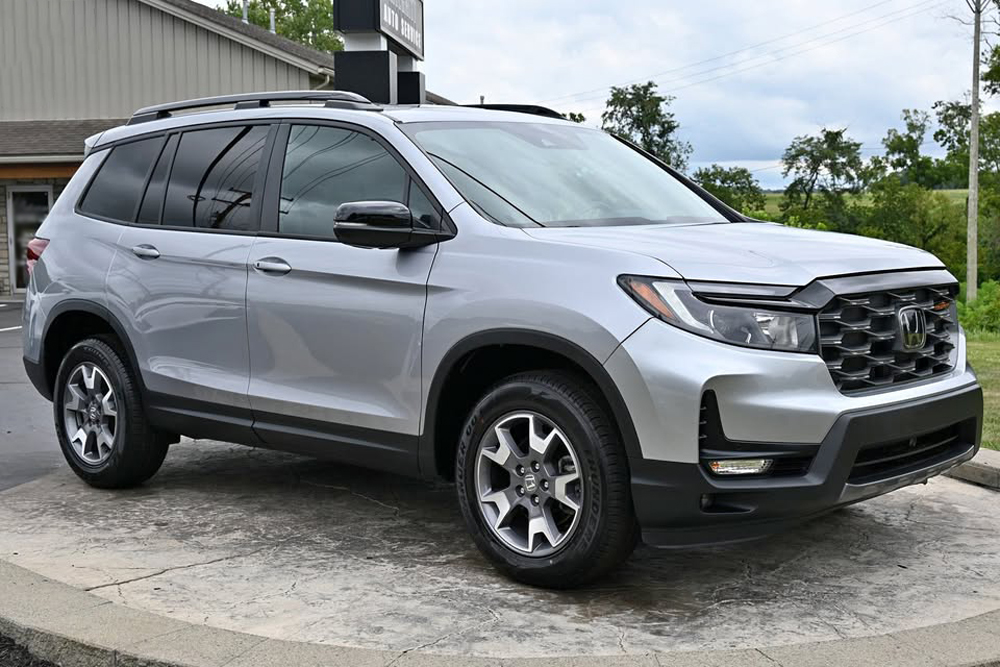
The Passport and Ridgeline went all-in. From their latest generations forward, every trim runs the ZF 9HP. Odyssey ran it briefly, then moved to Honda’s in-house 10-speed starting in 2020.
You won’t find a badge on the liftgate. Confirm by counting forward gears on the gear display or pulling the original window sticker.
Honda models using the ZF 9-speed (U.S. market, V6)
| Model | Model years with 9-speed | Engine | Typical trims with 9-speed | Notes |
|---|---|---|---|---|
| Honda Pilot | ~2016–2022 | 3.5L V6 | Touring, Elite, Black Edition | Lower trims often kept 6-speed |
| Honda Odyssey | 2018–2019 | 3.5L V6 | Touring, Elite | 2020+ moved to 10-speed |
| Honda Passport | 2019–2025 | 3.5L V6 | All trims | 9-speed standard across all trims |
| Honda Ridgeline | 2020–2025 (second-gen refresh) | 3.5L V6 | All trims | Replaced earlier 6-speed |
How it changed driving feel versus the 6-speed
The 9-speed piles on upshifts fast. You’ll hit 5th before 30 mph if you’re light on the pedal. The wide ratio spread keeps revs low on the highway, but in town it feels like the transmission’s always catching up. Step into the throttle, and it hesitates, thinks, then drops 3 or 4 gears in one gulp.
That slow reaction hits hardest in rolling traffic or two-lane passing. Drivers used to the older 6-speed’s predictable shifts often call the 9-speed busy, abrupt, or confused. Cold-start clunks, throttle lag, and awkward downshifts come built in.
3. Inside the ZF 9HP: why this box feels so unnatural
The dog clutch and its narrow timing window
ZF fit four planetary gearsets and six shift elements into this case. Two of those aren’t friction clutches, they’re dog clutches, a mechanical lock where teeth interlock like gears in a motorcycle box. No slip, no margin. It’s either in or it slams.
The 4–5 and 7–8 shifts depend on those dog clutches engaging clean. The only way to make that happen is perfect rev matching. That job falls to the TCM, which cuts engine torque during the shift window. If the timing’s off, even by milliseconds, the clutch bangs in.
That jolt isn’t a one-off. It’s baked into how the system handles interference engagement. Cold starts and uneven throttle make it worse. Smooth shifts rely entirely on software pulling torque and speed into line, fast and often.
Why hunting, clunking, and shudder stack up
The 9-speed can’t glide through gear changes like a traditional auto. At low speed, it clunks from 1–2–3 with a noticeable bump, especially in parking lots or stop-and-go traffic. Some drivers report a dragging feel on deceleration, like forced engine braking at light throttle.
On light cruise, the torque converter locks to boost efficiency. But as fluid degrades, that lock-up shudder shows up between 45–60 mph. It’s a rhythmic vibration through the floor or wheel, especially on a slight grade or when the converter clutch slips and re-engages.
Multi-gear downshifts, like 8–4 or 7–3, take a beat. The system has to coordinate multiple solenoids, reduce torque, rev-match, then grab the next gear. That pause feels like a dead pedal or delayed acceleration. Hard acceleration bypasses the issue, but light throttle makes the delay obvious.
4. Shifts that slip, bang, or vanish under load
Where “normal” harshness ends and real failure starts
Honda tuned the 9-speed to cover its flaws. That mask works, until it doesn’t. Once the shifts get past lumpy and start throwing flares, hard bangs, or neutral-like pauses, the box is on borrowed time.
Light-throttle upshifts often feel late or jarring, especially 2–3 or 4–5. During slow coasting stops, the downshift into 1st can slam or grab hard below 15 mph. And once the fluid heats up, mid-range gears, 5–6 or 6–7, can flare like a slipping clutch.
The line between normal and broken depends on consistency. Random clunks cold? Common. Same bang in the same gear every day? That’s a fault building up.
When poor shifting turns into a safety hazard
Some failures go beyond rough ride and hit safety territory. These are cases where the transmission drops into neutral under load, refuses to engage from a stop, or pauses just long enough to leave you hanging in an intersection.
The most common issues are harness faults, speed sensor failures, or a misread from the internal cluster that tells the TCM it’s seeing danger. That’s when it cuts power or drops gear completely.
These aren’t rare forum one-offs. They’ve triggered recalls, class actions, and full gearbox swaps on affected builds. Honda’s own bulletins link these symptoms to real internal failure modes, ones that software updates can’t always bandage.
5. Recalls, TSBs, and product updates that actually moved the needle
The sensor-cluster recall that dropped cars into neutral
ZF’s first major black eye came from a botched wire harness. In some 2015 TLX V6s and 2016 Pilot trims, poor crimps on the transmission’s internal sensor cluster caused false signals to the TCM. The fail-safe logic didn’t wait around; it commanded a shift into neutral to protect the box.
Drivers reported full power loss at speed, sometimes while merging or crossing traffic. Acura and Honda issued NHTSA recall 16V640, which forced a software patch to widen the detection window and inspect flagged transmissions for internal damage. Some got reflashes, others walked out with full replacements.
Coolant leaking into ATF through the transmission warmer
Another hidden failure lurked in the transmission warmer. On certain 2015–2016 TLX and MDX models, the internal heat exchanger developed cross-leaks between the engine coolant and transmission fluid circuits. That mix destroyed friction materials, swelled seals, and sent some units to early failure.
The leak rarely shows up fast. Most owners catch it when the fluid turns milky or when shudder and slip kick in during warm-up. Acura extended warranty coverage to 10 years, unlimited miles, but you had to catch it before the box cooked itself.
End-cover gasket leaks that starve the unit over time
Acura bulletins like 15-039 flagged a torn gasket issue during end-cover assembly. When the seal fails, ATF slowly leaks from the housing. No light comes on. Most drivers notice it after long highway drives, slip on takeoff, heat warnings, or spots on the driveway.
If the fluid runs low, the 9-speed loses pressure authority. That triggers delayed engagement, failed shifts, and torque converter complaints. Dealers fix it with an updated gasket and proper refill, but only if caught early.
Key recall / product-update summary for the 9-speed family
| Campaign / bulletin | Primary scope (brand/model) | Core defect / failure mode | What the driver notices | Typical dealer remedy |
|---|---|---|---|---|
| NHTSA 16V640 (ZF 9HP) | 2015 Acura TLX V6, select 2016 Pilot trims | Poor crimp on sensor-cluster harness, bad signals | Sudden shift to neutral or loss of drive while moving | Reflash TCU logic, inspect/replace transmission if fault found |
| Transmission warmer update / warranty extension | Certain 2015–2016 Acura TLX / MDX | Internal leak in trans warmer mixing coolant & ATF | Harsh shifts, slipping, discolored fluid, eventual no-move | Replace warmer, flush or replace transmission, extended coverage |
| End-cover gasket bulletins (e.g., 15-039 and superseding) | 2015–2019 Acura MDX / TLX, related 9HP apps | Gasket tears during assembly, external fluid leak | Spots under vehicle, delayed engagement, overheat warnings | Replace end cover and gasket, refill with correct ATF |
6. Diagnosing a misbehaving Honda 9-speed without tearing it apart
Feel, sound, and dash lights say plenty before the scanner does
Drivers spot patterns before the codes do. A flare on every 4–5 shift. A slip when warm. A delay dropping into Drive after backing out of a spot. That’s mechanical lag creeping past software’s ability to cover it.
Cold fluid makes the shifts louder, especially at low speed. But when the same gear bangs every time, the wear’s already set in. Vibration at 45–60 mph under steady throttle often traces back to converter clutch slip and degraded fluid.
When the “D” light starts flashing or the dash throws a CEL with a transmission code, the TCM’s lost confidence. Those codes, paired with driver symptoms, can zero in on solenoid issues, speed sensor failures, or internal wear without dropping the pan.
Trouble codes that carry real weight
Four codes come up again and again on failing 9HP units. They rarely show up alone, and the behavior they trigger tells you where to look next.
High-value DTCs on Honda’s ZF 9-speed
| Code | What’s complaining | Typical 9-speed issue | What the driver feels/experiences |
|---|---|---|---|
| P0730 | TCM / PCM – incorrect gear ratio | Internal clutch wear, dog-clutch timing errors, low or aerated ATF | Wrong gear feel, flare or slip, harsh engagement |
| P0796 | Pressure control solenoid “C” | Sticking or weak solenoid, valve-body wear, contaminated ATF | Erratic shifts, occasional bang or delayed upshift |
| P0741 | Torque converter clutch performance | Worn TCC, overheated/broken-down fluid, cooler flow issues | Steady-speed shudder, rising RPM at cruise, poor fuel economy |
| P0715 | Input/turbine speed sensor | Failing speed sensor, wiring or connector fault, harness damage | Random limp-mode, harsh default shifts, possible “D” flashing |
7. Maintenance, fluid, and the real-world cost of “fixing” a 9-speed
Why the ZF 9HP doesn’t tolerate fluid guesswork
The 9-speed demands Honda ATF Type 3.1, a low-viscosity synthetic blend formulated for the dog-clutch architecture. Anything else throws off clutch timing, boosts heat, and ruins torque converter lock-up. DW-1 and “universal” ATFs shear too fast and cause early shudder.
Heat and fluid age shorten the life of internal seals, solenoids, and converter linings. Delay a change, and the symptoms don’t show up gently. Engagement gets slow, shifts get rough, and the converter starts slipping during cruise.
Drain-and-fill vs. full triple flush
A single drain only clears about 3.7 quarts out of a system that holds much more. That leaves old, heat-soaked fluid in the converter, cooler, and clutch circuits. When a 9-speed starts shuddering at speed or slipping on mild throttle, a triple flush may clean it up, but only if the clutches haven’t glazed.
Triple flush means three cycles: drain, drive, repeat. Each time, you dilute the old fluid down further. By the third cycle, friction modifiers are back in range, if the unit was savable to begin with.
What owners actually pay to keep one running
Basic drain-and-fill costs vary by shop, but Honda dealers charge roughly $250–$460. Triple flushes run $600–$900 with labor and fluid. Add a TCM reflash, and you’re at $150–$200 out of warranty.
Every one of these jobs relies on a proper fill. The 9HP has no dipstick. You check level through a plug with fluid temp between 99–113°F. Get that wrong, and the transmission runs overfilled or underfilled, both of which damage shift quality and cooling.
Common 9-speed services and rough cost ranges
| Service / job | What’s actually done | When it’s used | Typical owner cost (USD) | Typical labor time |
|---|---|---|---|---|
| Basic ATF drain-and-fill | Drain pan, refill with Honda ATF 3.1, quick road test | Routine maintenance, mild harshness | ~$250–$460 (dealer) | 1.0–2.0 hours |
| “Triple flush” fluid service | Three drain-and-fills with driving between, full temp-window level checks | Persistent shudder, torque-converter complaints | ~$600–$900 | 3.0+ hours |
| TCM / PCM software update | Hook up scan tool, flash latest shift logic and adaptation | Fix known harsh-shift or hunting calibrations, post-TSB | ~$150–$200 out of warranty | 0.5–1.0 hours |
8. Honda vs Acura tuning and the move to the 10-speed
How Acura’s sport mapping makes the 9-speed feel harsher
Same box, different calibration. Acura programmed the 9-speed for sharper response, holding gears longer and downshifting faster to keep the V6 in its power band. SH-AWD pulls extra data from steering angle and throttle to feed torque where it’s needed, forcing the transmission to react quicker.
That tighter shift logic stacks fast changes, especially on curvy roads or mid-throttle pulls. Owners feel more gear hunting and louder engagement points. The box stays in lower gears longer, boosting throttle response but adding wear.
Honda trucks and vans use a more relaxed strategy. Shifts happen earlier, and kickdowns aren’t as aggressive. That softens driveability issues, same clutches, but less work per mile.
What changed when Honda dumped the ZF for its own 10-speed
Honda’s in-house 10-speed skips the dog clutches entirely. Every shift comes from traditional multi-plate friction units. That means better skip-shifting, smoother transitions, and far less drama during rolling stops or mild acceleration.
It launched in the 2018 Odyssey and spread to MDX, Pilot, and Passport. Despite adding a gear, the 10-speed is approximately 1.7 inches (45 mm) shorter than the old 6-speed and maintains a similarly lightweight profile to the ZF 9-speed, weighing approximately 200 pounds.
It shifts faster, locks the converter tighter, and learned gear timing faster after updates.
ZF 9-speed vs. Honda 10-speed summary
| Transmission | Gear count | Typical applications (V6) | Shift character | Owner-relevant notes |
|---|---|---|---|---|
| ZF 9HP (Honda 9-spd) | 9 | 2016–2022 Pilot (upper trims), 2018–2019 Odyssey Touring/Elite, Passport, Ridgeline | Can be jerky, hunts gears, sensitive to fluid and software | Outsourced unit, uses space-saving dog clutches, higher rate of shift-quality complaints. |
| Honda 10-speed | 10 | 2018+ Odyssey, 2022+ MDX, newer Pilot/Passport | Generally smoother, quicker multi-gear changes | In-house design, no dog clutches, better long-term owner feedback. |
9. When a Honda 9-speed is worth keeping vs when to walk away
When the 9-speed holds up fine
Low-mileage units with clean service records and smooth shifts after a software update usually hold their ground. If the box hasn’t developed shudder, and fluid changes happened before 40,000 miles, odds are good it’ll keep going.
A full triple flush at the first sign of converter vibration often restores lock-up if the clutches aren’t fried.
Used buyers looking at Passport or Ridgeline trims with fewer than 60,000 miles and no driveability flags can make it work. You’ll need to stay ahead on maintenance and know how to spot level issues early.
When you’re throwing money at a dead box
If the 9-speed slips after a triple flush, bangs shifts post-reflash, or throws P0730 alongside drive hesitation, expect an internal failure.
Repeat visits for shift tuning with no change point to hardware, not calibration. Units that drop into neutral while driving, delay engagement after startup, or flash the “D” regularly aren’t fixable on fluid alone.
Once hard parts go, a full rebuild often tops $4,000–$6,000. At that point, trading up to a 10-speed model year usually makes more financial sense than chasing a fix. Especially when the next update brings smoother shifts, tighter mapping, and a box that doesn’t rely on software to hide its design.
Sources & References
- List of Honda transmissions – Wikipedia
- Common Problems with 8, 9 & 10-Speed Car Transmissions
- ZF 9HP transmission – Wikipedia
- Honda 9-Speed Transmission Problems: Affected Models and Legal Help
- How are the ZF 9 Speeds Holding Up? : r/hondaridgeline – Reddit
- Honda’s New 10-Speed Is a Slick Shifter – Mobility Engineering Technology
- Honda Innovation Delivers 10 Speeds, No Clutch Pedal – Car and Driver
- ZF’s 9-Speed 9HP Transmission Puts Dog Clutches On The Leash | The Truth About Cars
- What’s up with transmissions with dog clutches? : r/askcarguys – Reddit
- Why is the ZF-8 speed so great yet the ZF-9 speed so bad? : r/cars – Reddit
- Honda Odyssey 9-Speed Transmission Problems | Lemon Law Help
- Comprehensive Guide to ZF 9-Speed Transmission Problems: Expert Solutions and Service
- ZF Recalls Nine-Speed Automatic for Random Drops into Neutral – Car and Driver
- Common Problems with the 9-Speed ZF 9HP (JLR Models) – ASR Gearbox Repairs
- Honda Pilot and Odyssey Transmission Problems | Lemon Law Help
- Understanding Honda Transmission Issues: Model-Specific Insights
- 2015 Acura TLX: Recall Alert – Cars.com
- Part 573 Safety Recall Report 16V-640 | NHTSA
- Statement by Acura Regarding 9-speed Automatic Transmission Sensor Cluster Recall: 2015 TLX V6 – Honda Newsroom
- For more information: – NHTSA
- September 22, 2017 TO: All Acura Sales, Service & Parts Managers and Personnel – NHTSA
- @ACURA Service Bulletin – NHTSA
- Service Bulletin – NHTSA
- Service Bulletin – NHTSA
- Understanding Honda 9-Speed Transmission Problems: Expert Insights and Solutions
- 9-Speed A/T Hard Upshift with Steady Acceleration – NHTSA
- Honda Fluid Replacement Service Tempe AZ
- Do 9 speed transmission fluid changes cost more than 6 speed transmission fluid changes? : r/askcarsales – Reddit
- 9 speed fluid change : r/HondaOdyssey – Reddit
- How easy is the ZF 9-speed to do a transmission fluid change? : r/hondaridgeline
- Thoughts on Dealer Cost for Transmission Fluid Change : r/hondapilot – Reddit
- Watch this before flushing your HONDA Transmission! – YouTube
- Transmission flush or drain? : r/Honda – Reddit
- Estimator Honda Pilot Transmission Fluid Change Cost – RepairPal
- Moore et al v. American Honda Motor Co., Inc. et al, No. 5:2023cv05011 – Document 84 (N.D. Cal. 2025) – Justia Law
- Moore et al v. American Honda Motor Co., Inc. et al, No. 5:2023cv05011 – Document 52 (N.D. Cal. 2024) – Justia Law
- Acura MDX – Wikipedia
- Does Honda Pilot drive the same as MDX? : r/Acura – Reddit
- Acura MDX Vs. Honda Pilot: Which Is Better? – Muller Acura of Merrillville
- Configurations For 2025 Honda Ridgeline Trim Levels Explained – Fisher Honda Dealership
- 2026 Honda Passport vs. 2025 Honda Passport – Honda of Mentor
- 2026 Honda Passport Model Review | Chattanooga, TN – Economy Honda Superstore
- Transmission issues across models? : r/hondaridgeline – Reddit
- Honda Pilot Vs. Acura MDX: Choosing The Best Family SUV
- 2026 Honda Ridgeline Feature Guide | Honda Info Center
Was This Article Helpful?