
Shake at idle. Catch a fuel smell on a cold start. Watch the temp needle creep higher than it should. That’s how many Honda Accord engine problems show up. Since 2008, this car has moved from V6 power to small turbos and now hybrids. Each step changed what breaks first.
The V6 years bring oil burning, fouled plugs, and rough mounts tied to cylinder shutdown. The 1.5T adds fuel washing into the oil and head gaskets that give up under boost. The 2.0T holds together better, but it costs more to feed and find. New hybrids shift trouble into software resets and fuel-system leaks.
Some Accords rack up miles with routine service. Others turn small issues into full engine jobs fast. Let’s sort out which ones hold up and which ones do not.
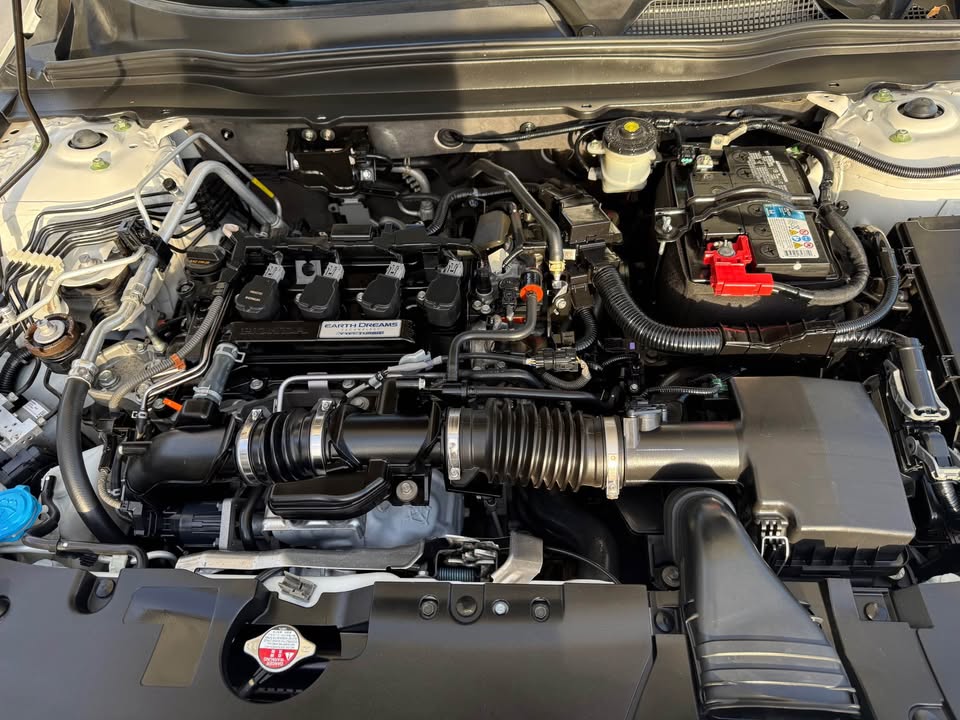
1. The engine timeline shifts the weak point every few years
The V6 years hide a cylinder-shutdown problem under smooth power
Run a 2008–2017 V6 long enough and oil loss shows up first. The J35 engine uses Variable Cylinder Management. It shuts down cylinders under light load to save fuel. That changes pressure inside the dead cylinders and starts pulling oil past the rings.
Oil enters the chamber and burns on restart. Spark plugs foul fast, often before 60,000 miles. Misfires trigger P0301–P0304, and coils get blamed first. The real fix often involves piston rings, software updates, and repeated plug changes.
The mounts take a hit next. Active engine mounts fight vibration when the engine runs on 3 cylinders. The hydraulic units fail, and the cabin shakes at idle in Drive. Replacement runs $600 to $1,500 per mount at dealer rates.
The turbo split creates two very different risk paths
The 2018–2022 Accord splits into two engines with nothing in common under load. The 1.5T runs high boost on a small block. The 2.0T uses a stronger bottom end and handles pressure better.
The 1.5T runs hotter and sees higher cylinder pressure per liter. Fuel enters directly into the chamber and can wash the cylinder walls on cold starts. Some fuel slips past the rings and mixes with oil. Oil thins out, and bearing wear starts early if intervals stretch past 5,000 miles.
Head gasket failure shows up next on early 1.5T engines. Combustion pressure lifts the head slightly under boost. Coolant leaks into the cylinder, causing cold-start misfire and white smoke. Failures often land between 60,000 and 100,000 miles.
The 2.0T avoids most of this. It uses a stronger block design and runs cooler under load. Failures are usually outside the engine, not inside it. Most units pass 150,000 miles without internal work if oil changes stay under 7,000 miles.
The hybrid era moves failure from metal to control systems
The 2023–2025 Accord Hybrid shifts the weak point into electronics. The engine often acts as a generator, not a direct drive unit. Control modules now decide when and how power flows.
One failure centers on the Integrated Control Module. A software fault can trigger a reset while driving. Power drops without warning, and the car coasts with limited assist. This issue led to recall 25V-785 affecting over 256,000 units.
Another problem sits in the high-pressure fuel pump. Internal cracks form under extreme pressure, sometimes above 2,000 psi. Fuel leaks near hot engine parts raise fire risk. Recall 24V-763 covers inspection and replacement of affected pumps.
| Era | Engine setup | Strength | Failure pattern |
|---|---|---|---|
| 2008–2017 V6 | J35 with VCM | Strong base engine | Oil consumption, plug fouling, mount failure |
| 2018–2022 1.5T | L15 turbo | Fuel economy, low torque band | Oil dilution, head gasket failure |
| 2018–2022 2.0T | K20C4 turbo | Strong internals | Mostly peripheral issues |
| 2023–2025 Hybrid | 2.0L + electric | High efficiency | Software resets, fuel pump cracks |
2. V6 Trouble Under Load: Oil Burn, Plug Fouling, and Mount Failure
Cylinder Deactivation Starts the Oil Consumption Cycle
Honda’s 3.5L V6 uses Variable Cylinder Management. It shuts down 2–3 cylinders under light load. Oil slips past piston rings on those inactive cylinders. The oil sits and burns once the cylinders reactivate.
Drivers see oil loss between changes at 1,000–2,000 miles per quart. Spark plugs foul with carbon and oil deposits. Misfires show up under light throttle with P0300–P0304 codes stored.
Fouled Plugs Trigger Misfire Chains and Converter Stress
Oil-soaked plugs fire weak or not at all. The ECU adds fuel to stabilize idle. Unburned fuel enters the exhaust and overheats the catalytic converter.
Converter temps can pass 1,600°F during repeated misfire events. The substrate starts to melt and restrict flow. Replacement costs run $900–$1,800 per bank.
Active Engine Mounts Break Down Under Cylinder Shutdown
VCM changes firing pulses across the crankshaft. The mounts counter those pulses with hydraulic damping. Fluid degrades as the mounts cycle on and off. Internal chambers lose pressure and control.
Idle shake shows with VCM active and drops when all cylinders fire. The vibration feels steady through the seat and steering wheel. No misfire codes store in many cases.
Mount replacement runs $300–$700 per side at independent shops. Dealer quotes reach $600–$1,200 per mount depending on access.
Ring Wear and Software Updates Don’t Fully Stop the Pattern
Honda released software updates to limit VCM activation. Updates reduce how often cylinders shut off. Oil consumption slows but does not fully stop once rings wear.
Some engines needed piston ring replacement under warranty extensions. That job requires engine teardown. Repair costs reach $2,500–$4,000 outside warranty.
3. 1.5T Failure Points: Fuel Dilution, Head Gaskets, and Cold Start Wear
Fuel Dilution Thins Oil and Wipes Bearings
The 1.5L turbo runs direct injection with short trips in mind. Cold starts dump extra fuel into the cylinders. Some of that fuel slips past the rings and mixes with oil.
Oil level rises on the dipstick and smells like raw gas. Viscosity drops below spec and loses film strength. Rod and main bearings wear faster under load.
Owners report oil dilution above 5% on lab tests. Honda issued software updates to adjust warm-up and injection timing. Severe cases still show bearing knock before 80,000 miles.
Head Gasket Leaks Build Between Cylinders Two and Three
Boost pressure peaks around 16–18 psi under load. The narrow gasket area between cylinders 2 and 3 takes the stress. Repeated heat cycles weaken the sealing ring.
Coolant starts to leak into the combustion chamber. Misfires appear on cold start with P0302 and P0303. White smoke and coolant loss follow within weeks.
Compression drops unevenly across those cylinders. Repair requires head removal and machining. Typical cost lands between $1,500 and $3,000.
Intake Valve Carbon Cuts Airflow and Raises Knock Risk
Direct injection keeps fuel off the intake valves. Oil vapors from the PCV system stick to the valve stems. Carbon builds up and restricts airflow over time.
Cold starts turn rough as airflow becomes uneven. The knock sensor pulls timing under load. Drivers feel reduced power and hesitation above 3,000 rpm.
Walnut blasting restores flow but does not prevent return buildup. Service intervals average 40,000–60,000 miles. Cleaning runs $300–$600 per visit.
Turbo Heat Cycles Crack Housings and Stress Oil Lines
The small turbo spins above 200,000 rpm under boost. Heat builds fast during short drives with repeated throttle input. Oil feed lines cook and restrict flow over time.
Some units develop wastegate rattle and boost loss. Others crack the turbine housing near the flange. Drivers see underboost codes like P0299.
Turbo replacement costs range from $1,200 to $2,500 installed. Oil line cleaning or replacement adds $150–$400.
4. 2.0T Durability: Strong Bottom End, Costly When It Fails
Forged Internals Handle Boost but Raise Repair Stakes
The 2.0L turbo uses a stronger block and forged crank. It runs higher cylinder pressure without early ring wear. Oil control stays stable past 100,000 miles with proper service.
Failures show less often but hit harder when they do. Parts cost more and access is tighter in the bay. Labor hours climb fast during teardown jobs.
A full long block replacement lands between $4,000 and $7,000 installed.
High-Pressure Fuel Pump Wear Triggers Lean Codes
The direct injection system relies on a cam-driven high-pressure pump. Internal seals wear and pressure drops under load. Fuel rail pressure falls below target during acceleration.
Drivers feel hesitation above 2,500 rpm. The ECU stores P0087 and P0171 codes. Cold starts may crank longer before firing.
Pump replacement runs $400–$900 depending on parts source.
Coil Packs and Plugs Fail Under Higher Cylinder Pressure
Boost increases spark demand across the cylinders. Ignition coils degrade faster under heat and load. Misfires show up during hard acceleration or uphill driving.
Codes like P0301–P0304 appear with flashing check engine lights. Spark plugs wear faster and need tighter service intervals.
A full set of coils and plugs costs $250–$600 installed.
Cooling System Leaks Start at the Belt-Driven Water Pump
The 2.0T uses a belt-driven water pump at the front of the engine. The shaft seal wears and seeps under pressure. Coolant tracks along the housing before it drips.
Flow drops as the impeller loses efficiency. Temps climb in traffic and under load. Heater output weakens as coolant circulation falls.
Overheat warnings can trigger near 230°F with low flow. Water pump replacement runs $600–$1,200 depending on labor access.
5. Hybrid System Shifts the Weak Points: Sensors, Injectors, and Software
Dual-System Cold Starts Expose Fuel System Leaks
The hybrid uses an Atkinson-cycle 2.0L with port and direct injection. The engine cycles on and off during short trips. Fuel pressure spikes and drops with each restart.
Injectors can leak when pressure bleeds off. Fuel drips into the cylinder after shutdown. Drivers smell fuel at startup and see rough idle for a few seconds.
Codes like P0172 and P0300 can store during repeated cold starts. Injector replacement runs $300–$800 per cylinder.
High-Voltage Battery Cooling Depends on Clean Airflow
The battery pack sits behind the rear seats with a cooling fan. Cabin air feeds that fan through intake vents. Dust and debris clog the intake over time.
Restricted airflow raises battery temps above 113°F under load. The system limits power to protect the cells. Drivers feel reduced acceleration and delayed engine assist.
Fan cleaning or replacement costs $150–$400 depending on access.
Software Resets Trigger Sudden Loss of Hybrid Assist
The hybrid control module manages engine and motor torque. Software glitches can force a system reset while driving. The engine runs alone until the system reboots.
Drivers see warning lights and a drop in power. Codes like P0A80 or communication faults can appear. Updates fix some cases but not all.
Dealer reprogramming runs $120–$250 per visit.
EGR and Intake Deposits Raise Combustion Temps
The hybrid engine runs cooler under light load but cycles often. Exhaust gas recirculation lowers combustion temps during steady driving. Carbon buildup blocks EGR passages over time.
Restricted flow raises cylinder temps and increases knock risk. The ECU pulls timing and reduces efficiency. Drivers notice lower MPG and uneven throttle response.
EGR cleaning services run $200–$500 depending on buildup level.
6. Heat and Oil Control Drive Most Failures Across All Engines
Oil Breakdown Starts Above 230°F and Accelerates Wear
Engine oil loses viscosity as temps climb past 230°F. Thin oil fails to hold pressure at bearings and cam journals. Turbo engines push oil temps even higher during short trips.
Drivers see faster oil darkening and fuel smell in the crankcase. Oil pressure drops at idle once viscosity falls. Bearing surfaces start to score under load.
Extended intervals past 7,500 miles raise wear rates sharply.
PCV System Pulls Oil Vapor Into the Intake Tract
The PCV valve meters crankcase pressure back into the intake. High blow-by pushes oil vapor through the system. That vapor coats intake runners and valves over time.
Deposits build on throttle plates and intake ports. Airflow becomes uneven across cylinders. Idle quality drops and fuel trims drift positive.
PCV valve replacement costs $50–$150 depending on access.
Cooling System Weak Points Trigger Overheat Events
Radiators clog with debris and lose heat transfer. Thermostats stick and delay coolant flow. Water pumps lose efficiency as seals wear and impellers erode.
Coolant temps climb past 220°F under load. Fans run at high speed with limited effect. Overheat warnings can trigger within minutes in traffic.
A full cooling system refresh runs $600–$1,500.
Short Trips Lock Moisture and Fuel Inside the Oil
Engines need sustained heat to burn off fuel and water. Repeated short drives never reach full operating temp. Contaminants stay trapped in the oil.
Sludge forms inside the valve cover and oil passages. Oil control rings stick and increase consumption. Cold starts grow louder with ticking valvetrain noise.
Oil change intervals drop to 3,000–5,000 miles under these conditions.
7. What Fails First by Engine and Mileage
Early Failures Hit Turbo Engines Before 60,000 Miles
The 1.5T shows issues early under short-trip use. Fuel dilution starts within the first 20,000 miles. Oil level rises and viscosity drops below spec.
Head gasket failures show up between 40,000 and 70,000 miles. Misfires on cold start lead with P0302 and P0303. Coolant loss follows within a few weeks of first symptoms.
Turbo wastegate noise and underboost codes can appear before 80,000 miles.
Mid-Life Failures Center on V6 Oil Control and Mounts
The 3.5L V6 holds steady early, then starts burning oil past 70,000 miles. VCM cycling accelerates ring wear in deactivated cylinders. Oil consumption climbs to 1 quart per 1,000 miles in some cases.
Spark plugs foul and trigger misfires under light throttle. Active engine mounts weaken between 80,000 and 120,000 miles. Idle vibration becomes constant with VCM active.
Catalytic converter damage can follow repeated misfire events.
High-Mileage Wear Shows in Cooling and Fuel Systems
Across all engines, cooling systems weaken past 100,000 miles. Water pumps lose flow and thermostats react slower. Radiators clog and raise operating temps under load.
Fuel pumps lose pressure consistency over time. Lean codes like P0171 appear during acceleration. Injectors develop uneven spray patterns that affect combustion balance.
Cooling system repairs and fuel system service together can exceed $1,500.
Hybrid Systems Shift Failures Into Electronics Over Time
Hybrid models avoid many early engine failures. Issues show later in sensors and control modules. Battery cooling fans clog after 60,000–90,000 miles of use.
Software faults trigger warning lights and reduced power states. Communication errors interrupt hybrid assist during driving. Control module resets restore function but may repeat.
Module replacement can reach $1,000–$2,500 depending on the component.
8. Fault Codes That Expose the Real Failure Path
Misfire Codes Reveal Oil, Fuel, or Gasket Problems
Misfires show first under light load or cold start. Codes P0300–P0304 identify random or cylinder-specific faults. Oil fouling leaves wet, black deposits on plugs.
Fuel dilution causes weak combustion and unstable idle. Head gasket leaks add coolant to the mix and spike misfires on startup.
Repeated misfires raise exhaust temps above 1,500°F and damage catalysts.
Fuel System Codes Track Pressure Loss and Injector Faults
Codes P0087 and P0171 point to low fuel pressure or lean conditions. High-pressure pumps lose output under load. Injectors clog or leak and disturb spray patterns.
Drivers feel hesitation during acceleration and longer crank times. Fuel trims climb positive as the ECU adds fuel to compensate.
Fuel rail pressure can drop below 500 psi under load when pumps fail.
Boost and Airflow Codes Signal Turbo or Intake Restriction
Turbo engines log P0299 when boost falls below target. Wastegate wear or cracked housings reduce pressure. Intake carbon buildup restricts airflow and lowers engine output.
Drivers report weak acceleration above 3,000 rpm. Throttle response feels delayed as airflow drops.
Boost pressure can fall 3–6 psi below target under load.
Cooling and Temperature Codes Warn of Imminent Overheat
Codes like P0128 and P0217 track thermostat and overheat conditions. Coolant flow drops when pumps wear or thermostats stick. Radiators lose efficiency as fins clog.
Drivers see rising temps in traffic and reduced heater output. Fans run at high speed with limited cooling effect.
Sustained temps above 230°F risk head gasket failure within minutes.
| Code | Likely Cause | Engine Type |
|---|---|---|
| P0300–P0304 | Oil fouling, injector leak, gasket | All |
| P0087 | Weak high-pressure fuel pump | 2.0T |
| P0171 | Lean condition, injector or intake | All |
| P0299 | Turbo underboost, wastegate wear | 1.5T / 2.0T |
| P0128 | Thermostat stuck open | All |
| P0217 | Overheat condition | All |
Sources & References
- Honda Accord Years to Avoid: What Canadian Used Car Shoppers Should Know – Clutch
- Honda 1.5-Liter Turbo Engine – Honda Newsroom
- Gas vs. Electric: Choosing Your Ideal Honda Accord Model
- Honda settles class-action lawsuit over oil-burning V6s – Autoblog
- Honda Accord Oil Defect Class Action Lawsuit
- Over 256,000 Honda Accords Recalled for Risk of Sudden Power Loss – Autoblog
- Variable Cylinder Management – Wikipedia
- VCMTUNER – Disable VCM / ECO for Honda Odyssey, Pilot, Accord & More.
- Honda Lawsuit – VCMTUNER
- American Honda settles class-action suit over oil-burning defect – Gasgoo
- Active Control Engine-Mount System (ACM) (Select Vehicles) – Honda Info Center
- 2023-2025 Honda Pilot Active Mount (ACM) Control Module: Vibration, Diagnosis & Replacement – Go-Parts
- Active Control Engine-Mount System (ACM) (Select models) – Honda Info Center
- Variable Cylinder Management System Information – YouTube
- Honda Accord Engine Mount Replacement Cost – RepairPal
- Is $3500 too much for replacing engine mounts? : r/askcarguys – Reddit
- Most common Honda 1.5T engine problems – Orbi Motors
- Here’s Why the Honda L15 Turbo Engine is a FAILURE – YouTube
- Canadian class action requests filed over Honda’s 1.5L turbo engine …
- Why Driving Short Distances Can Kill A Newer Honda CR-V – The Autopian
- Oil dilution: which model years had this issue, and did the software update fix it? – Reddit
- 2020 Honda Accord 1.5 Oil Dilution – Cause & Fix (L15B7 Engine) – YouTube
- Has oil dilution been fixed for 2022+ Hondas? – Reddit
- Class action suit in Canada or 1.5t head gasket failure : r/Honda – Reddit
- r/accord on Reddit: 2018 1.5T Touring with blown head gasket after 4 years of perfect maintenance? I think not
- Head Gasket Megathread : r/crv – Reddit
- well folks it finally happened : r/accord – Reddit
- Honda Tech Warns CR-V 1.5L Owners, “Honda Designed a Garbage Engine, They Like To Eat Head Gaskets,” and Says, “Don’t Use Honda Parts, Or You’ll Be Back To See Me” – Torque News
- Honda Tech Warns CR-V Owners: “Honda Designed Garbage Engine, They Eat Head Gaskets”, The Truth Revealed – Torque News
- Engine Cylinder Head Full Gasket Set Fit For HONDA 1.5 L T L15B GAS ACCORD X XI CIVIC X XI CR-V V VI HR-V ZR-V VTEC 16-25 – AliExpress
- I feel like I made a mistake : r/accord – Reddit
- It happened : r/accord – Reddit
- How good is the 2.0T engine? I’m looking to buy a 2022 with 40k miles but it’s not preowned certified since it’s at a different dealership than Hondas. Is the engine reliable to where I shouldn’t worry about have a warranty like that on the vehicle? : r/10thgenaccords – Reddit
- 1.5 vs 2.0 : r/accord – Reddit
- Accord 2.0t any problems? – Reddit
- 2.0t vs 1.5t : r/10thgenaccords – Reddit
- 2.0T long term reliability : r/accord – Reddit
- 2018-2025 Honda Accord HVAC Control: A Guide to Failures, Part Numbers, and Replacement
- Why the 2025 Honda Accord Hybrid Is Perfect for Summer Commuters
- 2025 Honda Accord Hybrid Vs. Gas
- Comparing Fuel Efficiency: Honda Hybrid vs Gasoline Models – Honda of Lincoln
- Service Bulletin – nhtsa
- Service Bulletin – nhtsa
- 2025 Honda CR-V Hybrid Recalls – Cars.com
- 2024 Honda Accord Recalls – Cars.com
- Find Existing Honda CR-V Hybrid Car Recalls – DealerRater
- Honda Hybrid Cold Stalling Issue Continues in 2026 – Metropolitan …
- Honda Accord Hybrid No Good In Cold Weather?
- Can My Honda Hybrid Handle the Cold?
- Common Honda Accord Problems You Should Know & How To Avoid Them
- What are your thoughts on the 2008 Honda accord EX V6 – Reddit
- Common Honda Accord Problems – 8th Gen (2008 to 2012) – 1A Auto
- 2008 Honda Accord Problems and Complaints – 39 Issues – RepairPal
- 2025 Honda CR-V Engine Stalling Causes & Solutions – RepairPal
- Honda 1.5t head gasket issues continued… – YouTube
- Hybrid vs. Gas: Which Honda Is Right for You?