Revs climb, speed barely follows. Feels like the gears turned to mush. That’s how Civic transmissions start talking before they fail.
From 2001 to 2025, Civic automatics moved from 4-speed hydraulics, to 5-speeds, to belt-driven CVTs, and finally to Honda’s dual-motor eCVT with a fixed reduction gear. Early 4-speeds burned up clutch packs and clogged internal filters around 100,000 miles.
Mid-cycle 5-speeds improved hardware but tripped pressure switches and flashed P0847. Then came the CVT era, steel belts under 600 PSI, heat-sensitive, fluid-picky, and quick to protest with surge or slip if maintenance slipped.
Now hybrids run a planetary eCVT with no belt at all, shifting the risk from friction wear to electronics and control logic. Some years fail from hard parts. Others stumble from bad calibration or neglected fluid.
This guide calls out what breaks, where risk clusters, and which fixes actually stop the damage before the bill spikes.
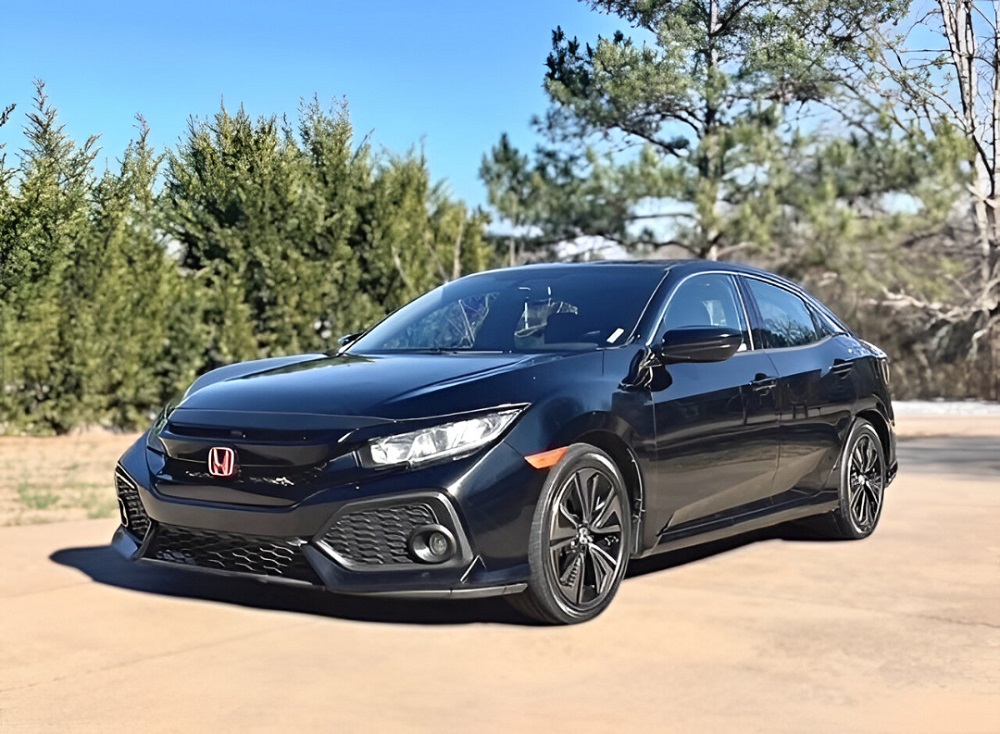
1. Civic transmission families and where trouble really clusters
How Honda shifted from gears to belts to motor control
Honda ran four core automatic architectures in the Civic between 2001 and 2025. Early cars used compact 4-speed hydraulic automatics with fixed gearsets.
Mid-cycle models moved to 5-speeds with better clutch capacity and smarter shift logic. By 2014, Earth Dreams CVTs took over, running steel belts under clamp loads that exceed 600 PSI.
The 10th generation added turbo torque to that belt system. Low-RPM boost loads the drive pulley hard at 1,800 to 2,500 RPM. Clamp force rises fast. Fluid shear temperature climbs even faster.
The 11th generation split the lineup. Gas models kept a refined belt CVT. Hybrid trims switched to a dual-motor eCVT that uses two motor-generators and a fixed reduction gear, with no belt or variable pulleys.
| Gen / Years | Primary Automatic | Manual Options | Core Stress Point | Relative Risk* |
|---|---|---|---|---|
| 7th 2001–2005 | 4-speed auto / early CVT | 5-speed | Internal filter clog, clutch debris | High (auto) |
| 8th 2006–2011 | 5-speed auto | 5- & 6-speed | Pressure switch, Si 3rd synchro | Moderate |
| 9th 2012–2015 | CVT (late) | 5-speed | Drive pulley shaft fracture | Moderate–high |
| 10th 2016–2021 | CVT (turbo) | 6-speed | Heat load, surge calibration | Moderate |
| 11th 2022–2025 | CVT / hybrid eCVT | 6-speed (limited) | Electronics vs belt wear | Low–moderate |
*Relative within Civic history.
Failure patterns follow architecture. Hydraulic automatics fail from clutch debris and pressure loss. Belt CVTs fail from heat, slip, and fluid breakdown. Hybrid eCVTs shift risk to inverters, control modules, and high-voltage management.
Early 4-speeds commonly failed near 104,000 miles. Earth Dreams CVTs often show surge or judder before 80,000 miles when fluid intervals stretch past 50,000. Hybrid eCVT mechanical wear remains low, but module replacement can exceed $5,000 if out of warranty.
Why fuel economy targets tightened the margins
EPA pressure forced Honda to hold engines in narrow efficiency bands. CVTs let the engine sit near peak thermal efficiency. That requires constant pulley ratio change under load.
Clamp force comes from hydraulic pressure. Pressure spikes during throttle tip-in and hill climbs. Degraded HCF-2 fluid loses shear stability under heat above 220°F. Slip begins at the belt-to-cone interface.
Microscopic steel dust forms during micro-slip events. That powder circulates through the valve body. Solenoids wear. Pressure control drifts. DTC P0730 or P0776 follows once ratio error exceeds tolerance.
Software now limits torque when input and output speeds disagree. That protection cuts engine power before the belt snaps. Drivers feel hesitation. The belt survives, but repeated events accelerate pulley face wear and drive up replacement costs to $4,000–$6,500 for a new OEM CVT.
2. Seventh generation 2001–2005: when the 4-speed started burning itself alive
Clutch debris, clogged filter, collapsing pressure
Shift into Drive. Feels fine for months. Then one day it flares between 1st and 2nd and never recovers.
The 4-speed automatic in 2001–2005 Civics, BMXA and SLXA families, used an internal non-serviceable filter. Clutch packs shed friction material early, often before 100,000 miles. Debris packed the filter. Line pressure dropped.
Low pressure caused clutch slip. Slip built heat fast. Heat cooked fluid past 230°F. The cycle fed itself until forward drive failed.
Many units died between 100,000 and 110,000 miles. Replacement in-period averaged $2,300 to $3,000.
Sudden loss of drive and real traffic risk
Failure rarely gave long warning. Some owners reported a brief flare. Others got a neutral condition in traffic.
Once pressure collapsed, the car would rev but not move. No limp mode. No torque reduction strategy. Just lost propulsion.
Complaint volume peaked in 2001–2003 models. Transmission complaints made up the majority of reported failures for those years.
Full rebuild costs today still land between $2,000 and $3,500, assuming the case and hard parts remain usable.
Early hybrid CVT and the low-speed judder problem
Hybrid and HX trims used an early belt CVT with a start clutch. Takeoff under 15 mph often felt like a shudder or vibration.
Fluid breakdown changed clutch friction behavior. The start clutch glazed. Engagement turned grabby.
Honda issued extended coverage to 7 years or 105,000 miles in many cases. Repair often began with a triple flush. Persistent cases required start clutch replacement or full CVT swap.
A complete CVT replacement on those early hybrids can still exceed $4,000 today.
3. Eighth generation 2006–2011: stronger hardware, sharper electronic faults
The 5-speed automatic fixed the burn-up cycle
Honda replaced the 4-speed with a 5-speed automatic for 2006. Clutch capacity improved. Fluid routing improved. Internal failure rates dropped hard compared to 2001–2003.
Most units ran past 150,000 miles with fluid changes under 60,000-mile intervals. Catastrophic clutch pack failures became rare. Heat management improved, and filter clog complaints nearly vanished.
The weak link shifted from hard parts to sensors and pressure feedback circuits.
Flashing “D” and P0847 point to a pressure switch
Cruise steady, then the green “D” starts blinking. Shift feel turns harsh or delayed. Scan tool shows P0847, 3rd clutch pressure switch circuit low.
The switch sits external on the case. It monitors hydraulic pressure in the 3rd clutch circuit. When it fails, the TCM loses accurate pressure data.
The transmission defaults to a protective strategy. Shift timing changes. Some cars enter limp mode.
Repair usually means replacing the pressure switch, $150 to $350 parts and labor. Full teardown rarely required unless clutch damage followed ignored warnings.
Civic Si 6-speed and the 3rd gear grind
Rev to 8,000 RPM, grab 3rd, hear a grind. That defined many 2006–2008 Civic Si complaints.
The issue centered on the 3rd gear synchronizer and 3–4 shift sleeve alignment. Under high-RPM shifts, the synchro failed to match shaft speed. Teeth clashed. Some units popped out of 3rd under load.
TSB 08-020 addressed faulty synchro design and sleeve geometry. Proper fix required transmission removal and gearset replacement.
Synchro repair often costs $1,500 to $2,500 depending on labor rates and internal damage.
4. Ninth generation 2012–2015: Earth Dreams CVT and the cracked pulley shaft
Honda leans hard into CVT efficiency
Honda rolled out the Earth Dreams CVT broadly by 2014. Fixed gears gave way to a steel belt riding between variable pulleys. Clamp force came from hydraulic pressure that could exceed 600 PSI under load.
Ratio changes happened continuously. The engine stayed near peak efficiency around 2,000 to 3,000 RPM. That efficiency came with tight pressure control margins and little tolerance for fluid neglect.
Early complaints centered on hesitation and surge during light throttle. Hardware durability questions followed soon after.
15V-574 and the drive pulley shaft fracture risk
Hard acceleration, high load, then sudden loss of drive. That scenario triggered recall 15V-574 for 2014–2015 Civics with CVT.
Engineering analysis found the drive pulley shaft could crack under excessive hydraulic stress. High clamp pressure during specific load events pushed the shaft toward its fatigue limit.
If the shaft fractured, propulsion stopped immediately. In some cases, front wheels locked as internal components jammed.
Honda’s fix was a software update that reduced peak hydraulic pressure during high-load events. No hardware swap unless damage had already occurred.
A post-failure CVT replacement typically runs $3,500 to $6,000 depending on labor rates and programming needs.
5. Tenth generation 2016–2021: turbo torque, heat load, and ratio hunt
The 1.5T raises belt stress fast
Boost hits at low RPM. Torque jumps early, often below 2,000 RPM. The CVT must clamp harder to hold that load.
Clamp pressure rises through the control solenoid and pump circuit. Fluid temperature climbs past 220°F during long pulls. Belt-to-cone friction increases under sustained boost.
Sustained heat thins HCF-2 fluid. Shear stability drops. Micro-slip events begin at the pulley face.
Repeated slip codes often show up as P0730 or ratio error flags before full failure.
Highway surge and bad learning values
Cruise at 55 mph. RPM drifts up and down 200 to 400 RPM. Feels like the car can’t pick a ratio.
Early 2016 models logged complaints of steady-speed surging between 45 and 70 mph. The issue traced to TCM adaptive learning values.
The control module misjudged optimal pulley ratio under light load. It hunted instead of settling.
Honda released a TCM software update to recalibrate ratio logic. Post-update drive feel stabilized in most cases without hardware replacement.
Heat-triggered limp mode and torque cut
Climb a long grade in summer traffic. Throttle response softens. RPM locks. Acceleration drops.
The CVT monitors fluid temperature and input-output speed difference. Once temperature crosses a protection threshold, the TCM limits engine torque.
The system may hold a fixed ratio to reduce belt slip risk. Drivers feel hesitation or reduced power.
Ignoring repeated thermal events accelerates belt wear. A full CVT replacement on 2016–2021 models typically costs $4,000 to $6,500 installed.
6. Eleventh generation 2022–2025: refined belt CVT and the hybrid eCVT split
Gas models refine the belt but keep the pressure
Honda carried the Earth Dreams belt CVT into the 11th generation gas models. Programming now simulates stepped shifts under load. That reduces the rubber-band feel drivers complained about in 2016.
Internally, the hardware still uses a steel push belt and variable pulleys. Clamp force still depends on clean HCF-2 fluid and tight pressure control. Fluid neglect past 50,000 miles still risks slip codes and pulley scoring.
Thermal thresholds remain similar to prior models. Sustained fluid temps above 220°F accelerate belt surface wear.
Out-of-warranty replacement for a 2022–2025 gas CVT still runs $4,000 to $6,500 installed.
Hybrid eCVT drops the belt and changes the failure map
Hybrid trims use a dual-motor eCVT with a planetary power-split device. No steel belt. No variable pulley faces. Ratio changes come from motor speed blending and gearset geometry.
The system links a 2.0L Atkinson-cycle engine to two motor-generators. One motor drives the wheels. The other manages engine speed and power flow.
Mechanical friction inside the transmission drops sharply compared to belt CVTs. Belt slip risk disappears.
Failure risk shifts to control electronics, inverters, and high-voltage components.
| Feature | Belt CVT (Gas Models) | eCVT (Hybrid Models) |
|---|---|---|
| Ratio change method | Variable pulleys with steel push belt | Dual-motor system with fixed reduction gear |
| Mechanical link | Friction-driven belt under hydraulic clamp force | Direct motor drive + lock-up clutch at cruise |
| Primary stress source | Heat and belt clamp pressure | Inverter load and control electronics |
| Common failure mode | Belt slip, pulley scoring, solenoid wear | Power electronics or control module faults |
Early hybrid feedback shows strong mechanical durability. Isolated reports include control module or inverter faults requiring full unit replacement.
A complete hybrid transaxle replacement can exceed $5,000 to $7,000 outside warranty due to integrated motor and control components.
7. The physics behind Civic CVT failures: where the belt starts to lose
Micro-slip, steel dust, and pressure loss
Roll into the throttle. RPM rises. Speed lags half a beat. That’s belt slip starting.
The steel belt rides between two variable pulleys. Clamp force must match engine torque at all times. Under load, hydraulic pressure can exceed 600 PSI.
If pressure drops even slightly, the belt micro-slips on the pulley face. That slip creates fine steel dust. The dust circulates in the fluid and starts grinding valves and solenoids.
Valve body wear reduces pressure control accuracy. Slip events multiply. Belt surface scoring follows. Full failure often triggers P0730 before total drive loss.
Hydraulic control drift and solenoid wear
Pressure control solenoids regulate clamp force. They meter fluid flow in milliseconds.
Contaminated fluid changes how those solenoids respond. Abrasive particles wear the valve lands. Pressure spikes become inconsistent.
When the TCM detects ratio mismatch beyond its limit, it stores P0776 or related pressure codes. Torque reduction follows to protect the belt.
Continued driving under slip conditions can destroy the belt and pulley assembly in under 10,000 miles once scoring begins.
Software torque limits and hesitation complaints
Modern Civics monitor input and output shaft speed constantly. The TCM calculates expected ratio in real time.
If speed sensors disagree beyond tolerance, the module cuts engine torque. Drivers feel hesitation or a brief power drop.
That response prevents sudden belt failure under peak load. It does not repair pulley face wear already present.
Once pulley surfaces score deeply, no software update restores friction integrity. Replacement of the CVT assembly remains the only fix at $4,000 to $6,500.
8. Fluid chemistry and maintenance discipline: where most CVTs are saved or ruined
ATF-DW1 vs HCF-2 and what happens when you mix them
Traditional 5-speed automatics use ATF-DW1. It’s built for clutch packs and torque converters. Friction modifiers target plate engagement under pressure.
CVTs require HCF-2. The fluid must support belt-to-pulley friction while lubricating bearings and pumps. Shear stability matters more than shift feel.
Wrong fluid changes the friction coefficient at the pulley face. Belt slip can begin within a few hundred miles after contamination.
Pulley scoring from incorrect fluid often leads to full CVT replacement at $4,000 to $6,500.
Why one drain isn’t enough
A standard drain removes roughly 30 to 40 percent of total fluid. The rest stays in the torque converter and internal passages.
Contaminated fluid remains suspended in the system. Fresh fluid mixes with abrasive particles already present.
Honda procedures often call for a triple drain-and-fill. Run through all ranges. Drain again. Repeat twice more.
Skipping the triple cycle leaves contaminated fluid behind, and judder often returns within 5,000 to 10,000 miles.
Real-world service intervals by transmission type
| Transmission type | Official interval | Severe-use best practice |
|---|---|---|
| Manual | ~60,000 miles | 30,000–40,000 miles |
| 5-speed auto | 60,000–100,000 miles | 30,000–50,000 miles |
| CVT (Earth Dreams) | ~50,000 miles | 25,000–30,000 miles |
| Hybrid eCVT | Inspect / extended | 50,000-mile fluid check |
Short trips raise fluid temperature quickly. Stop-and-go traffic keeps the pump working hard. High ambient heat pushes CVT fluid past 220°F during heavy use.
Stretching CVT fluid beyond 50,000 miles in severe conditions sharply increases the chance of belt slip and valve body wear before 100,000 miles.
9. Costs, codes, and where the real money gets spent
What the warning lights usually mean
Slip under throttle. RPM flares. Car barely accelerates. Scan shows P0730. That code flags incorrect gear ratio, usually belt slip in a CVT.
Hard shift into Drive on an older 5-speed auto can throw P0741. That points to torque converter clutch performance failure. Lockup doesn’t apply correctly, heat rises, fuel economy drops.
Blinking “D” on 2006–2011 models often pairs with P0847. That’s the 3rd clutch pressure switch circuit reading low. Most fixes stop at the external switch.
Pressure control faults like P0776 signal solenoid or hydraulic circuit issues. Ignore them long enough and internal wear follows fast.
What repair paths really cost in 2024–2025
| Repair path | Typical cost (USD) |
|---|---|
| Minor sensor repair | $300–$1,200 |
| Rebuild | $2,000–$3,500 |
| Used swap | $1,600–$2,700 |
| Reman unit | $2,300–$3,400 |
| New OEM CVT | $4,000–$6,500 |
Labor often makes up 30 to 40 percent of the bill. Urban labor rates hit $150 per hour in many markets.
2016 and newer Civics require TCM and ECU programming after replacement. That adds 1.5 to 2.0 hours of billed time.
Once pulley faces score or a belt delaminates, rebuild options shrink. Many shops refuse internal CVT repair and quote full unit replacement above $4,000.
Sources & References
- Honda Civic – Wikipedia
- Understanding Honda Transmission Issues: Model-Specific Insights …
- Honda Civic Years To Avoid: The 7th Gen Is The Worst
- Best Honda Civic Year: Most Reliable Used Picks – Car Talk – Panda Hub
- 2025 Honda Civic: Transmission Options For Model Each Trim
- Honda Civic Transmission Guide: How to Choose the Right One – CarInterior
- e-CVT vs. CVT Transmission: What’s the Difference? | Sport Mazda North
- CVT vs Automatic | CVT Transmission Pros and Cons | Germain Honda of Surprise
- List of Honda transmissions – Wikipedia
- How Much Does a Honda Civic Transmission Cost to Replace or Buy? – CarInterior
- Honda Civic Generations | CarsDirect
- Honda Civic Buying Guide: Cost, Reliability, and the Best Years to Buy – CarGurus
- CVT vs Automatic: Which Transmission is Right for You? – Germain Honda of Dublin
- CVTs Vs. Conventional Automatics: Breaking Down The Pros And Cons Of Each – CarBuzz
- CVT vs Automatic Transmission – Pros, Cons & Longevity Explained – YouTube
- 3 of the Worst Honda Civic Model Years, According to CarComplaints – MotorBiscuit
- Honda Civic Years to Avoid: What Canadian Buyers Should Know – Clutch
- These Are The Honda Civic’s Best Years For Reliability – Autoblog
- 8 Honda CVT Transmission Problems & How to Fix Them – The …
- Navigating Honda Civic Transmission Issues: A Closer Look – Oreate AI Blog
- Service Bulletin – Justanswer
- Gl) HONDA Service Bulletin – nhtsa
- Are Honda CVT transmissions good? : r/askcarguys – Reddit
- Are Honda CVT Transmissions Reliable Over Time?
- Is the 2025 Honda Civic Sport a reliable car even with the CVT transmission? – Reddit
- Honda Civic 2006-2011: pros and cons, common problems – Samarins.com
- Service Bulletin – Honda CIVIC 8. generace
- 2007 Civic Si Sedan Clicky Knock Popping Noise While Turning in Front Suspension
- World’s Best Oils & Filters for 2006 Honda Civic – AMSOIL Synthetic Oil
- If I am buying a 8th gen Honda civic which is notorious for transmission problems (mostly 3rd and 4th gear), what should I do or look for while test driving the car? Thank you : r/CivicSi – Reddit
- What is 8th gen “3rd gear” issue and is it real? : r/CivicSi – Reddit
- Amsoil FIXED 3rd Gear Pop Out on 8th Gen Civic! – YouTube
- 2006 Civic si 2nd gear pops out. Hi guys was looking at 8th gen Civic si. owner says he 2nd gear pops out. what things could cause this issue. would it be a good deal at CAD$5000 ??? and, how much would it cost to fix up the problem??? – Reddit
- 2006 Honda Civic Problems and Complaints – 63 Issues – RepairPal
- Honda Recalling 143000 Civic and Fit Models for CVT Trouble – Car and Driver
- Honda Civic Transmission Recall – Asbury Automotive
- Service Bulletin – nhtsa
- What Is An E-CVT And How Is It Different From A CVT? – Jalopnik
- 2025 Honda Civic Consumer Reviews – 41 Car Reviews | Edmunds
- How often should I change the transmission oil in my Civic? – BitAuto
- CVT Transmission Fluid Change (ATF) on a 9th generation Honda Civic (2012 – YouTube
- Is the hybrid CVT bad? : r/civic – Reddit
- Questions regarding CVT,ECVT and hybrids? : r/askcarguys – Reddit
- Honda Civic EPS Recall: TSB 24-119 – YouTube
- Part 573 Safety Recall Report 24V-744 | NHTSA
- POTENTIAL TRANSMISSION SHUDDER/SURGE WITH POSSIBLE DTC (CVT-8) – REVISED – nhtsa
- Need Real-World Feedback on Honda CVT Reliability – Reddit
- Are the CVT transmissions really that bad? : r/Honda – Reddit
- How Often Should Honda Transmission Fluid Be Changed?
- How Often Should You Change Your Transmission Fluid in a Honda Civic?
- Honda Transmission Fluid Change | Service Tips
- Does My Honda Need a Transmission Repair? Signs, Fixes & Local Help in Houma, LA
- Transmission Repair Costs: A Comprehensive Guide (2025) – Milex Complete Auto Care
- Transmission Replacement Cost Estimate – RepairPal
- How Much Is a Honda Transmission? | Honda of Toms River
- 2025 Honda Civic Consumer Reviews & Ratings | Kelley Blue Book
- Best Years for Honda Civic Hatchback Buying Guide – CarInterior
Was This Article Helpful?