
Shift into Drive, feel a shudder, and the Accent’s low price loses its pull. Certain 2020–2021 models need transmission software updates, and some need a replacement transmission. That fuel-saving commuter can carry a repair bill the asking price doesn’t reveal.
Older cars demand a different kind of caution. The 2012–2015 Accents combine an ABS-module fire recall with weak driver-side small-overlap crash protection. Fixing the recall won’t change the body’s crash performance. These documented risks warrant closer checks, but they don’t prove every car will fail.
This guide identifies the Hyundai Accent years needing scrutiny, explains repair coverage, and compares stronger picks before you buy.
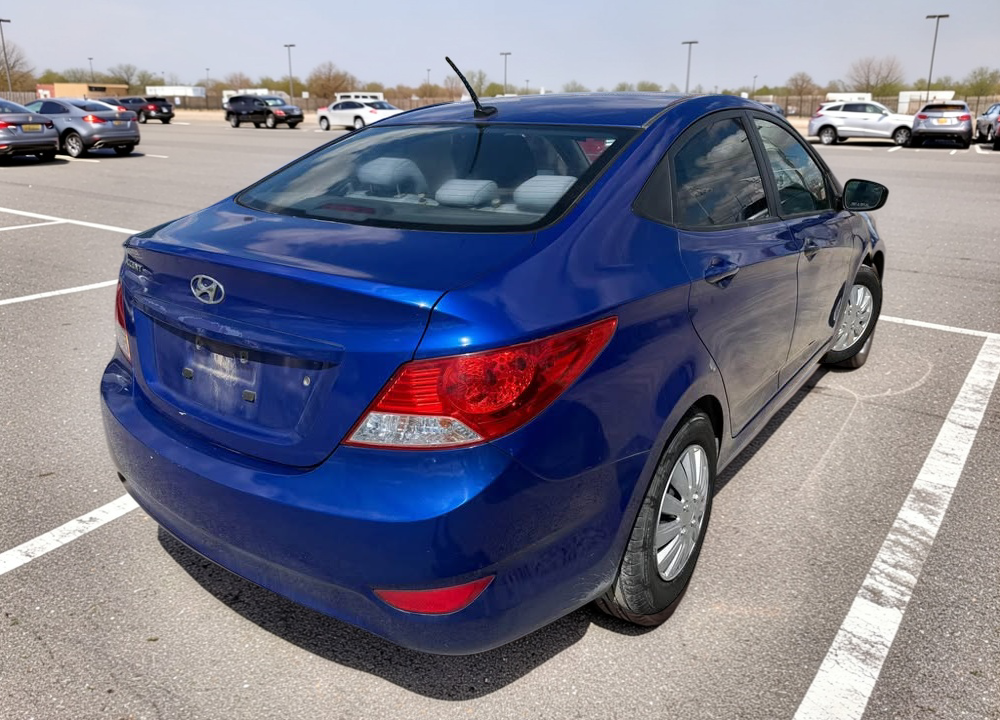
1. For 2000–2011 Accents, condition can outweigh the model year
Rust matters more than a “best year” label
A low-mileage Accent can still have rust around its suspension mounts. Age also takes a toll on hoses, wiring, and rubber bushings. The odometer won’t show years of road salt or missed maintenance. That is general used-car advice, not proof of a rust defect in every older Accent.
Complaint totals alone don’t establish that every 2001, 2002, 2004, 2008, or 2011 Accent is a bad buy. Older cars have had more time to develop faults. Sales volume, mileage, and owners’ reporting habits also affect those totals. Without a denominator and context for mileage, exposure, and reporting, a “worst year” label can overstate the evidence. Treat those years as prompts for closer inspection, not automatic rejects.
Have a mechanic inspect the underbody on a lift. Rust holes near suspension mounts carry more weight than faded paint or a dented door. Worn bushings can let the wheels shift under braking, while loose joints need a separate repair estimate.
Under the hood, look for evidence of coolant leaks around hose joints and the radiator. Damaged wire insulation or patched harnesses deserve closer checks when electrical faults come and go. Structural corrosion needs an assessment before purchase, even when the engine runs well. These are inspection priorities, not documented failure patterns for every older Accent.
A clean-looking timing belt proves little
On older Accents with timing belts, ask for a dated replacement invoice. It should show the mileage and parts installed. A seller’s claim that someone “did the belts” could refer only to the external accessory belts.
Hyundai’s 2011 schedule lists timing-belt replacement at 90,000 miles or 108 months under normal use, and 60,000 miles or 72 months under severe use. The time limit matters even when the car covers few miles. Use the exact model year’s schedule and the vehicle’s driving conditions to establish which interval applies; whichever limit comes first controls.
The timing belt keeps the crankshaft and camshaft timing synchronized. If its teeth strip or the belt breaks, valve timing can fail and the engine can stop. A smooth outer surface cannot establish the belt’s remaining service life. Without a credible invoice, include belt service in the purchase budget; do not assume that every belt failure causes the same internal engine damage.
A warm transmission can expose an expensive fault
Test an older automatic from cold, then repeat the checks once it’s fully warm. Select Reverse and Drive with your foot on the brake. A long pause before engagement needs diagnosis, especially if the transmission then slams into gear.
During acceleration, watch for engine speed rising without a matching gain in road speed. A brief surge between shifts can signal slipping during the shift. Loss of forward drive is a separate, serious fault, even if Reverse still works.
Don’t accept a transmission control module diagnosis based on those symptoms alone. Low fluid, hydraulic pressure loss, electrical faults, and worn internal clutches can produce overlapping behavior. The mechanic needs to check fluid level by the correct procedure, scan for faults, and test further as needed.
A short trip around the block can miss slipping that appears only when the fluid heats up. Repeat gentle starts and moderate acceleration after warm-up. If it slips or delays engagement, require a diagnosis and written repair estimate before buying.
2. The 2012–2019 engine needs more than a clean test drive
The 2018 redesign kept direct injection
The 2018 Accent brought a new body, but kept a 1.6-liter Gamma GDI engine. Direct injection continued through 2019. Buying the newer shape doesn’t remove the need to check for intake-valve deposits.
GDI injectors spray fuel straight into the combustion chambers. Gasoline therefore doesn’t wash the backs of the intake valves. Oil vapors and other residue can collect there and form deposits. Heavy buildup can disturb airflow and combustion, though not every engine develops severe deposits.
An affected engine may stumble after a cold start or hesitate under load. Those symptoms alone don’t prove carbon buildup. Adding cleaner to the fuel tank won’t provide the direct valve washing that this layout lacks.
A misfire code names the cylinder, not the failed part
P0303 means the computer detected a misfire in cylinder 3. It doesn’t tell you whether the spark plug, ignition coil, injector, or cylinder sealing caused it. A shaking engine needs diagnosis before anyone quotes a valve-cleaning job.
A mechanic should review stored codes and the conditions recorded when the fault appeared. Plug inspection can reveal wear, fouling, or damage. Moving a suspected coil to another cylinder can help test it. If the misfire follows that coil, the result points toward an ignition fault.
If ignition checks don’t explain the stumble, fuel delivery and mechanical condition need attention. An intake inspection can reveal deposits on the valve backs. Compression testing checks how well each cylinder builds pressure. A leak-down test helps locate where that pressure escapes.
Intake deposits don’t prove damaged piston rings. Low compression also needs more work before anyone names the failed part. Air escaping through the intake, exhaust, or crankcase points toward different sealing faults and repair paths.
Oil top-ups and engine knock raise the stakes
Ask how much oil the seller adds between changes, and over how many miles. Receipts or a mileage log carry more weight than “they all use some.” A low dipstick reading shows the current shortage, but it cannot establish the rate or cause.
Hyundai’s TSB 23-EM-008H sets out an oil-consumption inspection and repair procedure for gasoline engines. It directs technicians to address oil leaks, abnormal internal noises, and relevant running faults before measuring consumption. It also requires maintenance checks against the applicable owner’s manual.
In the ordinary version of the controlled test, the technician records a full level and measures the oil needed after at least 1,000 miles. The bulletin also describes an enabling-period path after a recent oil-and-filter service, so not every test starts with brand-new oil. Consumption below 1,000 miles per quart proceeds toward further treatment and assessment under Hyundai’s procedure. A seller topping up the engine before a viewing cannot establish a controlled consumption rate.
Persistent mechanical knocking needs diagnosis before another road test. Low oil can leave bearings without enough lubrication, but sound alone cannot identify the damaged part. Cleaning cannot restore worn bearings or repair scored cylinder walls.
For an engine replacement, request an installed estimate identifying a used, rebuilt, or remanufactured engine. It should list labor, added parts, fluids, and warranty terms. Confirm whether that warranty pays removal and installation labor if the replacement fails.
3. Two fire recalls need separate repair records
The ABS module can short while parked
Certain 2012–2015 Accents fall under NHTSA 23V651, Hyundai Recall 251. The affected population is production-date and VIN specific. An ABS-module seal can allow brake fluid onto the controller circuit board and cause an electrical short. The resulting overcurrent can increase the risk of an engine-compartment fire while parked or driving. This is a risk statement, not a prediction that every affected vehicle will ignite.
Hyundai made the Accent’s Recall 251 repair available on May 3, 2024. The remedy replaces the ABS multi-fuse and updates the fuse-box cover label. It addresses the electrical fire risk without routinely replacing the ABS module. Hyundai provides the recall repair at no cost, even after the vehicle warranty expires.
Ask a Hyundai dealer to confirm completion against the car’s VIN. A receipt for brake pads or an ABS sensor won’t establish that Recall 251 was completed. Until the repair is done, Hyundai instructs owners to park outside and away from structures.
The 2012 tire compressor has a different fire risk
Certain 2012 Accents also fall under NHTSA 20V393, Hyundai Recall 193. Eligibility is limited by production date and VIN; it does not cover every 2012 Accent. This defect involves the 12-volt outlet used to power the tire-mobility-kit compressor. Excess tightening during assembly could disable the outlet’s thermal fuse. That fuse should cut power when the outlet overheats.
Prolonged compressor use can overheat an affected outlet and raise the risk of fire. This Accent recall applies to certain 2012 vehicles, not the full 2012–2015 ABS recall range. A working outlet does not document recall completion or prove that the thermal protection is intact.
The listed repair adds a direct-to-battery connection harness to the tire compressor. This lets the compressor draw power without relying on the affected outlet. Hyundai’s published remedy specifies harness installation; check the dealer record for the exact work performed rather than assuming that any outlet or compressor replacement addressed the recall.
For an affected 2012 car, obtain separate completion records for Recalls 193 and 251. Have the dealer verify the compressor’s recall harness if the kit is missing or has been replaced. The ABS fuse repair provides no protection against overheating at the 12-volt outlet.
4. Recall repairs won’t change the 2012–2017 crash structure
A front-corner hit exposes the weakness
The 2012–2017 Accent earned a Poor driver-side small-overlap rating from IIHS. This test examines a hit concentrated on the car’s front corner. It helps assess protection in crashes involving a narrow object or partial frontal contact.
During the test, the cabin structure pushed inward and the steering column shifted roughly 6.3 inches to the right. The dummy’s head slid off the frontal airbag. Excess forward movement also let its head strike the instrument panel. The curtain airbag lacked enough forward coverage to protect against nearby hard surfaces.
The same generation earned Good in the original moderate-overlap frontal test. That result reflects a different impact, with more of the front end taking the load. You can’t apply either rating to every kind of crash.
A healthy engine and completed recalls don’t alter this structural limit. It also applies to the often-recommended 2014 Accent. Routine repairs cannot give that body the crash structure introduced with the 2018 redesign.
The newer body helps, but trim still matters
The 2018–2022 Accent earned Good for driver-side small overlap and Acceptable for passenger-side small overlap in IIHS testing based on structurally shared Kia Rio results. The newer structure performed much better in the driver-side evaluation. On the passenger side, the dummy’s head barely contacted and slid off the frontal airbag, leaving a restraint weakness. These are test-specific results, not a rating for every crash or trim configuration.
The 2019 Top Safety Pick award required specific headlights and front crash prevention. It didn’t cover every Accent on the lot. Verify the actual equipment before paying more for a seller’s safety-award claim.
The 2019–2022 Limited’s LED headlights earned Acceptable, while the 2018–2022 SE and SEL halogen headlights earned Poor. IIHS found inadequate low-beam visibility on straight roads and curves with the halogen setup. A shared body shape doesn’t give those trims equal night visibility.
The Limited also includes forward collision-avoidance assist. In IIHS testing, the equipped car avoided collisions at 12 mph and 25 mph. Those results don’t establish that it can stop before a crash at highway speed.
5. An airbag light can point to 3 different warranty programs
The seat sensor and airbag computer do different jobs
The passenger-seat sensor helps determine when the front passenger airbag should stay off. The main airbag control unit manages deployment based on crash signals and other inputs. Faults in either can trigger an airbag warning, but they need different repairs.
Coverage depends on the program’s terms and the vehicle’s VIN. Z01 and TXXQ run from original delivery or first use, whichever applies, and a used-car purchase does not restart those clocks. TXX6 uses the date of first service for its coverage period. The dealer must confirm the VIN, fault, and remaining coverage.
| Accent model years | Fault and warranty program | Coverage and repair limits |
|---|---|---|
| 2006–2011 | Passenger-seat sensor mat, TXX6 / TSB 17-BE-002. Relevant codes include B1447/B1448. | 15 years, unlimited mileage, measured from the date of first service under Hyundai’s TXX6 information. Many cars have passed the time limit. The documented fault can disrupt occupant classification and airbag-suppression logic. Mat replacement depends on the diagnostic findings. |
| Certain 2012–2017 | Intermittent airbag warning with B1763/B1764, under Z01 / TSB 26-BE-011H. | 18 years, unlimited mileage, including subsequent owners. The 2026 program covers specified OCS unit, harness, or mat repairs after fault confirmation. |
| Certain 2018–2019 | Airbag control-unit faults, TXXQ / TSB 24-BE-014H. | 15 years, unlimited mileage, including subsequent owners. Replacement requires an eligible vehicle and a fault code listed in the bulletin. |
A cleared warning light doesn’t prove a repair
Watch the airbag warning lamp when you switch on the ignition. It should illuminate for its startup check, then go out. Hyundai’s 2018–2019 control-unit bulletin specifies about 6 seconds. A lamp that stays on, returns, or never illuminates needs investigation.
The separate “PASSENGER AIR BAG OFF” indicator serves a different purpose. It can light normally when the occupant-classification system determines that the passenger airbag should be off, including in some empty-seat conditions. Don’t confuse it with the main airbag fault lamp in the instrument cluster.
Have a technician scan the restraint electronics before anyone clears codes. Use an SRS-capable scan tool or Hyundai GDS; an engine-only scan cannot establish airbag health. An intermittent fault may remain in stored records, so retain the diagnostic history where possible.
Diagnosis also depends on the seat hardware. Hyundai’s older sensor-mat bulletin notes that moisture and nearby electronics can affect certain later-built mats. Some stored B1447 cases therefore need checks beyond automatic mat replacement.
Under Z01, the repair can involve the OCS unit or wiring harness, followed by a reset. Persistent codes after harness replacement can require a sensor mat. These warranty extensions cover defined faults, not every cause of an airbag warning.
Before buying, obtain the diagnosis and completed repair record for any reported restraint fault. Code clearing alone leaves no proof that the failed part was repaired. An unresolved airbag warning means crash protection may not work as designed.
6. The 2020–2021 IVT needs its own inspection
The new engine saves fuel, but the transmission changes too
For 2020, Hyundai switched the Accent to a Smartstream 1.6-liter DPi engine with port injection. Output dropped from 130 hp to 120 hp. The six-speed automatic was replaced as the automatic option by Hyundai’s Intelligent Variable Transmission, or IVT. That is Hyundai’s name for a continuously variable transmission. A six-speed manual remained available on the 2020 SE.
The 2020 IVT model carries EPA estimates of 33 mpg city, 41 highway, and 36 combined. Port injection also puts fuel upstream of the intake valves, washing their backs during operation. It removes the earlier GDI layout’s lack of fuel washing, but cannot prevent every deposit or engine fault.
You still need oil-change records and a clean cold start. Port injection doesn’t rule out oil consumption, ignition faults, or internal wear. The newer engine also tells you nothing about the IVT’s current condition.
Campaign 9A9 can require a replacement transmission
Service Campaign 9A9 / TSB 24-01-018H covers certain 2020–2021 IVT-equipped Accents. Hyundai calls for transmission-control software work and IVT replacement when specified faults and conditions require it. The procedure identifies P0730, P0731, P0741, P0867, and P1603. An unlit warning lamp does not by itself prove that a vehicle is outside the campaign or that the campaign was completed; the dealer must check the VIN and applicable diagnostic information.
Ask for the actual repair order behind a “campaign completed” entry. It should establish whether the dealer updated software, replaced the IVT, or performed both. The campaign includes transmission relearn logic; use the repair order to confirm which steps were performed. A note saying “computer updated” leaves those details unanswered.
On the road, check for repeated shudder, delayed engagement, and weak acceleration. An IVT can hold steady engine speed while road speed rises. A sudden rev surge with little forward pull needs investigation. Don’t dismiss repeated slipping because the seller calls it normal CVT behavior.
Test it cold and fully warm. A completed campaign record doesn’t explain a fault that remains during the drive. Require a fresh diagnosis if engagement delays or loss of pull persist.
Some pressure faults allow a smaller repair
TSB 23-AT-010H gives a separate pressure-sensor repair path for applicable IVTs, including 2020-and-later Accents. It addresses P0845, P0846, and P0867. The sensor-only repair applies when those codes appear without driveability symptoms.
Slipping, shift shock, poor acceleration, or failure to engage changes that bulletin’s repair path. Under those conditions, it directs replacement of the IVT assembly. A pressure code therefore cannot establish the repair bill by itself.
P0867 appears in both this bulletin and Campaign 9A9. The dealer must check the VIN, campaign status, symptoms, and applicable procedure before choosing the repair. Don’t price a slipping car on the assumption that it needs only a sensor.
Sensor replacement also requires pressure-characteristic input and adaptive learning with Hyundai’s diagnostic equipment. The bulletin specifies transmission-fluid temperature between 86°F and 194°F for that learning step. Bolting in the sensor alone doesn’t complete the repair.
7. Later Accents still need specific recall repairs
A seat belt can buckle normally while its recalled pretensioner remains unrepaired. A trunk can open from outside while its emergency release fails. Neither fault needs to show up during a test drive.
These recalls cover different parts and vehicle populations. Recall counts alone cannot rank an entire model year’s reliability. Use the VIN and completed repair records to establish which work the car needs.
| Certain affected Accent years | Recall and failure | Repair to verify |
|---|---|---|
| 2020–2022 | 22V354 / Hyundai Recall 229. Front seat-belt pretensioners can deploy abnormally during certain crashes. Excess pressure can send metal fragments into the cabin. The amended filing includes 59,918 Accents. | Installation of protective caps securing the pretensioners’ gas generators and delivery pipes. The repair is free for affected vehicles. |
| 2018–2020 | 21V619 / Hyundai Recall 208. Damage to the trunk latch can disable the internal emergency release, trapping someone inside. | Replacement of the affected trunk-latch assembly, free of charge. |
| 2021–2022, only 2 vehicles in the reported U.S. population | 22V311 / Hyundai Recall 226. An insufficiently tightened steering-column joint bolt can allow separation from the steering rack, causing loss of steering control. | VIN confirmation, inspection of the steering-column joint, and bolt tightening to specification if needed. The recall repair is free. |
8. Theft exposure can change what an Accent costs to own
Some 2011–2017 cars need ignition hardware
A cracked steering-column cover deserves a closer look, even when the engine starts normally. Ask about theft attempts and request repair records for replaced ignition parts. Fresh trim can hide earlier damage to the lock housing or wiring.
Certain 2011–2017 Accents lack an engine immobilizer and cannot accept Hyundai’s anti-theft software upgrade. Hyundai offers these eligible cars a free ignition-cylinder protector. Its locking bracket reinforces the cylinder against the removal method targeted by the campaign.
Ask for the installation record and have the dealer confirm completion against the VIN. A window decal alone cannot establish that the hardware remains intact. Previous ignition repairs deserve another inspection if the seller cannot document what changed.
Before leaving a deposit, obtain an insurance quote for that exact VIN and your address. Ask about theft coverage, the deductible, and any required protection devices. A low purchase price won’t cover theft damage that your policy excludes.
Later cars may qualify for software and hardware work
Certain 2018–2022 Accents qualify for Campaign 993, Hyundai’s anti-theft software update. Eligibility depends on the ignition equipment and VIN. Cars with factory immobilizers or push-button start fall outside the software upgrade’s intended group.
The update changes the body-control software’s alarm and engine-start logic. Hyundai instructs owners to use the key fob to lock and unlock the car. That arms and disarms the updated protection. During the inspection, confirm that the fob works and that the seller supplies it.
Campaign P33 / TSB 25-01-089H adds another hardware option for applicable 2018–2022 Accents. It covers ignition-cylinder protection on cars without an immobilizer or push-button start. The published procedure requires a customer request, so ask the dealer about eligibility even after earlier software work.
P33 calls for a reinforcement protector and anti-theft window decals. Installation also requires removal of the ignition-key ring light where fitted. The hardware does not add a factory electronic immobilizer.
9. Three stronger picks, each with a different option
The 2019 Limited pairs better safety gear with a conventional automatic
A well-maintained 2019 Accent Limited earns a place on the shortlist. It combines the newer crash structure with a conventional six-speed automatic. LED headlights and forward collision-avoidance assist add equipment the lower trims lack. This recommendation rests on that combination, not a proven model-year failure rate.
The retained 1.6-liter GDI engine still needs oil-maintenance records and a clean cold start. Ask about oil added between services, then check for misfires and leaks. Road-test the automatic until fully warm, watching for delayed engagement or slipping.
Certain 2019 cars also qualify for the airbag control-unit warranty extension. Confirm eligibility and repair any restraint fault before purchase. That coverage lasts 15 years from original delivery or first use, not 15 years from your purchase.
The 2022 gets port injection but keeps the IVT
The 2022 Accent may suit buyers seeking the later port-injected engine and its EPA-rated fuel economy. Whether it suits a particular buyer depends on price, condition, equipment, and priorities. Every U.S. 2022 trim pairs its 120-hp Smartstream engine with an IVT. You cannot choose a conventional automatic or factory manual for this model year.
It falls outside Campaign 9A9’s published 2020–2021 Accent scope. That boundary identifies campaign eligibility, not a guarantee against transmission failure. Repeated shudder, delayed engagement, or weak acceleration still requires diagnosis before purchase.
The Limited’s LED headlights and forward collision-avoidance assist may justify paying more for buyers who value that equipment, but the appropriate price premium depends on the specific car and market. Verify the equipment and completed recall work on the actual car. An unresolved IVT fault needs a written repair estimate before you negotiate the price.
The 2020 SE manual avoids the IVT, with fewer safety features
The 2020 Accent SE six-speed manual pairs the port-injected engine with a different transmission choice. It sits outside the IVT campaign because it has no IVT. Hyundai lists EPA estimates of 29 mpg city, 39 highway, and 33 combined for this version.
Clutch condition becomes central to the inspection. Under load, rising engine speed without matching acceleration can point to clutch slip. Shudder during takeoff needs diagnosis, while grinding during shifts can involve clutch release or gearbox wear.
The SE lacks the Limited’s LED headlights and forward collision-avoidance assist. You gain the manual powertrain but give up that safety equipment.
Check engagement from cold and after the clutch warms through normal driving. A clutch replacement quote should include labor and inspection of the flywheel and release parts. Internal gearbox damage requires a separate repair beyond fitting a new clutch.
Sources & References
- Also for: 2009 Accent
- Journal Article
- static.nhtsa.gov
- static.nhtsa.gov
- static.oemdtc.com
- iihs.org
- iihs.org
- static.nhtsa.gov
- static.nhtsa.gov
- static.nhtsa.gov
- motor1.com
- static.nhtsa.gov
- static.nhtsa.gov
- static.nhtsa.gov
- static.nhtsa.gov
- static.nhtsa.gov
- Hyundai
- static.nhtsa.gov
- oemdtc.com
- secure.viewer.zmags.com
- Here Are The Hyundai Accent Years To Avoid – CoPilot
- Types of Hyundai Accent – NY Buyer Guide by Koeppel Hyundai
- Hyundai Accent Reliability and Common Problems – CarParts.com
- 2022 Hyundai Accent Repair: Service and Maintenance Cost
- 12 Best & Worst Hyundai Accent Years (With Facts & Stats)
- 2017 Hyundai Accent Recalls and Common Problems – Facebook
- 6 Most Common Hyundai Accent Problems (Explained) – Engine Patrol
- 2012 Hyundai Accent – IIHS
- Top Car Models with Most Complaints | PDF – Scribd
- Top 5 Problems Hyundai Accent Hatchback 2012-2017 4th Generation
- Hyundai KIA 1.6L Engine (Gamma MPI/GDI/T-GDI) Specs, Problems
- 2022 Hyundai Accent Recalls – Cars.com
- Hyundai has the Most IIHS Top Safety Pick+ and … – HyundaiNews
- 5 of the Best Cars for Problem-Free Ownership, According to Drivers
- Hyundai Accent 2012 Engine Problems – Facebook
- 2020 Hyundai Accent Recalls – Cars.com
- Hyundai Recalls – iSeeCars.com
- How Long Do Hyundais Last? What To Know About Lifespan – CoPilot
- Hyundai Accent – Autopedia | Fandom
- Hyundai 1.6 GDI Engine Reliability – Facebook
- Should You Buy a Used 2011–2018 Hyundai Accent? A
- 2012-2017 Hyundai Accent–Good Car? | BobIsTheOilGuy
- Very Small Cars Fail New IIHS Small-Overlap Frontal Crash Test
- 2013 Hyundai Accent driver-side small overlap IIHS crash test
- A and B-Segment Small Cars Fall Far Short in IIHS Frontal Crash Tests
- Hyundai Accent Repair: Service and Maintenance Cost – RepairPal
- VIN Validation – Hyundai – Recalls
- Hyundai Accent – Wikipedia
- Redesigned Kia Rio, Hyundai Accent Boost Crashworthiness Ratings
- Hyundai Smartstream engine – Wikipedia
- Hyundai Accent Reliability – 2026 Ratings – RepairPal
- Explore the evolution of the Hyundai Accent – CarMax
- Used Hyundai buying guide – CarMax
- Hyundai Motor is recalling 51587 vehicles in the US because a short