
A metallic knock cuts through the test drive as the Sonata’s revs climb. Inside certain Theta II engines, leftover machining debris can restrict oil flow to the bearings. Those bearings wear, knock, and can fail while the car moves. The bargain on the windshield now carries the risk of an engine replacement.
The 2011–2014 Sonatas with 2.4L GDI and 2.0L turbo GDI engines deserve the most caution. Engine recalls cover these years, but the concern doesn’t stop with the 2015 redesign. Hyundai’s bearing-related warranty extension also includes qualifying 2015–2019 models. Coverage has conditions, so don’t count on a free engine before Hyundai checks the car’s eligibility.
This guide sorts the years, engine faults, transmission trouble, and recalls, then explains which repair and warranty records matter.
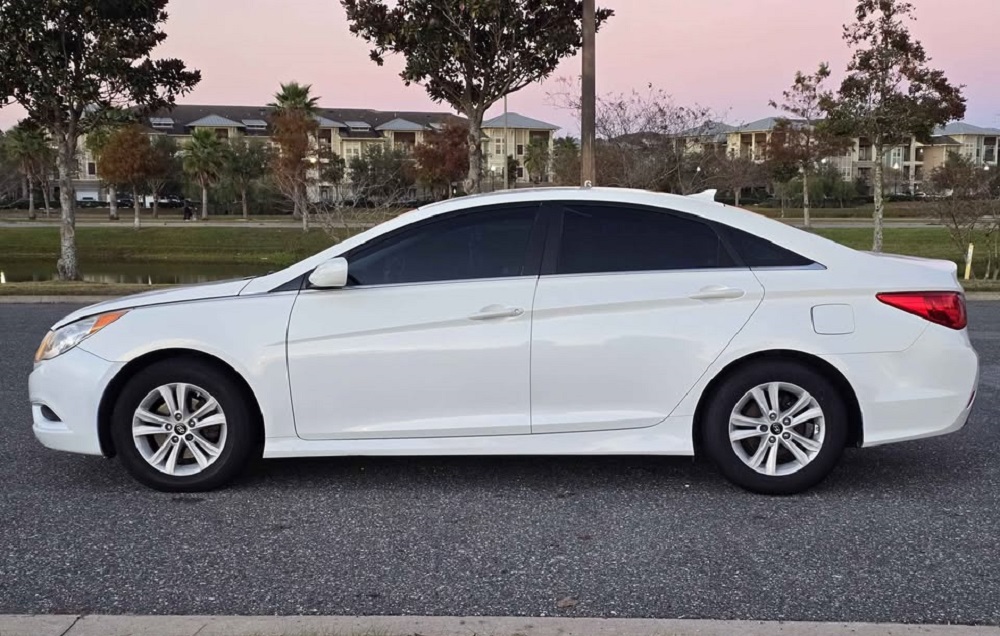
1. The engine matters as much as the year
A 2015 Sonata Eco pairs a 1.6L turbo with a seven-speed dual-clutch transmission. Its clutch faults differ from the bearing concerns in that year’s 2.4L and 2.0L turbo engines. Before judging a listing, confirm the engine and transmission through Hyundai’s VIN records.
Where the expensive faults cluster
| Model years | Engine or version | Main reason for caution |
|---|---|---|
| 2006–2008 | Four-cylinder and V6 | Certain cars have passenger-occupant-classification or ABS fire-risk recalls; eligibility depends on the specific campaign and VIN. |
| 2011–2014 | Certain Theta II 2.4L GDI and 2.0L turbo-GDI | Recalls 132 and 162 identify a bearing-wear risk in specified vehicles; inspection and conditional repair or replacement apply. |
| 2015–2019 | Certain Theta II 2.4L GDI and 2.0L turbo-GDI | Qualifying vehicles may have bearing-related warranty coverage; model year alone does not establish eligibility. |
| 2011–2019 | Hybrid and plug-in hybrid variants | Separate programs cover specified vehicles; TXXM protection can run 15 years or 150,000 miles, whichever comes first. |
| 2015–2019 | Specified 1.6L turbo with seven-speed dual-clutch transmission | TSB 22-AT-007H documents clutch judder; testing, software, retesting, and conditional clutch replacement may apply. |
| 2020–2023 | Specified Smartstream 1.6L turbo | Recall 286 concerns a purge check valve that can deform the fuel tank; plant, production, and VIN limits apply. |
| 2021–2023 | Specified non-turbo 2.5L GDI | TSB 26-FL-001H covers certain production ranges with confirmed P0300–P0304 misfires and may call for all-four-injector replacement. |
| 2021–2022 | Certain N Line vehicles with eight-speed DCT | Recall 236 concerns an electric oil-pump/fail-safe condition; software applies to all affected vehicles and transmission replacement is conditional. |
A matching year doesn’t prove a matching defect
Hyundai ties the newer fuel-tank, injector, and transmission repairs to specific engines, plants, VINs, and production ranges. A 2021 Sonata’s year alone won’t establish which repair applies. Its VIN, build date, powertrain, and, where relevant, diagnostic codes must match the campaign or bulletin.
The older airbag and ABS recalls also cover different groups. Passenger-classification concerns affect certain 2006–2008 Sonatas, while the separate ABS recall covers certain Korean-built 2006 cars. Hybrid bearing coverage carries its own mileage and time limits.
Complaint counts can’t tell you the odds
Complaint totals can flag repeated failures, but they don’t establish a failure rate. Model years differ in sales, mileage, and time on the road. Raw totals don’t account for those gaps or show how many failures owners never reported. Any comparison should state its query date, filters, and limitations.
A newer Sonata has had less time to wear bearings, burn oil, or develop clutch judder. A low complaint count can’t prove long-term durability. Without comparable vehicle populations and mileage data, a “worst year” score cannot show your chance of failure.
2. The bearing failures behind the 2011–2014 warning
Machining debris can starve the bearings
Hyundai’s early Theta II recalls identified residual metal or machining debris that could remain in crankshaft oil passages and potentially restrict oil flow to the connecting-rod bearings. Reduced flow may accelerate bearing wear. As damage grows, the bearing can fail, stall the engine, and cause loss of motive power.
15V568 / Hyundai Recall 132 covers certain 2011–2012 Sonatas built at Hyundai Motor Manufacturing Alabama with 2.0L turbo-GDI and 2.4L GDI engines. 17V226 / Recall 162 covers certain 2013–2014 Sonatas—and certain Santa Fe Sports—with specified 2.0L and 2.4L GDI engines and production ranges. These campaigns call for inspection, followed by repair or engine/short-block replacement when the findings require it. A completed inspection doesn’t necessarily mean Hyundai replaced the engine.
A quiet start can’t clear the engine
A worn rod bearing can produce a metallic knock that speeds up with engine rpm. An oil-pressure warning may also appear, though the lamp alone cannot identify the failed part. A quiet cold start cannot establish bearing condition. Hyundai’s recall procedure uses a defined inspection, beyond simply listening during a seller’s demonstration.
P1326, also displayed as P132600, relates to Hyundai’s Knock Sensor Detection System, or KSDS. The software monitors vibration for signs associated with bearing wear. The code calls for diagnosis, but it doesn’t prove the engine has seized or automatically requires replacement. Hyundai’s service procedures use inspection and testing to determine the appropriate repair.
Ask for the diagnostic report if the seller mentions a previous P1326 warning. A cleared code leaves the cause unresolved unless repair records explain the findings. If knocking or an oil-pressure warning appears during the test drive, stop safely and shut off the engine. Continued driving with a worn bearing can end in engine failure.
“New engine” needs more than the seller’s word
The replacement invoice should identify the car’s VIN, repair date, and odometer reading. It should also name the engine supplier and state whether the unit was new, remanufactured, or used. A used engine needs its own mileage record. Check the repair scope, since “engine replacement” alone doesn’t identify which parts the shop reused.
Service records after the swap matter too. Match oil-change dates and mileage to the replacement invoice, then look for later engine complaints. An old replacement receipt cannot establish the engine’s current oil use or bearing condition.
Certain engine replacements also triggered 18V934 / Recall 180, covering a high-pressure fuel pipe. Hyundai found that some pipes could be damaged, misaligned, or tightened incorrectly during engine work, allowing fuel to leak at the connection. Confirm this campaign by VIN rather than assuming every replacement engine is covered.
Have Hyundai confirm whether the VIN falls under Recall 180 and whether the dealer completed it. The repair calls for inspection at the fuel-pump outlet. If the connection leaks, the dealer must replace the pipe and install it correctly.
3. A full dipstick can hide a thirsty 2015–2019 engine
The redesign didn’t end the engine concern
Hyundai’s bearing-related warranty programs include qualifying 2015–2019 Sonatas with specified Theta II 2.4L and 2.0L turbo-GDI engines. That includes some 2018 and 2019 cars. Lower complaint totals don’t establish that Hyundai eliminated the risk in those years; eligibility remains engine- and VIN-specific.
Oil consumption needs a separate diagnosis. An engine can burn oil and suffer bearing damage, but one finding doesn’t prove the other. The bearing-related extension doesn’t automatically pay for an oil-burning engine. Hyundai must establish the fault and confirm coverage.
Measure the missing oil over miles
TSB 23-EM-008H sets out Hyundai’s oil-consumption inspection and repair procedure. The shop must address leaks, abnormal engine noise, relevant fault codes, and applicable campaigns before testing. It then establishes a full oil level with fresh oil and records mileage.
For the initial mileage test, the car travels at least 1,000 miles before the next measurement; the post-cleaning test requires more than 1,000 miles. The technician records how much oil restores the full mark. Dividing miles traveled by quarts added gives the consumption rate. The engine is warmed, shut off, and allowed to settle for about 10–15 minutes before checking.
Hyundai’s bulletin says more than 1,000 miles per quart passes this inspection and fewer than 1,000 miles per quart fails; it does not expressly address exactly 1,000 miles per quart. Depending on the documented result, the repair path can include combustion-chamber cleaning and another measured test. Continued excessive consumption after the required retest can lead to conditional engine replacement, subject to prior approval and applicable warranty terms.
Passing that threshold can still leave you adding oil between changes. At 1 quart every 1,200 miles, an engine would consume 5 quarts over 6,000 miles. That arithmetic assumes a steady rate and regular top-ups to maintain the level.
Top-up records reveal what a test drive can’t
Ask how much oil the seller adds and at what mileage. Receipts without odometer readings won’t establish a consumption rate. A dipstick filled before your visit shows only the current level.
A cleaning invoice needs the follow-up test result beside it. An engine-replacement invoice needs later oil-use records. Without those measurements, neither repair proves that consumption stopped.
Oily spark plugs or heavy deposits warrant diagnosis, but they don’t identify piston rings as the cause. Have the shop establish where the oil goes before pricing the repair. A short test drive cannot measure oil loss across 1,000 miles.
4. “Lifetime warranty” comes with limits
Bearing coverage won’t pay for every engine fault
Hyundai’s TXXI program covers certain 2011–2019 non-hybrid Sonatas with specified Theta II 2.0L turbo-GDI and 2.4L GDI engines. Eligible subsequent owners may receive coverage, subject to the program’s terms. The extension concerns engine damage tied to connecting-rod-bearing wear. It doesn’t promise free repairs for every oil leak, turbocharger fault, or oil-consumption complaint.
The NHTSA-posted TXXI bulletin describes a limited-lifetime warranty for qualifying bearing damage, while Hyundai’s current public TXXI page displays different 10-year/120,000-mile wording. Because the public materials are not consistent, have Hyundai confirm the applicable program and VIN eligibility in writing. Required software, maintenance conditions, diagnosis, prior approval, and other exclusions still apply.
Hybrid coverage runs on a different clock
The 2011–2015 Sonata Hybrid uses a Theta II 2.4L MPI Atkinson engine. Certain 2016–2019 Sonata Hybrids and plug-in hybrids use a Nu 2.0L GDI engine. These vehicles fall under the separate TXXM program for qualifying bearing-related engine damage, along with specified other Hyundai models.
For qualifying vehicles, that TXXM extension lasts 15 years or 150,000 miles, whichever comes first. Eligible subsequent owners can receive the remaining coverage. Buying the car used doesn’t restart either limit. Hyundai measures the time from the original retail delivery or first-use date specified by the program.
The software requirement has specific exceptions
The required KSDS update depends on the engine and warranty program. Hyundai’s TXXI guidance identifies Service Campaign 953 for the applicable Theta II GDI Sonata vehicles. TXXM guidance identifies Service Campaign 966, with 982 providing an updated version for certain vehicles. Have the dealer match the campaign number to the VIN.
For the applicable TXXM vehicles, Hyundai’s guidance generally requires KSDS installation before a covered engine failure. It exempts vehicles previously covered by Recall 198 / 20V746 or Recall 209 / 21V727 from that prerequisite. Those recalls are not universal Sonata software campaigns, and the exception does not create blanket warranty eligibility. Hyundai still encourages owners of exempt vehicles to obtain the update.
Ask for the completed campaign record, including its date and mileage. An appointment booking doesn’t establish that the dealer installed the software. Where the pre-failure requirement applies, an update after engine failure cannot satisfy it.
Early hybrids also carry an ABS fire recall
23V651 / Hyundai Recall 251 includes certain 2011–2015 Sonata Hybrids. Brake fluid can leak inside the ABS module and cause an electrical short. The resulting overcurrent can start an engine-compartment fire while driving or parked.
An engine replacement or KSDS update doesn’t complete this separate brake recall. Confirm the ABS repair through Hyundai’s campaign record. Until an affected car receives the repair, park outside and away from homes and other structures. The fire risk remains with the ignition off.
5. Older Sonatas hide different risks
The passenger airbag can misread an adult
08V161 / Hyundai Recall 083 covers certain 2006–2008 Sonatas. The seat’s occupant-classification system can mistake some smaller adults for children. It then lights the “Passenger Air Bag Off” indicator and disables the front passenger airbag. That airbag may not deploy in a crash that requires it.
An incorrect passenger-off indication differs from a separate SRS warning. Don’t assume either light proves a cracked seat-sensor circuit. This recall addressed how the seat classified occupants, with evaluation and repair or reprogramming as needed.
Have the dealer investigate if the passenger-off light stays on with an adult seated correctly. The recall procedure calls for checking the seat’s response before deciding on repair. A passenger-off light with an empty seat doesn’t establish a fault.
Certain 2006 cars can short with the key out
18V026 / Recall 172 concerns certain Korean-built 2006 Sonatas, not every car from that model year. Their ABS modules can retain electrical power after shutdown. Moisture entering the module can cause an internal short and increase the risk of an engine-compartment fire. The fault can occur while the car sits parked.
Hyundai’s remedy adds a relay in the main junction box. The relay cuts power to the ABS module when the ignition turns off. Confirm that installation through the VIN’s campaign record. Normal braking during a test drive cannot rule out this electrical fault.
Road salt can weaken the rear crossmember
Recall 113 covers rear-crossmember corrosion on certain 2006–2010 Sonatas originally sold in or currently registered in the Salt Belt or Washington, D.C. Hyundai’s affected regions include states such as Michigan, New York, and Pennsylvania. A car now listed in a warm state may have spent years on salted roads. Check its earlier registration history.
The crossmember supports rear suspension mounting points. Have an independent shop inspect it on a lift, including the areas around those mounts. Flaking metal, holes, or cracked mounting areas need a structural assessment before any road test.
An old recall-completion entry won’t show how much corrosion developed afterward. Ask what work the dealer performed and when. Perforation or weakened suspension mounts require repair before the car returns to service.
6. Steering clunks, melted lamps, and theft add costs
A worn steering coupler can knock on every turn
A flexible rubber coupling sits inside the motor-driven power steering assembly. As it wears, steering changes can produce a click or dull thud. TSB 17-ST-002 / TXX7 covers the specified MDPS coupler in certain 2011–2014 Sonatas and applicable 2011–2015 Sonata Hybrids. Hyundai’s repair replaces the coupling.
Hyundai states that this coupling wear doesn’t affect steering control. Heavy steering, a warning lamp, or substantial looseness needs a separate diagnosis. Don’t let a seller blame every steering symptom on the small rubber part. The coupler extension ends at 10 years or 100,000 miles, whichever comes first.
Another bulb won’t fix a warped lamp housing
Certain 2011–2014 Sonatas can lose brake-light operation when heat deforms the rear combination-lamp housing. TSB 24-01-073H / TXXT addresses this condition in specified vehicles produced within Hyundai’s listed range. Hyundai extends qualifying lamp coverage to 15 years or 200,000 miles, whichever comes first. Original and subsequent owners can qualify after the required inspection.
Press the brake pedal while someone checks the rear lamps. A dark lamp needs bulb, socket, and housing inspection before anyone orders parts. Hyundai warns that socket discoloration alone doesn’t establish the covered heat damage. The inspection looks for physical deformation around the bulb-holder opening.
Confirm coverage before paying for replacement housings. The bulletin may exclude deformation caused by bulbs unsuited to the application. When qualifying heat deformation appears in either housing, Hyundai’s procedure calls for replacing both rear combination lamps.
A keyed ignition can change the insurance bill
Certain 2011–2019 Sonatas with keyed ignitions lack an engine immobilizer and face a documented theft vulnerability. Push-button models with immobilizers don’t share that specific missing protection. Confirm the car’s equipment and software history through its VIN; the anti-theft campaign is not universal to every Sonata in those years.
Hyundai offers a free anti-theft software update for eligible keyed-ignition vehicles. After installation, you must lock the doors with the key fob to activate its ignition-disable feature. Have the dealer explain the operating requirements and confirm that the supplied fob works. The update is intended to deter a specific theft method and does not guarantee that the car cannot be stolen.
Get an insurance quote for the actual VIN before leaving a deposit. Ask about comprehensive coverage, theft deductibles, and any proof of software installation the insurer requires. Hyundai acknowledges that some affected owners have struggled to secure or retain insurance. A software receipt doesn’t guarantee an insurer will cover the car.
7. Newer engines bring different faults
A worn valve can swell the 1.6T’s fuel tank
25V796 / Hyundai Recall 286 covers certain 2020–2023 Sonatas with the 1.6L turbo engine, subject to plant, production-date, and VIN limits. A worn purge check valve can let compressed air flow backward into the fuel tank. That pressure can deform the tank and eventually cause a fuel leak. Fuel near an ignition source raises the fire risk.
Hyundai lists rear popping noises, fuel odor, a check-engine light, and failure to start as possible warnings. A pop from beneath the rear seat deserves investigation, especially alongside a gasoline smell. Stop the test drive if you suspect leaking fuel.
The remedy includes check-valve inspection or replacement, plus inspection and repair of the tank and nearby parts. The dealer must also verify or update the engine-control software. Confirm Recall 286 status even if the records show completed Campaign 9B1 work. That earlier campaign entry doesn’t establish completion of the later recall.
A misfire can come from leaking injectors
TSB 26-FL-001H covers certain non-turbo 2.5L GDI Sonatas with internally leaking fuel injectors. Hyundai identifies possible breakage of an injector’s internal filter. The bulletin lists P0300–P0304, covering random or multiple-cylinder misfires and individual misfires on cylinders 1–4. Don’t assume those codes mean the car needs plugs or coils.
The affected production ranges differ by assembly plant. For VINs starting with KMH, the bulletin covers certain 2021–2023 cars built February 8, 2021–January 19, 2023. For VINs starting with 5NP, it covers certain 2021–2022 cars built March 1, 2021–February 14, 2022.
When the car, production range, and confirmed misfire match the bulletin, Hyundai specifies replacement of all four GDI injectors. The bulletin follows normal new-vehicle warranty terms; it doesn’t grant every affected car free repairs indefinitely. Without the listed codes or a matching production range, Hyundai directs the shop to normal diagnosis.
An oil-use bulletin doesn’t prove a piston defect
Hyundai’s oil-consumption bulletin, 23-EM-008H, applies broadly to its gasoline vehicles across model years. It doesn’t establish a unique piston-tolerance defect in 2021–2022 Sonatas. Claims of that specific defect need evidence beyond a general inspection procedure.
For a newer 2.5L car, ask for measured consumption results and the diagnosis behind any engine repair. Keep injector misfires separate from oil-loss findings unless testing connects them. An injector-replacement receipt cannot establish how much oil the engine consumes between changes.
8. The Eco and N Line have different transmission risks
The Eco’s clutch can shake at low speeds
The 2015–2019 Sonata 1.6L turbo uses a seven-speed dual-clutch transmission in the specified application. Hyundai documents abnormal low-speed vibration in TSB 22-AT-007H. The repair path includes clutch-judder testing, revised transmission software, and double-clutch replacement only when the judder persists after retesting.
During a warm test drive, pay attention when pulling away, reversing, and moving through slow traffic. Note repeated shaking as the clutch engages. Clean highway shifts don’t establish how smoothly the clutch takes up from a stop.
Hyundai’s procedure measures judder with its diagnostic equipment. If the clutch fails the test, the technician updates the transmission software and tests again. Continued failure calls for replacement of the double-clutch assembly. A software-update receipt without the retest result leaves the repair outcome unclear.
The N Line recall concerns sudden loss of drive
22V746 / Hyundai Recall 236 covers certain 2021–2022 Sonata 2.5T N Lines and other specified Hyundai vehicles with an eight-speed DCT. A high-pressure electric oil-pump fault and fail-safe software condition can disrupt the transmission’s limited-mobility mode. Hyundai describes warning lights, followed by roughly 20–30 seconds of normal power before complete loss of drive.
That failure requires more than an explanation about normal clutch feel in traffic. The recall updates the transmission-control software to restore the intended protective driving mode. The dealer must also inspect the transmission and replace it when necessary. Recall completion therefore doesn’t mean every affected car received a replacement gearbox.
The 2026 bulletin still calls for hardware repairs
The article’s earlier reference to TSB 26-AT-001H, dated March 2026, is not supported by the authoritative bulletin reviewed for this topic. The matching 2026 bulletin identified in the primary records is TSB 26-AT-002H, dated February 2026, and it concerns certain Santa Fe and Tucson vehicles—not Sonata N Lines. Keep it separate from Recall 236.
For the Sonata N Line issue, rely on Recall 236’s VIN-specific inspection and diagnostic procedure rather than attributing unrelated diagnostic codes to a separate 2026 Sonata bulletin. A completed software campaign cannot establish the pump’s current condition, and software cannot repair failed pump hardware.
Review any warning-light visits after the recall repair, including stored codes and the dealer’s findings. A completed software campaign cannot establish the pump’s current condition. Hyundai requires applicable recall or campaign software before replacement, but the update cannot repair failed pump hardware.
9. Which Sonatas deserve a closer look?
A clean 2009–2010 car still needs a lift
A well-kept 2009–2010 Sonata can be worth considering on a tight budget. These years sit outside the later Sonata GDI bearing-recall population. Hyundai specifications identify naturally aspirated 2.4L I4 and 3.3L V6 configurations, but the article should not assume one universal fuel-injection system or infer better durability from fuel-delivery design alone. Age, maintenance, and current condition still govern the purchase.
Have the shop inspect coolant leaks, radiator condition, hoses, and evidence of past overheating. Test transmission engagement and shifts after the car warms up. Delayed engagement or an rpm flare between gears needs diagnosis before you agree on a price.
The rear crossmember also needs inspection, especially after years on salted roads. Recall 113 includes certain 2009–2010 cars with salt-belt exposure. A completed campaign record cannot establish the crossmember’s remaining metal thickness today.
The later non-turbo 2.5L offers a different combination
A regular 2024–2025 gasoline Sonata with the non-turbo 2.5L engine and conventional eight-speed automatic is another configuration worth investigating. It avoids the earlier Theta II GDI engines and the N Line’s eight-speed wet dual-clutch transmission. Hyundai lists this engine-and-transmission pairing in its U.S. model specifications. The statement excludes the N Line and Hybrid configurations.
That preference follows the hardware differences; it doesn’t establish a lower long-term failure rate. Ask about oil top-ups, misfire repairs, and any transmission complaints recorded during service. Check the car’s actual warranty status through Hyundai. A newer model year doesn’t prove how the previous owner maintained it.
Recent models haven’t earned a decade-long record
The 2025–2026 cars haven’t spent enough years on the road to demonstrate decade-long durability. Low complaint totals cannot fill that gap. Their VINs still need a current recall check before purchase.
26V047 / Hyundai Recall 293 includes certain 2026 Sonatas and Sonata Hybrids within Hyundai’s listed build-date and component ranges. A software error can cause the instrument display to reboot or go blank. That can hide the speedometer and warning lights while driving.
The remedy updates the instrument-panel software over the air or through a dealer. Have Hyundai confirm completion for the specific VIN. An update notification alone doesn’t establish that installation finished.
Editorial note: Recall, warranty-extension, and service-campaign eligibility is VIN-, engine-, plant-, production-date-, and sometimes symptom-specific. Confirm the current status with Hyundai or NHTSA before purchase. Service campaigns and technical bulletins are not necessarily safety recalls, and a completed software update does not prove that hardware is sound.
Sources & References
- Worst Years for a Hyundai Sonata — Problems & Complaints Ranked
- Hyundai Sonata Reliability and Common Problems – CarParts.com
- Here Are The Hyundai Sonata Years To Avoid – CoPilot
- Hyundai/Kia 2.5 Smartstream Problems: Oil Burn, DCT Shudder
- Hyundai Fined Millions over Santa Fe Sport, Sonata Engine Recalls
- Hyundai Engine Problems: The Theta II Recall Explained
- Hyundai’s $5 Billion Engine Recall Nightmare Explained
- Engine Warranty Extension (TXXI) – Dealer Best Practice – nhtsa
- united states department of transportation – NHTSA
- NHTSA Announces Consent Orders with Hyundai and Kia Over
- The Hyundai Sonata Is Responsible for the Automaker’s Worst
- Hyundai Sonata – CarComplaints.com
- Front Passenger Air Bag May Not Deploy When Needed – RepairPal
- 2015 Hyundai Sonata – Engine worries – Maintenance/Repairs
- A Massive Class Action Suit is Filed Against Hyundai for Excessive
- ENGINE OIL CONSUMPTION INSPECTION AND REPAIR … – nhtsa
- Hyundai class action over excessive oil consumption dismissed
- Airbag Light On Due To Faulty Passenger Seat Mat Occupancy
- engine inspection / replacement (recall campaign 198) – nhtsa
- Check your VIN – Hyundai Engine Recall
- Engineering Analysis – DOT NHTSA ODI Document
- Hyundai Issues Recall and Engine Software Update for Certain
- Hyundai Sonata steering coupler replacement cost concerns
- motor driven power steering (mdps) coupling warranty extension (txx7)
- motor driven power steering (mdps) coupling replacement – nhtsa
- 2011 Sonata Limited – Steering Coupler Replacement – Reddit
- mechanic tried to charge me $3200 for the steering coupler issue
- Hyundai Steering Coupler Replacement | TSB Common Issue
- powertrain extended warranty – Hyundai – Recalls
- Hyundai Motor Class Action Law Suit Due to Oil Consumption Defect
- HYUNDAI OCCUPANT CLASSIFICATION SYSTEM
- What Are Seat Weight Sensor and Why Calibration is Needed
- Hyundai Theta Engine Settlement: Home
- Hyundai Sonata Engine Recall & Theta II Lifetime Warranty Help
- Hyundai Engine II Class Action Settlement: Home
- I pulled 20 years of NHTSA complaints to find which used cars are
- 2022 Hyundai Sonata Consumer Reviews & Ratings
- Junkyard Adventures Ep 7 | 2006 Hyundai Sonata Airbag Sensor Fix