
A metallic knock interrupts the test drive before the Veloster reaches the next light. On certain 2013 Turbos, faulty engine software could trigger early combustion and damage the engine. Some 2015–2016 non-turbo models faced a different threat: connecting-rod bearings that wore out too soon. Either fault could turn that knock into a stall.
The year on the advert tells only part of the story. Engine choice, gearbox type, and past repairs shape what you’re buying. A software update can reduce a known risk, but it can’t rebuild damaged metal.
This guide sorts the Hyundai Veloster years to avoid, the recall and warranty limits, and the versions worth inspecting.
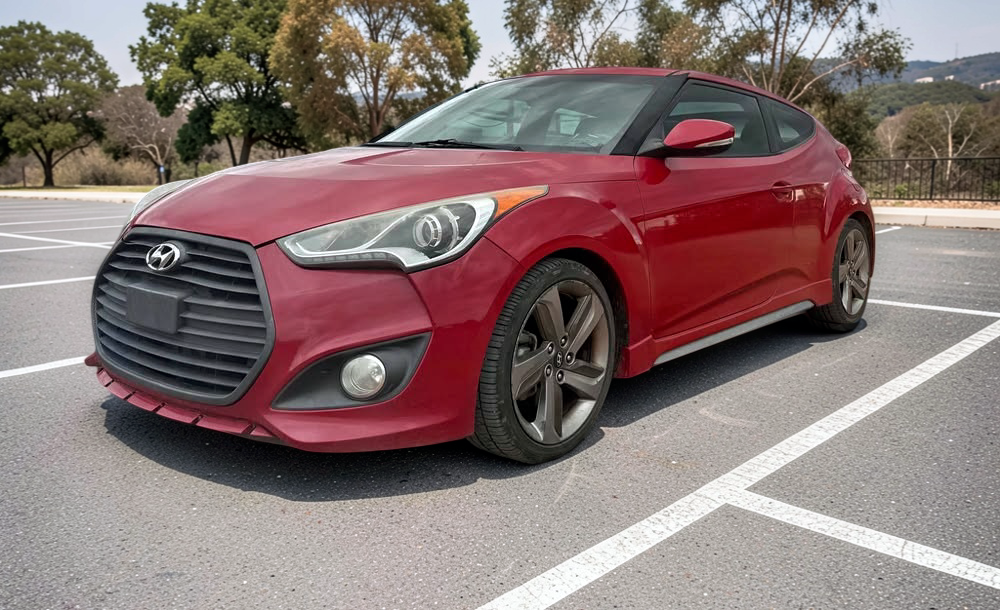
1. Which Veloster years deserve the closest look?
Start with the engine behind the badge
The 2013 Veloster Turbo belongs near the top of the caution list. Recall 19V-204, Hyundai campaign 182, targets engine software that could cause pre-ignition. That early combustion can raise cylinder pressure enough to damage the engine. Hyundai listed knocking noise, misfires, reduced power, and an illuminated malfunction-indicator lamp among the possible warnings.
The 2015–2016 non-turbo 1.6-liter needs separate scrutiny under recall 20V-746, Hyundai campaign 198. This recall concerns premature connecting-rod-bearing wear. Continued driving can damage the engine, stall the car, or allow a broken connecting rod to puncture the block. Sharing a 1.6-liter engine size does not put the Turbo under the same recall.
Across 2012–2017, engine condition and gearbox choice both matter. Moving to a later first-generation car does not rule out worn bearings, clutch trouble, or neglected maintenance. A seller’s “automatic” label also leaves out a crucial detail: Hyundai fitted several different types of gearboxes.
Certain 2019–2021 base 2.0-liter models have their own engine recall, 21V-301, Hyundai campaign 203. Improperly heat-treated piston oil rings can become excessively hard, chip, and score the cylinder walls. Oil consumption can rise as the damage spreads. This recall covers the 2.0-liter Nu MPI engine, not the 1.6-liter Turbo or the Veloster N’s turbocharged 2.0-liter.
These buying priorities reflect documented defects, not a measured failure-rate ranking. Raw complaint counts do not account for sales volume, vehicle age, mileage, maintenance, or driving conditions. Fewer reports alone cannot prove that a newer car has stronger bearings or longer-lasting clutches.
Skip the missing year and identify the gearbox
Hyundai sold no 2018 model-year Veloster in the U.S. The first-generation 2017 model year ran longer before the redesigned car arrived as a 2019 model. A listing for a U.S. “2018 Veloster” should be checked against the VIN and title.
For 2022, the U.S. Veloster range consisted of the Veloster N. Transmission choices also depend on trim. DCT means dual-clutch transmission; a conventional automatic uses a torque converter rather than launch clutches.
| U.S. model years | Engine or version | Transmission choices, depending on trim |
|---|---|---|
| 2012–2017 | Base 1.6-liter GDI | 6-speed manual or 6-speed EcoShift dry DCT |
| 2013–2015 | 1.6-liter Turbo | 6-speed manual or conventional 6-speed automatic |
| 2016–2017 | 1.6-liter Turbo | 6-speed manual or 7-speed dry DCT |
| 2019–2021 | Base 2.0-liter Nu MPI | 6-speed manual or conventional 6-speed automatic |
| 2019–2021 | 1.6-liter Turbo | 6-speed manual or 7-speed dry DCT |
| 2019–2020 | Veloster N 2.0-liter turbo | 6-speed manual |
| 2021–2022 | Veloster N 2.0-liter turbo | 6-speed manual or 8-speed wet DCT |
Always confirm the fitted transmission by VIN, build sheet, or a physical inspection. Trim and market differences can change the available equipment.
2. Why the 2013 Turbo needs more than a recall stamp
Faulty ignition timing can damage the engine
Hyundai recalled 16,487 vehicles under 19V-204, campaign 182, covering certain 2013 Velosters equipped with 1.6-liter turbo engines. The engine software could allow excessive spark advance and premature combustion. Pressure inside the cylinder could then rise enough to damage the engine.
Hyundai listed knocking noise, misfires, reduced power, and a check-engine light as possible warnings. Engine damage could cause a high-speed stall. In limited cases, it could also lead to a vehicle fire.
The recall targets a specific engine calibration. It does not establish that every turbocharged Veloster has the same defect. Hyundai’s recall report said related claims fell significantly from model year 2014 onward, after revised ignition logic entered production.
Updated software cannot rebuild damaged metal
Campaign 182 reprograms the engine control unit, or ECU, to reduce excessive spark advance and pre-ignition. That repair changes how the engine runs. It cannot restore parts that suffered damage before the update. A completed recall therefore does not establish the engine’s current mechanical condition.
Ask for the recall invoice and records of any engine repair or replacement. Those records should show when the work happened and what the shop replaced. An invoice for an ECU update alone does not document an engine replacement.
An aftermarket tune adds another question: what software controls the engine now? Have a Hyundai dealer or qualified specialist establish the current calibration. The recall record confirms work performed at that earlier visit; it does not certify that the vehicle is still running factory software.
Persistent knock or misfires need diagnosis before you agree to buy. A technician may use compression or leak-down testing if the symptoms suggest piston or cylinder damage. Those tests do not rule out worn rod bearings; suspected bearing damage requires a separate mechanical assessment.
3. Bearing wear puts more first-generation cars under scrutiny
The 2015–2016 recall targets the non-turbo engine
Recall 20V-746, Hyundai campaign 198, covers certain 2015–2016 Velosters with the non-turbo Gamma 1.6-liter GDI engine. Worn connecting-rod bearings can produce abnormal knocking noise and trigger the oil-pressure warning light. Continued operation can damage the engine and eventually stall the vehicle.
A broken connecting rod can puncture the engine block. Escaping oil can then reach hot surfaces and increase the risk of fire. Hyundai’s remedy calls for an engine inspection, replacement when bearing damage is found, and enhanced engine-monitoring software. The same model-year badge does not place a Turbo within this recall.
P1326 calls for testing, not a guess
Hyundai’s Knock Sensor Detection System, or KSDS, monitors engine vibration for patterns that may indicate abnormal bearing wear. It can trigger diagnostic trouble code P1326 when it detects a suspect pattern. A warning light, reduced power, or abnormal engine noise needs diagnosis. The code alone does not establish which parts need replacement.
Hyundai’s bearing-inspection procedure guides the repair decision. Dealers should use the applicable Hyundai procedure, including the latest version of TSB 22-01-023H, when the vehicle presents with P1326, abnormal engine noise, or a related no-crank/no-start condition. Inspection findings determine the required parts and repair work.
Oil consumption needs its own diagnosis. A full dipstick at the viewing does not reveal how much oil the seller added yesterday. Ask for oil-use measurements, top-up records, and previous test results. External leaks, oil burning, and bearing damage do not establish the same fault.
The 15-year warranty has firm limits
Hyundai’s TXXM extension covers eligible 2012–2017 Velosters with the Gamma 1.6-liter GDI engine. It applies to qualifying engine damage or malfunction related to connecting-rod-bearing wear. Coverage lasts 15 years or 150,000 miles, whichever comes first, from the original retail delivery date or date of first use. Eligible subsequent buyers can qualify.
Hyundai communicates KSDS completion as a requirement for coverage under the extended warranty. Vehicles previously covered by recall 198 are exempt from that KSDS requirement, although Hyundai encourages the update. Hyundai’s dealer guidance also says applicable claims should be submitted for review within the coverage period regardless of KSDS completion. That permits review; it does not guarantee approval.
TXXM does not cover every cause of oil loss, misfires, or engine failure. Hyundai excludes salvaged vehicles and specified commercial entities and vehicle businesses. Do not assume a Turbo or N qualifies without written VIN-specific confirmation.
Before buying, obtain the original in-service date, campaign history, and written coverage status. Keep any replacement-engine invoice with those records. The coverage period is based on the vehicle’s original retail delivery or first-use date; do not assume that an engine replacement restarts the 15-year or 150,000-mile period. Confirm the answer in writing for the specific VIN.
4. Dry DCT shudder needs more than a software promise
Two pedals do not identify the transmission
The first-generation base Veloster’s 6-speed EcoShift DCT uses dry friction clutches to move off from rest. The 2013–2015 Turbo’s conventional automatic uses a torque converter. Hyundai switched the Turbo’s automatic option to a 7-speed dry DCT for 2016.
At crawling speeds, a dry DCT slips its clutches to control movement. Repeated creeping can build heat, especially uphill. Holding the car on a slope with the accelerator keeps those clutches slipping. Use the brake to hold position.
You may feel clutch engagement more clearly than in a conventional automatic. Persistent shaking, delayed engagement, or rising revs without matching speed still needs diagnosis. Do not accept “they all do that” as an explanation for repeated shudder.
The 2016–2017 Turbo has a documented clutch repair
Hyundai bulletin 21-AT-013H addresses abnormal low-speed vibration in certain 2016–2017 Veloster 1.6T models equipped with the 7-speed DCT. Technicians use Hyundai diagnostic equipment to measure clutch judder. A failed result calls for double-clutch replacement, with a transmission-control-unit update where specified.
The bulletin replaces the older F833DS clutch material with revised F850 material. It lists replacement clutch assembly 41200-2D220 for the affected Veloster. The matching software update applies when the replacement converts the older material to F850.
An invoice saying “software updated” does not prove that anyone replaced the clutch assembly. Nor does clutch replacement mean the shop installed a complete transmission. Ask for the parts and labor lines showing the actual repair.
The bulletin lists 4.4 labor hours for the Veloster inspection, clutch replacement, and control-unit-update operation. That is a warranty labor allowance, not a fixed retail quote. Normal warranty terms apply; the bulletin does not grant free repairs to every car with similar symptoms.
Let a warm gearbox show its faults
Include parking, reversing, and normal stop-and-go driving after the transmission warms up. Watch for repeated shaking as the clutch takes up. Note any delay after selecting Drive or Reverse. A cold lap around the block can miss a heat-related complaint.
Do not force repeated launches or deliberately overheat the clutches. If a temperature warning appears, stop the test and follow the owner’s manual. Have the shop diagnose the clutch assembly, actuators, controls, or internal gearbox before pricing repairs.
A manual gearbox still needs a clutch and gear-engagement check. Revs that rise without matching road speed can point to clutch slip. Grinding or resistance during shifts needs diagnosis before you treat the manual as the cheaper choice.
After DCT clutch replacement, actuator adjustment also matters. Hyundai requires the actuator rods to return to their factory-zero setting. Incorrect rod adjustment prevents the required DCT relearn from completing.
5. Fire recalls reach beyond the engine
Parking sensors and ABS faults need separate repairs
| Affected Veloster vehicles | Recall and Hyundai campaign | Fault and prescribed repair |
|---|---|---|
| Certain 2012–2014 model-year vehicles produced through October 31, 2013 | 23V-132 / 242 | Liquid can enter rear parking sensors and cause a short. Dealers install a lower-amperage fuse, inspect the sensors, and replace them when needed. |
| Certain 2012–2015 model-year vehicles | 23V-651 / 251 | Brake fluid can leak inside the ABS module and cause an electrical short. Dealers replace the specified ABS fuse. |
The parking-sensor recall’s later service documentation includes certain 2014 model-year vehicles produced through October 31, 2013. Checking only the original 2012–2013 model-year description can miss an affected vehicle. Hyundai’s VIN-specific campaign record determines whether the vehicle needs repair.
The ABS defect can cause a fire while the car is parked or being driven. NHTSA and Hyundai advise buyers to park affected vehicles outside and away from structures until the recall repair is complete. Switching off the ignition does not remove the documented fire risk.
A shifter stuck in Park may point to the rear sensors
In campaign 242, inoperative rear parking assistance and a shifter stuck in Park are listed as possible warnings. Neither symptom alone proves internal transmission failure. Check the VIN and follow Hyundai’s current instructions for an affected vehicle rather than attempting an improvised repair.
The prescribed repair requires the revised fuse kit and associated label, with sensor replacement depending on inspection results. Replacing a blown fuse alone does not complete the prescribed repair.
The 2012 panoramic roof needs its own record
Certain 2012 Velosters with panoramic roofs fall under Hyundai campaign 108. Recall bulletin 13V-051 specifies glass inspection and replacement when required. The service bulletin lists affected production from July 4, 2011, through April 17, 2012.
Ask for the campaign record and any later glass-replacement invoice. During the viewing, check roof operation, water stains, and uneven fit around repaired glass. Those checks can expose leaks or installation faults, but they do not replace Hyundai’s glass inspection.
Hyundai specifies special tools for that inspection. The glass must be clean, dry, and between 65°F and 75°F before testing. A quick look across the roof does not meet the recall procedure.
6. The redesign brought a different engine risk
Brittle oil rings can score the base 2.0-liter
Recall 21V-301, Hyundai campaign 203, covers certain 2019–2021 Velosters with the base 2.0-liter Nu MPI engine. Hyundai identified 6,127 Velosters in the recall population. The defect involves piston oil rings that received inconsistent nitride heat treatment and became excessively hard.
Those rings can chip at the outer edge and scuff the cylinder walls. Damaged cylinders can consume oil faster, followed by abnormal knocking noise or an oil-pressure warning.
Continued operation could seize a connecting-rod bearing and stall the engine. A connecting rod could puncture the block and release oil onto hot surfaces. This recall does not cover the 1.6-liter Turbo or the N’s 2.0-liter turbo engine.
A monitoring update will not repair scored cylinders
Hyundai’s remedy calls for inspection of the cylinder bores and piston skirts. Related damage calls for engine replacement. The recall also specifies Piston Noise Sensing System software, known as PNSS.
PNSS monitors vibration patterns that can point to piston or cylinder damage. It cannot repair worn metal. A software entry on the service record does not establish that the car received a replacement engine.
Read the repair invoice for the inspection result, software work, and any engine replacement. Match the recorded mileage to later service visits. Ask whether the owner has measured oil use since that repair.
Repeated top-ups still need an explanation after a recall visit. Have the shop document oil level, distance traveled, and oil added during a measured test. A freshly filled sump can hide the rate of loss during a short viewing.
The 2019 driver’s door recall concerns side impacts
Recall 19V-311, Hyundai campaign 183, covers certain 2019 Velosters, including affected N models. During some side-impact crashes, damage to the driver’s door-latch housing and cable could let the door open. The recall concerns crash protection, not a passenger door routinely opening during normal driving.
A door that closes and locks correctly can still need this repair. Check the campaign record rather than judging it by the sound of the latch. Hyundai’s remedy replaces the driver-side door latch assembly and lower door channel.
7. The Veloster N has two paths to sudden power loss
Fuel-pump wear can affect manual cars too
Recall 24V-528, Hyundai campaign 262, covers certain 2019–2022 Veloster N models. Hyundai identified 8,842 Veloster Ns in the recall population. Wear inside the high-pressure fuel pump’s fuel-control-valve plunger can allow excess fuel into the pump.
The engine can then run too rich, with too much fuel for the available air. You may feel rough running, misfires, lack of power, or weak acceleration. Hyundai warns that the fault can reduce or cut motive power at low speeds.
The remedy includes revised engine-control software. If the vehicle has the specified existing MIL-on condition, the high-pressure fuel pump is also replaced. Pump replacement is therefore not automatic on every recalled car. Check the invoice for the work performed. Choosing a manual gearbox does not remove this engine-side fault.
The wet DCT recall involves its electric oil pump
Certain 2021–2022 Veloster Ns with the 8-speed wet DCT fall under recall 22V-746, Hyundai campaign 236. An internal fault in the transmission’s high-pressure electric oil pump can trigger warning lights. The original control software may then handle that fault incorrectly.
Hyundai described approximately 20–30 seconds of continued drive power before the clutches and drive gears disengage. The car can then lose all propulsion. That interval describes the recalled behavior, not a guaranteed window for reaching safety.
Follow Hyundai’s current VIN-specific instructions for the remedy. Depending on the final repair procedure and inspection result, the work may involve transmission-control software and transmission inspection or replacement. A completed software repair does not by itself prove that the car received a new gearbox. The invoice should identify the inspection result and any replacement assembly.
The wet DCT circulates oil to cool and lubricate its clutches. That gives it a different thermal design from the older dry-clutch units. It can still suffer pump faults, overheating, and wear. Use the N’s specified fluids and service schedule, not maintenance advice for the 6-speed or 7-speed dry DCT.
More power does not prove longer life
Early Veloster Ns offered 250 horsepower, or 275 horsepower with the optional Performance Package. Hyundai made that package standard for 2021, when the optional wet DCT arrived. Those changes establish equipment differences, not lower engine or transmission failure rates.
On a used N, inspect tire wear, brake condition, coolant leaks, and clutch or transmission behavior. Ask about track use and tuning, then compare the answers with service records. Neither proves damage by itself, but both affect what the inspection needs to cover.
Have the shop measure brake-pad and rotor wear rather than judge through the wheel spokes. Check the inner tire shoulders, which can hide wear from a casual walk-around. Price replacements against the car’s fitted tire size and brake hardware before agreeing on the sale.
8. Which Velosters are worth a closer inspection?
Start with a 2020–2021 Turbo R-Spec manual
A documented 2020–2021 Turbo R-Spec manual can be a sensible starting point for a buyer who wants to avoid the 7-speed dry DCT. Its 1.6-liter turbo engine also falls outside the base 2.0-liter piston-ring recall. These cars came years after Hyundai revised the ignition logic associated with the 2013 Turbo recall.
That recommendation rests on the fitted hardware, not proof of the lowest failure rate. Check oil use, clutch engagement, and power delivery once the engine warms up. Hesitation under boost needs diagnosis, even without a warning light.
Ask about ECU tunes, added boost-control hardware, and previous clutch work. A “stock” advert does not establish that the engine always ran factory software. Have the inspecting shop compare the fitted parts and current calibration with the service history.
An automatic shifts the risk toward engine condition
The 2019–2021 base model with the conventional 6-speed automatic avoids dry launch clutches. Its 2.0-liter Nu MPI engine still needs a clear answer on campaign 203. Confirm VIN applicability, completed repairs, and any oil-use testing before negotiating.
For a smaller budget, a 2014–2015 Turbo with the conventional automatic can merit conditional consideration. It follows Hyundai’s ignition revision and predates the Turbo’s 7-speed DCT. Age, engine condition, and applicable fire recalls still limit its appeal.
Test the automatic both cold and warm. Note delayed engagement, harsh shifts, or engine-speed flare between gears. Have a shop investigate those symptoms before accepting a fluid service as the proposed repair. Fresh fluid cannot restore worn clutch friction material.
Buy an N around wear and repair history
A 2020–2022 manual Veloster N suits buyers seeking performance without the wet-DCT recall exposure. The high-pressure fuel-pump campaign can still apply to affected manual cars. Its repair record needs the same scrutiny as the engine and clutch history.
A repaired car with clear invoices can merit consideration over a newer example with unexplained modifications. Compare tire, brake, clutch, and suspension wear against the asking price. Price the work the inspection finds rather than assuming low mileage means little wear.
Persistent misfires or oil loss may justify compression or leak-down testing after basic diagnosis. Those tests help assess cylinder sealing. They do not identify every cause of poor running or establish rod-bearing condition.
Misfire codes P0300–P0304 do not prove that intake-valve carbon caused the fault. Ignition, fueling, and compression faults can produce the same codes. Authorize valve cleaning when diagnosis supports it, not at a blanket 40,000- or 50,000-mile cutoff.
Sources & References
- NHTSA recall 19V-204 / Hyundai campaign 182
- NHTSA recall 20V-746 / Hyundai campaign 198
- NHTSA recall 21V-301 / Hyundai campaign 203
- NHTSA recall 23V-132 / Hyundai campaign 242
- Hyundai campaign 242 amended inspection bulletin
- NHTSA recall 23V-651 / Hyundai campaign 251
- Hyundai TXXM/T6G warranty-extension guidance
- Hyundai TSB 21-AT-013H: Veloster DCT clutch repair
- Hyundai recall 236 / NHTSA 22V-746 owner notice
- Hyundai recall 183 / NHTSA 19V-311 door-latch notice
- Hyundai recall 108 / NHTSA 13V-051 panoramic-roof bulletin
- NHTSA recall 24V-528 / Hyundai campaign 262
- Hyundai: all-new 2019 Veloster and Veloster Turbo