
Punch the gas, the Compass hesitates, then flashes Service Transmission as traffic bears down. That message ties to a mess of real failures.
From 2017 to 2025, Jeep Compass models racked up recalls over bad halfshafts, glitchy 9-speed harnesses, and limp-mode software bugs that removed power at speed. Some faults triggered NHTSA investigations. Others got buried as quiet dealer updates with no recall label.
This guide cuts through the noise. It maps which Compass years carry real transmission risks, which defects got buried under software, and what owners can actually claim, repairs, extensions, even buy-backs, before the next warning light hits.
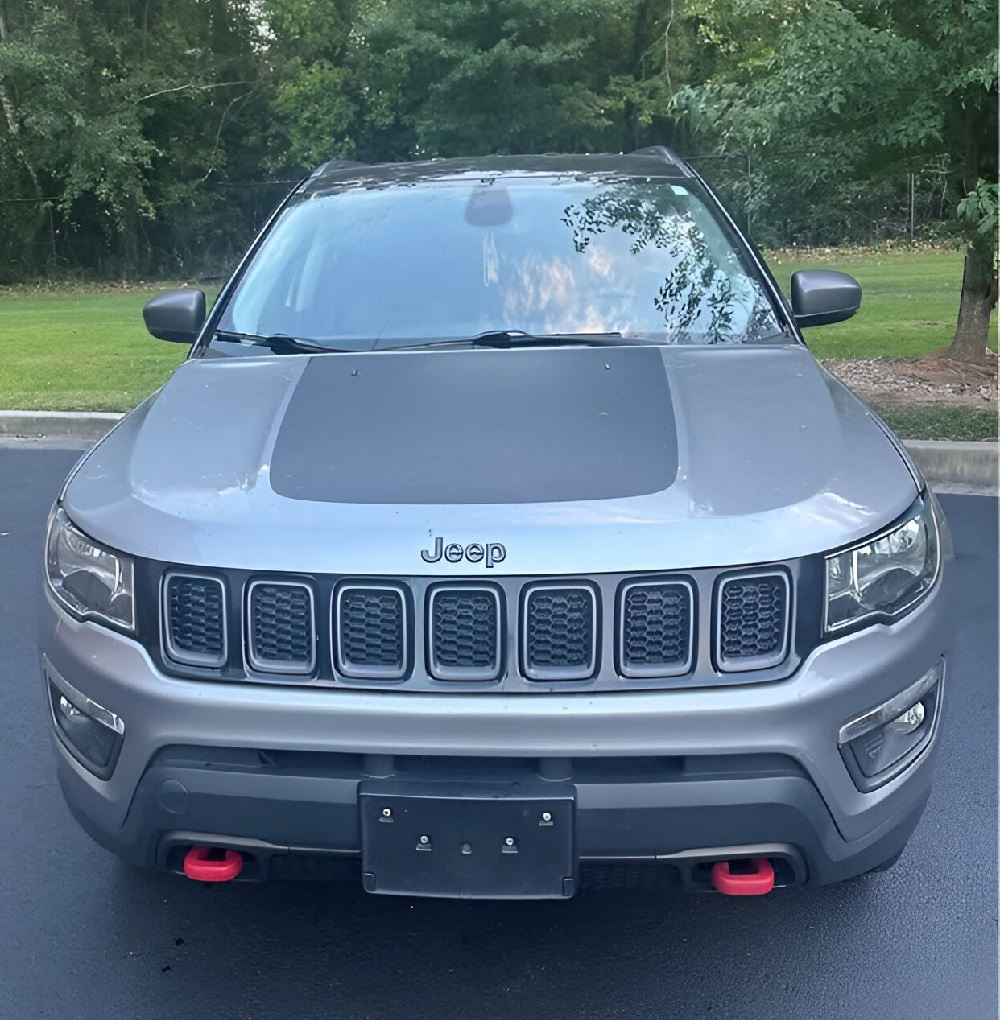
1. How Jeep Compass drivetrains became a recall magnet
Shared parts, wide fallout
The Compass rides on Jeep’s MP platform, same engines, same transmission layouts, same supplier chains across global plants. That means one defect, like a loose halfshaft or bad wiring crimp, can ripple through thousands of VINs.
Early builds didn’t get a break-in period. Jeep rushed them out to fill demand, and when problems surfaced, there were already tens of thousands on the road. One bad torque spec or misrouted harness didn’t stay local, it went global.
What’s under the hood, and which ones fail
Most 2017–2022 models pair the 2.4L Tigershark with a 6-speed or the ZF 9-speed 948TE. That 9-speed shows up most in complaints, hard shifts, neutral drops, and limp mode. The 6-speed saw fewer issues but still had stalling tied to sensor faults and shaft engagement failures.
By 2023, Stellantis started using the 8F30 8-speed with the 2.0L turbo. That brought its own trouble: harness rub-through, software-triggered limp mode, and early signs of ADAS-linked torque cutouts.
PHEV units mostly avoid gearset problems but show up in service logs for software and high-voltage hiccups.
Why everything feels like a transmission issue
The Compass doesn’t separate faults cleanly. If the engine stalls, if ADAS cuts torque, or if the cluster glitches, it still flashes Service Transmission. Oil-starved Tigershark engines, bad cam sensors, even faulty radios all land in the same complaint bucket.
That overlap muddies recalls. Jeep issues PCM or TCM updates for problems that feel mechanical. To the driver, it bucks or dies at speed. Doesn’t matter if the issue was fluid loss or firmware.
2. Early Compass recalls where mechanical failures turned dangerous
Halfshaft not seated, rollaway risk on flat ground
Recall 17V301000 flagged a hard stop for the 2017 Compass: the left front halfshaft wasn’t fully seated in the transmission. One bad joint, and the driveline could pop free, removing forward motion and snapping the mechanical link between the wheels and the parking pawl.
That matters more than most owners think. If the shaft breaks free, Park doesn’t lock the wheels. The car rolls. No warning, no engine light, just a parked Compass drifting down a driveway if the handbrake wasn’t set.
Jeep traced it to sloppy factory installs on 6-speed automatics, mostly front-wheel drive trims. Dealers had to inspect and replace affected shafts.
Crank sensor dropouts that looked like gearbox failure
Before the Compass even hit showroom floors, Recall 16V907000 caught a deeper fault: crank and cam sensors that dropped signal without warning.
The engine would cut out mid-drive, removing power and leaving owners stuck. No stall warning, no transition to idle, just sudden silence and no throttle response.
These stalls felt like the transmission died, especially in traffic. But the issue was upstream: bad sensors and connectors in the engine harness.
Early Compass units, especially those built before full MP ramp-up, carried over the flaw from outgoing FCA platforms. Jeep issued replacement parts and connector upgrades to cut the dropout risk.
When backlights, manuals, and software made safety worse
The early Compass had more than drivetrain flaws, it also flubbed how drivers saw or responded to them. Recall 17V433000 fixed a manual diagram that reversed battery terminal polarity in the jump-start graphic. Owners following it could miswire a jump, risking fire or shock.
Recall 17V740000 tackled something subtler but just as dangerous: cluster backlighting stuck at full brightness. In low light, it flooded the driver’s eyes and washed out warning icons. The IPC needed a software reflash to bring back dimming control.
None of these involved the gears or sensors directly. But when something failed, these flaws shaped how clearly the driver could react, and in some cases, whether the Compass stayed put or rolled off.
Early Compass campaigns that touched driveability and powertrain safety
| NHTSA ID | Component | Primary risk | What dealers had to do |
|---|---|---|---|
| 17V301000 | Left front halfshaft | Loss of drive, loss of Park, rollaway | Inspect engagement, replace bad halfshafts |
| 16V907000* | Crank/cam sensors | Sudden stall while driving | Replace sensors and connectors |
| 17V433000 | Owner’s manual graphics | Mis-jumping battery, shock or fire risk | Replace User Guides |
| 17V740000 | IPC dimming logic | Reduced night visibility | Update IPC software |
*Covers some transition units overlapping the early MP Compass launch.
3. ZF’s 9-speed risk and why the Compass got burned
Dog clutches, clunky shifts, and software that never caught up
The ZF 9HP 948TE was built to deliver nine gears in a compact shell using dog clutches and dense software. But in the Compass, that complexity showed up on the dash as Service Transmission, not smooth shifting. Instead of clean transitions, drivers got lags, sudden jerks, or no forward motion at all.
When it worked, the 948TE moved quick and clean. But the balance was razor-thin. Clutch packs and dog rings had to hit perfect sync. One bad sensor reading, and the gearbox didn’t engage, especially when shifting into Drive or Reverse.
Jeep tried to fix that in software, but owners kept filing complaints. A delay at the light or a drop into neutral on the freeway didn’t leave much room for patch notes.
Internal harness faults that removed forward drive without warning
At the heart of the mess: bad wiring crimps inside the transmission itself. The sensor cluster that fed the TCM wasn’t getting clean voltage, thanks to poor internal crimps.
That triggered random high resistance or full signal drop. In real-world terms, it meant the Compass could shift itself into neutral while moving.
Owners described it like the car gave up mid-lane change, no power, no throttle, just freewheel. Sometimes a flash on the dash gave warning. Other times, nothing.
This defect mirrored earlier issues in other Jeep and Chrysler models using the same 9HP layout, and triggered federal scrutiny, lawsuits, and flash-only campaigns that never touched the hardware.
Limp mode kicks in when signals stop making sense
When the TCM sees voltage or input data that doesn’t add up, it yanks the Compass into limp mode. Gear range gets locked, throttle gets restricted, and max speed barely hits 60 mph, even with the pedal on the floor. These failures come with a dash full of lights and a cluster that starts barking codes.
The most common codes:
• P0882: TCM power input low
• P0883: TCM power input high
• P0983: Solenoid 4 circuit high
• P0707: Range sensor circuit low
• P0901: Clutch actuator performance
These aren’t random one-offs. They point to real power feed issues, misread gear positions, and failing shift control. If the harness is rubbing or the crimp is degrading, these codes don’t just show up, they repeat.
No full recall, just a flood of TSBs and legal pressure
The 948TE never got a blanket Compass recall. Stellantis handled it with technical service bulletins, warranty extensions, and selective VIN coverage. In some cases, owners got new TCMs or harnesses. Others just got reflash campaigns that changed when limp mode kicks in.
Compass owners got lumped into wider ZF 9-speed class actions, many tied to Jeep Cherokee and Fiat models, not Compass by name. But the behavior was the same.
Harsh shifts, unsafe neutral drops, no advance warning. Some VINs got extended powertrain coverage. Others were left chasing the same failure under a different label.
Normal shifting vs. Compass limp mode behavior
| Parameter | Healthy 9-speed / 8-speed operation | Limp mode after TCM or harness fault |
|---|---|---|
| Available gears | Full range, smooth up/downshifts | Locked in 2nd or 3rd, no manual override |
| Throttle response | Quick, steady pull | Sluggish, late, barely builds speed |
| Max highway speed | 75+ mph as needed | Often capped around 45–60 mph |
| Cluster messages | Normal PRND, gear display | Service Transmission, MIL on |
| Safety risk | None | Trouble merging, passing, or climbing grades |
4. Leaks, overheating, and why HOTOIL means pull over now
Under-torqued bolts let ATF walk right out the case
In 2019, Compass owners started spotting delayed shifts, slow engagement into Drive, and the faint stench of burnt fluid under load. One issue: transmission case bolts torqued too soft at the factory. TSB 21‑039‑20 nailed it.
The lower split line between the case halves leaked fluid past the gasket seal, but not in puddles, just enough seepage to coat the housing and slowly starve the sump.
The leak was easy to miss. On a warm case, fluid flash-evaporates before it hits the ground. Meanwhile, gear shifts start flaring. Clutches slip. Shifts lag. Let it go too long, and you’re one thermal cycle away from internal scoring.
Heater boss and connector leaks that send techs chasing ghosts
Another ATF escape path showed up at the transmission oil heater boss and connector O-rings. Instead of leaking at the pan, fluid escaped higher up, then dripped down across the housing, crossmember, or lower bellhousing seam.
Most shops misdiagnosed it as a pan gasket. Stellantis issued TSB S2221000003 to refocus techs on upstream fittings.
Factory fix: inject UV dye, hit it with a blacklight, and watch where the trail starts, not where it pools. Miss it, and owners burn time and money resealing a pan that was never cracked.
J30 recall and the overheating warning too many drivers ignore
Recall J30 reprogrammed the cluster on affected Compass models to add a HOTOIL warning chime and alert when transmission temps spike under heavy load. No new sensor, just new logic, pulling a warning when the ATF crosses the danger zone.
This alert shows up most when towing uphill, crawling off-road in low gear, or idling in drive too long in high heat. Ignore it, and overheated fluid can flash-boil on the exhaust or catch fire inside the transmission tunnel.
The fix isn’t mechanical. You drop it into Neutral and idle. That keeps the pump running without slipping the clutches. Keep driving, and you’ll cook the fluid, glaze the clutch packs, and lose hydraulic pressure altogether.
Jeep Compass campaigns tied to ATF leaks and overheat risk
| Campaign/TSB | Affected years | Root problem | Driver symptom | Required fix |
|---|---|---|---|---|
| 21‑039‑20 | 2019 | Loose lower case bolts | Delayed shifts, red fluid on case | Re‑torque bolts, clean and recheck |
| S2221000003 | 2019–2022 | TOH boss or connector seepage | Fluid mist near bellhousing | UV dye, seal/connector replacement |
| J30 | 2017+ | ATF overheat in severe use | HOTOIL alert, chime under load | CCN reprogram, driver behavior change |
5. Software recalls that break the drivetrain without touching it
Camera blackout recall that removed Reverse visibility
Recall 24V‑436 slammed 2022–2023 Compass models for rear camera failure, radio software blocked the image in Reverse. The camera was fine. The glitch sat in the media stack.
Some owners had no backup image for weeks unless they pulled the battery or visited a dealer. FMVSS 111 requires rear visibility when shifting into Reverse. Jeep failed that, and over 1 million vehicles went into recall.
The fix didn’t involve wrenches. Most units got firmware-over-the-air (FOTA) updates through Uconnect’s cellular modem. The display came back, but so did questions: when your radio controls your reverse gear feedback, where’s the line between infotainment and driveline?
IPC blackout and ADAS drops that scramble driver feedback
On some 2021–2023 Compass units, the instrument panel cluster (IPC) failed to dim properly, making it unreadable at night. Speed, warning icons, and gear indicators vanished into glare. Recall 23V‑576 forced a dealer software flash to fix brightness control.
Other Compass models saw adaptive cruise, forward collision warning, and auto braking drop offline without notice. These weren’t optional bugs. Losing adaptive throttle on the highway felt like a trans cut. Losing AEB made limp mode more dangerous.
Shift logic depends on torque targets. When ADAS logic drops or misfires, gear engagement can misbehave. Owners blamed the trans. Jeep told dealers to update ADAS stacks and IPC firmware.
September 2025 recall wave hit powertrain by wire
In late 2025, Jeep launched a major recall covering more than 610,000 vehicles. Jeep Compass models from 2018 to 2024 were included.
The campaign addressed airbag control software that could block deployment, ADAS logic that disabled automatic braking, and electronic Park behavior that failed to hold vehicles stationary.
No broken gears. No snapped shafts. The failures lived in software.
Rollaway complaints followed a clear pattern. Drivers shifted into Park, saw “P” confirmed on the display, exited the vehicle, and watched it move.
The defect traced to software logic within body and powertrain control modules. When the electronic confirmation failed, the parking pawl never fully engaged, even though the screen said it had.
Late-Model Jeep Compass Software Recalls With Powertrain Safety Impact
| Campaign ID | System affected | Real-world risk | Fix channel |
|---|---|---|---|
| 24V-436 | Radio / camera software | No rear visibility when reversing | OTA or dealer software update |
| 23V-576 | IPC software | Speed and gear info unreadable at night | Dealer software flash |
| 25V-XXX* | ADAS control software | Loss of automatic braking or driver assist | Module software update |
| 25V-XXX* | Park engagement logic | Vehicle may roll despite “P” displayed | BCM/TCM software update |
*Campaign IDs finalized during the September 2025 recall actions.
6. Quiet fixes, regulator pressure, and where Compass defects really surfaced
Power-loss complaints that drew federal attention
By 2025, Compass owners had flooded NHTSA with reports of sudden power loss, drops into Neutral, and limp mode events tied to the ZF 9-speed. Many of those reports were consolidated under ODI complaint #11701273, a cluster that centered on transmission control faults and internal harness failures.
What raised eyebrows wasn’t just the failure pattern. Service records often showed the same repairs coded as goodwill work, software updates, or generic warranty fixes rather than safety defects.
Owners described repeat breakdowns, denied claims, and modules replaced without any recall notice attached. The complaints didn’t announce a formal enforcement action, but they did put Stellantis’ handling of non-recall powertrain repairs under a microscope.
Customer Satisfaction Notifications that fixed real failures quietly
Two programs matter most for Compass owners. CSN W84 rolled out PCM and TCM reprogramming for vehicles showing erratic shifting, stalls, or unexplained limp mode. CSN W80 addressed Tigershark engines burning oil to the point of stalling, often ending with long-block replacements.
Both dealt with real driveability and safety risks. Neither showed up as a recall. Many owners only learned about them after repeated dealer visits or by pushing service advisors to dig deeper.
VIN checks through NHTSA came back clean, even when major powertrain work had already been done under these programs.
Why VIN checks miss so much Compass history
NHTSA’s database only lists open safety recalls. Mopar’s owner portal adds some CSNs and flashes, but not all of them. The complete record lives inside dealer systems, where every reflash, module swap, and CSN application gets logged.
That gap explains why two identical Compass models can look very different on paper. One shows a spotless recall history. The other carries a trail of TCM updates, harness work, or even engine replacement that never appears in public tools. For Compass transmissions, that hidden layer often tells the real story.
What each lookup source actually reveals
| Source | Safety recalls | CSNs | Software flashes | What it’s good for |
|---|---|---|---|---|
| NHTSA VIN tool | Yes | No | No | Confirming open recalls required by law |
| Mopar owner site | Yes | Some | Some | Spotting select CSNs tied to a VIN |
| Dealer records | Yes | Yes | Yes | Full powertrain and software history |
7. Lawsuits, buybacks, and warranty extensions Compass owners actually got
Wood v. FCA forced Jeep to back the oil burners
The Wood v. FCA case hammered Stellantis over the 2.4L Tigershark’s oil consumption. Plaintiffs showed that 2017–2018 Compass engines could drop below safe oil levels without warning. The result? Stalls, misfires, limp mode. Owners often blamed the transmission.
The settlement extended the powertrain warranty to 7 years or 100,000 miles, covered engine repairs, and offered cash back for oil-related failures. Some even got long-block replacements. Many of these engines failed while showing Service Transmission on the dash, masking engine death as a gearbox glitch.
ZF 9-speed class actions pulled Compass into the fight
Compass drivers weren’t always the lead plaintiffs, but they rode shotgun in the lawsuits. Harsh shifts, gear slips, and sudden neutral drops in the 948TE triggered legal fire across multiple Jeep and Fiat models.
No full recall came. But class actions pushed Stellantis into extending the transmission warranty for select VINs to 6 years or 100,000 miles, depending on symptoms, repair attempts, and region. Settlement terms varied, some owners got reflashes, others got partial reimbursement for out-of-pocket rebuilds.
Lemon-law wins followed the same pattern: limp, return, repeat
Compass owners won lemon-law claims when they documented the cycle: Service Transmission, limp mode, dealer flash, no fix. Repeat that three or four times, or hit 30+ days in the shop, and buybacks started to land.
Successful cases often involved transmission parts on backorder, denied warranty claims, or harness failures that left drivers stuck. Some states required formal arbitration.
Others triggered lemon status after just two failed safety repairs. Cash settlements, vehicle swaps, or full refunds all landed for Compass owners who built the right paper trail.
How Compass owners got coverage or legal wins
| Program or path | What triggered it | What owners got |
|---|---|---|
| Wood v. FCA | 2.4L engine oil starvation, stalling | 7yr/100k mi warranty, refunds, engine swaps |
| ZF class actions | Harsh shifting, Neutral drops, no forward | Extended trans warranty, cash compensation |
| CSNs W80/W84 | Known powertrain faults, dealer-only repairs | Free PCM/TCM flashes, engine/trans replacements |
| Lemon law | Repeated limp mode, long down-time | Buyback, cash payout, or replacement vehicle |
8. How to survive a Compass in 2025, repairs, risks, and what to check now
Which Compass years carry the most transmission risk
2017–2018: These are the hot zone years. Halfshaft recall, Tigershark stalling, and early ZF 9-speed defects all hit at once. Many got patched under W80 or J30, but some are still out there raw.
2019–2020: Most saw updated hardware, but harness defects, ATF leaks, and bad connector seals still triggered limp mode. Transmission warranties were extended for some, not all.
2021–2022: Mid-cycle years got flash-heavy fixes, but problems shifted to software, camera dropouts, ADAS fails, IPC glitches. Same drivetrain, different code.
2023–2025: Newer Compass models run the 8F30 8-speed and 2.0L turbo. The mechanicals improved, but harness rub, logic faults, and recall delays still stack up. The September 2025 software wave hit these hardest.
What owners should do before the next limp-mode hit
Start with a VIN check, but don’t stop at NHTSA. Run it through Mopar’s site, then call a dealer and ask for a full flash/CSN history printout. Most of the critical repairs never show up on public tools.
If the car’s showing problems, document everything: warning lights, fault codes, time of day, mileage, how many days it sat at the dealer. Every paper trail builds ammo for warranty fights or lemon-law claims.
If it’s had the J30 campaign, know what HOTOIL means. Ignore it once, and you might fry the box.
What to look for when buying a used Compass
Skip the “clean Carfax” pitch. You want receipts. Ask for recall completion records, not just open campaigns. Make sure it had the right flashes and CSNs applied, especially if it’s a 2017–2020.
Check service reports for repeated trans resets, oil top-offs, or vague driveability complaints. That’s often how long-blocks and TCMs get slipped in under W80/W84 without a word.
A Compass with full documentation and a trail of completed campaigns is safer than one that’s never been in. The real problem is the ghost VINs, clean on paper, dirty under the skin.
Where the Compass transmission saga leaves Jeep
Jeep built the Compass as a global compact SUV, but stacked it with fragile drive-by-wire software, oil-thirsty engines, and a transmission that punished bad harness crimps with rollaways and limp mode.
The question isn’t whether your Compass has a recall. It’s how many problems were quietly patched without one, and whether your VIN got the fix or got missed.
Sources & References
- 2017 Jeep Compass Recalls & Safety Notices | Kelley Blue Book
- Safety Newsroom – Stellantis Media
- Chrysler and Jeep Transmission Problems | LEMON LAW AUTO …
- Consumer Alert: Stellantis/Jeep Concealing Fatal Safety Defect in ZF9HP Transmissions (TCM/Harness Failure) – NHTSA #11701273 – Reddit
- Find Existing Jeep New Compass Car Recalls – DealerRater
- 2016 JEEP Compass Recalls, Complaints and Investigations – The Center for Auto Safety
- Huge Transmission Recall Impacts Over 500,000 Cars – E3 Spark Plugs
- ZF Recalls Nine-Speed Automatic for Random Drops into Neutral …
- Safety Recall S55 / NHTSA 16V-529 Transaxle Range Sensor Wire Harness
- 2023 Jeep Compass Recalls, Complaints and Investigations – The Center for Auto Safety
- ZF-9 Speed Transmission Problems Continue to Plague Jeep, Fiat, Land Rover, Honda, and Acura Drivers – Kimmel & Silverman, P.C. – Lemon Law
- Limp Mode in a Car: Everything You Need to Know – Kelley Blue Book
- What is limp mode? Symptoms, causes, and how to fix it – Carwow
- Map Title 08-141-23 – nhtsa
- 21-039-20 GROUP: 21 – Transmission and Transfer Case … – nhtsa
- Case Number: S2221000003 Release Date: August 2022 Symptom/Vehicle Issue – nhtsa
- Warning Signs of a Transmission Fluid Leak that Should Be Addressed Immediately
- How To Fix “Service Transmission” Warning In Jeep Compass – Causes & Solutions
- How To Know If Your Jeep Is Leaking Transmission Fluid | Brigham-Gill Village CDJR
- Don’t Ignore these Signs that Your Car Needs Transmission Fluid Leak Repair
- SAFETY RECALL J30 REPROGRAM CCN – TRANSMISSION FLUID TEMPERATURE WARNING – Jeep
- Common Symptoms of a Transmission Fluid Leak that You Shouldn’t Ignore – Mata Auto Repair
- Technical Service Bulletin (TSB) – Various Models – Engine Valley Cap (Flywheel Side) – Oil Leakage – nhtsa
- Stellantis recalls nearly 1.2 million cars over rear camera software glitch – CBS News
- SAFETY RECALL – nhtsa
- Z08 FSAR-TSB-4571 – nhtsa
- Jeep Compass Recalls – RepairPal
- SAFETY RECALL – nhtsa
- M08 FSAR-TSB-5125 – nhtsa
- BREAKING: Stellantis Recalls 610K+ Vehicles – Jeep, Dodge, Chrysler Affected | September 2025 | Rohnert Park Transmission
- Wood, et al. v. FCA US, LLC
- Customer Satisfaction Notification W84 Powertrain Software Update – nhtsa
- Customer Satisfaction Notification W84 Powertrain Software Update – nhtsa
- Check for Recalls: Vehicle, Car Seat, Tire, Equipment – NHTSA
- Jeep Compass Transmission Problems – CoPilot for Car Shopping
- Update: Dodge, Jeep Transmission Defect Class Action Dismissed
- Consumer Class Action Lawsuit Against Jeep Patriot, Jeep Compass, Dodge Caliber CVT
- Jeep Compass Lemon Law – Goldsmith West
- 2025 Jeep Compass Problems & Complaints – The Lemon Law Experts
- Lookup FCA Vehicle Recalls by VIN | Official Mopar® Site
- THIS BULLETIN SUPERSEDES SERVICE BULLETIN 21-021-15 REV. D DATED AUGUST 14, 2015. WHICH SHOULD BE REMOVED FROM YOUR FILES. ALL R – nhtsa
- 7 Signs Your Jeep Needs a Transmission Service – Madison Chrysler
- 4 Warning Signs of a Transmission Fluid Leak – Everybody’s Auto Service
- jeep compass 2018: electrical system:wiring – Auto Recalls – Justia
Was This Article Helpful?