
The Jeep sits crooked by morning, and the compressor won’t stop humming. A leaking fitting or cracked air spring can drain the Quadra-Lift system’s nitrogen charge, forcing a healthy compressor to work overtime. Leave that leak unchecked, and a small repair can turn into a costly compressor replacement.
Newer Grand Cherokees bring another problem. Jeep’s service bulletins document pinched air lines and software faults that can block height changes without a failed compressor. This guide covers the common failures, factory fixes, diagnostic tests, repair costs, and when converting to coil springs makes more sense.
1. Know What Quadra-Lift Should Do Before Blaming a Failure
WK2 and WL Grand Cherokees Don’t Share the Same Weak Spots
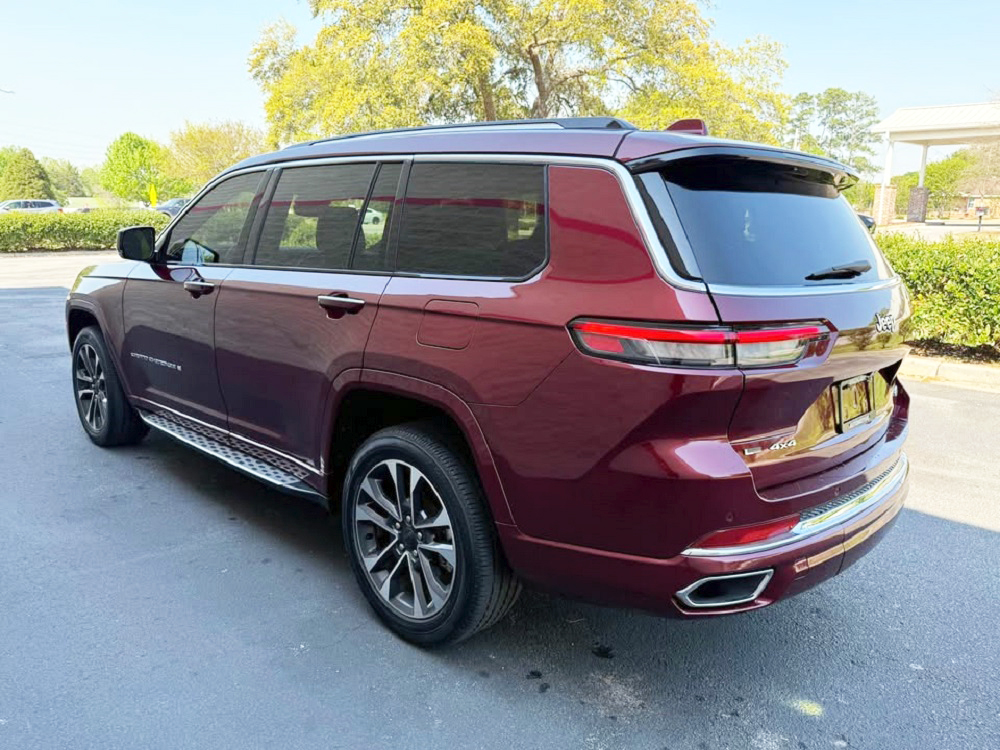
The Jeep Grand Cherokee uses 2 Quadra-Lift designs, and the model years overlap. The older WK2 covers 2011-2021, plus the carryover 2022 Grand Cherokee WK. The newer WL arrived with the 2021 three-row Grand Cherokee L. Its two-row version followed for 2022.
Older WK2 models face more age-related wear. Rubber air springs crack, fittings leak nitrogen, and compressors wear out after repeated pressure loss. Newer WL models have factory-documented problems with pinched lines, loose connections, and suspension software.
Jeep identifies Quadra-Lift with sales code SER in factory service bulletins. Check the VIN and build record before ordering parts. A 2022 Grand Cherokee could belong to either generation, and the suspension hardware differs.
The Parts Behind the Lift, Sag, and Compressor Noise
Quadra-Lift replaces conventional coil springs with 4 pressurized air springs. An Air Suspension Control Module (ASCM) manages ride height using sensor readings from each corner. A compressor, reservoir, and valve block control gas pressure and movement.
On WK2 models, each front air spring wraps around its shock absorber, forming an air strut. The rear air springs sit apart from the rear shocks. A leaking rear spring can therefore be replaced without buying a complete shock assembly.
The system uses a closed-type pneumatic circuit. During normal height changes, the compressor and valves move stored gas between the reservoir and air springs. When a leak drains the nitrogen charge, the compressor cannot restore the missing supply on its own. Proper refilling requires specified nitrogen and service equipment.
That distinction matters when the Jeep struggles to rise. Low stored pressure can slow lifting even when the compressor still works. A worn compressor can produce similar symptoms, but replacing it won’t restore a depleted nitrogen charge.
The WL adds electronically controlled dampers that adjust shock stiffness as road conditions change. Its Quick Down Leveling setup also uses a secondary reservoir and an extra valve block. Both axles can lower together, unlike the older WK2 lowering sequence.
A failed electronic damper needs different testing from a leaking air spring. WK2 and WL repair procedures also differ, especially around valve control and reservoir hardware.
Some Height Changes and Compressor Sounds Are Normal
Quadra-Lift has 5 ride-height settings. Normal Ride Height handles everyday driving, while Aero lowers the body at highway speeds. Entry/Exit brings the Jeep closer to the ground. Off-Road 1 and Off-Road 2 raise it for rough terrain.
These modes don’t remain available at every speed. Jeep’s 2017 Grand Cherokee manual specifies automatic lowering from Off-Road 2 to Off-Road 1 above 25 mph. Aero activates above 56 mph, or after more than 20 seconds between 52 and 56 mph. Other model years can use different thresholds.
The Jeep may also level itself briefly after shutdown. Opening a door can interrupt certain height changes until it’s closed. A delayed response during that interruption doesn’t prove the compressor has failed.
Repeated height commands can trigger an “Air Suspension System Cooling Down Please Wait” message. The control module temporarily limits further movement to protect the compressor from excess heat. A recurring warning during normal driving deserves a suspension-module scan.
Don’t judge compressor health by a fixed 5-10-second lift time or a universal cycling limit. Check whether the Jeep reaches its requested height and stays there. A corner that drops overnight, followed by repeated compressor operation, warrants a pressure-loss test.
2. Why Quadra-Lift Drops Overnight or Sags on One Side
A Leaking Front Fitting Can Look Like a Bad Air Strut
A Grand Cherokee sits level at night, then one front corner drops by morning. On older WK2 models, the brass air-line fitting above the front strut is a common leak point. Its internal seal can wear, allowing nitrogen to escape while the Jeep sits parked.
The line end can also develop damage where it enters the fitting. A small leak may leave the front corner low without showing any damage to the rubber air spring. When the engine starts, the compressor works to restore the lost height.
A shop should test the fitting and line connection before condemning the strut. Approved replacement fittings or line repairs can fix a confirmed connection leak. If the rubber air sleeve leaks or the damper fails, the strut needs separate repair or replacement.
Lubricating a damaged O-ring won’t restore its sealing surface. A fitting can also leak without showing any visible moisture. Pressurized gas escaping through a worn seal leaves no oil stain.
Cracked Air Springs Can Leak at One Height and Seal at Another
Rubber air springs flex whenever the Jeep rises, lowers, or hits a bump. Years of folding can leave cracks along the bellows, especially where the rubber repeatedly bends. Road debris can also damage the sleeve and create a path for nitrogen to escape.
Some cracks only open at certain ride heights. A spring might hold pressure at Normal Ride Height but leak when raised to Off-Road 2. The opposite can happen when a fold covers the damaged area.
Nylon air lines create similar trouble when they rub against brackets or nearby parts. A small worn spot can leak gas without leaving any fluid behind. That makes the damaged line easy to miss during a quick visual check.
Cold weather can make an existing leak more noticeable. Falling temperatures also lower gas pressure, so a small height change alone doesn’t prove a spring has failed. Automatic leveling can further complicate an overnight comparison.
Jeep’s STAR case S2202000003 Rev A instructs technicians to inspect air springs at different heights when needed. It also calls for a leak-down test lasting at least 4 hours. A spring that passes one quick inspection can still leak after its rubber folds shift.
A Leaking Valve Block Can Leave the Air Spring Innocent
The valve block controls nitrogen flow between the reservoir and individual air-spring circuits. Its internal valves must seal when the Jeep reaches the requested height. If a valve fails to close properly, pressure can escape or move where it shouldn’t.
An external leak can also develop where an air line connects to the valve block. That failure may produce the same overnight sag as a damaged air spring. Testing the connections can expose an external leak, while an internal fault requires further circuit testing.
The position of the sagging corner alone can’t identify the failed part. A shop must check pressure loss and isolate the suspect circuit before replacing the spring or valve block. Installing another air spring won’t fix a valve that cannot hold pressure.
3. Why Quadra-Lift Stops Raising the Jeep
A Compressor That Keeps Running May Be Fighting a Leak
The Jeep refuses to rise, yet the compressor keeps humming. A leaking air spring, fitting, or valve block may have drained the nitrogen charge. The compressor then runs longer to reach the requested height, building heat with each attempt.
As heat builds, the suspension module can limit compressor operation. Fault code C1562-98 indicates compressor over-temperature. It doesn’t prove the pump itself has failed. Low air mass, pressure leaks, and excessive running time all deserve testing first.
Code C15A1-00 means the suspension couldn’t reach its requested height. It can appear alongside an overheating fault, but it doesn’t identify the failed part. A compressor that runs without building enough pressure needs output testing. A silent compressor calls for electrical checks before replacement.
Repeated overheating can damage the motor and internal pump seals. Replacing that compressor without repairing the leak can put the new unit through the same strain.
Freezing Weather Can Lock the Compressor and Stop Height Changes
Some Grand Cherokees refuse to lift after sitting outside in freezing weather. The compressor may remain silent, or a suspension warning may appear immediately after startup. Moisture inside the pneumatic circuit can freeze and restrict moving parts.
Quadra-Lift normally uses a sealed nitrogen charge to limit moisture intrusion. Leaks and intake faults can allow moisture to enter. Ice can then restrict airflow or cause compressor parts to stick. A system that works again after thawing may still contain moisture or have an active leak.
Jeep addressed this failure pattern in STAR case S1723000007 Rev F, dated March 31, 2021. The factory procedure begins with checking the compressor fuse. For the covered failure, technicians are directed to replace a blown fuse before condemning the compressor.
The procedure also covers removing moisture, restoring the specified nitrogen charge, and checking the compressor’s air-intake routing. The intake hose must point downward as directed. Technicians must then test suspension operation and look for leaks.
Repeatedly replacing a blown fuse won’t correct a compressor that keeps sticking or drawing excessive current. Purging and refilling the pressurized circuit also requires proper shop equipment. If the fuse blows again, the compressor and its electrical supply need further testing.
Bad Wiring or Height Sensors Can Stop a Healthy Compressor
A compressor that won’t start may have lost electrical power. Weak battery voltage, corroded grounds, damaged wiring, or a faulty relay can interrupt operation. A blown fuse can leave the suspension stuck at its current height.
A relay that sticks closed creates the opposite problem. It can keep the compressor powered beyond the intended operating cycle. Arnott’s compressor diagnostic guidance specifically calls for checking relays, fuses, wiring, and air leaks before installing a replacement pump.
Ride-height sensors can also cause trouble without any pressure loss. Each sensor uses a linkage to track suspension movement. A bent link, loose connection, or damaged sensor can send the ASCM an incorrect height reading.
The module may then command the wrong adjustment or refuse a height change. A technician should compare measured ride height against live sensor readings. Sensor faults and wiring problems need to be ruled out before replacing pneumatic parts.
Fuse locations and ratings also vary by model year and equipment. The correct circuit must be identified from the vehicle’s service information. A working compressor with bad height-sensor data won’t receive reliable leveling commands.
4. WL Air Suspension Failures Jeep Has Already Documented
Pinched Lines and Software Faults Have Factory Fixes
Some newer Grand Cherokees develop suspension faults before their air springs show significant wear. Jeep’s factory bulletins identify pinched air lines, loose valve connections, and software errors. These failures can produce similar dashboard warnings but require different repairs.
The affected vehicles include specific 2021, 2023, and 2024 WL models equipped with Quadra-Lift.
| Factory bulletin | Affected vehicles | Symptoms and fault codes | Factory repair |
|---|---|---|---|
| 02-007-21 / RRT 21-168 | 2021 WL, built through September 1, 2021 | Slow height changes, uneven front suspension, C1556-16, C1567-85, C1569-85 | Inspect front air lines near body control module mounting studs. Repair pinched lines. |
| 02-006-23 / RSU 23-242 | 2023 WL, built through May 16, 2023 | Sagging corner, failed height requests, C15A1-00, C1509-00 | Inspect and fully seat air lines at the fast-down leveling valve. |
| 08-159-23 | Applicable 2023 WL models | Manual leveling stops working, unexpected rise to Off-Road 2, U0300-00 | Update ASCM software. |
| 08-138-25 | Applicable 2024 WL models | Suspension lowers but won’t raise, payload warning, MIL with U0300 | Update ASCM software. |
The 2021 bulletin traces the fault to front air lines trapped near the body control module’s mounting studs. These lines can restrict normal height changes. The factory repair involves inspecting the routing and replacing confirmed damaged sections.
For affected 2023 models, Jeep directs technicians to inspect the fast-down leveling valve connections. All 5 air lines must sit fully against their colored tape markers. Technicians verify each connection with a push-pull-push check.
Software faults take a different repair path. The 2023 bulletin addresses height controls that stop responding or raise the Jeep to Off-Road 2. The 2024 update addresses disabled height changes and payload-related warnings. Bulletin 08-138-25 supersedes 08-022-24 and removes its earlier build-date restriction.
The Same Warning Can Mean Different Repairs
A “Service Air Suspension” warning doesn’t identify which part failed. On a 2023 WL, code C1509-00 can direct technicians toward the fast-down leveling valve connections. Code U0300-00, under bulletin 08-159-23, points toward ASCM software incompatibility.
The distinction matters when a shop recommends replacing the compressor. A pinched line can stop pressure from reaching an air spring. A software fault can block height commands even when the pneumatic hardware remains sound.
Payload warnings need the same care. A heavily loaded Jeep can legitimately refuse certain height requests. But Jeep also documented a software fault that can trigger a payload-related refusal on applicable 2024 models.
Bulletin 08-138-25 requires the specified MIL and U0300 conditions for its repair procedure. Technicians must check vehicle load, stored codes, and installed software before applying the update.
A software flash cannot seal a leaking air line or restore lost nitrogen. Likewise, replacing the compressor won’t correct an ASCM calibration fault. The bulletin must match the vehicle, symptoms, and diagnostic findings before parts are ordered.
5. Tests That Separate an Air Leak From a Bad Compressor
Read the Suspension Codes Before Clearing the Warning
A “Service Air Suspension” warning can point to several different failures. A basic engine-code reader may miss the fault entirely. The shop needs a scanner that can access the Air Suspension Control Module (ASCM).
Record every stored code, including its suffix, before clearing anything. Note the warning message, outside temperature, ride height, and whether the fault appeared during startup or driving. These details help separate a cold-weather lockout from a persistent pressure leak.
Code C15D9-00 indicates low air mass on applicable vehicles. Jeep’s STAR case S2202000003 Rev A connects it with suspension warnings and abnormal air-release noises. It calls for a controlled leak-down test to find pressure loss.
Don’t confuse C15D9-00 with C1509-00, which appears in Jeep’s 2023 WL bulletin for fast-down leveling valve connections. Neither code identifies a leaking spring or fitting on its own. The affected circuit still needs testing.
A 4-Hour Pressure Test Can Catch Leaks a Quick Inspection Misses
Start with the Jeep parked on level ground and the battery in good condition. Measure the actual ride height at each corner. Compare those measurements with live height-sensor readings, reservoir pressure, and available air-mass data.
The next step is a controlled leak-down test using the appropriate ASCM service routine. Jeep’s STAR case S2202000003 Rev A specifies a minimum test period of 4 hours. The wiTECH routine measures pressure loss at the highest applicable off-road setting.
When the test reveals pressure loss, technicians inspect the air springs, fittings, nylon lines, reservoir, and valve block. Leak-detection fluid, such as a soapy water solution, can expose escaping gas through growing bubbles. The damaged connection or rubber sleeve must be identified before replacement.
Some air springs only leak at certain heights. Jeep specifically advises checking different suspension positions because rubber folds can conceal cracks. A spring that holds pressure at Normal Ride Height may leak when fully extended.
If pressure testing doesn’t explain the complaint, check compressor output and electrical supply. A pump that runs but builds insufficient pressure needs different testing from one receiving no power. A weak compressor and a depleted nitrogen charge can produce similar lifting delays.
An overnight height comparison can reveal a slow leak, but automatic leveling and temperature changes affect the result. The factory leak-down routine provides measured pressure loss. Jeep requires another leak-down test after repair to confirm the circuit holds pressure.
Know When Sagging Becomes Unsafe to Drive
A suspension warning with normal, stable ride height doesn’t always require immediate recovery. The Jeep still needs diagnosis, especially if the warning returns. Avoid repeated height commands while the cause remains unknown.
A collapsed corner changes that decision. Tire contact, severe bottoming, or unstable handling can make the vehicle unsafe. Stop driving and arrange suitable recovery instead of forcing the suspension to rise.
Before lifting a Quadra-Lift-equipped Grand Cherokee, activate Tire/Jack Mode using the procedure for that model year. The suspension can make automatic adjustments even after the engine stops. Unexpected movement creates a risk around jacks and lifting equipment.
Always support the Jeep with properly rated mechanical stands or a suitable lift. Never work underneath a vehicle supported only by its air suspension or a jack. Opening an air line also requires controlled depressurization under the correct factory procedure.
Air springs and reservoirs can retain pressure after shutdown. Disconnecting a pressurized fitting without proper preparation risks sudden gas release and vehicle movement.
6. Fix the Failed Part and Make Sure the Repair Holds
Jeep Now Warns Against Unnecessary Compressor Replacements
A sagging Grand Cherokee can end up with an expensive compressor replacement even when the pump works. Jeep addressed this repair pattern in manufacturer communication 9100897Rev1, dated September 10, 2026. It covers 2011-2022 Grand Cherokee WK models equipped with Quadra-Lift.
The communication directs technicians to diagnose individual parts before replacing the complete compressor assembly. Jeep’s updated parts catalog supports separate repairs to the compressor, valve block, air lines, reservoir, and temperature sensor.
A leaking valve block or damaged hose no longer needs to mean replacing the entire assembly. Technicians should confirm the failed part using pressure tests, electrical checks, and stored fault codes.
Compressor replacement makes sense when testing confirms weak pressure output, an internal motor fault, or mechanical seizure. A pump that runs continuously because of a leaking air spring may still work properly. The leak must be repaired before the compressor’s condition can be judged.
A Leaking Air Spring and a Worn Shock Need Different Repairs
WK2 front suspension assemblies combine an air spring and shock absorber into one air strut. The rear uses separate air springs and shocks. That difference affects which parts need replacement and how much labor the repair requires.
A leaking front air sleeve can require a complete strut replacement. But a leaking top fitting may need only an approved fitting or air-line repair. Oil running down the shock body points toward damper failure, which needs a separate inspection.
At the rear, a leaking air spring can be replaced without replacing a sound shock. If the shock also leaks oil or has lost damping control, both faults need attention. A rear spring leak alone doesn’t justify replacing the shock.
Replacing both sides of an axle may make sense when both springs show cracking or wear. A single confirmed leak doesn’t require replacing all 4 corners. Inspect the other springs and dampers before adding them to the bill.
WL models need extra care because electronically controlled damping uses different hardware. WK2 struts and WL assemblies aren’t interchangeable. Match replacement parts to the VIN, suspension equipment, and correct axle position.
A New Part Won’t Help if the Nitrogen Charge Is Still Low
After replacing a leaking spring, fitting, or air line, the shop must restore the pneumatic circuit. Connections need clean sealing surfaces and the correct fittings. The system then requires the specified nitrogen charge using approved service equipment.
The system is designed to move stored gas between the reservoir and the springs, so a depleted charge requires the specified nitrogen fill procedure. Commanding a depleted Jeep to rise again and again can overheat the pump. Refill and initialization must follow the factory procedure for that vehicle.
Height sensors may also need calibration after certain suspension repairs. The shop should check the actual ride height against ASCM readings and complete any required initialization. Alignment and driver-assistance calibration depend on the parts replaced and the vehicle’s service instructions.
A completed repair needs another pressure-loss test. Jeep’s S2202000003 Rev A procedure specifies at least 4 hours for its leak-down test. Springs should also be checked at heights where the original leak appeared.
The final check is whether the Jeep holds its height and completes normal height changes without returning warnings. Clearing a fault code doesn’t prove the nitrogen circuit is sealed.
7. What Jeep Grand Cherokee Air Suspension Repairs Actually Cost
A $309 Air Spring Can Turn Into a Much Larger Repair Bill
Quadra-Lift repairs get expensive when a shop replaces complete assemblies instead of failed parts. A leaking rear air spring costs far less than a new compressor. Front air struts also carry higher parts prices because they combine the air spring and damper.
These U.S. prices come from aftermarket retailer listings and RepairPal estimates checked in November 2026.
| Repair or part | Published price | What’s included |
|---|---|---|
| Arnott A-3010 rear air spring | $309.00 | One WK2 rear spring, parts only |
| Arnott AS-3324 front-left air strut | $1,030.07 | One 2011-2015 WK2 strut, parts only |
| Arnott P-3245 compressor | $1,019.09 | WK2 compressor, parts only |
| 2021 Grand Cherokee compressor replacement | $3,740-$3,842 | RepairPal estimate, parts and labor |
| Arnott C-3535 coil-conversion kit | $1,335.99 | Kit for specified 2011-2015 WK2 AWD models |
The parts prices exclude installation, diagnosis, and any required nitrogen service. RepairPal’s estimate includes parts and labor but excludes taxes, fees, and related repairs. These figures aren’t binding shop quotes.
A leaking $309 rear spring can also require nitrogen filling and a pressure test. Replacing a front air strut adds labor and may require an alignment. The compressor bill rises further if the shop must repair a separate leak that damaged the original pump.
Make the Shop Explain Every Charge Before Approving Repairs
A proper Quadra-Lift estimate should identify the failed part and the test that confirmed it. Ask whether the shop found pressure loss, poor compressor output, or an electrical fault. A suspension warning alone doesn’t support replacing a complete compressor assembly.
Parts choice changes the bill. Genuine Mopar assemblies, new aftermarket parts, and remanufactured units can carry very different prices. The quote should also separate labor, nitrogen service, calibration, alignment, and taxes.
A small fitting repair can still carry a substantial labor charge. The technician may need to access the connection, isolate the pneumatic circuit, replace the seal, and restore its nitrogen charge. The repair must then pass a leak-down test.
Software updates have their own pricing trap. Jeep’s WL bulletins 08-159-23 and 08-138-25 specify 0.2 warranty labor hours for ASCM programming. That figure doesn’t include the time a retail customer may pay for diagnosis.
A shop charging for a compressor and valve block should show why both failed. The parts themselves may be expensive, but replacing sound hardware can leave the original leak untouched.
Warranty Coverage and Suspension Recalls Don’t Work the Same Way
Factory warranties, extended service contracts, and technical service bulletins follow different coverage rules. A bulletin explains how technicians should diagnose or repair a documented fault. It doesn’t automatically promise a free repair after warranty coverage expires.
Mopar’s FlexCare Extended Care Premium advertises coverage for more than 5,000 components. That broad description doesn’t confirm coverage for every Quadra-Lift air spring, compressor, or valve block. The exact contract, failed part, exclusions, and deductible determine what the owner pays.
Get the coverage decision before authorizing paid repairs. A dealer can check the contract against the failed part and its repair requirements. Don’t assume an aftermarket part or previous suspension modification qualifies under the same terms.
The rear coil-spring recall 26V562 / 89D, issued in September 2026, also needs careful separation. It covers certain 2021-2023 Grand Cherokee L and 2022-2023 Grand Cherokee and Grand Cherokee 4xe vehicles with conventional rear coil springs. Quadra-Lift-equipped vehicles are excluded from that coil-spring recall.
Campaign 26V562 replaces earlier recalls 23V413 and 26V051. Their affected-vehicle totals shouldn’t be added together as separate suspension failures.
The recall addresses rear coil springs that could detach while driving. Dealers replace the lower coil-spring isolators free of charge on affected vehicles. Check the VIN for open campaigns, but don’t expect recall 89D to cover a leaking Quadra-Lift air spring or failed compressor.
8. When Replacing Quadra-Lift With Coil Springs Makes Sense
One Leaking Spring Rarely Justifies a Full Conversion
A single leaking air spring doesn’t make Quadra-Lift worth abandoning. If the compressor still builds pressure and the other springs hold nitrogen, repairing the leak usually costs less. A worn fitting may need only a small replacement part and proper nitrogen service.
The calculation changes when several parts fail. Cracked air springs, a weak compressor, and recurring pressure loss can push repair costs into thousands. An older WK2 with multiple failures may cost more to restore than to convert.
The Arnott C-3535 conversion kit was listed at $1,335.99 in November 2026, before installation and alignment. The full bill also depends on warning-light management and any worn suspension parts found during installation.
Coil springs eliminate the air springs, compressor, and pneumatic leak points. They also remove adjustable ground clearance, Entry/Exit lowering, and automatic load leveling. Conventional shocks, bushings, and steel springs still wear.
How long you plan to keep the Jeep matters. Spending thousands to restore Quadra-Lift makes more sense when its adjustable height and load leveling remain useful. For an aging WK2 with repeated failures, conversion can avoid further pneumatic repairs.
The Wrong Conversion Kit Can Leave Warning Lights Behind
Coil-conversion kits aren’t interchangeable across Grand Cherokee generations. Arnott C-3535 fits specified 2011-2015 WK2 models with all-wheel drive. It includes coil-spring strut assemblies and an Electronic Bypass Module (EBM) designed to suppress suspension warnings.
There’s an important restriction. Arnott excludes vehicles equipped with automatic headlight leveling from the C-3535 application. Its installation guidance warns that incompatible vehicles can develop headlight error messages.
Later WK2 models use different hardware. Arnott C-3937 covers specified 2016-2021 Grand Cherokees and the carryover 2022 Grand Cherokee WK.
An electronic bypass doesn’t preserve automatic leveling or selectable ride height. It only addresses the electronic side of removing the pneumatic suspension, within the selected kit’s capabilities.
Before ordering, verify the chassis, drivetrain, headlight equipment, and current kit fitment. A kit designed for the WK2 cannot be assumed to fit a newer WL Grand Cherokee.
Towing and Off-Road Driving Expose the Biggest Tradeoffs
Quadra-Lift automatically adjusts suspension height as cargo or trailer tongue weight changes. That helps maintain the Jeep’s stance under load. Fixed coil springs cannot provide the same automatic correction.
With a heavy trailer attached, converted vehicles may sit lower at the rear. How much they squat depends on spring rate, tongue weight, and remaining payload. Headlight aim can also change as the rear suspension compresses.
Off-road capability changes as well. Quadra-Lift lets drivers raise the body for ruts, rocks, and uneven ground. A coil conversion fixes the Jeep at the kit’s designed ride height, removing that extra clearance when obstacles demand it.
Spring rate also affects daily comfort. Firmer coils may better resist rear squat but can feel harsher without cargo. Softer coils may ride comfortably when empty yet compress farther under towing loads.
For a used Grand Cherokee that’s already been converted, request the kit invoice and installation record. Confirm that the springs match the vehicle’s weight and equipment. An alignment record and a check for suspension or headlight warnings also matter.
Neither conversion nor an air-suspension repair increases the Jeep’s factory towing capacity, axle weight ratings, or payload limit. Those limits remain in force regardless of which springs support the vehicle.
Sources & References
- All-New 2021 Jeep Grand Cherokee Press Release – Stellantis
- Jeep Quadra-Lift Air Suspension Overview (2011-2022 WK2) – Gears Magazine
- 2017 Jeep Grand Cherokee Owner’s Manual
- FCA STAR Case S2202000003 Rev A
- FCA STAR Case S1723000007 Rev F, March 31, 2021
- Arnott Air Suspension Compressor Diagnosis Checklist
- FCA TSB 02-007-21: Air Suspension Slow to Change Height
- FCA TSB 02-006-23: Service Air Suspension Message On
- FCA TSB 08-159-23: Flash Air Suspension Control Module Updates
- Stellantis TSB 08-138-25: Flash Air Suspension Control Module Updates
- Stellantis Manufacturer Communication 9100897Rev1 (NHTSA ID 11037351)
- TruckSpring: Arnott A-3010 Rear Air Spring
- TruckSpring: Arnott AS-3324 Front-Left Air Strut
- TruckSpring: Arnott P-3245 Compressor
- RepairPal: 2021 Jeep Grand Cherokee Air Compressor Replacement Estimate
- AutoZone: Arnott C-3535 Coil-Conversion Kit Listing
- Mopar FlexCare Plan Details
- NHTSA Recall Acknowledgment 26V562
- Arnott C-3535 Catalog
- Arnott C-3937 Catalog