
A weak battery can cause a no-start, but some Jeep electrical faults run deeper. Fuel-pump relay failures have affected selected 2011–2013 Grand Cherokees, while certain 2023–2025 WL models have BCM software issues linked to battery drain.
Recalls also address alternator diode fire risks, software that may delay side-airbag deployment, and high-voltage battery fire risks in affected 4xe models.
This guide covers 2005–2026 models, including known electrical faults, affected years, diagnostic checks, recalls, and repair costs.
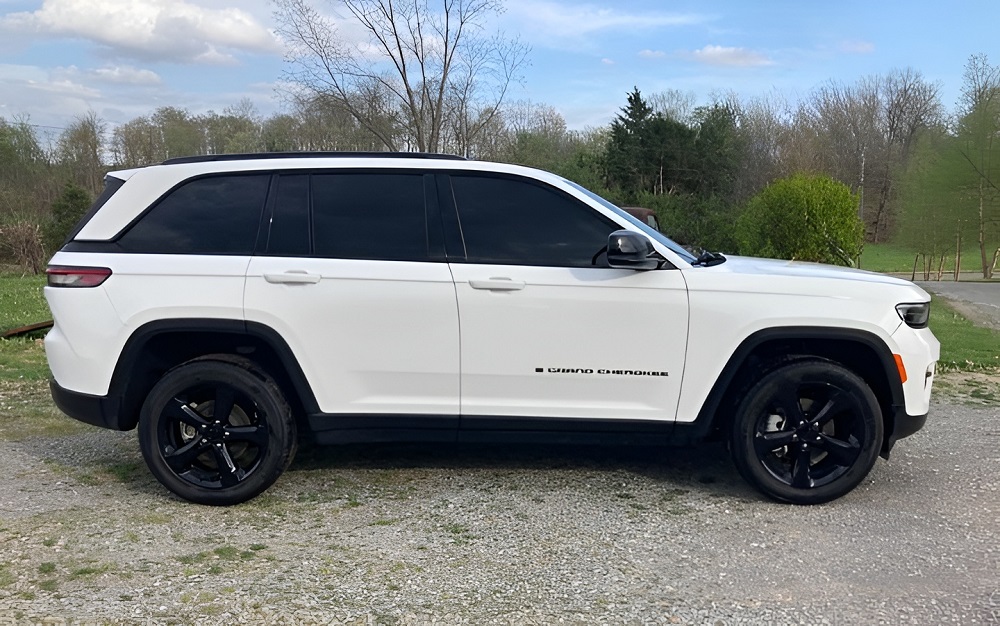
1. The Model Year Changes Where You Look for Electrical Faults
Two 2022 Grand Cherokees Can Have Completely Different Electronics
Jeep introduced the three-row Grand Cherokee L in 2021 and unveiled the redesigned two-row Grand Cherokee in 2021 as a 2022 model. The older WK design remained on sale through 2022 under the Grand Cherokee WK name.
| Generation | Model Years | Main Electrical Weak Points |
|---|---|---|
| WK | 2005–2010 | Ignition switch (selected 2005–2007); Front Control Module (selected 2008) |
| WK2 | 2011–2021; carryover WK sold in 2022 | TIPM fuel-pump relay (selected 2011–2013); alternator diodes (selected 2012–2014); ESS batteries; Uconnect 4/4C screens |
| WL Grand Cherokee L | 2021–2026 | BCM battery-drain software (selected 2023–2025); RF Hub key detection (selected 2022); display-related camera recall (selected 2021–2022) |
| WL Grand Cherokee | 2022–2026 | BCM battery-drain software (selected 2023–2025); Uconnect 5 software (selected 2022–2023); RF Hub recalls (selected 2022 and 2024–2026) |
| WL Grand Cherokee 4xe | 2022–2026 | 12-volt battery, high-voltage battery, and hybrid charging-system issues |
Factory service documents also use the WK designation for vehicles commonly known as WK2. Check the VIN, engine, body style, and build date before ordering parts.
A Weak Battery Can Make Healthy Computers Look Broken
Low voltage or poor grounds can cause erratic electronic behavior, affect multiple components, and produce false trouble codes.
Pay attention to how the Jeep fails to start. Slow cranking points toward the battery, cables, grounds, or starter. Normal cranking without starting shifts diagnosis toward fuel, ignition, and compression checks. A push-button start that produces no response also warrants checking key authentication and the brake-pedal switch.
Have the shop record stored fault codes and freeze-frame data before disconnecting the battery. Battery load testing and voltage-drop measurements across the positive and ground cables should come before module replacement. A healthy resting voltage doesn’t guarantee the battery can supply enough current under load.
FCA began installing a Security Gateway (SGW) on some 2017 vehicles, with broader fitment on selected later models. It restricts certain diagnostic functions, including fault-code clearing and module programming. Without compatible equipment and authorized access through AutoAuth, an aftermarket scan tool may read a fault but fail to clear it. That restriction alone gives you no grounds for replacing a control module.
2. Older Grand Cherokees Can Lose Power Without Warning
An Ignition Switch That Shuts the Engine Off While Driving
On affected 2005–2007 Grand Cherokees, the ignition switch can move out of the RUN position unexpectedly. The engine shuts down, steering becomes heavy, and brake assistance can fade. Airbag operation may also be disabled if a crash follows.
Chrysler addressed this defect through safety recall P41 (NHTSA 14V-438). The repair involves replacing both the ignition switch and the lock cylinder. The revised design requires you to push the key inward before turning it to the OFF position.
Remove all items from the key ring except the vehicle key; this does not correct the defect. Check the VIN for recall completion before paying for ignition repairs.
A Faulty Front Control Module Can Cut Power to Critical Parts
The Front Control Module (FCM) manages electrical commands for several functions on the older WK platform. The FCM on some 2008 vehicles may have been manufactured incorrectly. The defect may cause the engine to stall, prevent the vehicle from starting, or make the windshield wipers inoperative.
Safety recall H03 (NHTSA 08V-059) applied to about 1,300 2008 Grand Cherokee and Commander vehicles built December 4–11, 2007 (MDH 120406–121119). Dealers were instructed to inspect the module’s manufacturing date code and replace affected units. The defective production batches carried Julian date codes 337, 338, and 339.
Outside this recall, similar symptoms can come from corroded connectors, damaged wiring, or poor module grounds. Have the shop check power supplies, ground connections, and communication circuits before condemning the FCM. A replacement module won’t fix a voltage drop in the wiring that feeds it.
3. Early WK2 Fuel Pump Relays Can Fail Even After a Recall Repair
The Engine Cranks, but the Fuel Pump Gets No Power
On affected 2011–2013 Grand Cherokees, the fuel-pump relay sits inside the Totally Integrated Power Module (TIPM). Heat can deform the relay’s internal contact spring, interrupting power to the fuel pump. The engine may crank without firing, start and immediately stall, or shut down while driving.
Chrysler’s investigation documented 5,230 warranty claims involving 5,096 unique vehicles across the broader recall population, not Grand Cherokees alone. Of those claims, 71 involved stalling while driving. Field reports showed failures becoming more frequent around 20,000 miles. Chrysler’s analysis found suspected relay failures at a higher rate in southern states with higher mean ambient temperatures.
The fuel pump may stay energized after the vehicle is shut off.
Why the First Two Fuel Pump Relay Recalls Weren’t Enough
Chrysler launched recall P54 (14V-530) in 2014 for affected 2011 Grand Cherokees. Dealers installed an external fuel-pump relay to bypass the faulty internal relay. Recall R09 (15V-115) expanded that repair to affected 2012–2013 models.
The external relays installed under P54 or R09 could also fail. Silicon contamination on the relay contacts could cause relay failure and interrupt fuel-pump operation. Chrysler issued a third recall in November 2019, V62 (19V-813), to address those failures.
For vehicles previously repaired under P54 or R09, the V62 repair replaces the existing external relay and wiring harness. The revised repair installs a new harness and relay mounted near the Powertrain Control Module (PCM). If you’re buying a 2011–2013 Grand Cherokee, verify V62 completion through the VIN and dealer repair records. Finding an external relay under the hood only proves that some form of bypass was installed.
A Tiny Chip Inside the PCM Can Stall a 2018 Grand Cherokee
Certain 2018 Grand Cherokees may have a PCM manufactured with a suspect voltage-regulator chip. If the chip fails, the PCM may stop functioning. You may experience an unexpected stall, a no-start condition, or an engine that dies shortly after firing.
Chrysler issued safety recall U87 (18V-524) to address the potential chip condition. The prescribed repair involves replacing and programming the PCM.
Disconnecting the battery or clearing stored fault codes cannot repair the potential hardware fault. Affected vehicles qualify for PCM replacement under the safety recall at no charge.
4. Charging Faults and Stop/Start Batteries Can Leave You Stranded
Alternator Diodes Can Burn Out and Shut Down the Engine
Certain 2012–2014 Grand Cherokees were included in alternator-diode recalls. Cyclical loads induced by the electro-hydraulic power steering system, together with high operating temperatures, can cause thermal fatigue in the alternator diodes. The diodes convert alternating current into direct current for the vehicle’s electrical supply.
Charging output can drop, leaving the battery to power the vehicle until its reserve runs out. You may notice dim headlights, a battery warning light, or an unexpected engine stall. Failed diodes can also create a resistive short, generating enough heat to start an underhood fire.
Chrysler addressed these defects through recalls P60 (14V-634) and T36 (17V-435). Coverage depends on the engine, steering configuration, and alternator specification. The T36 procedure calls for inspecting the alternator’s part number and replacing affected units. Confirm recall eligibility by VIN.
Diagnosis should include charging output under load, cable voltage-drop measurements, and an AC ripple test to detect damaged diodes. Fault codes such as P0562 (low system voltage) may accompany charging failure. If the alternator starts smoking or gives off a burning smell, shut down the engine and arrange a tow.
A Weak Stop/Start Battery Can Affect the Main Battery
Grand Cherokees equipped with dual-battery Engine Stop/Start (ESS) use a main 12-volt battery and a smaller auxiliary battery. When connected, both batteries support the vehicle’s electrical system, and a low charge in one can reduce the combined state-of-charge reading. Replacing only the main battery may not resolve a low-charge problem if the auxiliary battery is also weak.
A persistent “Stop/Start Not Ready” message can accompany low battery charge. An engine that has not reached normal operating temperature, battery temperatures that are too high or too low, and cabin heating or cooling demands can also prevent automatic engine shutdown. The message alone doesn’t prove the auxiliary battery has failed.
The Intelligent Battery Sensor (IBS) monitors battery current, voltage, and temperature. The PCM uses battery state of charge to determine charging rates. A steady reading of 14.5 volts alone gives you no reason to condemn the sensor.
The batteries are normally connected and are briefly isolated during cranking for individual voltage evaluation. Both batteries should be tested separately. Because the IBS state-of-charge reading reflects both batteries, a combined reading may not identify which battery is weak. Disconnecting only the main battery also leaves parts of the dual-battery electrical supply energized.
5. Newer Grand Cherokees Can Drain Their Batteries While Parked
BCM Software Can Cause Battery Drain During Sleep
Some WL Grand Cherokees suffer from excessive ignition-off draw. BCM software can cause ignition-off draw and instrument-cluster activity as the vehicle enters sleep mode. Owners report instrument clusters lighting up repeatedly and batteries going flat overnight.
Stellantis issued several Technical Service Bulletins (TSBs) addressing BCM software faults. The documented symptoms include discharged batteries, repeated instrument-cluster activity during sleep, and door-lock indicator lights that remain illuminated.
| Affected Models | TSB | Prescribed Repair |
|---|---|---|
| 2023 Grand Cherokee and Grand Cherokee L | 08-172-25 | Update BCM software |
| 2024 Grand Cherokee and Grand Cherokee L | 08-019-26 | Inspect and update BCM software as required |
| 2025 Grand Cherokee and Grand Cherokee L built through May 5, 2025 | 08-170-25 Rev. A | Inspect and update BCM software as required |
Repeated deep discharges can permanently reduce a lead-acid battery’s capacity. Even after the software update corrects the excessive draw, the damaged battery may still need replacement.
A Quick Battery Test Can Miss an Overnight Electrical Drain
Some modules remain powered and communicate on the vehicle network for a period after ignition-off before sleeping. Measuring current immediately after shutdown can produce a misleading reading.
Intermittent wake-up events make diagnosis harder. A vehicle may show normal current for several minutes before a module wakes again. Recording current over several hours can expose repeated spikes that a quick multimeter test misses.
Nearby key fobs, connected smartphone services, hardwired dashcams, and aftermarket accessories also deserve investigation. Check each potential source before assigning blame. The measured ignition-off current must fall within the factory specification for that particular vehicle.
A Faulty RF Hub Can Cause a No-Start
Selected 2022 Grand Cherokees and Grand Cherokee L models can refuse to start because of a Radio Frequency Hub Module (RFHM) software fault. The owner’s manual says a “Key Fob Not Detected” warning may appear when the ignition position does not change.
Stellantis addressed the defect through Customer Satisfaction Notification Z23. The repair procedure calls for checking the RF Hub’s identification label. If the part number ends in “AM,” the dealer replaces the module, programs it to the latest software, and performs the immobilizer-module replacement routine.
Before paying for an out-of-campaign replacement, rule out a weak key-fob battery and poor 12-volt power supply. Confirm Z23 eligibility by VIN through a dealer or Mopar’s service-campaign lookup. If the RF Hub requires replacement, bring both key fobs for synchronization with the new module.
6. Uconnect Screen Failures Go Beyond Software Glitches
Bubbles Behind the Glass Can Trigger Ghost Touches
Some WK2 Grand Cherokees with 8.4-inch Uconnect 4/4C touchscreens can develop delamination. The bonded layers behind the glass begin to separate, creating visible bubbles or peeling. As the damage spreads, the touch-sensitive digitizer can register commands without anyone touching the screen.
The radio may change stations or adjust climate settings. Ghost touches can also input phantom destinations into navigation. Other areas of the touchscreen may stop responding altogether.
Electronics repair specialists offer digitizer and display repairs for affected 8.4-inch Uconnect units. Replacing the damaged display can save you from buying a complete radio assembly. Match the radio part number and navigation equipment before ordering a replacement screen. No software update can rebond separated display layers.
Uconnect 5 Software Can Black Out the Screen and Drain the Battery
The newer WL generation uses different infotainment hardware with its own documented software faults. TSB 08-055-23 Rev. A applies to selected 2022–2023 WL Grand Cherokees built through October 14, 2022.
The bulletin lists battery drain, wireless connection failures, unexpected radio resets, and black screens after the startup acceptance screen. It describes a phased over-the-air radio software update to version S26.18 and is marked information-only, not an authorization for repair.
The bulletin states that the rearview camera remains functional during the specified reset and startup black-screen conditions.
A Black Backup Camera Can Come From an Overheated Transistor
Safety recall 11C (25V-083) addressed a hardware defect inside the 10.1-inch center touchscreen. An internal transistor could overheat and prevent the rearview camera image from appearing. The recall covered just 1 two-row 2022 Grand Cherokee and 132 Grand Cherokee L vehicles from 2021–2022.
The owner notification stated that the affected displays had already been replaced. Owners experiencing similar symptoms outside that narrow group shouldn’t assume they qualify for a free touchscreen replacement.
A separate recall, 78D (26V-531), covers radio-software faults in certain 2026 Grand Cherokee and Grand Cherokee L vehicles. The defective software can prevent the rearview image from appearing when you shift into Reverse. The prescribed remedy requires an over-the-air software update where supported or a dealer-installed USB update.
7. Electrical Faults Can Disable Lights, Wipers, and Airbags
Sun-visor Wiring Can Start a Headliner Fire
On affected 2011–2014 Grand Cherokees, wiring for the sun visor vanity lamps can become damaged during assembly or service work. A sun-visor mounting screw can pierce the vanity-lamp wire. A short circuit can then generate heat behind the headliner.
Chrysler addressed the defect through safety recall P36 (14V-391). A subsequent recall, R71 (15V-879), targeted certain 2011–2013 models built December 3, 2009 through September 1, 2012. The revised repair includes inspecting the wiring, repairing damaged wires, replacing sun visors, and installing revised wire guides.
An inoperative vanity lamp can accompany this wiring fault, which may cause an electrical fire. Contact your dealer right away to schedule recall service.
Faulty RF Hub Software Can Hide Low Tire Pressure
Safety recall 54D (26V-559) covers affected 2024–2026 Grand Cherokee, Grand Cherokee L, and 4xe models. A software defect inside the Radio Frequency Hub can disrupt Tire Pressure Monitoring System (TPMS) operation.
The displayed tire pressures or low-pressure warnings may fail to update correctly. You could be driving on an underinflated tire without receiving the expected warning.
The prescribed repair involves reprogramming the RF Hub. Until the fault is corrected, check each tire with a handheld pressure gauge against the cold inflation pressure printed on the driver’s door placard.
Software Faults Can Disable Wipers and Delay Airbag Deployment
Recall 77D (26V-529) addresses BCM software that can prevent windshield wiper operation on certain 2026 models. The campaign covers just 81 vehicles across the Grand Cherokee and Grand Cherokee L. Dealers correct the defect through a BCM software update.
A separate safety recall, 01D (26V-328), addresses software inside the Occupant Restraint Controller (ORC). It affects selected 2022–2026 two-row Grand Cherokees and 2023–2025 Grand Cherokee L models.
The software can cause transient door-airbag pressure-sensor faults to remain active for the life of the sensor. A faulted sensor may delay side-airbag deployment in certain types of crashes. Once the fault sets, the airbag warning light remains illuminated, accompanied by a chime at each ignition cycle.
Affected vehicles require an ORC software update under the recall.
8. The 4xe Can Refuse to Start Even With a Fully Charged Hybrid Battery
A Dead 12-Volt Battery Can Lock Out the High-Voltage Pack
The Grand Cherokee 4xe uses separate low-voltage and high-voltage batteries. The smaller 12-volt battery powers the control modules and activates the contactors that connect the high-voltage pack. If the 12-volt supply collapses, the contactors may fail to close.
You can have 100% electric range available and still find the Jeep unable to enter READY mode. Owners have reported a 12-volt-related no-start after overnight charging and a blank center screen with communication problems.
Unlike gasoline models, the 4xe uses a DC/DC converter to charge its 12-volt battery. Diagnosis should include checking the 12-volt battery and scanning the hybrid control modules for fault codes. Disconnecting the 12-volt battery also prevents the high-voltage pack from accepting an external charge.
Charging Faults Can Come From the IDCM Software
Stellantis issued TSB 08-030-25 for qualifying 2023 Grand Cherokee 4xe models built through June 17, 2023. The bulletin addresses software faults within the Integrated Dual Charging Module (IDCM) that can prevent the vehicle from charging.
Eligible vehicles must have an illuminated malfunction-indicator lamp and at least one of the specified fault codes: B22A9-64, B22A9-16, B22A9-17, or B22A9-19. The bulletin directs technicians to the software update procedure under safety recall 04B (24V-111).
That recall covers affected 2022–2024 Grand Cherokee 4xe models with software faults that can disable windshield defrosting and defogging. Repeatedly clearing fault codes or pulling fuses won’t correct the underlying software defect.
Hybrid Software Can Cut Drive Power, While Damaged Battery Cells Can Catch Fire
Safety recall 73C (25V-576) covers affected 2022–2026 Grand Cherokee 4xe models. When the Battery Pack Control Module resets, the Hybrid Control Processor (HCP) can misinterpret the event and shut down propulsion. Dealers correct the fault through an HCP software update.
A separate high-voltage battery defect prompted recall 68C (25V-741). In rare circumstances, separator damage combined with other complex interactions within the high-voltage battery cells may lead to a fire. The campaign covers affected 2022–2026 Grand Cherokee 4xe models, with a remedy involving updated software and battery replacement where required.
Even if your Jeep received the earlier 95B (24V-720) battery recall repair, verify whether 68C remains outstanding. For affected vehicles awaiting the 68C remedy, Stellantis instructs owners to avoid recharging and park outside, away from structures and other vehicles. The high-voltage battery can cause a vehicle fire while it is parked or being driven.
9. Electrical Repair Costs and Coverage Can Make a Huge Difference
A $300 Screen Repair Can Save You From Buying a Complete Radio
Electrical repair bills depend heavily on which part has failed. A damaged Uconnect digitizer may need only a screen repair, while a failed PCM may require replacement and programming, depending on the vehicle and fault. Intermittent battery drains can also rack up diagnostic labor before the shop identifies the cause.
| Repair | Estimated U.S. Cost |
|---|---|
| Covered safety recall repair | $0 |
| Battery replacement | $544–$593* |
| Alternator replacement | $999–$1,086* |
| Uconnect 8.4-inch touchscreen repair | $299.99 |
*The battery and alternator figures come from RepairPal’s September 2026 general Grand Cherokee estimates and exclude taxes and fees. Model-year estimates vary. The battery figure is for a starting-battery replacement, not a high-voltage battery. The touchscreen price reflects a repair-and-return service for selected 2019–2022 units without navigation, excluding vehicle removal and installation.
Replacement control modules may require programming, configuration alignment, or immobilizer/key procedures; requirements depend on the vehicle and module. Have the shop include those charges in the repair estimate.
Extended 4xe Battery Coverage Comes With a Financial Limit
Stellantis extended XU1 coverage to select 2022–2026 Grand Cherokee vehicles equipped with the 2.0L PHEV engine (ECX); dealers must confirm eligibility in VIP. Warranty bulletin D-26-06 Rev. A, dated March 5, 2026, extends coverage for specified high-voltage battery faults beyond the original warranty period.
Qualifying fault codes include P0DAB-00, P0BBE-00, P1C5E-00, P0B24-00, and P0B28-00. The bulletin directs technicians to TSB 08-072-26 for battery diagnosis and replacement. Ordinary battery capacity loss and unrelated charging faults don’t automatically qualify.
The extension provides unlimited time and mileage from the vehicle’s in-service date for the specified battery condition, subject to eligibility and coverage terms. However, once the original high-voltage battery warranty expires, Stellantis reserves the right to limit payment. That limit is the lower of the battery replacement cost or the vehicle’s retail value before the specified fault codes illuminated.
Sources & References
- 2022 GRAND CHEROKEE WK Owner’s Manual
- Part 573 Safety Recall Report 14V-530
- Flash: Body Control Module (BCM) Updates, TSB 08-172-25
- Safety Recall P54 / NHTSA 14V-530 Fuel Pump Relay – Dealer Service Instructions
- Radio Over The Air S21B.5, S24.13 and S24.18 Updating to S26.18 Software Version, TSB 08-055-23 Rev. A
- Safety Recall T36 / NHTSA 17V-435 Alternator Diode Thermal Fatigue – Dealer Service Instructions
- Part 573 Safety Recall Report 26V328
- Part 573 Safety Recall Report 25V741
- Jeep® History
- 2026 Jeep® Grand Cherokee Brings the Hurricane 4 Turbo
- Press Kit: 2021 Jeep Grand Cherokee L
- All-new 2022 Jeep® Grand Cherokee: The Most Technologically Advanced, 4×4-capable and Luxurious Grand Cherokee Yet
- Canada: Jeep® Brand Announces Starting Prices for the All-new 2022 Grand Cherokee Lineup
- Safety Recall N23 / NHTSA 13V-175 – Reprogram Final Drive Controller Module
- Jeep Grand Cherokee Overview (2011 – 2021)
- 2026 Owner’s Manual – Grand Cherokee and 4xe
- 2014–2017 Grand Cherokee WK2 Factory Service Manual, 14 Electrical
- Diagnosing Voltage Drops: Electrical Automotive Troubleshooting
- Engine Won’t Crank or Start
- 2022 Jeep Grand Cherokee Owner’s Manual
- Battery Disconnect or Replacement Problems
- Battery Test Methods
- Security Gateway Module – Aftermarket Specific
- AutoAuth High Level Overview
- Secure Gateway Access
- FCA Security Gateway Module Basic Info and Location
- AutoAuth: Homepage
- Part 573 Safety Recall Report 14V-438
- Safety Recall P41 – Ignition Switch
- Vehicle Recalls & Service Campaigns
- Check for Recalls: Vehicle, Car Seat, Tire, Equipment
- Safety Recall H03 – Front Control Module
- Module-Front Control – 2007 Grand Cherokee WK Factory Service Manual
- No Response From FCM (Front Control Module) – 2007 Jeep Grand Cherokee Service Manual
- No Response From FCM (Front Control Module) – 2007 Jeep Grand Cherokee Service Manual
- Part 573 Safety Recall Report 15V-115
- Part 573 Safety Recall Report 19V-813
- Mr. Jeffrey L. Quandt, NVS-213krh; DP14-004, December 12, 2014
- Safety Recall R09 / NHTSA 15V-115 Fuel Pump Relay
- Safety Recall V62 – Fuel Pump Relay – 2011–2013 Dodge Durango & Jeep Grand Cherokee
- Safety Recall U87 / NHTSA 18V-524 – Powertrain Control Module (Dealer Service Instructions, Revision 2)
- Part 573 Safety Recall Report 18V-524
- IMPORTANT SAFETY RECALL – Powertrain Control Module (U87/NHTSA 18V-524 owner notice)
- New Safety Recall Advanced Communication – U87
- Dealer Service Instructions for: Safety Recall P60 / NHTSA 14V-634 Alternator
- Part 573 Safety Recall Report 17V-435
- Part 573 Safety Recall Report 14V-634
- How to Test Alternator Ripple Voltage with a Multimeter
- 5 Signs Your Alternator May Need to Be Replaced
- Alternator troubleshooting
- P0562 System Voltage Low
- Dodge, Jeep and Chrysler ESS Dual-Battery System Service
- Case Number S1408000384 Rev. C
- 2019 GRAND CHEROKEE USER GUIDE
- 08-019-26, Flash: Body Control Module (BCM) Updates
- 08-170-25 Rev. A, Flash: Body Control Module (BCM) Updates
- Grand Cherokee 2025, Drain battery, Rear clicking sound (similar to a lock (relay) attempting to engage)
- Battery draining in brand new 2024 GC
- BU-201: How does the Lead Acid Battery Work?
- Is a Deep Discharge Really That Damaging?
- Parasitic Draw Diagnosis
- New Circuit/System Testing for Parasitic Draws
- Diagnosing an Intermittent Parasitic Draw
- 2023 Jeep Grand Cherokee/Grand Cherokee L Owner’s Manual
- Meet the Jeep® App
- 15-308-23R Diagnostic Information – Testing Telematics Systems for Dark/Standby Current
- My vehicle battery drains after installing a THINKWARE dash cam
- Customer Satisfaction Notification Z23 – Radio Frequency Hub Module, Dealer Service Instructions (Revision 1, March 2022)
- UPDATE – CSN Z23: 2022 (WL) JEEP GRAND CHEROKEE L – DEALER SERVICE INSTRUCTIONS AND RFHM PARTS
- 2022 Jeep Grand Cherokee L Owner’s Manual
- 14 Reasons Why Your Car Won’t Start
- 2021 GRAND CHEROKEE Owner’s Manual
- Jeep Grand Cherokee Uconnect Screen Problems (2018–2023)
- Upgraded Uconnect 4 / 4C 8.4″ Touchscreen LCD Replacement – Chrysler, Dodge, Jeep & RAM 2017+ UAQ/UAS (LA084X01)
- Fixing Ghost Touch & Bubbling Screens on 2014-2022 Grand Cherokee & Durango Uconnect Displays
- FCA UConnect 4 UAV 8.4 Display Screen Repair Services
- Radio Instruction Manual
- Part 573 Safety Recall Report 25V-083
- NHTSA Campaign Number 25V083000: Rearview Camera Image May Not Display/FMVSS 111
- 11C/NHTSA 25V-083 – Important Safety Recall: Rearview Camera Visibility
- Part 573 Safety Recall Report 26V531, Amendment 2, October 20, 2026
- Safety Recall 78D/NHTSA 26V-531 – Rearview Camera Visibility
- NHTSA Campaign Number 26V531000: Rearview Camera Image May Fail to Display/FMVSS 111
- 78D/NHTSA 26V-531 – Important Safety Recall: Rearview Camera Visibility
- ODI Resume, Investigation EA 14-001 Close
- New Safety Recall Advanced Communication – P36070114
- Recall Quarterly Report 14V-391
- Part 573 Safety Recall Report 15V-879, amended February 23, 2016
- NHTSA Recalls by Vehicle: 2013 Jeep Grand Cherokee
- Safety Recall R71 / NHTSA 15V-879 Dealer Service Instructions, revised July 2016
- Important Safety Recall R71 / NHTSA 15V-879, owner notification
- Part 573 Safety Recall Report 26V559
- Tire Safety Ratings and Awareness | TireWise
- Part 573 Safety Recall Report 26V529
- 2024 Jeep Grand Cherokee 4xe Hybrid Supplement
- 2022 Jeep Grand Cherokee 4xe Hybrid Supplement
- GC Wouldn’t start this morning… 12v battery was low!
- Wrangler 4xe Owners Experiencing Dead 12V Battery
- Technical Service Bulletin 08-030-25: Flash: Integrated Dual Charging Module (IDCM) Enhancements
- Safety Recall 04B / NHTSA 24V-111: Defrost – Remedy Instructions
- Part 573 Safety Recall Report 24V-111
- Recall Owner Notification Letter 04B / NHTSA 24V-111: Defrost
- Part 573 Safety Recall Report 25V576
- NHTSA Campaign 25V576000: Loss of Drive Power
- Remedy Owner Notification Letter – Mailed
- Remedy Instructions and TSB
- NHTSA Campaign 25V741000: High Voltage Battery May Fail and Cause Fire
- Remedy Owner Notification Letter – Mailed
- NHTSA Campaign 24V720000: High Voltage Battery May Fail and Cause Fire
- Consumer Alert: Important Expanded Jeep Grand Cherokee and Jeep Wrangler PHEVs ‘Park Outside’ Recall for Fire Risk
- Jeep Grand Cherokee Battery Replacement Cost Estimate
- Jeep Grand Cherokee Alternator Replacement Cost Estimate
- 2019 – 2022 Jeep Grand Cherokee Touchscreen Repair (8.4-inch without Navigation)
- Safety Recall U87 / NHTSA 18V-524 Powertrain Control Module
- Jeep Grand Cherokee Battery Test Cost
- Consumer Alert: Time to Check for Vehicle Safety Recalls
- Warranty Bulletin: (XU1) High Voltage Battery Pack – Select 2021 – 2025 Jeep Wrangler (JL) and 2022 – 2026 Jeep Grand Cherokee/ Grand Cherokee (WL) (Rev. A)
- Technical Service Bulletin 08-072-26: High Voltage Battery Pack Replacement XU1 Warranty Extension