
A cold-start tick turns into a steady knock, and the check-engine light starts flashing. A leaking exhaust manifold can make a similar noise to a worn rocker arm. But the repair bills are worlds apart. Once metal from a damaged camshaft reaches the bearings, you could be looking at an engine replacement.
Early 3.6L Pentastar engines suffered cylinder-head sealing faults, while HEMI V8s can develop costly lifter and camshaft wear. The 3.0L EcoDiesel faces fuel pump and EGR cooler recalls. Certain 4xe hybrids carry an even greater risk: internal engine damage from leftover casting sand.
We’ll cover the known faults across each engine family, their warning signs, repair costs, and available recall or warranty coverage. A flashing check-engine light, falling oil pressure, or heavy knocking means it’s time to pull over safely and shut the engine off.
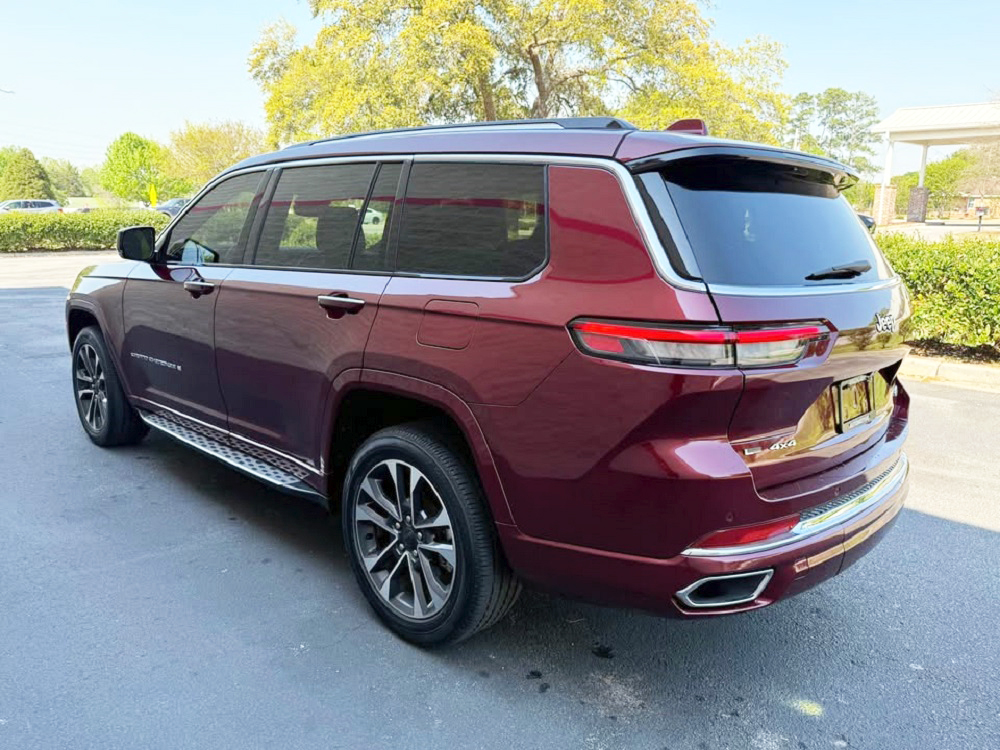
1. The Engine Under the Hood Matters More Than the Model Year
Same Grand Cherokee, Different Mechanical Risks
Jeep has used everything from a cast-iron straight-six to a turbocharged plug-in hybrid. Each engine brings its own weak spots, repair costs, and service needs. Even Grand Cherokees built in the same model year can have very different mechanical risks.
The change from WK2 to WL makes identification trickier. The 3-row Grand Cherokee L introduced the WL generation in 2021, followed by the 2-row model in 2022. Jeep also sold the outgoing WK2-based Grand Cherokee as the Grand Cherokee WK for 2022. Factory service bulletins often use the WK designation for vehicles commonly called WK2.
| Engine | Model Years and Generations | Main Mechanical Concerns |
|---|---|---|
| 4.0L inline-six | 1993-2004 ZJ/WJ | Cylinder-head cracks, coolant loss |
| 3.7L PowerTech V6 | 2005-2010 WK | Dropped valve seats after overheating |
| 4.7L PowerTech V8 | 1999-2009 WJ/WK | Valve-seat failure |
| 3.6L Pentastar V6 | 2011-present WK2, 2022 WK, WL | Cylinder-head leakage, rocker and camshaft wear, oil cooler leaks |
| 5.7L HEMI V8 | 2005-2024 WK/WK2/WL | Exhaust manifold leaks, lifter and camshaft wear |
| 6.1L HEMI SRT8 | 2006-2010 WK | Valvetrain wear |
| 6.4L HEMI SRT | 2012-2021 WK2 | Lifter and camshaft wear |
| 6.2L Supercharged V8 | 2018-2021 WK2 Trackhawk | Charge-cooling faults, heat-related stress |
| 3.0L Mercedes CRD | 2007-2008 WK (U.S.) | Oil cooler seal leaks |
| 3.0L EcoDiesel V6 | 2014-2019 WK2 (U.S.) | High-pressure fuel pump failure, EGR cooler cracks, tone-wheel delamination |
| 2.0L Turbo 4xe | 2022-2026 WL | Casting debris, hybrid-control faults, battery fire risk |
| 2.0L Hurricane 4 Turbo | 2026 onward WL | Long-term reliability remains unproven |
Even within the same engine family, hardware revisions change the diagnosis. Early Pentastar engines had documented cylinder-head sealing faults, while later versions have separate intake camshaft and rocker wear concerns. The 3.0L Mercedes CRD and VM Motori EcoDiesel also use different hardware despite sharing the same displacement.
Complaint counts need some care, too. Newer engines have fewer years and miles behind them, and a technical service bulletin doesn’t establish how often a part fails across the entire fleet.
Before pricing a repair or checking warranty coverage, confirm the engine code, production date, and 17-character VIN. Some factory repair programs exclude vehicles built just days after a specified production cutoff.
2. Pentastar Misfires Can Hide Expensive Valve Gear Damage
Early Cylinder-Head Failure Needs More Than a Coil Swap
The first 3.6L Pentastar engines had a documented sealing fault in the left cylinder head. Worn valve seats can allow compression to escape, leaving the engine shaking at idle. You might also notice an uneven exhaust beat, persistent ticking, or a check-engine light that returns after replacing spark plugs and coils.
Chrysler addressed the fault through TSB 09-002-14. It covers specified 2011-2013 Grand Cherokees with the ERB 3.6L engine built on or before July 25, 2012. The bulletin identifies 4 misfire codes: P0300, P0302, P0304, and P0306. Cylinders 2, 4, and 6 sit on the affected left bank.
Once ignition and fuel delivery faults have been ruled out, a cylinder leak-down test checks how well each cylinder holds pressure. Chrysler directs technicians to replace the left cylinder head when a tested misfiring cylinder shows 25% leakage or greater.
Warranty extension X56 originally covered the affected cylinder head for 10 years or 150,000 miles, whichever came first. That coverage is generally expired by 2026. Check the vehicle’s original in-service date and warranty records before expecting Chrysler to cover the repair.
Later Pentastar Ticks Can Grind Away the Camshaft
A rhythmic tick that speeds up with engine RPM can point to rocker arm wear. On earlier Pentastar engines, worn rocker arms can scrape against the camshaft and wear down the lobe.
The upgraded Pentastar introduced a different wear point through its two-stage variable valve lift design. Its intake rocker uses a sliding contact surface for high-lift operation. Wear between that surface and the intake cam lobe can reduce valve movement, disturb airflow, and trigger misfires.
Stellantis addressed this condition in TSB 09-011-25, dated May 17, 2025. It includes specified 2018-2022 WK and 2021-2025 WL Grand Cherokees, with a WL production cutoff of August 19, 2024. The bulletin describes valvetrain noise, idle shake, and misfires, typically reported between 10,000 and 60,000 miles.
The prescribed repair uses service kits containing intake camshafts, rocker arms, gaskets, and sealer. Catching the wear early may keep the repair confined to the cylinder heads. Once a cam lobe sheds metal into the oil, the repair needs a wider inspection.
If the oil filter contains metal shavings, replacing the camshafts and rockers alone may leave damaged crankshaft bearings and camshaft journals behind.
3. Pentastar Oil and Coolant Leaks Can Hide Above the Transmission
Check the Engine Valley Before Blaming the Rear Main Seal
The 3.6L Pentastar’s oil filter housing and oil cooler sit beneath the intake manifold. Repeated heating and cooling can distort the plastic housing, while aging seals can allow oil to escape. Oil collects in the engine valley before running down the back of the block and onto the transmission bellhousing.
From underneath, the leak can look like a failed rear main seal. Chrysler addressed valley oil pooling in TSB 09-008-15, covering specified 2014 Grand Cherokees built on or before January 20, 2014. The bulletin explains that the valley can hold nearly 1 quart of oil before an external leak becomes apparent.
Small amounts of oil left behind during filter changes can also collect in this area. Clean the valley and check for fresh leakage around the housing, cooler, cap, and seals. Confirm the leak’s origin before paying to remove the transmission.
Aluminum Housings Address One Weak Spot
Jeep’s original composite housing is often replaced with another factory plastic assembly. Aftermarket cast-aluminum replacements are also available that eliminate cracking and warping of the plastic body.
Autos of Chicago publishes the following repair prices for the Grand Cherokee’s 3.6L engine:
| Oil Filter Housing Repair | Estimated Cost |
|---|---|
| Plastic housing package | $650-$780 |
| Aluminum housing package | $795-$950 |
These prices reflect one repair shop’s service packages, which include different services. Aluminum still depends on good seals, accurate machining, and proper installation. Poor-quality replacement assemblies can leak regardless of the housing material.
Filter compatibility matters, too. Chrysler’s TSB 09-003-13 documents an oil filter adapter design change for the 2014 model year. The earlier and later filter elements aren’t interchangeable.
If the housing has already been replaced, match the filter to the installed assembly. Installing an incompatible filter risks permanent engine damage.
Disappearing Coolant Doesn’t Always Mean a Blown Head Gasket
A falling coolant level without a puddle underneath can send you straight toward an expensive head-gasket diagnosis. But the Pentastar’s water pump, thermostat housing, radiator, and oil cooler connections can also leak. Coolant may evaporate on hot engine surfaces before reaching the ground.
A cooling-system pressure test can expose these hidden leaks. Persistent white exhaust smoke after warm-up, repeated cold-start misfires, or unexplained coolant loss warrant closer inspection for coolant entering a cylinder.
A combustion-gas test can help identify exhaust gases entering the cooling system. Cylinder leak-down testing and inspection for coolant inside the cylinders can help locate the fault.
If oil appears in the coolant reservoir, test the oil cooler before condemning the head gasket. An internal cooler leak can contaminate the coolant without any damage to the cylinder-head sealing surfaces.
4. A HEMI Tick Can Hide a Much Bigger Repair
When a Cold-Start Tick Points to the Exhaust Manifold
A sharp ticking noise during a cold start is a familiar complaint on the 5.7L HEMI. Repeated heating and cooling can warp the exhaust manifold or break its mounting bolts. Exhaust gases then escape through the gap, producing a rhythmic tick that follows engine speed.
The noise often fades as the engine warms up and the metal expands. Look for black soot around the exhaust ports, missing bolt heads, or damaged manifold gaskets. A tick that disappears when warm is a useful clue, but it doesn’t confirm an exhaust leak.
Repair costs climb when broken bolts sit flush with the cylinder head. Removing them may require drilling or extraction. An exhaust leak also needs attention if fumes enter the cabin or interfere with oxygen sensor readings.
A Seized Lifter Can Chew Through the Camshaft
A HEMI tick that persists at operating temperature deserves closer inspection. Inside the engine, hydraulic roller lifters follow the camshaft lobes. When the needle bearings inside a lifter roller fail, the roller can seize and scrape against the camshaft.
As the lobe wears down, the affected valve opens less than it should. You’ll notice an uneven idle, reduced power, and eventually misfire codes such as P0300 or P0301-P0308. Metal particles from the damaged camshaft can also circulate through the oil and score bearing surfaces.
Both conventional lifters and Multi-Displacement System (MDS) lifters can fail. Mopar technical tip 9100229 warns that a misaligned disconnecting pin inside an MDS lifter doesn’t necessarily indicate damage.
Disabling MDS or switching to thicker oil won’t restore a worn cam lobe. Once metal reaches the crankshaft bearings, the repair may require a complete engine teardown.
SRT and Trackhawk Engines Bring Extra Heat and Repair Costs
The naturally aspirated 6.1L and 6.4L SRT engines face different demands from the supercharged 6.2L Trackhawk. Oil consumption on the SRT warrants checking for PCV faults, worn piston rings, and valve-guide wear. Measure actual oil use between service intervals before assuming the consumption is normal.
The 707-hp Trackhawk introduces another concern through its separate supercharger charge-cooling circuit. A weak intercooler pump or restricted coolant flow can allow intake air temperatures to climb under boost. The engine may then pull ignition timing and lose power during hard acceleration.
Check charge-coolant circulation, supercharger belt condition, and intake air temperature readings under load. The dashboard coolant gauge can show a normal temperature while the supercharger’s cooling circuit struggles to control intake heat.
5. EcoDiesel Failures Can Leave You Replacing Far More Than One Part
A Failed Fuel Pump Can Send Metal Through the Entire Fuel Circuit
The 3.0L EcoDiesel uses a Bosch CP4.2 high-pressure fuel pump lubricated by diesel fuel. Internal wear can damage the pump’s roller and cam surfaces, releasing metal particles into the fuel. Those particles can reach the fuel rails, injectors, lines, and tank.
You may notice abnormal engine noise, a change in drive quality, or sudden power loss. Complete pump failure can shut the engine down while driving and prevent it from restarting.
Recall Z46 (NHTSA 22V-406) covers certain 2014-2020 Grand Cherokees equipped with the 3.0L diesel. FCA specifies different repair procedures depending on whether the pump has contaminated the fuel circuit.
The factory labor allowance for the non-contaminated WK repair is 2.2 hours. That increases to 7.8 hours when contamination is present. The larger repair includes cleaning the fuel tank and replacing the pump, injectors, rails, filters, fuel tubes, and specified in-tank hardware.
Outside recall coverage, repair estimates can reach $3,000-$6,000. Installing a new pump without removing the remaining metal debris puts the replacement fuel hardware at risk.
A Cracked EGR Cooler Can Start an Intake Fire
The EcoDiesel’s exhaust gas recirculation (EGR) cooler uses engine coolant to lower exhaust gas temperatures. Repeated thermal stress can crack the cooler internally, allowing coolant vapor to enter the recirculated exhaust stream.
Under certain conditions, that vapor can mix with hydrocarbons and air, causing combustion inside the intake manifold. FCA addressed this fire risk through recall W79 (NHTSA 20V-699), covering certain 2014-2019 Grand Cherokee EcoDiesels.
Warning signs include unexplained coolant loss, persistent white exhaust smoke, and a sweet exhaust smell. Repeatedly topping off the reservoir leaves the internal leak unchecked.
The recall requires EGR cooler replacement. FCA also specifies intake manifold testing when fault codes P0299 or P2D2F are present under the conditions described in its repair instructions. A perforated intake manifold requires replacement.
A Peeling Tone Wheel Can Shut Down a Healthy Engine
The crankshaft tone wheel carries magnetic material that allows the crankshaft position sensor to track engine rotation. When that material separates from the wheel, the PCM can lose its crankshaft position signal. Fuel injection may stop, causing a sudden stall.
Replacing the crankshaft position sensor won’t restore the missing magnetic material. FCA issued different recall remedies depending on model year and prior campaign coverage.
| Recall | Affected Grand Cherokee Models | Factory Remedy |
|---|---|---|
| Z46 / 22V-406 | Certain 2014-2020 3.0L diesels | High-pressure fuel pump replacement and contamination repair as required |
| W79 / 20V-699 | Certain 2014-2019 EcoDiesels | EGR cooler replacement and intake inspection as required |
| W68 / 20V-475 | Certain 2014-2016 EcoDiesels | Physical tone-wheel replacement |
| 66A / 23V-411 | Certain 2014-2020 EcoDiesels | PCM software update that maintains propulsion if the crankshaft signal is lost |
Physical tone-wheel replacement requires transmission removal. The software remedy allows the engine to maintain propulsion if the crankshaft signal is lost, but the damaged magnetic coating remains in place.
Bearing Failure Runs Deeper Than an Oil Specification Change
A heavy knock from the lower engine, falling oil pressure, or metallic particles in the oil filter can point to crankshaft bearing damage.
FCA issued TSB 18-078-16 Rev. A in 2016, changing the engine oil specification to 5W-40 for specified applications. The bulletin also called for PCM and TCM updates, an updated oil filler-cap label, and an owner’s manual addendum. The change alone doesn’t prove that the previous oil specification caused the reported bearing failures.
Some owners may qualify for extended coverage under the Approved Emissions Modification (AEM) warranty. Eligible modified 2014-2016 EcoDiesels received the longer of 2 coverage periods: 10 years or 120,000 miles from the original sale, or 4 years or 48,000 miles from the modification.
Each coverage period ends when its time or mileage limit is reached. Payment depends on VIN eligibility, modification history, and whether the failed part falls under the extended warranty.
6. The 4xe Faces Separate Engine and Battery Fire Recalls
Leftover Casting Sand Can Destroy the Engine From Within
Certain 2023-2025 Grand Cherokee 4xe models suffer from internal engine contamination. Residual sand from the manufacturing process can damage parts inside the 2.0L turbocharged engine. The resulting wear can lead to engine failure, sudden loss of propulsion, or an engine compartment fire.
Stellantis addressed the defect through recall 78C (NHTSA 25V-766). Repair guidance issued in May 2026 calls for a PCM software update followed by a prescribed engine test. Technicians check for 4 cylinder-specific knock and combustion vibration codes: P2336, P2337, P2338, and P2339.
When the test meets the campaign’s replacement criteria, the engine requires replacement. The software helps detect abnormal combustion behavior, but it cannot remove casting debris or restore damaged bearing surfaces. Remedy availability depends on the vehicle’s model year and VIN.
Unlimited Engine Warranty Coverage Comes With Conditions
Stellantis issued warranty extension XC2 through bulletin D-26-11 Rev. A, dated June 10, 2026. It covers eligible 2023-2025 Grand Cherokee 4xe models with the ECX engine built between July 19, 2023, and April 10, 2025.
The extension provides unlimited time and mileage coverage following completion of recall 78C. However, the engine fault must meet the specified conditions and involve at least one of the 4 documented P2336-P2339 codes. Unrelated engine faults fall outside this extension.
A financial restriction also applies once the original limited warranty expires. FCA reserves the right to limit payment to the engine replacement cost or the vehicle’s retail cash value before the failure, whichever is lower.
Hybrid Software and Battery Defects Carry Their Own Risks
A sudden shutdown in a 4xe can also originate outside the gasoline engine. Recall 73C (NHTSA 25V-576) covers certain 2022-2026 Grand Cherokee plug-in hybrids. A battery control module reset can trigger an improper response from the hybrid control software, interrupting propulsion. The remedy involves updating the Hybrid Control Processor (HCP) software.
The high-voltage battery presents a separate fire risk. Recall 68C (NHTSA 25V-741) addresses battery cells susceptible to internal separator damage. A damaged separator can allow an internal short circuit and trigger a battery fire, even while the vehicle is parked.
The remedy involves updated diagnostic software and battery replacement where required. Completing the earlier 95B battery recall doesn’t establish that recall 68C has been completed.
NHTSA advises owners of affected, unrepaired vehicles to park outside, away from buildings and other vehicles, and avoid charging until the remedy is completed.
7. Older Jeep Engines Can Suffer Serious Damage From Cooling Faults
The 4.0L Straight-Six Has a Vulnerable Cylinder Head
Jeep’s 4.0L inline-six earned a strong reputation for durability, but certain cylinder heads are prone to cracking. Engine rebuilder Titan documents cracking in the 0331 head casting used on 4.0L engines from around 2000, including some WJ Grand Cherokees. Cracks can allow coolant to seep into the engine oil.
You may notice a falling coolant level without an external leak. Milky residue beneath the oil filler cap or a rising oil level can suggest coolant contamination. Continued driving with contaminated oil can damage crankshaft bearings and other lubricated surfaces.
Check the cylinder-head casting number and any previous replacement records. A cooling-system pressure test and direct inspection can help locate the crack. A negative combustion-gas test cannot rule out a crack that allows coolant to enter the oil without reaching a combustion chamber.
Dropped Valve Seats Can Destroy the 3.7L and 4.7L
The 3.7L PowerTech V6 and 4.7L PowerTech V8 use pressed-in valve seats inside their aluminum cylinder heads. Severe overheating can compromise the tight fit that holds these seats in place. A loosened seat can drop into the combustion chamber and get crushed between the valve and piston.
The engine may develop a sudden misfire, lose compression, or produce a loud metallic knock. Damage can extend to the piston crown, valves, cylinder head, and cylinder walls.
Engine remanufacturer Powertrain Products has warned technicians about debris remaining inside the intake manifold after valve-seat failure. Fragments can travel into the intake and remain trapped there during an engine replacement.
Before installing a replacement long block, inspect the intake manifold for retained debris and correct the original cooling fault. Leftover metal fragments can damage the replacement engine shortly after startup.
The Older 3.0L CRD Can Leak Oil Deep Inside the Engine Valley
The Mercedes-derived OM642 diesel used in older WK Grand Cherokees has a different set of mechanical weaknesses from the later EcoDiesel. One costly repair involves the oil cooler seals buried deep within the engine’s V-shaped valley.
Oil escaping past these seals can collect beneath the intake hardware before running down the back of the engine. Daimler documented this failure mechanism in a 2014 service bulletin, distinguishing leaking seals from a defective oil cooler.
Reaching the seals requires removing substantial intake and turbocharger hardware, making labor a major part of the repair bill. The later EcoDiesel’s Z46 fuel pump and W79 EGR cooler recalls don’t apply to the Mercedes-derived CRD.
8. Electrical Faults Can Shut Down a Mechanically Healthy Engine
A Failed Fuel Pump Relay Can Leave You Stranded
Certain 2011-2013 Grand Cherokees have a documented fuel pump relay defect tied to the Totally Integrated Power Module (TIPM). When the relay fails, electrical power to the fuel pump can disappear. The engine may crank without starting or suddenly shut down while driving.
Earlier recall repairs installed an external fuel pump relay to bypass the original relay inside the TIPM. However, some replacement relays also proved unreliable. FCA issued recall V62 (NHTSA 19V-813) to address the problem by replacing the external relay and its harness connector and moving the relay to a bracket near the PCM.
Before replacing the fuel pump, check its electrical supply and measure fuel pressure. Finding an external relay under the hood doesn’t confirm that the latest recall repair was completed.
Alternator Diodes Can Fail and Cut Electrical Power
Certain 2012-2014 Grand Cherokees equipped with affected alternators carry another stalling risk. Internal diode failure can stop the alternator from supplying electrical energy or create a resistive short circuit. You may notice a battery warning light, erratic electrical behavior, or several dashboard warnings before the engine shuts down.
Recall T36 (NHTSA 17V-435) addresses this defect, which also carries a fire risk.
The recall remedy involves replacing the affected alternator. Eligibility depends on the vehicle’s original charging hardware and VIN.
A Defective PCM Chip Can Cause Sudden Stalling
Certain 2018 Grand Cherokees suffer from a faulty voltage regulator chip inside the Powertrain Control Module (PCM). Failure of this chip can interrupt engine control, causing a sudden stall or preventing the engine from starting.
FCA addressed the defect through recall U87 (NHTSA 18V-524). The prescribed repair requires PCM replacement and programming.
Disconnecting the battery or clearing fault codes won’t repair a defective voltage regulator chip. Check the dealer’s repair records for documented PCM replacement before paying for further engine diagnostics.
9. The 2026 Hurricane 4 Turbo Brings New Hardware and New Questions
A Different 2.0L Engine With 324 Horsepower
Jeep introduced the 2.0L Hurricane 4 Turbo for the refreshed 2026 Grand Cherokee. It produces 324 hp and 332 lb-ft of torque, with a maximum towing capacity of 6,200 pounds when properly equipped. The naturally aspirated 3.6L Pentastar remains standard on Laredo and Laredo X trims.
The Hurricane 4 uses Turbulent Jet Ignition (TJI), which incorporates a small combustion pre-chamber and 2 spark plugs per cylinder. Burning gases shoot from the pre-chamber into the main combustion chamber, helping ignite the air-fuel mixture more effectively.
The engine combines port injection with 350-bar direct fuel injection. A variable-geometry turbocharger delivers up to 35 psi of boost, while larger main and connecting-rod bearings help handle the increased loads. Despite sharing its displacement with the 4xe engine, the Hurricane 4 uses different hardware and falls outside the 78C casting-debris recall.
Strong Performance, but Limited Long-Term Reliability Data
The Hurricane’s high torque output comes with more demanding ignition, fueling, and boost-control hardware. Diagnosing a misfire may involve checking 8 spark plugs, 2 fuel injection arrangements, and the pre-chamber ignition hardware. Poor acceleration could also involve the turbocharger’s movable vanes or boost controls.
Early 2026 owner complaints include an overheating report at just 1,900 miles on a Grand Cherokee L.
Buyers who prefer simpler hardware can still choose the naturally aspirated Pentastar, though its documented rocker, camshaft, and oil cooler faults deserve attention. The Hurricane 4 entered the Grand Cherokee lineup for 2026, leaving too little service history to judge its durability at 100,000 miles or beyond.
Sources & References
- TSB 09-002-14
- TSB 09-011-25, dated May 17, 2025
- TSB 09-008-15
- TSB 09-003-13
- Mopar tip 9100229
- W79 / 20V-699
- 66A / 23V-411
- 18-078-16 Rev. A
- 78C / 25V-766
- FCA’s May 2026 repair guidance
- D-26-11 Rev. A, dated June 10, 2026
- 73C / 25V-576
- 68C / 25V-741
- Engine rebuilder Titan
- Daimler’s OM642 seal bulletin
- V62 / 19V-813
- T36 / 17V-435
- U87 / 18V-524
- Jeep’s 2026 powertrain specifications
- Stellantis’ engine announcement
- Jeep Grand Cherokee Engine Problems: Years & Fixes
- Jeep Grand Cherokee: worst and best model years (2000-2026)
- OKAY, I get it. Do NOT get a Jeep! But what then? – Reddit
- A Journey Through the Jeep Grand Cherokee Generations
- 3.6 Pentastar Years to Avoid – Expert Review
- 1993-2026 Jeep Grand Cherokee Problems & Issues – Au7o
- Jeep Grand Cherokee – CarComplaints.com
- 24 Best & Worst Jeep Grand Cherokee Years (Explained)
- 2026 Jeep Grand Cherokee Engine Specs NH
- 3.6 pentastar as bad as it seems ??? | Page 9 | BobIsTheOilGuy
- Chrysler 3.6 Pentastar V6 VVT Engine Specs, Problems, Reliability, Oil
- Dodge, Ram, Jeep & Chrysler 6.4L Hemi (392) V8 Problems
- Jeep Grand Cherokee (WK2) – Wikipedia
- Jeep retires V8 engine from 2025 Grand Cherokee L | Car News
- Ram and Jeep Recall EcoDiesel V6 Models: Fuel Pump Problems
- 5.7L & 6.4L HEMI Tick & MDS Delete | El Campo, TX
- Jeep Grand Cherokee 3.6L Oil Filter Housing Repair Cost
- Jeep Grand Cherokee WK2 (2011-2021) parts & specs
- Jeep Might Put A Hemi V8 Back In The Grand Cherokee – Motor1.com
- Most Common Mopar SRT Problems & Fixes: Hellcat, Trackhawk
- Jeep 3.0 CRD Engine Problems: Crank, Oil Cooler, Cost
- 2005-2010 Jeep Grand Cherokee WK CRD OM642 Fuel Filter
- SAFETY RECALL – nhtsa
- SAFETY RECALL Z46 – High Pressure Fuel Pump – 2014-2020
- 2026 Jeep Grand Cherokee Towing Capacity, MPG & Specs
- 2026 Jeep Grand Cherokee MPG, Towing Capacity, and What Real
- Jeep 4xe Recalls in 2026: Fire Risks, Engine Failures, and Your
- 2026 Jeep Grand Cherokee Engine & Tow Specs | Tipton, IN
- 2026 Jeep Grand Cherokee Hurricane 4 Turbo Engine
- Please be advised of the below message provided by Powertrain
- 5 Jeep Engines You Should Steer Clear Of – SlashGear
- 2026 Jeep Grand Cherokee Engine & Tow Specs | Barrington, IL
- 6 Common Issues with the Pentastar 3.6L V6 Engine
- 3.6L Pentastar V6 Engine Replacement Guide: Applications
- Pentastar 3.6L V6 Cracked Cylinder Head: Symptoms, Fix & Cost in
- WARRANTY BULLETIN – autoevolution
- Chrysler Extends Warranty on Plagued 3.6-liter V-6 Pentastar Engines
- P0300 on Jeep: How to Diagnose & Fix – Au7o
- The 3.6 Pentastar Flat Cam and Rocker Failure Thread
- 3.6 pentastar 2020 major problems – Is the newer engine better in
- Major differences with 3.6l before after 2016 update (PUG) – Reddit
- Pentastar 3.6 With Loud Ticking – Visual Inspection To Determine
- What’s your rocker failure experience? : r/Jeep – Reddit
- FCA US Hit with Class Action Over Allegedly Refusing Warranty
- Jeep Grand Cherokee L Loses Its V8 Because Less Than 4 Percent
- The Hemi V8 ‘Doesn’t Make Sense’ in the Grand Cherokee. Jeep
- HEMI Lifter Failure Tech Article by Byron Walker of MMX
- I was quoted by the ram dealer $7,267 for new cam shaft and lifters
- Jeep MDS Lifter WARNING! Why You Shouldn’t Replace Them
- Rebuilt Jeep Grand Cherokee Engine for Sale – Save Up to 60%
- Technical Specifications: Jeep® Grand Cherokee | PDF – Scribd
- 3.0L EcoDiesel V6 Fuel Pump Failure Prompts Jeep Grand
- The HPFP recall on ecodiesel RAM and Jeep : r/GrandCherokee
- Safety Recall W79 – Diesel EGR Cooler – 2014-2019 Jeep Grand
- On certain vehicles equipped with a 3.0-L EcoDiesel engine, the
- 2024 Ecodiesel Recall Update: Is Your RAM or Jeep Affected?
- Safety Recall W68 / NHTSA 20V-475 Loss of Crankshaft Position
- Lets do a class action on recall W58 defective tone ring
- Tone wheel failure resulting in vehicle not operating as intended
- Ecodiesel settlement
- Ram & Jeep Eco Diesel Warranty | Official Mopar® Site
- FCA EcoDiesel Emissions Class-Action Lawsuit – Hagens Berman
- Meet the 2026 Jeep Grand Cherokee With the All-New Hurricane 4
- 78c/NHTSA 25V-766 Recall – JL Wrangler Forums
- Stellantis Recalls Nearly 113,000 Jeeps Over Self-Destructing Turbo
- 5 Four-Cylinder Engines With Terrible Reputations For Reliability
- Recall: Jeep Wrangler, Grand Cherokee for Fire Risk – NHTSA
- 2026 Jeep Grand Cherokee Engine Options – Imlay City CDJR
- 2026 Jeep Grand Cherokee First Drive Review: The Four-Cylinder Is
- Chrysler 3.7L PowerTech V6 Engine – Design, Problems, and Real
- Whats inside the intake on a 4.7 Dodge that dropped valve seat
- JUNK Jeep/Dodge 3.7L V6 Engine Teardown. Is This Why These All
- The 3.7 PowerTech V6 Engine | Common Problems & Reliability
- Jeep Grand Cherokee Camshaft Replacement Cost – RepairPal
- Those of you who paid for lifter/rocker arm repair… : r/JeepWrangler
- Jeep Grand Cherokee Exhaust Manifold Repair Costs – YourMechanic
- Jeep Grand Cherokee Exhaust Manifold Replacement Cost Estimate
- Cost to Replace Cam and Lifters on 5.7L | RamForum.com
- Lifter and cam replacement cost : r/Dodge – Reddit
- Lifter/Cam replacement quote | RamForum.com
- Jeep SRT 6.4 Hemi camshaft failure: A Story Part 1 | GDL Automotive