
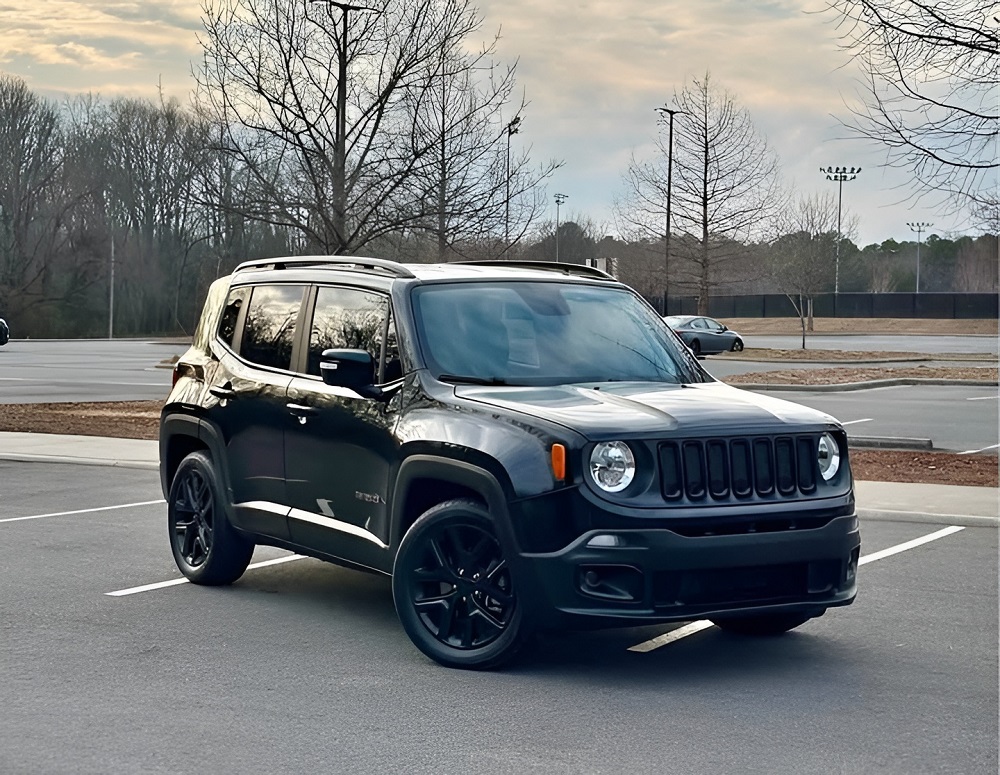
Hesitate off the line. Feel a bang into gear. Watch it hunt for the right ratio. That’s how Jeep Renegade transmission problems show up. Since 2015, most models run the ZF 9HP48 / 948TE nine-speed.
Early trucks stacked issues fast. Neutral-drop recall 16V-529. Harsh shifts, delay, and clunks from weak calibration. Some fail. Many just feel broken.
Confusion comes from overlap. The 2.4L Tigershark stumbles and makes the gearbox hunt. Bad mounts slam shifts. The shifter throws “Shift to Park” errors that mimic transmission failure.
Later years improved with software and the 1.3L turbo. The risk now sits in the used market, where the wrong year costs fast.
1. Separate the gearboxes before blaming the transmission
Most complaints trace back to the nine-speed, not the whole lineup
Search results point to one unit. The ZF 9HP48, sold as the 948TE, drives most complaints. It handles both the 2.4L Tigershark and later 1.3L turbo in North America. Same gearbox, same patterns, hesitation, bang shifts, and gear hunting.
This transmission stayed in place through 2023. Software changed. Hardware stayed largely the same. That keeps the nine-speed at the center of every Renegade transmission discussion.
Other transmissions exist, but they follow different failure paths
The Renegade shipped globally with several gearboxes. The 6-speed manual avoids most of the nine-speed drama. Failures stay simple, clutch wear, throwout bearing noise, and driver-dependent damage.
The Fiat C635 dual-clutch brings a different problem set. Dry clutches wear fast in stop-and-go traffic. Some units suffer bearing collapse from bad shimming. Repairs require precise setup, or the replacement fails early.
The Aisin 6-speed automatic shows up in hybrids and some markets. It uses a torque converter and simpler internals. Fewer complaints, fewer surprises, and fewer catastrophic failures.
The transmissions that actually matter in a problems discussion
| Market / powertrain | Transmission | Core problem pattern | Why it matters |
|---|---|---|---|
| North America 2.4L / 1.3T | ZF 9HP48 / 948TE 9-speed | Hesitation, harsh shifts, neutral events, shifter faults | Main source of complaints |
| North America 1.4T | 6-speed manual | Clutch wear, engagement issues | Simpler, lower-cost failures |
| Europe / global | C635 DDCT dual-clutch | Clutch wear, bearing failure, calibration quirks | Different failure pattern, wrong to compare |
| Hybrid / select markets | Aisin 6-speed automatic | Stable shifting, fewer major defects | Useful contrast, not a common U.S. concern |
2. The nine-speed design that created the hesitation everyone feels
Dog clutches drive the strange shift behavior
The ZF 9HP packs 9 gears into a tight transverse case. It uses two dog clutches instead of relying only on friction packs. These clutches lock with metal teeth, no slip allowed.
That design cuts size and weight. It also demands perfect timing. If shaft speeds don’t line up, the shift hits hard or pauses. That’s where the Renegade gets its signature hesitation.
The worst cases show up on the 4–5 upshift. That shift needs a dog clutch to engage cleanly. Miss the timing window, and the gearbox pauses, then slams.
Low-speed driving exposes the gearbox at its weakest point
City driving keeps this transmission busy. Constant throttle changes force rapid gear decisions. The TCM has to juggle torque cuts, clutch timing, and gear selection every few seconds.
Early calibrations struggled here. The gearbox hesitates leaving a stop. It may lunge after a delay or grab the wrong gear. Cold fluid makes it worse, slowing hydraulic response and throwing off timing.
Drivers feel it most in traffic and parking lots. That’s where the nine-speed works hardest and fails most often.
Wide gear spread adds complexity the software must control
The nine-speed uses a wide ratio spread. First gear is very low for launch and off-road crawl. Upper gears stretch out for fuel economy.
That range forces constant shifting. The transmission must decide quickly and precisely. Every shift depends on tight coordination between engine torque and clutch timing.
Miss that coordination, and the result shows up instantly. Hesitation, flare, or a hard bang into gear.
3. Early failures crossed into safety, not just bad manners
Neutral-drop recall exposed a real signal failure
Some 2015 Renegades could drop into Neutral while moving. That ties to Recall 16V-529. The issue sits in the transaxle range sensor harness.
Poor terminal crimps raise resistance. The TCM loses a clean gear-position signal. It triggers a fail-safe and commands Neutral to protect the hardware.
The fix combined software and parts. Reflash the PCM and TCM. Replace the affected harness when needed. Loss of drive at speed is a safety event, not a comfort issue.
Everyday symptoms look ugly but don’t always mean failure
Most owners report harsh 1–2 or 2–3 shifts. Others feel a pause, then a lunge from a stop. Cold starts bring clunks until fluid warms and pressure stabilizes.
Adaptive learning adds its own quirks. The TCM adjusts pressure and timing based on recent driving. In stop-and-go traffic, it can chase the wrong pattern and make shifts worse.
These behaviors feel severe. Many units keep operating for years without internal breakage. The line between bad behavior and true failure stays thin.
Symptom patterns split into issue vs. high-risk events
| Symptom | Likely source | Severity |
|---|---|---|
| Sudden shift to Neutral | Range sensor harness signal fault | High, safety-critical |
| Hard 1–2 or 2–3 bang | Calibration, solenoid timing, adaptive error | Moderate |
| Pause, then lunge from stop | Dog-clutch timing, torque cut delay | Moderate |
| Cold clunking | Thick fluid, delayed pressure response | Moderate |
| Limp mode with ratio codes | Internal clutch slip or hydraulic fault | High |
4. The shifter fault that fools owners into blaming the transmission
“Shift to Park” comes from the console, not the gearbox
Many Renegades throw a “Shift to Park” warning. The vehicle refuses to shut off or release the key. It feels like the transmission won’t land in Park.
The issue sits in the electronic shifter assembly. The module fails to confirm the Park position. The TCM and BCM see a mismatch and block shutdown.
This problem shows up across multiple years. It often gets misdiagnosed as internal transmission failure. The gearbox never touched the failure path.
Microswitch wear and solenoid faults drive the failure
The shifter uses internal microswitches to report position. Over time, contacts degrade and build resistance. The signal drops or flickers, and the system loses Park confirmation.
The shift-lock solenoid can bind. It may not release or fully engage. That traps the lever or prevents it from seating in the Park detent.
Debris makes it worse. Coins or dirt fall into the shifter track. The lever stops short of full engagement, and the module reads it as “not in Park.”
Fix path depends on whether it’s software or hardware
Some early units respond to a software update. TSB 21-054-15 calls for a reflash of the shift module on certain 2015 builds. That corrects signal interpretation without replacing parts.
Hardware failures require full assembly replacement. OEM shifter units run $550 to $850. Labor adds 1.5 to 2.5 hours, pushing total repair close to $800 to $1,200.
5. The engine that makes the transmission look worse than it is
Oil loss in the 2.4L triggers fake transmission symptoms
The 2.4L Tigershark burns oil on many Renegades. Drop the oil level, and the MultiAir system loses pressure. Intake valve control goes unstable, and the engine stumbles.
The transmission reacts to that chaos. It hunts for gears to keep the engine alive. Throttle response turns erratic, and shifts feel delayed or harsh.
Many owners chase the gearbox. The issue sits in the engine bay. Run low on oil long enough, and the drivetrain falls into limp mode with stored faults.
When engine faults mimic a failing gearbox
Low oil leads to power loss under load. The PCM cuts torque, then restores it unevenly. The TCM keeps changing gears to match a moving target.
Common patterns show up fast. Sudden downshifts, flare between gears, and refusal to hold a ratio. Some trucks log P1DD2 when torque requests don’t line up between PCM and TCM.
This chain confuses diagnosis. The transmission looks unstable, but it’s reacting to a bad engine signal.
Worn mounts turn normal shifts into hard impacts
Engine and transmission mounts wear early on some Renegades. The rubber softens and cracks. The drivetrain starts to move under load.
Every shift now feels worse. The engine rocks, then snaps back when the next gear engages. Drivers feel a hard bang and assume internal damage.
Mount replacement runs $200 to $600 depending on position and labor. Ignore it, and the false “bad transmission” feeling never goes away.
6. The model years that make or break your risk
2015 landed with the most problems and the least refinement
First-year Renegades carried the roughest version of the nine-speed. Calibration was unstable. Wiring faults triggered Recall 16V-529 with unexpected Neutral events.
Owners reported failures at low mileage. Harsh shifts, delay, and shifter faults stacked early. This year shows the highest complaint density and the weakest integration between engine and transmission.
Buying one without full records carries real risk. A single failure can push repair costs past $3,500 for a replacement unit.
2016–2018 improved on paper but stayed inconsistent in practice
Software updates reduced some harsh behavior. The hardware stayed the same. Many vehicles still hesitate in traffic and lunge from a stop.
Complaint volume stayed high, especially around city performance. Some units settle after updates. Others keep repeating the same patterns.
These years demand proof of updates and maintenance. Without records, the risk stays close to early models.
2019–2020 marked a transition with better torque and calibration
The 1.3L turbo entered the lineup. It delivers stronger low-end torque than the older 1.4T. That helps the transmission manage gear changes more smoothly.
Software continued to improve shift timing. Some of the worst hesitation and flare issues eased. The 2.4L still appears in these years and carries its oil-consumption problems.
These models sit in the middle. Condition and service history decide everything.
2021–2023 finally behave like a sorted package
Later Renegades benefit from years of calibration work. Dog-clutch timing improved. Shift logic became more predictable in traffic.
Complaint rates dropped compared to early years. Failures still occur, but far less often. Most units behave consistently when fluid and software stay current.
These years carry the lowest transmission risk. Replacement cost still lands between $3,500 and $5,500 when failure occurs.
| Model years | Transmission outlook | Risk level |
|---|---|---|
| 2015 | Recall exposure, unstable calibration | Highest |
| 2016–2018 | Improved software, still inconsistent | High |
| 2019–2020 | Better torque and tuning, mixed engine reliability | Moderate |
| 2021–2023 | Mature calibration, fewer complaints | Lowest |
7. What it costs when things go wrong
A fluid service buys time, not forgiveness
Fresh fluid can calm rough shifts. It helps clutch packs engage cleaner and reduces heat. On this transmission, that matters more than most.
But it will not fix worn clutches or leaking seals. If the unit already slips or bangs gears, fluid only masks it briefly. Expect $180 to $350 for a proper service with the correct spec fluid.
Skipping service accelerates wear. Burnt fluid leads to pressure loss and clutch damage.
Valve body and solenoids sit at the center of many failures
Most performance complaints trace back to hydraulic control. The valve body manages pressure, timing, and clutch engagement.
When solenoids stick or passages wear, shifts become unpredictable. You get flare, harsh engagement, or delayed response.
Repair costs typically land between $800 and $1,800. That depends on parts availability and labor access.
Software updates are cheap, but not always enough
Dealers often start with a reflash. It adjusts shift timing and clutch behavior. Some vehicles improve noticeably after updated calibration.
The cost ranges from $100 to $250. In many cases, it only delays deeper problems. Mechanical wear does not disappear with software.
Repeated updates without hardware repair signal a deeper issue.
Full transmission replacement hits hard
When internal damage spreads, replacement becomes the only option. That includes clutch pack failure, gear damage, or major hydraulic loss.
Remanufactured units cost between $2,800 and $4,000. Installed cost typically reaches $3,500 to $5,500 depending on labor rates.
Used units carry risk. Many come from vehicles with the same underlying problems.
Warranty coverage changes the outcome
Some failures fall under powertrain warranty. Early years may have received goodwill repairs or extended coverage in certain markets.
Out-of-warranty owners carry the full cost. That is where the Renegade becomes expensive quickly.
| Repair type | Typical cost range | What it actually fixes |
|---|---|---|
| Fluid service | $180 – $350 | Improves shift quality temporarily |
| Software update | $100 – $250 | Adjusts shift timing only |
| Valve body / solenoids | $800 – $1,800 | Restores hydraulic control |
| Full replacement | $3,500 – $5,500 | Replaces failed internal components |
8. How to keep the transmission alive longer
Short trips and stop-and-go driving do the most damage
This transmission struggles most at low speeds. Constant gear hunting builds heat and wears clutch packs faster.
City driving forces repeated clutch engagement. That creates friction and pressure spikes inside the unit. Highway miles are far easier on it.
If your driving is mostly short trips, expect faster wear. Heat is the silent destroyer here.
Fluid changes matter more than the manual suggests
Factory intervals often stretch too far. By the time fluid degrades, damage has already started.
A safer interval sits around 30,000 to 50,000 miles. Fresh fluid keeps pressure stable and reduces clutch slip.
Using the correct spec fluid is critical. The wrong fluid can change shift timing and damage internal components.
Software updates should not be ignored
Transmission behavior depends heavily on calibration. Updated software improves clutch timing and reduces harsh shifts.
Skipping updates leaves older, less refined logic in place. That increases wear over time.
Ask for update history before buying. A neglected system usually shows it in how it drives.
Driving style directly affects lifespan
Hard throttle at low speed stresses the system most. The transmission has to jump ratios quickly and manage torque spikes.
Smooth inputs reduce clutch shock. Let the gearbox settle before pushing it. Aggressive driving shortens life. Controlled inputs extend it.
Early symptoms should never be ignored
Small delays and light jerks are early warnings. They often show before major failure.
Ignoring them allows wear to spread. What starts as a minor hesitation can end in full replacement.
Catching problems early can keep repairs under $1,500 instead of crossing $4,000.
Sources & References
- Jeep® Renegade Parts and More
- 2023 Jeep® Renegade SPECIFICATIONS
- Safety Recall S55 / NHTSA 16V-529 Transaxle Range …
- Jeep Renegade – Wikipedia
- Jeep Renegade Problems: The Best (And Worst) Models To Buy – CarBuzz
- Jeep Renegade Review – More Fiat Than Jeep? – YouTube
- 9-Speed Automatic Transmission – ZF
- The World’s First 9-Speed Automatic Transmission Was Plagued With Problems – Jalopnik
- Jeep Renegade Reliability: Problems, Recalls & Complaints
- Honda 9-Speed Transmission Problems: Affected Models and Legal Help
- Problems and Specifications of ZF 9HP48 | PDF | Automatic Transmission – Scribd
- List of Chrysler transmissions – Wikipedia
- ZF 9HP transmission – Wikipedia
- ZF’s 9-Speed 9HP Transmission Puts Dog Clutches On The Leash | The Truth About Cars
- Renegade jolts while shifting : r/JeepRenegade – Reddit
- Transmission Solenoid Symptoms, Causes & Repair
- These Are Jeep Renegade Years To Avoid, According To Owners
- Unreliable Vehicles To Avoid: Jeep Renegade | Endurance Warranty
- 2015 Jeep Renegade Transmission Recall – Asbury Automotive Group
- Jeep Auto Transmission Problems: Here’s What You Can Do – Cline APC
- Transmission problem? : r/JeepRenegade – Reddit
- Hard shift issue : r/JeepRenegade – Reddit
- THIS BULLETIN SUPERSEDES SERVICE BULLETIN 21-032-15, DATED MAY 14, 2015, WHICH SHOULD BE REMOVED FROM YOUR FILES. ALL REVISIONS – nhtsa
- Map Title 21-025-20 – nhtsa
- Jeep Renegade Car is not shifting into park Inspection Costs – YourMechanic
- 2015-2023 Jeep Renegade Shifter Failures: The Ultimate Guide to …
- Jeep Renegade Car does not shift from park to drive Inspection Costs – YourMechanic
- Shift to Park – What is the actual fix? : r/volt – Reddit
- Jeep Renegade Problems & Years to Avoid Guide Review
- 2022 Jeep Renegade review, photos & specs | CarMax
- Symptoms of Transmission Solenoid Problems
- Fiat FTP C635 Dual Clutch DDCT Gearbox Faults & Repairs – Eco …
- 2020 Jeep Renegade Transmission | Larry H. Miller Casa Chrysler Jeep
- Jeep Renegade Transmission Fluid Change – YouTube
- Mastering Jeep Renegade Transmission Troubles: Expert Solutions from Cleveland Auto Repair
- How to Tell If Your Transmission Solenoid Is Failing
- 5 Signs Your Car Has a Bad Transmission Shift Solenoid (Only MECHANICS Know)
- Jeep Renegade Transmission
Was This Article Helpful?