
Overheats, cracks, then spits ceramic dust back into the engine. That’s how certain Kia catalytic converter recalls begin. Between 2012 and 2023, multiple Kia engines tangled emissions hardware with internal engine failure.
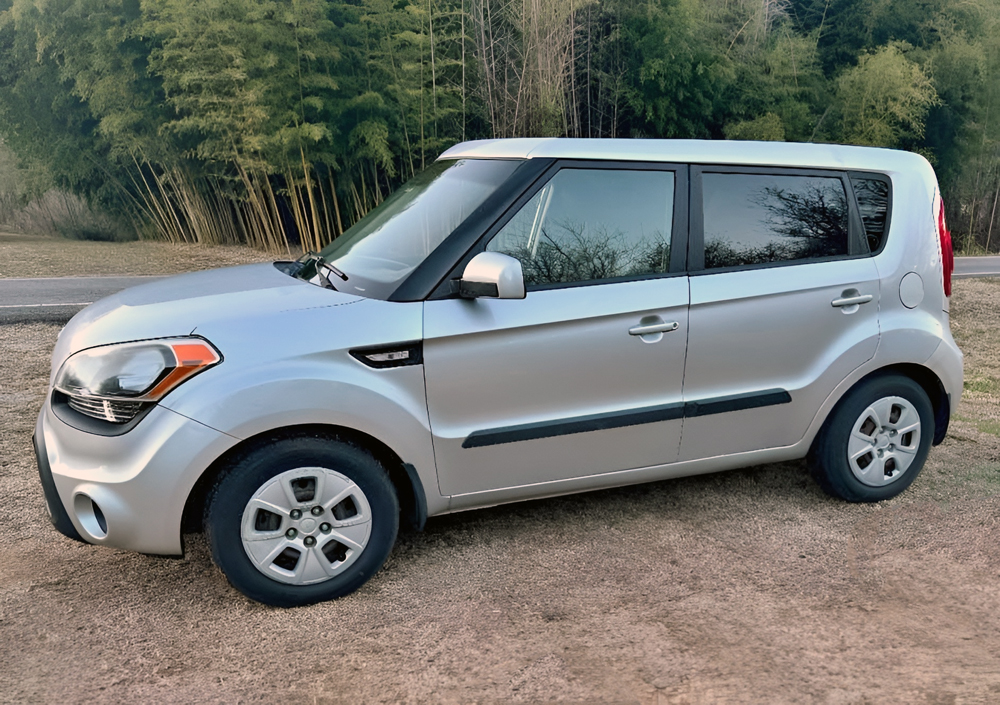
The 1.6L Gamma GDI in 2012–2016 Souls ran hot enough to damage its close-coupled converter under SC176 / 19V120. Later 2.0L Nu MPI engines in 2021–2023 Soul and Seltos models fell under SC336 / 25V099 for defective piston rings that burn oil and poison the cat.
Add KSDS and PNSS software updates, and the story shifts from melted converters to rod bearings, limp mode, and fire investigations. This guide explains how the failures start, how dealers diagnose P0420 and P1326, and when Kia owes a converter, a long block, or both.
1. How Kia’s catalytic converter recalls actually started
Gamma 1.6L ran hot and the software let it
Heat climbs fast in a close-coupled converter bolted inches from the exhaust ports. The 2012–2016 Kia Soul with the 1.6L Gamma GDI placed the catalyst in an extreme thermal zone. Exhaust gas temps can exceed 1,600°F under load.
Under 19V120 / SC176, Kia admitted the Catalytic Overheating Protection logic failed to control those spikes. The ECU did not trim fuel or retard timing soon enough. Prolonged high EGT cooked the ceramic honeycomb.
Sintering begins when the substrate structure fuses and collapses. Cells deform, flow drops, backpressure rises. A restricted cat drives exhaust temps even higher, creating a self-feeding thermal cycle that fractures the brick.
Ceramic dust in the cylinders and rods through blocks
Once the substrate breaks apart, fragments travel upstream during valve overlap. High cylinder pressure in GDI engines helps pull fine ceramic dust back into the chamber. That dust scores cylinder walls and wipes out ring seal.
Compression drops. Oil consumption climbs fast. Detonation starts as hot spots form on piston crowns.
Rod bearings take the hit first. Heavy knock shows up under load. If ignored, the connecting rod snaps and punches through the block. Hot oil sprays onto the exhaust manifold, the ignition source in documented engine fire cases tied to this recall.
Which Souls qualify under SC176
| Model | Engine | Model Years | Production Window | Recall | Kia Campaign | Core Defect |
|---|---|---|---|---|---|---|
| Kia Soul | 1.6L Gamma GDI | 2012–2016 | Jul 8, 2011 – Aug 11, 2016 | 19V120 | SC176 | COP logic failure, catalyst overheat |
| Kia Soul | 2.0L MPI | 2012–2016 | Various | None | – | No COP defect in this campaign |
VIN and engine code decide coverage. The 2.0L MPI Souls from those years do not fall under SC176. Symptoms alone do not trigger recall eligibility.
Dealers perform an ECU logic upgrade first. If P0420 is present and physical damage confirmed, they replace the converter. If rod noise or metal shows in oil, Kia authorizes a long-block replacement. Long-block assemblies retail above $7,000 before labor outside recall coverage.
2. Software flashes, hard parts, and when Kia owes an engine
Updated ECU logic clamps exhaust heat before the brick melts
Kia’s SC176 fix starts with an ECU reflash. The update revises fuel trims, spark timing, and load targets under high EGT. When exhaust temps spike, the ECU now enriches mixture and retards timing sooner.
Target is to keep catalyst temps below structural failure range. Prolonged operation above 1,600°F accelerates substrate sintering. The flash takes about 1 hour with KDS, battery voltage must hold above 12.3 volts during programming.
The update prevents new thermal events. It does nothing for a converter already cracked or an engine already scored.
When P0420 means cat only and when it means engine damage
P0420 flags low catalyst efficiency. On a recalled Soul, techs must decide if the cat failed alone or after internal damage. They scan for misfire codes, knock history, and oil level trends.
| Finding Set | Issue | Dealer Action |
|---|---|---|
| P0420 only, no noise, no misfire history | Thermal substrate damage | ECU flash + OEM converter under SC176 |
| P0420 + heavy knock + metal in oil | Substrate ingestion, rod/bearing damage | ECU flash + long-block + new converter |
| P0420 + P030X codes | Raw fuel overheat from misfire | Repair misfire first, then reassess converter |
Downstream O2 data seals the call. A flat, steady rear O2 with active upstream switching means the cat still stores oxygen. Matching waveforms confirm the brick has lost oxygen storage capacity.
OEM converter replacement can run $2,200 to $2,600 installed outside recall coverage.
KSDS, P1326, and the limp-home ceiling
Kia added the Knock Sensor Detection System across Gamma, Nu, and Theta engines. KSDS recalibrates the knock sensor to detect rod bearing vibration patterns. When it sees abnormal frequency, it sets P1326 and drops the engine into limp mode.
RPM caps around 1,800 to 2,000. Throttle response dulls. The goal is to prevent a thrown rod that can puncture the block and spray oil on hot exhaust.
KSDS installation is required for extended engine coverage under the E2 settlement. Without that update on record, claims for short-block or long-block replacement can be denied past the standard warranty window.
3. SC336 piston-ring defect and oil-fed converter death
Nu 2.0 MPI rings wore early and started burning oil
SC336 targets 2021–2023 Soul and Seltos models with the 2.0L Nu MPI engine. The defect originates from improperly manufactured oil control rings from a third-party supplier. Ring tension and surface finish fell outside spec.
Cylinder walls score as the rings lose seal. Oil consumption climbs well beyond 1 quart per 1,000 miles in severe cases. Spark plugs foul, and combustion stability drops.
| Campaign | Models | Engine | Model Years | Production Window | Primary Defect |
|---|---|---|---|---|---|
| SC336 | Kia Soul | 2.0L Nu MPI | 2021–2023 | Jul 2, 2020 – Apr 19, 2022 | Defective oil rings, bore scoring |
| SC336 | Kia Seltos | 2.0L Nu MPI | 2021–2023 | Jul 2, 2020 – Jul 1, 2022 | Defective oil rings, bore scoring |
Excess oil in the chamber feeds straight into the exhaust stream.
Oil ash coats the brick and ends oxygen storage
Burned engine oil leaves metallic ash on the catalyst substrate. Ash blocks active sites in the washcoat and reduces oxygen storage capacity. Rear O2 sensor voltage begins to mirror the front sensor.
Unlike thermal melt, ash poisoning builds slowly. Backpressure may remain normal early on. P0420 appears once efficiency drops below threshold.
Replace the converter without fixing ring wear, and the new brick loads with ash again. Repeat failures can show up in under 10,000 miles if oil use stays high.
PNSS cold-soak test decides who gets a long block
SC336 adds a stricter diagnostic path. Vehicle must sit untouched for 24 hours before testing. Cold start captures vibration data at peak mechanical stress.
| Step | Result | Dealer Action |
|---|---|---|
| 24-hour cold soak | Engine fully cold | Required before vibration test |
| PNSS vibration test | Pass | Install PNSS software, monitor |
| PNSS vibration test | Fail | Approve long-block replacement under SC336 |
| Post-repair inspection | Catalyst contaminated | Replace converter as needed |
PNSS flags abnormal ring and cylinder vibration patterns. Failed engines receive long-block replacement under recall. Long-block assemblies for the Nu 2.0 retail above $6,500 before labor outside campaign coverage.
4. Reading P0420 the right way on recalled Kia engines
Separate dead catalyst from upstream damage
P0420 sets when the rear O2 sensor sees too much switching. The ECM compares upstream and downstream oxygen signals. If the rear waveform mirrors the front, oxygen storage is gone.
On SC176 and SC336 vehicles, that loss can originate from heat or oil. Techs must pull freeze-frame data. They check fuel trims, misfire counters, and oil level history before condemning the converter.
Replace the brick without fixing the underlying problem, and the code returns.
Misfires, rich mixtures, and coolant leaks torch converters
Raw fuel entering the exhaust spikes catalyst temperature fast. A single-cylinder misfire under load can push localized temps past 1,700°F. Substrate melt can happen in minutes with a flashing MIL.
| Upstream Problem | Damage Path | Common Clue |
|---|---|---|
| P030X misfire | Raw fuel ignites in catalyst | Flashing MIL, sulfur smell, glowing cat |
| Rich condition, bad O2 | Sustained over-fueling, long heat exposure | High negative trims, lazy O2 switching |
| Oil burning rings/seals | Ash buildup, blocked washcoat | Blue smoke, oily tailpipe |
| Coolant leak | Silicate contamination of washcoat | White smoke, coolant loss |
Coolant intrusion leaves white deposits on the substrate. Oil ash leaves gray crust. Melted cores show collapsed honeycomb and heavy backpressure.
A restricted converter can raise manifold pressure above 3 psi at idle. That chokes flow and drives exhaust heat even higher.
Diagnostic sequence for Soul and Seltos under recall
Start with VIN and open campaign check. Active SC176, SC336, or KSDS status changes the repair path.
| Step | Check | Why It Matters |
|---|---|---|
| 1 | Verify open recalls | Determines eligibility for free repairs |
| 2 | Scan for P030X, P1326 | Flags misfire or bearing damage |
| 3 | Check oil level and consumption rate | Identifies ring wear poisoning the converter |
| 4 | Compare O2 waveforms | Confirms true catalyst efficiency loss |
| 5 | Listen for rod knock at cold start | Signals internal damage beyond the converter |
Cold-start knock that fades warm often points to bearing clearance issues. Active P1326 with limp mode caps RPM near 2,000 and demands immediate engine inspection. Ignore that path and a thrown rod can destroy the block in seconds.
5. Warranty lines, emissions law, and where owners fall into the gap
Federal emissions coverage stops at 8 years or 80,000 miles
Catalytic converters fall under federal emissions warranty. Coverage runs 8 years or 80,000 miles, whichever comes first. That includes the converter and engine control module.
Kia’s powertrain warranty runs 10 years or 100,000 miles for original owners. It covers internal engine parts, not emissions components like the cat. That split creates a gap when the engine defect poisons a converter after 80,000 miles.
| Coverage Type | Term | Covers | Common Gap |
|---|---|---|---|
| Federal emissions | 8 yr / 80,000 mi | Catalytic converter, ECM | Expires before engine damage shows |
| Kia powertrain | 10 yr / 100,000 mi | Engine internals | Does not include emissions hardware |
| SC176 / SC336 campaigns | Recall specific | ECU flash, engine, sometimes cat | Requires campaign eligibility |
Outside recall coverage, OEM converter replacement often lands between $2,200 and $2,600 installed.
Engine fire settlements and the KSDS requirement
Kia’s E2 settlement extends engine coverage up to 15 years or 150,000 miles for qualifying vehicles. That coverage applies to short-block and long-block damage tied to rod bearing wear.
KSDS installation must be completed by the required deadline. No KSDS on record weakens later claims. Dealers check software status before approving engine replacement tied to P1326 events.
Rod bearing failure that triggers limp mode often qualifies. Converter damage linked to that internal failure may qualify as consequential damage.
Reimbursement fights and arbitration leverage
Owners who paid out of pocket can seek reimbursement under settlement terms. Documentation must show VIN, mileage, and itemized repair lines. Scan reports with P1326, P0420, or bearing noise notes strengthen claims.
| Expense Type | Often Covered? | Required Proof |
|---|---|---|
| Engine long-block | Yes, if settlement eligible | Invoice, VIN, mileage, diagnosis |
| Catalytic converter | Case dependent | Invoice, DTC record, linkage to engine |
| Towing and rental | Often, if failure covered | Receipts and repair order numbers |
Denied claims can move to BBB arbitration under settlement terms. Arbitration decisions are binding and often depend on proof of completed KSDS and recall updates.
6. Backorders, theft, and why recall repairs stall for months
Converter and long-block shortages choke recall flow
Global parts shortages hit catalytic converters hard in 2024–2025. OEM units depend on platinum, palladium, and rhodium pricing swings. Allocation tightened as theft claims spiked nationwide.
Engines approved under SC176 or SC336 often wait in queue. Dealers report limited long-block inventory per region. Some owners sit 4 to 12 weeks after approval.
| Component | 2024–2025 Status | Owner Impact |
|---|---|---|
| OEM catalytic converter | Frequent backorder | Vehicle stuck with P0420 or restricted |
| Engine long-block | Limited allocation | Weeks to months waiting after approval |
| O2 sensors, gaskets | Generally available | Rarely the repair bottleneck |
Safety recalls require OEM parts. Aftermarket substitutions void campaign repair eligibility.
Aftermarket converters create warranty friction
Cheap converters often use lower precious metal loading. Low loading reduces oxygen storage capacity and shortens lifespan. GDI engines run hotter and expose weak washcoat quickly.
Fitment can be poor on close-coupled Gamma setups. Exhaust leaks at the flange skew O2 readings and retrigger P0420.
Install a non-OEM converter during an open recall, and reimbursement claims can fail. Dealers document prior repairs before approving recall coverage.
Limp mode, rentals, and the buyback tipping point
KSDS limp mode caps RPM near 2,000. Highway merging becomes unsafe under full load. Sustained limp operation risks further bearing damage.
Some recall repairs qualify for rental or loaner coverage. Proof requires an open campaign and approved repair order.
Extended downtime beyond 30 days in some states opens lemon-law leverage. Multiple documented repair attempts tied to the same defect strengthen buyback negotiations under state statutes.
7. Keep the new converter alive and stop the cycle
Oil control decides converter life on Gamma and Nu
Fuel dilution thins oil in GDI engines. Thin oil wipes bearings and accelerates ring wear. Ring wear feeds oil into the exhaust stream.
Shorter oil intervals cut that chain early. Many independent shops service these engines every 5,000 to 6,000 miles with full synthetic 0W-20. Owners who stretch past 7,500 miles see higher consumption rates.
| Task | Real-World Interval | Impact on Cat and Engine |
|---|---|---|
| Full synthetic oil change | 5,000–6,000 miles | Reduces ring wear and fuel dilution |
| Oil level check | Every fuel fill | Catches high consumption early |
| Air filter replacement | 15,000–30,000 miles | Stabilizes mixture control |
Running low on oil by 1 to 2 quarts can spike bearing temperature fast.
End misfires fast or melt the brick again
A flashing MIL signals active misfire. Unburned fuel ignites inside the converter and drives extreme heat. Substrate collapse can occur in under 10 minutes of highway load.
Coils, plugs, and injectors must stay in spec. Worn plugs widen gap and increase misfire risk under boost and heavy load. Replace plugs on Gamma GDI engines around 45,000 to 60,000 miles. Ignore misfire events, and converter core temperature can exceed 1,700°F.
Shop habits that prevent repeat engine damage
Borescope the exhaust manifold before installing a new engine or converter. Ceramic debris left upstream can destroy fresh parts within hours. TSB guidance requires debris inspection after catastrophic failure.
Use correct torque on manifold and downpipe fasteners. Exhaust leaks skew O2 readings and trigger false efficiency codes. Maintain battery voltage above 12.3 volts during ECU flashes to avoid PCM damage. Skip these steps and the repair fails before 10,000 miles.
Sources & References
- Kia Catalytic Converter Recall – Asbury Automotive
- Part 573 Safety Recall Report 19V-120 | NHTSA
- 2016 KIA SOUL Recalls – California Lemon Law
- important safety recall – nhtsa
- RENOTIFICATION IMPORTANT SAFETY RECALL – nhtsa
- safety recall campaign – engine control unit (ecu) logic improvement (sc176) – nhtsa
- Attention: All Kia Parts & Service Managers – nhtsa
- sc176 – 2012-2016 my kia soul engine control unit (ecu) logic upgrade – nhtsa
- Kia Code P1326 and your Service Options at Emich Kia in Denver
- 2011-2018 MY OPTIMA, SORENTO & SPORTAGE ECU UPGRADE (KNOCK SENSOR DETECTION SYSTEM SOFTWARE) PRODUCT IMPROVEMENT CAMPAIGN – ClickOrlando
- Knock Sensor Detection System (KSDS) Logic improvement … – nhtsa
- Knock Sensor Detection System – ECU Logic improvement (PI1802) – nhtsa
- P1326 Code: What Is It And How To Fix It – Car Talk – Panda Hub
- nu 2.0l gdi – knock sensor detection system (ksds) ecu logic improvement (pi2106) – nhtsa
- knock sensor detection system (ksds) ecu logic improvement (pi2107) – nhtsa
- Frequently Asked Questions – Kia E2 Settlement
- Kia Engine Class Settlement
- INFORMATION ABOUT THE ENGINE IN YOUR KIA VEHICLE
- Does the KSDS update extend the power train warranty? : r/kia – Reddit
- Hyundai / Kia Engine Fire Hazard Class-Action Settlement – Hagens Berman
- Find Existing Kia Soul Car Recalls – DealerRater
- Kia Global Information System – TSB – nhtsa
- ADVANCE DEALER NOTICE OF SAFETY RECALL – nhtsa
- Kia Recall: Engine Piston Rings Manufactured Incorrectly Resulting In Engine Failure
- p0420 Code – Catalyst System Low Efficiency – 13.2% | KBB
- P0420 Code: What It Means & How to Fix It (2026 Guide) – Rohnert Park Auto Repair
- P0420 Code: Catalyst System Efficiency Below Threshold (Bank 1) – CarParts.com
- engine inspection/replacement and ecm logic improvement (sc336) – nhtsa
- Cost to Replace a Catalytic Converter (2026) | ConsumerAffairs®
- Kia Recalls Nearly 75,000 Sorento Vehicles Over Lighting Problem – autoevolution
- Is my muffler guy being honest about the catalytic converter backlog? : r/AskLosAngeles
- Should I truly be worried about the backorder for parts wait time? : r/kia – Reddit
- Is the Catalytic converter back order? : r/askcarguys – Reddit
- Catalytic Converter Warranties in California: What You Need to Know – Hottexhaust
- Kia Optima Catalytic Converter Replacement Cost Estimate – RepairPal
- Catalytic Converter Cost: Repairs & Replacements – SoFi
- P0420 23 Sportage : r/kia – Reddit
- Catalytic Converter Failed at 89K – Kia Refused Warranty – Reddit
- Frequently Asked Questions (FAQs) – Lancaster Kia
- Frequently Asked Questions – Kia Engine Settlement
- Kia E2 Class Action – BBB National Programs
- Kia Global Information System – TSB – nhtsa
- nu 2.0l gdi – knock sensor detection system (ksds) ecu upgrade (pi2002b) – nhtsa
- updated ksds software installation (sc218a) – OEMDTC
- P0420 error code popped up after I filled with premium, dealer says it’s the catalytic converter. Any tips? – Reddit
- KSDS-Knock Sensor Detection System- P1326 is a scam so Kia Hyundai can dodge responsibility & rip us off. – Reddit
- Catalytic Converter Issue and I need help!!!! : r/KiaSoulClub – Reddit
Was This Article Helpful?