Millions of Kia Optima owners got more than they bargained for—engines stalling without warning, oil pressure lights flickering, and in some cases, smoke from under the hood. What looked like a design win with the Theta II engine turned into a massive repair and recall operation that’s still playing out years later.
The trigger for the crisis? Metal shavings left behind during manufacturing clogged the crank’s oil passages, starving the bearings of lubrication. Once wear set in, the fix wasn’t cheap or fast.
Kia’s solution was the Knock Sensor Detection System (KSDS), a software update that listens for early signs of failure and forces the car into limp mode. But for some owners, the warning came after the damage had already been done.
If your Optima falls into the affected range, you could be eligible for a free engine replacement, a 15-year extended warranty, or cash reimbursement—but only if you act before the deadlines. This guide breaks down every step, recall, and claim path you need to know.
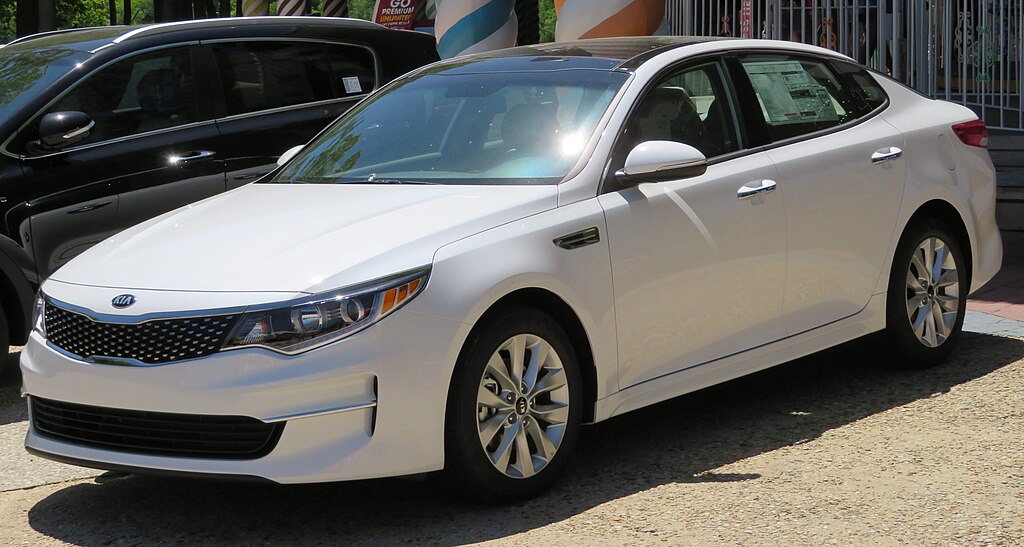
1. What the Sensor Sees—and What It Missed
Knock Sensor vs. the Real Problem
The knock sensor’s job is simple on paper—listen for the telltale ping of abnormal combustion. But in this case, the engine’s actual failure didn’t start with knocking in the cylinders.
It started with debris left behind in the crankshaft’s oil passages. That starved the connecting rod bearings of lubrication, and eventually, those bearings began to wear out fast.
So while the knock sensor wasn’t broken, it wasn’t designed to detect this kind of mechanical death spiral. That’s why Kia had to reprogram its entire detection strategy.
How the KSDS Software Actually Works
Kia’s Knock Sensor Detection System (KSDS) isn’t just a firmware tweak—it’s a defensive system designed to catch failing rod bearings early. It monitors vibration signatures coming from the crankshaft. Once it hears that low-frequency knock—typically 2–3 Hz under load—it flags the problem.
Here’s what happens next:
• The car drops into limp mode. You’re capped at around 65 mph and 2,000 RPM.
• The MIL (check engine light) starts blinking continuously.
• A diagnostic trouble code, P1326, gets stored in the ECU.
• Freeze-frame data gets logged to show engine conditions at the time of the fault.
The goal? Force the driver to slow down and head straight to the dealer before catastrophic failure. This system doesn’t prevent the wear—it just tries to catch it in time. For many owners, it was too little, too late.
2. A Decade of Trouble: How the Recalls Unfolded
Kia didn’t flip a switch and fix the problem overnight. What happened instead was a years-long rollout of recalls, service campaigns, and software updates—each one reacting to a deeper layer of the same engine flaw. Below is a condensed timeline showing just how wide this web spread:
| Date | Campaign No. | Model Years | Engine | Action Taken | Risk |
| Sep 2015 | 15V-XXXX | ’11–’14 Optima 2.4L / 2.0T | Theta II GDI | First rod-bearing recall | Stall / fire |
| Oct 2018 | 18V907 | ’11–’15 (w/ engine replaced) | Various | Fuel pipe re-torque | Fuel leak fire |
| Dec 2020 | 20V750 | ’11–’13 Optima Hybrid | Nu Hybrid | KSDS re-notification | Stall / fire |
| Oct 2021 | 21V844 | ’17–’18 Optima HEV & PHEV | Nu Hybrid | Engine test + KSDS | Stall / fire |
This table doesn’t even cover the full scope—Canada, the EU, and Australia each had parallel campaigns, often under different names. Some began as quiet “Product Improvement Campaigns” before being escalated under NHTSA pressure.
What’s clear is this: the issue spanned nearly every powertrain variation in the Optima lineup between 2011 and 2018, and Kia’s response evolved as owners and regulators pushed back.
3. What Went Wrong Under the Hood
Kia’s problem wasn’t just one faulty part—it was a chain reaction of internal design flaws and manufacturing shortcuts that quietly stacked the deck against these engines from the start.
Debris Left Behind: Machining Residue Choked Oil Flow
At the factory, tiny metal shavings left behind from engine block machining weren’t always cleared out. These particles often settled in the crankshaft’s oil passages, right where lubrication to the connecting rod bearings is most critical. Once blocked, those bearings were left starved for oil.
The Bearings Wore Faster Than They Should
Heat cycling under real-world driving conditions began to break down the bearing surface, especially under high load. Over time, these bearings developed surface scoring. The engine didn’t seize immediately, but the damage built slowly—until a knock, oil pressure drop, or catastrophic failure gave it away.
Why Hybrids Took Longer to Fail
For Optima HEV and PHEV models, symptoms didn’t always show up early. Because these drivetrains use engine assist differently—lower sustained RPMs, frequent start-stop cycles—early signs were often delayed. But when they did hit, it was often without much warning.
4. Early Red Flags and What’s at Risk
These weren’t subtle issues. When the rod bearings in Kia’s Theta II engines started to go, they made themselves known—just not always in time. Here’s what owners started noticing before things spiraled.
That Low-Frequency Knock Is Telling You Something
Many drivers first heard a metallic tapping—usually between 2 to 3 hertz—when accelerating or under load. It wasn’t always loud, but it was rhythmic and got worse fast. That knock was the sound of bearings eating themselves alive.
Oil Pressure Light Flickering at Idle
Once those oil passages got restricted or the bearing wear advanced, pressure dropped, especially at idle. A flickering oil lamp on the dash was often the only visual warning before things turned serious.
The MIL Blinking After the Software Update
After the KSDS update, the check engine light would start blinking constantly if it detected those bad bearing vibrations. That blinking light wasn’t a glitch—it was your last warning before Limp Mode kicked in.
Smoke, Burnt Oil Smell, or a Fire Risk
In severe cases, engine oil leaked onto hot components. Some owners smelled burnt oil. Others saw light smoke. A few lost the car entirely—engine fires were reported, and it wasn’t just theory. That’s why some campaigns even advised owners to park outside.
5. What Happens When You Bring It In
The recall fix wasn’t just a quick software flash. It came with multiple steps, and depending on what the dealer found, it could mean a full engine replacement.
The 3-Step Dealer Process Owners Faced
Every affected Optima had to go through a standard sequence:
• First, dealers performed the KSDS software update. That alone took about an hour.
• Next came the bearing noise test using a specialized electronic stethoscope. This part usually took two hours.
• If the test picked up telltale knock frequencies, Kia authorized a full long-block engine replacement. That’s an 8–10 hour job, and not all dealerships could turn it around quickly.
This wasn’t a one-size-fits-all repair—it hinged on whether your engine was already damaged when you showed up.
Engine Replacement? Free—But Only at the Dealer
If the bearing test failed, the engine got swapped at no charge. But here’s the catch: all work had to be done at an authorized Kia dealership. Take it to an independent shop, and you’re footing the bill—even if your VIN was covered.
What About Loaners and Towing?
Most dealers offered free towing if your vehicle was in Limp Mode or undrivable, and many provided loaner cars during the wait. But this varied widely—some owners got a rental, others were told to wait it out. The inconsistency left a lot of people frustrated.
6. Extended Coverage… with Strings Attached
The recall didn’t just patch the problem—it reshaped the warranty landscape for Optima owners. But this isn’t a blanket extension. It comes with conditions that could leave some out in the cold.
15 Years, 150,000 Miles—If You Qualify
Once the KSDS software was installed, Kia offered an extended powertrain warranty for the engine long block: 15 years or 150,000 miles, whichever came first. But to keep that coverage, you had to show regular oil changes with proper documentation. No service records? No coverage.
Even then, certain submodels like the HEV and PHEV were eligible for this extended protection even without the KSDS update, mainly due to the later timing of their recalls (like 21V844).
Separate Coverage for Fuel Pipe Recall Repairs
Owners who had their engines replaced under the earlier 18V907 recall also received coverage on the high-pressure fuel pipe for 15 years with unlimited mileage—but only if the engine had already been replaced during an earlier campaign.
This warranty maze created confusion. Many owners thought they were protected, only to find out they’d missed a requirement buried in a footnote.
7. Not All Fixes Are Created Equal
Kia didn’t start with recalls. The first steps looked more like a PR move than a safety push, and that blurred the lines for a lot of owners.
Safety Recall vs. “Product Improvement” – Why It Matters
Recalls are backed by law. They trigger owner notifications, reimbursement rights, and strict deadlines. But when Kia first rolled out the Knock Sensor Detection System (KSDS), it wasn’t under a recall. It was branded a Product Improvement Campaign (PIC)—specifically, bulletin PI1802.
That distinction let Kia delay formal obligations like loaners, refunds, and engine replacements. It also meant many owners weren’t notified at all.
Things changed only after pressure from NHTSA, especially for hybrid and plug-in hybrid Optimas. That’s when Kia converted parts of the campaign—like 21V844—into full safety recalls.
What Owners Got Depending on the Label
| Label | Notification Required? | Free Engine Replacement? | Extended Warranty? |
| Safety Recall (e.g. 21V844) | Yes | Yes (if KSDS detects wear) | Yes (15yr/150k mi) |
| PIC (e.g. PI1802) | No | Not guaranteed | Only if update done |
Many owners who ignored or missed the PIC found themselves ineligible for reimbursement later—despite having engine damage that the update was supposed to detect.
8. How Far Did the Fire Spread? A Global Look at the Recall
This wasn’t just an American problem. The Optima’s engine saga made waves in Canada, rippled through Europe, and lit legal fires in Australia.
Canada: Similar Problems, Different Labels
In Canada, the campaign took shape under SC026, and Transport Canada assigned recall #2021666. While the root issue mirrored the U.S. (engine stalling and fire risk), owners up north often didn’t receive the same volume of dealer outreach. Still, the same software update—KSDS—was pushed through dealers, and the extended engine warranty followed suit.
Europe: Dealer-By-Dealer, No Blanket Fix
Across the EU, Kia issued technical bulletins, but no pan-European recall exists as of early 2025. Some owners in Germany and France reported dealership updates and repairs, but without a formal recall notice, many fell through the cracks. Warranty extensions were often case-by-case and inconsistent.
Australia: Class Action in Full Swing
Things turned more aggressive in Australia. Owners of the 2010–2015 TF Optima launched a class-action lawsuit, citing widespread engine failures and poor corporate response.
The campaign gained traction at kiaengineclassaction.com.au, and while Kia didn’t issue an official national recall early on, the pressure forced broader coverage of repairs and more formal acknowledgments of long-block replacements.
Global, But Uneven
One issue that ties all these regions together is connecting rod bearing failure. But the response? That’s been anything but uniform. If you’re outside the U.S., it’s a roll of the dice—what you get depends on how vocal your regulators and fellow owners have been.
9. Class Actions, Deadlines, and the Fine Print That Matters
When enough engines fail and enough drivers get left with the bill, courtrooms get involved. That’s exactly what happened with the Optima.
U.S. Settlement: Engine Litigation II
Owners of 2011–2016 Optima Hybrids and 2017–2020 HEV/PHEV models were rolled into the Engine Litigation II settlement. The deal promised:
•15-year warranty coverage for long-block failures.
•Reimbursement for past repairs, rentals, and towing—if you saved the receipts.
• Compensation for trade-in losses or reduced resale value.
But here’s the kicker: to get the most out of it, you had to install the KSDS update by November 4, 2023. No update? Some benefits vanished.
Claims Deadline: July 8, 2024
That’s the hard stop for most reimbursements. Submit your claim, attach your paperwork, or you’re out. Many owners missed out simply because they didn’t realize a class action even existed.
Australia: Legal Heat Still Rising
Australia’s class action, while still ongoing, focuses on the same engine issues—rod-bearing wear, failure, and alleged corporate negligence. Owners are pushing for broad compensation, but no firm deadline had been published by early 2025.
One Catch After Another
What you get depends on what you did—and when. Missed software updates, poor documentation, or waiting too long can all mean less money back in your pocket. If you’re eligible, file now—before that door slams shut.
10. What Every Owner Should Do—Before It’s Too Late
If you’re driving a Kia Optima from the affected years, there’s no room for guesswork. Here’s how to cover your bases and claim what’s yours.
Check Your VIN—Don’t Assume You’re in the Clear
Use the NHTSA recall lookup or Kia’s owner portal to see if your car is flagged. Even if you’ve been to the dealer before, new campaigns may have been added.
Book That KSDS Update Now
No update means no warranty extension. Don’t wait for a warning light—call your dealer, mention the recall, and get it flashed.
Round Up Every Oil Change Receipt You’ve Got
Kia doesn’t mess around with maintenance records. If you want engine coverage or reimbursement, your service history better be airtight. Cloud backup helps.
If You See a Blinking Check Engine Light—Tow It Free
P1326 means the KSDS has triggered. Don’t drive it. Kia will tow it to the dealership on their dime. And yes, they’re supposed to give you a loaner if the engine’s toast.
Paid for Repairs Already? File Your Claim
Visit the settlement site, fill out the forms, and upload your documents. Don’t leave money on the table because you forgot a receipt or missed a deadline.
11. What’s Still Unfolding Behind the Scenes
Kia might have issued fixes and offered extended warranties, but there’s still smoke behind the curtain.
NHTSA Still Has Eyes on the Fire Risk
The investigation labeled PE22-003 is ongoing. It zeroes in on post-recall engine fires, including some that occurred even after the KSDS update. Depending on what NHTSA finds, another recall isn’t off the table.
Could Valve Gunk Spark the Next Wave?
There’s buzz in owner forums about carbon buildup on GDI valves causing misfires and long-term damage. No recall yet—but if you’re out of warranty, a cleaning job could cost you.
Engine Backlog Still Bottlenecked
With thousands of long blocks on order, some dealers are stretched thin. If your engine fails and a replacement isn’t available, you could be in for a wait, sometimes weeks. Loaners help, but only if the dealer has one available.
Wrapping It Up: What Every Optima Owner Should Walk Away With
This recall wasn’t just about a software update—it was Kia’s response to a deeper engine flaw that could leave you stranded or worse. Whether you drive a 2011 hybrid or a 2018 plug-in, the risks were real, and the fixes came with conditions.
If your Optima qualifies, don’t wait. Get the KSDS update. Keep every oil-change receipt. Check your VIN regularly. And if something still smells off—literally or mechanically—press your dealer and reference the recall codes.
Staying ahead of this issue means more than getting the update. It means knowing what Kia offered, what they didn’t, and how to hold them accountable if the engine starts knocking again.
Was This Article Helpful?