
Jerk off the line. Watch RPM flare with no push. Feel the shift hang too long. That’s how many Kia Soul transmission problems start.
Since 2010, the Soul has run 4-speed automatics, 6-speeds, a 7-speed dry DCT, and now the IVT. Each swap changed how it drives and how it fails.
Some years cruise quietly past 150,000 miles. Others flash P0730 and limp. Let’s sort the safe bets from the transmission traps.
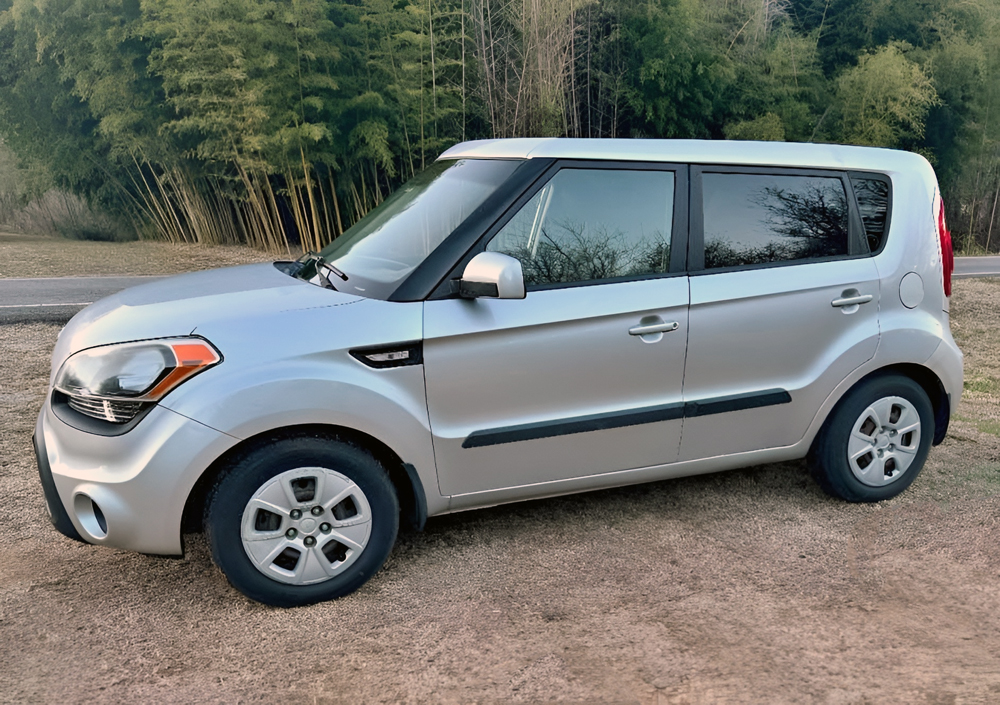
1. The Soul’s transmission history shapes every failure pattern
First generation ran simple hardware and failed the old-fashioned way
Launch the 2010 Soul with a 4-speed automatic and you get basic hydraulic control. No adaptive clutch maps. No simulated ratios. Line pressure moves through solenoids and valves the way automatics have for decades.
The 1.6L Gamma made 124 hp and 115 lb-ft. The 2.0L Beta II pushed 140 hp and 137 lb-ft. Those numbers never stressed the gearbox hard. Most failures originate from aging solenoids, worn valve bodies, or fluid neglected past 100,000 miles.
In 2012, Kia swapped in a 6-speed automatic behind the 1.6L GDI and 2.0L Nu. Closer ratios improved cruise RPM and fuel economy. Early builds showed harsh 1–2 shifts and odd downshifts on light throttle. Calibration updates fixed many cases, but some units kept slamming until fluid service or valve body work.
Repair math stays reasonable here. A used 4- or 6-speed assembly runs $400 to $800. A new OEM unit ranges from $1,800 to $2,400 plus $500 to $800 labor.
Second generation split into steady 6-speed autos and heat-prone DCT Turbos
From 2014 to 2019, the 6-speed automatic carried most Souls. The 2.0L Nu GDI made 164 hp and 151 lb-ft. Torque stayed within the gearbox’s design window. Catastrophic failures remained uncommon.
Shift complaints still surfaced. Some drivers reported delayed engagement into Drive after cold starts. Others felt flare between 2nd and 3rd under light throttle. Valve body wear and outdated TCM logic usually sat at the center.
Then 2017 Turbo models changed the equation. The 1.6L Turbo-GDI produced 201 hp and 195 lb-ft. That torque fed a 7-speed dry dual-clutch transmission. No torque converter. Two dry clutch packs handled launch and gear swaps.
Dry clutches generate heat during low-speed slip. Heavy traffic, hill holds, and creeping in parking lots spike temperature fast. Kia bulletin TRA 083 outlines a creep test and dual-clutch replacement path for confirmed judder. Clutch assemblies and labor can push total DCT repairs to $2,200 to $6,000.
Third generation moved to IVT and introduced chain-driven ratio failures
The 2020 redesign replaced the 6-speed auto with the Intelligent Variable Transmission behind the 2.0L Nu MPi. Output settled at 147 hp and 132 lb-ft. Fuel economy climbed to 27 mpg city and 33 mpg highway.
The IVT uses a chain-belt running between variable pulleys. Internal wear at the pulley faces sheds metallic debris into the fluid. Debris clogs solenoids and scars the torque converter clutch.
Common stored codes include P0730, P0731, P0741, and P0867. These point to ratio mismatch, clutch slip, and fluid pressure loss. Kia TSB SA476 directs TCM updates and, in many cases, full IVT replacement when metal contamination is present.
IVT replacement costs run $2,800 to $3,600 for a new unit. Labor adds $800 to $1,200. Once chain and pulley surfaces score, internal repair is rarely approved, and full assembly swap becomes the standard fix.
2. The 6-speed automatic years, the Soul’s most stable stretch with a few sharp edges
The 6-speed automatic became the lineup’s workhorse
Bolt the 6-speed auto to the 2.0L Nu and the Soul settles down. Torque peaks at 151 lb-ft. The gearbox handles that load without exotic clutch packs or heat-sensitive launch logic.
Internal layout follows a conventional planetary gearset with a hydraulic torque converter. Line pressure stays steady under normal wear. Most units cross 120,000 miles without internal failure when fluid isn’t neglected.
Failures show up as harsh 1–2 shifts, delayed Drive engagement, or flare between 2nd and 3rd. Worn valve bodies and tired shift solenoids sit at the center. Valve body replacement runs $600 to $1,200 plus labor, far below IVT or DCT swap costs.
The 2012 model year earned its own reputation for rough calibration
Introduce the 6-speed in 2012 and early software missed the mark. Drivers reported jolts on the 1–2 upshift. Some felt random downshifts on mild inclines at 35 to 45 mph.
The hard parts often stayed intact. The problem lived in shift timing and pressure mapping. TCM updates corrected many cases, but neglected fluid accelerated clutch pack wear once harsh shifts persisted past 80,000 miles.
A neglected 2012 unit with repeated bang shifts can scar clutch drums and overheat friction material. Full rebuild costs climb to $2,000 to $3,000 once internal clutches glaze.
These units age predictably when fluid stays clean
The 6-speed auto responds well to 40,000 to 60,000 mile fluid service. Clean ATF preserves line pressure and clutch apply timing. Burnt fluid darkens fast and smells sharp when overheated.
Metal debris in the pan signals internal wear before drive loss occurs. Catch it early and valve body or solenoid service can extend life. Ignore it and clutch packs slip under load at highway merge speeds.
Used 6-speed assemblies remain available for $400 to $800. That keeps total repair under $3,200 even with a new OEM unit and labor, a ceiling the IVT and DCT often exceed.
3. The 7-speed dry DCT, fast on paper, fragile in traffic
Turbo torque pushed the Soul into dual-clutch territory
Pair 201 hp and 195 lb-ft from the 1.6L Turbo-GDI with a 7-speed dry dual-clutch. Launch feel sharpens. Shift times drop. Fuel economy improves under steady throttle.
The torque converter disappears. Two dry clutch packs handle odd and even gears. An electro-hydraulic actuator controls clutch engagement and gear selection.
Low-speed slip generates heat fast. Stop-and-go traffic forces repeated clutch modulation under 10 mph. Clutch surface temperature can exceed safe limits in under 10 minutes of heavy crawl driving.
Judder shows up first, and Kia documented the pattern
Feel a shake from 0 to 5 mph under light throttle. That’s clutch judder. Uneven clutch finger wear or pressure plate glazing causes inconsistent contact.
Kia bulletin TRA 083 outlines a creep test to confirm the condition. The procedure isolates vibration at low speed without throttle input. Confirmed cases often require dual-clutch assembly replacement and TCU update.
TCU logic revisions adjust clutch kiss points and engagement timing. They reduce shudder temporarily in some vehicles. Once friction material overheats repeatedly, hardware replacement becomes the only durable fix at $2,200 to $6,000 total.
Overheat protection triggers before hardware melts
Ignore judder and keep creeping uphill. The cluster flashes a transmission temperature warning. Stage 1 calls for stopping and idling in Neutral or Park.
Push further and Stage 2 disables clutch engagement. The vehicle will not move until internal temperature drops. That logic protects the pressure plate from warping and prevents fire risk.
Repeated overheat events scar clutch surfaces and strain the actuator motor. Actuator replacement alone can run $800 to $1,500 before labor, and it doesn’t restore worn clutch packs.
4. The IVT era, where chain wear and software faults collide
Chain-belt design raised efficiency and raised the stakes
Install the IVT in 2020 and the Soul shifts to a chain-driven variable setup. The 2.0L Nu MPi sends 147 hp and 132 lb-ft through adjustable pulleys. Ratio changes happen by moving pulley faces closer or farther apart.
The chain runs under high clamping force. Pulley faces rely on clean fluid and precise pressure control. Any drop in hydraulic pressure allows micro-slip at the chain interface.
Micro-slip creates metal dust. That debris circulates through the valve body and solenoids. Once contamination spreads, internal damage compounds fast and full IVT replacement becomes standard at $2,800 to $3,600 plus $800 to $1,200 labor.
Four DTCs define most early IVT failures
Scan a failing unit and codes tell the story. P0730 flags incorrect gear ratio. P0731 points to low-ratio mismatch during launch.
P0741 signals torque converter clutch performance faults. P0867 reports low transmission fluid pressure. These codes appear in TSB SA476 as triggers for TCM updates or complete IVT replacement.
Metal debris in fluid makes sub-assembly repair impractical. Once the chain and pulley faces score, internal surfaces cannot be restored. Kia’s documented repair path often ends with full assembly swap.
Early 2020–2021 models absorbed the worst reputation
Complaint volume spiked after the 2020 redesign. Owners reported RPM surging at 30 to 50 mph. Some experienced sudden loss of drive at highway speed.
Software logic updates improved ratio control in later builds. Early units already circulating metal rarely recover with software alone. Fluid darkens quickly once internal wear begins.
Used IVT assemblies remain scarce due to high early failure rates. Refurbished units run $800 to $1,500 when available, but contamination risk makes many shops refuse installation without full system flush.
5. Engine failures that mimic transmission collapse
Piston-ring defects stole power and blamed the gearbox
Lose power at 40 mph and most drivers blame the transmission. In 2021–2023 Souls, the 2.0L Nu engine carried defective piston oil rings. Poor heat treatment led to oil consumption, knock, and sudden stall.
Recall campaign SC336 covered over 137,000 vehicles. The fix included engine inspection, possible long-block replacement, and PNSS software installation. A failing engine bucks under load and feels like IVT slip, even when the transmission remains intact.
Engine replacement costs exceed $5,000 outside warranty. Misdiagnosis wastes time and delays recall eligibility.
Catalytic failure and rod damage created false transmission reports
High exhaust temperatures in 2012–2016 models degraded catalytic converters. Restricted flow raised combustion pressure. Some engines threw connecting rods through the block.
Drivers felt a bang and instant loss of drive. Many reported “transmission failure” at first contact. Recall 19V120000 addressed fire and rod risk tied to catalyst breakdown.
A ventilated block ends the drivetrain discussion fast. Engine seizure at highway speed has nothing to do with clutch packs or pulley faces.
Idle Stop oil pump faults caused delayed engagement complaints
The 2023 Idle Stop & Go oil pump recall, SC275, added another wrinkle. The electric oil pump maintains transmission pressure during engine stop events. Controller overheating led to delayed restart engagement.
Drivers felt hesitation when lifting off the brake. The gearbox seemed slow to respond. In reality, hydraulic pressure lagged due to pump control failure.
Transmission logic cannot compensate for zero line pressure. Electric oil pump replacement resolves the condition, and parts plus labor can approach $1,200.
6. Factory actions that shaped the transmission record
IVT service bulletins confirmed hardware-level risk
Early SK3 models triggered internal review fast. TSB SA424 and SA476 addressed IVT logic updates and, in defined cases, full unit replacement. Covered years centered on 2019–2021 builds.
Technicians were instructed to scan for P0730, P0731, P0741, and P0867. Presence of these codes, combined with metal in fluid, moved the repair path toward replacement. Kia did not outline pulley resurfacing or chain repair as approved fixes.
Full IVT swap under warranty avoided $3,500 to $4,800 customer bills. Outside coverage, that cost lands directly on the owner.
DCT judder bulletins separated normal feel from clutch failure
Dry DCT behavior drew heavy complaint volume in 2016–2020 vehicles. Kia’s TRA 083 bulletin formalized a creep test procedure. Confirmed judder required dual-clutch assembly replacement and TCU update.
The bulletin recognized low-speed vibration under light throttle as diagnosable hardware wear. Clutch fingers and friction discs degraded with repeated heat cycles. Software revisions alone could not restore worn friction surfaces.
Clutch pack replacement involves transmission removal. Labor plus parts commonly exceeds $2,200 and can reach $6,000 in dealer service departments.
Powertrain warranty extensions changed the repair math
Engine Litigation II extended coverage to 15 years or 150,000 miles on qualifying models. Coverage required installation of the Knock Sensor Detection System update. Vehicles without KSDS update risked denial of engine-related claims.
Transmission complaints tied to engine knock or stall often fell under that umbrella. Verification of KSDS status through VIN lookup became critical for used buyers. Failure to complete required updates removes eligibility for extended coverage.
A missed software campaign can erase tens of thousands of miles of warranty protection.
7. Which Kia Soul transmissions actually earn long-term trust
The safest bet sits in the middle years
Target 2014–2019 Souls with the 6-speed automatic and 2.0L Nu GDI. Output stays at 164 hp and 151 lb-ft. The gearbox handles that torque without chain belts or dry clutches.
Failure patterns remain predictable. Valve body wear and solenoid faults show up gradually. Parts availability stays strong, and used assemblies run $400 to $800.
Total replacement with a new OEM unit and labor usually caps under $3,200. That ceiling keeps repair risk within reason for high-mileage ownership.
The hardest stare belongs on early IVT models
Focus on 2020–2021 IVT Souls when shopping used. These years logged the highest complaint volume for ratio mismatch and pressure faults. Codes like P0730 and P0867 define the pattern.
Metal contamination inside the IVT spreads fast. Once chain and pulley faces score, internal repair stops being viable. Full assembly swap remains the standard repair path.
New IVT replacement runs $2,800 to $3,600 plus $800 to $1,200 labor. Total exposure approaches $4,800 outside warranty.
Turbo DCT models demand disciplined driving
Approach 2017–2019 Turbo trims with clear expectations. The 7-speed dry DCT rewards steady throttle and minimal creeping. Heavy traffic and hill holds accelerate clutch wear.
Judder at 0 to 5 mph signals friction surface degradation. Overheat warnings indicate clutch temperature nearing protection thresholds. Repeated events shorten actuator and clutch life.
Clutch assembly and actuator replacement combined can exceed $6,000. That figure eclipses the resale value of many high-mileage Turbo Souls.
| Model Years | Transmission | Primary Risk Pattern | Typical Repair Exposure |
|---|---|---|---|
| 2010–2011 | 4-speed auto | Solenoids, valve body wear | $900–$3,200 |
| 2014–2019 | 6-speed auto | Calibration, valve body | $600–$3,000 |
| 2017–2019 Turbo | 7-speed DCT | Clutch heat, judder | $2,200–$6,000 |
| 2020–2021 | IVT | Chain wear, pressure loss | $3,500–$4,800 |
8. Maintenance that actually changes transmission survival odds
Fluid neglect ends IVTs faster than mileage
Run an IVT on “lifetime” fluid and wear accelerates. Kia specifies SP-CVT1 fluid for the chain-driven unit. Severe service includes short trips, city traffic, and heat.
Fluid should be serviced around 25,000 to 37,000 miles under severe use. Dark fluid with metallic shimmer signals pulley face wear. Once metal circulates, solenoids stick and pressure drops under load.
Ignoring fluid service can turn a $300 maintenance visit into a $4,800 replacement bill.
Scan data reveals failure before drive loss
Pull codes even when the dash stays dark. Pending P0730 or P0731 can appear before harsh symptoms. TCM software updates sometimes correct early ratio logic errors.
For DCT models, perform a controlled creep test at under 3 mph. Vibration during light roll points to clutch wear. Early calibration reset may extend clutch life if friction material remains intact.
Waiting for limp mode means internal damage already spread. Once P0867 stores with low pressure under load, IVT replacement becomes the common outcome.
Driving habits decide clutch and chain lifespan
Avoid creeping a dry DCT in traffic. Use the brake, not throttle, to hold position on inclines. Reduce repeated half-clutch slip below 10 mph.
For IVT models, allow warm-up before heavy throttle. Cold fluid thickens and delays pressure stabilization. Hard acceleration on cold fluid strains pulley clamping force.
Thermal abuse and neglected fluid shorten service life dramatically. DCT clutch packs can fail before 60,000 miles under heavy urban crawl use.
Sources & References
- Kia Soul Problems Commonly Reported: Best And Worst Generations To Buy – CarBuzz
- Kia Soul: Is It A Reliable Car? | Endurance Warranty
- Are Kia Souls Reliable? The Comprehensive Soul Breakdown – Chula Vista Kia
- What Level of Engine Performance is Offered by the 2020 Kia Soul? – Concord Kia
- 2020 Kia Soul fuel efficiency and engine options – VanDevere Kia
- Difference Between iMT vs DCT vs IVT | Which Transmission is Better? – YouTube
- Kia’s Intelligent Variable Transmission | Fort Smith Kia
- Kia Soul Transmission Problems – CoPilot
- CVT Transmissions : r/kia – Reddit
- 2021-2023 Kia Soul Problems – Top Engine & Transmission …
- Kia Global Information System – TSB – nhtsa
- DCT vs CVT – Check which Transmission is Best – Spinny
- DCT warning messages – Kia
- DCT overheating issue in my Kia Seltos while covering Spiti circuit – Team-BHP
- 7-speed dct judder inspection and dual clutch assembly … – nhtsa
- Kia Seltos 7DCT transmission problems – Judder and hesitation while accelerating
- Clutch Actuator Fault Symptoms & Repair Cost – Sinspeed
- Common Problems for the 2021-2025 Kia Soul Models – The Lemon Lawyers
- Kia Soul Recalls | Cars.com
- Find Existing Kia Soul Car Recalls – DealerRater
- 2025 Kia Soul Transmission Repair and Replacement Prices & Cost Estimates
- Kia Recall Notices & Safety News | Kelley Blue Book
- Kia Soul Reliability: Problems, Recalls & Complaints – autopom!
- Complete Auto Transmissions for Kia Soul for sale | eBay
- Kia Transmissions & Drivetrains for Kia Soul for sale – eBay
- is $5,000 for new transmission and new catalytic converter a fair price? : r/Cartalk – Reddit
- Kia Soul HVAC Air Door Actuator Replacement Cost Estimate – RepairPal
- Kia Soul EV HVAC Air Door Actuator Replacement Cost Estimate – RepairPal
- Frequently Asked Questions – Kia E2 Settlement
- Kia Engine Class Settlement
- Kia America, Inc. – nhtsa
- Requirements for engine warranty? : r/KiaSoulClub – Reddit
- UPDATED WARRANTY COVERAGE – nhtsa
- Kia Theft Settlement
- $9M Kia Hyundai settlement offers cash and security upgrades to owners
- Attorney General Schwalb Announces Multistate Settlement with Hyundai and Kia for Selling Cars Lacking Anti-Theft Technology
- Attorney General Bonta Secures Settlement with Hyundai and Kia for Selling Easy-to-Steal Cars, Igniting National Crisis
- Attorney General Sunday Announces Multistate Settlement with Hyundai and Kia Regarding Vehicles with Sub-Standard Theft Protections
- Hyundai / Kia Car Theft Defect Lawsuit & Settlement FAQ – Hagens Berman
- KIA Soul: common problems and faults AUTODOC BLOG
- Kia Transmission Recall – Asbury Automotive
- Kia HECU Settlement – Home
- Top 3 Questions 2021 Kia Soul
Was This Article Helpful?