
Shake at speed. Hear wind rise. Spot trim lifting off the door. That’s how Kia Telluride window trim trouble starts. Since 2020, the Telluride has worn 2 trim headaches. One fades and stains. The other loosens, rattles, and can break away on the road.
That split matters early. Cosmetic trim fights the warranty clock. Loose belt molding pulls dealers, service actions, and a full recall into the picture.
Some trucks just look rough. Others shed parts at highway speed. Let’s separate the fading trim complaints from the recalled pieces, the affected years, and the fix Kia finally pushed out.
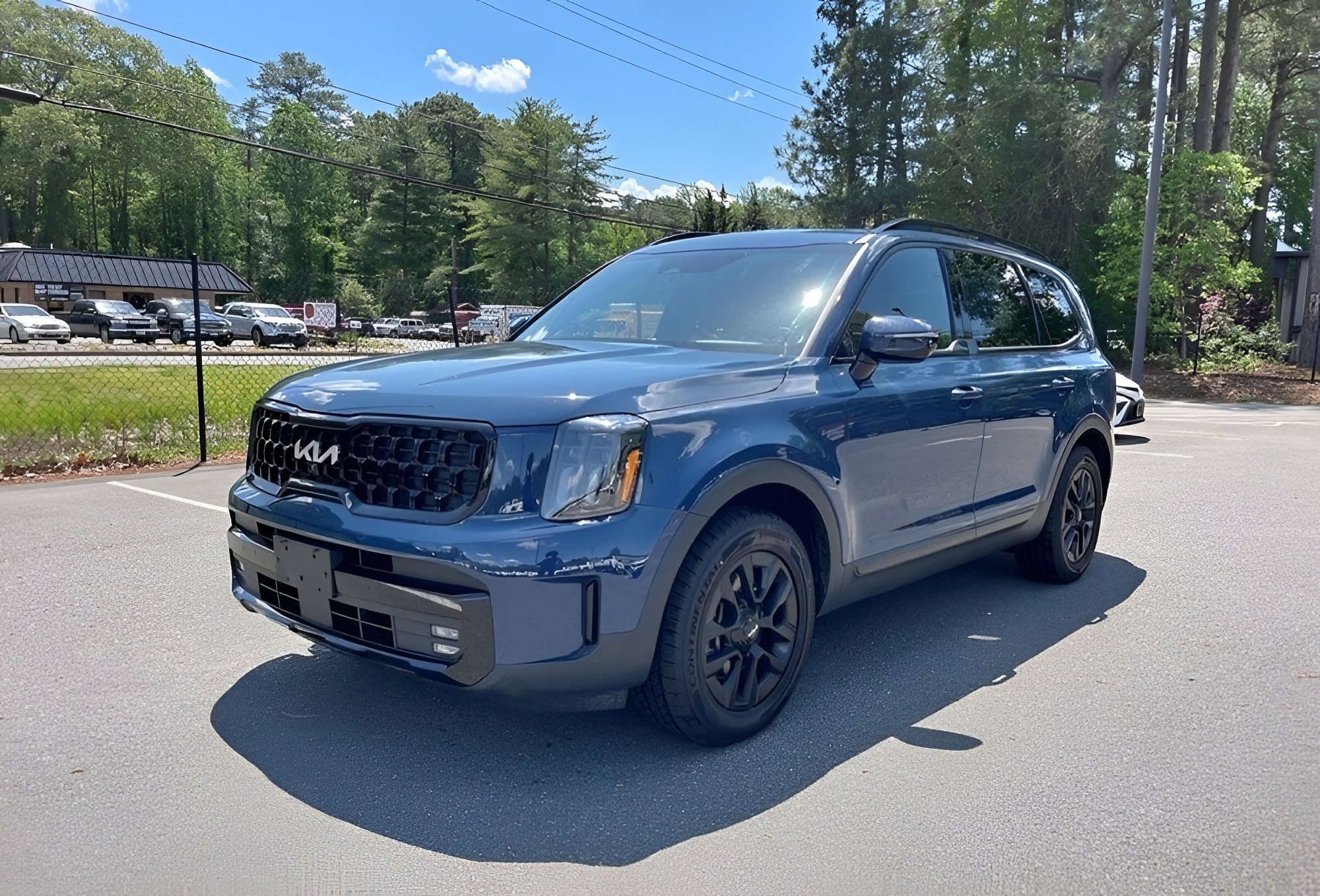
1. Two trim failures got lumped together, and that muddies the whole Telluride story
The real recall is SC347 / 25V494, and it centers on loose belt molding
Start with the part that triggered the federal safety action. Recall SC347 / NHTSA 25V494 covers certain 2023–2025 Kia Telluride SUVs built from October 3, 2022 through September 18, 2024. Kia says the door-belt molding face plate can delaminate from the molding base, loosen up, and eventually fall off the vehicle.
That failure matters because the strip does not stay your problem. Kia’s recall report says a detached face plate can create a road hazard for traffic behind the Telluride. Early warning signs include a visibly loose edge, a rattle, and extra wind noise around the door glass line.
This is not a paint complaint or a fussy appearance issue. The official remedy is dealer replacement of the affected belt molding assembly with an improved version. Kia also says the updated part adds mechanical retention to the base, which tells you the original adhesive-only setup did not hold enough margin.
The dark trim fading fight is real, but it runs down a different lane
The second problem is the black exterior trim fading, bronzing, staining, or turning purple on Nightfall and similar dark-finish Tellurides. Owners have reported that issue around the window surrounds for years, often with the black finish wearing thin or changing color long before the rest of the SUV looks old. That damage hits appearance first, not roadway safety.
That difference changes the whole coverage path. Kia’s U.S. warranty page still places trim and finish fights under the 5-year/60,000-mile limited basic warranty, not under the powertrain coverage owners like to quote. So once dealers treat the discoloration as environmental, cosmetic, or chemical damage, the argument turns into a warranty battle instead of a recall repair.
That is why Telluride owners keep talking past each other. One owner is dealing with trim that can leave the vehicle at speed. Another is staring at bronze window surround pieces on a dark-trim SUV and hearing that no recall applies.
The clean split that keeps the rest of the article from going sideways
| Issue | Main years affected | What fails | Why owners care | Coverage path |
|---|---|---|---|---|
| SC347 / 25V494 recall | 2023–2025 built Oct. 3, 2022 to Sept. 18, 2024 | Door-belt molding face plate delaminates and can detach | Loose trim can become road debris | Safety recall, dealer inspection and replacement |
| Nightfall / black-trim fading | Mostly owner-reported on 2020–2025 dark-trim Tellurides | Black finish bronzes, oxidizes, stains, or loses color | Premium look drops, trade-in appeal falls | Usually a basic-warranty dispute, not a federal safety recall |
2. The trim fails at the bond line first, then the slipstream finishes the job
The break starts between the face plate and the molding base
Kia’s recall filing points to delamination, not a simple loose clip. The door-belt molding uses a decorative outer face plate bonded to the base of the molding. Kia says the adhesive layer between those 2 pieces was applied insufficiently by the supplier.
That detail matters because the part can still look attached at first glance. The base may stay seated on the door while the outer face plate starts lifting away from it. Once that bond line opens, the trim stops acting like one solid piece.
The affected parts span all 4 door positions, not one oddball corner. Kia lists front left, front right, rear left, and rear right belt weatherstrip assemblies in the recall paperwork. That wider spread points to a process defect in part build, not one door with bad fitment.
Heat, vibration, and airflow turn a weak bond into a flying part
Most failures do not start with the whole strip ripping off at once. Kia’s own warning signs are simpler, a loose look, a rattle, and wind noise. That matches the way a weak bond starts to separate in stages.
The Telluride’s door-belt molding sits in a rough place. It sees sun load, heat soak, wash chemicals, door slam shock, and steady highway airflow along the glass edge. Once a section lifts, air gets under the face plate and pries harder with speed.
That is why owners may notice noise before loss. The trim starts moving, the gap grows, and the slipstream keeps working the edge until the part leaves. Kia identified the condition as progressive delamination, which means the failure grows before final separation.
Once the face plate leaves the vehicle, the safety problem moves behind you
A loose molding on the Telluride can sound minor inside the cabin. The safety filing uses harsher language. Kia says a face plate that detaches while the SUV is in motion can create a road hazard for other road users and raise crash risk.
That is the line where trim trouble stops being a warranty issue. Federal recall territory starts when the failed part can strike, distract, or force an avoidance move from traffic behind the vehicle. Kia estimated 201,149 Tellurides in the U.S. recall population and put the defect estimate at 6%.
3. The paperwork shows Kia caught part of this early, then widened the net hard
SA578 hit the board first, before the full recall carried a federal number
Kia flagged this problem in TSB SA578 months before SC347 / 25V494 went public. The bulletin covers some 2024 Telluride SUVs built from August 1, 2023 through January 18, 2024. It says affected vehicles may be missing an adhesive layer, which can let the outer face plate detach from the molding.
That bulletin told dealers to inspect the belt outside weatherstrip and check VIN eligibility first. If the face plate was separating, the dealer had to record a KVID video from the VIN label to the failed trim before moving into replacement. Kia also warned technicians that the detached face plate can become sharp during removal and cause serious injury.
SA578 also showed the parts pipeline was already tight. Kia told dealers not to stock the replacement moldings, said supply was very limited, and told them to confirm part availability before booking the job. The inspection labor allowance was 0.2 M/H under operation code 240A20I0.
The early campaign was narrow, the recall pulled in all four doors and over 200,000 SUVs
SA578 worked like a controlled dealer action. It focused on a shorter production band and a service-action process performed during the warranty period. Kia’s bulletin even states that repairs outside the warranty period required DPSM approval.
The full recall moved far beyond that. SC347 / 25V494 covers certain 2023–2025 Tellurides built from October 3, 2022 through September 18, 2024, with a recall population of 201,149 vehicles. Kia’s filing lists affected belt molding assemblies at the front left, front right, rear left, and rear right doors.
That jump matters because it changes how the defect reads on paper. A narrow service action can point to one batch, one station, or one door location. A four-door recall population spread across multiple model years points to a broader supplier-process failure.
The K5 recall shows this was bigger than one Telluride trim line
Kia filed a second recall the same day for the 2023–2025 K5. That case, SC346 / 25V493, covers 100,063 cars built from October 3, 2022 through July 24, 2024. Kia said the C-pillar garnish face plate could progressively delaminate, loosen from the molding base, and fall off in motion.
The language in that K5 filing tracks the Telluride recall almost line for line. Kia again blamed insufficient adhesive application by the supplier. The warning signs were the same too, visually loose trim, rattles, and wind noise before full separation.
The fix pattern matched as well. Kia replaced the affected K5 garnish assemblies with improved parts that added mechanical retention to the face plate, and production changed on July 25, 2024. That puts 2 separate Kia nameplates on the same failure map, both tied to adhesive application and both moved to a clip-backed remedy.
4. Kia changed the hardware, because fresh adhesive alone would not save this part
The final fix adds a mechanical lock to the molding assembly
Kia’s recall remedy does not read like a simple re-glue job. The company says dealers will replace affected door-belt molding assemblies with an improved version. The key change is mechanical retention added between the face plate and the molding base, on top of the adhesive layer.
That matters because the original failure sat at the bond line. Once the adhesive margin went away, airflow and vibration could keep working the face plate loose. A mechanical lock gives the part a second holding method after the glue starts aging.
The earlier SA578 bulletin already pointed toward replacement, not surface repair. Dealers were told to inspect, document with KVID video when separation showed up, and replace weatherstrip assemblies as needed. Kia also tied parts ordering to VIN entry and warned dealers not to stock parts because supply was limited.
September 19, 2024 is the production line that matters most to used buyers
Kia says recalled Tellurides were built through September 18, 2024. Vehicles produced beginning September 19, 2024 got door-belt molding assemblies with mechanically retained face plates from the factory. That date is one of the cleanest cut lines in the whole recall record.
That does not mean every later Telluride is automatically perfect. It means the factory switched away from the recalled design on that production date. When you are checking a used 2025, that build date matters as much as the trim condition in front of you.
A recalled SUV that already had the repair done can be fine. A later-build SUV with no recall history still needs a visual check around the window line for waviness, loose edges, glue marks, or mismatched moldings from earlier dealer work.
The dealer path stays simple on paper, but parts and timing can still slow it down
| Repair path | What the dealer does | Why it matters |
|---|---|---|
| Inspection only | Checks recall eligibility and looks for separation, looseness, rattle source, or wind-noise trim movement | Confirms whether the SUV sits in the affected VIN group and whether the molding is already failing |
| SA578 early campaign repair | Inspects affected 2024 VINs, records KVID video for separated trim, replaces weatherstrip assemblies as needed | Shows Kia first handled the defect through a narrower dealer campaign with tight parts control |
| SC347 final recall remedy | Replaces affected belt molding assemblies with improved parts that add mechanical retention | Confirms the official recall fix is full part replacement, not adhesive touch-up |
5. The Nightfall trim problem ruins the look first, then starts the warranty fight
The dark finish ages badly, and the failure shows up as color loss before anything falls off
Nightfall and similar dark-trim Tellurides have a different problem than the recall trucks. Owners report black window surround trim turning bronze, purple, blotchy, or chalky. In many cases, the finish goes bad while the molding still stays physically attached.
That pattern points to finish breakdown, not trim separation from the base. The common complaint is color failure around the window line, not a strip flapping in the wind. Owners also report chrome or lighter underlayers showing through once the black surface starts wearing off.
Some trucks fade evenly. Others spot up in streaks and patches. That leaves the Telluride looking older than the mileage suggests, even when the paint and glass still look clean.
The coverage fight runs through the 5-year, 60,000-mile basic warranty, not the recall lane
Kia’s U.S. warranty page puts this kind of trim dispute under the 5-year/60,000-mile limited basic warranty. That means the fight usually starts at the service desk, not in the recall database. Once the dealer writes it up as cosmetic, environmental, or chemical damage, approval gets much harder.
That leaves owners in a gray zone. The trim can look awful well before 60,000 miles, but dealer responses are not always consistent. Some owners report warranty replacement. Others get pushed toward out-of-pocket fixes, trim restorers, or vinyl wrap instead of new factory pieces.
That inconsistency matters more on dark-trim packages than on brightwork. Black surround trim telegraphs every stain, fade mark, and mismatch. One replaced section next to three weathered sections can look nearly as bad as the original damage.
This hits trade-in value because the trim frames the whole greenhouse
Window surround trim sits high and catches light from every angle. When it bronzes or turns patchy, the whole side glass area looks tired. On a Telluride sold as near-premium family transport, that visual hit lands fast.
Owners often end up choosing between bad options. New trim can be expensive, dealer approval can drag, and temporary dressings rarely last. Wrap shops and refinishing workarounds show up in owner discussions because they cost less than replacing every affected piece.
6. The paper chase can be rougher than the repair
Owners who paid early have a reimbursement path, but it runs through Kia’s recall paperwork
Kia’s Telluride recall filing says owners can seek reimbursement for eligible repair expenses already paid before the recall fix rolled out. The company ties that to its General Reimbursement Plan filed May 1, 2024. That matters for owners who replaced loose moldings before SC347 was on the books.
The recall timing explains why this matters. Kia submitted 25V494 on July 28, 2025. Dealer notice was set for July 29, 2025, owner notice for September 26, 2025, and VIN searchability for August 11, 2025. Owners who paid before those dates were stuck in the gap between defect symptoms and full recall recognition.
Kia uses the same reimbursement language across multiple recall notices. That language gives owners a route to recover money already spent, not a promise that every loose-trim invoice gets rubber-stamped. The review still runs through Kia Customer Care and the reimbursement form process.
The proof stack decides whether Kia pays, not the story behind the repair
Kia’s reimbursement form language is blunt about documentation. The claim package needs a repair order showing the name and address of the person who paid, the vehicle VIN, the problem repaired, the repair date, mileage at the time of repair, and the total claimed cost. It also needs proof of payment, such as a canceled check, credit-card receipt, or similar record showing the amount paid and payment date.
That is where a lot of owner claims fall apart. A screenshot from a banking app without the repair order usually is not enough. A service invoice without mileage, VIN, or proof the bill was actually paid can stall the claim or trigger a request for more information.
Kia’s recall notices say the company will use its best efforts to respond within 60 days after receiving the claim. Kia can accept the claim, reject it, or ask for more information during that review window. That means sloppy paperwork can add another month or two before the owner even gets a clear yes or no.
Parts shortages and temporary glue jobs complicate what the dealer sees later
Kia already warned dealers in SA578 that replacement parts were in very limited supply and should not be stocked. Dealers were told to confirm parts availability before scheduling customers. That kind of supply warning matters more once the issue expands from one service action to a 201,149-vehicle recall population.
That delay pushes owners toward temporary fixes. Tape, trim adhesive, and home-brew clamp jobs can keep a molding from leaving the SUV for a while. They can also hide the separation pattern the dealer needs to document, especially if glue squeeze-out or residue is already all over the molding base.
A later inspection can get messy fast. Kia’s early bulletin required KVID video when separation was present, and technicians were warned that detached face plates could be sharp during removal. By the time a dealer sees a taped or re-glued molding, the part may no longer show the clean failure state it had when the owner first heard the rattle.
7. The Telluride years break into 2 risk bands, and buyers need to inspect them differently
The main recall zone runs through September 18, 2024 production
The highest-risk band for flying trim is certain 2023–2025 Tellurides built from October 3, 2022 through September 18, 2024. That is the exact SC347 / 25V494 population Kia filed with NHTSA. If a Telluride sits in that build window, recall completion status matters before anything else.
A clean Carfax line does not replace a close trim check. The dealer repair should have replaced affected belt molding assemblies with the updated mechanically retained parts. A used buyer still needs to look for loose edges, glue residue, misaligned moldings, or trim pieces that do not match side to side.
The build date line matters because Kia says Tellurides produced beginning September 19, 2024 got the revised molding design in production. That does not erase the need for inspection, but it does move later trucks out of the official recall design window.
Earlier Tellurides dodge the flying-trim recall, but dark-trim trucks still carry finish risk
The earlier 2020–2022 Telluride years are not the heart of SC347. The recall filing does not place them inside the door-belt molding population. That lowers the risk of buying a truck with the exact recalled trim design.
That does not make those years clean across the board. Owner reports keep pointing to black window surround trim fading, bronzing, and blotching on earlier Nightfall trucks, including 2021 and 2022 examples. That problem does not throw the truck into the NHTSA recall system, but it does hit curb appeal and replacement cost. (reddit.com (community.cartalk.com)
A buyer looking at one of those earlier dark-trim SUVs should focus on finish condition, not recall paperwork. Walk the window line in daylight. Bronze or purple haze, patchy gloss, and fresh wrap or refinish work usually mean the trim fight already started.
The year and trim map that matters when money is on the table
| Telluride group | Main trim risk | What to check first | What usually matters most |
|---|---|---|---|
| 2020–2022 standard trim | Lower exposure to SC347 flying-trim recall | Basic physical trim fit, prior body work, door-edge alignment | General condition, not recall status |
| 2020–2022 Nightfall / dark trim | Black trim fading, bronzing, surface breakdown | Window surround color, gloss uniformity, wrap or repaint evidence | Cosmetic condition and warranty history |
| 2023–2025 built Oct. 3, 2022 to Sept. 18, 2024 | SC347 / 25V494 belt molding detachment risk | Open recall status, proof of repair, loose edges, glue residue | Recall completion and part condition |
| 2025 built Sept. 19, 2024 and later | Revised production with mechanically retained moldings | Build date, physical trim fit, signs of earlier repair | Whether the trim is original and sitting flat |
Sources & References
- Kia issues recalls over loose parts creating possible roadway hazards, over 300K vehicles impacted – FOX6 News Milwaukee
- 2020-2025 Kia Telluride Door Belt Trim: Recall, Fading, and Replacement | Go-Parts.com
- Part 573 Safety Recall Report 25V494 | NHTSA
- Kia Telluride Recalled For Trims Flying Off Over Time – CarBuzz
- It Took 12,000 Cases For Kia To Admit This Was A Recall-Worthy Problem – Carscoops
- Kia Recalls Over 200,000 Telluride Vehicles Due to Detaching Door Trim
- 2020-2025 Kia Telluride Exterior Trim: Recalls, Fading, and Replacement Guide – Go-Parts
- NHTSA Recall of Popular Kia Telluride and K5 Models – Parker Waichman LLP
- Kia recalls over 300,000 Telluride and K5 vehicles for trim issues that may increase accident risk – Top Class Actions
- Kia Canada recalls Telluride and K5 models over exterior trim defect risk – CTV News
- technical service bulletin – door belt outside weatherstrip … – nhtsa
- Window Trim defective, Customer Service is useless. Boycott Kia. : r/KiaTelluride – Reddit
- 2022 door trim pieces. Are these under warranty or recall? If not, can I DIY replace? – Reddit
- Part 573 Safety Recall Report 25V-099 | NHTSA
- Part 573 Safety Recall Report 26V105 | NHTSA
- Kia issues recalls over loose parts creating possible roadway hazards, over 300K vehicles impacted – Fox Business
- Part 573 Safety Recall Report 26V135 | NHTSA
- Part 573 Safety Recall Report 25V548 | NHTSA
- Campaign Customer Reimbursement – Kia Customer Care Center
- claim form – Kia
- IMPORTANT SAFETY RECALL – nhtsa
- Submit a Claim – Kia Engine Settlement
- Trim Recall – 20023 – 2025 : r/KiaTelluride – Reddit
- Window/door Trim peeling and falling off 2024 Kia. : r/KiaTelluride – Reddit
- Loose moulding : r/KiaTelluride – Reddit
- 2025 EX X-Line window seal issue : r/KiaTelluride – Reddit
- Molding recall finally : r/KiaTelluride – Reddit
- Is this covered under warranty? I hope! : r/KiaTelluride – Reddit
- Kia Recalls Telluride Over Defect in Power Front Seats – Kelley Blue Book
- National Highway Traffic Safety Administration Makes/Models/Model Years: Mfr’s Report Date
- Kia Telluride Recalls | Cars.com
- Find Existing Kia Telluride Car Recalls – DealerRater
- So is this what the recent letter is covering? : r/KiaTelluride – Reddit
- Peeling paint on 2024 KIA Telluride : r/KiaTelluride – Reddit
- Recall for faded Nightfall trim? : r/KiaTelluride – Reddit
- What’s New and Notable in the 2026 Kia Vehicle Collection – Lawton Kia Blog
- Kia Full Product Line
- 2026 Kia EV9: Long-Range, Fast-Charging, Available AWD, 3-Row Electric SUV | MSRP & Features
- 2027 Kia Telluride Hit With First Recall, 2026 Kia K4 Also Affected – autoevolution
- Kia Telluride Recalls – RepairPal
- CarFax 1 Owner Kia Vehicles | Bill Dodge Kia Westbrook, Maine