
Lifters tick, idle shudders, a buddy swears Marvel Mystery Oil fixes it fast. Quick cure or bigger bill?
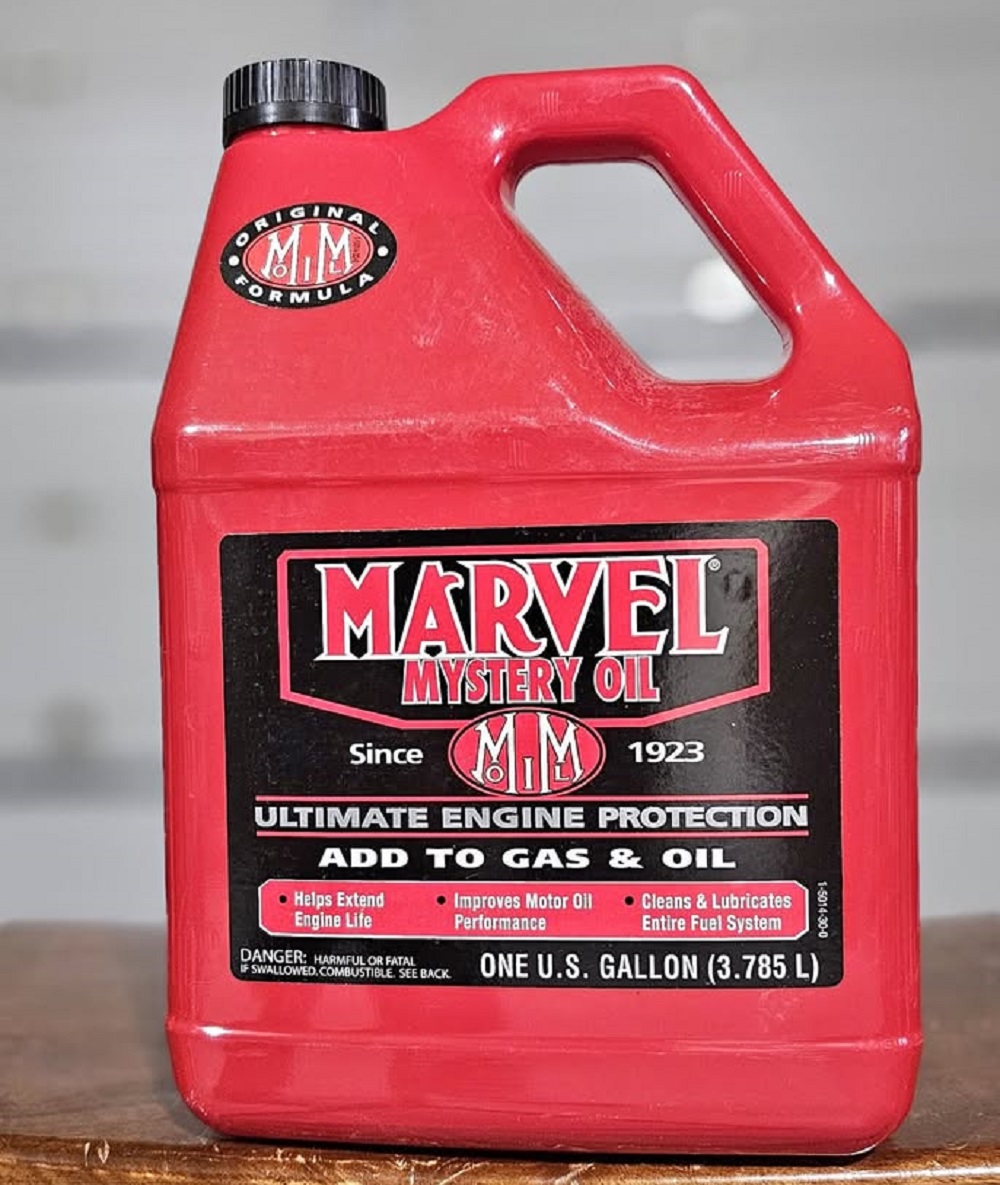
Marvel Mystery Oil is a light naphthenic base with serious solvent, often 10 to 30% mineral spirits. Pouring it into a modern 0W-20 or 0W-16 crankcase means thinning the film, diluting ZDDP and detergents, and stirring up varnish that can choke VVT screens.
Turbos feel it first, seals feel it later. Replace 10 to 25% of the sump with MMO, and the oil’s HTHS protection can fall under spec.
This guide calls the shots. We’ll show what’s in MMO, quantify how much it thins real oils, map the risks to phasers, turbos, and seals, then point to safer options that actually clean.
1. What’s Hiding Inside Marvel Mystery Oil
The Solvent Backbone That Built Its Reputation
Marvel Mystery Oil leans on a heavy naphthenic base, an old Group I oil built for cleaning, not endurance. Back in the carburetor era, that solvency worked wonders on sludge and carbon. In today’s engines, it clashes with tight tolerances and synthetic blends.
The mix carries roughly 10–30 % Stoddard solvent, essentially mineral spirits, strong enough to dissolve deposits but thin enough to undercut oil film strength.
Cleaning Power That Cuts Too Deep
Solvents don’t discriminate. They strip varnish and carbon, but they also shear down viscosity improvers and upset oxidation balance.
A 20 % MMO blend can drop a 0W-20 oil from 8.26 cSt to around 7 cSt at 100 °C, pushing HTHS below 2.5 cP. Once that happens, bearing film weakens and wear accelerates under heat or load.
The Additive Drain You Don’t See Coming
Every quart of MMO replaces an equal part of fully formulated oil. That swap thins out ZDDP, detergents, and dispersants, the chemistry that guards against wear and acid buildup.
MMO’s trace tricresyl phosphate can’t make up the loss. The result: a cleaner that doubles as a dilution agent, trading short-term quiet for long-term protection.
2. How MMO Knocks Oil Out of Spec
Solvents shave viscosity and chew polymers
Mineral spirits in MMO thin modern 0W-20 and 0W-16 on contact. Multi-grade oils hold grade with polymer thickeners that keep viscosity up at heat.
Solvent exposure shortens those long chains, so the oil shears permanently and flows too easily at temperature. What looked fine on the dipstick turns weak in the bearings once the engine is hot.
HTHS, the last guardrail, drops below the line
A reference 0W-20 sits near 40.78 cSt at 40 °C, 8.26 cSt at 100 °C, and about 2.71 cP HTHS. Blend 20% MMO, and the 100 °C viscosity falls near 7.00 cSt with HTHS under 2.50 cP.
OEM limits for many modern specs live right above that number. Slide under it, and hydrodynamic film breaks in the big-end bearings, ring pack, and turbo journal under load.
Quick math that shows the collapse
| Blend | ν@40 °C (cSt) | ν@100 °C (cSt) | HTHS (cP) est. | What it means |
|---|---|---|---|---|
| Pure 0W-20 reference | 40.78 | 8.26 | 2.71 | In grade, meets OEM targets |
| 80% 0W-20 + 20% MMO | ~35.00 | ~7.00 | <2.50 | Sub-spec film at load, higher wear |
3. Where the Damage Starts Showing
Seals that swell, shrink, and leak later
Mineral spirits in MMO hit elastomers hard. Nitrile and silicone gaskets soak them up, swell for a while, then lose plasticizers and turn brittle.
A valve-cover leak that seemed to seal up often comes back months later as the seal shrinks and cracks. Only higher-end materials like Viton handle white-spirit exposure well, and few mass-market engines use it across every seal.
VVT solenoids that lose their rhythm
Modern VVT systems rely on tight hydraulic timing. Thinner oil changes how fast the phasers move and alters cam response. Solvents also free varnish that ends up in the micro-screens protecting each solenoid.
Once those clog, timing drifts, idle roughens, and the ECU logs position faults. What started as a cleaning attempt often ends with a misfire code and new solenoids on the invoice.
Turbo bearings running on fumes
A turbo’s life depends on film strength at searing heat. MMO’s low HTHS blend cuts that margin. Under sustained boost, the oil can’t carry full pressure through the feed line, and the bearing runs near boundary contact.
Heat cooks the residue, forming coke on the return side. That baked film restricts flow further, pushing the next cycle even hotter until shaft wear starts to show.
The chemistry-to-failure chain
| MMO Component | Reaction in Engine | Typical Failure Outcome |
|---|---|---|
| Stoddard solvent | Viscosity drop | Bearing and turbo wear |
| Dichlorobenzenes | Mobilizes sludge | Clogged VVT or oil screens |
| Naphthenic base | Lower oxidation stability | Varnish and deposits returning |
4. Fuel Additives and the Modern Engine Divide
Tank treatment that doesn’t match the times
Marvel Mystery Oil still lists a fuel-side dose, 4 ounces per 10 gallons. In carbureted engines, that light oil mist once cushioned valve stems and flushed sticky jets. In a direct-injected setup, the chemistry plays a different role.
The mineral base offers mild top-end lubrication, but the solvent fraction does most of the work. That solvent load has little to clean in GDI systems, where deposits form on the back of valves the fuel never touches.
GDI injectors and emissions hardware under stress
GDI injectors run at pressures past 2,000 psi through nozzles thinner than a hair. Those parts depend on coatings and fine tolerances that resist ethanol blends and detergents. MMO’s mineral solvent mix wasn’t designed for those conditions.
The same solvents that free old varnish can etch or strip surface films. Oxygen sensors and catalysts usually survive because MMO burns cleanly, but injectors and high-pressure pumps see unnecessary chemical exposure every cycle.
What modern cleaners do better
Polyetheramine (PEA) formulas target carbon at the molecular level, breaking it down during combustion instead of dissolving it upstream. They leave no residue in the oil and are safe for aluminum, seals, and coatings.
A proper PEA cleaner used every few tanks outperforms MMO’s dated recipe without thinning fuel lubricity or adding risk to injectors. Real gains come from running the right detergent chemistry, not blending a 1920s solvent into a 2020s fuel system.
5. High-risk scenarios where MMO bites hardest
Engines and use profiles that get hit first
Low-viscosity fleets that run 0W-16 or 0W-20 sit on the edge of HTHS limits. A 20% solvent blend pushes them under the line during heat and load. Small sump volumes, often 4 to 5 quarts, magnify any dilution.
Long intervals and short-trip driving trap fuel and moisture, so the solvent cocktail thins the film even more once the engine is hot. Turbo and VVT-dense layouts add tight screens and narrow passages that punish any debris surge.
Why some engines seem quieter at first
Seal swell masks leaks for a while, then the material hardens and starts to seep. Varnish softens, so lash adjusters and phasers quiet for a few heat cycles.
As solvent flashes off and polymers shear, viscosity slides, and the chatter returns. The net effect is a brief calm followed by fresh leaks or new hydraulic faults.
Platform risk map at a glance
| Platform type | Risk level | Why it climbs |
|---|---|---|
| Modern NA, port-injected, 0W-20 | Medium | Oil thins below spec, VVT screens see loosened varnish |
| Modern turbo GDI, 0W-16 or 0W-20 | High | Low HTHS margin, hot turbo bearings, fine injector tolerances |
| Hybrid start-stop with small sump | High | Frequent restarts, thin film at hot idle, accelerated oxidation |
| Vintage or high-mileage on 10W-40 or 15W-40 | Low | Wide clearances, thick mineral oils, fewer hydraulic pinch points |
6. Warranty details vs. real-world risk
The protection law most owners misread
The Magnuson-Moss Warranty Act keeps automakers from voiding coverage just because a car runs an additive. The issue lies in proof. The OEM must show the product directly caused the failure.
On paper, that sounds airtight for the consumer. In practice, it rarely plays out that cleanly. Once a dealer finds non-OEM oil in the sump, the case heads for engineering review, and the owner’s on defense until testing says otherwise.
How proving innocence drains a wallet
A teardown and oil analysis to confirm cause can reach five figures fast. Tribological testing, chemical fingerprinting, and lab-verified viscosity reports aren’t cheap.
Estimates peg a full failure analysis near $500,000 for a single gasoline engine. No manufacturer funds that for a retail claim unless litigation’s on the table. Most owners fold, paying for repairs rather than chasing a ruling they can’t afford to prove.
Why legal coverage doesn’t equal protection
Paper rights don’t offset practical cost. An additive can’t void your warranty by rule, yet the process to clear your name burns time and cash. Until the issue is verified, the car sits, the bill grows, and the legal safeguard means little.
In real terms, dumping solvent into a modern crankcase trades one form of risk, sludge, for another: warranty exposure with no simple exit path.
7. Smarter fixes that clean without wrecking the film
Oil-side cleanup that respects HTHS
Start by running the correct spec oil, API SP or ILSAC GF-6 for gas, ACEA for Euro apps, and keep intervals tight for the next two changes. If sludge is suspected, do staged short drains, 500 to 1,000 miles each, with a high-detergency synthetic 0W-20 or 5W-30 that meets the engine’s sheet.
Hot drains carry more debris, so finish each run fully warmed. For fuel-side deposits, use a PEA cleaner at the labeled dose every 3,000 to 5,000 miles, which scrubs carbon during combustion without touching the oil’s viscosity or additive balance.
If you still plan to use MMO, limit the damage
Keep it to older, slack-tolerance engines on conventional 10W-30, 10W-40, or 15W-40. Cap the dose at 5% of sump volume, run no more than 300 to 500 miles, then drain and replace the filter.
Watch for new leaks after heat soak, and avoid any engine with VVT, small sump, GDI, or a turbo. If lifter noise was the only symptom, try a proper oil grade change first, then a short interval, before risking solvent.
Hard no rules for modern fleets
Skip MMO entirely in 0W-16 and 0W-20 applications, hybrids with frequent restarts, and any turbo or VVT-dense design.
These platforms live near minimum HTHS and use fine oil screens that plug fast once varnish breaks loose. The safe path is simple: run in-spec oil, shorten the next couple of intervals, and handle carbon with PEA in the tank.
Why modern engines and MMO no longer mix
Marvel Mystery Oil earned its name when engines ran thick mineral oils and loose tolerances. That era’s chemistry rewarded solvents; today’s precision engines punish them.
Modern lubricants already balance detergency, dispersancy, and film strength on a razor edge. Dropping solvent-heavy oil into that system thins the blend, strips additive balance, and turns protection margins into weak spots.
What MMO once solved, carbon, sludge, varnish, modern synthetics now prevent by design. Every new API or ACEA upgrade tightened those controls through better base stocks, antioxidants, and shear stability.
The same chemistry that made MMO useful in the 1950s now conflicts with the engineered precision of a 2020s drivetrain.
In practice, its use shifts risk instead of reducing it. Lifters may quiet for a week, but seals, bearings, and phasers start paying the bill later. Modern engines already run close to their lubrication limits; a quart of solvent doesn’t give them breathing room; it takes it away.
Sources & References
- Marvel Mystery Oil Store – marvelmysteryoil
- Marvel Mystery Oil. Is It Safe To Use In Modern Cars? – YouTube
- Marvel Mystery Oil fact or fiction – The Official 356Talk Forum
- Marvel Mystery Oil – Wikipedia
- Marvel Mystery Oil – SAFETY DATA SHEET
- Modelling the Impact of Reducing Lubricant Viscosity on a Conventional Passenger Car Fuel Economy and Wear Protection – ResearchGate
- Oil Additives Actually Cause More Wear to Your Engine, Testing …
- WHITE SPIRIT Resistant O-Rings and Seals – Marco Rubber & Plastics
- Bad Variable Timing Solenoid Symptoms – AutoZone.com
- DO OIL AND FUEL ADDITIVES VOID CAR WARRANTIES?
- Information obtained from http://blog.garagistry.com/2012/04/the-mystery-of-marvel-mystery-oil.html
- Water-Based Parts Cleaning – Mass.gov
- FAQs – marvelmysteryoil
- Oil Additives Actually Cause More Wear to Your Engine, Testing Shows – YouTube
- APPLICATIONS, TESTS, AND MEASURES OF VISCOSITY LOSS IN SHEAR STABILITY OF MULTI-GRADE, POLYMER-THICKENED LUBRICANTS – Koehler Instrument Company
- Is Your VVT Solenoid Acting Up? Common Indicators to Watch For – Foxwell Diag
- Marvel mystery oil too strong to soak injectors? – PeachParts Mercedes-Benz Forum
- Every Reason You Should Use Marvel Mystery Oil – Top Speed
Rami Hasan’s article on Marvel Mystery Oil has persuaded me that use of the oil in my crankcase for modern engines is a risky and bad idea. I admit I have read that with the improvements and advancements of standard motor oils the last two decades that additives are not necessary and indeed could be harmful.
However not clear is the use of gas additives as upper engine cleaning and lubricating products like MMO. This I must research further! A great and very technical article! GJ Burns, Waterboro Maine