
Hook up a 5,000 lb camper, crest a grade, watch temps climb. That’s where the CX-90 earns its keep. Mazda moved from the old CX-9’s 3,500 lb ceiling to a 5,000 lb rating on a new longitudinal platform.
Inline-six Turbo trims can hit 5,000 lb when equipped right. The PHEV caps at 3,500 lb due to cooling and battery limits. All versions run a rear-biased AWD system and an eight-speed wet-clutch automatic built to handle load.
This guide breaks down which trims unlock full Tow mode, what hardware and wiring you must install, how GCWR and axle limits shrink your margin, and how the CX-90 compares against Pilot, Grand Highlander, and Telluride when the trailer’s real.
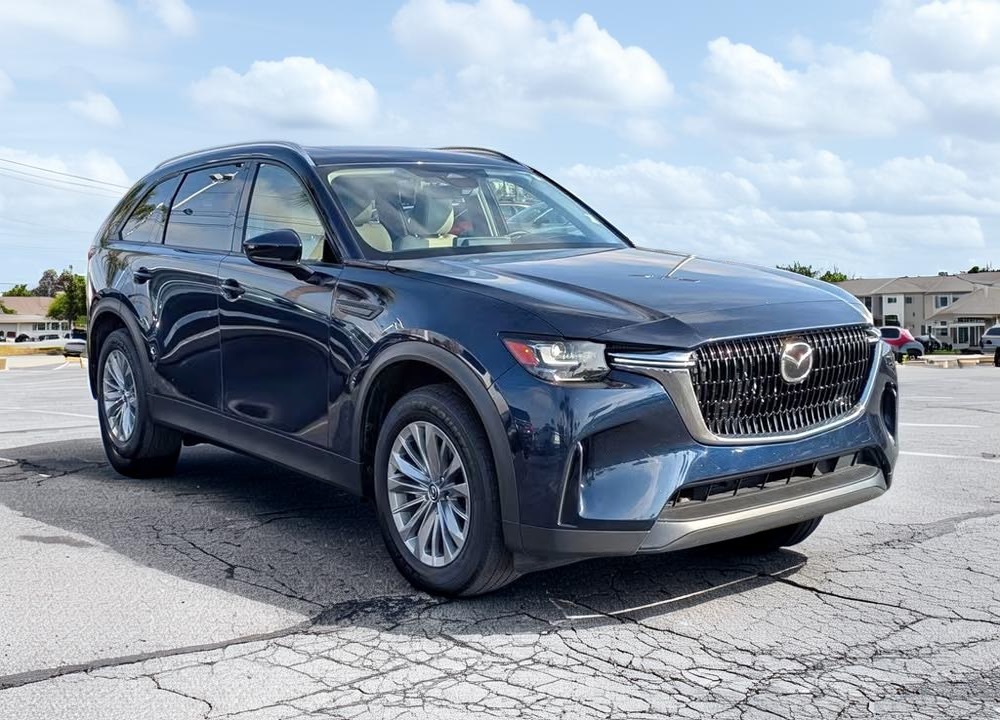
1. CX-90 powertrains and tow ratings under the skin
Torque first, trim second, software decides the ceiling
Mazda runs three power setups in the CX-90. Two are 3.3L turbo inline-six variants. One is a 2.5L plug-in hybrid.
The standard 3.3T makes 280 hp and 332 lb-ft. The high-output version bumps that to 340 hp and 369 lb-ft. The PHEV combines a 2.5L four-cylinder with a 68 kW motor for 323 hp and 369 lb-ft system output.
| Engine / System | Output (hp) | Torque (lb-ft) | Max Tow (lbs) |
|---|---|---|---|
| 3.3L Turbo I6 Standard | 280 | 332 | 3,500–5,000 |
| 3.3L Turbo I6 High Output | 340 | 369 | 5,000 |
| 2.5L PHEV | 323 (sys) | 369 (sys) | 3,500 |
Select and some Preferred trims stay at 3,500 lb. Premium Sport and higher unlock 5,000 lb with Tow mode enabled. The engine hardware is shared, but cooling logic and Mi-Drive mapping cap the rating in lower trims.
All models use an eight-speed wet-clutch automatic. No traditional torque converter. Power runs through a multi-plate clutch pack that locks earlier under load to cut slip and heat.
Longitudinal layout changes how weight and torque move
The CX-9 mounted its turbo four sideways. It topped out at 3,500 lb. The CX-90 flips the engine north-south and pushes mass rearward.
The new Large Platform places the inline-six behind the front axle centerline. That improves weight balance under tongue load. Rear GAWR rises to 4,090 lb, and GCWR climbs to 10,309 lb on high-output trims.
Rear-biased i-Activ AWD feeds torque aft under load. Launching on a wet ramp puts more push at the rear tires. The platform shift is the core reason the rating jumps to 5,000 lb.
Inline-six stamina versus PHEV boost under trailer load
The 3.3T builds torque early and holds it steady. Peak 369 lb-ft arrives low in the rev range. That keeps downshifts short and controlled on long grades.
The PHEV hits hard off the line. The electric motor fills torque instantly. With a 3,500 lb trailer, it feels strong in town.
Battery capacity sits at 17.1 kWh. Once depleted on a highway pull, the 2.5L four-cylinder carries the load alone. Tow rating stays fixed at 3,500 lb due to hybrid cooling and battery thermal limits.
2. Ratings math that quietly caps your 5,000 lb dream
GCWR and axle limits decide before the engine does
Tow rating grabs headlines. GCWR and GAWR decide what survives the trip.
| Configuration | Max Trailer (lbs) | GVWR (lbs) | GCWR (lbs) | Front GAWR (lbs) | Rear GAWR (lbs) |
|---|---|---|---|---|---|
| 3.3T High Output (21″ wheels) | 5,000 | 6,854 | 10,309 | 2,806 | 4,090 |
| 2.5 PHEV | 3,500 | 6,854 | 9,148 | 2,910 | 4,090 |
GCWR covers SUV, trailer, fuel, people, and gear. Hit 10,309 lb in a high-output model and you’re done. Exceed it and the cooling system and clutch packs run hotter than designed.
Rear GAWR is 4,090 lb across the board. Tongue weight loads that axle first. Add cargo behind the third row and rear axle margin shrinks fast.
Family load eats payload before the trailer does
Curb weight on a Turbo S lands near 4,900 lb. GVWR is 6,854 lb. That leaves roughly 1,954 lb for people, gear, hitch, and tongue weight.
| Item | Weight (lbs) |
|---|---|
| CX-90 curb weight | 4,900 |
| 2 adults | 350 |
| 3 kids + small gear | 250 |
| Rear cargo | 250 |
| Hitch + 7-pin + controller | 60 |
| Tongue weight at 12% of 5,000 lb | 600 |
| Total added to GVWR | 1,510 |
That 1,510 lb sits inside the 1,954 lb window. Add bikes on a rack or a roof box and you can push close to GVWR. Rear axle load climbs fast because the 600 lb tongue weight acts like a lever on the back end.
Hit GVWR before 5,000 lb trailer weight and you must cut cargo or reduce trailer mass. The door sticker wins every time.
Altitude and heat trim the rating in the real world
Mazda calls for a 10% tow reduction per 1,000 meters of elevation. At 6,600 feet, that’s about a 20% cut. A 5,000 lb rating drops to roughly 4,000 lb.
| Elevation | Reduction | Effective Max from 5,000 lb |
|---|---|---|
| Sea level | 0% | 5,000 lb |
| 3,300 ft | ~10% | ~4,500 lb |
| 6,600 ft | ~20% | ~4,000 lb |
| 9,800 ft | ~30% | ~3,500 lb |
Thin air reduces cooling efficiency and intake density. Turbo boost works harder to maintain torque. Coolant and transmission temps rise quicker on long grades.
Mazda mandates a 600-mile break-in before towing. Ignore it and early bearing wear and clutch glazing become your problem, not theirs.
3. Tow mode, AWD logic, and brakes under real load
Tow mode rewrites shift maps and heat control
Plug in a 7-pin harness and the CX-90 wakes up differently. Tow mode appears in Mi-Drive once the system sees a valid trailer connection. No signal, no Tow logic.
Shift points stretch higher under load. The wet clutch locks sooner and stays locked longer. That cuts slip and keeps transmission temps in check on grades.
Gear hunting drops on rolling hills. The turbo stays in its boost window instead of falling flat between shifts. Lower trims without Tow mode stay capped at 3,500 lb in software.
Rear-biased AWD pushes instead of pulling
i-Activ AWD shifts torque rearward when it senses load and throttle demand. With a trailer, more drive goes to the rear axle. That stabilizes the chassis under acceleration.
On a wet boat ramp, rear torque limits front-wheel spin. The system reads steering angle, yaw rate, and wheel speed 200 times per second. It adjusts clutch pressure at the center coupling in real time.
Under heavy throttle, the rear takes a larger share of torque. Front axle GAWR stays between 2,806 and 2,910 lb, while rear GAWR tops at 4,090 lb.
Trailer brakes decide stopping distance, not SUV brakes
Mazda requires trailer brakes over 1,000 lb. That’s printed in the owner’s manual. Ignore it and stopping distances stretch fast.
| Trailer Weight (lbs) | Trailer Brakes Required | Control Type |
|---|---|---|
| Up to 1,000 | No | Vehicle brakes only |
| 1,000–3,500 | Yes | Proportional electric |
| 3,500–5,000 | Yes | Proportional with gain setup |
The factory brake controller uses a proportional design. It matches trailer braking force to deceleration rate. Time-delay units hit late and shove the SUV forward before biting.
On long downhill grades, drop a gear manually. Use engine braking to spare the pads. Overheat the service brakes and pedal feel goes soft, with fade starting above 500°F rotor temps.
4. Hitch hardware and wiring that unlock 5,000 lb
Integrated receiver ties into the crash structure
Bolt-on hitches from the past don’t apply here. The CX-90 receiver integrates with the rear structure. The bumper beam is removed or replaced during install.
The factory 2-inch receiver carries a Class III/IV rating. MSRP runs about $499.95. It spreads load across the rear frame rails, not just thin sheet metal.
Aftermarket hitches cost $250 to $450. Many tow fine. Some shift ball position enough to misalign camera guidelines and parking sensors.
The 7-pin harness triggers Tow mode and brake logic
Tow mode depends on a live 7-pin connection. Mazda’s harness part number is KMV6-V7-780A. MSRP sits near $229.95.
Install requires access to a 14-pin factory connector behind the driver-side rear trim. The harness routes through the spare tire well. A factory drain plug gets replaced with a sealed rubber grommet.
Ground ties into the chassis with a 10 mm bolt. Skip proper grounding and trailer lights flicker under load. No recognized signal means no Tow mode activation.
Factory brake controller mounts clean, wires clean
Mazda offers a proportional brake controller, part number C9N1V7782. It plugs into a pre-wired socket under the dash. No wire splicing required.
Install involves removing the lower driver dash panel. The knee airbag connector must be unplugged during access. A template guides drilling 5/16-inch mounting holes.
Universal controllers cost less. They hang under the dash and use generic brackets. The OEM unit integrates cleanly and avoids knee interference at full pedal travel.
5. Tongue weight, load balance, and sway control limits
Miss the 10–15% window and the chassis tells you fast
Mazda calls for 10% to 15% tongue weight. Load 60% of trailer mass toward the front half. That keeps the center of gravity ahead of the axle line.
| Trailer GVW (lbs) | 10% Tongue (lbs) | 15% Tongue (lbs) |
|---|---|---|
| 2,500 | 250 | 375 |
| 3,500 | 350 | 525 |
| 4,500 | 450 | 675 |
| 5,000 | 500 | 750 |
Drop below 10% and sway builds at highway speed. Go past 15% and the rear axle squats hard. Rear GAWR remains 4,090 lb, and tongue weight counts against it directly.
Front axle load drops as tongue weight rises. Steering lightens and braking balance shifts rearward. An abnormal nose-up stance signals a load problem before you hit 60 mph.
Weight-distribution hitches when you’re near the edge
At 5,000 lb trailer weight, tongue weight can reach 750 lb. A weight-distribution hitch transfers part of that load forward. It pushes force back into the front axle and trailer axles.
This reduces rear squat. It restores front tire contact patch under braking. Match bar rating to real tongue weight, not brochure trailer weight.
Overrated spring bars ride harsh. Underrated bars flex too easily and do little. The CX-90 offers no factory air suspension to mask setup errors.
Trailer Stability Control steps in after physics slips
Trailer Stability Control monitors yaw rate and steering angle. Rapid oscillation triggers brake pulses at individual wheels. Engine torque is reduced at the same time.
The system reacts in milliseconds. It cannot fix a badly loaded trailer. Speed still multiplies sway forces fast above 62 mph, which is Mazda’s towing speed limit.
6. Cameras and visibility systems that turn it into a one-person job
Hitch view makes ball-to-coupler alignment surgical
Select reverse and switch to Trailer Hitch View. The center screen shows a top-down angle of the receiver. A dynamic guideline moves with steering input.
Hitch Zoom tightens the frame for the final inch. It reduces guesswork when lining up a 2-inch ball. The system is calibrated to the factory hitch location.
Aftermarket receivers can shift ball position slightly. That throws off guideline accuracy. Precision depends on OEM mounting geometry.
See-through and side views guard the blind spots
The 360° View Monitor stitches camera feeds into a perimeter image. See-Through mode projects a virtual view under the hood. That helps when clearing rocks or curbs at low speed.
With a trailer attached, the rear window view is blocked. Side mirror camera feeds assist during lane changes. They reduce blind spots created by wide campers or enclosed trailers.
Camera lenses foul in rain and road grime. Sun glare can wash out the image at low angles. Manual mirror adjustment still matters at highway speed.
Sensor logic assumes proper wiring and trailer signal
Rear parking sensors adjust sensitivity with a recognized trailer connection. Without a valid 7-pin signal, alerts can misfire. Tow mode and stability tuning depend on that signal.
The system cross-checks steering angle, yaw rate, and wheel speed while reversing. It expects a trailer mass behind the axle. No trailer detection limits adaptive logic and disables Tow-specific mapping.
7. CX-90 versus Pilot, Grand Highlander, and Telluride under load
Torque and layout decide how hard it pulls
Paper ratings look similar. Real pull strength differs.
| Model | Engine / Layout | Torque (lb-ft) | Max Tow (lbs) |
|---|---|---|---|
| Mazda CX-90 3.3T I6 | 3.3T I6, longitudinal | 369 | 5,000 |
| Mazda CX-90 2.5 PHEV | 2.5 + e-motor, AWD | 369 (sys) | 3,500 |
| Honda Pilot | 3.5 V6, transverse | 262 | 5,000 |
| Toyota Grand Highlander 2.4T | 2.4T I4, transverse | ~310–332 | 5,000 |
| Kia Telluride X-Pro | 3.8 V6, transverse | 262 | 5,500 |
The CX-90’s 369 lb-ft gives it a torque edge over the V6 Pilot and Telluride. That matters on long grades at 65 mph. Fewer deep downshifts mean steadier coolant and transmission temps.
Telluride X-Pro claims 5,500 lb. It adds cooling upgrades and self-leveling rear suspension. CX-90 tops at 5,000 lb with a 10,309 lb GCWR cap.
Chassis balance changes driver workload
The CX-90’s longitudinal engine shifts mass rearward. It feeds torque to the rear under load. That gives a planted feel when accelerating with 600 lb of tongue weight.
Pilot and Grand Highlander use front-drive-based layouts. They tow well, but weight bias stays forward. Under heavy throttle, front tires work harder while the rear carries tongue load.
Grand Highlander offers up to 97.5 cubic feet of cargo space. CX-90 maxes around 75.2 cubic feet. More cargo room can mean more payload pressure on GVWR before you even hook up a trailer.
Complexity and early-platform risk
The CX-90 runs a new turbo inline-six and wet-clutch 8-speed. Early models saw recalls for steering components and software faults that triggered reduced-power modes. Some owners reported limp-home limits near 10 mph after fault detection.
Pilot and Telluride rely on simpler V6 engines with conventional torque converters. Fewer clutch packs and less hybrid hardware mean fewer thermal interfaces. CX-90 requires stricter fluid discipline and software updates to stay within design limits.
8. Operating rules and maintenance when you actually tow
Break-in miles and speed limits matter
Mazda mandates a 600-mile break-in before towing. That allows engine bearings, clutch packs, and differential gears to seat. Load them early and you risk premature wear.
Towing speed is capped at 62 mph. Higher speeds amplify sway forces and heat load. Aerodynamic drag climbs fast above 65 mph with tall campers.
Downshift manually on long descents. Use engine braking to control speed. Overheat the brakes and fade starts once rotor temps push past roughly 500°F.
Severe-service intervals cut heat damage
Frequent towing moves you to Mazda’s severe schedule. Oil and filter changes come sooner than the standard 7,500-mile interval. High load shears oil faster and raises sump temps.
| System / Fluid | Normal Interval | Severe / Frequent Towing |
|---|---|---|
| Engine oil & filter | ~7,500 miles | ~5,000 miles |
| 8-speed transmission | Inspect only | Periodic drain and fill |
| Rear differential | Periodic check | Shorter change interval |
| Brake inspection | Routine rotation | Each tow season |
The wet-clutch 8-speed runs hotter under load. Fluid breakdown shortens clutch life. A drain and fill costs far less than a transmission rebuild that can exceed $6,000.
Tire pressure, stance, and real-world cutoffs
Rear tire pressure should rise about 2.9 psi over the door placard when towing. Check pressures cold before departure. Underinflated rears overheat and squirm under tongue load.
Watch stance after hookup. Excess rear squat or nose-up posture signals overload or poor distribution. Rear GAWR remains fixed at 4,090 lb, and exceeding it voids any 5,000 lb claim.
Tow near max every weekend and the CX-90 works hard. Stay within GVWR, GCWR 10,309 lb on high-output trims, and the 62 mph speed limit. Cross those numbers and heat, not horsepower, becomes the limiting factor.
Sources & References
- Mazda CX-90 Towing Capacity Chart By Year & Engine
- 2025 Mazda CX-90 Towing Capacity & Tow Features + Real World Capabilities
- New Mazda CX-90 Turbo S Premium Plus Model Research |
- New Mazda CX-90 Model Research | The Autobarn Mazda of Evanston
- Configurations for 2025 Mazda CX-90 Trims Explained
- How much can the 2024 Mazda CX-90 PHEV tow?
- Compare 2024 MAZDA CX-90 vs 2024 MAZDA CX-90 PHEV – Classic Mazda Westside
- What exactly separates CX-90 GSL and GSL-enhanced in terms of towing ability? – Reddit
- Using the Towing – 2025 Mazda CX-90 Owner’s Manual | Mazda USA
- Using the Towing – 2024 Mazda CX-90 Owner’s Manual | Mazda USA
- 2025 Mazda CX-90 Owner’s Manual | Mazda USA
- How to Use the Towing – 2025 Mazda CX-90 Owner’s Manual | Mazda Canada
- Using the Towing – 2026 Mazda CX-90 Owner’s Manual | Mazda USA
- 2024 Mazda CX-90 Owner’s Manual | Mazda USA
- What is Mazda MI-Drive and How Does It Work?
- Mazda intelligent Drive Select (Mi-Drive) – 2024 Mazda CX-90 Owner’s Manual | Mazda USA
- Mastering EV Mode and Mi-Drive on the 2025 Mazda CX-90 Plug-in Hybrid for Busy Families in Irvine, CA – CardinaleWay Mazda Corona
- 2024 Mazda CX-90 PHEV Review: Luxury-Lite Done Right – HotCars
- 2025 Mazda CX-90 Towing Capacity: Performance & Overview
- GENUINE TRAILER HITCH HARNESS KIT
- 2024 MAZDA CX-90 Towing Capacity
- Tow Hitch Harness – 7-Pin – Mazda (KMV6-V7-780A)
- Mazda CX-90, CX-70 (7-PIN) Trailer Hitch Wiring Harness KMV6V7780A | eBay
- 2024-2025 Mazda Tow Hitch Harness – 7-Pin KMV6-V7-780A | OEM Parts Online
- BRAKE CONTROLLER WITH HARNESS – Med Center Mazda Parts
- 2024 Mazda CX-90 Brake Controller – etrailer.com
- Trailer Brake Controller Installation How-To – 5 Easy Steps! – CURT
- Is the 360° View Monitor with See-through View on the 2026 Mazda CX-90 worth it for daily parking in Mesa, AZ?
- 2026 Mazda CX-90 Owner’s Manual | Mazda USA
- Mazda CX-90 • 360° Camera See Through View – YouTube
- 2024 Mazda CX-90: see through mode in the 360 vehicle camera – YouTube
- ZDA CX-90 vs. Honda Pilot vs. Toyota Grand Highlander | 2024 | Walser Polar Mazda
- New Honda Pilot vs Toyota Highlander and Kia Telluride
- 2025 Mazda CX-90 MHEV vs Highlander, Pilot, Telluride & Palisade
- 2025 Kia Telluride vs Toyota Highlander vs Honda Pilot – Which 3-Row SUV Wins in Independence, MO?
- 2025 Toyota Grand Highlander vs. Kia Telluride
- Hyundai Palisade vs. Mazda CX-90 vs. Toyota Grand Highlander …
- 2024 Mazda CX-90 Plug-in Hybrid Consumer Reviews – 29 Car Reviews | Edmunds
- Long-Term Mazda CX-90: 30,000-Mile Update – Car and Driver
- Calling all current CX-90 PHEV owners! : r/MazdaCX90 – Reddit
- 2025 MAZDA CX-90 PHEV Consumer Reviews | Kelley Blue Book
- Find your answer quickly using our Frequently Asked Questions. – Mazda USA
Was This Article Helpful?