
Rattles cold, fades warm. Sounds like loose bolts in a tin can. That’s the first warning on many 2007–2013 Minis with the Prince engine.
N14 turbo cars fail fastest, often between 40,000 and 80,000 miles. Chains stretch, plastic guides crack, oil pressure drops, and some engines jump time without much notice. BMW issued Service Action 61 and bulletins, not a federal safety recall.
Then came Skeen v. BMW, extending coverage to 7 years or 100,000 miles on certain 2007–2010 Cooper S models. This guide lays out what fails, what was covered, and whether fixing yours now beats paying for a motor later.
1. How the Prince timing system was built to run
Inside the Prince engine family and its chain layout
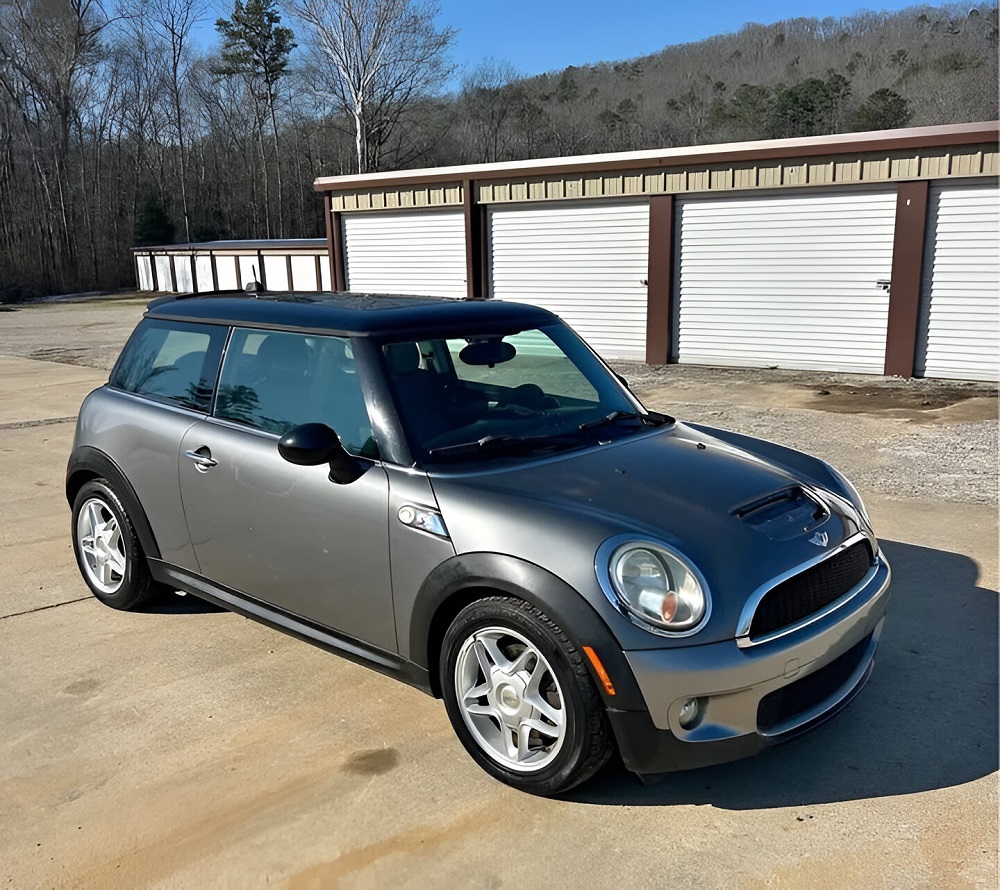
BMW and PSA co-developed the Prince engines for second-gen Minis. Codes include N12 and N16 for non-turbo cars, N14 and N18 for turbo Cooper S and JCW. Most U.S. timing chain failures center on N14 from 2007–2010.
All use a chain-driven dual overhead cam layout. The chain runs from the crank sprocket up to the intake and exhaust cams. VANOS units sit on the cam ends and adjust timing on the fly. There is no external belt, no scheduled replacement interval, and no factory service line calling for routine chain swaps.
Marketing labeled the chain “lifetime.” Internal durability targets often assume about 120,000 miles or 10 years. Field data shows many N14 chains stretch far earlier, with documented failures before 60,000 miles.
The hydraulic tensioner and its cold-start weak point
The Prince chain relies on a spring-loaded hydraulic tensioner. A small internal spring preloads the plunger at startup. Oil pressure then takes over and holds the chain tight against plastic guides.
On early N14 engines, the preload spring is marginal. After sitting overnight, oil drains back from the tensioner body. On cold start, the chain runs slack for a few seconds until oil pressure builds. That slack lets the chain slap the guides.
Low oil level makes this worse. Some Prince engines consume up to 1 quart per 1,000 miles. Half a quart low reduces available oil volume and delays pressure rise. The tensioner’s oil feed passage is small, so any varnish slows extension.
Oil consumption, long intervals, and sludge damage
Factory oil intervals reached 15,000 miles in some service schedules. Many engines ran direct injection with high blow-by and fuel dilution. Short trips kept oil cool and thick with contaminants.
Sludge forms in narrow galleries. The tensioner feed passage can partially clog. Oil pressure at idle may still meet spec, yet the plunger responds slowly. Repeated cold starts with weak tension accelerate chain elongation.
Once the chain stretches, cam timing drifts. DTCs such as P0012 or P0015 can set for cam timing over-retard. A stretched chain also loads the plastic guides harder, raising the chance of guide fracture. Broken guide fragments often end up in the oil pan and can block the pickup screen, cutting oil pressure across the entire engine.
2. Which Mini Coopers sit in the timing chain blast zone
Models, engines, and build years that carry the highest risk
| Chassis | Model & Trim | Engine | Model Years | Primary Timing Risk |
|---|---|---|---|---|
| R56 | Cooper S Hardtop | N14 | 2007–2010 | Cold-start rattle, chain stretch, guide fracture |
| R55 | Cooper S Clubman | N14 | 2008–2010 | Same N14 failures, added heat soak from longer body |
| R57 | Cooper S Convertible | N14 | 2009–2010 | Tensioner drain-back, cam timing faults |
| R56 | Cooper S / JCW | N14 | 2008–2009 | Accelerated wear from higher boost and thermal load |
| R56 LCI | Cooper / Cooper S | N16 | 2011–2013 | Improved tensioner, still prone to guide wear |
| R60 | Countryman S / ALL4 | N18 | 2011–2016 | Upper guide breakage, VANOS oiling issues |
| R61 | Paceman S / JCW | N18 | 2013–2016 | Same N18 top guide fracture risk |
N14 turbo cars form the core of the failure data. Most documented stretch events land between 40,000 and 80,000 miles. Track use, short trips, and extended oil intervals push failures earlier.
N12 and N16 non-turbo cars see fewer catastrophic events. They still use the same chain architecture. Neglected oil service can trigger the same elongation pattern.
Why N14 turbo engines fail earlier and harder
N14 runs higher cylinder pressure from direct injection and turbo boost. Exhaust heat loads the timing side of the head. Oil breaks down faster under repeated heat cycles.
Higher boost in JCW trim increases cam torque demand. The chain sees sharper load reversals during throttle lift and reapplication. Slack grows faster under those oscillating loads.
Field reports show many N14 cars setting cam correlation codes before 70,000 miles. Common DTCs include P0012, P0015, and P0341. Once those codes pair with cold rattle, chain stretch is already measurable.
N18 revisions helped, but guide failures remain
N18 introduced an updated “551” tensioner and revised guides. Double VANOS improved cam control and emissions. Oil routing to the head changed slightly.
Upper timing guide failures now show up more often than chain elongation. The top guide sits between the cam sprockets. Its mounting ear can crack, leaving the chain unsupported across the upper span.
Countryman and Paceman models add weight and AWD load. Heavier curb weight increases torque demand during acceleration. A snapped top guide can allow a tooth jump without extended warning, leading to bent valves in one rotation.
3. How the timing chain failure snowballs into engine damage
The cold-start rattle that signals active wear
Hear a metallic clatter for 2 to 5 seconds on cold start. Noise comes from the timing cover area. It fades as oil pressure rises above idle.
That sound is chain slack striking plastic guides. Lifter tick sounds lighter and higher in the head. Chain slap sounds heavier and sits low at the front.
Repeated slap deforms the guide face. Each cold cycle removes material. After dozens of cycles, elongation becomes measurable and cam timing drifts.
Chain stretch, broken guides, and falling oil pressure
Chain elongation shifts cam phasing. The ECU compensates through VANOS travel. Once adaptation limits hit, correlation codes set.
Common faults include P0012, P0015, P0016, and P0017. Idle may roughen. Throttle response softens under load.
Plastic guide fragments drop into the oil pan. Debris collects on the pickup screen. Oil pressure falls at hot idle below 10 psi in severe cases, starving rod bearings and the tensioner at the same time.
When timing jumps and metal meets metal
Prince engines are interference design. Valves occupy piston space when open. Cam timing keeps them apart by degrees.
If the chain skips one tooth, cam timing shifts roughly 10 to 12 degrees. Two teeth can cause piston-to-valve contact on the next rotation. Bent valves, marked pistons, and cracked guides follow within seconds.
Compression drops on one or more cylinders. Engine may crank fast with no start. Repair shifts from a $1,500 timing kit to a $4,000 to $6,000 engine replacement.
Failure stages and repair odds
| Stage | Typical Symptoms | Engine Risk Level | Common Repair Path |
|---|---|---|---|
| 1 | Brief cold rattle, smooth warm operation | Moderate | Updated tensioner, aggressive oil service |
| 2 | Frequent rattle, cam codes, light power loss | High | Full timing kit replacement |
| 3 | Constant rattle, misfire, rough idle, correlation faults | Very High | Timing kit plus internal inspection |
| 4 | Sudden stall, no-start, loud mechanical impact | Catastrophic | Used or reman engine replacement |
Stage 2 is the economic cutoff. Past that point, guide damage is usually present. At Stage 4, valve damage is common and parts alone can exceed $3,000 before labor.
4. Mini’s factory response without a federal recall
Bulletins and Service Action 61 replaced a recall letter
BMW issued early TSBs in 2008 addressing N14 cold-start rattle. Dealers were given noise criteria and inspection steps. Coverage depended on mileage and warranty status.
Service Action 61 followed in 2010–2011. It targeted specific VIN ranges for timing chain measurement. Owners were not universally notified under NHTSA recall rules.
No U.S. safety recall was filed for the Prince timing chain. The issue was framed as durability and wear, not a crash hazard. That distinction kept it outside mandatory recall territory.
The 68 mm measurement rule that decided your fate
Dealers removed the tensioner and installed Special Tool 11 9 340. The tool measured chain elongation through deflection. A reading over 68 mm triggered full timing set replacement.
Below 68 mm, the repair often stopped at an updated tensioner. The revised part carried stronger preload. Many cars returned later with continued rattle and further stretch.
Full timing kit replacement included chain, guides, sprockets, bolts, and seals. Labor time typically ran 8 to 10 hours. Dealer invoices often landed between $2,000 and $2,700.
How to verify prior campaign work
BMW instructed dealers to punch a “61” on the B-pillar service label. That mark signified Service Action 61 completion. Absence of the punch does not confirm no work was done.
Dealer service records list timing chain kit, tensioner update, or cam correlation repair. Look for part numbers tied to revised tensioners and guide rails. Invoices under goodwill often note defect code 00 11 17 03 00.
A documented full timing kit with updated hardware raises resale value. Cars without proof often trade at a $1,000 to $2,000 discount in private sales.
5. Skeen v. BMW became the recall owners never got
What the lawsuit alleged about the N14 timing system
Filed in 2013, Skeen v. BMW of North America targeted 2007–2010 Cooper S models. Plaintiffs claimed BMW knew of timing defects by 2008. Internal bulletins showed awareness of tensioner weakness and chain elongation.
Owners reported repeat tensioner replacements. Some paid over $3,000 for engine work before 80,000 miles. Court filings described under-designed preload springs and oil service guidance that stretched intervals to 15,000 miles.
The case consolidated multiple complaints in New Jersey federal court. Settlement approval followed in 2016 with a $30 million fund.
Extended warranty terms and hard mileage limits
The settlement extended timing system coverage to 7 years or 100,000 miles from in-service date. Coverage applied to specific 2007–2010 Cooper S vehicles with N14 engines. Eligibility depended on VIN and original delivery date.
Covered parts included the chain, guides, tensioner, sprockets, and related bolts. Oil and filter during the repair were also covered. Failures outside 7 years or 100,000 miles received no automatic protection.
Claims required proof of maintenance. Missing oil change records led to denial in many cases. The hard cutoff remained 100,000 miles, even if failure occurred at 100,001.
Reimbursement rules and caps for prior repairs
| Repair Type | Dealer Reimbursement | Independent Shop Cap |
|---|---|---|
| Tensioner replacement only | 100% of invoice | Up to $120 |
| Full timing chain assembly | 100% of invoice | Up to $850 |
| Engine repair or replacement | Sliding scale percentage | Up to $5,400 |
| Vehicle sold unrepaired | Not applicable | Up to $2,500 |
Dealer repairs reimbursed in full with documentation. Independent shop work faced strict caps. Many full timing jobs at independents exceeded the $850 ceiling.
Engine damage reimbursement followed a sliding scale. Payout shrank as mileage and age increased. At 6 to 7 years and over 87,500 miles, reimbursement dropped to 10% or less.
How the sliding scale reduced engine payouts
| Years from In-Service | <50k | 50k–62.5k | 62.5k–75k | 75k–87.5k | 87.5k–100k | 100k–112.5k |
|---|---|---|---|---|---|---|
| <4 Years | 100% | 85% | 70% | 60% | 40% | 25% |
| 4–5 Years | 85% | 75% | 60% | 40% | 30% | 15% |
| 5–6 Years | 75% | 60% | 50% | 30% | 20% | 10% |
| 6–7 Years | 50% | 30% | 30% | 15% | 10% | 0% |
| 7–10 Years | 25% | 10% | 10% | 5% | 0% | 0% |
A failure at 70,000 miles and 4.5 years landed at 60%. A $5,000 engine bill would return $3,000 under that bracket. After 7 years, most claims dropped to 0% regardless of mileage.
6. N18 updates slowed the crisis but did not end it
The upper guide that snaps without warning
N18 replaced N14 in late 2010 production. It carried a revised “551” tensioner and updated chain guides. Double VANOS improved cam control under load.
A new failure pattern showed up in R60 and R61 models. The upper timing guide between the cam sprockets cracks at its mounting ear. When it breaks, the chain loses support across the top span.
Rattle can start suddenly, even on engines with no prior stretch codes. Some cars jump time within a few hundred miles of the first noise. Bent valves follow on the next high-rpm event, and repair costs climb past $4,000 fast.
Later bulletins and part revisions
Dealers received updated part numbers for guides and tensioners. Revised kits bundled stronger rails and fresh hardware. Labor procedures remained largely the same, requiring front-end teardown.
No broad NHTSA recall covered N18 timing guides. Repairs depended on warranty status or goodwill. Most N18 cars now sit outside any factory coverage window.
Independent shops often replace the upper guide proactively. Parts run about $150 to $250. Full timing kit service still averages $1,200 to $1,800 at an independent shop.
The “timing chain recall” headlines and the reality
Law firm sites often label the issue a recall. Federal recall databases show no nationwide safety recall for Prince timing chains. Verification requires a VIN check through official channels.
Service Action 61 and the Skeen settlement handled most N14 claims. N18 cases rarely reached the same legal scale. As of 2025, no new blanket recall covers these engines.
Any N18 failure past 100,000 miles falls fully on the owner. A skipped chain can turn a $1,500 service into a $5,000 engine swap in one over-rev event.
7. Repair paths and cost math in 2024–2026
What timing chain repairs actually cost today
| Repair Option | Labor Cost | Parts Cost | Total Ballpark (USD) | When It Makes Sense |
|---|---|---|---|---|
| Tensioner replacement only | $400–$600 | $150–$250 | $600–$850 | Early rattle, no guide damage, low mileage |
| Full timing kit, independent shop | $800–$1,200 | $400–$600 | $1,200–$1,800 | Solid car, planning to keep it |
| Full timing kit, Mini dealer | $1,300–$1,900 | $700–$800 | $2,000–$2,700 | OEM parts, possible goodwill coverage |
| Used engine replacement | $2,000–$3,000 | $1,500–$2,500 | $3,500–$5,500 | Bent valves, bottom end still viable |
| Reman or new engine | $2,500–$3,500 | $8,000–$9,000 | $10,500+ | Low-mile car with strong resale value |
Tensioner-only repairs work only in Stage 1 cases. Once guide wear starts, full kit replacement becomes mandatory. Dealer pricing often doubles independent labor rates.
Used engines carry risk. Many salvage N14 motors still have early-design hardware. Installing one without a fresh timing kit invites repeat failure within 20,000 miles.
Repair it or walk away
Second-gen Cooper S values range from $4,000 to $9,000 depending on condition. A $2,500 dealer timing job can equal half the car’s market value. Rust, worn suspension, and turbo issues tilt the decision.
Shops evaluate more than the chain. They check oil pressure at hot idle. They inspect for rod knock, turbo shaft play, and coolant leaks.
If bottom-end wear exists, a timing kit won’t save it. At that point, a $4,500 used engine install may exceed the car’s resale ceiling.
Buying a used Mini with chain awareness
Ask for invoices showing full timing kit replacement. Look for updated tensioner part numbers and guide rails. Service Action 61 documentation adds value.
Cold-start the car after sitting overnight. A 3-second metallic rattle signals active slack. Scan for P0016, P0017, or stored VANOS adaptation limits.
Low mileage means little without service records. A 55,000-mile N14 with 15,000-mile oil intervals carries more risk than an 85,000-mile car with 5,000-mile oil changes and a documented timing kit.
8. Keeping a Prince timing chain alive past 100,000 miles
Oil discipline that protects the tensioner
Cut oil intervals to 5,000 miles. Use high-quality synthetic in 5W-30 or 0W-40 that meets BMW specs. Thin, contaminated oil slows tensioner response on cold start.
Check oil level weekly on N14 and N18 engines. Some consume 1 quart per 1,000 miles under load. Running half a quart low can delay pressure rise by critical seconds.
Replace the oil filter with every change. Sludge and varnish clog the tensioner feed passage. A clean oil circuit maintains stable pressure above 12 psi at hot idle.
Catching slack before it skips teeth
Listen for new cold-start rattle patterns. A noise that grows louder over weeks signals elongation. Scan for cam correlation codes even if the light is off.
Monitor VANOS adaptation values with a scan tool. High correction angles point to stretch. A compression test and bore scope can confirm guide wear before a jump.
At 80,000 to 100,000 miles, proactive chain service becomes reasonable. Many specialists recommend full kit replacement at that mileage on original N14 hardware.
Parts choices when the front cover comes off
Use updated tensioners and revised guide rails. Reinforced or metal-backed guides resist fragmentation. Avoid no-name kits with soft chains and weak fasteners.
Replace crank bolt, cam bolts, and seals during the job. Torque specs matter, especially on cam sprocket bolts that see repeated load cycles. Skipping hardware saves $100 and risks thousands.
Combine water pump and accessory service while access is open. Labor overlap reduces total cost. A full timing kit with quality parts still averages $1,500 to $2,000 at an independent shop.
Sources & References
- Mini Cooper Timing Chain Problems May Stem From Defect – Class Action Lawsuits
- Mini Cooper S (R56): Timing Chain Rattle on N14/N18 Engines | Stedmans Garage
- If you have ever owned or leased any of the following MINI Cooper Models, you could get a payment from this class action settlement and will receive a warranty extension – AWS
- SB-10054635-2047 – nhtsa
- DCSnet Message Important Subject: MINI Timing Chain/Tensioner Class Action Settlement Class Action Settlement Information – nhtsa
- Settlement In MINI Cooper Timing Chain Issue
- How do the N14 & N18 MINI Cooper engines compare? | Blogs …
- Mini Cooper Timing Chain Problems | Dose Independent – El Cajon BMW Experts
- Mini Cooper S Timing Chain Guide: What to Look For – CarInterior
- A Comprehensive Guide to BMW & MINI Timing Chain Problems – Beverley Motor Works
- Symptoms of a Bad Timing Chain Tensioner, Plus FAQ – In The Garage with CarParts.com
- MINI Cooper Timing Chain Information – Cincinnati MINI
- R56 MINI N14 Death Rattle/Timing Chain Issue Explained | Blogs
- Attention: The model information above is for informational purposes …
- Question about engines? : r/MINI – Reddit
- MINI N18 Engine Timing Chain Guide Failure & Replacement – PSC Exclusively German
- MINI Cooper Timing Chain Tensioner – Detroit Tuned
- Why Your MINI’s Timing Chain Is Rattling: Causes & Solutions | Dart Auto
- Mini Cooper Timing Chain Tensioner Replacement Cost Estimate – RepairPal
- Timing Chain Failure – techtalk.ie
- N14 vs N18 : r/MINI – Reddit
- Common BMW N18 Engine Problems Solved Completely with the SneedSpeed N18 Rebuild Kit
- How to Fix the Common Mini Cooper Timing Chain Rattle (N14/N18 Engines)
- Timing Chain Repair : r/MINI – Reddit
- $30M BMW Mini Cooper Timing Belt Class Action Settlement Reached
- Timing Chain Kit N12/N16/N18 Engine – ECS Tuning
- Mini Timing Chain Recall : r/MINI – Reddit
- SB-10057380-1970 – nhtsa
- BMW Mini Cooper Engine Defect Class Action Settlement
- BMW Will Settle Mini Cooper Engine Defect Class Action Lawsuit
- Mini Cooper Timing Chain Recall: What You Need to Know | 10/28/2025
- Judge OKs BMW Mini Cooper Class Action Settlement
- Top Timing Chain Guide N18 Engine R55 R56 R57 R58 R59 R60 Cooper S
- Timing Chain Replacement Cost (2026) | ConsumerAffairs®
- Timing Chain Replacement Cost: 2025 Guide – Car Talk
- Timing Chain Replacement Cost Estimate – RepairPal
- 2024 Mini Cooper Timing Chain Tensioner Replacement Cost Estimate – RepairPal
Was This Article Helpful?