
Fires up with a deep V8 rumble, then ticks at idle. Oil drops a quart between services. A P0430 lights up after a hard tow. That’s how Nissan’s 5.6 starts asking questions.
Since 2004, Nissan has run two main versions of this engine, VK56DE and VK56VD. Early DE trucks fight catalytic reversion and timing chain shoe wear. Later VD models add direct injection, a cam-driven high-pressure pump, and the cylinder #7 scuff scare in 2017–2019 builds.
Power sits strong, 305 to 400 hp depending on year and tune. Torque stays thick down low, perfect for Titans, Armadas, and QX80s that haul weight and heat. But when maintenance slips or design weak spots line up, damage moves fast.
This guide breaks down what actually fails, what the warning signs sound like, and which engines deserve investment versus caution.
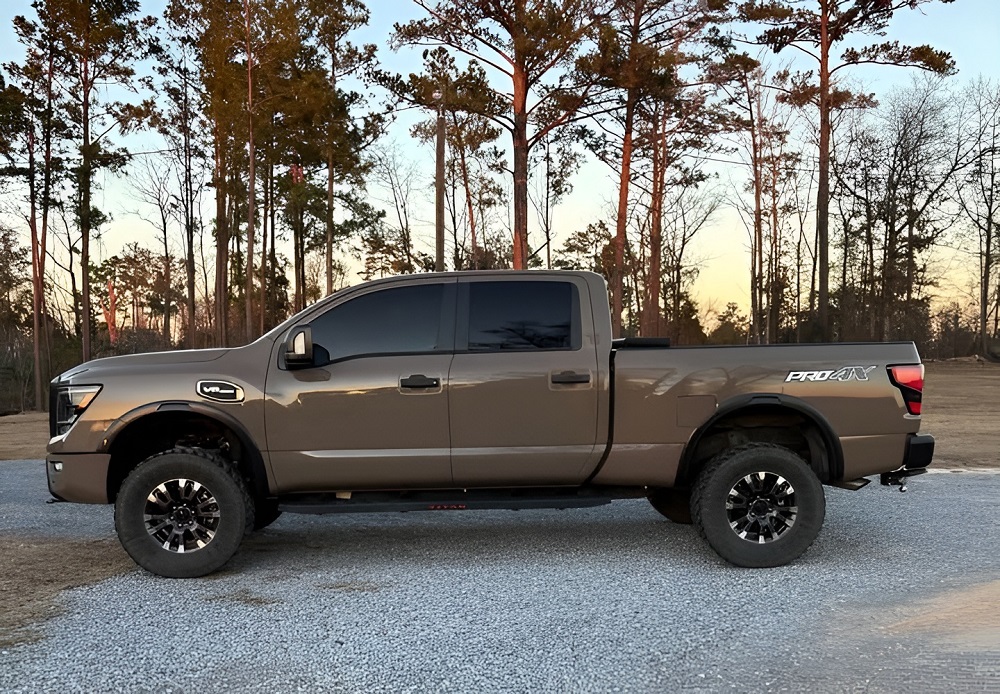
1. VK56 platform overview and what changed under the hood
DE versus VD and why the letters matter
Launched in 2004, the VK56DE powered the first Titan, Armada, and QX56. It runs multi-point port injection, intake-side CVTCS, and a 9.8:1 compression ratio. Oil spec sits at 5W-30. Output lands around 305 to 317 hp and 379 to 385 lb-ft.
Rolled out in 2010, the VK56VD brought direct injection and VVEL. Compression jumps to roughly 11.2:1. Power climbs to 390 to 400 hp with torque over 400 lb-ft in some trims. Nissan mandates 0W-20 full synthetic to keep VVEL and the cam-driven high-pressure pump alive.
Both engines share a 98 mm bore and 92 mm stroke. Displacement holds at 5,552 cc. Oil capacity stays at 6.9 quarts. The hardware around that block changes the failure pattern.
| Engineering metric | VK56DE | VK56VD |
|---|---|---|
| Fuel system | Port injection | Direct injection |
| Valve control | CVTCS intake | VVEL + CVTCS |
| Compression ratio | ~9.8:1 | ~11.2:1 |
| Oil spec | 5W-30 | 0W-20 full synthetic |
| Typical output | 305–317 hp | 390–400 hp |
Timing layout and why chain noise shows up
Both engines run a primary chain off the crank and two secondary chains for the cams. Plastic tensioner shoes guide those chains. Early DE shoes wear through and expose bare metal. Chain contact on steel creates a high-pitched buzz that tracks RPM.
Nissan issued TSBs NTB07-042a and NTB09-128a for chain noise on VQ and VK engines. Updated tensioners reduce wear but don’t eliminate it. Full timing service means chains, guides, tensioners, and crank sprocket. Parts alone often clear $700 before labor.
Fueling and oil demand reshape long-term risk
Port injection on the DE keeps intake valves clean. Fuel sprays across the valve backs every cycle. Carbon rarely becomes a top-end issue unless oil control fails.
Direct injection on the VD leaves valves dry. PCV vapors bake onto hot stems and form hard deposits. Shops recommend walnut blasting every 50,000 to 60,000 miles in heavy-use trucks.
The VD also adds a cam-driven high-pressure fuel pump. A lifter bucket rides between the pump piston and cam lobe. When that bucket wears, metal enters the oil and fuel pressure drops under load.
Where these engines live and how they’re used
DE engines dominate 2004–2015 Titan, Armada, QX56, and NV vans. Many tow, idle, and run hot in commercial duty. Integrated exhaust manifolds with close-coupled cats create a direct path for ceramic debris into the cylinders.
VD engines power 2010+ QX56, QX80, later Armada, Patrol, and second-gen Titan. Luxury buyers expect silence and smoothness. Trucks see heavy tow cycles with oil temps over 230°F on long grades.
2017–2019 VD builds carry the highest risk window for cylinder #7 scuffing. Nissan’s fix calls for short block part 10103-EZ30A when borescope inspection confirms deep vertical scoring. Out-of-warranty replacement commonly exceeds $10,000 installed.
2. VK56DE exhaust design and how the cats destroy the cylinders
Close-coupled converters and the reversion path
Mounts the primary catalytic converter inside the exhaust manifold. The ceramic brick sits inches from the exhaust ports. Heat rises fast on cold start, which helps emissions. It also puts fragile substrate right next to valve overlap events.
Misfires, rich fuel trims, or overheating crack the honeycomb. The brick fractures and turns into fine ceramic dust. During valve overlap at low RPM or sudden decel, exhaust pulses reverse direction. That pulse can pull dust back through an open exhaust valve.
That dust enters the cylinder at 1,000°F gas temperatures.
What ceramic dust does inside the bore
Grinds between piston rings and iron liners like lapping compound. The moly-coated piston skirts lose their surface finish first. Vertical scoring follows, often visible with a borescope through the plug hole.
Compression drops as ring seal fails. Oil slips past the rings and burns in the chamber. Consumption jumps from half a quart per 1,500 miles to a quart per 500 miles in late-stage engines.
Intake plenums collect debris through reversion and re-ingestion. Shops often replace the intake manifold during rebuild to prevent re-seeding a fresh short block.
Early warnings versus engine-ending damage
| Driver clue or DTC | Mechanical condition | Damage stage |
|---|---|---|
| P0420 or P0430 only | Catalyst efficiency dropping | Early |
| Rotten egg smell, mild power loss | Substrate overheating or melting | Mid |
| Metallic rattle from manifold | Brick broken, pieces loose | High |
| Oil use + misfires + cat codes | Ceramic in cylinders | Late |
Exhaust backpressure climbs when the brick melts. Power falls off under load above 3,000 rpm. Sulfur smell increases as conversion efficiency drops.
Once oil consumption spikes and plugs foul, the damage sits in the cylinder walls. Short block replacement on a VK56DE typically runs $6,000 to $9,000 installed.
3. VK56DE timing system failures and the chain buzz warning
Plastic tensioner shoes that wear to metal
Runs a primary crank chain and two secondary cam chains. Secondary tensioners use nylon shoes. Early 2004–2010 units wear through that plastic face.
Chain then rides directly on the metal piston. A sharp buzzing or whining noise rises with RPM. Many trucks show it between 80,000 and 130,000 miles.
Nissan addressed the issue in TSBs NTB07-042a and NTB09-128a. Updated tensioners slow the wear but don’t change the design.
Chain stretch, cam timing drift, and jump risk
Chain “stretch” comes from pin and plate wear. Cam timing retards as the chain elongates. Fuel trims shift and throttle response dulls.
Cam and crank correlation codes can appear. Cold starts become rough if timing drifts far enough. On a bad day, the chain skips teeth under load.
The VK56DE is an interference engine. A full jump can bend valves.
Noise patterns that separate issue from teardown
| Symptom | Likely cause | Urgency |
|---|---|---|
| Brief rattle at cold start | Tensioner bleed-down | Monitor |
| Constant high-pitched buzz | Shoe worn through | Plan full timing job |
| P0011, P0021, cam/crank codes | Chain stretch, timing drift | High priority |
| No-start after loud bang | Chain jump or break | Engine teardown |
Cold-start rattle that fades in seconds often points to oil drain-back. Continuous buzz at hot idle points to metal-on-metal contact. Ignoring that noise leads to chain and guide damage.
A complete timing service includes both secondary chains, guides, tensioners, and crank sprocket. Parts commonly exceed $900. Labor pushes total repair into the $2,000 to $3,500 range on most Titans and Armadas.
4. VK56VD high-pressure fuel system and cylinder damage hotspots
Cam-driven fuel pump and lifter bucket wear
Drives the high-pressure fuel pump off a dedicated cam lobe. A steel lifter bucket sits between the lobe and pump piston. That bucket carries constant load at idle and full throttle.
Poor lubrication or weak metallurgy chews through the bucket face. The cam lobe then grinds metal into the oil. Fuel pressure drops under load as effective pump stroke shrinks.
Drivers report long crank times and a ticking from the rear of the engine. Fuel rail pressure codes can set under heavy throttle. Repair often means pump, bucket, and sometimes a camshaft, which pushes the bill past $2,500.
Direct injection carbon and airflow choke
Sprays fuel straight into the chamber. Intake valves stay dry and collect oil vapor from the PCV system. Heat bakes that mist into hard carbon on the valve stems.
Idle turns rough and throttle response dulls. Misfires appear without bad coils or plugs. Power falls off near redline as airflow narrows.
Fuel additives in the tank don’t touch those valves. Walnut blasting every 50,000 to 60,000 miles restores flow. Most shops charge $500 to $900 for a proper blast service.
Cylinder #7 scuffing in 2017–2019 builds
Shows up most in 2017–2019 Titan, Armada, and QX80 models. Owners report a sharp knock or tick early in life, often under 50,000 miles. Nissan issued TSB NTB19-057 outlining borescope inspection through the #7 plug hole.
Heavy vertical scoring on the cylinder wall confirms failure. Light random marks are normal; deep concentrated scuffing is not. The prescribed fix calls for short block 10103-EZ30A.
Oil jet orientation matters during replacement. Bank 2 uses short jet 13081-AR000. Bank 1 uses long jet 13081-AR010. A dealer-installed short block commonly exceeds $10,000 outside warranty.
5. Oil, heat, and the thin line between healthy and cooked
0W-20 flow and what happens when it’s wrong
Specifies 0W-20 full synthetic on all modern VK56VD builds. Oil feeds VVEL actuators, timing tensioners, and the HPFP cam lobe. Cold starts demand fast flow through tight passages.
Thicker oil delays pressure at the rear cam journals. HPFP buckets see metal-on-metal contact during those first seconds. Repeated dry starts accelerate lobe and bucket wear.
Nissan lists 7,500-mile intervals for normal service. Severe duty cuts that to 3,750 miles for towing, short trips, or dusty use. Ignoring that schedule leads to sludge in VVEL control galleries.
Oil loss, dilution, and ring damage
Cat reversion on DE engines spikes oil consumption fast. Scored cylinder walls let oil bypass rings under load. Blue smoke shows on decel or long downhill pulls.
VD engines face fuel dilution from short-trip driving. Unburned fuel thins the oil and lowers film strength. Owners have reported losing 2 to 3 quarts over 7,000 miles on neglected trucks.
Low oil level starves rear cylinders first during hard acceleration. A 6.9-quart system drops below safe pickup margin when 2 quarts are missing.
Cooling system limits under tow load
Runs aluminum radiator cores with narrow tubes. Debris and old coolant clog passages over time. Heat transfer falls as internal scaling builds.
Heavy towing can push coolant temps past 220°F on long grades. Oil temps climb higher without an external cooler. Head gaskets and rear cylinders take the stress.
Thermostats that stick late raise steady-state temps. Weak fan clutches reduce airflow at low speed. Replacing radiator, thermostat, and fan components often totals $800 to $1,500 in parts and labor.
6. What failure feels like from the driver’s seat
Noise signatures that separate normal from terminal
Hears a faint tick at idle on most VK56 engines. Injectors click in a steady rhythm. That sound stays light and even.
Chain buzz carries a sharper tone and rises with RPM. It doesn’t fade once warm. Metal-on-metal guide contact creates a high-frequency whine.
HPFP bucket wear produces a knock at the rear of the engine. It sharpens under throttle. Deep rod knock hits low in the block and grows louder with load, often below 2,500 rpm.
Codes that point to the real system
| Code or complaint | Most likely source | Engine bias |
|---|---|---|
| P0420 / P0430 | Catalyst efficiency loss | Mostly DE |
| P0011 / P0021 | Cam timing drift | Mostly DE |
| Fuel pressure DTCs | HPFP output drop | VD |
| Random misfire + oil use | Scored cylinders | DE, some VD |
| Rough idle, no codes | Carboned intake valves | VD |
Cat codes paired with sulfur smell raise reversion risk. Cam timing codes with chain noise point toward worn guides. Fuel pressure faults under heavy throttle often trace to a worn pump bucket.
Smoke, power loss, and oil level clues
Blue smoke on decel signals oil past valve guides or rings. Heavy smoke under load suggests ring seal failure. Oil use over 1 quart per 1,000 miles demands compression testing.
Loss of top-end pull with clean plugs often links to carbon buildup. Sluggish response with long crank leans toward fuel pressure loss. Persistent oil level drop below 4 quarts in the pan risks rear cylinder starvation during hard acceleration.
7. Model-year risk map and which builds worry techs most
2004–2010 VK56DE trucks with original manifolds
Left the factory with close-coupled catalytic converters in the manifolds. Many still run the original bricks past 150,000 miles. Thermal cycling cracks the substrate over time.
Short-trip city use accelerates brick failure. Repeated cold starts dump raw fuel into hot cats. Misfires spike converter temperature past 1,600°F.
Once ceramic breakup begins, reversion risk rises fast. Engine replacement on high-mile DE trucks often exceeds the market value of early Titans.
2011–2015 VK56DE with aging timing hardware
Received updated tensioners and chains. Mileage now pushes most past 120,000. Plastic guides harden and wear with age.
Oil intervals stretched beyond 7,500 miles increase chain wear. Cam timing drift appears before hard failure. Full timing service often becomes due before 150,000 miles.
Well-maintained examples run strong past 200,000 miles. Neglected units face $2,000 to $3,500 timing repairs before any bottom-end work.
2010–2016 VK56VD early direct-injection era
Introduced VVEL and cam-driven HPFP. Oil quality now directly affects fuel system life. Carbon buildup starts showing by 60,000 miles in heavy-use trucks.
Luxury SUVs see fewer tow cycles. Fleet Titans rack up idle hours and heat. HPFP bucket wear and intake carbon dominate failure reports.
Top-end repairs with pump and cam replacement can cross $3,000.
2017–2019 VK56VD with cylinder #7 exposure
Showed concentrated scuffing in rear cylinders. Complaints often start below 50,000 miles. Nissan directs borescope inspection under TSB NTB19-057.
Confirmed scuffing requires short block 10103-EZ30A. Warranty covers 5 years or 60,000 miles. Out-of-pocket replacement typically exceeds $10,000 installed.
| Era | Typical years | Primary risk | Repair exposure |
|---|---|---|---|
| Early DE | 2004–2010 | Cat reversion | $6,000–$9,000 short block |
| Late DE | 2011–2015 | Timing chain wear | $2,000–$3,500 timing job |
| Early VD | 2010–2016 | HPFP, carbon | $2,500–$3,500 top end |
| 2017–2019 VD | 2017–2019 | Cylinder #7 scuff | $10,000+ short block |
8. Preventive fixes, smart upgrades, and the cost reality
Preventive moves that change the odds
Shorten oil intervals to 3,000–4,000 miles on tow rigs. Use quality 0W-20 on VK56VD and stick with 5W-30 on DE. Fresh oil protects chain guides, VVEL passages, and HPFP lobes.
Replace close-coupled manifolds on high-mile DE trucks before failure. Many owners swap to headers with relocated cats. That removes ceramic from the exhaust port area.
Clean intake valves on VD engines before performance drops. Walnut blasting at 50,000-mile intervals keeps airflow stable. Ignoring carbon leads to misfires and lost top-end power.
Aftermarket fixes and their limitations
Headers reduce reversion risk and free some torque. Emissions inspections can fail without proper tuning. Some states flag relocated cats during visual checks.
HPFP upgrade kits and improved lifter buckets exist for VD engines. Installing them before metal contamination limits cam damage. Waiting until noise appears often means replacing the camshaft.
Oil catch cans reduce intake valve deposits. They require regular draining. Poorly maintained cans create vacuum leaks.
Repair costs versus truck value
| Repair type | Typical cost range | When it makes sense |
|---|---|---|
| DE timing set | $2,000–$3,500 | Clean chassis under 180,000 miles |
| DE short block | $6,000–$9,000 | Rust-free truck, strong transmission |
| VD HPFP + cam | $2,500–$4,000 | Early noise, low debris in oil |
| VD short block | $10,000+ | Under warranty or high resale trim |
A 2008 Titan worth $7,000 rarely justifies a $9,000 engine. A clean 2019 QX80 with strong resale may justify a warranty short block. Once repair costs exceed 60% of market value, most owners sell or part out.
Sources & References
- Nissan VK engine – Wikipedia
- Japanese Sleeper: Nissan’s VK56 V8 Is A Relatively Unknown Monster – EngineLabs
- 5.6 Spec | PDF | Engines | Piston – Scribd
- 2007-2009 Nissan Titan Engine 5.6L VIN Z 4th Digit VK56DE | eBay
- Time Is Running Out For The Last Nissan In America With A V8 Engine – CarBuzz
- 2022 Nissan TITAN Crew Cab Specifications Mechanical – Regulations.gov
- Nissan Armada Oil Type | All Model Years – AutoCenters Nissan
- Nissan VK56DE, VK56VDS, VK45DE, VK50VE Racing Connecting Rod Bearings – CR8051XP
- How to Replace Exhaust Manifold Catalytic Converter Assembly 2004-2015 Nissan Titan
- OEM Nissan / Infiniti Exhaust Manifold w/ Cat- VK56DE – Z1 Off-Road
- How to Recognize and Repair Catalytic Converter Issues in Nissan’s
- Catalytic Converter Issues – MotorWeek
- Exhaust Reversion • Help Center – Summit Racing
- Reasons For Catalytic Converter Failure
- Everett Catalytic Converter: Causes of Catalytic Converter Failure | Catalytic Converter service in Everett, Lynnwood, Edmonds, Marysville, Mill Creek, Snohomish, Washington | Conaway Motors
- General Information Broken Valves, Broken Pistons and Piston to Cylinder Head Damage — Catalytic Converter Failures – nhtsa
- NissanPartsPuller VK56 Catalytic Converter Kit
- Exhaust manifold issues : r/Nissan – Reddit
- 3 Engine Problems You Should Always Fix at Your Nissan Dealer
- Pathfinder / Xterra / Frontier; Buzzing / Whining Noise from Timing Chain Area
- VK56 Engine Rebuild Part 10 (Timing Chain/Oil Pump/Front Cover) Titan/Armada/QX56
- VQ Engine Timing Chain Noise Bulletin | PDF | Propulsion – Scribd
- NISSAN RECALL CAMPAIGN BULLETIN – nhtsa
- 5 Signs Your Nissan’s Timing Chain Needs Replacement [2026] – Tacoma Nissan
- NISSAN RECALL CAMPAIGN BULLETIN – nhtsa
- VK56DE OEM Nissan Master Timing Kit – VVT – Z1 Off-Road
- Nissan / Infiniti VK56VD Hitachi High Pressure Fuel Pump – Z1 Off-Road
- Nissan Techs what’s your impression of reliability of the New Titan XD – Reddit
- The Truth about HPFP Failure. What causes it, and what can YOU do about it? – YouTube
- Nissan VK56VD High Pressure Fuel Pump Kit – Luso Overland
- Symptoms Of A Bad High Pressure Fuel Pump – YouTube
- Is Your HPFP Going BAD? Here’s How to Tell – YouTube
- Bad High Pressure Fuel Pump Symptoms: HPFP Failure Signs – YouTube
- Why do DI engines carbon up so bad? : r/AskMechanics – Reddit
- Does direct injection cause carbon buildup – Submit Your Question HERE – CarKiller
- Oil consumption in GDI and bg fuel cleaner : r/MechanicAdvice – Reddit
- NISSAN RECALL CAMPAIGN BULLETIN – nhtsa
- At what mileage would the cylinder 7 knock not be an issue? : r/NissanTitan – Reddit
- engine knock or tick noise – nhtsa
- HELP I lost at least 3 quarts of oil thru 7000 miles (2018 SV 65k miles) : r/NissanTitan
- 2008-2012 rogue; reduced performance due to cvt fluid temperature protection logic – nhtsa
- 2008-2012 rogue; reduced performance due to cvt fluid temperature protection logic – nhtsa
- 2024 Nissan Titan Maintenance Schedule – Pohanka Nissan of Fredericksburg
- SERVICE & MAINTENANCE GUIDE – Nissan USA
- How to Choose the Best VK56 Engine for Your Needs: A Complete Buying Guide
- Nissan Armada Maintenance Schedule
- INFINITI QX80 Maintenance Schedule
- Nissan Armada & Titan, Infiniti QX56 & QX80 – High Pressure Fuel Pump Lifter Bucket replacement – YouTube
- Nissan Safety Recalls, VIN Lookup, & Service Info
- Part 573 Safety Recall Report 25V437 | NHTSA
- Nissan recalls nearly 444K vehicles for engine failures | WardsAuto
- Nissan Faces Class Action Lawsuit Over Alleged VC-Turbo Engine Defect
- Nissan Is Being Accused Of Selling Defective Engines | AutoGuide.com
- How reliable is the Nissan 5.6l V8?? : r/whatcarshouldIbuy – Reddit
Was This Article Helpful?