
Shudders off the line. Revs climb, speed doesn’t. Feels like the gearbox is slipping on ice. That’s how many Nissan Versa CVTs start to go.
From 2007 through 2026, Nissan cycled the Versa through old 4-speed automatics and several Jatco-built Xtronic CVTs. The early 4-speed holds up.
The second-gen JF015E CVT7 racks up the most judder complaints, especially 2012–2016 cars. Third-gen units improve belts, pumps, and software, but heat and fluid still decide their fate.
This guide breaks down which years carry real risk, how belt slip turns into P17F0, what limp mode actually means at 65 mph, and how warranty extensions like Martinez v. Nissan North America changed the repair math.
Then we’ll get blunt about fluid intervals, cooling upgrades, and when replacing the unit makes sense.
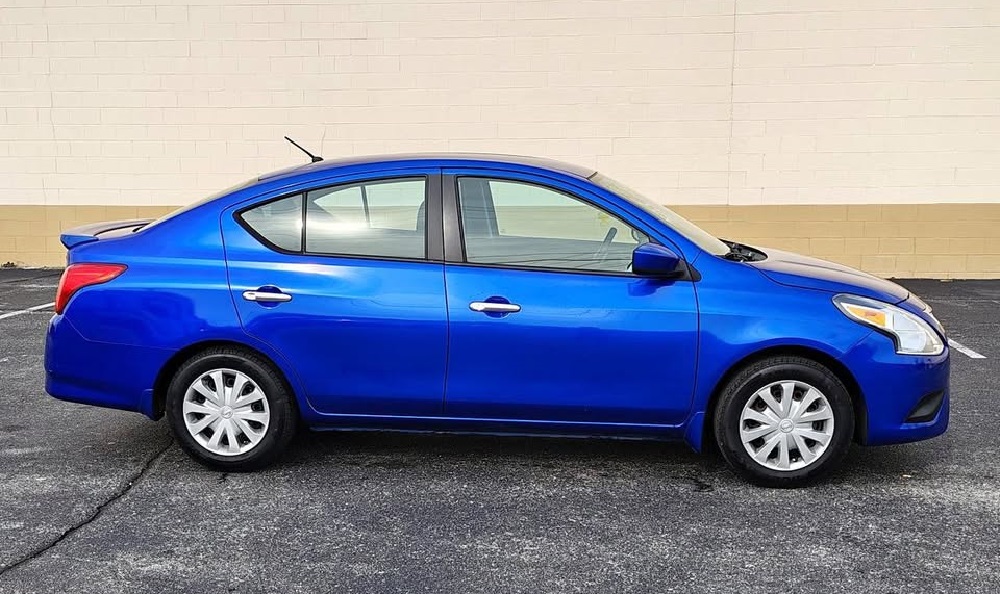
1. Versa transmission eras and the hardware under the floor
First generation 2007–2011, the 4-speed survivor and early CVT experiment
Rolled out with real choices. 5-speed manual, 6-speed manual, a 4-speed automatic, and an early Xtronic CVT. The 4-speed, RE4F03B, uses planetary gears and proven hydraulic control. It handles the 1.6L and 1.8L engines without drama past 200,000 miles when serviced.
Early CVT models used the Jatco JF009E (RE0F08A). That unit relies on a steel push-belt and variable pulleys. Heat and fluid condition decide its lifespan. Failures show up, but not at the scale seen later in the CVT7 cars.
Most first-gen complaints today trace to age, worn solenoids, or fluid neglect. A clean 4-speed example still avoids the $5,000 replacement math tied to later CVTs.
Second generation 2012–2019, the CVT7 risk that backfired
Standardized around the 1.6L and the Jatco JF015E, branded CVT7. Manual options faded fast in the U.S. market. The CVT7 packs a 2-speed auxiliary planetary set inside the CVT case. That design widened ratio spread without huge pulleys.
The internal low-to-high range shift added clutch packs and extra solenoids. Hydraulic timing had to be exact at light throttle. Miss the timing and RPM flares between 20 and 40 mph start showing up.
2012–2016 models post the highest judder rates. TSB NTB15-014C outlines road-test steps to trigger it at about 10% throttle up to 40 mph. Many of those cars log P17F0 before 100,000 miles and end up with full CVT replacement.
Third generation 2020–2026, revised Xtronic and the manual exit
Arrived with updated Xtronic hardware, often referenced as the JF020E (RE0F12A) family. Nissan revised belt metallurgy and pump design. Software now simulates stepped shifts to calm engine drone.
Complaint volume drops compared to the 2012–2016 cluster. Failures still track back to heat and long fluid intervals. Limp mode still triggers around 230–240°F fluid temperature in high-load conditions.
2025 marks the end of the 5-speed manual in the U.S. lineup. CVT becomes the only path. A full CVT replacement on a late-model Versa still runs $4,500 to $8,000 at retail labor rates.
| Generation | Years | Engines | Transmission choices | Primary Jatco unit | Reliability headline |
|---|---|---|---|---|---|
| Gen 1 | 2007–2011 | 1.6L, 1.8L | 5MT, 6MT, 4AT, early CVT | JF009E / RE0F08A | 4AT durable, early CVT mixed |
| Gen 2 | 2012–2019 | 1.6L | 5MT limited, CVT7 dominant | JF015E / RE0F11A | Core judder and early CVT failures |
| Gen 3 | 2020–2026 | 1.6L | 5MT to 2024, CVT only after | JF020E / RE0F12A | Improved hardware, still heat-sensitive |
2. How the Versa CVT tears itself apart under heat and load
Fluid cooks first, then pressure drops
Runs hot in city traffic. Stop-and-go driving pushes CVT fluid past 220°F fast. Nissan NS-3 fluid carries line pressure and cools the belt and pulleys. Once temps push into the 230–240°F range, additive breakdown starts.
Viscosity falls. Line pressure dips under load. The steel push-belt starts micro-slipping on the sheaves.
Slip creates more heat. Heat creates more metal debris. That debris circulates through the valve body and solenoids, cutting pressure even further. Limp mode often triggers once fluid temp crosses the mid-230°F range and slip counts stack in the TCM.
Belt and pulley wear that no software can fix
The JF009E and JF015E use a segmented steel push-belt clamped between two variable pulleys. Hydraulic pressure squeezes the belt to transmit torque. Under light throttle, clamp force drops to improve MPG. That’s where slip starts.
Grooves form on pulley faces. Bearings supporting the movable sheaves start to pit. In some production runs, hardness mismatches between shaft and bearing accelerate wear.
Once the pulley face scores deep enough, the belt can’t hold. Full failure shows up as a locked pulley or snapped belt. Repair path shifts from valve body work to full unit replacement, typically $4,500 to $8,000 installed.
The CVT7’s internal range shift that triggers violent judder
The JF015E CVT7 adds a 2-speed auxiliary gearbox inside the case. A clutch pack switches between low and high ranges. That shift happens during light acceleration around 20–40 mph. Hydraulic timing must be exact.
Debris in the valve body or a weak range solenoid delays clutch apply. Engine RPM flares 500 to 1,000 rpm with no matching road speed gain. Drivers feel it as a sharp shudder or rapid pulsing through the seat.
Repeated flare events log slip data in the TCM. Once thresholds hit, P17F1 or P17F0 stores. A stored P17F0 after confirmed road test usually ends with a complete CVT assembly replacement under Nissan’s service procedure.
3. Nissan Versa transmission symptoms, codes, and failure staging
Judder that shakes the seat, not the engine
Roll into light throttle from a stop. The car vibrates in quick pulses. It feels like driving over rumble strips at 25 mph. That’s classic CVT judder.
Normal CVT behavior feels smooth and steady. RPM rises and holds. Judder shows up in a narrow window, often 15 to 40 mph on slight grades. It starts intermittent, then becomes repeatable in the same speed range.
Nissan’s diagnostic bulletin NTB15-014C instructs a slow acceleration to 40 mph at about 10% throttle to confirm it. Once repeatable, the TCM logs slip data that feeds straight into P17F1 or P17F0.
Limp mode that destroys highway confidence
Climb a long grade in summer heat. Fluid temps creep past 230°F. The TCM sees high temp or repeated slip events. It locks the transmission into a fixed ratio.
Throttle input stays the same. Acceleration drops off hard. The car struggles to hold 60 mph on the highway. No grinding, no bang, just a gutless response.
This is failsafe strategy. Torque request gets limited to protect the belt and pulleys. Fluid temps near 240°F often trigger this behavior in stressed units.
High-value CVT codes and what they mean in the bay
| Code | Scan tool description | What’s happening mechanically | Severity |
|---|---|---|---|
| P0746 | Pressure control solenoid “A” performance | Valve body wear or debris blocking pressure regulation | Medium |
| P0868 | Transmission fluid pressure low | Pump output low, hot thin fluid, or internal leakage | High |
| P17F0 | CVT judder, T/M inspection | Sustained belt slip recorded by TCM | Critical |
| P17F1 | CVT judder, control unit inspection | Early slip detection, may respond to valve body repair | High |
| P1778 | Step motor function | Stepper motor can’t adjust pulley ratio as commanded | Medium |
Drop the pan on a P0868 car and you often find metallic paste in the fluid. Line pressure has already fallen below safe clamp force. Keep driving and the belt starts cutting grooves into the sheaves.
A confirmed P17F0 on a 120,000-mile 2014 Versa usually ends in full CVT replacement. Most shops won’t risk a valve body at that stage. Installed cost still lands between $4,500 and $8,000 depending on labor rates and reman source.
4. Nissan’s response, TSB logic and the warranty reset
Judder bulletins that tighten the noose
Issued TSBs once complaints spiked. NTB15-014C spells out the road test and data capture for judder. Techs must reproduce vibration at light throttle and confirm slip counts in CONSULT. If slip crosses Nissan’s threshold, replacement gets authorized.
Enhanced diagnostic logic updates raised slip sensitivity. Cars that once drove with mild shudder now set codes sooner. That shift reduced gray-zone cases and increased documented failures. Logged slip data becomes the deciding factor in a $6,000 claim.
Martinez settlement and the 84,000-mile line in the sand
Filed as Martinez v. Nissan North America, Inc., it covered 2018–2019 Versa and Versa Note models. CVT warranty extended to 84 months or 84,000 miles. Prior dealer repairs qualified for full reimbursement. Independent shop reimbursement capped at $5,000.
Owners with two or more CVT replacements received a $1,000 voucher toward a new Nissan or Infiniti. Claims required invoices, proof of ownership, and mileage documentation. Once past 84,000 miles, coverage drops back to standard policy.
A 2019 Versa at 90,000 miles falls outside that extended window. Full retail replacement then lands between $4,500 and $8,000.
Write IP Chara and why calibration makes or breaks the repair
Every valve body has unique flow characteristics. Nissan’s “Write IP Chara” procedure programs those values into the TCM. CONSULT-III plus is required. Battery voltage must stay between 12.0V and 15.5V during the write.
Procedure includes key ON, engine OFF, brake applied, selector in Reverse, throttle at half stroke. The TCM writes calibration data from the QR code tied to that hardware. Skip this step and line pressure targets won’t match the solenoids.
Improper calibration leads to instant flare, repeat judder, or fresh P17F1 codes within miles. Shops that replace hardware without IP write often see the car back on a tow truck the same week.
5. Maintenance and upgrades that decide whether the CVT lives or fails
End the lifetime fluid myth at 30,000 miles
Marketed as inspect-only fluid. Real-world wear tells a different story. NS-3 fluid carries clamp pressure and cooling load. It shears down with heat and contamination.
Metallic paste builds in the pan by 40,000 to 60,000 miles in hard city use. Line pressure stability drops as viscosity falls. Belt slip counts rise long before a warning light shows.
Drain-and-fill every 30,000 to 50,000 miles keeps pressure stable. Ignore it and slip data builds toward P17F0.
Filters and service parts that actually matter
Versa CVTs use an internal mesh strainer and an external cartridge filter. The cartridge, part number 31726-3JX0A, catches fine debris the strainer misses. Debris left in circulation scores valve body bores and sticks solenoids.
Drop the pan, inspect for glitter or flakes. Replace the cartridge filter and pan gasket each time. Fresh NS-3 fluid runs about 5 to 7 quarts per drain-and-fill depending on model year.
| Component | Typical Part Number | Function | Practical Interval |
|---|---|---|---|
| CVT Fluid NS-3 | Nissan NS-3 | Clamp pressure, cooling, lubrication | 30,000–50,000 miles |
| Cartridge Filter | 31726-3JX0A | Fine metal debris filtration | Every major service |
| Pan Gasket | 31397-1XF0D (varies) | Case seal after pan removal | Replace when pan is off |
| Cooler Kit Assembly | 21606-3JX1C / 21606-3JX2C | Supplemental fluid temperature control | Hot climates or heavy use |
Skip the cartridge filter and debris keeps cycling. That debris accelerates bore wear in the valve body.
Cooling upgrades that drop failure odds fast
Factory coolers on second-gen cars run small. Stop-and-go traffic pushes fluid temps past 220°F easily. Add a plate-and-fin auxiliary cooler in front of the condenser. Plumb it in series with the factory cooler.
Temperature drops of 30°F to 50°F are common under load. Lower temps slow fluid shear and reduce slip counts. High-heat regions benefit most.
Installation costs range from $200 to $600 in parts and labor. A cooked CVT replacement still lands between $4,500 and $8,000.
6. Repair economics and the hard math behind replacement
Dealer replacement and the price of a fresh unit
Quote from a dealer usually starts high. New or Nissan-rem, an CVT installed runs $5,500 to $8,000 in many markets. Labor includes subframe drop on several Versa models. Book time often lands between 8 and 12 hours.
Dealer installs typically carry a 12-month or 12,000-mile parts warranty. Some Nissan reman units extend that coverage. Fluid, programming, and “Write IP Chara” get bundled into the total.
On a 10-year-old Versa worth $4,000 to $6,000 private party, that math gets ugly fast. The transmission bill can exceed the car’s resale value by $1,500 or more.
Independent reman units and what you’re really buying
Independent shops source reman units from specialty builders. Suppliers like TD REMAN incorporate hardened valves and updated bearings. Some units include revised pump components and improved bore sleeves.
Pricing often ranges from $4,500 to $6,500 installed. Warranty terms vary from 12 months to 36 months, depending on the builder. Calibration still requires proper IP write and relearn.
Cheap used CVTs from salvage yards run $1,500 to $2,500 plus labor. Unknown fluid history and prior slip data make those a risk. A used unit with hidden belt wear can fail within 10,000 miles.
When walking away makes financial sense
Stack a $6,000 repair against a car valued at $5,000. Add 120,000 miles and a stored P17F0. Internal belt slip already logged. Valve body repair won’t reset worn pulley faces.
Prior fluid neglect compounds risk. No service records means higher chance of repeat failure. Insurance and registration costs keep climbing on aging vehicles.
At that point, selling as-is for $2,000 to $3,000 can be the cleaner exit. Pouring $6,000 into a high-mileage CVT rarely pencils out beyond the 84,000-mile extended warranty window.
7. 2020 and newer Versa CVTs, better hardware but same rules
Revised Xtronic internals and lower complaint rates
Launched with updated Xtronic units in 2020. Nissan revised belt metallurgy and pulley surface treatment. Oil pump design improved flow at low RPM. Software now manages torque more smoothly during takeoff.
Failure rates dropped compared to 2012–2016 cars. Fewer early P17F0 reports under 60,000 miles. Dual-path oiling improves lubrication during slow city driving. That reduces localized hot spots on the sheaves.
Heat still drives failure. Fluid neglected past 50,000 miles still shears down. Limp mode still triggers once temps push toward 240°F under sustained load.
Versa against Yaris and Accent in drivetrain durability
Toyota Yaris sticks with conventional automatics in most U.S. trims. Hyundai Accent used a 6-speed automatic before discontinuation. Both rely on planetary gearsets and clutches instead of steel belts.
Planetary automatics tolerate higher fluid temps without belt slip risk. They still wear clutches, but failures tend to show gradual shift flare, not instant limp mode. Rebuild costs often land between $3,000 and $5,000.
Versa keeps purchase price low. Parts availability stays strong. Resale takes a hit once out of warranty due to CVT reputation. A 2020+ Versa still faces a $4,500 to $8,000 replacement bill if the CVT fails outside coverage.
Sources & References
- Why Is Nissan Dropping the Nissan Versa 5-Speed Manual?
- List of Jatco transmissions – Wikipedia
- Car History: Nissan Versa – dubizzle
- Altima, Sentra, Versa and Juke CVT Warranty Extension Reinstatement Request
- Nissan Versa Generations | CarsDirect
- Nissan Versa Transmission Guide: How to Choose & Maintain – CarInterior
- Nissan Versa 2007-2011: Pros and Cons, Problems – Samarins.com
- What You Need to Know About Jatco CVT in Nissan Vehicles – CarInterior
- Nissan Versa CVT Transmission Guide: What to Look For – CarInterior – Alibaba.com
- Jatco CVT Guide: What to Look for in a Used Nissan or Renault – CarInterior
- Understanding CVT Warning Signs Before Failure | Rohnert Park …
- 8 Common Symptoms to Identify a Transmission Problem – CVT NZ
- JF015E: Common Issues – Gears Magazine
- How to Choose a Jatco Transmission: A Practical Guide – CarInterior
- Nissan CVT Issues: What You Need To Know – Crown
- Experiencing Nissan CVT Problems in Monroe, NC? Common Symptoms & Solutions
- Troubleshooting Common CVT Transmission Issues in Nissans – simon’s auto repair
- CVT warning signs to watch? : r/Nissan – Reddit
- Drain and Fill vs Flush Transmission: Which Is Better for a Nissan?
- Nissan CVT Transmission: 10 Warning Signs You Can’t Ignore – The Barry Law Firm
- Most Common CVT Transmission Problems – In The Garage with CarParts.com
- Nissan CVT Transmission Problems: Affected Models and Legal Help
- Nissan Versa Reliability and Common Problems – In The Garage with CarParts.com
- Nissan Pathfinder CVT Lawsuit | Shudder Problem | ClassAction.org
- What’s causing the Nissan CVT transmission issues? : r/MechanicAdvice – Reddit
- Nissan; Enhanced Diagnostic Logic for CVT Judder – nhtsa
- NISSAN RECALL CAMPAIGN BULLETIN – nhtsa
- Understanding the Nissan CVT “Judder” Code and how it relates to …
- 2012-2016 Sentra; Belt and Pulley Sub-assembly Diagnosis and Repair – nhtsa
- P0868 Code: Transmission Fluid Pressure Sensor Low – In The Garage with CarParts.com
- Friends car, recommended new transmission : r/MechanicAdvice – Reddit
- Minerva Martinez, et al. v. Nissan North America, Inc.
- Nissan CVT Stringer Class Action – BBB National Programs
- QUALITY ACTION – nhtsa
- 2022 Nissan Versa Transmission Repair and Replacement Prices & Cost Estimates
- Why Are Jatco Transmissions So Bad? Explained & Debunked – CarInterior
- Jatco CVT guide: How to choose and avoid common problems – CarInterior
- How bad are Nissan Versa CVT’s? : r/askcarguys – Reddit
- CVT Fluid Replacement : r/Nissan – Reddit
- Does anyone know by any chance how much cvt transmission fluid a 2018 nissan Sentra takes? I can’t find any info on it – Reddit
- Understanding Nissan CVT Failure: Causes, Solutions, and Expert Tips
- Step-by-Step: How to Change Your Nissan’s CVT Fluid and Filter – Glendale Nissan
- How To Change A Nissan Transmission Filter
- 31726-3JX0A – Filter 2012-2021 Nissan | Official Nissan Parts Store
- 2012-2021 Nissan Filter 31726-3JX0A | OEM Parts Online
- CVT Transmission Oil Cooler Kit for Nissan Versa Note 2012-2019 1.6L 21606-3JX1C
- Trans Oil Cooler Assembly for Nissan Versa Sentra 21606-3JX2C Silver | eBay
- Expert Answers about Nissan Transmission Coolers install | etrailer
- How To Install an Aftermarket Transmission Cooler
- Should I let my Nissan dealer replace my transmission? – Reddit
- How Dealership Vs Independent Transmission Shops Compare
- Recommended CVT Fluid Fill Chart – td reman
- What Nissan CVT Transmission Problem Years Should You Avoid? – CarInterior
- voluntary service campaign 2013 pathfinder tcm reprogram – nhtsa
- 2013 – 2014 altima v6 sedan and pathfinder; judder during light acceleration – nhtsa
Was This Article Helpful?