
A failing A/C system in a Subaru isn’t just about sweating through traffic—it can leave you with fogged-up windows in winter, a fried cabin in summer, and a repair bill that punches above its weight.
And yet, despite the steady hum of complaints, Subaru hasn’t issued a sweeping, all-model recall. Instead, it’s been quiet service campaigns, warranty extensions, and a string of bulletins that only insiders tend to hear about.
This guide lays it all out—every official A/C-related action Subaru has taken since 2016, plus the patterns real owners are seeing long after the warranty’s up.
If your Forester, Ascent, Crosstrek, or Outback isn’t blowing cold like it used to, your VIN might be your best shot at a free fix. But even if it isn’t, there are key strategies that’ll save you money—and headaches—before the next heatwave hits.
Not All Recalls Are Built the Same—Know What You’re Looking At
When you hear “recall,” you might think every fix is mandatory and free. That’s not always the case. Subaru, like every other automaker, uses different types of campaigns depending on the problem and how bad it is.
Safety Recall vs. Service Program vs. TSB—Here’s the Breakdown
• Safety Recalls are government-regulated. They cover defects that pose a real risk—think fire hazards or things that could kill the A/C while you’re stuck in 110°F traffic. These must be fixed at no cost, and you’ll usually get an official notice in the mail.
• Service Programs (sometimes called Customer Satisfaction Programs) are voluntary efforts by Subaru. They fix issues that might not be life-threatening but still hurt the ownership experience, like a condenser that slowly leaks over time. These fly under the radar unless you ask.
• Technical Service Bulletins (TSBs) are a step further back. They’re internal memos sent to dealerships with repair procedures for known quirks. You won’t get a letter in the mail for these, and you’ll often have to push a little to get them honored, especially if you’re out of warranty.
Who’s Watching All This?
In the U.S., it’s NHTSA (National Highway Traffic Safety Administration). They monitor safety, launch investigations, and can force a recall. In Canada, it’s Transport Canada. The UK uses GOV.UK’s recall checker, while Australia runs theirs through vehiclerecalls.gov.au.
But Subaru doesn’t always issue global fixes. Some campaigns show up in one country and not the next, especially when it comes to air conditioning problems tied to weather and road salt exposure.
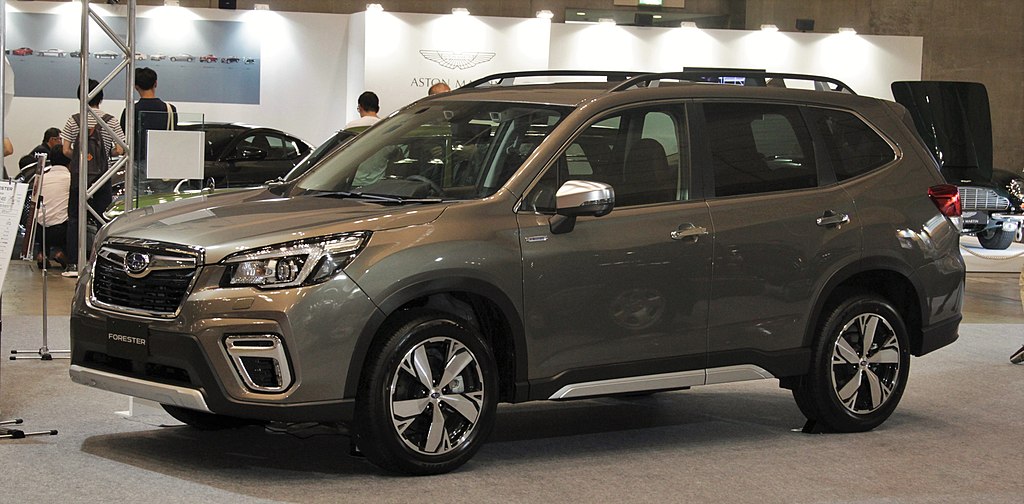
2017–2018 Forester: Hidden Corrosion That Kills Your Cool
Owners of the 2017 and 2018 Subaru Forester may have noticed the A/C fading out, gradually at first, then totally. The culprit? A batch of condensers that were prone to internal tube-wall corrosion. Once those corrode, refrigerant leaks out and cooling performance drops off a cliff.
Subaru issued Service Program WRB-21R, targeting Foresters built from March 2016 through September 2017. The program covers:
• A free 15-minute inspection of the condenser part number.
• If it matches the faulty batch (usually part #73210SG010), they’ll swap it with kit 73219SG01A—takes about an hour.
• They also extended the warranty to 5 years/unlimited miles, thanks to TSB 15-269-20R.
If your Forester A/C started slacking off and it was built in that window, you may be driving around with a ticking time bomb of corrosion inside the condenser.
2019 Ascent: Rough Pipe Surface = Weak Seals
This one’s all about bad machining. Some 2019 Subaru Ascent models rolled off the line with A/C refrigerant pipes that weren’t smooth enough at the seal points. The result? Leaky joints and subpar cooling right from the start.
Subaru tackled this with Service Program WRK-20, which:
• Affects about 11,257 units built between January 4 and March 8, 2019.
• Involves replacing the pipe assembly (73431XC00A) and installing a fresh O-ring kit (SOA635162).
• Requires around 2.1 hours of labor—not a DIY job.
If you’re sweating inside a 2019 Ascent, check that build date. This fix could be free if your VIN falls in the affected batch.
Smaller Recalls with Big Impacts: Canada’s Condenser Corrosion Alert
If you’re in Canada and drive a 2017–2018 Forester, you weren’t left out of the loop—Transport Canada issued Recall #2022435 for the same condenser corrosion issue seen in the U.S. The symptoms were identical: weak A/C, long cool-down times, and eventual refrigerant loss.
The Canadian recall echoed Subaru of America’s findings—faulty condensers that corrode from the inside out. The fix? Same as in the States: inspect and, if necessary, replace the unit. But in Canada, coverage details vary depending on dealer interpretation and location, so Subaru owners up north should push hard if their A/C’s gone limp.
At-a-Glance Breakdown: Every Known Subaru A/C Program
Let’s simplify what’s been scattered across forums, bulletins, and service centers. Below is a quick-hit table of Subaru’s official air-conditioning repair initiatives since 2016:
| Program ID | Models/Years | Issue | Fix | Coverage |
| WRB‑21R | 2017–2018 Forester | Internal condenser corrosion | Condenser kit 73219SG01A | 5-year/unlimited-mile warranty |
| WRK‑20 | 2019 Ascent | Rough sealing surface on pipe | New A/C pipe + O-ring kit | Free replacement, 2.1 hrs labor |
| Transport CA #2022435 | 2017–2018 Forester | Condenser corrosion (Canada) | Inspection and replacement | Covered under regional recall |
Tech Bulletins You’ve Probably Never Heard Of—But Should
Subaru’s AC fixes don’t stop at service campaigns. A wave of Technical Service Bulletins (TSBs) has quietly gone out to dealerships, updating parts, repair instructions, and even software procedures—none of which owners typically get wind of unless they dig deep or complain loudly.
1. Compressor Break-In Isn’t Optional Anymore
TSB 18‑232‑23 landed in late 2023 and affects nearly everything in the lineup: 2020–2023 Legacy, Outback, 2017–2023 Impreza and Crosstrek, plus 2019–2022 Ascent.
Subaru now requires a step-by-step break-in process after compressor installation, including specific oil charges, ECU resets, fuse installs, and a Subaru Select Monitor test session. Skip this, and you risk early compressor failure or uneven cooling.
2. New Clutch Assemblies for Mid-2010s Models
TSB 10‑84‑16 wasn’t a recall, but it was a big one for owners of 2014–2016 Imprezas, XV Crosstreks, WRXs, and Foresters. Subaru quietly released a new AC compressor clutch design with reworked electrical windings. The reason? The old clutches were shorting out or not engaging, leaving owners stranded in the heat.
3. Part Supersessions and Refrigerant Oil Updates
There’s a slew of lower-profile TSBs covering stuff like condenser part number changes and updated refrigerant oil specs. These often go unnoticed unless your shop runs your VIN through Subaru’s internal system.
Miss the update, and your repair shop could unknowingly install an outdated part with a shorter service life or the wrong charge ratio.
What Owners Are Actually Dealing With—And It’s Not Just a Weak Breeze
Subaru didn’t issue a blanket AC recall, but that hasn’t stopped the flood of complaints from showing up across Reddit threads, RepairPal, forums, and dealer service bays. Patterns are starting to form, and a few culprits show up again and again—some even before 60,000 miles.
1. Refrigerant Keeps Vanishing—But Where’s the Leak?
This is the top issue across multiple models—2017–2021 Foresters and Outbacks, Crosstreks, and Ascents, especially. The AC works fine for a few months after a recharge, then fades.
Common suspects? Corroded condensers (even beyond the Forester service campaign), failed O-rings, or crimped hose fittings. Techs sometimes miss tiny leaks that only show up under UV dye or pressure decay testing.
2. Compressors Giving Up Way Too Soon
You’d expect the compressor to last well past 100,000 miles. Yet, dozens of owners report noisy, seizing, or outright dead compressors under 60K.
Grinding sounds, chirping on startup, or a sudden drop in cooling output are all signs. Subaru’s newer variable-capacity units, especially on Crosstrek and Legacy, are under scrutiny. Whether it’s heat-soak, internal failure, or a failed clutch, this isn’t wear-and-tear—it’s premature death.
3. AC That Quits at Stoplights
A weird but repeatable problem—your AC works while driving, then fades when you idle at a red light or in a parking lot. Blame could fall on the electric fans, undercharging from the factory, or the newer R1234yf refrigerant that just doesn’t perform like the older R134a, especially in slow airflow conditions.
4. Blend Doors and Smart Valves Aren’t So Smart
On newer models (especially 2019+ Outback, Ascent, and Legacy), some complaints aren’t about cooling but inconsistent cabin temps. Faulty blend door actuators and buggy thermal control valves have left drivers stuck with lukewarm air, regardless of their settings. While these aren’t true AC failures, they kill comfort and are often misdiagnosed.
Don’t Guess—Here’s Where to Check Your Subaru’s VIN for AC Coverage
Before you spend hundreds chasing down a leak or replacing a compressor, it’s worth a few clicks to check if Subaru already owes you a repair.
The Vehicle Identification Number (VIN) is your golden ticket—it’s the most accurate way to confirm if your specific car is included in any service campaign, TSB, or recall.
Where to Run Your VIN (and What Each Site Offers)
United States:
• Subaru.com/recalls: Direct from the manufacturer. Plug in your 17-digit VIN and you’ll see any open service campaigns—even ones not safety-related, like AC condenser extensions.
• NHTSA.gov/recalls: The government’s master database. Also has consumer complaints and manufacturer communications.
• SaferCar app: Mobile-friendly and sends recall alerts.
Canada:
• Subaru.ca – Takata recall page: Also includes VIN lookup for general campaigns.
• Transport Canada (recalls-rappels.canada.ca): A full recall search by make, model, or VIN.
• CARFAX Recall Check: Great for checking used Subarus—lets you catch past unresolved issues.
UK:
• GOV.UK recall checker: Official lookup tool.
• Subaru.co.uk: Manufacturer site, though less frequently updated than government listings.
• Motor Ombudsman: VIN recall checks for participating brands.
Australia:
• Subaru.com.au/recall and vehiclerecalls.gov.au: Both have searchable tools. The gov site often posts details a few days before Subaru updates their own.
Pro Tip: Run It Twice a Year
Recalls don’t always roll out all at once. New ones pop up as complaints build or investigations conclude. Set a reminder in your phone to check every six months—especially before summer when you need that AC the most.
What a Compressor or Condenser Really Costs You—With and Without Coverage
If your Subaru’s AC fails and there’s no active recall or service campaign, brace yourself. These aren’t minor fixes, and the parts alone can sting. Labor? That’s where the real punch lands.
Condenser Replacements: The $1,000 Chill
For models like the 2017–2018 Forester with known condenser issues, retail pricing (without a coverage extension) breaks down like this:
• Parts: Around $450–$650, depending on whether it’s OEM or aftermarket.
• Labor: Expect 1.0 to 1.3 hours, billed at $120–$180/hr depending on your region.
• Total Damage: $850 to $1,100 out of pocket.
The warranty extension on affected Foresters saves owners close to $950 on average, making it one of Subaru’s most valuable “non-recall” goodwill efforts.
Compressor Failures: When the Bill Gets Brutal
If the AC issue is the compressor or clutch, you’re looking at a much higher bill.
• Compressor unit (OEM): $700–$1,200
• Labor: Often 2.0 to 3.5 hours, especially if reprogramming is required.
• Refrigerant Recharge (R1234yf): This newer, eco-friendly gas is three times more expensive than R134a—easily $100–$200 on its own.
All in, a compressor replacement often runs $1,200–$1,800, and that’s assuming no collateral issues like a clogged expansion valve or oil starvation.
R1234yf: The Costly Refrigerant Subaru Switched To
Since the mid-2010s, Subaru has moved many of its models to R1234yf refrigerant. It’s better for the planet, but worse for your wallet. Unlike R134a, this gas isn’t widely available at corner garages, and topping off can cost $100–$150 more per charge.
No Major Lawsuits—But the Legal Pressure Is Simmering
Despite all the complaints floating around Reddit threads and service centers, Subaru hasn’t been hit with a major, wide-ranging class-action lawsuit over AC failures. Not yet, anyway.
What’s on the Books: Targeted Litigation, Not System-Wide
The one standout is a class action tied to the Thermal Control Valve (TCV) found in 2019+ models. It’s not technically an AC component, but when it fails, it messes with both heating and cooling performance. This case is still unfolding and doesn’t cover the broader AC systems like condensers or compressors.
There’s also an older lawsuit naming AC component suppliers like Denso in a price-fixing case, but that’s about anti-competitive behavior in the supply chain, not specifically Subaru AC defects.
So, Why No Class Action Over the Known Issues?
Here’s the likely reason: Subaru has preemptively handled many AC problems with quiet service programs, TSBs, and warranty extensions, especially on models like the 2017–2018 Forester. That helps defuse legal action before it gains steam.
Unless a widespread, pattern-level failure emerges—think Toyota’s smelly HVAC lawsuit or Honda’s compressor settlements—Subaru may continue to dodge major legal fallout.
Keep Your AC Alive with a Bit of DIY Know-How
Not every AC issue needs a trip to the dealership, and a few simple habits can save you serious cash down the road.
Start with the Basics: Filter, Run Time, and Seal Protection
Swapping out the cabin air filter every 12 months (or sooner if you’re in a dusty region) keeps airflow strong and reduces strain on the system. It’s a five-minute job that most owners skip—until weak airflow becomes a headache.
Next up: don’t let the system sit idle. Even in winter, run the AC for a few minutes once a month. This keeps seals lubricated and helps prevent long-term leaks. It also helps spot issues before summer hits and shops get backed up for weeks.
Spot the Leak Before It Costs You
If your AC performance suddenly tanks—or only cools while driving but blows warm at idle—it could be a refrigerant leak. UV dye kits are cheap, easy to use, and can flag a leak in your condenser, hoses, or O-rings before things get worse. Just be sure to wear gloves and eye protection.
Also, pop the hood and give your condenser a once-over. If it’s clogged with leaves, dirt, or bugs, your cooling efficiency drops fast, especially in traffic. Use low-pressure water to rinse it clean without bending the fins.
Just Replaced the Compressor? Don’t Skip This Step
If you’ve had a new compressor installed—especially on newer Subarus like the 2020–2023 Outback or Ascent—don’t just drive off. Subaru’s own TSB (18‑232‑23) calls for a specific break-in procedure using their Subaru Select Monitor.
Failing to follow it can lead to premature failure or weak performance, even with a brand-new unit. Most dealers know this, but it doesn’t hurt to ask—especially if you’re going through an aftermarket shop.
What Subaru (and You) Should Be Doing Next
Subaru has made some strides—warranty extensions, updated parts, and more precise break-in procedures—but there’s still room to tighten things up.
For Subaru: Time to Seal the Gaps—Literally
Owners are getting fed up with short-lived condensers, noisy compressors, and leaky joints. Here’s what needs to change:
• Stronger corrosion resistance for condenser tubes. The current alloys aren’t holding up well in humid or salted-road regions.
• Tighter QA on sealing surfaces. That 2019 Ascent pipe fiasco? A smoother finish would’ve prevented thousands of leaks.
• A broader warranty on compressors, not just condensers. Especially since failures are creeping up even under 60,000 miles.
These aren’t luxury features—they’re expected at this price point.
For Owners: How to Stay One Step Ahead
If you own a Subaru—or are planning to buy one—keep these habits in your back pocket:
1. Check your VIN every 6 months. Programs like the 2017–18 Forester’s weren’t launched right away. You could qualify for free work and not even know it.
2. Track performance issues early. Vent temps, outside temps, when cooling weakens—write it down before your shop visit. It helps techs zero in faster.
3. Insist on OEM parts during warranty or service program repairs. Aftermarket condensers often have slight fitment differences or lower corrosion protection.
Wrapping It Up
There’s no sweeping AC recall across all Subaru models, but there are targeted fixes that matter. If you’re driving a 2017–2018 Forester or a 2019 Ascent, you’ve got official service programs covering known AC weak points.
The rest? You’re navigating a mix of technical bulletins, warranty extensions, and owner complaints about leaky condensers, seizing compressors, and underperforming systems, especially when idling in the heat.
Your VIN is your lifeline. Check it often. Document every symptom. And when it’s time to fix things, push for genuine Subaru parts. That’s how you protect your cabin comfort—and your wallet.
2018 Forester. Sticker price for A/C repair $3221.33. Haven’t scheduled it yet, still in shock. How much of this due to tariffs?
Ouch, that’s a steep quote. Tariffs and parts shortages could be part of it, but $3,200 still sounds high. Might be worth getting a second opinion to see what’s really driving the cost.