
Flares to 4,000 rpm, then lags. Shudders at 30 mph like you hit rumble strips. That is how Forester CVTs start to talk before they quit.
From 1998 to 2013, Subaru ran the old 4EAT and 5EAT automatics. Heavy, geared, and rebuildable. In 2014, the Forester switched to the Lineartronic CVT, mainly the TR580, with the TR690 in XT models.
Fuel economy jumped about 5 mpg, but failure patterns shifted to valve bodies, torque converters, and chain slip.
Early 2014–2015 models see the highest complaint rates. Later units improve, then 2019+ adds the Thermal Control Valve mess that mimics transmission failure. This guide calls out what fails, which years carry the real risk, and when the repair bill means it is time to walk.
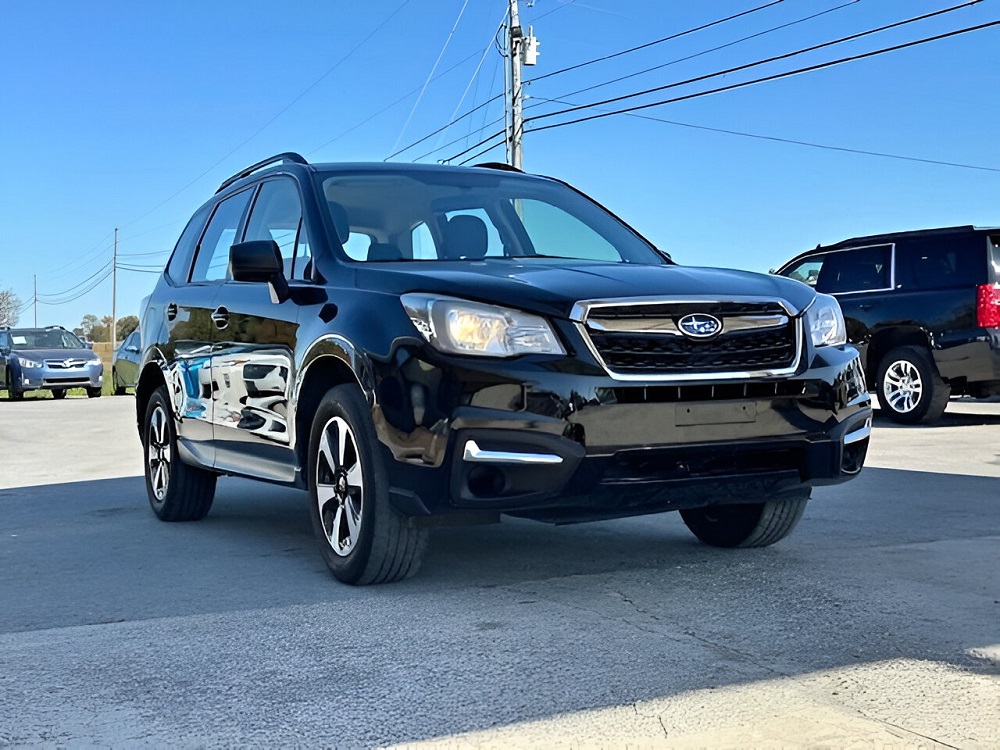
1. Forester transmission generations and where the real risk lives
From geared workhorses to chain-driven CVT hardware
Ran the 4EAT from 1998 through 2013. Added the 5EAT in higher trims and turbo models. Both used planetary gears, clutch packs, and a hydraulic valve body. Rebuild parts are widely available, and most units cross 200,000 miles with fluid service.
Shifted to the Lineartronic CVT in 2014. Subaru gained about 5 mpg on the same FB25 engine. The failure pattern moved from worn clutch packs to pressure loss, solenoid faults, and chain slip. Field rebuild options dropped sharply once internal pulley faces score.
TR580 versus TR690 under the case
Bolted the TR580 to naturally aspirated 2.5L Foresters. It is about 15 percent lighter and roughly 100 mm shorter than the TR690. The valve body sits on top of the case, which cuts labor time for replacement. Most valve body jobs land between $1,400 and $2,200 at a dealer.
Installed the TR690 in 2014–2018 Forester XT models. It handles higher torque from the FA20 turbo. Internal reduction gearing and a different input clutch add complexity. Early units saw torque converter thrust washer failures tied to TSB 16-90-13R.
Generation-by-generation risk
| Generation | Model years | Main transmission(s) | Engine pairings | Reliability headline |
|---|---|---|---|---|
| Gen 1–3 | 1998–2013 | 4EAT / 5EAT | EJ NA / turbo | Durable; age-related wear dominates. |
| Gen 4 | 2014–2018 | TR580 / TR690 | FB25 NA, FA20 turbo | Highest CVT complaint volume. |
| Gen 5 | 2019–2024 | TR580 | Revised FB25 NA | Fewer internal failures; TCV confusion. |
| Gen 6 | 2025+ | TR580 / eCVT | 2.5L + hybrid | Early data; hybrid changes architecture. |
Flag 2014 and 2015 as peak risk years. Many failures hit between 60,000 and 110,000 miles. Subaru issued 10-year or 100,000-mile CVT warranty extensions on many 2014–2020 models. Units past that window face full replacement costs that run $7,000 to $10,000 installed.
2. How the Forester CVT actually works under load
Steel chain and variable pulleys under pressure
Spins a high-tensile steel chain between two adjustable pulleys. Each pulley uses a pair of movable sheaves. Hydraulic pressure squeezes the sheaves to change effective diameter. Ratio changes happen without fixed gear steps.
Line pressure holds the chain tight against the pulley faces. Secondary pressure drops and the chain starts to slip. Slip scars the pulley surface in seconds. Once scored, the variator assembly is not serviceable in the field.
Torque converter lockup and AWD integration
Launches through a torque converter at low speed. Lockup clutch engages early to cut heat and boost efficiency. Most steady cruising runs in near-constant lockup. Faults here trigger P0741 or P2763.
Routes AWD torque through a transfer clutch inside the CVT case. A duty solenoid meters clutch pressure. Tight turns load the clutch hard at parking-lot speeds. Solenoid failure sets P0971 and produces classic torque bind.
Valve body, solenoids, and the TCM control loop
Houses multiple pressure control solenoids in the valve body. The TCM commands pulley ratio, line pressure, and clutch apply rates. Sensors feed back secondary pressure and fluid temperature. P0841 flags mismatch between commanded and actual pressure.
Fluid temperature targets sit in the 175–195°F range under normal driving. Heat over 220°F accelerates oxidation and solenoid coil breakdown. Electrical resistance shifts with heat cycles. A single failed solenoid often forces full valve body replacement at $1,400 to $2,600.
3. Core Forester CVT failure modes and what drivers actually feel
Valve body heat soak and solenoid breakdown
Heat cycles cook the lockup duty solenoid first. Resistance drifts once fluid temps sit near 200°F for long stretches. Shifts feel normal cold, then harsh once fully warm. Dash lights stack with P2763, P0841, or P0700.
Subaru sells the valve body as a full assembly. Internal solenoids were not originally serviced separately. Aftermarket units like Dorman 926-408 target specific failures. Dealer replacement usually runs $1,400 to $2,600 with fluid and relearn.
Torque converter thrust washer debris and stall
Early pre-October 2013 converters used a solid thrust washer. The washer sheds metal as it wears. Debris blocks the lockup clutch release passage. The clutch stays applied as vehicle speed drops to zero.
Stops at a light and the engine shudders. Idle dips below 600 rpm, then stalls. TSB 16-90-13R replaced the converter with an updated design. Ignored long enough, repeated stalls stress mounts and the starter.
Chain slip and pulley face scoring
Secondary pressure loss triggers slip under load. Hard throttle at 3,000 to 4,000 rpm exposes weak line pressure. RPM flares without matching road speed. A faint whine develops under steady cruise.
Slip grinds the pulley faces in seconds. Metal contaminates fluid and pump circuits. Field rebuild parts for variators are not supported. Internal damage means full CVT replacement at $7,000 to $10,000 installed.
Transfer clutch failure and torque bind
Transfer clutch solenoid controls AWD torque split. Failure sets P0971 or related circuit codes. Tight parking lot turns feel like the brakes are dragging. Rear tires hop on dry pavement.
Mismatched tire circumference worsens the load. Clutch packs overheat during long highway runs. Ignored bind chews through rear wheel bearings and axles. Transfer clutch repair often requires transmission removal on high-mileage units.
| Failure mode | Typical mileage range | Driver feel | Long-term risk |
|---|---|---|---|
| Valve body / solenoid | 80,000–140,000 | Hot shudder, delayed engagement | Escalates to pressure loss |
| Torque converter thrust washer | 40,000–90,000 (early builds) | Stall at stops, low idle | Mount and starter damage |
| Chain slip / pulley scoring | 90,000+ | RPM flare, surge, whine | Full CVT replacement |
| Transfer clutch / torque bind | 70,000+ | Hop in tight turns | Driveline wear and axle stress |
4. Codes and clues that separate valve body trouble from full CVT failure
High-value DTCs that actually narrow the fault
Scan shows P0700 first. That code only means the TCM asked for the MIL. It tells you nothing about the underlying problem. Pull TCM data before touching a wrench.
P2763 points to the torque converter clutch pressure control solenoid. Heat-soaked coils or wiring faults trigger it. P0741 flags lockup performance problems. Persistent lockup slip overheats fluid fast.
P0841 calls out secondary pressure sensor performance. The sensor reading does not match commanded pressure. P0868 signals low line pressure under load. Keep driving with P0868 and chain slip becomes a real risk within a few hard pulls.
| DTC | System flagged | What’s happening internally | Typical next move |
|---|---|---|---|
| P2763 | TCC pressure control solenoid | Electrical fault in lockup solenoid circuit | Inspect wiring, replace solenoid or valve body |
| P0741 | TCC performance | Lockup clutch not applying or releasing correctly | Check fluid condition, test converter |
| P0841 | Secondary pressure sensor | Pressure mismatch, valve body or sensor fault | Verify sensor, pressure test system |
| P0868 | Line pressure low | Pump output or control loss | Stop heavy driving, inspect for internal wear |
| P0971 | Transfer clutch solenoid | AWD solenoid circuit high | Check harness, evaluate clutch pack |
Low pressure codes paired with RPM flare mean internal damage risk. Solenoid-only codes without flare often stay contained to the valve body. Pressure codes plus whining noise usually mean pulley face scoring has started. Once metal shows in fluid, the repair path shifts to full unit replacement.
Seat-of-the-pants diagnosis without a scan tool
Delayed engagement cold often points to fluid level or aeration. Engagement lag over 2 seconds in Drive signals pressure build delay. If lag disappears once warm, suspect fluid viscosity breakdown. Persistent lag hot leans toward valve body wear.
Rumble-strip shudder at 25 to 35 mph during light throttle ties to lockup clutch control. That is classic converter or TCC solenoid behavior. True chain slip feels different. RPM jumps 500 to 1,000 rpm without speed gain.
Flashing AT OIL TEMP light during steady cruise means overheating. Smell burnt fluid and check temperature data if possible. Sustained temps over 230°F shorten fluid life fast. At that point, damage may already be in the pulley faces.
5. Generation-specific weak points and where the money goes
Late 4EAT and 5EAT years before the CVT switch
Ran geared automatics through 2013. Failures center on torque converter lockup shudder and shift solenoids. Internal clutch packs wear past 150,000 miles with dirty fluid. Most units can be rebuilt by a local shop.
Parts are available and valve bodies are serviceable. Cooler line leaks and corroded fittings show up in salt states. Mount wear causes harsh engagement that mimics internal faults. Rebuilds usually land between $2,500 and $4,000, far below CVT replacement cost.
Fourth generation 2014–2018 and the high complaint window
Launched the Forester CVT in 2014. Early units saw thrust washer debris and valve body failures. Many complaints cluster between 60,000 and 110,000 miles. Warranty extensions covered many units to 10 years or 100,000 miles.
2014 and 2015 carry the highest failure reports. 2016 through 2018 improved converter design and software logic. Valve body faults still show up past 80,000 miles. Internal failure outside warranty often means a $7,000 to $10,000 reman swap.
Fifth generation 2019–2024 and the TCV misfire scare
Revised the FB25 engine and updated TR580 control logic. Internal CVT failure rates dropped compared to 2014–2015. New problem surfaced in the Thermal Control Valve. Plastic housing cracks and leaks coolant into the sensor.
Dash lights illuminate with P2682 or P26A3. EyeSight and RAB disable at the same time. Cabin heat disappears even with normal engine temp. Subaru issued extended coverage up to 15 years for many TCV units.
Sixth generation and hybrid eCVT shift in architecture
Introduced a hybrid with planetary gear eCVT in 2025. No steel chain or variable pulley set. Two motor-generators manage ratio and torque blend. Mechanical slip points inside the variator disappear.
AWD remains mechanical through driveshafts. Hybrid adds inverter and high-voltage control modules. Failure risk shifts to electronics and motor assemblies. Hybrid transaxle replacement costs are expected to exceed $10,000 if out of warranty.
| Generation | Model years | Transmission | Dominant failure theme | Cost exposure |
|---|---|---|---|---|
| Gen 1–3 | 1998–2013 | 4EAT / 5EAT | Age wear, solenoids | $2,500–$4,000 rebuild |
| Gen 4 | 2014–2018 | TR580 / TR690 | Valve body, converter, slip | $7,000–$10,000 replacement |
| Gen 5 | 2019–2024 | TR580 | TCV faults, some valve body | $1,500 TCV, $2,000 valve body |
| Gen 6 | 2025+ | TR580 / eCVT | Too early, hybrid risk | Likely $10,000+ hybrid unit |
6. Fluid myths, chemistry breakdown, and why these CVTs punish neglect
“Lifetime” fluid versus real thermal limits
Marketed the CVT fluid as lifetime in the U.S. service schedule. Internal dealer documents still flag severe intervals near 25,000 to 30,000 miles. Canada lists 60,000 miles normal, 30,000 severe. Japan calls for 30,000 to 60,000 miles depending on use.
Fluid in a Lineartronic handles lubrication, pressure control, and friction transfer. Sustained temps above 220°F oxidize the additive package. Friction modifiers shear down under load. Once viscosity drops, secondary pressure control suffers and slip risk climbs.
Most Foresters see short trips, hills, and traffic. Those qualify as severe duty under Subaru’s own definitions. Fluid that runs 60,000 miles in that cycle often shows darkening and metallic shimmer. Neglected fluid sets the stage for P0868 and pressure loss.
Regional service schedules and what applies in the real world
| Region | Normal guidance | Severe guidance | Real-world pattern |
|---|---|---|---|
| United States | “Lifetime,” inspect only | ~25,000–30,000 miles (internal docs) | Most drivers fit severe |
| Canada | ~60,000 miles | ~30,000 miles | Dealers often recommend 30,000–60,000 |
| Japan | 30,000–60,000 miles | 30,000 miles or 3 years | Conservative schedule |
Highway cruising at 75 mph pushes fluid temps past 200°F. Towing or mountain grades push higher. City stop-and-go cycles heat and cool fluid repeatedly. A 30,000 to 60,000 mile drain-and-fill keeps friction characteristics stable past 150,000 miles.
Correct fluid types and the narrow friction window
Subaru specifies CVTF-II for most 2014–2018 2.5L TR580 units. 2019+ 2.5L models use CVTF-III with lower viscosity. Turbo XT models require High Torque CVTF in TR690 units. Using the wrong fluid shifts clutch apply feel within a few hundred miles.
Chain-driven CVTs need precise friction coefficients. Many “universal” fluids target belt-driven systems. Shudder and chatter show up fast with the wrong blend. Persistent use can trigger slip under moderate throttle.
Fluid level setting requires 95°F to 113°F fluid temperature. Engine must run and vehicle must sit level. Overfill aerates fluid and drops line pressure. Underfill starves the pump and accelerates chain slip within a few thousand miles.
7. Warranty extensions, TSBs, and what Subaru actually covered
The 10-year CVT extension and its hard limits
Subaru issued CVT warranty extensions on many 2014–2020 Foresters. Coverage ran 10 years or 100,000 miles from in-service date. It applied to internal CVT failures, including chain and bearing damage. It required an original or Subaru reman unit in the car.
Vehicles past 100,000 miles at notice time received a short grace window. That window has closed for early 2014–2015 models. Fluid services, mounts, and external leaks were not covered. Out-of-window internal failure now lands squarely in the $7,000 to $10,000 range.
| Program | Model years | Coverage | Key limitation |
|---|---|---|---|
| CVT warranty extension | 2014–2020 (varies by bulletin) | 10 years / 100,000 miles | Must be OE or Subaru reman CVT |
| Torque converter TSB | Early Lineartronic builds | Updated converter under warranty | No coverage once outside window |
| TCV extended coverage | 2019–2021 (varies by market) | Up to 15 years | Applies only to TCV hardware |
Torque converter campaigns and updated hardware
TSB 16-90-13R addressed thrust washer debris in early converters. Dealers replaced the torque converter with an updated design. Repair required transmission removal. Covered vehicles avoided repeat stalling at stops.
Units that missed the campaign can still exhibit shudder and stall. Replacement today involves labor plus converter cost. Out-of-warranty converter jobs often exceed $2,000. Repeated debris contamination raises internal wear risk.
Thermal Control Valve coverage and diagnostic split
2019+ models introduced the plastic Thermal Control Valve. Internal leakage sets P2682 or P26A3. EyeSight and RAB disable during failure events. Engine may enter limp mode with reduced throttle response.
Subaru extended TCV coverage up to 15 years in many markets. The fix replaces the valve assembly and coolant. Dealers must separate TCV codes from CVT codes before authorizing work. A misdiagnosed CVT swap for a TCV fault would cost $7,000 or more without solving the underlying problem.
8. Repair paths, real costs, and the walk-away line
Valve body jobs versus full transmission swaps
Failing solenoids usually point to a valve body job. TR580 units allow top-side access once the pan and harness come off. Relearn with Subaru Select Monitor or a high-end scan tool is mandatory. Skip the relearn and ratio control stays erratic.
Dealer valve body replacement runs $1,400 to $2,200. Independent shops may land between $900 and $1,600 with OE or quality aftermarket parts. Fluid adds 4 to 7 quarts of Subaru CVT fluid. Labor time averages 3 to 5 hours depending on access.
Chain slip or pulley scoring changes the equation fast. Subaru does not support internal variator rebuilds. Dealers quote a Subaru reman unit with converter and updated hardware. Installed cost typically falls between $7,000 and $10,000.
| Repair option | Typical total cost | What you get | Risk level |
|---|---|---|---|
| Dealer valve body | $1,400–$2,200 | New valve body, fresh fluid, relearn | Low if internals are healthy |
| Independent valve body | $900–$1,600 | Mixed OE/aftermarket parts | Depends on shop skill |
| Subaru reman CVT | $7,000–$10,000 | Factory reman with warranty | High cost, lowest failure risk |
| Used CVT | $2,500–$4,000 | Salvage unit, short shop warranty | High repeat-failure risk |
Used units often come from wrecked cars with unknown fluid history. Mileage under 60,000 helps but does not guarantee health. Many share the same early design weaknesses. A second failure wipes out any savings.
When the math stops making sense
2014–2015 models with 120,000 miles and internal failure face the toughest call. Market value often sits between $6,000 and $9,000. A $8,000 transmission quote can exceed resale value. Insurance rarely covers mechanical breakdown.
Later 2018–2021 models hold value better. A clean 2020 Forester may justify a $2,000 valve body repair. Full reman replacement makes more sense on lower-mileage units. Once total repair exceeds 60 percent of vehicle value, many owners cut losses.
Sources & References
- Subaru Lineartronic CVT Transmission Engineering | Golden, CO
- List of Subaru transmissions – Wikipedia
- Subaru’s Lineartronic CVT Explained | Sport Subaru in Orlando
- SERVICE BULLETIN – nhtsa
- How reliable are the 4EAT auto trans? – subaru – Reddit
- Understanding Subaru’s CVT: A Comprehensive Guide
- Outback 5EAT vs. CVT – ultimatesubaru.org
- Lineartronic TR-580: Subaru’s most popular CVT – The AKPPro Magazine
- Subaru CVT Transmission Problems: What You Need to Know – A&A, The Shop
- Subaru CVT reliability : r/subaru – Reddit
- Worth Another Look! Subaru Lineartronic Failures, Faults, And Fixes! – Gears Magazine
- Are Subaru CVTs Reliable in 2025? Lineartronic Transmission Explained
- Subaru CVT Transmission Explained Delray Beach FL
- Understanding CVT Warning Signs Before Failure | Rohnert Park Transmission
- 2015 at 113k miles needs valve body replacement for $2.6k. Worth it? – Reddit
- How to Extend the Life of Your Subaru’s CVT Transmission – Subaru of Dayton
- How do you tell if a CVT trans or valve body has failed? – ultimatesubaru.org
- Early signs of the TCC solenoid failure? : r/subaru – Reddit
- Should any of these lights concern me : r/subaru – Reddit
- CVT valve body replacement : r/subaru – Reddit
- CVT valve body replacement : r/SubaruForester – Reddit
- Valve Body : r/SubaruForester – Reddit
- Dorman Automatic Transmission Control Solenoid | 926-408 – PartsHawk
- Dorman 926-408 Automatic Transmission Control Solenoid + Cross Reference | FinditParts
- CVT slip? : r/subaru – Reddit
- Is this CVT failure? : r/subaru – Reddit
- P0841 Code: Transmission Fluid Pressure Sensor / Switch “A” Circuit Range Performance – In The Garage with CarParts.com
- Subaru CVT Transmission Care: Myths vs. Facts
- SERVICE BULLETIN – nhtsa
- 2018 CVT problems? : r/SubaruForester – Reddit
- Subaru Forester Reliability by Year: A Complete Breakdown
- Common Subaru Forester Problems To Keep An Eye Out For When Buying Used – CarBuzz
- 2012-2018 Subaru Forester Problems – Car City Wholesale
- Subaru Forester Years To Avoid (Best & Worst Models) – Car Talk
- How many of you have experienced CVT transmission failure in your Subaru? – Reddit
- Subaru Forester 2019–21: Thermal Control Valve (TCV) design flaw. Free repair in the US, Canada, and Australia, BUT $1800(USD) in Chile. Anyone know how to reach Subaru Corporate that oversees Latin America? – Reddit
- Thoughts? Who else’s lit up like a tree? : r/SubaruForester – Reddit
- What actually happens when the TCV fails? : r/SubaruForester – Reddit
- Dreaded TCV failure? : r/SubaruForester – Reddit
- PSA: Subaru is now covering thermo control valve issues for 2019 and up models. – Reddit
- 2019 Forester with 54k miles celebrated the 4th with a TCV failure. : r/SubaruForester
- Outback Thermo Control Valve (TCV) Issues : r/Subaru_Outback – Reddit
- what do y’all think? should i get my tcv replaced before my first roadtrip in my 2019? – Reddit
- To change CVT fluid or not? : r/subaru – Reddit
- Modern CVTs any better? (2014 Forester CVT dead at 115k miles) : r/subaru – Reddit
- 60k mile service question re: changing CVT : r/SubaruForester – Reddit
- Just had my 60k service done. Mechanic said Subaru doesn’t recommend CVT drain & fill until 130k at least. I read elsewhere it’s every 30k, or 60k. What’s the truth? And where is this stated? : r/SubaruForester – Reddit
- When should I change my transmission fluid, dealership keeps telling me 100k miles. : r/subaru – Reddit
- Gen 6 Outback CVT fluid swap : r/Subaru_Outback – Reddit
- I want to know about CVT fluid. My niece has a 2018 Subaru Forester and needs her CVT oil topped off. I want to learn about the different types of CVT fluids (ratings?) and how to determine which is appropriate for her vehicle. – Reddit
- I want to know about CVT fluid. My niece has a 2018 Subaru Forester and needs her CVT oil topped off. I want to learn about the different types of CVT fluids (ratings?) and how to determine which is appropriate for her vehicle. : r/MechanicAdvice – Reddit
- CVT Compatibility Chart – Subaru | LUBRICANTS – TOM’S Racing
- Subaru CVT Warranty Extension Service Bulletin | PDF | Transmission (Mechanics) – Scribd
- CVT Warranty Extension for select ’19-20 models : r/subaru – Reddit
- SERVICE BULLETIN – nhtsa
- SERVICE BULLETIN – nhtsa
- CVT Chain Guide Breakage – nhtsa
- SUBARU Forester – All Models by Year (1997-Present) – Specs, Pictures & History
- Transmission valve body replacement? : r/SubaruForester – Reddit
- Transmission valve body needs to be replaced. : r/SubaruForester – Reddit
- How to tell if transmission has problems or is this just how CVTs feel? : r/subaru – Reddit
- Total cost (parts/labor) for Transmission Valve Body and Filter replacement? – Reddit
- SERVICE BULLETIN – nhtsa
Was This Article Helpful?