
A low dipstick can turn a clean-looking Impreza into a costly bet. Some early 2.0-liter engines burn oil between changes. Keep running low, and bearings can pay the price.
The 2012–2013 models deserve the closest look, especially with missing repair records. Oil consumption, valve-spring recall eligibility, and aging CVTs put several costly concerns in the same shopping years. Certain 2014–2015 manuals also fall within Subaru’s oil-consumption program. A newer model year alone will not clear the engine.
This guide sorts the Subaru Impreza years to avoid, better buying candidates, and the repair records worth checking.
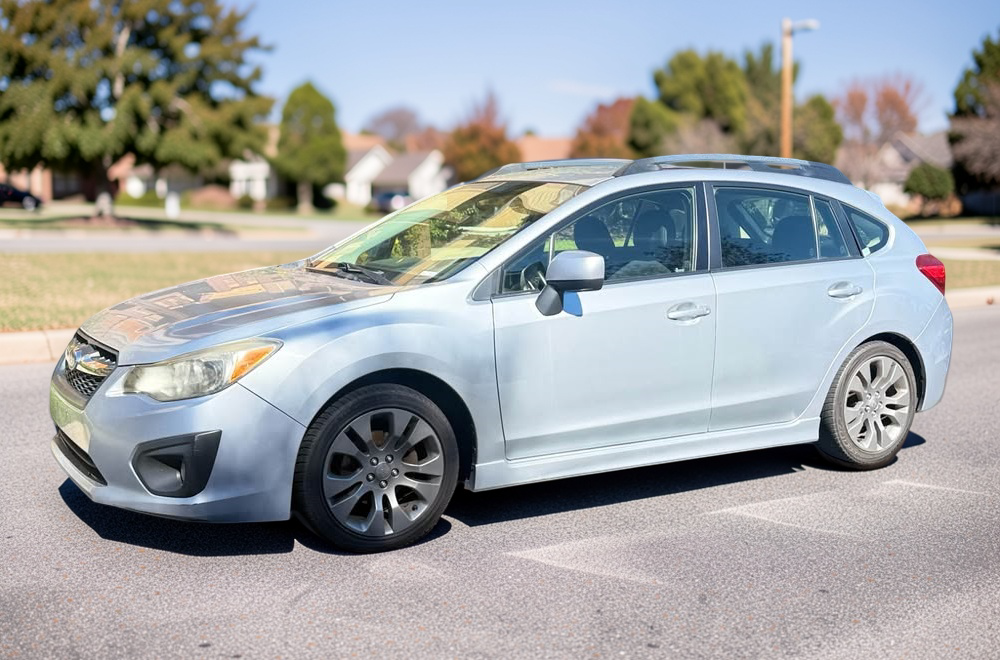
1. Which Impreza years carry the biggest repair risks?
Check the engine before judging the badge
Older WRX and STI models sometimes carry the Impreza name, but their turbocharged engines have different failure patterns and recall coverage. This guide focuses on U.S.-market Impreza sedans and hatchbacks with naturally aspirated engines.
The 2012 redesign replaced the earlier 2.5-liter engine with a 2.0-liter FB engine and introduced an available CVT. Subaru described it as a second-generation Lineartronic CVT. It was not Subaru’s first CVT, but it changed the transmission checks a used Impreza needs.
The 2017 redesign brought the Subaru Global Platform and direct fuel injection. The new engine sprays fuel directly into the cylinders, whereas the earlier engine uses port injection. That change means the engines have different parts and service considerations.
Let the transmission and repair history narrow the years
Subaru’s oil-consumption bulletin 02-157-14R covers eligible 2012–2013 Imprezas with either a manual transmission or CVT. For 2014–2015, the bulletin lists manual-transmission Imprezas. Production and VIN limits apply, so a model year and gearbox are only the first checks.
Valve-spring recall WTY-84, also identified as NHTSA 18V-772, covers certain 2012–2014 four-door Imprezas and 2012–2013 station-wagon or hatchback Imprezas. Subaru determines eligibility by VIN, so the model year alone cannot confirm coverage.
Recalls identify defined safety defects. Warranty extensions provide special coverage for named faults or parts. Neither tells you what share of all Imprezas will fail. Complaint totals also need context such as sales volume, vehicle age, mileage, and body style. WRX and STI reports should not be blended into naturally aspirated Impreza data.
| Model years or version | Buying assessment | What needs the closest look |
|---|---|---|
| Older 2.5-liter cars through 2011 | Judge each car by condition | Head-gasket leaks, coolant loss, timing-belt records, and underbody rust. |
| 2012–2013 | Highest caution, especially with missing records | Valve-spring recall status, oil use, and CVT history where fitted. |
| 2014–2015 | Separate manuals from CVTs | Manuals may fall within the oil-consumption program. Certain 2014 sedans also need a valve-spring recall check. |
| 2016 | Conditional budget candidate | CVT condition, service history, and applicable telematics battery-drain coverage. |
| 2017–2019 | Purchase depends partly on completed recalls | Ignition coils, PCV valve, halogen headlamps, and VIN-specific campaign status. |
| 2020–2023 | Reasonable later-used starting point | Individual recall status, service records, and applicable CVT coverage. |
| 2024–2026 | Too early for firm long-term rankings | Current condition, recall status, and remaining warranty. |
2. Older 2.5-liter Imprezas can hide more than a gasket leak
Clean oil does not rule out a leaking head gasket
A head gasket can leak coolant externally without mixing it into the oil. Subaru documented that type of fault in campaign WWP-99 for certain 1999–2002 2.5-liter Imprezas. Those cars can lose coolant while the dipstick still shows no milky residue.
That campaign does not establish coverage for later models. On a later 2.5-liter Impreza, a mechanic needs to trace the leak to its source. Oil from a valve-cover gasket can wet the engine and resemble a more expensive repair.
Check for falling coolant levels, dried coolant trails, and signs of past overheating. A cooling-system pressure test can help expose an external leak. If the engine has overheated, the shop should also check for damage beyond the gasket.
A useful repair invoice names the leak and lists the work performed. Look for records of cylinder-head inspection and any machining the shop found necessary. An “upgraded gasket” claim alone does not establish the repair’s quality or the engine’s current condition.
A cheap 2006, 2008, or 2010 can come with overdue work
These years deserve a close inspection, but the year alone does not establish a bad gearbox or engine. Evidence cited for these cars does not support a blanket claim that all 2006 manuals have hard-shifting gears. Recall totals that combine Impreza and WRX models can also blur which parts affect a particular car.
On these 2.5-liter engines, ask for dated timing-belt records showing the mileage and parts replaced. A fresh accessory belt tells you nothing about the timing belt behind its covers. Missing records leave that major service unverified.
Inspect the underbody for deep corrosion, especially around suspension mounts and brake lines. During the road test, check for clutch slip, gear noise, and resistance when shifting. Cooling repairs, belt service, and clutch work can erase the savings from a low purchase price.
A 2007 badge does not prove Subaru permanently cured head-gasket leaks. Judge the actual engine by its leak checks, coolant history, and repair records. Low mileage cannot cancel decades of corrosion or aging rubber.
Keep WRX fire recalls tied to the right cars
Recall 09V-468, Subaru campaign WVK-21, concerned cold-weather fuel leaks on certain 2002–2003 WRX models. Fuel could seep where a fuel pipe met a hose in very low temperatures. The recall applied to specified cold-weather states, while separate historical warranty treatment addressed a broader population.
Those records do not establish the same defect across naturally aspirated Imprezas. For an affected WRX, verify the VIN and fuel-line repair history. A raw-fuel smell requires a leak inspection before further driving.
Recall 16V-738, Subaru campaign WTM-73, covered certain 2008–2014 WRX and STI models. A stuck secondary-air-pump relay could keep the pump running after shutdown. The pump could overheat and create a fire risk, so Subaru directed affected owners to park outside until the repair was completed. This recall should not be used as evidence that ordinary naturally aspirated Imprezas have the same defect.
3. A fractured valve spring can stall the engine
The recall splits sedans from hatchbacks
A valve spring closes a valve as the camshaft turns. If the spring breaks, the valve may stop working as intended. The engine can run abnormally or stall while the car is moving.
Subaru’s WTY-84 / NHTSA 18V-772 recall covers certain 2012–2014 Impreza four-door models and 2012–2013 station-wagon or hatchback models. VIN and production-date limits apply. A 2014 sedan therefore needs a recall check even though the listed hatchback range stops at 2013.
A broken spring does not always mean a dropped valve or seized engine. The recall establishes a fracture risk that can disrupt engine operation. Any internal damage needs its own diagnosis.
Find out what “recall done” actually means
The recall repair replaces the affected valve springs with improved parts. Subaru’s FB-engine repair procedure requires engine removal for the Impreza repair. BRZ repair steps differ, so BRZ repair stories do not establish what happened to an Impreza.
Ask for both the campaign-completion record and the repair invoice. The completion record confirms that Subaru logged the recall work. The invoice can show the repair date, mileage, and any other work performed during the visit.
Check how many miles the car has covered since the repair. Documented service without recurring faults carries more weight than an unexplained “engine work done” claim. Fresh leaks, warning lights, or uneven running still need diagnosis, even when the recall record shows completion.
Engine removal can disturb connections, hoses, and exhaust joints. During inspection, check those areas for leaks and poor connections. If the engine runs unevenly, a mechanic may need compression and cylinder leak-down tests to assess valve sealing.
4. Oil burning keeps some 2014–2015 manuals on the caution list
The transmission changes which cars qualify
Subaru bulletin 02-157-14R covers eligible 2012–2013 2.0-liter Imprezas with either transmission. For 2014–2015, the oil-consumption extension lists manual-transmission models. Production and VIN limits apply, so the year and gearbox are only the first checks.
That distinction rules out calling 2015 a universal cure for oil burning. A 2015 manual can fall within the program while a same-year CVT can fall outside it. Exclusion from the extension does not prove that an engine uses no oil.
A full dipstick only tells today’s story
A seller can top up the oil shortly before a viewing. That reading will not show how much disappeared over the previous 1,000 miles. Ask for top-up amounts and mileage between additions, alongside oil-change records.
A mechanic should check for external leaks before blaming oil burning. Oil escaping through a seal also lowers the dipstick reading. Recorded oil use without visible leakage calls for a measured consumption test.
Subaru’s bulletin used more than one-third of a quart over 1,200 miles as its test threshold. The test tracks oil loss over a set distance under the prescribed procedure. An estimate such as “a quart now and then” lacks the mileage needed to judge consumption.
For qualifying cases, Subaru specified short-block replacement. The short block contains the cylinder block, crankshaft, pistons, and connecting rods. It is substantial engine work, so an invoice should identify the repair and its mileage.
A replacement short block gives you a repair history to assess. Check subsequent oil-use records and inspect for current leaks. The replacement date alone cannot establish how much oil the engine burns today.
The old extension will not cover most buyers now
The historical extension lasted eight years or 100,000 miles, whichever came first. By October 2026, most 2012–2015 cars will be outside that original protection. Confirm the original warranty start date before counting on coverage.
A later engine repair may carry separate terms. Ask for the repair invoice and written warranty, including any transfer limits. The oil-consumption extension does not restart its eight-year clock when Subaru installs a short block.
5. A troubled CVT needs a diagnosis before a replacement quote
A shudder does not tell you which part failed
Shift into Drive or Reverse and watch for a long delay before the car moves. During the road test, note repeated shuddering, slipping sensations, or warning lights. An engine that stalls as the car stops also needs diagnosis before purchase.
Test the car cold, then again once the engine and transmission reach normal operating temperature. Some faults appear only after the fluid warms. A short lap around the seller’s block can miss them.
A CVT can hold engine speed relatively steady while road speed rises. That behavior alone does not establish slip. Repeated loss of pull, harsh shaking, or delayed engagement calls for a fault-code scan and a proper road test.
Engine faults, transmission controls, and internal CVT wear can produce overlapping symptoms. Subaru’s CVT programs cover defined repairs and replacement conditions, but a CVT complaint does not automatically call for a complete transmission.
Read past invoices for the diagnosed fault and the actual repair. A fluid change shows maintenance, but it does not establish that a shudder or delay disappeared. If the symptom remains, ask the shop to reproduce it before pricing parts.
Match the coverage to the model year
Subaru issued separate CVT warranty extensions for different model-year groups. Each generally runs from the original warranty start date and ends at the first applicable time or mileage limit. Coverage alone does not establish that a transmission is defective.
| Impreza model years | Subaru bulletin | General extended CVT coverage |
|---|---|---|
| 2012–2015 | 16-107-17R | Up to 10 years or 100,000 miles, subject to eligibility and bulletin terms. |
| 2016–2017 | 16-115-18 | Up to 10 years or 100,000 miles. |
| 2018 | 16-117-18 | Up to 10 years or 100,000 miles. |
| 2019–2020 | 16-155-25R | Up to 10 years or 100,000 miles. |
The extra 2026 repair window has closed
For eligible 2019–2020 cars already beyond 100,000 miles, the special one-year repair window began June 30, 2025 and ended June 30, 2026. As of October 2026, that temporary allowance no longer applies. Standard coverage may remain if the car falls within both the applicable time and mileage limits.
A replacement transmission adds another detail to check. The 2025 program includes qualifying Genuine Subaru replacement units, subject to its terms. Salvage vehicles and nonapproved rebuilt or used transmissions face restrictions.
Ask for the replacement invoice, unit details, and a dealer coverage check tied to the VIN. For uncovered work, get a written estimate based on the diagnosed fault. A valve-body repair and a complete CVT replacement require different parts and labor.
6. The 2017–2019 cars need more than a clean test drive
An earlier software update may leave the coil recall open
Certain 2017–2019 Imprezas fall under ignition-coil recall 21V-264 / WRE-21. Faulty control software could keep the ignition coils energized too long after shutdown. That electrical load could damage the coils, causing a stall or failure to restart.
The remedy calls for software verification or an update, plus ignition-coil replacement. An earlier software campaign addressed the same concern, but some cars still needed the later repair. Completion of the first campaign does not establish completion of WRE-21.
Ask for the exact campaign number on the dealer record. “Software updated” could describe unrelated work or the earlier recall. A smooth test drive cannot confirm that Subaru completed the required coil replacement.
A broken PCV valve can leave pieces inside the engine
Recall 19V-744 / WUP-01 covers certain early fifth-generation Imprezas, including specified 2017–2019 vehicles, with an affected positive-crankcase-ventilation valve. The valve controls crankcase gases flowing into the intake. It can separate, allowing engine oil into the combustion chamber and potentially sending loose pieces into the engine.
The repair depends on whether the valve remains intact. An intact affected valve needs replacement under the campaign. If pieces have separated, the technician must follow the recall procedure to locate them and assess further work.
A missing piece changes what the repair record needs to show. Look for the required inspection and its findings, including any resulting engine work. Replacing the valve alone will not repair internal damage that loose parts already caused.
Halogen headlamps have their own recall
Recall 22V-624 / WRG-22 covers certain 2017–2019 Imprezas with halogen headlamps. Their reflector design can produce a light pattern that fails federal requirements. The remedy replaces the affected headlamp assemblies.
LED-equipped cars fall outside this particular campaign. Check which lamps the car has, then confirm recall status by VIN. Working bulbs do not prove that the headlamps cast the required light pattern.
Keep this defect separate from claims about windshield film or unexplained nighttime glare. Those complaints do not establish the cause of poor visibility on a particular car. New bulbs will not correct the reflector defect addressed by WRG-22.
7. A fresh battery can hide an unresolved drain
The telematics module can keep drawing power while parked
Subaru bulletin 15-317-24R addresses certain 2016–2018 Imprezas with an affected data communication module, or DCM. This module handles the car’s cellular telematics connection. After the 3G network shutdown, an affected module can continue searching for a retired network and draw too much current after shutdown.
That parked-car draw can leave too little charge to start the engine. A new battery may restore starting until the module drains it again. How long that takes depends on battery condition, charge level, and the electrical draw.
Have the battery tested before blaming the DCM. A weak battery and excessive draw can exist together. The technician then needs to measure parked current after the car’s electronics enter their normal sleep state.
Pulling a fuse and seeing the draw fall can help locate the affected circuit. It does not, by itself, prove which part needs replacement. The diagnosis must identify what keeps consuming power after shutdown.
Check the DCM extension, not the wrong battery settlement
The DCM extension provides up to eight years or 100,000 miles of coverage, subject to eligibility. Its program terms do not provide blanket protection for every battery failure or every later Impreza.
Subaru provides a prescribed reprogramming or repair route for eligible cars, depending on the DCM and subscription status. Buying a telematics subscription is not the basic repair for excessive parked current. Ask the dealer which bulletin procedure applies to the car’s VIN.
The separate Subaru battery-drain settlement lists Outback, Forester, Legacy, WRX, and Ascent vehicles, but not the Impreza. Its battery and reimbursement terms therefore do not establish Impreza coverage. The DCM bulletin also does not provide blanket protection for 2019–2021 Imprezas.
Test the touchscreen separately from the battery drain
A freezing touchscreen needs its own diagnosis. It does not prove that the DCM caused a flat battery. Check screen response, audio output, and phone pairing on the actual car.
Connect your phone and test calls, music, and any supported phone-projection features. Select Reverse and check that the camera image appears consistently. Repeat those checks after the road test, when the cabin electronics have warmed up.
If a fault remains, get a written repair quote before agreeing on price. The shop needs to establish whether software, wiring, a camera, or the head unit caused it. Replacing the starter battery will not repair a failed touchscreen.
8. Which Impreza years deserve a place on your shortlist?
Consider 2016, but keep the CVT under scrutiny
The 2016 Impreza falls outside the model years listed in Subaru’s earlier oil-consumption extension. That makes it a reasonable budget candidate when it has sound service records. It still needs a cold and warm road test, plus checks for oil loss.
CVT-equipped cars need transmission records and a coverage check. Certain 2016 models also fall within the DCM battery-drain bulletin. A new battery will not establish whether the telematics repair happened.
A well-documented 2015 CVT deserves separate consideration from a 2015 manual. Subaru’s oil-consumption extension lists the manual version for that year. The CVT’s exclusion does not rule out oil use, external leaks, or transmission wear.
Start with 2020–2023 for a later used car
The 2020–2023 cars offer a reasonable starting point within the later fifth generation. That is a buying judgment, not a measured guarantee of fewer failures. Compare service history, current condition, and open recalls before choosing between them.
Do not reject these cars based on Subaru’s thermo-control-valve bulletin 09-80-21. Its listed applications do not include the Impreza. The bulletin therefore cannot support a claim that post-June 2021 Imprezas received a specific thermo-control-valve cure.
A 2020 CVT may retain extended coverage within the applicable time and mileage limits. Certain 2023 Imprezas also fall under propeller-shaft recall 23V-647 / WRN-23. Check the VIN because the model year alone will not establish whether that campaign applies.
Newer 2024–2026 cars still lack a long wear record
The 2024–2026 Imprezas have spent fewer years exposed to wear, corrosion, and repeated heat cycles. That shorter history limits firm claims about long-term durability. Low complaint counts can reflect age rather than proven strength.
New cars can still leave the factory with defective parts. Subaru issued front-drive-shaft recall 23V-754 / WRP-23 for a limited group of 2024 Imprezas. Its narrow production range makes a VIN check more useful than a blanket warning against the year.
Compare any remaining warranty with the car’s original service date and current mileage. Ask for invoices when the history shows axle, engine, or transmission work. A younger car’s warranty still ends when it reaches either its time limit or its mileage limit.
Sources & References
- Subaru: 2012 Impreza launch
- Subaru: 2017 Impreza announcement
- Subaru service bulletin 02-157-14R: Engine oil consumption
- Subaru campaign WTY-84R / NHTSA 18V-772: Valve springs
- NHTSA 09V-468: 2002–2003 WRX fuel delivery line
- NHTSA 16V-738: Secondary air-pump relay
- Subaru service bulletin 16-107-17R: CVT warranty extension
- Subaru service bulletin 16-115-18: CVT warranty extension
- Subaru service bulletin 16-117-18: 2018 Impreza CVT warranty extension
- Subaru service bulletin 16-155-25R: 2019–2020 Impreza CVT warranty extension
- Subaru WRE-21 / NHTSA 21V-264: Ignition coils
- NHTSA 19V-744: Subaru PCV valve
- NHTSA 22V-624: Subaru Impreza halogen headlamps
- Subaru service bulletin 15-317-24: DCM warranty extension
- Subaru battery-drain settlement
- Subaru WRN-23 / NHTSA 23V-647
- Subaru recall information