
Shakes on cold start. Rattles like it’s hydrolocked. Then runs fine. That’s how many 2010–2015 Prius engines begin their head gasket story. Forums call it a recall.
Toyota never issued one for the gasket itself. Instead, they used bulletins and warranty programs that cover parts around the failure, not always the failure.
Gen 2 cars rarely blow gaskets. Gen 3 cars do, often between 150,000 and 250,000 miles. Gen 4 redesigns cut the risk but add a different coolant leak trap. This guide lays out what breaks, why it breaks, and when Toyota might help pay.
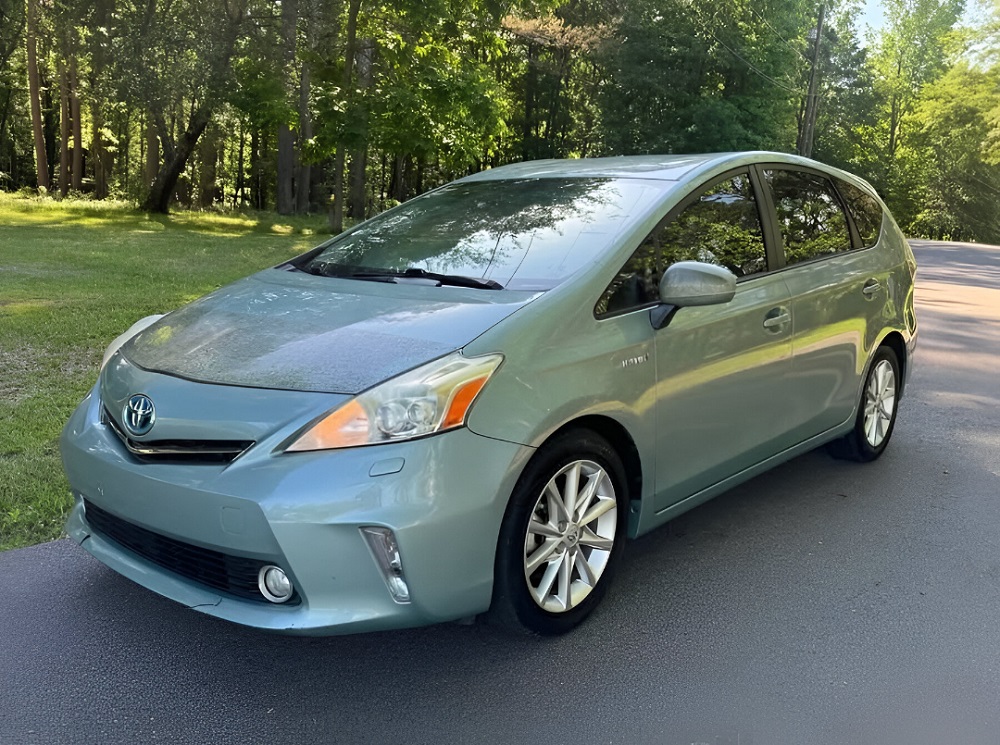
1. The engine design that loads the gasket hard
The jump to 2ZR-FXE changed the stress map
Toyota moved from the 1.5L 1NZ-FXE to the 1.8L 2ZR-FXE in 2010. Displacement grew. Cylinder pressure rose. Highway efficiency improved, but so did average combustion load.
The 2ZR-FXE runs an Atkinson cycle with late intake valve closing. Effective compression drops, but expansion stays long. That raises exhaust heat and pushes more work into the head and gasket over time.
Aluminum block. Aluminum head. Multi-layer steel gasket. An electric water pump now controls coolant flow, not a belt. That shift changed how heat moves through the deck surface.
| Generation | Model years | Engine | Cooling system | Field head gasket risk |
|---|---|---|---|---|
| Gen 2 | 2004–2009 | 1NZ-FXE 1.5L | Belt-driven pump | Very low, usually after severe overheat |
| Gen 3 | 2010–2015 | 2ZR-FXE 1.8L | Electric pump | High, often 150,000–250,000 miles |
| Gen 4 | 2016–2022 | 2ZR-FXE revised | Electric dual-flow | Low, isolated cases |
Gen 3 engines cluster failures between 150,000 and 250,000 miles. Failures below 120,000 miles usually involve overheating or neglected EGR service.
Multi-layer steel gasket meets aluminum expansion
The gasket uses several thin steel layers with embossed fire rings. Polymer coatings seal the coolant and oil passages. The seal depends on flat aluminum surfaces and steady clamping force.
Aluminum expands fast with heat. The head bolts clamp the head tight at specific points. Between those bolts, the head lifts slightly during heat cycles.
Hybrids heat and cool constantly. A city commute can trigger dozens of on-off cycles. Each cycle flexes the gasket coating and relaxes clamp load in the spans between bolts.
Over years, the fire ring near cylinder 1 or 3 loses seal first. Combustion pressure then leaks into the coolant jacket at peak cylinder pressures above 1,000 psi.
Electric water pump logic and hot spots
The 2ZR-FXE uses an ECM-controlled electric water pump. Pump speed follows load and coolant temp, not engine rpm. Flow can drop during extended EV operation after a hard pull.
Heat then soaks into the head without steady coolant circulation. Localized hot spots form near exhaust ports and thin deck areas. That stresses the gasket at the fire ring edge.
DTC P261B flags pump performance faults. Many failed engines show that code months before the gasket breach. Head warp beyond 0.002–0.004 inches requires machining before reassembly.
2. Carbon choke and EGR heat that cooks the gasket
The Gen 3 EGR layout that plugs itself
The 2ZR-FXE runs a cooled EGR system with a stainless heat exchanger. Exhaust flows through the cooler, past the EGR valve, then into a small transfer pipe. From there it feeds four narrow intake manifold ports.
Oil vapor from the PCV system mixes with soot. The cooler’s fine passages trap that mix first. By 100,000 to 150,000 miles, many coolers flow under 20 percent of spec.
Flow loss raises combustion temps fast. Some logged engines show higher knock counts within 5,000 miles of heavy restriction.
| Odometer range | Typical EGR condition | Combustion impact | Head gasket risk |
|---|---|---|---|
| 0–80,000 | Light deposits | Normal temps | Low |
| 80,000–130,000 | Moderate restriction | Higher average temps | Moderate |
| 130,000–180,000 | Heavy restriction | Local hot spots | High |
| 180,000+ | Severe clog or near zero flow | Chronic high temps | Very high |
Cylinder 1 and 3 often run hotter. Intake routing and uneven clogging skew flow between ports. That heat pattern matches many early gasket breaches.
Lean cylinders and fire ring abuse
EGR cools the burn by adding inert gas. Restrict that flow and peak cylinder pressure rises. NOx output climbs with it.
Higher pressure hammers the MLS fire ring. Light knock events add sharp pressure spikes. Repeated spikes erode the coating at the combustion seal.
Some engines log chronic light knock without a loud ping. The ECM trims timing to protect pistons. The gasket still takes the hit at over 1,000 psi peak pressure.
Gen 2, Gen 3, Gen 4 and the EGR divide
Gen 2 used a simpler EGR path and lower soot loading. Head gasket failures there usually follow clear overheating. Reports under 200,000 miles remain rare.
Gen 3 pushed aggressive EGR for emissions. The cooler is small and clogs hard. Field data clusters failures at 150,000 to 250,000 miles.
Gen 4 revised coolant jackets and EGR routing. Cooler clog rates dropped. Head gasket cases fell sharply compared to 2010–2015 production.
3. The cold-start rattle and the codes that tell the truth
The “death rattle” pattern on first fire
Park overnight. Coolant seeps past a weak fire ring into one cylinder. The system stays pressurized after shutdown, so seepage continues.
Hit Start in the morning. The piston tries to compress liquid coolant. The engine misfires hard and shakes the chassis.
The damper plate between engine and transaxle amplifies the torque pulses. It clatters against the input shaft. After a few seconds, the coolant blows out the exhaust and the engine smooths out.
Repeated events wash cylinder walls. Oil dilution rises. Long-term misfire damage can score the bore in under 10,000 miles.
Code clusters that map the failure
Most cars log P0300 with one cylinder code. P0301 and P0303 show up often in Gen 3 cases. The same cylinder repeats on cold starts.
Many cars also log P0401 before the gasket fails. That code confirms low EGR flow. Some show P261B weeks earlier, pointing to water pump faults.
Severe cases trigger P3190, P3191, or P0A0F. The hybrid system aborts engine start due to unstable combustion. Those codes often appear once coolant intrusion worsens.
| DTC | System | Meaning | Link to gasket failure |
|---|---|---|---|
| P0300 | Ignition | Random misfire | Unstable combustion |
| P0301–P0304 | Ignition | Specific cylinder misfire | Often 1 or 3 first |
| P0401 | EGR | Insufficient EGR flow | Precursor to overheating |
| P261B | Cooling | Water pump malfunction | Head overheating risk |
| P3190 | Hybrid/engine | Poor engine power | Low compression from coolant |
| P3191 | Hybrid/engine | Engine does not start | Severe intrusion |
| P0A0F | Hybrid | Engine failed to start | Hybrid shutdown |
Freeze-frame data matters. Coolant temp spikes or low EGR flow during misfire events strengthen the case. Dealers often require stored DTCs to escalate coverage.
When it looks like a gasket but isn’t
Gen 4 cars add a new trap. The exhaust heat exchanger can leak coolant into the exhaust stream. That failure sets P148F00.
White smoke appears. Coolant drops. No misfire codes show.
Block tests stay negative. Compression holds steady. Toyota addressed this under TSB-0135-19, and many repairs fall under the 8-year/80,000-mile federal emissions warranty or 15-year/150,000-mile PZEV coverage.
4. Recall talk versus what Toyota actually issued
Why no safety recall ever covered the gasket
A safety recall requires a clear crash risk. Sudden loss of steering or braking meets that bar. A gasket that fails over years usually does not.
Most Gen 3 head gaskets fail after 150,000 miles. The pattern shows gradual coolant loss and cold-start misfire. NHTSA has no campaign number for a Prius head gasket defect.
Toyota treats it as durability, not safety. That legal line blocks a blanket recall.
Warranty Enhancement ZF3 and the EGR link
Toyota launched Warranty Enhancement ZF3 for 2010–2014 Prius. It focused on sticking EGR valves and cold-start rattle. Coverage ran up to 10 years or 150,000 miles from first use.
ZF3 covered the EGR valve and related parts. It did not list the head gasket. Dealers could replace the valve and clear P0401 without opening the engine.
Some owners secured goodwill engine repairs. Approval depended on stored codes and service history. Without documentation, most paid out of pocket.
| Program ID | Applies to | Covered parts | Direct head gasket coverage |
|---|---|---|---|
| ZF3 | 2010–2014 Prius | EGR valve, related components | No |
| ZJB | 2010–2015 Prius | Brake booster and pump | No |
| 24TE01 | 2014–2016 Highlander HV; 2015–2017 Prius C | Brake Booster & Brake Booster Pump | No |
Customer Support Programs and emissions coverage angles
Customer Support Programs extend warranty on defined parts. They require matching DTCs and time limits. A gasket without a qualifying code falls outside the program.
Federal emissions warranty runs 8 years or 80,000 miles. PZEV states extend certain parts to 15 years or 150,000 miles. EGR coolers and heat exchangers often qualify.
Head gaskets rarely receive direct emissions coverage. Some claims succeed when failure ties to a covered emissions part. Most Gen 3 gasket jobs land between $1,800 and $5,000 out of pocket.
How dealers decide who pays
Dealers open a tech case with Toyota. They submit DTCs, freeze-frame data, and service records. Regional reps review mileage and maintenance gaps.
Repeated P0401 or P261B codes strengthen a claim. Missing coolant service records weaken it. Two cars with the same rattle can receive different decisions.
Approval often depends on documentation within 10 years and 150,000 miles. Beyond that window, goodwill drops fast.
5. Generation risk map and where failures cluster
Gen 3 mileage bands where gaskets give up
Most 2010–2015 failures land between 150,000 and 250,000 miles. Below 120,000 miles, look for overheating or heavy neglect. Above 200,000 miles, risk climbs fast if EGR service never happened.
Shop data shows no clean “safe year” inside Gen 3. Software updates and minor part changes did not remove the pattern. Prius liftback and Prius v track close in failure timing.
Oil consumption often rises before failure. Engines burning 1 quart every 1,000 miles foul EGR faster. That speeds heat load on the gasket.
| Generation | Model years | Engine | Common failure mileage | Relative risk | Main driver |
|---|---|---|---|---|---|
| Gen 2 | 2004–2009 | 1NZ-FXE 1.5L | 200,000+ | Very low | Severe overheat |
| Gen 3 | 2010–2015 | 2ZR-FXE 1.8L | 150,000–250,000 | High | EGR clog + thermal cycling |
| Gen 4 | 2016–2022 | 2ZR-FXE revised | No strong cluster | Low | Heat exchanger leaks |
Gen 2 baseline and what fails first
Gen 2 cars rarely pop head gaskets. Failures usually follow a clear overheat event. Low coolant and red temp lights show up first.
More common Gen 2 issues include HV batteries and brake actuators. Rust and age take many off the road before gasket trouble. A confirmed Gen 2 gasket job often follows warped aluminum from overheating.
Machine shops measure head warp beyond 0.003 inches as out of spec. Most warped heads require surfacing before reassembly.
Gen 4 redesign and the new coolant trap
Gen 4 revised coolant passages and head casting. Heat spreads more evenly across the deck. Field reports of gasket failure dropped sharply.
Early Gen 4 cars introduced exhaust heat exchanger leaks. Coolant enters the exhaust without combustion breach. DTC P148F00 flags the issue.
Repairs often involve full front exhaust pipe replacement. Parts and labor can reach $1,200 to $2,000 if out of warranty.
Used market math on repaired Gen 3 cars
Buyers discount unrepaired Gen 3 cars heavily. A documented head gasket and full EGR service raises confidence. Receipts from hybrid specialists carry weight.
A $2,500 repair can protect $3,000 to $5,000 in resale value. Cars with no EGR history often face price cuts of $1,000 or more. High-mile Gen 3 cars without records remain high risk past 200,000 miles.
6. Repair paths and what a real fix requires
What a proper Gen 3 head gasket job includes
A true repair starts with full head removal. The aluminum head goes to a machine shop. They check flatness and cracks under pressure.
Warp beyond 0.002 to 0.004 inches calls for surfacing. Shops replace the MLS gasket and torque new head bolts in sequence. Final angle torque matters for clamp load.
Most pros replace the electric water pump and thermostat at the same time. Many also install new spark plugs and inspect timing chain guides. Labor runs 12 to 15 hours in flat-rate books.
| Repair strategy | Shop type | Typical cost (USD) | What’s included | When it fits |
|---|---|---|---|---|
| Full head gasket job | Dealer | $3,500–$5,000 | OEM gasket, bolts, machining, pump | Mid-mile car, strong bottom end |
| Full head gasket job | Hybrid specialist | $1,800–$2,800 | Gasket, machining, full EGR service | Budget-conscious, solid history |
| JDM engine swap | Hybrid specialist | $2,500–$3,500 | Used long block, fluids, labor | 200,000+ miles or rod damage |
| Minimal gasket job | Budget shop | $1,200–$1,800 | Gasket only, limited extras | High repeat-failure risk |
Skipping machining saves money short term. It raises the chance of a repeat leak within 20,000 to 40,000 miles.
When rods bend and the bottom end is done
Severe coolant intrusion can cause hydro-lock. The electric motor tries to spin the engine anyway. That force can bend a connecting rod.
Bent rods change piston height at top dead center. Techs measure piston drop to confirm damage. A few thousandths of difference signals trouble.
Reassembling with a bent rod leads to vibration and oil use. Many shops recommend engine replacement once rod damage appears. Used JDM engines often cost less than a full rebuild on a 200,000-mile core.
EGR service is not optional during repair
Replacing the gasket without cleaning the EGR system invites repeat failure. The cooler must come off the car. Internal passages need manual or chemical cleaning.
The intake manifold ports must be cleared evenly. PCV valves should be replaced. Many specialists also add an oil catch can to reduce future sludge.
A clogged cooler can drop EGR flow below 10 percent of spec. Leaving it in place loads the new gasket under the same heat cycle within weeks.
7. Getting Toyota to pay and when the law steps in
Building a case under ZF3 or emissions coverage
Dealers need codes and history. Stored P0401 supports an EGR claim under ZF3. A clean service record strengthens goodwill requests.
Freeze-frame data showing misfire with low EGR flow helps. Videos of the cold-start rattle can support the complaint. Mileage under 150,000 improves odds under older enhancement windows.
Head gaskets rarely receive direct coverage. Claims succeed more often when tied to a covered emissions part. Without matching codes, most claims get denied.
Reimbursement rules when programs expand
Toyota allows reimbursement if a repair later qualifies. Owners must provide itemized repair orders. Proof of payment and proof of ownership are required.
Repairs must match the condition in the program letter. A gasket repair without a covered DTC may get partial reimbursement only. Review can take weeks through the Toyota Customer Experience Center.
| Requirement | What Toyota asks for | Why it matters |
|---|---|---|
| Repair order | Itemized invoice | Confirms parts and labor |
| Proof of payment | Card receipt or check | Shows you paid |
| Proof of ownership | Registration or title | Ties repair to you |
| Matching condition | Correct DTCs and dates | Confirms eligibility |
Claims outside time or mileage limits fail fast. Missing documentation also ends most reviews.
What past Prius settlements show
Toyota has settled major cases before. Unintended acceleration led to a $1.4 billion settlement. Inverter cases brought millions in reimbursements.
Those cases involved clear defect patterns and regulatory pressure. Head gasket failures center on durability and emissions systems. That makes large class-wide payouts less likely.
Lemon law claims may apply in some states. Repeated failed repairs and long downtime matter. Most successful lemon claims involve newer vehicles under 18 to 24 months of service.
8. Stop it before it blows: prevention on a Gen 3
EGR service that actually lowers gasket stress
Gen 3 engines need full EGR teardown around 100,000 miles. The cooler must come off the car. The valve and transfer pipe need full cleaning.
The intake manifold ports clog unevenly. Each of the four runners must be cleared by hand. Flow balance matters more than surface shine.
Shops that only “spray clean” the valve miss the restriction inside the cooler. Many clogged coolers flow under 10 percent of spec at 150,000 miles.
| Service | Suggested interval | What’s done | Why it matters |
|---|---|---|---|
| Full EGR + intake clean | Every 100,000 miles | Remove and clean cooler, valve, pipe, intake | Restores EGR flow, lowers combustion temps |
| Coolant replacement | 100,000 miles or 10 years | Drain, fill, bleed system | Prevents hot spots |
| PCV valve replacement | 100,000 miles | Replace PCV valve | Cuts oil vapor into EGR |
| Engine oil & filter | 5,000–8,000 miles | Quality synthetic oil | Reduces carbon load |
Ignoring EGR service raises average cylinder temp. Higher temp increases peak pressure on the MLS fire ring above 1,000 psi.
Cooling system checks that catch early damage
Small coolant loss matters. A few ounces every month can signal seepage. Repeated top-offs without leaks demand a closer look.
Monitor coolant temp with a scan tool. Long highway pulls should hold near 190–200°F. Spikes above 210°F under light load suggest flow problems.
Replace weak electric water pumps early. P261B should never sit ignored. A failed pump can overheat the head in one drive cycle.
Buying used with gasket risk in mind
Cold start behavior tells the story. A stone-cold engine should fire smooth. Any violent shake points to possible intrusion.
Check for stored P0301, P0303, or P0401 codes. Inspect coolant level and look for bubbles at idle. Ask for proof of EGR cleaning or head work.
A documented gasket repair with full EGR service often runs $2,000 to $3,000. A neglected Gen 3 at 180,000 miles carries real risk of a $3,500 to $5,000 repair.
9. Final call: what the Prius head gasket issue really is
Pattern failure, not a recall campaign
Gen 3 head gasket failures form a clear pattern. Most hit between 150,000 and 250,000 miles. EGR restriction and thermal cycling drive the damage.
Toyota never issued a safety recall for the gasket. Programs like ZF3 covered EGR parts, not engine teardown. Emissions warranty helps some owners, not most.
Repair costs vary by path. A proper gasket job runs $1,800 to $5,000. A used engine swap often lands near $3,000 installed.
The hard mechanical limit
Aluminum heads flex under heat. Hybrid start-stop cycles add fatigue. Clogged EGR systems raise peak cylinder pressure beyond 1,000 psi.
Left unchecked, coolant intrusion escalates. Repeated hydro-lock events can bend rods in a single morning start. A bent rod usually means full engine replacement above 200,000 miles.
The cutoff is simple. Maintain the EGR and cooling system by 100,000 miles, or plan for a multi-thousand-dollar repair before 250,000.
Sources & References
- All you need to know about PRIUS head gasket repair
- CUSTOMER SUPPORT PROGRAM 24TE01 – nhtsa
- Warranty Enhancement Program – nhtsa
- Toyota Prius Head Gasket Failure: What Every Owner Needs to Know – Country Automotive
- Every Toyota Prius Generation, Ranked By Reliability – Jalopnik
- Toyota Prius Blown Head Gasket or EGR Cooler – Green’s Garage
- How does EGR blow head gasket : r/prius – Reddit
- Hybrid FAQ – Tampa Hybrids Inc.
- Toyota Prius, Generation 3 Head Gasket Problems in Chandler, AZ
- Prius Rumbling, what could it be? – Reddit
- 2010 Prius Knocking Noise on Start-up – Reddit
- Head gasket issue : r/prius – Reddit
- T-SB-0027-16 – PriusChat
- T-SB-0027-16 – PriusChat
- When a Prius Head Gasket Problem is Not a Prius Head Gasket Problem Warning | Torque News
- [repost] 2014 Prius V-261k mi. engine knocking/rattle – Reddit
- Safety Recalls & Service Campaigns – Toyota
- In our continuing efforts to help ensure the best in customer satisfaction, Toyota is announcing a Warranty Enhancement Program – nhtsa
- Prius Brake Booster Warranty: How I Made Toyota Honor Their Own Program
- TOYOTA RECALL NEEDED, SAYS PETITION – The BRAKE Report
- Toyota Hybrid Brake Defects Are Subject to California Lemon Law – Model Years 2010, 2011, 2012, 2013, 2014, 2015
- Do I really need the EGR cleaned on my 2013 or are Prius forums too technical? – Reddit
- Prius Owner’s Warranty Information – Toyota
- Guide. – Fixed-Ops
- Owner’s Warranty Information – Toyota
- What warranty coverage do I have on my Toyota vehicle?
- Prius OwnerÕs Warranty Information – Toyota
- Head gasket leaking on Gen3 prius, dealer is quoting $4700 for parts and labor. Worth it?
- Gen3 owners with NO head gasket issues, how many miles do you have? : r/prius – Reddit
- 3rd Gen Owners – What milage did you replace/experience head gasket problems? What year is your car? : r/prius – Reddit
- I have two Gen 3 Prius cars and both have head gasket issues what is the average cost to replace the gaskets? I am located in Southern California and also need a trustworthy shop—suggestions please – Reddit
- Estimator Toyota Prius Head Gasket Replacement Cost – RepairPal
- My experience with buying a used Gen3 and EGR cleaning : r/prius – Reddit
- Car sputtering eating coolant only from reservoir. Says hybrid system error and pksb unavailable. : r/prius – Reddit
- Low Coolant, MIL ON DTC P148F00, and/or Poor Heater Performance – nhtsa
- Coolant runs low, possible Prius-specific issues – Reddit
- Susman Godfrey Obtains $1.4 Billion Settlement in Toyota Unintended Acceleration Class Action
- Miller Barondess Settles Class Action Lawsuit for the Benefit of 1.1 Million Toyota Prius Owners
- Toyota Prius Class Action Lawsuit Settlement | CA Lemon Law Blog
- What if you have previously paid for repairs to your vehicle for a specific condition outlined in a recall or special service campaign? – toyota
- What documents are needed for reimbursement review for previously paid for repairs to your vehicle for a specific condition outlined in a recall or special service campaign? – toyota
- toyota – PriusChat
- Warranty Policy Bulletin – nhtsa
- Well I spoke to my Toyota mechanic on the EGR cleaning : r/prius – Reddit
Was This Article Helpful?