
Hear a cold-start tick. Smell oil or coolant. Watch the idle shake. That’s how Toyota Sequoia engine problems begin.
Since 2001, this SUV has run three very different engines. The 2UZ-FE V8 handles neglect but needs timing-belt discipline. The 3UR-FE drops the belt and brings oil and coolant leaks instead. The new twin-turbo hybrid adds recalls, turbos, and cooling upkeep.
Some years run forever with basic care. Others stay quiet, then hit hard with big bills. Let’s split them and find the weak spots.
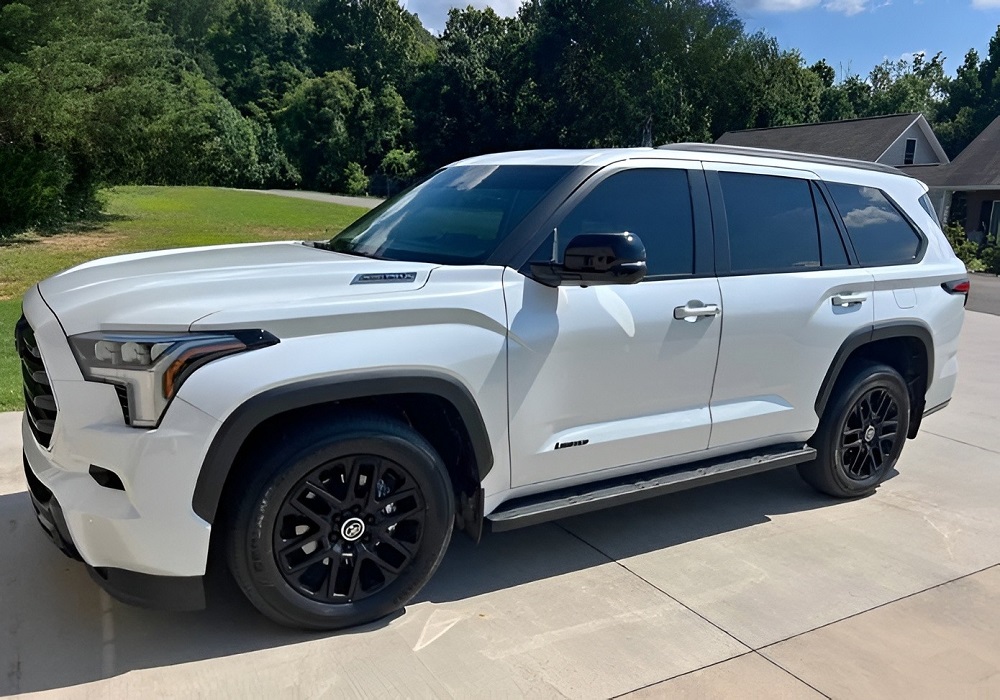
1. Split the Sequoia into three engine eras before diagnosing anything
The early V8 survives abuse, but the surrounding systems decide its fate
The 2001–2007 Sequoia runs the 2UZ-FE 4.7L V8. Iron block, thick internals, low stress. These engines regularly pass 250,000 miles with basic oil changes. Failures rarely start inside the block.
The weak points sit around it. Timing belt service every 90,000 miles controls survival. Exhaust manifolds crack from heat cycles and weight. Early radiators can fail internally and mix coolant with transmission fluid.
Transmission cooler failure can wipe both systems at once. Full rebuilds often exceed $4,000 when contamination spreads.
The later V8 drops the belt and replaces it with hidden leak failures
The 2008–2022 Sequoia switches to the 3UR-FE 5.7L V8. Timing chain replaces the belt. Power jumps to 381 hp. The engine runs smoother and pulls harder under load.
The failure pattern shifts upward. Cam tower seals use RTV and begin to seep with heat cycles. Oil drips onto hot exhaust and burns before it hits the ground. Owners smell it before they see it.
Repair requires major teardown. Dealer quotes for cam tower reseal land between $5,000 and $7,000.
The twin-turbo hybrid brings power, heat, and precision risks
The 2023–2025 Sequoia runs the i-FORCE MAX 3.4L twin-turbo V6 hybrid. Output hits 437 hp and 583 lb-ft. Torque arrives low and stays flat. The system packs a motor between engine and transmission.
Failure risk now depends on precision. Early engines suffered from machining debris left inside the block. Metal particles circulate through oil passages and damage main bearings. Knock and sudden failure follow.
Toyota’s fix replaces the entire engine assembly. Full engine swaps are required on affected units.
The three engine eras define three different failure maps
| Sequoia years | Engine | Primary failure pattern |
|---|---|---|
| 2001–2007 | 4.7L 2UZ-FE | Timing belt neglect, manifold cracks, radiator cooler failure |
| 2008–2022 | 5.7L 3UR-FE | Cam tower oil leaks, valley coolant leaks, SAIS faults |
| 2023–2025 | 3.4L twin-turbo hybrid | Debris-related bearing damage, turbo hardware risk, hybrid cooling upkeep |
Timing belt service on the first generation averages $950 to $1,500 depending on labor rates.
2. The 4.7L V8 lives or dies by one service most owners delay
The timing belt controls the entire engine’s survival window
The 2UZ-FE uses a timing belt, not a chain. Toyota sets replacement at 90,000 miles. Miss that window and the risk climbs fast with age and heat cycles.
Early engines tolerate failure better. The 2005–2007 VVT-i versions do not. Valve timing changes bring tighter piston-to-valve clearance. A snapped belt can bend valves and drop compression instantly.
Most failures hit between 100,000 and 130,000 miles when service gets pushed. Full rebuild or engine swap often exceeds $3,500 to $6,000.
Partial repairs create repeat failures within the same service window
The water pump sits behind the timing cover. It runs on the same cycle as the belt. Bearings wear, seals leak, and coolant starts to drip near the crank pulley.
Shops that replace only the belt leave old components in place. Idlers and tensioners carry the same mileage and fail next. That forces a second teardown within 20,000 to 40,000 miles.
Complete timing service includes belt, pump, idlers, and tensioner. Typical cost runs $950 to $1,500 depending on labor rate.
Late first-gen engines punish missed service harder than early ones
The VVT-i update improves power and throttle response. It also raises failure severity when timing slips. Cam timing moves faster, and valve overlap increases.
A worn belt can jump teeth before it snaps. That throws timing off and causes rough running or no-start. Compression drops across multiple cylinders within seconds.
Cylinder head repair adds machine work, valves, and labor. Total repair cost often crosses $4,000 once damage spreads.
3. The 4.7L survives inside, fails outside
Manifold cracks start as a tick and turn into a fuel-control problem
Cold start brings a sharp ticking from the engine bay. Sound fades as metal expands. That points to cracked exhaust manifolds, common on high-mileage 2UZ-FE trucks.
Cracks form near the flange from heat stress and weight load. Exhaust leaks pull in outside air before the O2 sensors. The ECU reads a lean condition and adds fuel.
Fuel trims climb, efficiency drops, and catalytic converters run hotter. Manifold replacement often costs $800 to $1,800 with labor depending on seized studs.
Radiator cooler failure mixes coolant and transmission fluid into a destructive slurry
Early radiators carry an internal transmission cooler. Internal walls crack with age and heat cycles. Coolant and ATF mix into a pink fluid known as the “strawberry milkshake.”
That mixture destroys transmission clutches fast. Fluid loses lubrication and friction material breaks down. Contamination can also spread through the cooling system.
Transmission rebuild plus radiator replacement often lands between $3,500 and $5,500 when caught late.
These failures show up before the engine itself wears out
The 2UZ-FE bottom end rarely fails first. Supporting systems break earlier and decide the truck’s lifespan. Exhaust, cooling, and transmission issues hit long before internal engine wear.
Many engines still run strong past 250,000 miles if those systems stay intact. Most trucks get retired after a major cooling or transmission failure, not a spun bearing.
4. The 5.7L V8 trades belt service for expensive leak repairs
Cam tower leaks start small and turn into major labor jobs
The 3UR-FE uses RTV sealant on the cam towers. Heat cycles break that seal over time. Oil seeps from the rear edges and runs down the block.
Most owners smell burning oil before they see anything. Oil hits the exhaust and burns off fast. No puddle forms under the truck.
Fixing it requires pulling major top-end components. Labor hours stack fast, pushing total repair cost to $5,000–$7,000 at dealer rates.
Valley plate leaks hide under the intake and drain coolant slowly
Coolant flows through a plate in the engine valley. The seal degrades and starts leaking internally. Fluid collects under the intake and evaporates from heat.
The reservoir drops with no visible leak. Dried pink residue forms deep in the valley. Overheating risk builds once coolant loss passes a critical level.
Repair requires intake removal and full access to the valley. Most jobs land between $1,800 and $3,000 depending on labor time.
Leak detection comes late and repair costs hit early
Both leak paths stay hidden for long periods. Oil burns off before it reaches the ground. Coolant evaporates before it drips.
By the time symptoms show, damage risk increases. Low oil levels stress timing components. Coolant loss pushes operating temps beyond 220°F under load.
Ignoring either leak can lead to overheating or lubrication loss. Combined repair exposure can exceed $8,000 if both failures occur together.
5. Emissions and access issues turn small faults into big problems on the 5.7L
SAIS failure drops power fast and floods the dash with codes
Cold start triggers the Secondary Air Injection System. Pumps push air into the exhaust for emissions. Moisture enters the pumps and valves and corrodes internal parts.
Failure sets codes like P0418, P0419, and P2440. The ECU limits throttle and locks the truck in limp mode. Power drops hard during acceleration and towing.
Replacing pumps and valves costs $2,000–$3,000 with parts and labor. Many failures originate from water intrusion inside the pump housing.
Starter placement turns a basic part into a high-labor repair
The starter sits buried near the exhaust side of the engine. Heat shielding and tight packaging block easy access. Standard removal often requires moving surrounding components.
Labor runs 6 to 9 hours on most shops. Parts cost stays under $350, but labor drives the total bill. Many owners get hit with $1,000–$2,100 invoices.
Heat exposure shortens starter life over time. Failures often show up after 120,000 miles with slow crank or no crank.
Electrical and accessory faults can mimic engine failure
SAIS faults trigger limp mode and feel like engine damage. Starter failure creates a no-start that looks like a dead engine. Both issues stop the truck without internal engine failure.
Drivers often chase fuel or ignition problems first. Scan data points straight to emissions or starting systems. Misdiagnosis wastes time and adds parts cost.
SAIS-related limp mode can cap speed below 40 mph until the system is repaired.
6. The twin-turbo hybrid brings power, but early engines failed from inside out
Machining debris turns a new engine into a failure case within miles
Early i-FORCE MAX engines left the factory with metal debris inside the block. Aluminum particles stayed in oil passages after machining. Oil flow carried that debris straight to the main bearings.
Damage builds fast once particles reach the bearing surface. The #1 main bearing takes the hit first under load. Oil film breaks down and metal contacts metal.
Drivers report knocking, rough idle, or sudden stall. Some engines fail under 10,000 miles. Toyota’s repair requires full engine replacement, not internal repair.
Failure shows up as knock, stall, or complete loss of drive
Cold start knock signals bearing damage early. Load makes it worse, especially under towing. Oil pressure drops as clearances open up.
Some trucks stall at speed with no warning. Others refuse to restart after shutdown. No-start conditions follow once bearing damage spreads.
This failure does not give long warning windows. Once knock starts, engine life can drop to minutes or hours.
Production fixes separate early trucks from later builds
Toyota updated machining and cleaning processes after early production runs. Bearing design also saw revisions to handle contamination better. Later engines show fewer reported failures.
Build date now matters more than mileage. Early 2023–2024 units carry the highest risk window. Later production trucks fall outside the main recall exposure.
Engines built after early 2024 show lower contamination rates based on field data.
7. Turbo hardware and hybrid systems add new long-term failure points
Wastegate actuators fail and cut power under load
The twin turbos rely on electronic wastegate actuators. These control boost pressure during acceleration and towing. Early units showed actuator failure and stuck positions.
When the actuator fails, boost control breaks. The ECU limits power and triggers limp mode. Acceleration drops hard, especially under load or uphill pulls.
Access is tight in the engine bay. Turbo-related repairs often require major disassembly. Repair bills can exceed $3,000 once labor stacks up.
Hybrid battery cooling becomes a maintenance item you can’t ignore
The hybrid battery sits behind the rear seats. Cooling air flows through an intake filter and fan system. Dust and debris clog that filter over time.
Restricted airflow raises battery temperature. The system reduces output to protect the pack. Warning messages can appear when temps climb too high.
Cleaning the filter takes minutes. Dealer service runs $200 to $500 depending on labor and inspection scope.
Heat and packaging increase long-term repair complexity
The engine bay packs turbos, intercoolers, and hybrid components tightly. Heat builds faster under towing and high load. Components sit closer together than in older V8 layouts.
Higher temperatures stress seals, wiring, and sensors. Small failures require more labor to access and repair. Routine jobs take longer as mileage climbs.
Turbo replacement can cross $4,000 per side once out of warranty.
8. Picking the right Sequoia engine comes down to the risk you accept
The 4.7L V8 rewards strict timing service and punishes delay
The 2UZ-FE handles heat and load without stress. Thick internals and low compression keep wear slow. Most engines pass 250,000 miles with basic oil service.
The weak point stays fixed. The timing belt sets a hard service interval at 90,000 miles. Skip it and failure risk rises fast, especially on VVT-i models.
A snapped belt on late engines can bend valves and drop compression instantly. Full repair often lands between $3,500 and $6,000.
The 5.7L V8 delivers power but carries high repair exposure
The 3UR-FE runs a timing chain and removes belt service. Power climbs to 381 hp with strong towing performance. The engine holds up well under load.
Leaks define long-term ownership. Cam tower seepage and valley coolant loss stay hidden early. Repairs demand major labor and deep access.
Single repairs can reach $5,000–$7,000. Combined leak repairs can exceed $8,000 once both systems fail.
The twin-turbo hybrid pushes torque but raises complexity
The i-FORCE MAX delivers 583 lb-ft at low rpm. Torque comes in early and stays flat under load. The system blends engine and motor output through a 10-speed.
Failure points shift to precision and heat. Debris-related failures required full engine replacement in early units. Turbo hardware and hybrid systems add new wear paths.
Turbo replacement can exceed $4,000 per side. Hybrid battery replacement can reach $7,000 or more outside warranty.
Sources & References
- Toyota Sequoia Generations: Key Updates Across All Model Years – CarBuzz
- Toyota Sequoia – Wikipedia
- Toyota Sequoia Buying Guide: Cost, Reliability, and the Best Years to Buy – CarGurus
- Toyota Sequoia Years To Avoid: Models, Problems & Reliability Guide
- Most Reliable Engines: 10 Motors That Refuse To Die
- V8 vs TT-V6 : r/ToyotaTundra – Reddit
- Best Sequoia Engine : r/toyotasequoia – Reddit
- Toyota Sequoia Generations Ranked By Reliability – CarBuzz
- What is a more reliable and overall better engine. The 4.7 V8 or the 5.7 V8? We are strictly talking engines here. What will go on to be the most iconic Toyota V8 in history? : r/ToyotaTundra – Reddit
- 2025 Toyota Sequoia Timing Belt Replacement Prices & Cost Estimates | Kelley Blue Book
- Estimator Toyota Sequoia Timing Belt Replacement Cost – RepairPal
- Exhaust Manifolds Can Crack and Cause Leak on Toyota Sequoia – RepairPal
- 2007, Toyota Sequoia Limited, Ticking Noise when accelerating. : r/toyotasequoia – Reddit
- 2000 Toyota tundra right manifold crack help : r/1stGenTundras – Reddit
- Exhaust Manifold Repair : r/toyotasequoia – Reddit
- Thoughts on replacing motor in an older Sequoia? : r/toyotasequoia – Reddit
- Fixing Every Common Problem with Toyota’s Last V8 Engine – YouTube
- Cam Tower Leaking? Advice please : r/ToyotaTundra – Reddit
- Is buying a 5.7L tundra with 88k miles a bad idea? – Reddit
- Cam Tower Leak Lawsuits | Toyota, Lexus, Land Cruiser | ClassAction.org
- What engine has the least issues : r/toyotasequoia – Reddit
- EXPERT Mechanic Explains the Valley Plate Leak on Lexus GX460 – YouTube
- Toyota Sequoia Complaints, Problems and TSBs
- How Much Does a Starter Replacement Cost | AAA Automotive
- 2007 5.7 – $1200 to replace starter? : r/tundra – Reddit
- 2007 5.7L needs new starter – $2100 reasonable for the amount of work? : r/ToyotaTundra – Reddit
- Starter replacement 2010 Toyota tundra 5.7L 4WD. Mechanic is telling me $1948, is that reasonable? : r/MechanicAdvice – Reddit
- Estimator Toyota Tundra Starter Replacement Cost – RepairPal
- Toyota Sequoia Recalls – RepairPal
- TOYOTA Sequoia – All Models by Year (2000-Present) – Specs, Pictures & History
- Toyota Recalls Certain Tundra, Tundra HEV and Sequoia Models – Toyota USA Newsroom
- TOYOTA – nhtsa
- Toyota Engine Stall Recall Linked to Contamination From Manufacturing Debris: NHTSA
- Are 2024 Tundras really at risk? : r/ToyotaTundra – Reddit
- With New Toyota Tundra Engine Failures Surfacing, Even ‘Fixed’ Trucks Are Leaving Loyal Owners Stranded and Experts Questioning If Any Year Is Truly Safe – Torque News
- Is Toyota V35A-FTS Engine Reliable? Well..It’s Not That Simple : r/LexusGX – Reddit
- URGENT: 2024 Toyota Tundra Nightmare – Stranded, Frustrated, and Need Your Help! : r/ToyotaTundra – Reddit
- Thoughts on the longevity of the new v6 twin turbo ? : r/ToyotaTundra – Reddit
- The reliability of the 1st/2nd gen v8’s lasting 300k+ miles was a big seller point for me. Will its new hybrid v6 powertrain last that long? (sure more parts) but is the engine designed in the same way the v8’s were designed to last? : r/toyotasequoia – Reddit
- What does everyone think of the 2024 TRD Sequoia with the new V6 twin turbo hybrid engine? Is it worth it? – Reddit
- How & When To Replace Hybrid Battery Fan Filter On Your Toyota Sequoia 2023-2025
- HV Battery Cooling System Maintenance – nhtsa
- Hybrid Battery Cooling Filter Cleaning | Don’t Overlook – Choice Auto Repair
- HV Battery Cooling System Filter Maintenance – nhtsa
- [hybrid] clean your HV battery filter if you havn’t. : r/COROLLA – Reddit
- Toyota Check Hybrid System Warning? Here’s This Hidden Filter Fix – YouTube
- Hybrid Battery Cooling Fan Service ? : r/ToyotaSienna – Reddit
- Toyota Battery Warranty
- National Highway Traffic Safety Administration Makes/Models/Model Years: Mfr’s Report Date: October 01, 2025 NHTSA Campaign Numb
- Toyota Recalls Certain Model Year 2024 Sequoia & Tundra Vehicles
- Toyota’s Most and Least Expensive Models To Maintain Revealed – Torque News
- Toyota Sequoia Camshaft Replacement Cost Estimate – RepairPal
- 2025 Toyota Sequoia Battery
- Toyota Sequoia Hybrid High Voltage Battery Replacement Cost Estimate – RepairPal
- Why 5.7L 3UR-FE will last longer than the 3.5L Twin Turbo V6 : r/ToyotaTundra – Reddit
- Best Toyota Sequoia Model Years For Reliability – CarBuzz
Was This Article Helpful?