
A knock beneath a used Tundra’s hood can stop price talks before the test drive. On certain newer trucks, Toyota links that noise to crankshaft main-bearing damage. Its bearing recalls cover specific 2022–2024 nonhybrid trucks and warn of engine stalls while driving.
Older Tundras need a different kind of scrutiny, especially underneath the frame. Engine choice, rust damage, and documented repairs can change the buying decision within the same model year.
This guide explains which years deserve caution, what can fail, and when completed repairs make a truck worth considering. Before you settle on a price, you’ll need proof of what was fixed and what still needs work.
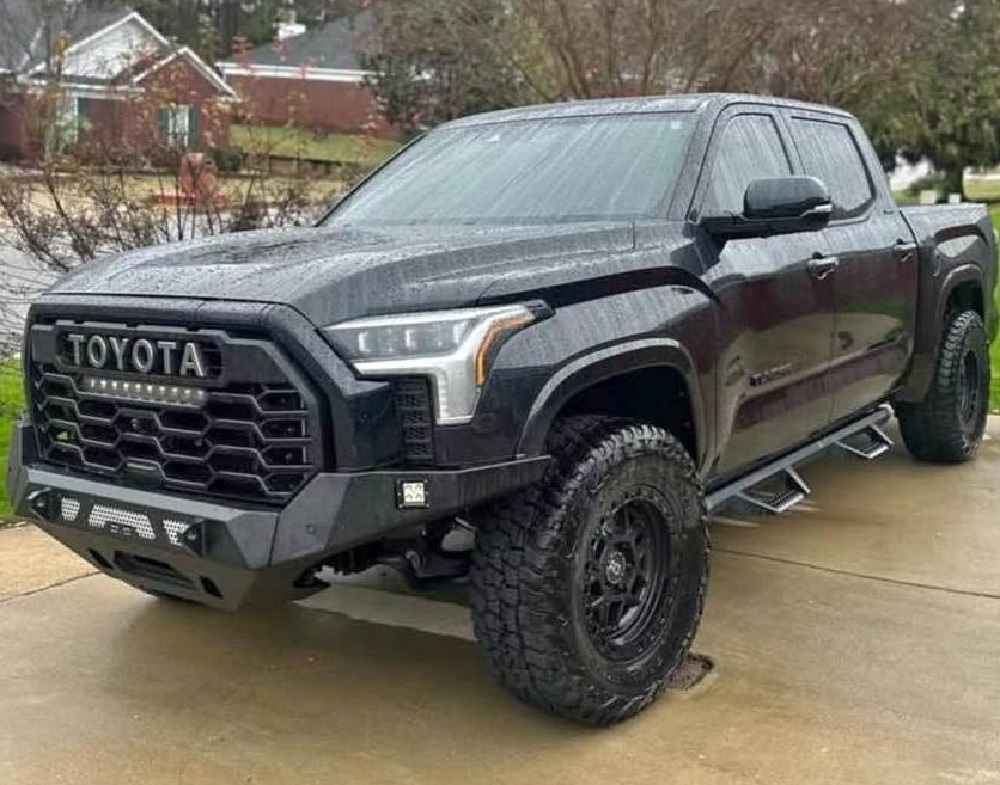
1. Tundra years that can turn a good deal costly
Frame rust, worn ball joints, and engine damage call for different buying decisions. These year groups reflect documented faults and repair risks. Recall totals and complaint counts can’t tell you whether one truck will fail.
Recall coverage depends on the VIN, build date, engine configuration, and fitted equipment. Replacement-part recalls also depend on part numbers and production lots. Confirm the truck’s current status with Toyota or NHTSA before relying on a model-year range.
The groups overlap because each defect affects a different range of trucks. Completed repairs can make one worth considering, but the repair order must show what work took place. A replaced frame still needs a rust check, and an engine repair needs records of any later faults.
| Model years | Main concern | What should decide the purchase |
|---|---|---|
| 2000–2003 | Rust can weaken the rear crossmember supporting the spare tire. The rear brake line and fuel-tank mounts also need attention. | Pass on unresolved structural damage. Recall 09V444 eligibility depends on the VIN and sale or registration history. Trucks outside the listed states still need inspection. |
| 2002–2006 | Certain front lower ball joints can wear loose and separate. Recalls 05V225 and 07V013 overlap in 2004. | Match the VIN and build period to the recall. Confirm repair records, installed parts, and current joint condition. |
| 2007–2010 | Secondary air-injection pumps and switching valves can fail. The 2007–2008 trucks also fall within a separate historical frame settlement. | Buy only when frame condition and air-injection repair history support the price. Toyota documented the air faults under warranty program ZTQ. |
| 2012–2013 with the 5.7-liter V8 | Air-pump faults and engine-control software need attention. Codes P2440 and P2442 flag switching valves stuck open on banks 1 and 2. | Establish the fault before pricing repairs. Toyota’s valve bulletin calls for a software update under specified conditions, not automatic replacement of every air-injection part. |
| 2022–2024 nonhybrid | Certain V35A engines fall under main-bearing recalls 24V381, 25V767, and 26V320. | Apply the strongest engine caution when the required recall work remains incomplete. Match the VIN to the campaign and repair record. Bearing failure can stall the engine and remove drive power. |
2. Frame rust that can end the deal
When the spare tire’s support rots away
Rust can eat through a Tundra’s rear crossmember while the body above still looks clean. On certain 2000–2003 trucks, that crossmember supports the spare tire beneath the bed. Severe corrosion can let the tire break loose and fall onto the road.
Recall 09V444 covered certain trucks originally sold or registered in 20 listed road-salt states and Washington, D.C. Toyota also allowed owners of subject trucks elsewhere to request inspection. The campaign addressed the rear crossmember and brake line at the proportioning valve. Toyota’s later Q&A also identifies the fuel-tank mounting system within the recall’s scope.
Coverage depends on the VIN, sale or registration history, and applicable program terms. Toyota also ran a separate, time-limited frame-perforation campaign for certain 2000–2003 trucks. Neither program made every truck from those years eligible for a replacement frame.
A thin orange film alone doesn’t prove the crossmember has lost strength. Thick flakes, deep pits, and holes call for closer inspection of the remaining steel. A truck’s current address can’t reveal where it spent past winters.
The separate frame settlement for 2007–2008 trucks
Certain 2007–2008 Tundras fell within a later class-action settlement over frame corrosion. Toyota’s ZH7 program provided inspections and no-cost frame replacement when the frame met the settlement’s rust-perforation standard. Some trucks qualified for corrosion-resistant treatment under a separate campaign. Toyota denied wrongdoing, and the settlement did not establish legal liability.
ZH7 coverage lasted until the later of 12 years from first use or May 21, 2018. Those historical terms do not promise free frame work today. Have Toyota confirm any assistance for the VIN before you budget for repairs.
Ask for inspection findings and invoices that identify the work. Rust treatment and frame replacement leave different repair histories. A coating invoice cannot establish that Toyota replaced the frame.
Fresh undercoating can hide missing steel
A proper inspection needs clear views of frame rails, crossmembers, suspension mounts, and brake lines. Fresh undercoating can hide deep pits or loose rust beneath a smooth black finish. If the coating blocks the view, the inspector needs access to the steel underneath.
Leaf-spring mounts deserve close attention because they carry suspension loads into the frame. Rust around those mounts can weaken their attachment points. A smooth idle and clean body tell you nothing about that remaining strength.
A documented replacement frame still needs inspection for later corrosion and damage. Brake lines and mounting hardware need their own assessment, too. Walk away from unresolved structural damage around a suspension mount; undercoating cannot restore steel that rust has consumed.
3. Ball-joint wear that can cost you steering control
Why 2004 belongs in both recall groups
Recall 05V225 covered certain 2002–2004 Tundras with defective front lower ball joints. Recall 07V013 covered certain 2004 through late-2006 trucks. The ranges overlap in 2004, so Toyota needs to match the VIN and production period to the campaign.
The earlier recall involved scratches on the ball surface caused during manufacture. Those scratches could speed wear and create looseness. The later recall linked poor surface finishing to loss of lubrication inside the joint.
Without adequate lubrication, wear can create excess play in the joint. You may hear front-end noise or feel heavier steering. The steering may also return toward center less readily after a turn.
A quiet test drive can’t establish how much wear an aging joint has. Have a technician inspect both lower joints using Toyota’s procedure. Continued use of a worn joint can let it separate, causing loss of steering control.
Replacement joints need their own paper trail
A receipt that says “front suspension repaired” leaves too much unknown. You need the repair date, mileage, brand, and part numbers for both lower ball joints. Those details help establish whether the shop completed the recall repair or fitted other parts later.
Recall 22E002 covered certain aftermarket lower ball joints for 2004–2006 Tundras. Tenneco’s filing identified inadequate housing hardening, which could speed wear and cause early failure. Affected parts included specific MOOG, NAPA, and ACDelco joints made from April 1, 2020, through April 29, 2021.
That recall applies to listed part numbers and production lots, not every joint from those brands. The filing identifies affected lot codes stamped on the joint’s cover plate. A shop can compare those markings with the recall even when an invoice lacks enough detail.
A completed Toyota recall also can’t account for parts someone installed years later. The installed joints still need a check for wear and damage. A joint with play beyond its service limit needs replacement before further driving.
4. Air-injection faults that can remove engine power
Water damage on 2007–2010 trucks
The secondary air-injection pumps push fresh air into the exhaust during cold starts to cut emissions. Switching valves control that flow. Moisture can damage the pumps and valves, triggering a check-engine light.
Toyota documented this condition on certain VIN-matched 2007–2010 Tundras under warranty enhancement ZTQ. Coverage ran for 10 years or 150,000 miles from first use, whichever came first. Most trucks from these years have passed that time limit, even with low mileage.
Toyota’s ZTQ parts list includes the 4.0-liter 1GR-FE V6 and the 4.6-liter 1UR-FE V8. It also lists the 4.7-liter 2UZ-FE and 5.7-liter 3UR-FE and 3UR-FBE V8s. Repair rules differ by engine, so the truck’s VIN and engine code matter.
Two distinct faults on 2012–2013 5.7-liter trucks
Limited Service Campaign D0E addressed engine-control software that could cause an air-injection pump to fail under certain driving conditions. Toyota called for a software update on affected trucks. Its instructions also specified replacing the bank 1 pump when P0418 or P2445 appeared with the old calibration. Those failures could trigger reduced power and speed.
A separate bulletin, T-SB-0143-14, addressed P2440 and P2442 on certain 2012–2013 5.7-liter trucks. Those codes report switching valves stuck open on banks 1 and 2. Toyota identified debris or ice as possible causes and prescribed updated software for the stated condition. If the truck already has that calibration, the bulletin directs technicians to continue diagnosis.
The 2014 refresh didn’t end air-valve faults
Toyota issued T-SB-0144-14 for certain 2014–2015 trucks with the 5.7-liter V8. It also addressed P2440 and P2442, with debris or ice affecting the switching valves. Updated engine-control software aimed to reduce recurrence under the stated conditions.
The 4.6-liter V8 had separate guidance covering certain 2014–2016 Tundras under T-SB-0079-16. Toyota linked those valve codes to below-freezing temperatures and prescribed a calibration update. Under some conditions, affected trucks could enter reduced-power mode with speed limited to about 25 mph. That figure belongs to this specific bulletin, not every air-injection fault.
A software update and a pump repair carry different bills
A useful estimate names the fault, failed parts, labor, and required software work. The cited 4.6-liter and 5.7-liter calibration bulletins each list 0.4 labor hour for reprogramming. They update the existing engine computer; they do not call for replacing it.
ZTQ’s listed inspection-and-repair operation allows 4.0 labor hours per vehicle. That is a warranty labor allowance for the specified work, not a universal retail quote. Parts, diagnosis, and the required repair scope determine what you pay.
Water damage can require a much broader repair. On affected 1GR, 1UR, and 3UR engines, ZTQ requires all specified pumps and switching valves when moisture is present. Toyota warns that leaving required parts unchanged can lead to repeat repairs.
The 2UZ-FE follows a different rule: most trucks do not need the bank 1 pump replaced. Toyota requires the diagnostic record to show P2444, P2445, or P0418 when that replacement is necessary. The shop must use the parts and procedure for the engine it is repairing.
An electronic bypass also changes the purchase price calculation. You’ll need to establish which factory parts remain and what restoring their operation would cost. A bypass can suppress fault signals while a pump stays seized or a valve stays stuck.
5. Engine-bearing recalls on 2022–2024 nonhybrid Tundras
When bearing damage stops the engine
A damaged main bearing can turn an engine knock into a stall while you’re moving. These bearings support the crankshaft as it turns inside the engine. Toyota’s filings describe machining debris left during production that can damage a bearing under load.
Toyota’s 2026 report links failure to debris size, bearing pressure, and continued use at higher loads. Possible symptoms include knocking, uneven running, or an engine that won’t start. If the engine stalls while driving, the truck loses drive power.
These campaigns cover specific V35A configurations used in certain nonhybrid trucks, built at named plants during defined production periods. Toyota must match the VIN to the affected group. The reviewed campaigns cover certain 2022–2024 Tundras; they do not establish coverage for 2025–2026 trucks.
The June 15, 2026 amendment defines the remedy for 25V767 and 26V320. It does not prove that the work is available or complete for every affected truck. Confirm current remedy status and completion records for the individual VIN.
Three recalls with different repair rules
| NHTSA campaign | Tundra model years affected | Published remedy as of September 20, 2026 |
|---|---|---|
| 24V381 | Certain 2022–2023 nonhybrid trucks | Replace the engine assembly at no charge. |
| 25V767 | Certain 2022–2024 nonhybrid trucks | Evaluate the No. 1 main bearing using inspection software and available driving data. Replace the engine if that assessment cannot confirm freedom from abnormal wear caused by this defect. |
| 26V320 | Additional certain 2024 nonhybrid trucks | Evaluate the No. 1 main bearing using inspection software and available driving data; replace the engine when required. Confirm current remedy availability and completion for the VIN. |
What a replacement engine changes
“The engine recall was done” leaves a key question unanswered. The dealer may have completed a software-assisted bearing assessment, or installed a replacement engine. The repair order needs to identify the campaign, findings, and work performed.
For a replacement, match the invoice to the VIN and note the installation mileage. Later service records show how far that engine has run and whether symptoms returned. A truck with documented repair work deserves a different assessment from one still awaiting its remedy.
Any knock after replacement still needs diagnosis. An oil change cannot reverse wear already present on a bearing surface. A quiet test drive also cannot establish that the required recall work took place.
Hybrid models need their own assessment
These particular engine campaigns cover nonhybrid trucks. Their scope does not establish the i-FORCE MAX hybrid’s long-term failure rate or prove immunity from bearing damage. Assess a hybrid against its own VIN, engine repair history, and applicable recalls.
A hybrid’s service records should explain any engine replacement or repeat noise complaint. Unresolved knocking needs diagnosis before you proceed with a test drive. Electric assistance cannot repair a damaged crankshaft bearing.
6. Turbo faults, fuel leaks, and software recalls
Wastegate faults can mean replacing a turbo
A wastegate controls how much exhaust gas bypasses the turbine that drives the turbocharger. If it sticks open, boost can fall and acceleration can weaken. Toyota’s T-TT-0681-22 documents wastegate-related warning lights on certain 2022 Tundras with the V35A engine.
The listed codes include P024300 and P024700 for wastegate actuators A and B. P25B372 identifies actuator A stuck open, while P25B473 identifies it stuck closed. P25B572 and P25B673 identify actuator B stuck open and stuck closed, respectively.
Toyota also lists P02351C for boost sensor A circuit voltage outside its expected range. That sensor-circuit code requires its own diagnosis. The code list alone does not prove that a turbocharger needs replacement.
Toyota’s 2022 guidance calls for replacing a turbocharger subassembly once diagnosis confirms it’s defective. It warns against adjusting or repairing that assembly’s internal parts. Labor depends on the affected turbo and the applicable removal procedure; a wastegate code alone doesn’t establish that cab removal is required.
A fuel tube can rub against a brake line
Recall 23V566 covers certain 2022–2023 Tundras, including hybrids, within specified production ranges. A plastic fuel tube can chafe against nearby metal brake lines. Continued contact can wear through the tube and let fuel escape. An ignition source can then turn that leak into a fire.
Protective material and a clamp were the temporary measure under interim notice 23TB09. Toyota’s final remedy under 23TA09 replaces the fuel tube with an improved part and adds clamps. The repair order must show which work the dealer performed. An interim repair alone does not establish completion of the final remedy.
Have Toyota confirm the VIN’s current remedy status and any remaining work. A visual check for protective material cannot prove the improved tube was installed. A tube that already leaks needs diagnosis and repair before further driving.
Movement in Neutral and missing camera images
Recall 24V125 addresses unexpected movement in Neutral on certain 2022–2024 Tundras, including hybrids. The truck can move when the brakes aren’t applied. Toyota specifies a transmission-control software update, rather than replacement of worn internal parts. A claim that the transmission was “serviced” doesn’t confirm installation of that update.
Later trucks also need a check for rearview-camera campaigns. Recall 26V038 covers certain 2024–2025 Tundras and hybrids equipped with the Panoramic View Monitor. The rear camera image may fail to appear in Reverse, reducing your view behind the truck. This is a safety-camera fault with its own repair, separate from ordinary touchscreen or Bluetooth complaints.
The repair order should name the camera campaign completed for that VIN. A radio reset doesn’t establish completion of the recall. Toyota specifies an update to the parking-assist control unit’s software at no charge.
7. Tundra years worth putting on your shortlist
Start with 2018–2021 for an established V8
The 2018–2021 trucks make a reasonable starting point if you want the established V8 drivetrain. On the 5.7-liter model, output is 381 hp and 401 lb-ft, paired with a 6-speed automatic. Toyota made Safety Sense P standard for 2018, adding pre-collision braking, lane-departure alerts, and radar cruise control.
These years still carry repair risks. Fuel-pump recalls 20V012 and 20V682 affect certain 2018–2020 Tundras. The low-pressure pump inside the tank can fail and stall the engine. Toyota’s remedy replaces the affected pump.
Recall 21V688 covers certain 2018–2021 Tundras with halogen headlights; LED-headlamp trucks are excluded. The circuits can power both beam filaments at once when high beams are selected. Extended high-beam use at idle or low speed can overheat the connector and raise fire risk.
Toyota’s remedy modifies the engine wiring harness and inspects the bulb, connector, and headlight assembly. The dealer replaces parts damaged by that overheating condition as needed. Confirm the VIN and original headlamp equipment before treating this recall as applicable.
A sound 2014–2017 truck can earn its lower price
A 2014–2017 Tundra can offer value when its price leaves room for documented repair needs. Maintenance records and a frame inspection help judge whether that discount is enough. Any air-injection warning needs diagnosis against the truck’s engine, codes, and installed calibration before you agree on price.
Reported cam-tower leaks deserve a close look on the 5.7-liter V8. The cam towers house the camshafts, and their sealed joints can seep oil. A shop needs to trace the oil to its source before quoting a reseal. Oil running down from another joint can make the wrong area look responsible.
Light seepage leaves a damp film without active dripping. Fresh drops, falling oil levels, or oil reaching hot exhaust parts demand a different repair decision. Leak reports alone don’t establish a poor reliability ranking for every 2015–2017 truck.
If the engine has just been washed, a dry surface gives you little evidence about leakage. The shop may need to run the engine and recheck the suspected joint. Oil reaching hot exhaust parts can produce smoke and a burning smell.
Give 2025–2026 trucks more time to prove themselves
The 2025–2026 trucks have far less long-term service history than the late V8 models. Fewer complaints after a shorter time on the road cannot establish better durability. Buyers seeking years of high-mileage evidence still face that gap.
Toyota’s 2026 filing for certain 2024 V35A engines describes production changes, including an improved main bearing. The company also says it continues to monitor that improvement’s effectiveness. Those changes provide useful evidence, but they don’t establish how every later engine will age.
Match recall coverage to the VIN and review any recorded engine work. Have the dealer confirm the remaining engine warranty in writing. Coverage ends at the applicable time or mileage limit, whichever comes first.
Sources & References
The article’s key factual claims were checked against the following primary or official records. Recall eligibility and remedy availability should be confirmed for the individual vehicle identification number (VIN).
- NHTSA/Toyota 09V444 safety advisory – 2000–2003 Tundra frame corrosion
- Toyota 09V444 Q&A – frame, brake-line, and fuel-tank mounting-system scope
- Toyota ZH7 bulletin – 2007–2008 Tundra frame-corrosion warranty program
- Toyota 07V013 campaign – lower ball-joint recall
- Tenneco 22E002 report – aftermarket lower ball-joint recall
- Toyota T-SB-0143-14 – secondary air-injection valves
- Toyota T-SB-0079-16 – 4.6-liter secondary air-injection system
- NHTSA 24V381, 25V767, and 26V320 – V35A engine-bearing recalls
- Toyota 23TA09 – final 23V566 fuel-tube remedy
- Toyota T-TT-0681-22 – 2022 Tundra turbocharger diagnostic guidance
- NHTSA 24V125 – Tundra movement-in-Neutral recall
- NHTSA 21V688 – Tundra halogen-headlight recall