
The V10 pulls hard uphill, then suddenly falls flat. A failed turbo actuator, sticking vanes, or damaged wiring could explain the power loss. On the first-generation Touareg, that diagnosis can mean the difference between an electrical repair and pulling the engine and transmission.
That’s where VW Touareg V10 TDI problems get expensive. The same cramped engine bay complicates camshaft repairs, starter replacement, and other major jobs. This guide covers the warning signs, failure causes, diagnostic checks, and repair costs, from lost boost and harsh shifts to air suspension leaks and no-start faults.
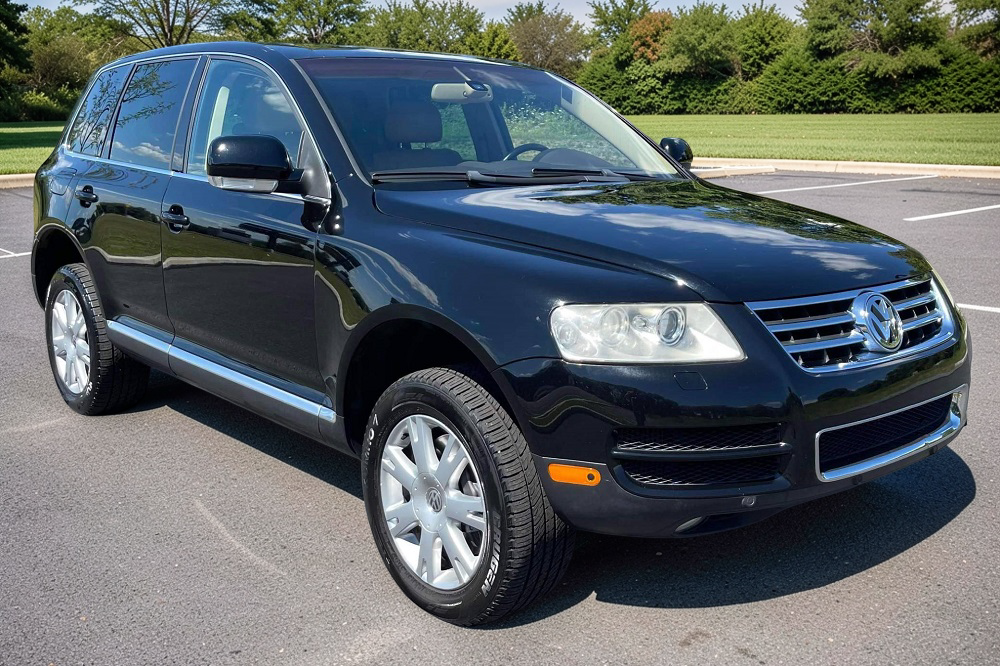
1. Why Minor V10 Faults Can Lead to Engine Removal
Know Which V10 You’re Dealing With Before Ordering Parts
The first-generation Volkswagen Touareg 7L carried the 5.0-liter V10 TDI, including the later R50. Engine codes vary by year and market. U.S. models used BKW in 2004 and BWF in 2006-2007. European versions included AYH, BLE, and other variants.
The standard V10 produces 313 PS (309 hp) and 553 lb-ft of torque. The R50 raises output to 351 PS (346 hp) and 627 lb-ft. Both use twin turbochargers, but their engine specifications and replacement parts aren’t always interchangeable.
Check the engine code before ordering turbos, camshafts, injectors, or emissions parts. A part advertised for the Touareg V10 may fit the wrong bank or engine version. Even oil approval requirements differ between applications.
Gear-Driven Timing Saves Belt Changes, but Repairs Remain Brutal
Volkswagen built the V10 around 2 cylinder banks, each managed by its own engine controller. Its Pumpe-Düse (PD) fuel system uses cam-operated unit injectors. Each injector generates high fuel pressure mechanically, placing heavy loads on the camshaft.
The engine also uses gears to drive its timing and auxiliary equipment. There’s no conventional timing belt with a scheduled replacement interval. Still, camshaft wear, injector faults, and turbo failures can demand extensive disassembly.
Access creates the biggest repair problem. Two turbochargers sit deep in a tightly packed engine bay, with little room around the exhaust and intake hardware. Even reaching a failed starter can require major mechanical work.
Some V10 specialists use alternative access methods for certain repairs. Those shortcuts depend on the failed part, available equipment, and workshop experience.
2. Turbocharger Problems Can Start With Wiring and End With Engine Removal
Sudden Power Loss Doesn’t Always Mean a Failed Turbo
The V10 TDI uses 2 variable-geometry turbochargers, one for each cylinder bank. When boost control fails, the engine can lose pulling power under load. Acceleration feels flat, especially when climbing hills or passing.
Fault code P1952 points to turbocharger control module 1, while P1953 identifies module 2. Ross-Tech lists damaged wiring, connectors, control modules, and turbocharger faults as possible causes. Neither code proves the turbocharger itself has failed.
Soot can jam the variable-geometry vanes, while damaged linkage can prevent proper movement. A failed electronic actuator may also leave the vanes in the wrong position. Mechanics should check electrical supply, linkage movement, actuator response, and requested versus actual boost.
A damaged compressor wheel requires a different repair. Metal damage, shaft play, and oil leakage need physical inspection before condemning the turbo.
Why a Small Actuator Failure Can Trigger a Major Repair
Volkswagen designed the electronic actuator as part of the turbocharger assembly, and each positioning motor is matched to its specific turbocharger. In practice, the turbo is replaced as a unit rather than as an actuator-only service item.
Some diesel specialists can repair or rebuild the actuator separately. However, the repaired unit must be correctly matched and tested against the turbo’s vane movement. An actuator that moves without proper calibration can still cause incorrect boost control.
Replacing both turbochargers during one engine removal can save repeated labor. Still, a failed unit on one bank doesn’t automatically mean the other needs replacement. Its shaft condition, actuator operation, service history, and remaining warranty should guide that decision.
A cleared fault memory offers little reassurance. Both banks need a proper boost and actuator check before an expensive replacement.
Find the Original Damage Before Installing Another Turbo
Turbocharger whine, exhaust smoke, and weak boost can come from several faults. Restricted oil supply can damage bearings, while exhaust leaks reduce the energy available to drive the turbine. Foreign objects can chip or break compressor blades.
Oil supply lines need inspection for blockage or restriction before fitting another turbo. The exhaust manifold and connecting joints also need checking for leaks. A whistle alone cannot confirm worn turbo bearings.
A broken compressor wheel creates another risk. Metal fragments can travel into the charge-air pipes and intercooler, where they may remain trapped.
Volkswagen’s repair instructions require checking the intake and complete charge-air circuit after mechanical turbo damage. Contaminated parts must be cleaned, and the intercooler replaced when necessary. Leaving metal fragments inside can damage the replacement turbo or reach the engine.
3. Camshaft Wear and Wrong Oil Can Turn Into Major Engine Damage
A Heavy Idle Beat Can Point to Worn Cam Lobes
The V10 TDI’s camshafts work harder than those in a conventional diesel. Each bank uses cam lobes to operate the valves and drive 5 Pumpe-Düse injectors. Those injector plungers place heavy contact loads on the camshaft.
As lobes and lifters wear, valve movement or injector operation can suffer. The engine may develop a deep, uneven beat at warm idle. Mechanical ticking, vibration, and uneven cylinder output can follow.
Still, sound alone won’t confirm camshaft damage. Injector correction values can reveal uneven cylinder output, but they can’t identify a worn lobe. Valve-train inspection must check the cam lobes, lifter faces, and bearing surfaces for visible damage.
Used-oil analysis may show rising iron or copper levels. These metals can come from several engine parts, so they don’t identify the camshaft by themselves. Deep scoring, pitted lobes, or damaged lifter faces provide stronger evidence.
The Wrong VW Oil Approval Can Make Wear Worse
The V10’s PD injectors place high loads on the camshaft. Oil must protect those contact surfaces while meeting the engine’s specific requirements. Using the wrong approval can increase wear risk, even when the viscosity looks correct.
Volkswagen’s oil requirements differ by engine code, market, and emissions equipment. Early non-DPF LongLife applications used VW 506.01, while later versions have different requirements. The common claim that VW 507.00 replaces every older specification has an important exception.
| V10 application | Documented oil approval | Important detail |
|---|---|---|
| Early non-DPF V10 with LongLife service | VW 506.01 | LongLife II era approval; VW’s LongLife III (504.00/507.00) compatibility statement excludes R5/V10 TDI models built before model year 2006, commonly stated as a before-June-2006 cutoff |
| Later BWF in VW’s fluid chart | VW 507.00 | Applies to later BWF builds; oil capacity varies by revision, so follow VW’s fluid chart for the specific vehicle |
Oil choice should follow the vehicle’s factory documentation and VIN-specific requirements. A 5W-30 bottle doesn’t automatically meet the correct VW approval. Neither does a newer specification guarantee compatibility with every early V10.
Service intervals also matter. Repeated short trips, fuel dilution, and uncertain maintenance records increase the need for closer oil monitoring. Shorter changes may help limit contamination, but fresh oil cannot repair worn cam lobes or compensate for the wrong approval.
Camshaft Replacement Can Require Pulling the Engine
Camshaft replacement on the V10 is not a simple in-place job on many vehicles.
Some specialist workshops use alternative access methods to avoid full engine removal. Their labor estimates depend on the engine version, damaged bank, and exact repair method. A lower quote should state which parts will be removed and how timing will be set.
The camshaft itself represents only part of the bill. Worn lifters, bearings, seals, and specified replacement bolts increase parts costs. The gear-driven timing arrangement also requires correct alignment during reassembly.
Camshaft kits differ between engine codes and cylinder banks. A kit covering cylinders 1-5 won’t automatically fit cylinders 6-10. Replacing both banks requires the correct parts for each side, plus the labor needed to reach them.
4. Hard Starts and Rising Oil Levels Can Signal Injector Seal Failure
Listen to the Cranking Speed Before Blaming the Injectors
Long cranking is a common complaint on aging V10 TDIs, but the sound helps narrow the cause. Slow engine rotation points toward weak batteries, poor cables, or a worn starter. Normal cranking without firing calls for fuel delivery, compression, and injection checks.
Volkswagen’s Pumpe-Düse (PD) system uses electric pumps to move diesel from the tank to the fuel filter. Mechanically driven pumps then feed both cylinder banks at a regulated pressure of about 123 psi. Each unit injector generates its own high injection pressure through camshaft movement.
Weak fuel supply, air entering the lines, or pressure bleeding away can delay starting. Faulty glow plugs can also make cold starts harder, especially in low temperatures. They don’t explain every warm-engine starting problem.
Worn Injector Bores Can Let Diesel Contaminate the Oil
The V10 has 10 PD injectors mounted directly in its aluminum cylinder heads. Repeated injection loads can allow slight injector movement, wearing grooves into the bores. Over time, this movement can damage the sealing O-rings.
Failed seals can let fuel escape into the engine oil or allow combustion gases into the fuel passages. The engine may crank longer, shake at idle, or produce uneven exhaust smoke. A rising dipstick level or strong diesel smell in the oil makes fuel dilution a serious concern.
Diesel-thinned oil loses viscosity and load-carrying strength. Cam lobes, bearings, and turbocharger shafts can suffer accelerated wear. If the oil level rises without added oil, investigate fuel contamination before driving further.
Injector correction values from VCDS can help identify cylinders producing uneven power. However, abnormal readings can also result from weak compression, nozzle wear, or camshaft damage. No single correction value, including 2.0 mg/stroke, proves an injector needs replacement.
New Seals Won’t Repair a Badly Worn Cylinder Head
Replacing damaged injector O-rings can stop leakage when the bores remain sound. The injector body, seating surfaces, and retaining hardware need inspection first. Deep grooves or missing aluminum can prevent new seals from holding.
Some diesel specialists fit aftermarket injector retainers to limit movement inside the head. Companies such as 07eins offer supports designed for compatible PD engines, including certain V10 applications. The retainers aim to keep each injector seated more securely.
07eins also warns that its retainers cannot fully compensate for advanced seat or cylinder-head damage. Engine-code compatibility must be checked before ordering, and repair access depends on the V10 version.
A damaged injector seat may need specialist machining or cylinder-head replacement. New O-rings and retaining supports cannot restore aluminum already worn away from the bore.
5. Oil Burning, Coolant Leaks, and Blocked Exhausts Need Different Repairs
Heavy Oil Consumption Can Hide Serious Cylinder Damage
Volkswagen gave the V10 TDI aluminum cylinder walls with a thin plasma-sprayed running surface. This coating replaces traditional cast-iron liners and helps keep the engine compact. Damage to that surface can let oil pass the piston rings and enter combustion chambers.
High oil consumption can also come from worn rings, leaking turbo seals, or external engine leaks. Blue exhaust smoke and frequent oil top-ups deserve attention, but neither proves cylinder-wall damage. A damaged coating can turn a routine oil complaint into major engine work.
Start by measuring actual oil use over a known distance. Inspect the turbochargers and external seals, then check cylinder condition with a borescope and suitable compression tests. Scoring, coating damage, and poor compression help narrow the cause.
Severe cylinder-wall damage may require specialist block repair or engine replacement. Volkswagen’s factory construction also limits certain lower-block repairs. No verified mileage threshold or failure rate establishes when the V10’s plasma coating will fail.
Oil Near the Bellhousing May Come From Above
Oil dripping between the engine and transmission often raises suspicion of a failed rear crankshaft seal. On the V10, fluid can travel down from higher in the engine bay. The leak’s lowest point may be far from its source.
The engine valley contains the oil-filter housing, coolant connections, and liquid-cooled generator. Some versions also carry exhaust gas recirculation (EGR) cooling hardware. Failed seals or connections can let oil or coolant collect between the cylinder banks.
Clean the valley and trace the highest wet area before replacing parts. UV dye can help locate stubborn oil leaks. A wet bellhousing seam alone doesn’t justify an engine-out rear seal repair.
Coolant loss needs separate checks. On EGR-cooled versions, an internal cooler leak can let coolant enter the exhaust-gas path. Persistent coolant loss, unexplained steam, or pressure loss calls for cooling-system pressure testing and cooler inspection.
Coolant entering a cylinder in sufficient volume can cause hydrolock. Repeated topping up won’t stop that risk.
DPF Blockages Depend on the Exhaust System Fitted
Not every first-generation V10 TDI left the factory with diesel particulate filters. Early versions used oxidation catalysts, while later applications gained DPF equipment. The layout depends on engine code, model year, and market.
DPF-equipped V10s use exhaust pressure and temperature signals to monitor soot loading. As soot builds up, exhaust backpressure rises and the engine may lose power. Short trips make matters worse because exhaust temperatures often remain too low for effective regeneration.
During active regeneration, exhaust temperatures can reach roughly 1,110-1,200°F. This heat burns trapped soot, but it cannot remove accumulated ash. Ash remains inside the filter and reduces its available capacity.
A faulty pressure sensor or damaged pressure line can also produce misleading loading readings. Check stored faults, exhaust pressure, sensor signals, and calculated soot load before attempting forced regeneration.
Excessive soot loading may prevent a safe forced regeneration. A filter packed with ash needs proper cleaning or replacement, regardless of how hot the exhaust gets.
6. Harsh Shifts and Floor Vibrations Often Come From Different Parts
Harsh Shifts When Hot Can Expose a Worn 09D Valve Body
The V10 TDI uses the Aisin TR-60SN 6-speed automatic, known as the 09D. As the transmission warms, worn valve-body passages can lose hydraulic pressure. You may feel an RPM flare during upshifts, a harsh 5-4 downshift, or delayed engagement into Drive.
Sonnax identifies worn clutch-control bores, pressure-regulator passages, and sticking solenoids as known failure points. These faults disrupt clutch pressure and shift timing. Torque-converter lockup can also surge or slip when its control circuit loses pressure.
Diagnosis starts with transmission fault data, fluid level, and a road test at operating temperature. Burnt fluid or heavy clutch debris in the pan points toward internal damage. A rebuilt valve body can’t restore burned clutch plates.
Fluid changes may help prevent further wear, but they won’t repair scored valve bores. Use the correct ATF and follow Volkswagen’s temperature-based filling procedure. Transmission adaptations should follow the specified repair or control-unit changes, rather than every routine fluid change.
A Torn Driveshaft Support Can Shake the Entire Floor
A deep rumble through the floor at highway speeds often points toward the rear driveshaft. The Touareg’s center support holds the propshaft through a rubber carrier. As that rubber tears, the shaft can move excessively under load.
Drivers may notice vibration around 50-75 mph or a heavy clunk when accelerating from a stop. The sound can resemble a failing transmission or differential. A lift inspection should check the rubber carrier, bearing play, and driveshaft joints.
A torn carrier doesn’t automatically mean the center bearing has failed. The bearing itself may still rotate smoothly without looseness or grinding. If it feels rough or has excess play, replacing only the rubber support won’t fix it.
Aftermarket upgrades from JXB Performance replace the surrounding carrier while retaining the original bearing. That can avoid replacing an otherwise sound driveshaft. A worn bearing still needs replacement, regardless of the new support.
Tight-Turn Binding Can Point Toward the Transfer Case
Shuddering during tight parking turns can come from the Touareg’s 4XMOTION driveline. Its transfer case distributes torque between the axles and provides low-range gearing and differential locking. Faults can cause binding, grinding, or uneven torque delivery.
Start with all 4 tires. Different sizes, pressures, or tread depths can create rolling-speed differences between the axles. Those differences can add stress to the transfer case, although matching tires won’t cure an internal fault.
Transfer-case fluid condition and actuator operation also deserve inspection. A worn driveshaft bearing usually creates vibration that changes with road speed. Transfer-case binding tends to show up more clearly during tight, low-speed turns.
Check low-range operation and differential-lock engagement according to Volkswagen’s instructions. Don’t force the driveline through tight turns on dry pavement with the center differential locked. That can wind up the driveline and place heavy loads on the transfer gears and shafts.
7. Air Suspension Leaks Can Burn Out the Compressor
One Low Corner Overnight Can Reveal an Air Leak
The Touareg V10 TDI uses 4-corner air suspension with automatic ride-height control. A leaking air spring can leave one corner sitting low after an overnight stop. The compressor may then run longer than usual to restore the correct height.
Cracked air springs are one possible cause. Leaking air lines, loose fittings, faulty residual pressure valves, and valve-block faults can produce similar symptoms. The lowest corner helps locate the leak, but doesn’t prove the strut has failed.
Volkswagen bulletin 43-05-02 covers 2004-2006 Touaregs with fault 01772 008, indicating an implausible pressure-sensor signal. The bulletin directs technicians to inspect the air suspension for leaks before replacing parts.
Measure ride height after parking, then check air springs, connections, and valve-block fittings for escaping air. A pressure-sensor fault alone doesn’t justify replacing the sensor.
A New Compressor Won’t Survive an Unrepaired Leak
Every air leak forces the compressor to work harder. Repeated refilling increases running time and heat, wearing the pump’s internal seals and piston mechanism. Eventually, the compressor may struggle to raise the vehicle or stop building pressure.
The compressor relay also needs testing. A faulty relay can interrupt power or keep the compressor running when it should stop. Check the air supply, relay operation, and pressure buildup before replacing the pump.
Owners facing repeated failures sometimes consider converting to conventional coil springs. A properly matched kit removes the air springs and compressor from service. However, the Touareg loses adjustable ride height and automatic load leveling.
Repairing the air suspension preserves those factory features. Any work beneath the vehicle requires secure mechanical supports because the air springs can lose pressure without warning. Never rely on air pressure alone to hold the Touareg above the ground.
8. No-Start Problems Can Involve Both Batteries and the Immobilizer
One Good Battery Doesn’t Mean the V10 Has Enough Starting Power
The Touareg V10 TDI uses 2 batteries to handle diesel starting and electrical loads. The onboard power supply battery sits beneath the driver’s seat. A separate starter battery sits beneath the luggage compartment floor.
Volkswagen’s dual-battery arrangement uses control relays to manage charging and starting power. Under certain conditions, both batteries can supply current during cranking. A weak battery or faulty relay can leave the starter short of power, even when one battery tests healthy.
Test both batteries individually under load. Check cable voltage drop during cranking, relay operation, and charging performance. A normal resting voltage doesn’t prove the batteries can deliver enough current to turn the V10.
A Failed Starter Can Mean Removing the Entire Engine
A silent starter doesn’t automatically mean the motor has failed. Weak battery connections, faulty start authorization, or a missing starter command can prevent cranking. Slow cranking points toward a different fault than an engine that turns normally but won’t fire.
Before replacing the starter, check its electrical supply under load. Confirm that the start command reaches the motor and inspect the ground connections. A faulty solenoid or worn brushes can also prevent the motor from turning.
Access is where the repair becomes expensive. Some experienced mechanics have developed alternative access methods, but results vary with equipment and engine revision.
A cheap replacement starter can still produce a large bill when engine removal dominates the labor.
Low Charging Voltage Can Come From the Alternator or Its Drive
The V10 uses a liquid-cooled alternator mounted deep in the engine valley. A geared auxiliary drive turns it, while coolant removes heat. Faults in the alternator, drive, or electrical connections can leave both batteries undercharged.
A battery warning light or repeated flat batteries calls for charging tests under load. Check alternator output, cable voltage drop, and drive condition before ordering parts. One low voltage reading doesn’t prove the alternator itself has failed.
Coolant leaks around the generator also deserve attention. Volkswagen bulletin 27-05-05 covers leaking generator coolant connections on 2004-2005 V10 models. The repair involves replacing O-rings and removing upper-engine parts to reach the connections.
That specific coolant leak can be repaired without removing the engine. A failed alternator or damaged auxiliary drive requires a separate access assessment.
KESSY Faults and Wet Wiring Can Leave the Ignition Dead
The Touareg’s KESSY system controls key recognition and start authorization. A faulty electronic steering column lock can prevent the ignition from switching on. The dashboard may display an immobilizer warning, or the vehicle may remain completely unresponsive.
Failed door-handle electronics or keyless antennas can also damage the KESSY control unit. KessyDocs identifies electrical faults in these circuits that can prevent key recognition. Some damaged units also draw current while parked, draining the battery within days.
A replacement steering lock may require electronic adaptation to match the vehicle. Used units cannot always be installed without specialist programming. Confirm the lock, key recognition, and control-unit faults before replacing expensive electronics.
Water entering the cabin creates another electrical risk. Blocked sunroof drains, hatch drains, or the A/C condensate outlet can soak the carpet padding. Moisture can then corrode wiring splices and connectors beneath the trim.
Inspect the wiring wherever water has collected, including the footwells and rear cargo area. Dry carpet on top can still hide soaked padding underneath. Replacing a damaged control unit won’t stop recurring faults until the leak is sealed and corroded wiring is repaired.
9. Repair Costs Can Climb Fast Once Engine Removal Enters the Bill
Parts Prices Tell Only Half the Repair Story
Replacement parts for the V10 TDI can be expensive before a mechanic touches the engine. Camshaft kits, turbochargers, and driveline parts vary by engine code and supplier. Some aftermarket parts also cover only one cylinder bank.
These listed prices, checked against supplier listings in November 2026, give a useful starting point.
| Replacement part | Listed price | What you’re paying for |
|---|---|---|
| IDParts V10 camshaft kit | $959.95 | One cylinder bank; engine and bank selection required |
| JXB driveshaft center carrier | From $299.99 | Upgraded rubber support and carrier; original bearing retained |
These are parts-only prices. Shipping, taxes, fluids, and installation can add substantially to the final bill. A damaged bearing also needs separate replacement when fitting the JXB carrier.
Engine Removal Can Add Thousands in Labor
A failed turbo actuator or starter may require removing the V10 and transmission. That work can cost more than the failed part.
Labor rates make a major difference. A repair requiring 20 hours costs $3,000 at $150 per hour. At $200 per hour, the same labor reaches $4,000 before parts.
Those 20 hours are an illustration, not Volkswagen’s published repair time. Actual quotes must account for diagnosis, removal, reinstallation, fluids, seals, and any additional damage discovered.
Repairing several confirmed faults during one engine removal can reduce repeated labor. For example, a shop may inspect both turbochargers while the engine is out. Replacing the healthy turbo still adds parts costs and requires a sound reason.
Wrong Parts Can Leave the Engine Sitting on the Workshop Floor
The V10 uses bank-specific camshafts and turbochargers. Engine codes also determine injector fitment, seals, and other replacement parts. A listing labeled “Touareg V10” doesn’t guarantee the correct fit.
Confirm the engine code, cylinder bank, and original part number before ordering. Remanufactured turbos may also carry exchange deposits and warranty conditions. Check whether the supplier requires the old unit returned.
Transmission parts need the same care. Volkswagen Classic Parts still lists valve body 09D 325 039 BX for certain 09D gearbox codes. That listing doesn’t establish compatibility with every V10 transmission.
Before major disassembly, the workshop should confirm parts availability, exact fitment, and warranty coverage in writing. An incorrect camshaft or turbocharger can leave an engine-out repair stalled until the right part arrives.
Sources & References
- 89n303 The Touareg V10-TDI Engine | PDF | Piston – Scribd
- VOLKSWAGEN TOUAREG R50 V10 TDI – AutoBelle
- Touareg V10 talk me out of it. : r/Volkswagen – Reddit
- Volkswagen Touareg V10 TDI Mk1 Reliability – Problems & Costs
- ORIGINAL PDE Korpushalter für 1.2 – 2.5 und 5.0 TDI Motoren By:NSC
- 2004-2022 Volkswagen Touareg Problems & Issues – Au7o
- VW Touareg – KessyDocs
- Replacing the starter in a Touareg. Step One: Drop Engine and
- V10 Diesel VW Touareg in for a minor oil leak… – Reddit
- Touareg – VolksPage.Net
- Volkswagen New Technician Introduction – DataRunners
- Volkswagen Touareg – Auto Catalog Archive
- Volkswagen Touareg – Wikipedia
- TOUAREG, AUDI Q7, PORSCHE CAYENNE TR60SN “09D
- Volkswagen Touareg Alternator Replacement Cost – RepairPal
- Volkswagen Touareg 1 5.0 V10 TDI Specs
- Why This V10 Diesel Is One Of The Hardest Engines Of All Time To
- R5 & V10 TDI with plasma coating need the right oil – YouTube
- VW Volkswagen Touareg 5.0 V10 TDI Camshaft | CYL 6-10
- 2008 Volkswagen Touareg R50 Specifications & Performance
- Volkswagen Touareg 5.0 V10 TDI R50 – Cars-Data.com
- Volkswagen Touareg R50: In Detail – Motor1.com
- Volkswagen Touareg R50 – Drive
- VW Touareg Common Problems: Suspension and Transfer Case
- Oil: 506.01 v 507.00 once and for all… I hope! – The Brick-yard – Page 2
- V10 TDI VW Touareg oil analysis results | BobIsTheOilGuy – Bob Is The Oil Guy
- Oil: 506 01 v 507 00 – The Brick-yard – Page 1
- VW 505.01 – 506.01 | BobIsTheOilGuy – Bob Is The Oil Guy
- Volkswageni TDI PD mootori õlid? – Leht 2
- Oil: 506.01 v 507.00 once and for all… I hope! – The Brick-yard
- Oil consumption TDI engine : r/Volkswagen – Reddit
- Prevention of cylinder head damage in pump-injector element TDI
- Injector seals Touareg 7L 5.0 V10 TDI 313 hp Diesel 230 kW 2002
- PD heads…a theory proposed – The Brick-yard – Page 1
- VCDS: Checking injector values – VAG Coding
- PD injector TDI Problem Explained: Fuel in Oil, Root Cause and the
- Volkswagen Touareg 2003-> (7L)
- V10 TDI Starter rebuild – YouTube
- Residual pressure valves – AIGO-TEC
- 7L0698014 Control unit complete VW Touareg I (7L_)
- VW Touareg 7L Residual Pressure Holding Valve Front – Aerosus
- Touareg – Position of Relays and Fuses | PDF | Pump – Scribd
- The Touareg Electrical System – VolksPage.Net
- T1/7L Touareg Kessy Repair/Rebuid – YouTube
- VW Touareg Kessy key problem. Immo active. Need help.
- VAG Kessy 2003-2010 VW Touareg, Porsche Cayenne, Audi A8
- Service Action Code: 60E2 REVISION – nhtsa
- VW Touareg water Drain Fix – YouTube