
Tick. Misfire. Stall. The 3.6 Pentastar sends drivers chasing ghosts, until one of them wrecks the camshaft.
First launched in the 2011 Grand Cherokee, this V6 was meant to do it all: tow in a Ram, cruise in a Charger, idle through daycare runs in a Pacifica. And for millions, it did.
But deep in that aluminum block sit some high-mileage tripwires, rocker arms that grenade, plastic oil filter housings that warp and leak, cam sensors that short without warning.
Then there’s the split personality. Early engines chewed through left-head valves and wiped cams. The 2016+ version (PUG) runs stronger down low but brings a touchier valvetrain and extra cooling stress. Different years, different failures.
This guide breaks it all down, by version, by failure mode, by model. No sugarcoating, no sales pitch. Just what fails, when, and why.
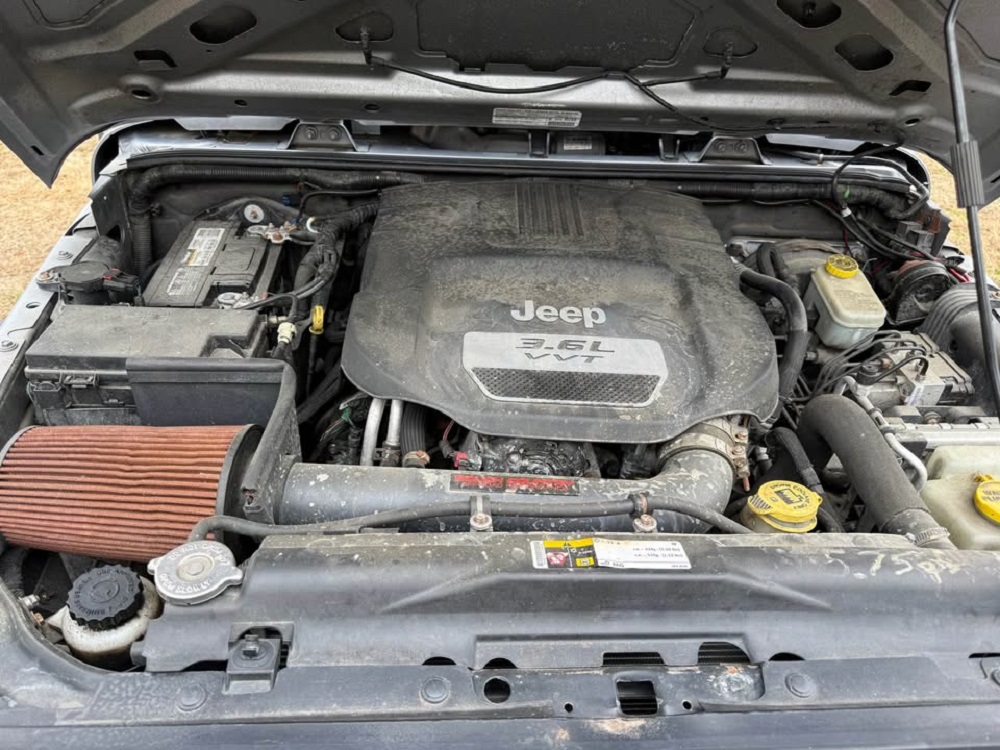
1. How the 3.6 Pentastar was built to do everything and what cracked first
Big shoes to fill after the 4.0 and 3.8 V6s
Chrysler dropped the 3.6 Pentastar into the 2011 Grand Cherokee to end seven old engines at once.
The design went clean-slate: aluminum block and heads, 60° bank angle, chain-driven dual overhead cams, roller rockers, and a deep-skirt block stiff enough for both vans and trucks. Chrysler built it to fit anything; transverse or longitudinal, front- or rear-drive, van or truck.”
Compared to the old 3.8 V6 and the Jeep 4.0 straight-six, the Pentastar made more power, ran smoother, weighed less, and passed emissions without sacrificing torque.
The early numbers told the story: 285 hp, 260 lb-ft, 90 lb lighter than the iron-block 4.0. But for all that ground-up engineering, two flaws crept in early, valvetrain fragility and thermal imbalance in key parts of the head.
What changed with PUG and what didn’t
In 2016, Chrysler rolled out the Pentastar Upgrade (PUG). The target was efficiency, not raw output. Compression jumped from 10.2:1 to 11.3:1.
Two-step Variable Valve Lift (VVL) joined the existing Variable Valve Timing (VVT) system. Fuel injectors got a redesign to spray finer, faster. A new cooled EGR system pulled heat out of combustion and kept knock under control.
The block, crank, and fuel delivery method stayed the same. Chrysler stuck with Multi-Port Fuel Injection (MPFI) instead of switching to direct injection. That call paid off long term, MPFI keeps intake valves clean.
But nothing in the PUG update addressed the valvetrain’s weak points. In fact, with added complexity from VVL and tighter oil-control demands, failure points shifted more than they vanished.
MPFI buys you time, but not immunity
MPFI helps dodge the carbon-buildup trap that wrecks modern DI engines. Because fuel passes over the intake valves, it washes off oil and grime that DI engines just bake in.
That’s a win for longevity. But carbon isn’t what ends these engines. Plastic parts, overworked hydraulics, and metal-on-metal wear are the bigger threat.
Needle-bearing rockers still spin until they don’t. Hydraulic lash adjusters still collapse. And that oil cooler housing, buried in the valley under the intake, still warps, leaks, and impersonates a rear main seal failure. MPFI helps the breathing, but the ticking starts somewhere else.
Spec changes that shifted failure patterns
| Spec / feature | 2011–2015 Pentastar | 2016+ Pentastar Upgrade (PUG) |
|---|---|---|
| Compression ratio | 10.2:1 | 11.3:1 |
| Valve control | VVT only | VVT + two-step VVL |
| EGR strategy | Internal via cam phasing | External cooled EGR |
| Fuel system | MPFI, dual injectors | MPFI, finer 8-hole injectors |
| Real-world weak spots | Bank 2 valve seat wear | VVL faults, rocker collapse |
2. The valvetrain grenade that starts with a tick
How the top end’s supposed to run
Each cam lobe pushes a roller-style rocker arm, riding on a tiny needle bearing that spins against the lobe face. The rocker presses the valve open while the hydraulic lash adjuster (HLA) keeps everything snug, even as oil pressure, temperature, and wear shift.
No shims, no feeler gauges. It’s a compact, lightweight setup made to run quiet up top while taking revs all day.
When everything works, lash stays tight, rollers spin clean, and oil pressure feeds every bearing and lifter. But once those bearings seize or that lash adjuster collapses, the damage snowballs.
When the roller stops spinning and starts grinding
Once a needle bearing fails, the roller locks up and skids across the cam. That metal-on-metal drag flattens the cam lobe fast. Every pass of the lobe eats away at the hardened surface. Lift drops.
The valve barely opens. Compression tanks. Misfire codes fire off, usually P0300 mixed with one or more specific cylinder faults.
You’ll hear it first: a sharp, metallic tick, usually on a warm restart. Within weeks, it’s louder and rougher. By then, metal flakes are already in the oil.
And that debris doesn’t stay put, it runs through VVT solenoids, phasers, and back into other rockers, turning one failure into a top-end teardown.
The soft lifter problem in newer engines
Some 2022–2023 Pentastars took a different hit, intake lash adjusters that go soft. These HLAs collapse under pressure, losing preload and letting the rocker float.
They mimic the same tick, but the damage isn’t from bearing failure, it’s a hydraulic collapse. You can push them down by hand. They won’t hold oil pressure.
Chrysler issued TSB 09-009-23 to flag this, telling techs to check for HLAs that squish under thumb pressure with the rocker off.
These lifters don’t always shred the cam, but they throw misfire codes and wreck idle quality. The fix still means pulling valve covers, swapping parts, and re-priming oil flow.
What each failure sounds like and what it wrecks if ignored
| Component | Failure mode | What drivers notice | Damage if ignored |
|---|---|---|---|
| Rocker arm roller | Needle bearing collapse | Sharp, fast tick from one bank | Wiped cam lobes, metal in oil |
| Lash adjuster | Hydraulic sticking/collapse | Softer rhythmic tap, misfires | Persistent misfires, top-end wear |
| Camshaft lobe | Scuffing / flattening | Power loss, dead-cylinder feel | Full cam/rocker/HLA job, oil cleanup |
3. The valley leak that fools shops and empties wallets
A plastic housing baked between two hot banks
Buried in the engine’s V under the intake manifold, Chrysler planted the Pentastar’s oil filter and cooler inside a plastic housing. That plastic sits bolted to a metal block, riding out thousands of heat cycles it was never built to endure.
Over time, the housing warps, the dual figure-eight seals flatten out, and oil quietly pools in the valley, often for weeks, before any drips hit the pavement.
Most leaks show up between 60,000 and 100,000 miles. The engine still runs fine. Oil pressure reads normal. Meanwhile, that hidden pool slowly cooks the harnesses and sensors resting in the valley.
Why it looks like a rear main seal failure
Once that hidden valley floods, gravity takes over. Oil drains down the back of the block and off the bellhousing. From below, it mimics a classic rear main seal leak.
Shops see it, quote a transmission pull, and owners brace for a four-figure repair. But the true source sits under the intake, just inches away, sealed from view unless someone knows to check.
Sloppy oil changes add fuel to the fire. Cranking the filter cap too tight doesn’t remove threads, it fractures the housing at the base. One rushed job can turn a slow ooze into a pressurized mess.
Aluminum replacements and what they actually fix
Aftermarket aluminum housings from Dorman, Mishimoto, and others eliminate the mismatch. Aluminum expands like the block, holds its shape, and stops crushing the seals. With a proper install, most shops consider it a one-and-done solution. No more hairline cracks. No more warped bases.
The housing’s still buried under the intake. Miss a gasket or overtighten a bolt, and it’ll leak again, just from tougher metal.
Plastic versus aluminum in real service
| Feature | OE plastic housing | Aftermarket aluminum housing |
|---|---|---|
| Material | Polymer | Cast aluminum |
| Typical failure mileage | 60,000–100,000 miles | Built as a lifetime part |
| Common failure | Warping, base cracks, seal collapse | Rare cracking, gasket-related only |
| Leak path | Valley fill, bellhousing drip | Same path, far lower failure rate |
| Shop practice | Replace once, expect repeat | Install once, done |
4. The left-head defect Chrysler tried to bury with warranty code X56
Exhaust seats that couldn’t take the heat
On 2011–2013 engines, the left-side head, Bank 2, saw chronic valve seat and guide wear, especially at cylinder #2. The seats wore down, the valves stopped sealing, and compression dropped. It started as a random misfire. Then came a rough idle, low power, and finally a dead hole.
The metallurgy couldn’t handle localized heat. Some heads failed under load. Others let go after long idle sessions. The rest carried the defect quietly until the first cold morning exposed the drop in compression.
Leak-down tests, dead-end parts swaps, and bad diagnostics
When Bank 2 misfires pop up, P0300, P0302, P0304, P0306, most techs chase coils, plugs, injectors. They’ll swap cylinder parts side to side. Nothing changes.
A proper leak-down test is what solves the case. If you’re losing 25%+ through the exhaust valve on #2, the head’s toast. No amount of ignition tuning will bring it back.
Many misfires were misdiagnosed for months before the factory admitted the casting was bad. By then, enough owners had racked up shop bills and filed complaints that Chrysler had to act.
The 10-year/150k head fix Chrysler didn’t advertise
Chrysler issued a quiet X56 warranty extension on these heads, 10 years or 150,000 miles, parts and labor. It only applied to the original defect, not later wear or other failures. To qualify, you had to show codes, confirm compression loss, and prove your engine was in the affected VIN range.
The new heads used hardened seats and updated guides. The good castings are stamped with a four-digit date code: 2062 or higher means post-fix. Anything earlier is suspect.
Which heads to trust and what to check before buying used
| Model years | Head design / date code clue | Risk of Bank 2 failure | What to verify on a used vehicle |
|---|---|---|---|
| 2011–mid 2012 | Early head, pre-2062 codes | High, many X56 replacements | Check stamp near rear cam cap |
| Late 2012–2013 | Revised head, 2062+ codes | Moderate to low | Confirm casting number and stamp |
| 2014+ | Fully updated design | Low for this specific issue | Focus on valvetrain and oil cooler |
5. Cooling quirks that end heat, pop codes, and trap air pockets
Sand left behind that never should’ve made it out of the plant
Some early Pentastars left the foundry with casting sand still in the block. Not a little, enough to clog heater cores and radiators. Instead of flushing clean, the sand cycles through until it builds up in low-flow spots.
Cabin heat drops, usually on the passenger side. Over time, coolant flow slows enough to trigger temp swings, boil-over in traffic, or ghost overheating issues that vanish at speed.
Flushing doesn’t always fix it. Some owners run two or three full chemical flushes before getting full heat back. Even then, it’s sometimes just buying time.
Pumps that start dripping, thermostats that stay wide open
Early pumps fail from bearing wear or weep-hole leaks. It starts as a slow coolant loss with no visible puddle. Add in an open-stuck thermostat, common in 2011–2013, and you’ve got cold-starts that never warm up and P0128 codes that flag a failed emission readiness check.
Most don’t notice until fuel economy drops or the heater can’t catch up on a cold morning. By then, the pump seal’s usually gone, and the thermostat’s stuck open for good.
The PUG engines run hotter and demand cleaner coolant
Starting in 2016, compression jumped. Chrysler added a cooled EGR system to handle the heat, but that shifted more thermal load into the cooling system. Tolerances tightened, and the margin for bad coolant or partial flow disappeared.
Wrong chemistry, old hoses, or half-bled systems don’t just drop efficiency, they spike wear on valley seals, cause vapor pockets, and start soft-cooking the heads at idle.
Common symptoms tied to cooling failures
| Complaint | Likely issue | First checks |
|---|---|---|
| No heat on one side | Sand/sludge in heater core | Infrared scan, back-flush core |
| Slow warm-up, P0128 | Stuck-open thermostat | Thermostat replacement, coolant level |
| Coolant smell, slow drip | Water pump weep hole, cooler housing leak | Pump inspection, valley inspection |
| Random temp swings | Air pockets, partial blockage | Bleed system, full flush if needed |
6. Electrical failures that feel like engine trouble
TIPM failures that turn normal Pentastars into ghost cars
When Chrysler’s Totally Integrated Power Module (TIPM) goes bad, all bets are off. The fuel pump relay might stick open and end the engine while cruising.
Or it might stick closed, draining the battery with the pump still running hours after shutdown. Some TIPMs trip headlights, lock horns, cycle wipers at random. Others just end the start signal.
No codes. No pattern. No reliability until it’s replaced or rewired. Most failures trace back to cracked solder joints or moisture tracking across the board.
Sensors that short, wires that rub, and sudden limp mode
The crank and cam sensors on Pentastars fail in bursts, especially around P0335, P0344, or P0369. Sometimes they throw intermittent codes. Other times the car stalls at idle or loses throttle input mid-drive.
One known issue: the cam sensor harness was routed tight enough to chafe through on some models. Chrysler issued a TSB, but plenty of engines ran beyond the bulletin with the harness uncorrected.
When these wires short to ground, you lose sync. No spark, no fuel trim, and no working cruise control.
Dirty oil takes out the VVT solenoids from the inside
When oil gets thick or loaded with debris, Variable Valve Timing (VVT) solenoids start sticking. They throw P0011 or P0017, sometimes both. Idle turns rough, fuel trims skew rich, and power drops off. The oil pressure’s fine, but the solenoid pintle can’t move freely anymore. Bad oil does more than clog, it stalls timing.
Skip enough oil changes, and you’ll be replacing solenoids one month, phasers the next.
What the codes point to and what actually failed
| Code / symptom | Usual issue | Owner experience |
|---|---|---|
| Random stall, no code | TIPM fuel pump relay | Sudden shut-off, intermittent start |
| P0335 / P0339 | Crankshaft position sensor | Cranks long, sometimes won’t restart |
| P0344 / P0369 | Cam sensor or harness chafing | Limp mode, dead cruise control |
| P0011 / P0017 | VVT solenoid or oil contamination | Rough idle, sluggish performance |
7. What fails first: Wrangler trails, minivan heat, or half-ton load
Jeeps run hot, idle long, and eat valvetrains
In Wranglers and Grand Cherokees, the 3.6 spends hours idling, crawling, or loaded with mud and heat. Rocker arms fail earlier. HLAs lose pressure faster. Dust clogs cooling fins and filters.
Valley leaks show up sooner from heat soak. Jeeps also see more off-road sensor rub and water intrusion, especially crank/cam sensor issues or TIPM glitches from splash and mud.
The combo of low airflow and high underhood temps makes weak points crack wide open.
Pacficas cook their own cores sitting in school lines
The minivan crowd gets hit by a different cycle, short trips, long idle time, back-to-back cold starts. That keeps the oil cooler under load and lets the thermostat fail quietly. You don’t notice until P0128 shows up with no heat and poor mileage.
Cooling complaints in Pacificas aren’t flukes, they’re baked in. The oil cooler leaks show up sooner, and the plastic housing gets cooked from the inside. TIPMs act up from heat cycling alone, and some units stall with no codes or warning.
Rams haul more, but stay cooler, until they don’t
The Ram 1500 runs the Pentastar in heavier, hotter cycles, light towing, highway grades, steep launch RPM. The cooling system’s under more load than in cars, but better airflow helps offset it. Still, thermostats fail under strain, and the oil cooler’s a known weak point here too.
What shows up first? Ticks and top-end wear. Rockers and HLAs go sooner when under steady RPM climbs, and a half-worn lifter can flatten a cam under load in one bad pull.
Chargers and Challengers rev high, wear top ends fast
Dodge muscle cars with the 3.6 don’t see trailers or trails, they see throttle. Owners rev them hard, skip oil changes, or hammer them on cold starts. VVT faults spike first. P0011 and P0017 start showing up once varnish builds and solenoids stick.
Top-end work hits earlier. Misfires, dead rockers, and oil contamination knock these engines down well before 100,000 miles if service slips even slightly.
| Platform / use case | Common first issues | Long-term concerns if ignored |
|---|---|---|
| Wrangler / off-road Jeep | Rocker tick, oil cooler leak | Cam damage, valley oil fire risk |
| Grand Cherokee daily + tow | Cooler leaks, sand/heater issues | Overheating, misdiagnosed head gasket |
| Pacifica / minivan | Cooler leaks, thermostat, TIPM | Chronic leaks, poor warm-up, stalls |
| Ram 1500 light tow | Rocker tick, pump/thermostat | Top-end wear, detuned performance |
| Charger/Challenger Pentastar | Rocker tick, VVT codes | Power loss, expensive top-end rebuild |
8. Keeping a Pentastar alive, or spotting a bad one before you buy
Oil that sludges ends the top end first
The rocker arms, HLAs, and VVT solenoids in the Pentastar don’t tolerate dirty oil.
Chrysler’s monitor system might say 8,000–10,000 miles between changes, but engines that follow that interval often don’t make it past 120,000 without valvetrain noise. 5,000-mile changes with 0W-20 on PUG models keep lifters fed and VVL hardware from sticking.
Once sludge hits the top end, it’s over. Needle bearings seize. Lash adjusters collapse. VVT solenoids get choked out. One skipped change does more damage than three weeks of hard driving.
Bundle the repairs before you bolt it back together
If you’re in the top end, valve covers off, intake off, there’s no excuse to skip the known weak spots. Swap the full set of rockers and HLAs on the affected bank.
Replace the plastic oil filter housing with aluminum while the intake’s off. If coolant’s drained, do the thermostat. If you’re flushing, use the right HOAT or OAT coolant, not a random mix.
Don’t reuse gaskets or skip sensors in the valley. That short-cut ends with a comeback job and another teardown.
What to check before buying a used 3.6 Pentastar
Start cold. Listen for tick on startup and idle. Look for oil around the bellhousing, valley leak in disguise. Scan for P0011, P0017, P0300-range misfires, or P0128 thermostat codes.
Pop the oil cap and check for varnish. On 2011–2013 engines, read the head casting date near the cam, anything under 2062 may still have the X56 head defect.
If a seller says “It’s just a lifter,” walk. That’s how most wiped cams and metal-filled engines start.
Sources & References
- 3.6L Pentastar V6 Overview, Common Problems and Reliability – YouTube
- 3.6L Pentastar V6 Oil Filter Housing Leak Guide – Scott’s U-Save
- Four Common Problems With the 3.6L Pentastar V6 Engines that We Can Repair
- Inside Chrysler’s Pentastar V6: One of the Most Versatile Engines in the Automotive Industry
- 5 Jeep 3.6 Engine Problems & How to Fix Them – The Lemon Law Experts
- FCA US Hit with Class Action Over Allegedly Refusing Warranty Coverage for Pentastar V-6 Engine Ticking ‘Defect’
- WardsAuto Names Pentastar V6 A 10 Best Engine – Benna Chrysler Dodge Jeep Ram
- FCA Pentastar V6 Named Best Engine by WardsAuto
- Chrysler Group’s Pentastar V-6 “Three-peats” on Ward’s 10 Best Engines List
- Everyone that has owned both, what do you think of the new 3.6 vs. the old 4.0? : r/Jeep
- Fiat Chrysler reveals upgraded 3.6-litre Pentastar V6, Jeep Grand Cherokee first recipient
- Chrysler Reveals Major Revisions to Pentastar V-6 – American Automotive Policy Council
- PUG: What’s in the Pentastar engine upgrades? – YouTube
- Chrysler Reveals Major Revisions to Pentastar V-6 – Car and Driver
- Chrysler Pentastar engine – Wikipedia
- 3.6L Pentastar V6 Specs and Information – CJ Pony Parts
- Understanding the Troublesome Rocker Arms in Chrysler’s Pentastar V6 Engine
- Hearing a Ticking Noise? FCA Hit with Class Action Over Alleged 3.6L Pentastar V6 Engine Problems
- 2022 Jeep Grand Cherokee L Overland 3.6L – Rocker Arm Failure and Camshaft Damage
- 2016 Jeep Wrangler JKU – 3.6L Pentastar Rocker Fail and Damaged Cam Shaft – YouTube
- WL – 2022 Jeep Grand Cherokee L 3.6L V6 – Rocker Arm Failure and Camshaft Damage
- Map Title 09-009-23 REV. A – nhtsa
- Aluminum Oil Filter Housing Kit, Fits 3.6 L/3.2 L Pentastar 2011-2017 – Mishimoto
- What Is The Design Flaw In The Oil Filter Adapter For The Chrysler 3.6L?
- Parts Bin: Dorman Makes a Better-Than-New Aluminum Replacement to Solve the Dreaded Oil Filter Housing Issue on the Dodge/Jeep/Ram 3.2 & 3.6L Pentastar V6 – OnAllCylinders
- Enhance Your Engine with an Aluminum Oil Filter Housing Kit for 3.6L/3.2L Pentastar (2011+) | 12-degrees-north
- So is every 3.6 Pentastar a time bomb waiting for the oil cooler to blow? – Reddit
- WARRANTY BULLETIN – nhtsa
- Early 3.6L Pentastar V6 Engine Left Cylinder Head Failure Explained – autoevolution
- Chrysler Pentastar V6 Engine Gets Extended Warranty – Autoguide.com
- 3.6 Liter Pentastar V6 Engine Common Issues – Newparts.com
- TIPM Failure Symptoms and Repair Options Explained Simply for You
- Chrysler TIPMs Demystified: How To Reliably Trace Specific Vehicle Symptoms To TIPM Failure
- What is TIPM Failure? – Apollo Off-Road
- What Causes a TIPM to Fail? Understanding and Solving Issues by Upfix
- Signs Of a Troubled TIPM – MAKS TIPM Rebuilders
- SYMPTOMS OF A BAD CRANKSHAFT POSITION SENSOR – YouTube
- NUMBER: 18-103-20 GROUP: 18 – Vehicle Performance DATE: October 28, 2020 – nhtsa
- Safety Recall W68 / NHTSA 20V-475 Loss of Crankshaft Position
- Cam position sensor codes jeep pentastar : r/MechanicAdvice – Reddit
- THIS BULLETIN SUPERSEDES SERVICE BULLETIN 18-053-15, DATED JUNE 25, 2015 – nhtsa
- 3.6L Pentastar – Starting Issues after 2 camshafts replaced : r/MechanicAdvice – Reddit
- Is the 3.6 Pentastar Actually Reliable? (The Honest Breakdown) – YouTube
- 3.6L Pentastar V6 issues : r/MechanicAdvice – Reddit
- Trying to diagnose coolant loss on 3.6L Jeep Grand Cherokee — possible head gasket?
- Technical Service Bulletin (TSB) – Engine Oil Cooler Leak – nhtsa