
Pop the hood, hear a snap, and spot a spark plug sitting loose on the valve cover. That’s the Ford 4.6 Modular V8 in a nutshell, respected for long-haul reliability, yet infamous for plastic manifolds that crack, threads that lose grip, and timing chains that slap cold.
Built to replace the old-school Windsor V8, this overhead-cam design went into everything from police cruisers to Mustangs and F-150s.
But not every 4.6 is the same. Some blow plugs clean out of the heads. Others rattle to death from worn phasers or quietly leak themselves dry. This guide breaks down exactly what fails on the 2-valve, 3-valve, and 4-valve versions, and what keeps them alive past 300,000 miles.
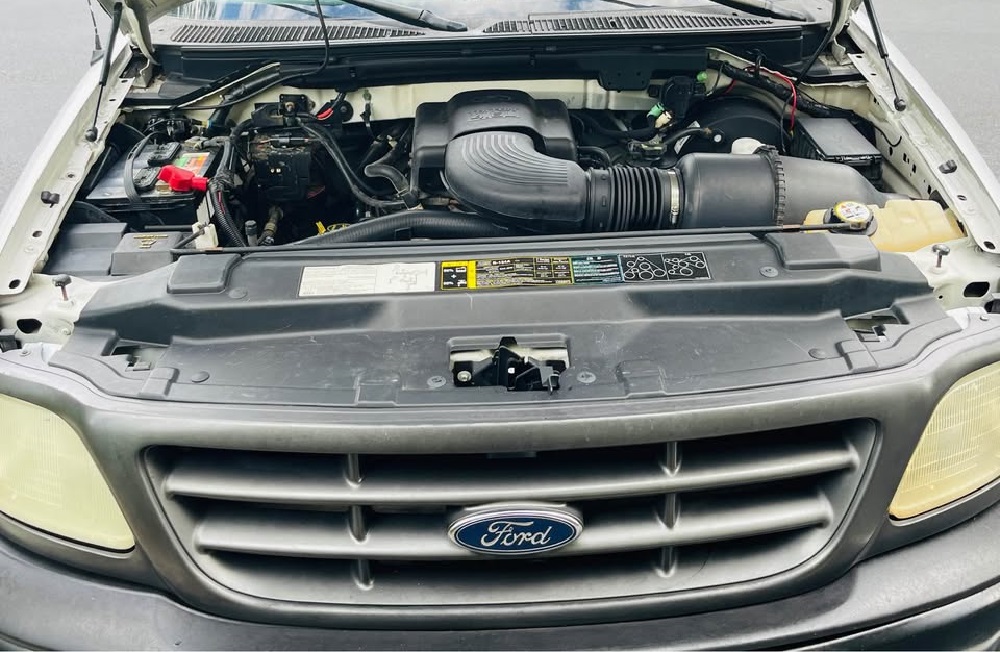
1. What makes or breaks a 4.6 depends on which one
Modular design changed everything under the hood
The 4.6L Modular wasn’t just a new engine, it was a clean break from everything Ford built before. Gone were the pushrods and blocky castings of the Windsor small-block.
In came overhead cams, long chains, metric hardware, and tight bore spacing that set the tone for every V8 and V10 Ford built for the next two decades.
This undersquare 90.2 x 90.0 mm layout let it rev high and run smooth, but at a cost. Longer chains meant more tensioners. Oil routing got more complex.
Packaging was tight. Failures became systemic, not random. What used to be a $5 timing set turned into a job that could wipe out a week’s paycheck.
Why 2V, 3V, and 4V are practically different engines
Lump them all under “4.6,” and you miss the point. The 2-valve SOHC was built for taxis and trucks. The 3-valve added power and problems with cam phasers and plug design.
The 4-valve DOHC versions were high-rpm screamers built for Mustangs and Lincolns, but they packed in more heat and complexity than most shops wanted to deal with.
Each version has its own weak spots. The 2V blows plugs and leaks oil. The 3V clatters warm and breaks plugs cold. The 4V eats valve guides in the back head and needs a cooling mod just to survive under boost.
Romeo or Windsor? That stamp matters more than you think
Two plants built the 4.6L, and they didn’t always follow the same rules. Romeo engines, mostly for cars, came with 6-bolt cranks, multi-piece cam caps, and often aluminum blocks. Windsor units, usually in trucks, ran cast-iron blocks, 8-bolt cranks, and full girdles on some years.
Swapping parts between them isn’t always plug-and-play. Timing covers, flywheels, even front covers may not line up. Romeo gets points for lighter weight and smoother builds. Windsor wins for brute strength, especially under towing loads.
Quick-hit comparison of each 4.6 variant
| Variant / plant | Common vehicles | Known weak spots |
|---|---|---|
| 2V Romeo (cars) | Crown Vic, Town Car, early Mustang GT | Intake cracks, plug blowouts, guide rattle |
| 2V Windsor (trucks) | F-150, Expedition, Econoline | Same as above, plus higher timing wear under load |
| 3V SOHC | 2005–2010 Mustang GT, F-150 | Two-piece plug snap, cam phaser clatter |
| 4V DOHC (Teksid/iron) | Mach 1, Cobra, Mark VIII | Rear head tick, coolant imbalance, labor cost |
2. Why 2-valve 4.6s fail where the metal runs thin
Plastic intakes split and dump coolant without warning
From 1996 to 2001, Ford swapped its aluminum intake for a nylon-composite manifold. It was lighter, cheaper, and quieter, but not built for load. The front coolant crossover carried pressure, and the alternator bolted right into the plastic. Over time, heat cycles and belt tension cracked the housing.
When the crossover let go, it didn’t just leak. It dumped hot coolant across the engine valley, soaked the alternator, and often ended the coil packs.
Rear heater nipples also snapped off or pulled out under pressure. Ford’s fix came in 2002: an aluminum crossover grafted into the same composite body. It holds, but older cars still need the upgrade.
Weak plug threads send coils flying
Early 2V aluminum heads had just 4 or 5 threads cut into the spark plug wells. That wasn’t enough to hold under repeated combustion pressure, especially when plugs were under-torqued.
The threads slowly wore or stretched. Then came the ticking. Then the pop. Then a plug launched through the coil and slammed into the hood liner.
Shops learned to listen for ticking near the plug boots. That sound meant gas was sneaking past crumbling threads. The go-to fix now is steel thread inserts, Time-Sert 5553 or Calvan 38900 kits, that lock in permanent sleeves without pulling the head.
Other wear points that show their age
Oil leaks from the filter adapter often look like blown head gaskets. Exhaust manifold studs rot and snap, causing ticking on cold starts.
Chains rattle when the plastic guides wear out or when tensioners lose oil. These weren’t rare events. Taxi motors saw it all by 150,000 miles, especially in hot fleets or salt-belt duty.
Thread count by year and who’s still at risk
| Model years | Head design / thread count | Blowout risk profile | Typical fix route |
|---|---|---|---|
| 1996–2000 | Early 2V, 4–5 threads | High risk under load | Steel insert kits in-car |
| 2001–2004 | PI heads, 8–9 threads | Moderate; still occasional fails | Insert or full head replacement |
| 2005–2008 | 3V heads, two-piece plugs | Breakage issue, not blowout | Plug extractor or head pull |
| 2008+ svc | Deep-thread service heads | Rare when torqued right | Thread check + torque verify |
3. When the 3-valve 4.6 goes wrong, it gets loud, brittle, and expensive
Spark plugs snap in half instead of unscrewing
From 2005 to 2008, Ford used a two-piece spark plug with a crimped lower shell. The design ran deep into the chamber and gave carbon more time to lock it in place. Once seized, any real torque sheared the lower half off, leaving the shell buried in the head.
Even techs with steady hands broke plugs. Most relied on cold removal, soaking with cleaner, and working the plug back and forth. When that failed, the Lisle 65600 extractor tool became the fix. By late 2008, Ford switched to one-piece plugs and updated heads, marked by brown ignition coil boots.
Ford’s TSB and the right way to handle a stuck plug
TSB 08-1-9 spelled it out, remove plugs cold, soak with carb cleaner, and use a slow twist. If it broke, don’t drill. Don’t tap. Use the extractor. Even with one-piece plugs, those threads need anti-seize and a torque wrench. Cross-thread a coil boot or over-torque a fresh plug, and the damage just starts over.
Cam phasers knock like a diesel when oil pressure drops
The 3V’s Variable Cam Timing system runs on high-pressure oil. Worn phasers, torn tensioner gaskets, or clogged solenoids knock timing out of spec. Drivers hear clatter near the valve covers. Idle drops. Codes fly; P0011, P0012, P0021, P0022; and the engine drops power in protest.
If the phasers wear or the locking pin fails, they slap around uncontrollably. When oil tension is gone, timing chains flutter and start chewing through the guides. Some owners delete the system entirely. Lockout kits hold the cam fixed, but require a tune and lose midrange torque.
What the driver feels and where to start looking
| Driver complaint | Likely 3V issue | First checks in the bay |
|---|---|---|
| Warm clatter at idle | Worn cam phasers or low oil pressure | Command values, solenoids, base pressure |
| Cold start rattle | Chain slack or tensioner bleed-down | Guide wear, debris in pan, gaskets blown |
| Plug snaps during tune-up | Two-piece carbon-seized plugs | Soak threads, slow breakaway, extractor |
| Bucking or surging idle | Dirty VCT solenoid or throttle buildup | Pull screens, clean throttle, scan trims |
4. The 4-valve 4.6 hits harder, but runs hotter and costs more
Teksid blocks hold power, but the top end gets touchy
The early aluminum Teksid blocks, cast in Italy, handled big power and high revs. They landed in the Mark VIII, Cobra, and early Mach 1. Strong bottom ends. Thick walls. No real complaint there.
The trouble showed up in the heads, cooling, and timing hardware, especially after Ford switched to the weaker WAP blocks and heavier iron units in later years.
The valvetrain took more maintenance. Timing jobs meant more chains, more tensioners, and tight access. One slip on reassembly and the whole job had to be redone. Labor cost doubled compared to a 2V.
Cylinder 8 runs hotter, and starts ticking first
On most DOHC 4.6s, the driver-side rear cylinder suffers from coolant stagnation. Cylinder #8 sees higher temps, weaker flow, and slower heat extraction. That heat cooks valve guides, hardens seals, and starts the infamous Cobra tick.
In boosted 2003–2004 Terminators, the damage goes deeper. Piston scuffing and ringland failures show up under load. Stock cooling paths choke at the back of the head, and by the time the knock shows up, it’s often too late.
Head cooling mods keep the rear cylinders alive
Aftermarket head cooling mods tap the freeze plugs behind the head and route coolant out through new return lines. They cut temps, prevent guide wear, and help hold ring seal at high RPM. It’s standard fare on built Cobras, but rarely touched on stock street cars, until the tick starts.
DOHC service work piles up fast. Access is tight. Cam timing’s more sensitive. Radiators clog early. Add those up, and even simple maintenance can turn into a teardown.
Model patterns and what each platform struggles with
| Model / years | Block / head combo | Common complaints | Typical preventive upgrade |
|---|---|---|---|
| 1993–1998 Mark VIII | Teksid block, early DOHC | Oil leaks, chain rattle | Full timing kit, front cover reseal |
| 1996–2001 Cobra/Mach | Teksid/WAP DOHC | Rear head tick, heat soak | Head cooling mod, radiator swap |
| 2003–2004 Cobra (“Term”) | Iron block, blown DOHC | #8 piston damage, scuffing | Cooling mod, tune, forged internals |
5. Common failures across all 4.6s, age, leaks, and chain noise
Chains slap, guides crumble, and tensioners lose oil
The 4.6 Modular runs long chains and plastic-lined guides. Over time, the guides wear through and start feeding metal into the oil. Cold-start rattle usually means the tensioners aren’t holding oil.
In most cases, the tensioner gaskets blow out, dumping oil back into the timing cover instead of pushing on the chain.
When pressure drops, the chains go slack, timing jumps, and the phasers (on 3V engines) start clacking. Ignore it long enough, and you’ll find aluminum in the pan and plastic chunks in the pickup tube.
Oil filter adapter gaskets leak like a head’s blown
The filter adapter seals both oil and coolant paths. When the gasket flattens or cracks, the fluids mix externally, usually dripping near the passenger frame rail.
From above, it can look like a head gasket failure. But a $12 part and some careful torque is all it takes to stop the mess. Failures are most common on high-idle trucks or fleets.
Rusted pans, puffing seals, and broken studs
In salt states, the oil pan rusts from the outside in. The stamped steel turns flaky, starts to seep, and eventually springs pinhole leaks near the seams. On 4WD trucks with a crossmember in the way, replacing it means lifting the engine.
Valve stem seals dry out and shrink with age, leading to blue smoke on startup. It’s worst after sitting overnight. Manifold studs shear off at the flange and rattle loose on cold starts, especially in vans and trucks with heat soak and poor access.
Failures that show up in every 4.6, no matter the badge
| Problem area | What actually fails | Common symptoms | Typical long-term fix |
|---|---|---|---|
| Timing system | Plastic guides, tensioner gaskets | Cold rattle, metal in oil | Full timing kit, upgraded tensioners |
| Oil filter adapter | Flattened gasket | Oil drip, external mix | Replace gasket, clean mating surface |
| Oil pan (rust belt) | Corroded stamped steel | Seepage, oil weep at seams | Replace pan, rustproof lower cradle |
| Exhaust manifolds | Warped flange, snapped studs | Ticking when cold | Machine surface, install stainless studs |
| Valve stem seals | Hardened rubber | Blue smoke on startup | Replace seals, often during timing work |
6. Fleet 4.6s ran forever, retail ones didn’t always make it
Why cops and cabbies trusted the 2-valve
The 2V 4.6 earned its name on the street. Crown Vics and Town Cars ran 200,000 to 300,000 miles with nothing but oil changes and cooling system service.
Police Interceptors (P71/P7B) got extras: external oil coolers, 200-amp alternators, higher-flow airboxes, and reinforced drivetrain parts. Timing guides still wore out, but they gave audible warning. Manifolds cracked, but rarely left the car immobile.
High idle hours didn’t show up on the odometer. But the engines held, even under heat soak, long pursuits, and hours of gridlock.
Mustangs got parked. Trucks got worked
Mustang GTs with the 4.6 mostly lived easy lives, weekend drives, mild mods, low miles. That meant carbon, dried seals, and occasional plug thread failure. F-150s and E-series vans lived the opposite: hard load, frequent idle, low oil changes, and salty roads.
Trucks wore out tensioners and timing guides early. Broken exhaust studs showed up before 100,000 miles. And when coolant leaked from the intake or adapter, it often went unnoticed until the smell hit the cab.
Usage patterns decide what fails first
| Use case | Typical mileage when issues show up | Most common problems seen first |
|---|---|---|
| Taxi / police | 150,000–220,000 (high idle hours) | Timing wear, intake leaks, valve seals |
| Daily commuter | 120,000–180,000 | Plug issues, throttle buildup, minor leaks |
| Hard-work truck | 100,000–160,000 (high load/idle) | Chain slap, oil adapter leaks, exhaust studs |
| Weekend performance | Varies by age/mods | Head tick, carbon buildup, VCT codes (3V only) |
7. How to keep a 4.6 alive, and what to check before buying one
Wrong oil and lazy changes end these engines fast
The 4.6 isn’t picky, but it punishes neglect. Use thin oil. Stick to 5W-20 in anything stock. Run a decent filter with a silicone anti-drainback valve, Motorcraft FL-820S or equivalent.
Cheap filters drain out, starve the tensioners, and hammer the guides on every cold start. Long intervals stretch timing chains and shred phasers, especially on 3V engines.
Fleet survivors ran 3,000-mile intervals with bulk oil and still lived long. DIYers trying to push 8,000 with discount blend? Those are the ones slapping at 90,000.
Spot ticking, leaking, or cracking before it snowballs
Check for coolant at the front of the intake, especially near the alternator bracket. Look at the filter adapter, if it’s oily or wet underneath, the gasket’s toast. Rattle at startup means the timing system’s already worn. A ticking plug usually means threads are about to let go.
E-series vans and trucks often have exhaust leaks on the passenger side. Listen cold. If you hear ticking that fades warm, suspect warped manifolds or snapped studs.
Used 4.6 checklist, what matters before the deal
Don’t buy blind. Pop the coil boots. Check for aftermarket thread inserts. Ask if the manifold’s been swapped, aluminum crossover only. Fire it up cold and listen for chain noise. Watch the tailpipe. Blue smoke at startup points to valve stem seals. Look underneath, pans rot, adapters leak, rear mains seep.
If it’s a 3V, look at the plug boots. Brown = one-piece plugs. Black = two-piece trouble. If they’ve never been touched, budget for broken ceramic and extractor time.
Sources & References
- FOUR-CYLINDER ENGINE SECTION – Ford Performance
- Ford 4.6L V8 Problems Most Commonly Reported By Owners
- Looking at a Modular 4.6 Ford Engine? Here’s a Quick Rundown – Newparts.com
- Buy a 4.6L 3V Ford Remanufactured Engine – Fraser Engines
- Reliability? : r/CrownVictoria – Reddit
- Ford Modular Engine Identification Guide – DIY Ford
- The Ford Crown Victoria Is Not The Car The Internet Wants It To Be – The Autopian
- Mustang Engines by Engine Family
- Ford Crown Victoria – Wikipedia
- Ford 4.6L Plastic Intake Manifold Problems – AGCO Automotive Repair Service
- Ford 4.6L V8 Engine Problems – CoPilot
- Ford Spark Plug Blowout FAQ’s – Common Questions – Wise Auto Tools
- Did You Know About The 4.6 Ford Engine Problems? – Car From Japan
- Ford F-150 Reviews: Written By Customers | Page 4 – Consumer Affairs
- Crown Vic/ Grand Marquis – Maintenance/Repairs – Car Talk Community
- FORD SETTLES PLASTIC MANIFOLD CLASS ACTIONS COVERING 1.8 MILLION VEHICLES – Cunningham Bounds
- MIL ON WITH DTC P2004 THROUGH P2008, P151A, TSB 06-7-10 P2015, P2020—4.6L 3V
- Ford Spark Plug Blow Out – Solved – Wise Auto Tools LLC
- Ford Tech Tips – Car Parts Warehouse
- 2007 FORD F-150 Recalls, Complaints and Investigations – The Center for Auto Safety
- 2008 FORD F-150 Recalls, Complaints and Investigations – The Center for Auto Safety
- Ford 4.6L Engines: What’s The Difference Between 2V Vs 3V, And Which Is Better?
- Ford F-150, Mustang, 3-Valve 5.4 / 4.6 VCT Solenoid Failure …
- 2009 FORD F-150 Recalls, Complaints and Investigations – The Center for Auto Safety
- 2V 4.6 vs 3V 4.6 : r/Mustang – Reddit
- 4.6L/5.4L 3V CAM PHASER NOISE REPAIR KIT | LPP822133 | Livernois Motorsports
- How to Fix the Cam Timing System in Ford’s Troublesome Modular 3 …
- Solving Ford Timing Chain Tensioner Gasket Issues – Fel-Pro
- VCT solenoid diagnostics on 4.6l & 5.4l 3 Valve Ford engine – GT Canada How To
- Ford 5.4 motor question (2v vs 4v vs 3v) : r/Cartalk – Reddit
- UPR Billet Head Cooling Mod for 4.6L/5.4L DOHC
- UPR 4.6 5.4 Head Cooling Mod (fits 1996-2004 DOHC Modular Engines)
- Head Cooling Mod Kit 4V HCM For 1996-2004 Ford 4.6 SVT Mustang Cobra DOHC New
- Symptoms of a Bad Timing Chain Tensioner, Plus FAQ – In The Garage with CarParts.com
- bad timing chain? : r/NewedgeMustang – Reddit
- Symptoms of Bad Timing Chain, Ford V8 Engines – AGCO Automotive Repair
- How Replace a 4.6, 5.4 Ford Oil Filter Adapter Plate Gasket – YouTube
- Ford Crown Victoria Oil System & Leak Prevention Guide – RepairPal
- 2003 Ford Crown Victoria Debunking the Myths About Its Reliability – Innovate Tech Hub
- How The Ford Crown Victoria Became An Enduring Symbol Of Reliability – Top Speed
- 2005 Ford Crown Victoria Problems & Reliability – Flagship One Blog
- Any opinions on the 4.6 3v Ford’s? – Cars and Trucks Message Board – GameFAQs