
Spot the RPO code, then watch the seller lean on one word: 4L65E. That word can add money fast. The 4L60E and 4L65E share GM’s same basic 4-speed family, but the 4L65E brings the stronger LS-era parts, including five-pinion planetaries and tougher shafts.
The 4L60E still fits stock trucks, mild 5.3 swaps, and budget daily drivers. The 4L65E makes more sense when a 6.0L, towing weight, or hard launches start leaning on the geartrain.
A used badge means little by itself. Check the converter setup, pin count, heat history, and what’s inside the case before the 3-4 clutch pack pays the bill.
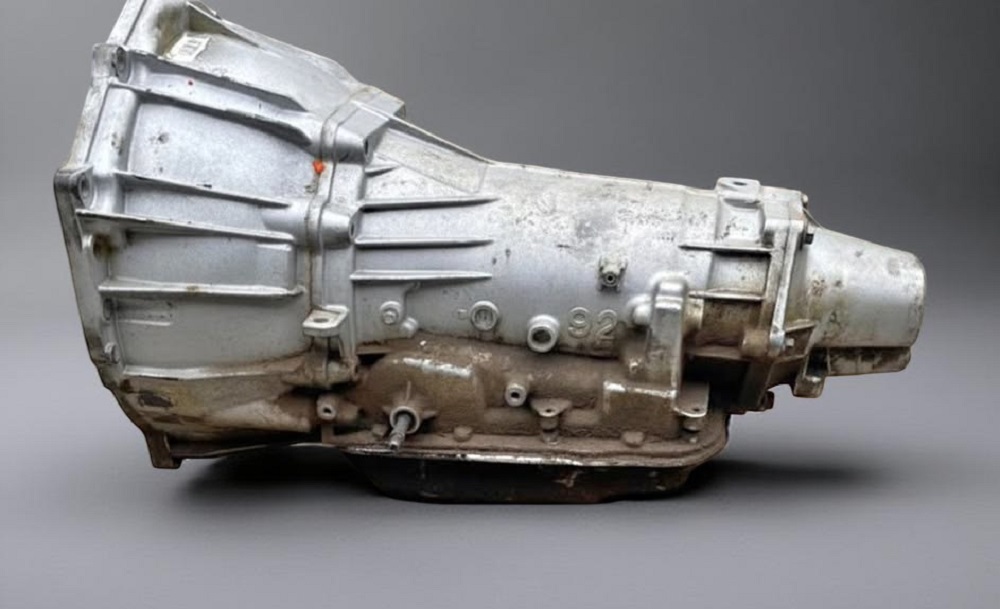
1. Same case family, different strength package
The 4L60E earned its keep the cheap way
The 4L60E became GM’s go-to light-duty 4-speed in 1993. It replaced the hydraulic 4L60, which originated from the 700R4 that arrived in 1982. GM used the M30 RPO code for this standard-duty electronic unit.
That wide use is the 4L60E’s biggest strength. Trucks, SUVs, vans, Camaros, Corvettes, and swap builds all used some version of the same basic family. Parts are everywhere, rebuilders know them, and a mild 4.8L or 5.3L doesn’t scare a healthy unit.
The weak point sits inside the original layout. Most stock 4L60E units use 4-pinion planetary carriers, limited 3-4 clutch space, and hard parts sized for light-duty work. Add heat, towing weight, low line pressure, or a tired converter, and the clutch pack starts slipping before the case gives any warning.
The 4L65E was GM’s stronger LS-era answer
The 4L65E arrived in 2001 under RPO code M32. GM built it for higher-output LS trucks and performance half-tons that needed more strength without the size and drag of a 4L80E. The stock torque rating moved from the 4L60E’s roughly 360 lb-ft class to about 380 to 400 lb-ft.
The main change sits in the geartrain. The 4L65E uses 5-pinion planetary carriers, an induction-hardened turbine shaft, heat-treated stator shaft splines, and a shot-peened output shaft. Those parts help it live behind engines like the LQ9 6.0L, which made up to 345 hp and 380 lb-ft.
GM kept the same basic 4-speed ratios. First stays at 3.059:1, fourth stays at 0.696:1, and the unit still fits the compact 4L60E footprint. The stronger parts buy margin, not a free pass for burnt fluid or a bad rebuild.
The hardware difference that matters first
| Core difference | 4L60E | 4L65E |
|---|---|---|
| GM RPO code | M30 | M32 |
| Main role | Standard light-duty 4-speed | Stronger half-ton and LS performance variant |
| Planetaries | Usually 4-pinion | 5-pinion |
| Stock torque range | About 360 lb-ft class | About 380 to 400 lb-ft class |
| Converter family | Early 298mm and later 300mm versions | 300mm LS-era setup |
| Best fit | Stock 4.8L, 5.3L, mild daily use | 6.0L trucks, heavier towing, stronger LS swaps |
2. Five-pinion planets help, but they don’t make the 4L65E bulletproof
The 4L65E spreads torque across more teeth
The 4L65E earns its strength claim inside the planetary carriers. GM moved from the common 4-pinion layout to 5-pinion carriers, which spreads torque across more gear teeth. That cuts the load on each tooth by about 20%.
That matters most at low speed. Heavy throttle, towing weight, and a loaded 6.0L truck hammer the planetary set before the vehicle has much road speed. The 5-pinion geartrain gives the 4L65E more room before tooth load, heat, and shock start breaking hard parts.
The issue sits inside the same ring gear diameter. Some builders point out that 5-pinion carriers use smaller individual pinions to fit the package. The whole carrier still spreads load better than the 4-pinion setup under normal heavy-duty use.
A good 4L60E still has a clean lane
A healthy 4L60E can live a long time in the right truck. Stock 4.8L and mild 5.3L builds don’t need 6.0L torque capacity when cooling, line pressure, and shift timing stay right. The unit’s 3.06:1 first gear also helps a light vehicle move without brutal converter abuse.
The trouble starts when the job outgrows the parts. Tow heat, big tires, sloppy converter lockup, and repeated wide-open shifts lean hard on the 3-4 clutch pack. A stock 4L60E with worn seals and weak pressure control can burn 3rd and 4th before the owner blames the engine.
A rebuilt 4L60E changes the math if the builder upgrades the weak spots. Better sun shell, servo parts, clutch materials, and pressure control can make it stronger than a junkyard 4L65E with black fluid. A used tag never proves clutch clearance, shaft condition, or valve-body wear.
The 4L65E still carries the family scars
The 4L65E keeps the same basic 700R4 family bones. It still uses the same 4-speed ratio spread, the same compact clutch-pack limits, and the same need for clean hydraulic pressure. The 3-4 clutch pack only has so much room inside the case.
The 4L65E improves the factory hard parts. It adds 5-pinion planetaries, stronger shaft treatment, and a better factory shell path than early 4L60E units. It still can lose reverse, 2nd, and 4th if the sun shell cracks or the reaction path fails.
Hydraulics can end either unit faster than torque alone. A worn pressure regulator valve, leaking servo seal, or tired EPC solenoid lets clutches apply soft and slip under load. Once the fluid gets hot and friction material glazes, the stronger planetary set won’t save 3rd gear.
3. Converter fit is where swaps get expensive fast
The 298mm and 300mm difference can end the pump
The dangerous difference sits at the converter and input shaft. Early 4L60E units used the 298mm converter setup, while later LS-era units moved to the 300mm setup. The 4L65E was built around the 300mm LS-era architecture.
Both setups can use 30-spline input shafts, but the profile, depth, and engine fit differ. The 300mm converter is about 3/4 inch thicker than the 298mm unit. That extra depth changes how the converter engages the pump, flexplate, and crank pilot.
Mix those parts wrong and the failure happens at startup. A 298mm converter on a 300mm input-shaft setup may not drive the pump correctly. The engine can fire, the pump can starve, and the front end of the transmission can die before the truck backs out of the bay.
LS swaps punish lazy flexplate math
Older 4L60E swaps behind LS engines need careful stack-up work. The LS crank flange sits shorter than the old small-block Chevy crank. Builders often need a crank spacer and dished flexplate on 4.8L, 5.3L, and 6.0L swaps.
That spacer does real work. It supports the converter pilot and keeps the starter gear lined up with the ring gear. Get that depth wrong, and the converter can shove into the pump or hang too far out of engagement.
A true 4L65E usually fits LS work cleaner because it already uses the 300mm converter layout. The 7-bolt removable bellhousing and LS-era converter package remove several old-SBC problems. The wiring year, sensor setup, and PCM match still decide whether the truck moves under its own power.
4. Pin count can matter more than the badge
The wrong year can stop a good transmission
The 4L60E and 4L65E both use electronic control. A round case connector on the passenger side carries shift-solenoid, pressure-control, and converter-clutch commands. That connector changed several times between 1993 and 2013.
Early 1993 to 1995 units used a 12-pin setup. Most 1996 to 2006 LS-era units used 13 pins. Later units added more control logic, and that’s where swaps start getting ugly.
A 2007-up transmission can carry an input speed sensor, also called an ISS or turbine speed sensor. A 2009-up unit can add an internal mode switch. Bolt one behind the wrong PCM and the truck may see missing sensor data before it ever reaches 2nd gear.
The connector years that burn swap budgets
| Year range | Common connector setup | Why it matters |
|---|---|---|
| 1993 to 1995 | 12-pin | Early electronic setup, poor LS-era compatibility |
| 1996 to 2006 | 13-pin | Mainstream LS swap and truck compatibility window |
| 2007 to 2008 | 15-pin | Adds input speed sensor, needs matching control logic |
| 2009 to 2013 | 17-pin | Adds internal mode switch, harder to mix into older builds |
A controller won’t fix bad hard parts
Standalone controllers help on custom builds. They can manage shift points, line pressure, and converter lockup when the engine, axle ratio, tire size, or camshaft no longer matches a factory tune. Carbureted swaps and non-GM builds often need one.
The control box still can’t repair a bad parts stack. It won’t fix the wrong converter depth, wrong flexplate, missing ISS signal, or mismatched internal wiring. It also can’t save a 3-4 clutch pack already blackened by heat.
A 15-pin transmission behind a 13-pin control setup needs the right harness and logic. A 13-pin transmission in a later ISS-based vehicle can trigger fault codes because the PCM expects a signal that isn’t there. The plug must match the controller before the torque rating matters.
5. The failures overlap, but the 4L65E starts with better bones
The 3-4 clutch pack burns first
The 3-4 clutch pack is the famous failure point in this family. The original 700R4 layout left limited room for that clutch stack, then the electronic 4L60E carried the package forward. A stock 4L60E commonly uses 6 friction plates, while the 4L65E moved to 7.
That extra friction helps, but pressure still decides the shift. A worn pressure regulator valve, weak EPC solenoid, leaking servo seal, or hardened piston seal lets the clutch apply soft. The shift slips, heat spikes, and the friction material glazes.
The driver usually feels it before the unit quits. The 2-3 shift flares, 3rd gear gets lazy, then 4th starts slipping under light throttle. Keep driving it hot, and the truck loses 3rd and 4th.
A cracked sun shell takes reverse, 2nd, and 4th
The sun shell carries torque for reverse, 2nd, and 4th gear. Early stamped-steel shells could crack around the splined neck. When that neck lets go, the truck can lose reverse, 2nd, and 4th almost at once.
That failure has a clean road feel. You shift into Reverse and get nothing. Then the truck pulls away in 1st, skips the normal 1-2 handoff, and limps around on what the geartrain can still hold.
The 4L65E used a better factory shell path than early 4L60E builds. Serious rebuilders still often install a hardened aftermarket shell, including the well-known Beast-style upgrade. A stock shell is a bad place to save money on a tow rig.
Where both gearboxes still break
| Failure pattern | 4L60E | 4L65E |
|---|---|---|
| 3-4 clutch burnout | Common when pressure or heat gets bad | Still possible, but better starting capacity |
| Sun shell failure | Classic weak point | Improved, but still upgraded in strong builds |
| P1870 / TCC slip path | Common valve-body wear complaint | Less common in later units, still possible |
| Accumulator piston problems | Worse on early plastic-piston units | Improved with aluminum-piston updates |
| Main failure risk | Cheap and common, but easier to overload | Stronger base, still needs a quality rebuild |
6. Heat and rebuild quality decide how long either one lives
Hot fluid cooks both transmissions
The 4L60E and 4L65E both hate heat. Heavy towing, city traffic, big tires, and a loose converter push fluid temperature up fast. The torque converter makes much of that heat before the clutches ever get blamed.
A plate-and-fin auxiliary cooler can cut transmission fluid temperature by 20°F to 40°F. Keeping fluid below about 200°F gives the clutch material and seals a fighting chance. Above that range, oxidation speeds up and the oil starts losing its grip on friction control.
Heat damage shows up in stages. First the shifts soften, then the 2-3 flare gets longer, then the fluid smells burnt. Once the 3-4 clutch glazes, cooler flow can’t put friction material back on the plates.
Dexron VI helps only when the cooler circuit stays clean
GM originally used Dexron III in these older 4-speed units. In 2006, GM moved to Dexron VI, and it became the common backward-compatible fluid for older 4L60E and 4L65E service. The fluid matters, but the cooler circuit matters just as much.
A fresh fill can’t fix trash in the lines. Burnt clutch material can hide in the cooler, then return after a rebuild and score the valve body. That debris can stick a pressure regulator valve or feed the same soft-shift failure that ended the first unit.
Service discipline beats brand guessing. Use the correct fluid, flush or replace a contaminated cooler, and verify line pressure after the repair. Skip that step, and the new clutch pack eats the old failure’s dirt.
A rebuilt 4L60E can beat a tired 4L65E
A junkyard 4L65E can look better on paper than it does in the pan. The 5-pinion carriers and hardened shafts don’t prove clean clutches, straight bushings, or a healthy valve body. A burnt unit with black fluid still needs the same teardown as any failed 4L60E.
A properly built 4L60E can make more sense for a stock daily. Good frictions, a hardened sun shell, fresh seals, corrected pressure control, and enough cooler capacity fix the weak paths that usually end the unit. The build sheet matters more than the RPO sticker.
Ask what parts went into the rebuild. Five-pinion planets mean less if the shop reused a worn pump, ignored servo leaks, or left valve-body wear unchecked. The cutoff is simple: no line-pressure check, no cooler cleanup, no real warranty.
7. Pick by load, torque, and swap pain
The 4L60E fits stock work when the build stays honest
The 4L60E still makes sense in a stock daily driver. A mild 4.8L, tame 5.3L, or light truck doesn’t need the heavier 4L80E path. The 4L60E stays compact, common, and cheaper to replace.
That fit depends on cooling and use. A 3.06:1 first gear helps the vehicle move without a huge stall converter. A 0.696:1 overdrive keeps highway rpm low.
The safe lane gets narrow with weight. Big tires, heavy trailers, sloppy converter lockup, and hot fluid push the 3-4 clutch pack past its comfort zone. Once the 2-3 shift flares under load, the budget build has crossed the line.
The 4L65E earns its keep behind heavier LS torque
The 4L65E makes more sense when the engine and vehicle load climb. A 6.0L LQ9 made up to 345 hp and 380 lb-ft, right in the range that pushed GM toward the stronger M32 unit. Silverado SS and Escalade applications show where that strength mattered.
The 5-pinion planetaries, hardened turbine shaft, heat-treated stator splines, and shot-peened output shaft give the 4L65E a better base. That matters in a heavier SUV, a light tow setup, or an LS swap with real torque. It also keeps the compact case where a 4L80E may add size, weight, and fitment work.
Still, the 4L65E needs the right year and wiring. A 300mm LS-era unit with the wrong pin count can turn a strong transmission into a harness problem. Match the connector, converter, flexplate, and PCM before trusting the torque rating.
The 4L70E and 4L75E sit past the clean comparison
The 4L70E came after the 4L65E and added more strength for later LS applications. It kept the 5-pinion foundation, then added stronger reaction gear hardware, output-shaft upgrades, and input-speed-sensor logic. Many 4L70E units use the 15-pin connector, which pulls controller choice into the swap plan.
The 4L75E pushes the family farther. GM Performance offered it as a Super-HD style package with stronger clutches, bands, and shafts for higher-output builds. Some ratings point toward 650 hp capability in a compact 4L60E-style footprint.
Those later units can be smart buys, but they add control problems fast. Sensor needs, connector year, PCM logic, and harness fit matter as much as hard parts. For a clean rule, use the 4L60E near stock, step to the 4L65E when 6.0L torque or towing load starts chewing into the clutch margin.
Sources & References
- 4L60E, 4L65E, and 4L70E Differences | PDF | Transmission … – Scribd
- GM 4L60-E transmission – Wikipedia
- How to Identify GM Transmissions | 700R4, TH350, 4L60, TH400, 4L80e, Powerglide, & More – Speedway Motors
- Is a 4L65E Stronger Than a 4L60E? – Gearstar Performance Transmissions
- What’s The Difference Between 4L60E And 4L65E Transmissions? – Jalopnik
- Spotter’s Guide: 4L60E Transmission – Street Muscle
- The Novak Guide to the GM 4L60-E (Late Style) Automatic Transmission
- 4L60E Transmission Identification Guide | PDF | General Motors – Scribd
- https://www.streetmusclemag.com/tech-stories/spotters-guide-4l60e-transmission/#:~:text=The%20numbers%20decipher%20like%20this,use%20in%20heavy%2Dduty%20trucks.
- Are 4L60E and 4L65E Interchangeable? Understanding the Differences and Compatibility
- 4L65E Transmission Specs and Updates
- GM Chevrolet Buick Cadillac – Regular Production Option – RPO Codes VIN Decoder
- 4L60E Control and Swap Info – US Shift
- 4L60E 4L65E Transmission Case 1997-2004 2-Piece M30 M32 Removable Bell | eBay
- 4L60E vs. 4L65E: Key Differences, Specs, and How to Tell What You Have
- 4l60e to 4l65e swap : r/projectcar – Reddit
- 4L60E 4L65E 4L70E TRANSMISSION INPUT SHAFT SONNAX HEAT TREATED HEAVY DUTY FITS ’93+ 300mm RELUCTOR STYLE
- Will a 4L60E torque converter fit a 4L65E? – Gearstar Performance Transmissions
- 4L60E 4L65E 4L70E Transmission Input Speed Sensor (ISS) Plug 05-Up (P0176-P0717)
- Common Problems with the 4L60E & 4L65E – Monster Transmission
- What 700R4 or 4L60E Transmission Rebuild Kit is Right for You?
- The LS PowerHouse 4L65E Transmission | Specs, Problems & Upgrades
- 4L60E Transmission Failure Points: Symptoms, Fixes
- Programmed T42 TCM for GM 4L60E 4L65E | 24255280 | Ready to Install
- 4L60E & 4LXX Series Transmission Guide for LS Swaps | PSI
- Need help to understand 4l60e 13 pin vs 15 pin? – PSI Conversions
- Installer Ed: 4L60 Wire Harness Pin Variations – YouTube
- Is there a difference in 4l60 years? – Pro-Touring.com
- 4L65E vs 4L70E – Which Do You Have? – Monster Transmission
- Intro to the LQ4 and LQ9 – Help Center
- LQ4 vs LQ9 Engines: Which Is Best For Your Vehicle? – JEGS
- LS Engine and Transmission Package | Complete LS Swap – 603 Auto Salvage
- 6.0L – LQ9 vs LQ4 – BD Turnkey Engines LLC
- 4L65E Transmission parts, repair guidelines, problems, manuals – Go4trans
- Why Proper Cooling is Critical for GM Transmissions: Prevent Overheating in Your 4L70E, 4L75E, or 4L65E
- 4L60E 4L65E 700R4 Actual genuine BEAST Sunshell Sun Heavy Duty Upgrade | eBay
- THE REAL BEAST 700R4 4L60E 4L65E Transmission Sunshell Sun Gear Reaction 1982-Up | eBay
- Overview of the 4L65E Transmission
- 4l60e vs 4l65e Identification: Are All 4l60e Transmissions Interchangeable? – YouTube
- 4L60, 4L65E, 4L70E Transmission Wiring Harness | Marks 4WD
- 4l60e swap need help : r/transmissionbuilding – Reddit
- 4L60E 4L65E 4L70E 4L75E Transmission Wire Extension Harness – ICT Billet
- Overview of GM’s Stronger 4L65E Transmission