
Struts are new, but the car still floats like a couch on wheels. Bad brand? Wrong valving? Or just the wrong shock for the job?
Shocks don’t just smooth out bumps. They keep tires planted, cut braking distance in the rain, and give stability control something to work with. Get it wrong, and it’s not just bounce, it’s lost grip and shredded rubber.
This guide cuts the noise. It breaks down what actually makes a shock “good,” walks through KYB’s full lineup, from Excel-G to MonoMax, sizes them up against Monroe, Bilstein, and Koni, and calls out the weak spots pros complain about. End to end, it shows exactly which KYB fits the car, the load, and the budget.
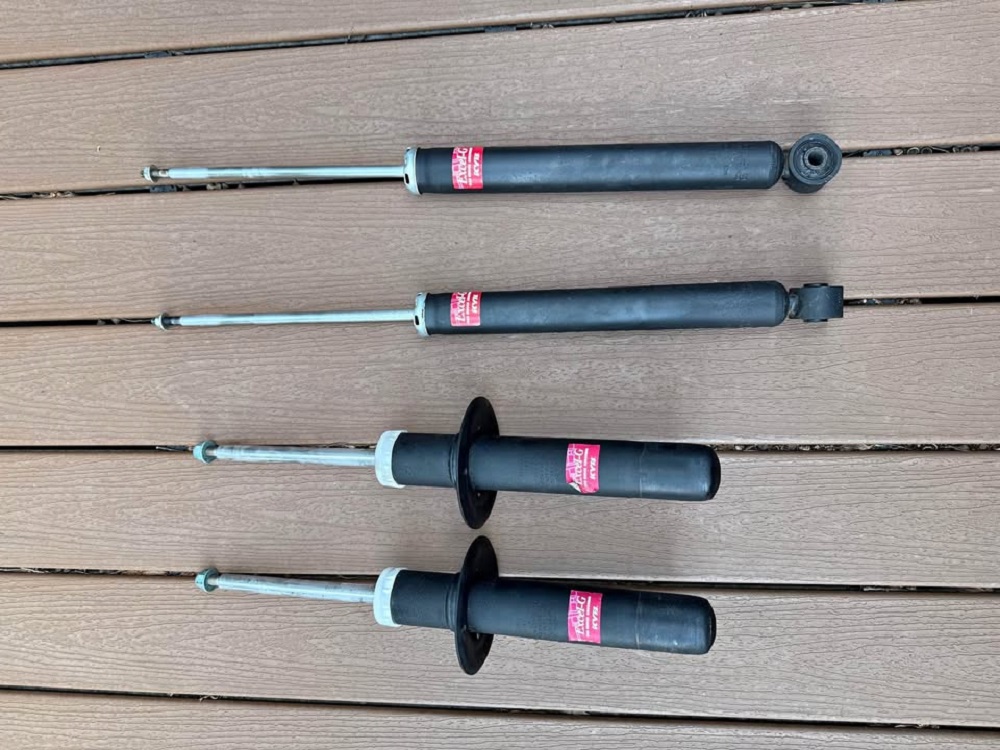
1. What really makes a shock “good”
A shock isn’t just a metal tube with oil inside. It’s what decides whether your tires grip or give up when the pavement turns ugly. Comfort’s just one line on the checklist.
Control you can feel in your spine
When damping fades, the car tells on itself, longer braking, nose-diving on stops, and sloppy body roll through off-ramps. Modern systems like ABS and ESC lean hard on the shocks to keep everything steady.
If the suspension floats, those systems lag. OE-grade shocks, like KYB, use tighter valving to keep the chassis flat and the electronics working clean.
Damping character changes everything
Twin-tube designs, like KYB’s Excel-G, soften out small bumps with fluid flowing between two chambers. It’s smooth, but that same layout can foam up under load, muting control.
Monotubes like Gas-a-Just or MonoMax solve that with a single cylinder and floating piston. Fluid and gas stay separate, response stays sharp, and the ride stays consistent, even when hauling or hitting expansion joints. But that precision brings trade-offs: a noisier ride and more road texture through the cabin.
Durability isn’t just a spec sheet stat
A proper shock should run 50,000 to 100,000 miles without leaking or fading. KYB builds theirs with triple-chrome-plated rods and multi-lip seals, designed to keep oil in and grit out.
Once the seal gives up, it’s obvious: wet streak down the body and a lazy bounce on rebound. If nitrogen charge escapes, damping turns spongy. High-grade coatings and proper seals separate OE-quality shocks from bargain-bin junk that gas out early.
Fitment means more than bolt holes
It’s not just about getting the shock to mount. With today’s lane-keep systems and ESC calibration, even a ½-inch ride-height change can throw off how the car reads its movement.
That’s where brands like KYB stand apart; they co-design with automakers, so ride height and motion stay in the right window. No weird behavior. No sensor freakouts.
The cost isn’t just on the box
Shocks hit twice: once at checkout, and again in the labor bay. An $80 shock that lasts 80,000 miles? Smart buy. A $120 unit that leaks in 20,000? That’s double the labor cost. Warranty matters too. KYB covers most of its shocks with a limited lifetime warranty, solid leverage if one goes bad early.
2. Inside KYB’s OE DNA: Why Factory Roots Still Matter
KYB doesn’t chase the soft, vague ride some aftermarket parts settle for. They design for control, because they’re tied directly to OE demands. Their tuning follows how ESC and ABS expect the chassis to move, which means factory-like grip and fewer surprises on the road.
From oil pumps to OE dominance
KYB started as Kayaba back in 1919, turned corporate in ’35, listed in Tokyo by ’59, and unified its global name in 2005. A U.S. footprint has been in place since 1974.
That history isn’t trivia; it explains why their aftermarket parts feel dialed in. Deep ties with automakers keep their designs tight, specs clear, and weird fit issues rare.
Built where the OEMs build
KYB doesn’t just reverse-engineer. They co-develop with manufacturers, then often run their aftermarket units down the same lines, same rods, same seals, same tolerances.
That’s why ride height stays proper, and damping hits the targets your vehicle’s electronics expect. Install them, align it, and the chassis behaves like it rolled off the line yesterday.
Industrial muscle, built into every shock
Their reach goes way beyond passenger cars. KYB builds for construction, hydraulics, and heavy machinery. That experience shows up in monotubes like Gas-a-Just and MonoMax, both built to hold up under heat, weight, and miles. They don’t fold under pressure.
Not bargain-bin, not boutique
KYB’s Excel-G line restores factory ride without fluff. Step into their monotubes when the job calls for more grip or heavier loads. Their catalog runs wide, the logistics are tight, and the warranty covers most cases without a fight.
Want high-precision, motorsport-grade tuning? That’s Bilstein or Koni territory. Want dependable control and long-term value? KYB nails it.
3. KYB product lines: matching the shock to the job
One brand, five clear lanes. KYB didn’t toss out a “one size fits all” lineup. They split their shocks by load, use case, and ride feel, because the wrong pick rides like a boat or beats like a drum.
Excel-G – the factory reset
This is KYB’s mainstay. A twin-tube design with low-pressure gas, built on the same lines as many OE parts. It’s not built for autocross or aggressive steering response; it’s built to cancel out nose dive, float, and roll without making the ride harsh.
Seamless tubing, OE-grade seals, and Teflon bands all work together to restore that “new car” feel. It’s a go-to for daily drivers chasing comfort with control, not cornering Gs.
Gas-a-Just – for drivers who want sharper street feel
Monotube layout. Floating piston. High-pressure gas. The response is quick, fade stays low, and body motion tightens up, especially when trucks or SUVs carry bigger tires or extra weight.
Roll shrinks, steering sharpens, and the ride firms up. But the payoff comes with a catch: more road feel, more noise, and the occasional rattle you didn’t know was there.
MonoMax – built to handle real work
Heavy-duty monotube with a large bore and up to 40% more damping force than stock twin-tubes. Zinc-coated components, off-road dust boots, and thermal resistance built for hauls, hitches, and heavy setups.
It’s the shock that keeps the back end from bucking under load. But slap it on a lightly driven street truck, and it’ll feel like the suspension’s carved from granite. Built for work, not for empty commutes.
AGX – adjustability without a coilover price tag
Manual adjusters on the body let damping stiffness go up to 125% over stock. No teardown needed, just a knob twist or screwdriver depending on model. Weekday soft, weekend stiff. Ideal for street cars that moonlight at the autocross.
Velocity-sensitive valving helps keep grip when cornering loads shift fast. It’s not a full race setup, no height or spring control, but it’s a solid move for tuners who need flexibility without the budget blowout.
Strut-Plus – fast installs, with a caveat
Pre-assembled with strut, spring, and top mount, ready to bolt in. Saves hours and dodges spring compressor drama. DIYers and flat-rate techs love the concept. But here’s the rub: the shock is pure KYB, the mounts and bearings aren’t always.
Fit issues and early noises show up more here than in any other KYB product line. That’s why many shops go for the bare strut and pair it with OE or trusted-brand hardware to avoid callbacks.
4. Performance and durability: how KYB feels on the road
New shocks don’t just change the ride. They change how the whole car behaves under pressure. KYB’s own telemetry data shows worn dampers adding up to 6 feet to wet stopping distance. With fresh shocks, the nose stays planted and ABS keeps its edge, because body control buys reaction time.
Why monotubes win under heat
Twin-tube shocks handle small bumps well but struggle when the pace picks up. Repeated hits can whip air into the oil, softening damping, and flattening control.
Monotubes, like Gas-a-Just and MonoMax, use a floating piston to separate gas from fluid. That keeps response consistent, even when towing or running oversized tires in summer heat. Forget the myth that fade only happens on the track. A long uphill pull with a trailer can cook budget shocks just as fast.
Ride feel, post-swap
Excel-G resets the factory ride. Road chatter fades, body roll calms, and the suspension feels balanced again. Gas-a-Just adds edge, firmer around turns, and quicker to settle after lane changes, though it pipes more texture into the cabin.
MonoMax clamps down under load, keeping trailers straight and squat to a minimum, but feels firm-to-harsh when unloaded.
Build quality that doesn’t fold early
Expected lifespan falls between 50,000 and 100,000 miles, depending on load and road conditions. KYB’s triple-chrome-plated rods, synthetic multi-lip seals, and high-grade internal coatings hold up where cheaper parts fail.
When the gas charge leaks, shocks go mushy, ride height sags, and rebound gets lazy. Most of the time, the first clue is a stripe of oil on the shock body and fresh wallow in the rear during crosswinds.
Warranty that keeps labor costs in check
KYB backs most of its shocks and struts with a limited lifetime warranty for the original buyer. That’s not just nice to have, it’s financial insurance.
When a part fails early, the install bill stings worse than the shock cost. Keep the receipt, log your mileage, and snap photos if a leak shows up. It makes a warranty claim quick and clean.
5. Where KYB hits the mark, and where it doesn’t
Every shock brand has its strong suits and pain points. KYB’s no different. When matched right, it brings a car back to factory-tight feel. But mismatch the spec, or bolt it to a weak mount, and what should’ve been an upgrade turns into a hunt for clunks and squeaks.
What KYB gets right
The biggest win? OE-grade control at a sane price. Excel-G calms the chassis without turning it to mush. Gas-a-Just and MonoMax sharpen response without wandering into high-dollar territory.
Their catalog runs deep, and the monotube lineup brings real handling gains to trucks and SUVs that work for a living. For most daily drivers, it’s a straight shot back to confidence, less float, flatter turns, shorter stops.
Where issues still show up
Strut-Plus kits promise convenience but pull the most complaints. The shock itself is solid, but the preloaded mounts and bearings are often the weak link, squeaks, knocks, or early wear. Enough shops have been burned by that combo that many now go bare-strut and pair with OE or premium-grade mounts.
AGX offers decent adjustability for budget tuners, but coverage is spotty. It won’t work for every platform, and it’s no substitute for a proper coilover when spring rate or ride height changes are on the table.
As for MonoMax, it shines under load but can feel over-damped in daily driving. Light trucks and empty beds may ride stiff enough to surprise buyers expecting “better control,” not industrial-grade firmness.
6. How KYB Compares to Monroe, Bilstein, and Koni
Shoppers don’t always want the firmest ride or the flashiest brand; they want control without blowing the budget. That’s the space KYB plays in best: restoring OE balance with a touch of added control.
Higher price doesn’t always mean better safety or comfort, just different tuning, often with trade-offs in ride feel.
The table that actually helps
| Use case | KYB pick | Monroe analog | Bilstein analog | Koni analog | Takeaway |
|---|---|---|---|---|---|
| Restore stock comfort | Excel-G | OESpectrum or Quick-Strut | B4 or Touring | Special Active | KYB nails OE feel with added control. Monroe leans soft. Koni is plush. |
| Sharper street control | Gas-a-Just | Reflex | B6 | STR.T | KYB wins on value. Bilstein is sportier, pricier. Koni is firm, fast. |
| Tow, haul, big tires | MonoMax | Gas-Magnum | 4600 or 5100 | – | MonoMax handles loads. 5100 adds height, costs more. |
| Adjustable street/AX | AGX | – | B8 plus springs | Sport (yellow) | AGX is the budget clicker. Koni Sport fine-tunes, but costs more. |
When Monroe makes sense
For the softest ride possible, Monroe fits the bill. Quick-Strut kits speed up installs and avoid spring compression, ideal for flat-rate bays or budget DIYs.
But the trade is early fade and looser highway feel. For drivers who value high-speed stability and firm brake response, KYB usually holds up better.
Where Bilstein justifies the cost
B6 and B8 models bring crisp rebound and firm body control that performance drivers crave. The 5100 series adds ride height tweaks for trucks.
But with those perks come sharper road feel and a higher price tag. For daily driving with just a hint more control, Gas-a-Just or MonoMax often strike a smarter balance.
Why tuners still chase Koni
Koni Sport (yellow) shocks offer real adjustability and ride finesse that outclasses entry-level options. Paired with the right springs, they build a dual-duty setup that carves and cruises.
But pricing climbs fast, and fitment varies. For drivers who want some adjustability without the learning curve or spend, KYB AGX gives a solid step up at a lower cost.
The numbers that settle the score
On many sedans and crossovers, Excel-G shocks run $70 to $140 per corner. Equivalent Bilstein or Koni parts often sit higher. MonoMax lands around $100 to $200 for half-ton trucks, undercutting premium monotubes without skipping on damping force.
When labor and alignment add $250 to $600 to the bill, that price gap matters. Pick a shock that fails early, and the second install hurts more than the first checkout.
7. Buying and setup: how to match the shock to the job
Shopping by price alone is the fastest way to a suspension that feels off. KYB split its lineup for a reason; ride quality depends on what the vehicle hauls and how it’s driven. The key is matching load and purpose before pulling the trigger.
Start with the vehicle’s role, not just the part number
A family sedan or crossover with no trailer duty? Excel-G resets the factory ride and comfort without complication. For tighter body control on highways or windy passes, Gas-a-Just brings quicker response with monotube precision.
Half-ton pickups and SUVs that tow or run larger tires benefit from MonoMax in the rear to cut squat and bounce, while Gas-a-Just up front sharpens turn-in. For street cars that dabble in autocross, AGX gives quick adjustability, crank it up for the weekend, back off for weekday drives.
Expect ride feel to change, sometimes more than expected
Twin-tube setups like Excel-G absorb road chatter and mute the rough stuff. Monotubes, Gas-a-Just, and MonoMax respond faster and stay firm under heat but let more road texture through.
Some owners report “rattles” after install that aren’t actual faults; sharper shocks just reveal the noises soft OE parts used to mask.
Strut-Plus saves time, but the smart money’s in custom pairing
Preloaded Strut-Plus assemblies install fast and skip the spring compressor, but the top mounts and bearings inside don’t always meet the same standard as the strut itself.
Many techs play it safe and order bare KYB struts, then pair them with OE or premium-brand mounts. It adds setup time but avoids the repeat labor when a mount starts clunking after a month.
Always plan for alignment and related parts
Any strut swap shifts suspension geometry, even if ride height doesn’t budge. Alignment should follow immediately. While under there, check sway bar links, jounce bumpers, spring seats, and boots.
Worn isolators or cracked bushings can turn a clean install into a rattle trap. Skipping a $40 link now often means redoing labor down the line.
Costs and value: what the bill really looks like
Sticker shock rarely comes from the shock itself. The parts are just half the story. Labor, alignment, and repeat installs are where budgets get torched. The right KYB line avoids that second round of wrenching.
Real-world price bands from shop catalogs
| Line | Sedan/CUV parts | ½-ton truck/SUV parts | Value note |
|---|---|---|---|
| Excel-G (strut/shock) | $70 to $140 | $70 to $130 | OE ride feel at economy to mid-range pricing |
| Gas-a-Just | $75 to $150 | $80 to $170 | Monotube control for a small price bump |
| MonoMax | – | $100 to $200 | Heavy-duty damping without premium-brand cost |
| AGX | $120 to $220 | Limited | Budget tuning vs full coilover setups |
| Strut-Plus assembly | $180 to $350 | $220 to $420 | Fast install, mount quality varies by model |
Labor adds another layer, and eats the savings if done twice
Alignment and install costs range from $250 to $600 per vehicle. Rusted bolts, corroded links, or seized hardware only push the number higher. If a low-cost kit fails early or rides poorly, that labor happens again.
That’s why experienced techs often spec KYB struts with known-good mounts from the start, especially on cars with sensitive geometry or ADAS calibration.
Warranty helps, but only if the setup was smart from the start
Most KYB shocks and struts come with a limited lifetime warranty for the original buyer. Keep the invoice and jot down mileage at install. If a unit leaks early or a seal fails, there’s leverage on the part, but not the labor. That’s where the real savings come in: choosing the right shock on day one.
8. Installation risks and pro tricks that actually matter
Fresh shocks should feel like an upgrade, not a mistake. But when clunks or squeaks show up right after the install, the cause usually isn’t the shock itself; it’s what got skipped during the job. One or two oversights can turn a brand-new KYB into a frustrating return trip to the lift.
Post-install noise doesn’t always mean bad parts
Clunking after a strut swap often points to the top mount or misaligned spring. If the bolts were torqued with the wheels hanging instead of loaded, the mount may bind and groan over every bump.
And when old boots or isolators get reused, squeaks and rattles follow, getting blamed on the new strut even when it’s doing its job.
Alignment isn’t optional on modern chassis
Swapping struts shifts suspension geometry. Skip the alignment, and the tires start scrubbing within months. More than that, electronic systems like ESC and lane-keep expect a suspension sitting true.
Even if the shock needs no coding, the sensors watching wheel angle and yaw do, and they’ll fight the physics if calibration’s off.
Break-in isn’t just a myth on paper
New KYBs often ride firmer for the first 300–500 miles. That’s the internal seals seating, and the gas charge stabilizing. Some owners get spooked and swap too soon, chasing a softer feel. Most settle in naturally once the miles add up.
9. Real-world shock picks: built around how the car is used
No guesswork needed. Match the job, then pick the shock that holds grip, calms roll, and skips the second install. Cushy suspension might feel great rolling out of the driveway, but control is what matters when the road gets wet and the stakes get real.
Reliable setups that consistently deliver
| Scenario | Pick | Why it works |
|---|---|---|
| Floaty ride on a family sedan | Excel-G | Resets OE feel without adding harshness |
| Compact SUV in crosswinds | Gas-a-Just | Monotube design tames roll and mid-corner sway |
| Half-ton that tows often | MonoMax rear, Gas-a-Just front | Boosts rear damping; keeps steering tight under load |
| Oversized wheels and tires | Gas-a-Just | Handles added mass and heat with firmer response |
| Work truck with payload | MonoMax | High-pressure monotube keeps the axle steady under weight |
| Street car with autocross duty | AGX | On-body adjusters give up to 125% damping for weekend events |
| DIY install, no spring tools | Strut-Plus or bare KYB + OE mount | Prebuilt speed or matched reliability, depending on platform |
| Daily highway drive, rough roads | Excel-G | Twin-tube comfort without float or wander |
Where setups go sideways
MonoMax can feel too stiff on lightly used trucks that rarely tow. For occasional hauls, Gas-a-Just might strike a better balance, then upgrade only if it still squats under tongue weight.
Sport compacts with sagging springs won’t ride right on any shock until the springs are sorted. If the foundation’s off, no damper will fix it.
The mount decision that saves the second job
On platforms known for upper strut noise, pairing bare KYB struts with OE or premium-grade mounts and new isolators prevents knock and bounce from creeping back in.
It takes extra setup time, but dodges the redo. Strut-Plus still makes sense for clean vehicles or when the install needs to move fast, but when reliability matters, match the hardware to the workload.
So, are KYB shocks actually good?
They are, when matched to the job. KYB’s biggest strength is bringing factory control back without gimmicks. Excel-G takes worn sedans and crossovers and resets the ride to how it left the plant, tight enough to keep ABS and ESC honest, smooth enough to soak up bad pavement.
Gas-a-Just and MonoMax step in when the load gets heavier. Both resist fade where softer twin-tubes give up, keeping trucks, SUVs, and bigger-wheel setups stable when the heat rises or the trailer’s on.
AGX lets budget-conscious tuners dial in damping without jumping into full coilover territory. Strut-Plus remains the one asterisk, quick to install, but let down by mounts and bearings that don’t always match the strut’s durability.
What makes KYB worth it is balance. OE-grade engineering, broad coverage, and price points that stay well below Bilstein and Koni, without dropping the ball on quality.
For daily drivers, working trucks, and weekend enthusiasts, KYB delivers control that holds up past 50,000 miles and keeps the chassis honest well beyond that.
Need maximum adjustability, razor-sharp track precision, or a luxury-smooth ride? That’s where premium European brands earn their keep. But for most real-world roads and real-world cars, KYB is the smarter play, honest parts, smart prices, and a ride that stays planted when it matters.
Sources & References
- The History of KYB Americas Corporation
- KYB Corporation (7242.T) Stock Price, Market Cap, Segmented Revenue & Earnings
- A Different Approach to Thinking About Shocks and Struts – KYB Americas
- Excel-G – KYB Americas
- Shock Absorbers and Struts for Trucks – KYB Americas
- MonoMax – KYB Americas
- KYB Suspension mounts rubbing Strut Wall : r/MechanicAdvice – Reddit
- KYB Struts on RockAuto – Legit or Counterfeit? : r/MechanicAdvice – Reddit
- KYB vs Monroe – ShockWarehouse
- KYB Stuts And Shocks Good or Bad – TDIClub Forums
- How to tell if you need new shocks – KYB Americas
- KYB Excel-G Review – ShockWarehouse
- KYB® – Excel-G™ Series Shock Absorbers – TRUCKiD.com
- KYB Performance Shocks & Struts: Enhanced Vehicle Handling
- #10: The Difference Between Monotube and Twin-Tube Shocks – KYB Americas
- How to Choose the Best Shocks – KYB TV Video Series #3
- KYB Excel-G Shock 343460 Reviews – AutoZone.com
- KYB Gas-A-Just Shock Review – ShockWarehouse
- KYB KG6416 – Gas-A-Just Shock Absorber, High Pressure Monotube, 26.61 in. Extended Length, Sold Individually – BuyBrakes
- Anyone using KYB Monomax : r/ToyotaTacoma – Reddit
- KYB 5640003 – High Pressure Monotube Gas Strut – BuyBrakes
- KYB Monomax Shock – Tire Rack
- AGX – KYB Americas
- KYB AGX Adjustable – Tire Rack
- AGX Shock Absorbers KYB – KYB Europe
- Replacement shock options (Are KYB AGX really that terrible)? : r/Miata – Reddit
- KYB Strut-Plus – the best complete assembly solution for your vehicle
- KYB: Shocks and Struts for Cars and Trucks, Performance and OE
- KYB Product Warranty – KYB Americas
- Do not purchase KYB struts. : r/mechanic – Reddit
- Monroe vs KYB shocks – 1990 to Present Legacy, Impreza, Outback, Forester, Baja, WRX&WrxSTI, SVX – ultimatesubaru.org
- 11 Best Shock Absorber Brands (UPDATED 2025) – ASFA Auto Care
- HELP me decide: Koni vs. Bilstein vs. KYB – Bimmerforums – The Ultimate BMW Forum
- KYB vs. Bilstein vs. Rancho – The Campfire – CouesWhitetail.com Discussion forum
- KYB 339288 Front Right Excel-G Strut Toyota Camry – ShockWarehouse
- KYB Excel-G Front & Rear Suspension Struts Kit For Toyota Camry Hybrid LE L XLE | eBay
- KYB Shock Absorbers and Struts – BuyBrakes.com
- Monroe 72992 Front Right OESpectrum Toyota Camry – ShockWarehouse
- Monroe Toyota – Walmart
- Bilstein Shocks for Toyota Camry for sale – eBay
- 22-048325 F4-VNE-4832-BK Bilstein Toyota Camry – ShockWarehouse
- Bilstein 5100 Rear Shock [21+ F-150 2WD] – Level Up Suspension
- BILSTEIN 5100 F&R F150 | Ford F150 Suspension Upgrade – Rogue Offroad
- Rancho F-150 RS5000X Rear Shock for Stock Height RS55316 (14-20 4WD F-150, Excluding Raptor) – American Trucks
- Ford Suspension, Lift Kits, Steering Dampers, Shocks & Struts | Rancho