
A small trailer hits the hitch, the rear squats, and the CX-5’s limits show up quick. Light loads tow fine, but once the weight climbs or the trailer slices poorly through wind, the 2,000-lb cap stops being a guideline; it’s the whole game.
Mazda drew that line across every CX-5 for a reason. The brakes, cooling system, and chassis tap out long before the engine quits. The rules are simple: keep the tongue weight tight, stay under the payload limit, and don’t drag a barn door through the air.
This guide breaks down what Mazda’s tow package includes, where the real-world limits land, and how to keep the drivetrain from getting cooked on the climb.
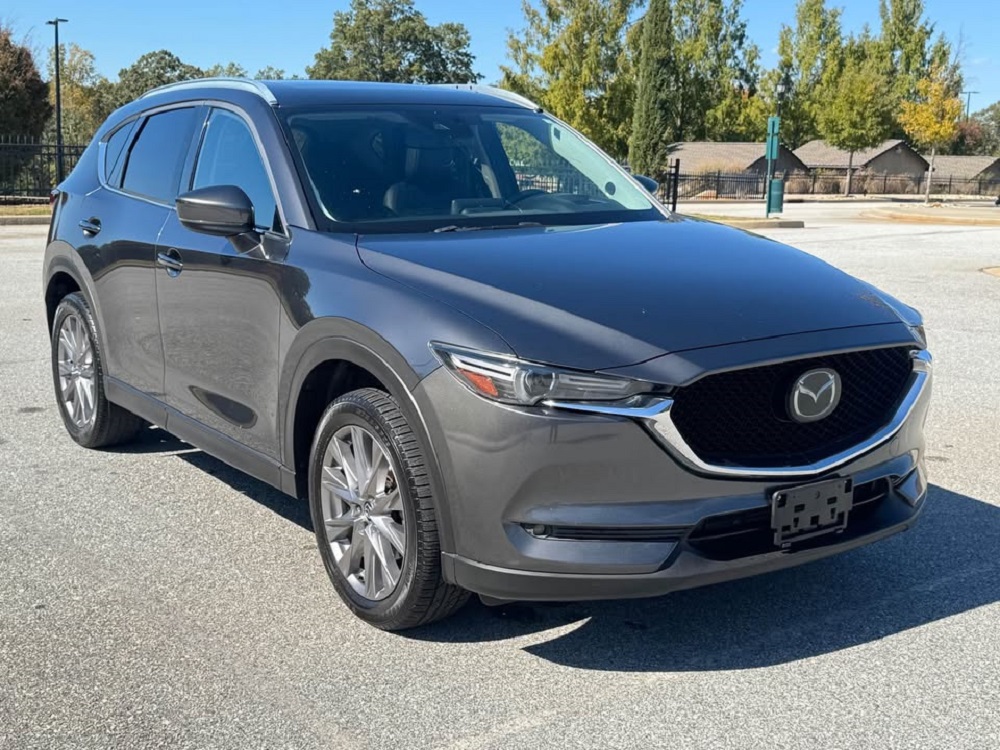
1. Where Mazda drew the line and why it won’t budge
Mazda’s 2,000-lb cap has never flinched
Drop a trailer on the hitch and the CX-5 hits the same ceiling, no matter the year. From 2013 through 2025, Mazda locked the tow rating at 2,000 lb because it’s not the engine holding things back; it’s the brakes, cooling, and chassis that run out of margin.
Even the turbo trims with stronger pull can’t carry more without overheating the hardware that keeps the drivetrain alive. That 2,000 lb covers everything: trailer, gear, fluids, and all.
CX-5 tow specs by generation
| Model years | Tow limit | Typical curb weight | Drivetrain | What holds the rating down |
|---|---|---|---|---|
| 2013–2016 | 2,000 lb | 3,500–3,700 lb | FWD or AWD | Chassis stiffness, brake capacity, cooling margin |
| 2017–2025 | 2,000 lb | 3,600–3,900 lb | FWD or AWD | Same limits, no structural bump to raise tow capacity |
Payload math stops big trailer dreams
The CX-5 starts losing ground before the trailer hits full weight. Mazda allows roughly 200 lb of tongue weight, which lands square on the rear suspension and pulls straight from payload.
Add a mount, harness, and a loaded tongue, and you’re already 250 lb deep; before passengers or gear get in. Once families load up, even a 1,600–1,800 lb trailer can shove the setup past safe limits.
Mazda’s Gross Combined Weight Rating sits around 6,138 lb. Subtract curb weight, add people and cargo, and what’s left for the trailer drops fast. Hauling camping gear or tools in the trailer eats into that margin even faster.
Shape hurts more than weight
Aerodynamics matter. A square trailer punches air the CX-5 can’t shed heat against. Mazda limits frontal area to 32 square feet because that’s about where the cooling system taps out. Tall, flat campers that tow fine on paper can boil the transmission fluid on a summer climb.
Higher altitudes thin the air and kill cooling power. Mazda slashes tow ratings by 10% for every 3,280 feet above sea level. A trailer that behaves at sea level can send the CX-5 into limp mode by 8,000 ft if the climb’s long enough.
Effective trailer limits with aero and altitude
| Condition | Practical safe limit | Notes |
|---|---|---|
| Sea level, low-profile trailer | ~2,000 lb | Full rating available under clean airflow |
| Sea level, tall 32 sq ft trailer | ~1,600–1,800 lb | Drag becomes the main load |
| 5,000 ft elevation | ~1,400–1,500 lb | Air density drop trims cooling |
| 8,000 ft elevation | ~1,000–1,200 lb | Long climbs can overwhelm heat capacity |
2. What’s really in the CX-5 tow package and what’s still on you
Hitch options built stronger than the CX-5 can handle
Mazda’s factory hitch and aftermarket setups from Curt or Draw-Tite all bolt in solid, but they don’t raise the 2,000 lb cap. The OEM unit slices through the bumper cover and slots into factory mounts with a finished trim panel.
Most aftermarket hitches tuck beneath the bumper and skip fascia cuts, though some drop the splash shield for clearance. Either way, every hitch is rated far beyond the car’s actual limit. The real difference is how clean you want the install to look.
CX-5 hitch choices
| Feature | Mazda OEM | Aftermarket Class III |
|---|---|---|
| Receiver size | 1.25 or 2 in | 2 in |
| Vehicle tow limit | 2,000 lb | 2,000 lb |
| Component rating | Matches vehicle | 4,000–4,500 lb GTW, 600–675 lb TW |
| Fascia work | Trim cut with OE bezel | Usually hidden, minimal trimming |
| Cost | 275–370 dollars | 190–300 dollars |
| WDH use | Not supported | Labeled possible but still prohibited on CX-5 |
The wiring that decides if you’re legal, or just lit up
A 4-pin harness gets the lights working on smaller trailers, and Mazda’s plug-and-play kit ties into the rear harness without hassle. It’s good for basic hauls under 1,000 lb. Anything heavier, especially with brakes, needs a 7-pin connector. That unlocks brake power, reverse lights, and charge lines.
The CX-5 doesn’t come wired for a controller. If you’re adding a 7-pin, you’ll need a proportional brake controller inside the cabin and a dedicated power feed through the firewall. Shops charge serious time for this install; get it wrong and the brakes drag, fade, or cut out mid-run.
Mazda’s no-go list: weight distribution hitches and leverage games
Weight distribution hitches are off the table. Mazda prohibits them outright. The CX-5’s unibody and hitch mounts weren’t built to take the lever action from spring bars.
Even hitches labeled “WDH capable” can’t override that rule. The better route is keeping tongue weight under 200 lb and, if needed, using airbags or helper springs to support, not shift, weight.
Safety chains have to cross under the coupler and clip into rated loops. Ball size matters too: 1 7/8 or 2 in must match the trailer coupler exactly. A tight fit holds the latch down and keeps the tongue locked during dips, bumps, and tight corners.
3. Legal and safety rules that shape how the CX-5 actually tows
Where Mazda draws the brake line
Once trailer weight clears 1,000 lb, Mazda says brakes are mandatory. Most campers and small boats cross that line quick. Without trailer brakes, the CX-5 can’t control the push; not in traffic, not on a downgrade.
Electric brakes, wired through a 7-pin socket and run by a proportional controller, give the setup a real shot at stopping straight. Tapping into the Mazda’s hydraulic system is a hard no; the pressure spikes don’t play well with trailer actuators, and Mazda warns against it outright.
Trailer weight and required wiring
| Trailer weight | Brakes required | Minimum wiring | Brake controller |
|---|---|---|---|
| Under 1,000 lb | No | 4 pin | No |
| 1,000–2,000 lb | Yes | 7 pin | Yes |
| Over 2,000 lb | Exceeds CX-5 limit | N/A | N/A |
Tongue weight that wrecks the stance and steering
Mazda caps tongue weight at around 200 lb because the rear suspension gives up fast. Push past that, and the back sags, the front lifts, and steering goes light in a way you’ll feel right away.
Braking stretches out, too, since the rear’s already deep in its travel. But cut tongue weight too far and you’ve got a trailer dancing behind you until the stability system jumps in.
Small trailers can swing wildly depending on where gear is packed. Shift a few items near the axle or forward of center, and tongue weight jumps by dozens of pounds. It’s a balancing act that has to be deliberate.
What towing near the limit actually feels like
The CX-5 can pull 2,000 lb; but you’ll feel it working. Crosswinds shove tall trailers around, and you’ll be correcting constantly. With a short wheelbase and soft rear springs, the SUV reacts fast to weight shifts. Throw in a trailer near that 32-square-foot drag limit, and the steering load spikes.
Long climbs demand low gears to keep the torque converter locked and the transmission cool. Descents need the same: engine braking takes pressure off the service brakes.
Stability control can clean up a sway spike, but everything works smoother when the trailer sits below the cap, the brakes are wired right, and tongue weight lands on target.
4. What it really costs to set up a CX-5 for towing
Parts that bite before the trailer even rolls
Setting up a CX-5 starts with a hitch and wiring. Most Class III aftermarket hitches fall between 190 and 300 dollars. Mazda’s factory hitch runs higher, around 275 to 370 dollars. A basic 4-pin harness stays under 100 and handles lights for lighter loads.
But to tow anything pushing the 2,000 lb ceiling, you’ll need a 7-pin kit and a brake controller, which usually adds 200 to 350 dollars in parts once heavy-gauge wiring and connectors enter the mix.
Labor that jumps once wiring hits the firewall
Bolting in the hitch is the easy part; 1 to 1.5 hours in most shops. The bumper stays intact, and mounting points are clean. Wiring is where the job gets long.
Installing a 7-pin kit and brake controller means fishing wires through the firewall, pulling a fused power line from the battery, and mounting the controller where the driver can reach.
Shops that know trailer brakes usually handle this kind of work. Done wrong, the symptoms show up fast; draggy brakes, bad grounds, and signal loss.
Different builds for different loads and wallets
If your trailer stays under 1,000 lb, a hitch and 4-pin harness are enough. That covers small carriers and utility trailers with no brakes. If you tow often, even light stuff, rear helper springs or air bags help keep the stance clean.
But to use the full 2,000 lb rating, there’s no skipping the 7-pin and brake controller. With parts and labor, expect to land between 590 and 1,050 dollars depending on how deep the wiring job goes and what the shop rate looks like.
CX-5 tow build examples
| Setup level | Parts included | Typical all-in cost |
|---|---|---|
| Light duty | Hitch, 4 pin | ~300–450 dollars |
| Mid tier | Hitch, 4 pin, rear spring aids | ~450–650 dollars |
| Full 2,000 lb | Hitch, 7 pin, brake controller | ~590–1,050 dollars |
5. What towing does to the CX-5 long-term
Maintenance clock starts ticking faster under load
Mazda flags towing as severe duty. That 7,500-mile oil interval? Cut it down to 5,000 when a trailer’s involved. Heat burns through additives quicker, and towing churns more metal and soot into the oil. Transmission and AWD fluid don’t get a pass either; clutch packs and bearings live longer when fluid stays fresh.
Stick to those shorter intervals, and a CX-5 can clear 200,000 miles without drama. But skip them while towing; especially in hot weather or on steep grades, and the wear shows up early. Fluid neglect is what takes these drivetrains down.
Cooling limits that explain the 2,000 lb wall
Mazda built the CX-5’s cooling system and integrated transmission cooler for exactly this limit; 2,000 lb. The electric fan can run after shutdown to vent heat out of the radiator and condenser, which helps after a long grade or hot city crawl. Stay within the spec, and the system holds up without upgrades.
Some owners eye aftermarket coolers, but Mazda doesn’t call for them. The ceiling’s not about one component; it’s about total thermal headroom across the drivetrain.
Respect the weight limit, downshift early on climbs, and don’t tow tall at altitude. That keeps temps under control better than any bolt-on fix.
Warranty risk when the scale tips too far
Running aftermarket hitches or wiring won’t void your warranty by itself. Under Magnuson-Moss rules, Mazda has to prove a failure was caused by the parts or the towing. A clean hitch won’t damage your A/C.
But if the service records show a trailer over 2,000 lb and the diff fails? That’s where the denial starts. If Mazda can tie a failure to an overweight load, they can call it misuse. Keeping maintenance receipts, weight tickets, and scale slips builds the kind of paper trail that shuts those claims down.
6. Matching real-world trailers to what the CX-5 can truly tow
Low loads that keep the ride feeling like a car
The CX-5 handles best with trailers in the 1,000–1,600 lb range that ride low and cut clean through the air. Think Jet Skis on bunks, small aluminum boats, and light utility trailers. Once you count fuel, tools, and gear, most still land under the edge.
With tongue weight packed smart, usually 150–180 lb, the rear stays level and steering stays sharp. Electric brakes wired through a 7-pin setup keep the stopping distance predictable, even in traffic or downhill.
“Small” campers that still push the limits
Brochures might say 1,400 lb dry, but real-world teardrops and pop-ups climb past 1,800 once water, propane, and weekend gear load in. Tall front walls chew into Mazda’s 32-square-foot drag cap fast, and a trailer that looks harmless can overload the drivetrain once it hits wind.
Front storage boxes and propane tanks push tongue weight past 200 lb before you even start packing. It doesn’t take much to nudge these campers from “close” to “over.”
Common trailers and how they fit a CX-5
| Trailer type | Typical loaded weight | Frontal area feel | CX-5 match |
|---|---|---|---|
| Single Jet Ski on bunk trailer | 1,000–1,400 lb | Low, clean | Good |
| Small aluminum fishing boat | 1,200–1,600 lb | Low, tapered | Good |
| 5×8 or 5×10 open utility trailer | 1,200–1,800 lb | Low to moderate | Good if packed smart |
| Compact teardrop camper | 1,600–1,900 lb | Moderate | Borderline near limit |
| Small pop up camper with gear | 1,700–2,000 lb | Moderate to high | At ceiling, needs brakes |
| Enclosed 5×8 or 6×10 cargo trailer | 1,800–2,200 lb | High, boxy | Poor, often over spec |
| Small car hauler or heavy tandem utility | 2,000+ lb | High | Not suitable |
When it’s time to move up to a CX-50, or bigger
If the trailer’s always loaded near 2,000 lb, the CX-5 spends every trip maxed out. Families who camp often, haul in the mountains, or tow anything tall get more breathing room by jumping to a CX-50 or a midsize SUV.
A 3,500 lb tow rating buys more payload, better brakes, stronger cooling, and a setup that feels planted instead of stretched thin.
Once your trailer needs a 7-pin, electric brakes, and constant attention to weight balance, it’s time for a tow vehicle built to handle that load with margin to spare.
Where the CX-5 lands when the trailer math gets real
The CX-5 tows clean and steady when the setup stays smart; under 2,000 lb, tongue weight dialed around 150–180 lb, and a trailer shape that doesn’t fight airflow.
With trailer brakes wired up and lower gears on climbs, it keeps its head. Fluid temps stay in check. Wear stays predictable. And mileage adds up without drama.
But problems hit fast when a “light” trailer shows up heavy, or when a tall box turns into a rolling parachute. That’s when the CX-5 starts to feel busy, runs hotter than it should, and loses the cushion Mazda built into the spec.
Owners who tow often learn to keep scale tickets and service logs; because if the drivetrain fails, Mazda may want proof the numbers were right.
Stick to the limits and the CX-5 delivers repeatable, controlled towing. But if every trip rides the redline, it’s a better bet to move up to a CX-50 or something with more cooling, more payload, and room to breathe when the grade steepens or the trailer adds weight fast.
Sources & References
- Mazda CX-5 Towing Capacity: All Model Years
- 2025 Mazda CX-5 Towing Capacity & Tow Features + Real World Capabilities
- Mazda CX-5’s Powerful Engines & Towing Capabilities
- How Much Can Your Mazda Tow? [2025]
- Mazda CX-5 Towing Capacity: Max Trailer Weight & Specs
- 2025 Mazda CX-5 Towing Capacity & Specs
- Trailer Towing Tips – 2025 Mazda CX-5 Owner’s Manual | Mazda USA
- Towing Instructions – CX-5 Owner’s Manual | Mazda Motor Corporation
- Facts about CX5 trailer hitches. – Reddit
- Trailer Towing Tips – 2021 Mazda CX-5 Owner’s Manual | Mazda USA
- Towing – 2025 Mazda CX-50 Owner’s Manual | Mazda USA
- Towing Caravans and Trailers (Europe/Russia/Turkey/Israel/South Africa) – CX-5 Owner’s Manual
- 76138 | Class 3 Trailer Hitch, 2 Inch Square Receiver, Black, Compatible with Mazda CX-5
- Best 2023 Mazda CX-5 Trailer Hitch Options Video – etrailer.com
- Class 3 Trailer Hitch, 2″ Receiver, Select Mazda CX-5 #13315 – Curt Manufacturing
- 2022-2025 Mazda CX-5 Trailer Hitch 0000-8E-R06B | OEM Parts Online
- Trailer Tow Hitch For 17-21 Mazda CX-5 Complete Package w/ Wiring Kit & 2″ Ball | eBay
- estimated cost to install a hitch on cx5? – Reddit
- Class III Receiver Hitch For Mazda CX-5 (69602C) – Husky Towing Products
- Dealer tow hitch install; brand new Signature Turbo : r/CX5 – Reddit
- 2017 2018 2019 2020 2021 Mazda CX-5 Trailer Hitch Wiring Harness 00008ER13
- Mazda CX-5 Trailer Hitches – Curt Manufacturing
- Will I Need to Trim Rear Bumper to Install etrailer Hitch on 2021 Mazda CX-5
- What is the Difference Between a 4-Way and 7-Way Trailer Connector | etrailer.com
- 2017-2021 Mazda CX-5 Trailer Hitch Harness 0000-8E-R13 | OEM Parts Online
- Why a 7pin wiring harness for the Turbo PP tow hitch : r/CX50 – Reddit
- Trailer Hitch – Mazda CX-5 Owner’s Manual
- MAZDA CX-5 Towing Capacity | 2019-2024 Models | SUV Engine Specs
- Standard Trailer Hitch Ball Sizes | How to Choose – Curt Manufacturing
- Ball Hitch Size Guide: Hitch & Ball Sizes Explained | Blue Ox
- How Much Does It Cost to Install a Hitch? A Complete Guide – Custom Skirting
- 2013-2025 Mazda CX-5 | U-Haul Trailer Hitch Installation | B&W RH650113 – YouTube
- Strongly considering a CX-5. Tell me the good, the bad, and the ugly. : r/mazda – Reddit
- How Reliable Is The Mazda CX-5?
- Will aftermarket parts installed affect my factory warranty? – K5 Optima Store
- Does Adding a Trailer Hitch Void Warranty? – CountyOffice.org – YouTube
- Does the CX5 have a transmission oil cooler? What’s the most weight you’ve towed with it?