
Configurator opens. X31’s already checked. Price climbs. That badge might scream grit, but decals don’t shield your oil pan or drag a truck out of swampy ruts. Steel does. So does gearing. So does a chassis that knows how to fight back.
X31 lands in the middle ground, more gear than a base 4×4, less flash than a full-bore off-road trim. Tuned shocks, skid plates, traction controls, and a locking rear diff come baked into one factory box. Whether it’s worth the hit to your wallet depends entirely on which Sierra it’s bolted to.
We’re pulling the package apart, what’s real hardware, what’s just packaging, and where the value flips between the half-ton and the heavy-duty rigs.
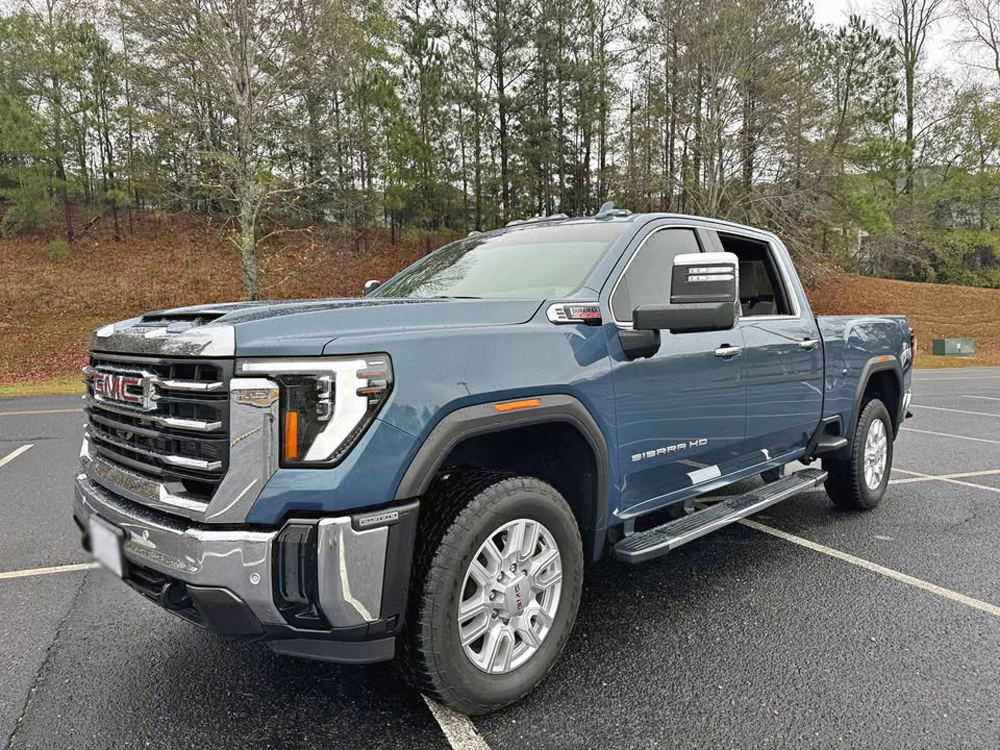
1. What the X31 package really brings to the table
Built for dirt work, not trail posing
X31 wasn’t built to flex on boulders or chase YouTube views. It’s for trucks that leave pavement because they have to, gravel jobsites, slushy inclines, iced-over driveways.
The equipment list keeps things focused: off-road–tuned Rancho shocks, steel skid plates guarding the oil pan and transfer case, a G80 auto-locking rear diff (where it’s not already standard), and controls like Hill Descent and a 2-speed transfer case on many trims.
What makes X31 work isn’t one flashy part. It’s how all the parts talk to each other. Suspension, traction logic, and driveline controls are matched from the factory, under warranty, with none of the clunky feel that can come from mixing aftermarket gear.
Middle rung between bare-bones and full-bore
A basic 4×4 will claw through snow and gravel, but it usually skips low-range gearing and leaves key parts exposed. On the flip side, AT4 and AT4X bring extra height, trail geometry, and high-end dampers built for true off-road use.
X31 threads the needle. Ride height stays stock, so you don’t lose towing manners or step-in ease. What you gain is control and protection, without dragging along lifestyle add-ons meant for weekend wheeling. That’s why X31 often shows up on work-trim Sierras instead of badge-heavy builds.
Price hits different on half-tons vs HD
Sierra 1500 pricing for X31 depends on trim and year. On some builds, it’s shown up around $500, but most land closer to $1,100. When it’s bundled with the Off-Road & Protection Package, it creeps near $1,900, putting it in direct competition with towing tech, luxury trim, or driver-assist features.
But the story changes with HD trucks. On Sierra 2500 and 3500 models, X31 usually costs just $325 to $440. That’s a bargain.
Retrofitting skid plates, shocks, and low-speed software after the fact would run several times more, and heavy-duty trucks spend far more time in rutted, rock-strewn environments. At that price, X31 isn’t just a feature; it’s cheap insurance.
2. Hardware that actually changes how the truck behaves
Suspension tuned for jobsite control
X31 swaps out street-biased gas shocks for Rancho off-road–tuned units. Valving is dialed for washboard roads, frost heaves, and gravel stretches where factory shocks tend to chatter and lose grip.
On heavy-duty trucks, especially unloaded, the difference is immediate: less kick through the cab, more tire contact across rough patches. On the 1500, the ride softens on dirt but can feel floaty at highway speed. That’s why some owners swap them again for monotubes later.
Real traction when the rear wheel lets go
X31 adds the G80 auto-locking rear differential when it’s not already part of the trim. If one wheel spins too fast, the diff locks up and pushes power evenly across the axle.
No buttons. No driver input. It’s not a true rock-crawler locker, and it won’t save you from bad tires, but in snow, muck, or a crossed-up slope, it keeps you moving.
Skid plates that stop trip-ending hits
Steel plates shield the oil pan and transfer case, two weak points that can end a day with a single strike. Whether it’s a frozen rut, a buried rock, or debris on the job, these plates spread the force and prevent blowouts or cracks that leave you stuck.
They’re not made for rock gardens or hard crawling, but they’re more than enough for the kind of abuse most Sierras actually see. One saved hit pays for the whole package.
All-terrains that stick when the road disappears
Many X31 trucks roll out with all-terrain tires instead of highway-grade rubber. The difference is clear: stronger sidewalls, better grip on loose ground, more predictable steering in snow and gravel.
You’ll pay for it with more tire noise and a small hit to MPG, but it’s a compromise most owners are happy to make. The truck feels more confident off pavement and only slightly rougher on it.
X31 vs base 4×4: every key upgrade and how it hits the ground
| Component | Base 4×4 Sierra | X31 hardware change | What changes on the ground | Where the limit shows |
|---|---|---|---|---|
| Shocks | Street-biased gas units | Rancho off-road–tuned shocks | Better control over washboard, potholes, and ruts; less cab kick on rough terrain | Can feel floaty on certain highways |
| Rear differential | Open or G80 (trim-dependent) | G80 auto-locking rear diff | Locks automatically under wheel-speed difference, helps regain traction in muck | Not a true low-speed locker |
| Underbody protection | Splash shields or minimal | Steel plates under oil pan and transfer case | Stops debris strikes from cracking vital components | Not built for rock crawling abuse |
| Tires | Highway all-seasons | All-terrain fitment common | Stronger sidewalls; better snow/gravel grip | Louder on-road; small MPG penalty |
| Exhaust / air | Standard routing | Dual-exit (gas) / better air filtration (diesel) | Cleaner rear layout; deeper tone (gas); better dust resistance (diesel) | Exhaust gains are mostly cosmetic |
3. Drivetrain software that actually earns its paycheck
Why the 2-speed transfer case still matters
Many X31 trucks come equipped with a proper 2-speed Autotrac case, 4LO, neutral, the whole deal. Low range changes everything when grip disappears.
It slows the wheels, multiplies torque, reduces clutch stress, and keeps brakes from grabbing and overheating. That matters when you’re crawling up a loaded gravel drive or inching through ice-covered ruts.
Neutral mode isn’t just trivia, it’s required for flat-towing behind an RV. Base 4×4 systems without a 2-speed case can’t do it. So for RV owners, X31 isn’t a nice-to-have; it’s the only option that makes their setup work.
Hill Descent Control when gravity takes over
Hill Descent Control taps the ABS system to pulse the brakes, holding a steady crawl speed on steep or slick descents. Wet fields, icy slopes, loose dirt roads, this is where it shines. Steering stays light, wheels stay pointed, and you don’t have to ride the brakes manually.
Yes, it’s still brake-based. Long drops will build heat, and drivers need to back off if they start smelling pads. But when used right, HDC reduces stress and keeps the truck pointed where you want it.
Drive modes that match the mechanicals
Off-road and terrain modes tweak throttle response, shift timing, and traction logic to suit the shocks, tires, and diff. Throttle inputs smooth out, shifts hold longer, and wheelspin management becomes more forgiving, enough to keep you moving without slipping into chaos.
X31 doesn’t add advanced trail toys like one-pedal drive or trail cams. The software stays grounded, built for traction and control when the work gets dirty, not for tech demos.
4. Sierra 1500 vs HD: why X31 plays a different game on each
On the Sierra 1500, X31 is a strategic decision
As a standalone option, X31 usually lands between $575 and $1,100 on the half-ton. Wrapped in the Off-Road & Protection bundle, it pushes close to $1,900. At that price, you’re squarely in the same budget zone as trailering upgrades, tech, or comfort gear.
What you’re really buying is coordination. Skid plates, shocks, traction control, and a 2-speed case all tuned to work together, right from the factory, under warranty. But the value depends on use. If your 1500 lives on pavement or tows near its limit, other upgrades may pull more weight.
On Sierra HD trucks, X31 is almost too cheap
For 2500 and 3500 models, X31 often prices out between $325 and $440. That’s nearly throwaway money in HD truck terms. Retrofits would cost far more, and you’d likely never get the same integration.
These trucks live in rougher places: frozen fields, jobsite debris, steep gravel climbs. Skid plates and downhill control see regular use.
And because empty-bed HDs ride stiff, Rancho shocks help tame the bounce without compromising capability. For most buyers, skipping X31 on an HD rig isn’t worth the few hundred bucks it saves.
Same package, different impact
On the 1500, X31 gives you refinement. The ride gets more confident on broken ground, traction holds up better in bad weather, and low-speed maneuvering feels tighter. It doesn’t rewrite the truck, it polishes it.
On the HD, it’s a more dramatic shift. X31 brings actual protection, real control, and smoother ride quality where you’d otherwise feel every hit. In that world, it stops being a feature and starts feeling essential.
Sierra 1500 vs HD: What X31 adds, what it costs, and why it matters
| Platform | X31 price range | What the package adds in practice | Where the value lands |
|---|---|---|---|
| Sierra 1500 | ~$575–$1,100 standalone; ~$1,900 bundled | Rancho shocks, skid plates, G80 where not standard, 2-speed transfer case, HDC on many builds | Pays off if truck sees regular dirt, snow, or 4LO work; questionable for all-pavement duty |
| Sierra 2500/3500 HD | ~$325–$440 | Skid plates, off-road shocks, HDC, traction tuning | Near no-brainer; cost to replicate is far higher and the gear sees regular use |
5. Payload, towing, and the compromises buried beneath the badge
Payload hits that don’t show up in the brochure
X31 adds steel. Skid plates, tougher shocks, and in some 1500s, dual exhaust setups, every piece adds weight. And weight eats payload. The GVWR doesn’t rise just because the curb weight does. That means 50 to 100 lbs shaved off your payload rating, roughly the weight of a passenger or a loaded cooler.
That drop stings most on crew-cab, 4×4 V8 Sierras, where the payload ceiling is already tight. X31 won’t wreck your numbers, but it narrows your margin when it’s time to load up or hitch a trailer.
Towing feel, not numbers, is what changes
X31 doesn’t touch tow ratings. Those stay locked to engine, axle ratio, and trailering package. What changes is the behavior. Rancho shocks allow more travel, which can mean extra squat or body movement under a heavy tongue load, especially over rough pavement.
It’s not a red flag. But if you’re towing near max capacity, the ride may feel softer than ideal. Spring rates and load leveling matter more than shock compliance in that game.
Low-speed grunt is where X31 quietly shines
Towing a heavy trailer up a gravel incline. Creeping across soft pasture with a bed full of tools. Navigating jobsite muck. These aren’t highway tasks, they’re control problems. And that’s where X31’s low-range gearing, traction logic, and armor make a real difference.
No spec sheet brags about these moments, but they’re the ones that make owners nod and say, “Glad I had it.”
The quiet penalties if you never use it
All-terrain tires ride rougher, burn a little more fuel, and hum at speed. The Rancho shocks handle dirt better but can feel vague on smooth roads. Over time, it adds up, but only if you’re not using the gear.
If the truck lives on blacktop, X31 starts to feel like overbuilt ballast. But if it sees dirt once a month or more, those downsides fade fast.
6. X31 vs Z71 vs AT4: Same ladder, different rungs
X31 and Z71 are cousins under the sheetmetal
Structurally, GMC’s X31 and Chevy’s Z71 are close, Rancho shocks, skid plates, traction tuning, and the same 2-speed transfer case setup.
What changes is what you see and feel inside the cab. Z71 leans more all-purpose and leans harder into Chevy’s broader branding. X31 goes for a more reserved, professional edge under GMC.
Capability-wise, they’re within spitting distance. The choice comes down to brand loyalty and trim flavor, not dirt performance.
AT4 and AT4X crank things up, for a price
AT4 takes X31’s idea and adds lift, clearance, larger tires, and more aggressive damping. AT4X pushes further with DSSV dampers, e-locking diffs, and extra armor, gear meant to take repeated punishment.
But the spend is serious. These trims can tack on $10,000 or more over a comparable X31-equipped model. Entry height jumps. Ride firms up. Tire swaps cost more. Great if your truck lives on trails. Wasteful if it doesn’t.
What you can’t bolt on later
Tires and shocks are easy to swap. Skid plates tied to factory mounts? Not so much. A true 2-speed transfer case with neutral for flat-towing? That’s a drivetrain surgery, not a weekend mod. Same story for Hill Descent Control, factory calibration makes it work right.
That’s where X31 finds its footing. It bundles the expensive-to-retrofit hardware that matters in real-world use. Some owners still tweak damping later, but the heavy lifting’s already done.
X31 vs Z71 vs AT4: Capability, compromises, and who they actually suit
| Angle | Base 4×4 Sierra | X31 Package | AT4 / AT4X |
|---|---|---|---|
| Suspension | Street/work tuned | Off-road–tuned Rancho | Lifted, higher-spec off-road dampers |
| Armor | Minimal splash shields | Steel skid plates | Broader, thicker underbody protection |
| Traction | Open or G80 (varies) | G80 focus with A/T tires | G80 or e-locker with aggressive tire setup |
| Ride height | Stock | Stock | +2 inches (AT4 factory lift) |
| Cost impact | Baseline | Modest add | ~$10,000–$12,000 over comparable trims |
| Best fit | Pavement, light gravel | Mixed-use, snow, worksites | Frequent trail use, heavy off-road demand |
7. Reliability, maintenance, and upgrades that actually make sense
X31 parts age like they’re meant to be used
This package skips fragile electronics in favor of steel and oil. Skid plates don’t wear out, they get scraped, bent, and checked for bolt tension. Rancho shocks are normal wear items. Expect the same lifespan as any factory damper that sees rough terrain: not fragile, but not forever.
The 2-speed transfer case is a proven design. The only weak link is the shift motor. Trucks that never cycle through 4HI or 4LO are more likely to end up with a stuck actuator, corrosion and inactivity do that. Using the system regularly keeps it alive.
Routine service stays simple
Maintenance doesn’t get harder with X31, just more important when the truck sees dirt or snow. There’s no air suspension, no fancy damping controllers, just hardware that works.
But suspension cycles more, tires scrub harder, and alignments drift quicker. That means underbody checks, tire rotations, and front-end alignments carry more weight.
Brake wear may creep up if Hill Descent Control sees regular downhill duty. That’s a usage tax, not a flaw.
Where owners tighten things up
Most X31 owners leave the bones intact. The first move is usually shocks, many step up to monotubes for better rebound on pavement without reducing off-road control. Next is armor. If the truck sees rock instead of ruts, heavier plating shows up.
Tires follow use. Some go more aggressive once the factory set wears. Others dial it back for quiet highway miles. X31 doesn’t lock you in, it gives you a solid base to adjust from.
8. X31: when it’s worth it and when to walk away
Who wins every time
Sierra HD owners who live in the real world, gravel roads, work sites, snowbelt properties, get their money back fast. Skid plates earn their keep. Downhill control lowers fatigue. And the shocks absorb hits that would rattle stock gear apart. At $400 or less, this isn’t an upgrade, it’s cheap insurance.
Same goes for half-ton buyers in rural zones. Long dirt driveways, unplowed roads, spring mud, those conditions chew up base 4×4 setups. X31 isn’t for trailheads. It’s for terrain that punishes trucks quietly and often.
Who can skip it and never look back
City and suburban drivers don’t need X31. Light gravel and rainy parking lots don’t challenge stock suspension. The added weight, the all-terrain tires, the $1,100 bill, they’re wasted unless the truck works off pavement.
Half-ton owners chasing max payload or tow capacity may want that money spent on tow mirrors, cooling, or suspension instead. When every pound counts, off-road compliance takes a back seat.
Best pairings for engines and trim levels
V8 1500s that tow and work around the property match X31 well. The torque gets handled smoothly, and armor adds peace of mind when surfaces go uneven. Diesel trucks that live in dust and see brush benefit long-term from the improved airflow and underbody shielding.
HD trims? They were built for this setup. X31 fits the job better than luxury packages ever could.
The no-nonsense call
X31 makes sense when the truck earns its keep in dirt, slush, or low-speed grunt work. On HDs, it’s a smart add. On 1500s, the call depends on terrain and task, not how it looks on the lot.
If the pavement’s home base, X31 is nice to have. If the ground fights back, it’s the gear that keeps you moving.
Sources & References
- Features of the 2025 GMC Sierra 1500
- 2025 GMC Elevation X31 5 3 V8 Truck Review | Classy And Capable – YouTube
- 2025 GMC Sierra 1500 Pro, SLE, Elevation, & SLT | Light-Duty Truck
- GMC Sierra Off-Roading Capabilities – Koons Clarksville Chevrolet GMC Blog
- Build & Price: 2025 Sierra 3500 HD | GMC
- X31 Off-Road Package $440.00 – 2025 GMC Sierra 2500HD | Build And Price | GMC Canada
- What is the difference between AT4 and X31? : r/gmcsierra – Reddit
- What is the GMC Sierra X31 OFF-ROAD PACKAGE?! – YouTube
- GMC X31 vs Chevy Z71: Which Off-Road Package Wins? – Huffines Chevrolet Lewisville
- Ride Quality and MPG of X31 Package : r/gmcsierra – Reddit
- 2025 GMC Sierra 1500 Trim Level Comparison – Carl Black Kennesaw, GA
- Considering a ’24 SLT W/x31 package : r/gmcsierra – Reddit
- Who’s changed stock at4 rear rancho to Bilsteins : r/gmcsierra – Reddit
- 2025 Sierra HD PRO, SLE & SLT | Heavy-Duty Truck – GMC
- sierra models – 2024 FEATURES, SPECS AND OPTIONS
- 2025 GMC Sierra 1500 AT4 Vs The Competition | Oak Lawn, IL
- Need Help. X31 Package Important? : r/gmcsierra – Reddit
- How GM retrofit process will work and what owners need to know
- The Pros and Cons of Dual Exhaust Systems: Is It Worth the Upgrade? – Gexhaust
- Dual Exhaust Vs Single Exhaust: Pros And Cons – DKU Performance
- How Much Horsepower Does a Dual Exhaust Add? – OnAllCylinders
- 2025 GMC Sierra 1500 Engine Options & Towing | Kokomo, IN
- 2025 Sierra 1500 | Trim Selection – GMC
- GMC 5.3 or 6.2 Liter Engine? | Good Sam Community
- GMC Sierra – THE KING of Towing and Hauling Power
- X31 Off-Road and Protection Package Discounted Price – Build & Price: 2024 Sierra 3500 HD | GMC
- Buyer Beware: No Chevy Silverado 4LO for some 4x4s, GMC Sierra, too
- 2021 GMC Sierra 1500 Crew Cab Depreciation Value | Kelley Blue Book
- Compare 2025 vs. 2024 GMC Sierra 1500 Today
- Personal truck towing basics – understanding payload, limits, avoiding fines and lawsuits
- 2025 GMC Sierra 1500 Weight – Serra Buick GMC Rochester Hills
- Here are the Payload Capacities for Sierra 1500 by Configuration – Valley GMC
- Specifications – Build & Price: 2025 Sierra 1500 | GMC
- Payload and Towing Capacity Unveiled: What You Need to Know | Reading Truck
- Build & Price: 2025 Sierra 1500 | GMC
- 2025 GMC Sierra 1500 Trims Compared | Elmhurst, IL
- Payload : r/gmcsierra – Reddit
- Help me decide between Silverado Vs. Sierra : r/gmcsierra – Reddit
- 2024 GMC Sierra 1500 Overview
- 2025 GMC Sierra 1500 vs. 2025 Chevy Silverado 1500
- Question: I’ve been wondering if GMC is reliable.. I’ve always heard don’t get Ford, GMC and Chevy. But the sierra has my head turning and wanted to know what the pros and cons were and if it was reliable. : r/gmcsierra – Reddit
- Rancho vs. Bilstein | Which Shock Is Right for You? – Shockwarehouse
- Bilstein vs Rancho | Good Sam Community
- GMC Sierra 1500 Transfer Case Shift Motor Replacement Cost Estimate – RepairPal