
Plowing exposes what a truck’s really made of. Hang a blade up front, and the weak points show fast; sagging suspension, vanishing airflow, electrical strain with every pump cycle. A truck that’s not built with margin won’t ease into failure. It’ll drop out mid-storm.
That’s what Ford’s Snow Plow Prep Package is built to prevent. Option 68P on the F-150 and 473 on Super Duty don’t mount a plow; they make sure the truck holds together with one.
You’re getting matched heavy-duty springs, tuned alternator control, added cooling buffer, and smart load-shedding that keeps voltage stable when everything’s drawing current.
What matters is knowing exactly what this package delivers, and where it still leaves gaps. This guide breaks down what factory prep really protects, where it tops out, and why skipping it often turns into an expensive fix halfway through winter.
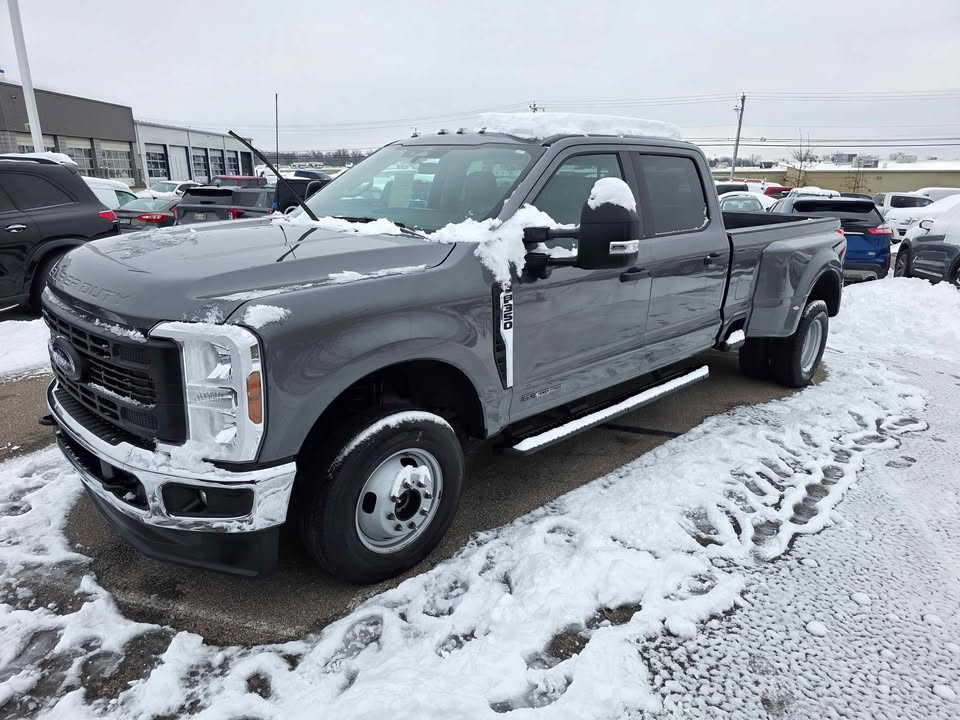
1. What factory prep actually changes under the skin
Built to handle the heat when snow work piles it on
A plow doesn’t just add weight, it buries the front axle, blocks airflow, and hits the electrical system in hard pulses. Every lift or angle cycle demands power, and every blocked grille turns heat into a real threat. The Snow Plow Prep Package doesn’t boost capability. It preserves function when stress piles on.
Ford builds in the margin where it counts: heavier-rate springs to hold ride height, charging upgrades to absorb repeated electrical hits, cooling support for low-speed pushes, and control logic that keeps the truck stable under load. The goal isn’t more, it’s endurance under the kind of work that wears trucks out fast.
Why Ford splits the prep package between 68P and 473
Ford doesn’t copy-paste prep gear between half-tons and Super Dutys for a reason. The F-150’s 68P targets lighter residential and small-crew commercial use. That means shorter runs, tighter turns, and fast electrical recovery between cycles.
The Super Duty’s 473 goes the other way; built for heavier blades, longer hours, and a charging system that doesn’t blink when lights, pump, and heat are all demanding power at once.
Both aim to stop the same failures; overload, overheating, voltage drop; but they scale the defense for totally different missions. One keeps a light-duty truck from being chewed up too fast. The other hardens a workhorse that won’t get a break until March.
Why you can’t spec it on every truck
Ford draws hard lines around plow prep eligibility for a reason. Certain builds just don’t last when you strap a blade up front. On the F-150, 68P only shows up with 4×4 and the 5.0L V8.
That combo holds voltage steadier and runs cooler when airflow drops. Turbo engines and lighter drivetrains didn’t make the cut; they heat up or fall behind on charge.
Super Duty models have more breathing room, so the 473 package fits more engines, including diesels. Still, Ford limits it to setups with the electrical backbone and drivetrain gear to take repeat plow abuse without cooking themselves mid-season.
2. How the front end holds together when the blade goes up
No guesswork, Ford matches springs to the build
The moment you hang a blade, the front axle’s under fire. Ford answers with computer-selected heavy-duty springs, tailored to the exact truck config; engine, cab, and installed options.
That matters. A regular cab V8 loads the nose differently than a crew cab diesel. Generic springs can leave you sagging or bouncing over every manhole.
Matched springs hold ride height even with the blade raised, preserve suspension travel, and keep your steering angles in the zone so geometry doesn’t wander.
Steering stays sharp with weight on the nose
A blade hanging past the bumper turns your front end into a see-saw. Ford’s prep package, especially on the F-150, dials in roll control to stop the truck from lurching or leaning unpredictably under that weight. You get more than just clearance; you get stability.
From behind the wheel, the truck tracks cleaner, corners with less drama, and doesn’t turn small corrections into wrestling matches once the blade is up and loaded.
Front axle rating, not engine power, sets your plow limit
Plows don’t just add weight; they add leverage. A 700-lb blade doesn’t sit directly over the axle. It pushes forward, amplifying the load through every bounce and stop. That’s why front GAWR is what decides your max blade; not torque, not trim level, not the guy at the dealer.
The prep package gives you some breathing room, but it won’t change what’s printed on the door sticker. Run past that limit, and you’re eating through ball joints, bearings, and steering parts before winter even ends.
Ford’s front-end prep strategy for plow duty
| Platform | Package code | Front-end approach | What it protects against |
|---|---|---|---|
| F-150 | 68P | Config-matched heavy-duty front springs and load control | Sag, bottoming, unstable steering under plow load |
| Super Duty | 473 | Maximum front spring capacity for heavy plow classes | Front suspension overload in long duty cycles |
3. The electrical backbone, charging upgrades and Snow Plow Mode
If the alternator can’t keep up, you’re done before the route is
Every time the plow lifts or angles, it yanks over 100 amps in a blink, and it keeps doing it, cycle after cycle. Without margin in the charging system, voltage drops fast. Lights dim. Modules throw codes. Batteries never catch up between hits.
Ford’s prep package pushes alternator output higher and tunes recovery time for hard, repetitive loads. Voltage stays stable while the truck idles and the pump keeps working. That’s what lets you finish a run instead of pulling codes in a frozen lot at midnight.
Super Duty’s dual alternator advantage, diesel changes the game
Gas Super Dutys get a high-output single alternator tuned for plow abuse. Diesel trucks go a step further; optional dual alternators split the load. One keeps the truck running, the other handles hydraulic demands and cold-start recovery.
That separation matters when the work gets real. Dual setups top off batteries quicker after each hit and keep glow plugs, heater circuits, and lights alive even when temps crash. Less dimming. Fewer ghost faults. No fighting a dead truck before sunrise.
Snow Plow Mode cuts comfort to keep systems alive
This mode flips a switch inside the body control module. When active, it sidelines power-hungry accessories; heated seats, heated wheel, fog lights, even the 110V outlet; so core systems get first dibs on power. That means steady voltage, reliable lighting, and no surprise dropouts while the plow cycles nonstop.
It’s not subtle, but it works. Remove the luxuries, preserve the mission. That’s what keeps warning lights off and the battery ahead of demand through back-to-back storms.
What Snow Plow Mode is protecting
| Electrical demand | Source | System response |
|---|---|---|
| Short, high-current draw | Plow pump motor cycling | Charging priority and load management |
| Sustained accessory load | Lighting and cab comfort features | Temporary shutdown of non-essential features |
Factory wiring keeps gremlins from sneaking in
Ford includes dedicated wiring for plow controls; specifically, a fused 10-amp feed tied to Snow Plow Mode. That means you’re not splicing into random interior circuits never built for inductive loads.
The rule’s simple: high-current stuff pulls straight from the battery or starter relay through relays; never from fuse panels. Skip that, and you invite reverse voltage spikes, glitchy modules, and a wiring nightmare that drags out for months.
4. Cooling upgrades, the hidden fight against heat in the cold
Low speed and a front blade make heat the real enemy
Plowing punishes the cooling system harder than highway towing. You’re working the engine and transmission in low gear, slipping the converter, and blocking nearly all airflow with a steel wall. Temps climb. Airflow doesn’t.
Ford doesn’t try to make more power here; it adds thermal headroom. The truck’s expected to crawl for hours under heavy demand without cooking fluids or triggering protection modes. It’s not about speed. It’s about staying in the game.
Transmission cooling works quietly in the background
On F-150 builds, the Snow Plow Prep Package triggers upgraded trans cooling where needed. The forward-reverse grind during plowing spikes temps fast; especially with an unlocked converter pushing into resistance. That’s when fluid thins, oxidizes, and destroys transmissions over time.
You won’t feel this cooling boost. But you’ll notice what doesn’t happen; no burnt smell, no limp-home mode, and no $4,000 rebuild after the second winter.
Radiator capacity helps, but airflow still makes or breaks it
Even with extra cooling, airflow is king. A raised blade blocks the grille like a barricade. Coolant temps climb fastest when the outside air hovers near freezing; cold enough to trap heat, warm enough to make fans work.
Angling the blade during transport or pauses helps air reach the radiator. Idling to cool only works if that air can actually move. Sit too long with the blade straight up, and heat just piles into the bay. Watch the needle and move the blade; it buys you more time than you’d think.
Winter plowing puts you in severe duty, whether you admit it or not
Forget what the service sticker says. If you’re plowing snow, you’re in severe-duty mode. Heat cycles stack fast. Oil and trans fluid degrade quicker. Long service intervals don’t work here; they just let the damage build up quietly.
Shorten your oil and transmission fluid service windows. That does more for long-term survival than any bolt-on cooler or aftermarket add-on.
5. Don’t blow your axle, matching plow weight to truck limits
Plow weight snowballs fast, and the front axle pays for it
Blade choice sets the tone, but most buyers underestimate how fast the weight climbs. Straight blades stay relatively light. Start adding V-blades, wing extensions, or reinforced frames, and you’re suddenly hundreds of pounds deeper; right where the front suspension has to carry it.
The number that matters isn’t what’s printed in a brochure. It’s the raised weight. Once the blade lifts, every pound sits ahead of the axle centerline and multiplies its force.
That leverage eats through front axle margin faster than most expect. Stay under the rating, or start planning for new ball joints and alignment problems by January.
Rear ballast isn’t optional if you want control
The plow loads the front; it’s supposed to. But if you don’t add weight to the rear, the back tires go light, and the truck starts skating every time you hit the brakes. Braking distances grow, and stability disappears on packed snow.
Where you put the ballast matters more than how much. It needs to sit behind the rear axle to act as a proper counterweight. Stack 500 lb ahead of the wheel wells, and most of it still presses forward. Get it past the axle, and it starts doing real work to keep the nose from diving and the tires from slipping.
Trim weight quietly eats your plow margin
Same plow, different outcome. A blade that fits fine on a regular cab XL might push a crew cab Lariat with a moonroof over the edge. Engine weight, cab length, trim options; they all chew up the same front axle rating. You don’t see it until the numbers don’t add up.
Ford’s prep package gives you more headroom where it can; better springs, more stable voltage; but it doesn’t rewrite the law of physics. What fits depends on what’s left after the truck is built; not what it says on the build sheet.
Plow matching logic in one view
| Factor | What it affects | Real-world result |
|---|---|---|
| Plow weight and forward leverage | Front axle load | Reduced steering control if limits are exceeded |
| Vehicle trim and engine mass | Remaining axle capacity | Same plow, different allowable configurations |
| Ballast placement behind rear axle | Weight balance and traction | Improved braking and stability |
6. Legal lines you don’t want to cross
The prep package doesn’t change what’s legal
Ford’s Snow Plow Prep Package helps the truck take more punishment; but it doesn’t move the goalposts. GVWR and GAWR still rule the game. Go over the front axle rating, and you’re not just risking parts. You’re stepping into liability if something fails.
Inspectors, insurance adjusters, and attorneys don’t care what you meant to haul. They care what’s printed on the certification label inside the door. Stay under the numbers, and your coverage, warranty, and inspection status hold up. Go over, and you’re on your own.
If the blade blocks the lights, legal lighting isn’t optional
Mount a plow, and the factory headlights usually go dark. That’s why plow-mounted auxiliary lights aren’t just a good idea; they’re the standard.
But they can’t just be bolted on and spliced in. They need to integrate cleanly, using relays and correct signal taps to avoid overload, flicker, or control module confusion.
Bad wiring doesn’t just look sloppy; it can trigger dash warnings, failed inspections, or worse if a critical light goes out mid-run.
Factory prep makes paperwork and warranty claims cleaner
With factory prep, the truck leaves the line already plow-ready; spring rate, alternator size, wiring feeds, all documented. That makes life easier for installers, who don’t have to prove the truck can handle the setup. It’s already baked into the VIN and build record.
For owners, it’s more than convenience. Having prep from the factory locks in warranty eligibility, supports resale, and helps fleet managers track compliance without guesswork. It’s a paper trail that pays off down the road.
7. F-150 or Super Duty? How to pick the right prep without guessing wrong
Where the F-150 with 68P earns its stripes
The F-150 with 68P shines in tighter routes; neighborhoods, driveways, and short pushes where maneuverability beats brute strength. Stick with straight blades or modest V-blades, and it fits the job, as long as the truck isn’t loaded down with every luxury trim.
The front stays light enough to steer, the suspension stays up, and the whole setup doesn’t fight you through every turn.
What wears these trucks down isn’t one big push, it’s the hours. Long shifts and repeated stacking take their toll. The platform holds up early, but fatigue sets in when the job drags on.
Underneath, it’s still a half-ton, and while it can handle snow duty, it wasn’t built to grind through a full commercial season without showing signs.
Why 473 on Super Duty becomes the no-brainer for real volume
Super Duty trucks don’t need to be convinced to plow; they’re already built for it. Big frames, heavier axles, stronger cooling systems. The 473 package just dials it in tighter. Bigger blades, longer shifts, colder nights; this setup holds voltage, temp, and balance even when everything else starts to fade.
The big win? Consistency. Hour 2 feels like hour 12, and that matters when you’re clearing a municipal lot in a blizzard and there’s no time to “take it easy.” That’s why pros and fleets stick with Super Duty; they don’t have time for drama.
Go too light, and the cost shows up later
An F-150 is cheaper up front and easier to handle in tight spaces. But pick it for the wrong job, and you’ll pay the difference in repairs. Suspension fatigue, flickering modules, long nights at the shop when you should be on the route; it all adds up, just not right away.
Resale tells the story, too. A Super Duty with factory plow prep shows buyers it was built to work. They recognize it, and they’re willing to pay more for a truck that didn’t get patched together after things started breaking.
8. When plow prep actually earns its paycheck
Worth every penny when snow is part of the job
If a plow is in the picture from day one, factory prep is a smart bet. The truck leaves the line with matched springs, tuned alternators, cooling that holds up at a crawl, and software that cuts power to fluff when voltage gets tight. All those pieces working in sync prevent the slow, silent issues that sneak in mid-season.
This isn’t for the rare snowstorm. It’s for the folks running every week, through deep snow, long hours, and back-to-back shifts. That’s where factory prep turns into uptime; not just theory.
When the option turns into wasted steel
Skip the prep if the blade’s an afterthought. Trucks that push snow once a month or clear the occasional driveway don’t stress the system enough to justify the upgrades. You’re paying for strength that never gets used.
It also won’t fix a bad build. If the truck’s already too nose-heavy or spec’d past its axle limit, adding prep doesn’t magically make it plow-ready. It backs up the right platform; it doesn’t save the wrong one.
Factory prep vs. DIY, what you can and can’t replicate
Sure, you can piece some of it together after the fact. Careful wiring, smart ballast, proper blade sizing; it all helps. But those fixes rely on discipline, and discipline fades fast when the snow piles up and the schedule’s tight.
What you can’t easily replicate is how the factory ties it all together. Configuration-matched front springs, alternator logic baked into the software, and wiring that plays nice with body modules; all documented and tested before the first snowflake hit the windshield. That’s where the value holds; not in the parts, but in the system.