
Skip the diesel, buy the big gas Ford, and it still starts ticking at idle. You feel a stumble when pulling, hear chatter at red lights, or catch the 10-speed hunting for a gear on mild climbs. That’s where confidence fades and the 7.3’s reputation starts to slip.
Most Godzillas hold up. The ones that don’t tend to fail the same way; lifter tick that signals real trouble, ignition coils that burn out early, and transmission quirks that turn expensive once codes like P07F7 show up.
This guide tracks the failure patterns that matter. Not the noise you can ignore, but the ones that cost you. It breaks down issues, known fixes, and where recalls, TSBs, or warranty quirks change what Ford owes you next.
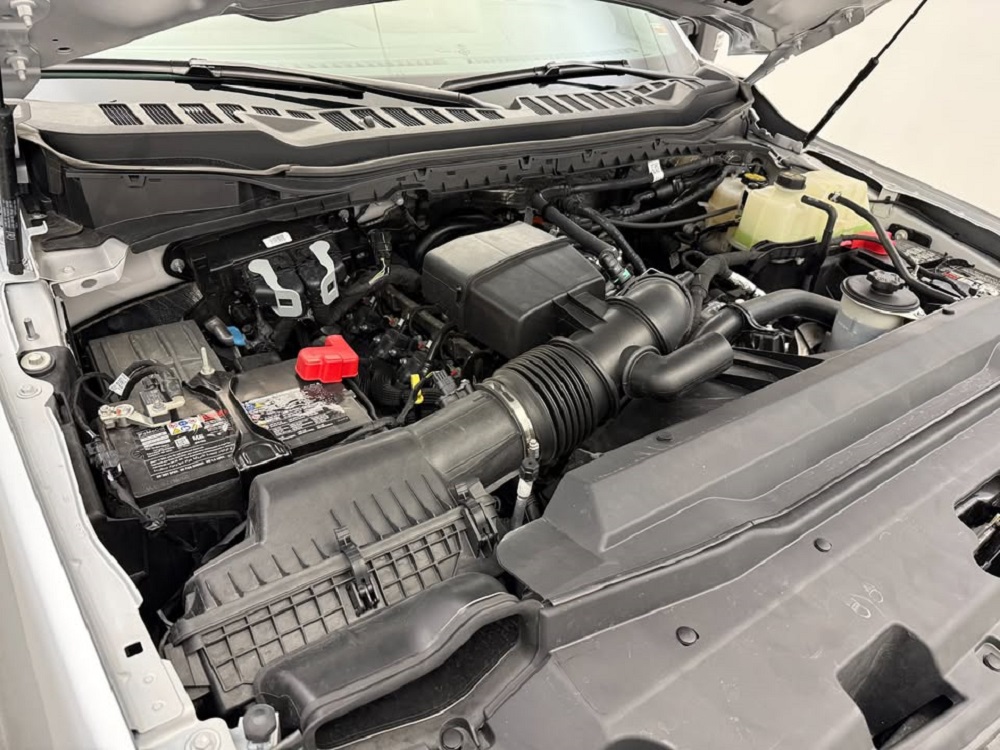
1. Why the Godzilla’s bones help it haul, and how they explain the failures
Built thick, built simple, built to take abuse
Ford went old-school for a reason. The 7.3 Godzilla packs a deep-skirt cast-iron block, forged crank, four-bolt mains, and cross-bolts to hold the bottom end square when torque hits hard.
Pushrods and port injection keep the parts count down, and sidestep the carbon buildup that plagues modern DI engines. No turbo, no DEF, no 3,000-psi fuel pump waiting to ruin your quarter.
That simplicity builds high expectations. Idle all day, tow at 3,500 rpm, and take a beating without flinching. Most of the time, it does. But when it breaks, it’s mechanical, not subtle.
The cam’s last in line for oil, and it shows
The variable-displacement oil pump trims pressure at idle to save fuel, then ramps it back up under load. But the cam and lifters sit last in the oiling path, which means they feel every cutback in flow. That edge shows up under long idle hours, hot oil, hood closed, thin film, low pressure.
Early builds saw single-digit oil pressure at idle, especially in ambulances and work trucks left running for hours. The bottom end stays safe. The top end doesn’t get the same margin.
When lubrication slips, pushrod hardware takes the hit
Pushrod designs keep torque strong and packaging tight, but they rely on consistent oil flow to keep lifters tracking. There’s no slack in the system. Once oil film drops or the roller loses its spin, metal-on-metal starts fast, and it doesn’t back off.
A roller that skids doesn’t heal. It shaves itself down, loads the oil with grit, and chews its way into a full teardown. These aren’t slow failures. They’re mechanical losses with a fuse already lit.
Ford 7.3 Godzilla architecture and where stress concentrates
| Design choice | Intended benefit | Where stress concentrates |
|---|---|---|
| Deep-skirt cast-iron block | Rigidity under load, long service life | Heat soak around ignition and upper valley |
| OHV pushrod valvetrain | Compact size, strong low-end torque | Lifter rollers and cam lobes |
| Variable-displacement pump | Efficiency at light load | Low idle pressure to the top end |
| Port fuel injection | Simpler fueling, no intake coking | Less precise mixture control at peak load |
2. Valvetrain failure, the real line between noise and engine death
A roller lifter fails once, and takes the cam with it
It starts quiet. A light tick, maybe a random misfire. Dash says oil pressure’s fine. Then the roller stops rolling, the lobe starts skidding, and metal sheds into the pan. At that point, cam damage is locked in, and every minute adds more grit to the system.
Ignore it, and the lifter mushrooms in the bore. Now you’re not just swapping a cam, you’re pulling the engine because the lifter won’t come out without machining the block.
Idle hours do more damage than highway miles ever will
The trucks that lose valvetrains early aren’t high-mileage, they’re high-idle. Delivery vans, RV chassis, ambulances. Same story: thousands of hours at low rpm, thin oil, closed hood, and calibrations that ran idle pressure too low for too long.
The oil pump has the capacity. But if the ECU doesn’t call for it at idle, the cam sits starving. The crank’s fine. The lifters aren’t.
What Ford’s 24B27 update actually solves
Ford issued Customer Satisfaction Program 24B27 to bump minimum oil pressure at idle and low load, especially when the oil’s hot. New trucks get the fix from the factory. Older ones get it via dealer flash once available for their calibration.
But timing matters. If metal’s already flaking, software won’t save the engine. 24B27 prevents damage. It doesn’t reverse it. That’s why trucks with ticking and misfire codes still end up in long-block territory, even after the update.
7.3L valvetrain failure pattern
| Factor | Typical behavior | What the driver notices |
|---|---|---|
| Mileage at onset | As low as 6,000, most often 40,000–90,000 | Still under powertrain coverage |
| First symptoms | Intermittent tick, rough idle, misfires | “Sounds like a lifter,” no warning lights |
| Progression | Lobe wear, metal in oil, lifter damage | Power loss, persistent noise, stored DTCs |
| End result | Lifter stuck, cam destroyed | Engine replacement, not a cam-only job |
| High-risk use | Long idle, commercial duty | Ambulance, delivery, RV chassis |
3. Ignition heat turns routine misfires into chronic repairs
This ignition layout cooks itself in silence
There’s no space for heat to go in a 7.3. Cast-iron manifolds radiate under load, the valley stays hot, and airflow tanks once you drop this engine in an RV or upfit truck. Coil boots and plug wires sit right in that blast zone, and once they’re heat-soaked long enough, insulation starts to fail from the inside out.
Early wire sets came with silicone jackets and steel boot shields. On paper, that helps. In practice, the shields trap more heat than they deflect. Wires get brittle, resistance climbs, and spark breaks down just when the load peaks.
How hot misfires sneak up and disappear
The pattern’s predictable. Misfires after a long climb, hesitation when you roll back into throttle, or sudden power loss while towing. Scan it and you’ll usually pull P0300 or cylinder-specific misfire codes spread across the bank.
Drivers don’t feel it as random. These happen hot, under load, and clear once the truck cools. That leads people to chase fuel trims or sensors. By the time the coil boots come out, the damage is already cooked in.
What Ford changed, and why it’s not always enough
Ford issued TSBs like 20-2370 for F-53 chassis and tweaked Super Duty ignition parts over time. Updated wire routing, new boots, and revised coils cut the problem down in moderate duty. Owners with normal cycles saw the issue fade.
But heavy tow and RV drivers still burn through parts. That’s why many jump to ceramic-boot wires and high-temp sleeving. Not for power, just to stop doing the same misfire repair every summer when the valley temps go nuclear again.
Ignition component durability in high-heat service
| Setup | Heat tolerance | Typical outcome |
|---|---|---|
| Early OE wires | Low | Recurrent misfires under load |
| Revised OE wires | Moderate | Acceptable for standard duty |
| Ceramic-boot aftermarket | High | Long-term stability in RV and tow use |
4. 10R140: Where minor annoyances snowball into big bills
The CDF clutch defect that ends 10th gear
The ugliest failures trace back to the CDF clutch cylinder. In certain builds, an internal bushing walks out of spec and blocks the lube port. Clutch packs starve, heat builds, and the transmission drops 10th gear. You get a wrench light and P07F7, and you’re headed for teardown.
This isn’t wear; it’s a defect in the drum design. Once the failure starts, no fluid flush or adaptive relearn fixes it. The only real answer is revised hardware and a full tear-down. Out of warranty, this fix hurts.
Flare, harsh downshifts, and never-quite-right behavior
Plenty of trucks never toss a P07F7 code and still shift like garbage. The usual complaints? Harsh 2–1 downshifts, flare on light throttle, and gear hunting on small hills. Owners blame the learning logic, because resets help, for a minute.
But the real story is wear stacking up. Small clearances shift pressure, old fluid confuses sensor input, and the TCM can’t land on the right map. It’s not catastrophic, but it’s death by a thousand shift points.
When sensor noise makes a good transmission act bad
The 10R140 leans hard on wheel-speed sensors. If the ABS signal gets noisy, drops out, or goes flaky, the transmission timing goes off, without throwing a clear code. It feels mechanical, so shops tear into the wrong parts.
Data logs usually tell the truth. Fix the signal, and the trans behavior often cleans up on the spot. The internals didn’t change, the info feeding them finally made sense.
10R140 complaints and likely sources
| Driver complaint | Common clue | Likely source |
|---|---|---|
| Loss of 10th gear | P07F7, wrench light | CDF clutch cylinder defect |
| Slam on low-speed stops | No hard DTCs | Pressure mismanagement, sensor input |
| Gear hunting on grades | No codes | Adaptive logic + fluid condition |
| High temps in city towing | ATF over 220°F | Marginal cooling under severe duty |
5. Fuel problems that seem random, until the truck shuts off
Low-pressure pump debris turns stalls into no-starts
The most serious fuel failure tied to the 7.3 comes from low-pressure pump contamination, now recalled under 25V455. A supplier process change left some pumps vulnerable to internal debris. When that debris blocks flow, the engine doesn’t warn, it just dies.
From the cab, it feels electrical. Power cuts out instantly, the engine stalls, and crank attempts go nowhere. Heat and low tank levels make it worse, which is why failures often hit after a long tow or hot-soak stop, not first thing in the morning.
Injector leaks aren’t common, but they’re treated seriously
Injector failures aren’t a pattern yet on the 7.3, but Ford’s cracked-injector issues on other gas platforms have reshaped how the risks are handled. Modern fuel systems now monitor rail pressure and redirect leaks through drain paths to keep gas away from hot surfaces.
This isn’t about panic, it’s about knowing the signs. Fuel odor, visible seepage, or misfires under load deserve immediate attention. This isn’t diesel. Gasoline doesn’t play nice with heat.
Spotting safety issues before chasing performance ghosts
Most fuel-system complaints don’t trace back to recalls. Hesitation, lean codes, or stumble under load usually come from heat-soaked sensors or weak wiring, not pump failure. But the symptoms feel close enough to cause confusion.
VIN checks close the gap. Confirm recall status before chasing phantom faults. Real stall risks need a fix now. The rest need time and a real diagnosis.
Fuel-system issues seen by 7.3 owners
| Issue | Driver experience | Risk level | Typical fix |
|---|---|---|---|
| LP fuel pump contamination | Sudden stall, no restart | High | Recall pump replacement |
| Injector leak | Fuel odor, smoke | High | Software update and hardware routing |
| General fuel faults | Hesitation, lean codes | Moderate | Targeted pump or sensor repair |
6. Fuel economy complaints that trace back to physics, not flaws
Empty-bed MPG looks fine, until expectations overshoot
Unloaded, the 7.3 delivers what it should for a 430-hp gas 3/4-ton. With 3.55 gears, highway cruising hovers around 15–16 mpg. Step up to 3.73 or 4.30, and that drops by 1–2 mpg just from the gearing change. That’s not failure, it’s torque bias doing its job.
Where owners get tripped up is wind and rolling resistance. A lifted truck, oversized tires, or a high-profile body all knock down gains fast. Coming from a half-ton or crossover, it feels like something’s wrong. It’s not. The baseline just shifted.
Towing drags mileage down in predictable ways
Load up 12,000–15,000 lb and MPG drops into a tight band. Expect 7–9 mpg in mixed terrain, and mid-sixes with tall trailers or headwinds. The 7.3 sits deep in its torque band, 3,500 to 4,500 rpm, and that’s where fuel disappears.
Drag beats weight here. A light but tall camper can burn more fuel than a heavier flat trailer. It’s not a bad tune. It’s basic airflow math working against a naturally aspirated engine.
The real gas vs. diesel cost story plays out over time
Gas wins early. It’s cheaper to buy, cheaper to maintain, and there’s no DEF, turbo, or high-pressure fuel system hanging overhead. For first 120,000–150,000 miles, it’s a cleaner ownership curve.
But diesel owners often earn it back later. Lower fuel consumption adds up, especially in high-mile, heavy-haul use. Where this goes sideways is when buyers mismatch the engine to the job, and blame fuel spend on the truck instead of the duty cycle.
Real-world MPG ranges for the 7.3L gas
| Axle ratio / use | Highway unloaded | Heavy towing | Common owner reaction |
|---|---|---|---|
| 3.55 | 15–16.5 mpg | 8.5–9.5 mpg | Acceptable for gas |
| 3.73 | 13.5–15.5 mpg | ~8 mpg | Thirsty but manageable |
| 4.30 | 12–14 mpg | 6.5–8.5 mpg | Feels extreme under load |
7. Long-term wear comes down to how it’s used, not just how it’s built
Scoring shows up when debris meets heat and thin oil
Cylinder scoring isn’t where failure starts, it’s where ignored problems end up. Metal from a failing lifter or cam doesn’t settle in the pan. It circulates, wipes oil film off the cylinder wall, and leaves the rings to cut grooves into the bore. Oil consumption climbs slowly, then shows up as blue smoke on startup or decel.
This isn’t a design flaw. It’s a chain reaction. Clean engines don’t score. Engines that eat metal almost always do.
Idle hours break trucks that mileage says are still young
Highway driving keeps the 7.3 healthy. Airflow stays up, oil pressure stays stable, and thermal load stays low. That’s how some make it to 200,000–300,000 miles without major work.
But RVs, municipal rigs, and idle-heavy fleet trucks rack up damage without racking up miles. The odometer says 30,000. The engine hours say 130,000. That’s the number that matters.
Oil change timing, not brand, keeps things alive
Ford’s factory interval assumes you’re mixing short trips with long runs. But in hard use, it stretches the oil too far. Viscosity drops, debris lingers, and small wear points lose their safety margin.
Trucks that drop to 5,000-mile intervals and use decent filters see fewer stacked problems. It won’t bulletproof the engine, but it keeps issues small instead of letting them spiral.
Duty cycle versus long-term 7.3 wear behavior
| Use pattern | Typical outcome | Wear that shows first |
|---|---|---|
| Highway-heavy, low idle | Long service life | Normal seepage, minor consumption |
| Mixed towing and daily use | Stable with maintenance | Ignition wear, occasional shift issues |
| High idle, RV or fleet | Elevated risk | Valvetrain wear, scoring, oil use |
8. When patterns turn into paper trails, and Ford has to listen
The difference between a quirk and a defect is how often it shows up
Every truck has its traits. Harsh downshifts, rough cold starts, fuel thirst, that’s character. But the same failure, over and over, isn’t a personality trait. It’s a defect. Repeat lifter noise, repeated coil faults, or a trans code that clears and comes right back, that’s what dealers document.
They won’t chase every complaint. But they log patterns. And those logs build leverage when the fix doesn’t stick.
Recalls, CSPs, and TSBs change the odds fast
A recall forces a repair. A Customer Satisfaction Program like 24B27 makes it optional, but acknowledged. A TSB gives the dealer a process but no obligation. Knowing the difference decides whether you’re fighting, negotiating, or just confirming coverage.
Owners who show up with TSB numbers, build dates, and exact symptoms don’t argue at the counter. They get yes or no. That saves time, and avoids getting buried in “we couldn’t replicate it” territory.
When lemon laws or buybacks start to apply
One cam swap isn’t enough. But two or three, plus downtime, plus codes that keep stacking? Now you’re talking lemon-law thresholds, especially in strict states where days out of service count as much as repair attempts.
These trucks don’t always look blown up. They just come back again and again with the same problem. That’s when documentation stops being a chore and starts being leverage, whether it’s Ford footing the bill or legal review taking over.
Sources & References
- 2020 Gasser Wars: Ford 7.3L vs GM 6.6L | DrivingLine
- The New Ford 7.3L Godzilla V8 – King of Truck Gas Engines? – Heatshield Products
- Ford 7.3 Gas Problems and Top Complaints – Timothy Abeel & Associates
- Here’s What Makes Ford’s Godzilla Engine So Different From Most Other Modern V8s
- Ford 7.3 Godzilla Problems, Repairs & Legal Solutions (2025) | Lemon Law Firm
- 5 Ford 7.3 Gas Problems & How to Fix Them – The Lemon Law Experts
- How’s everyone liking their 7.3 Godzilla engine ? : r/superduty – Reddit
- Ford 10-Speed Transmission Problems: Latest Safety Alerts & Recall Updates (2025)
- Ford 7.3 Godzilla Specs: Is It Reliable? Is It a Good Motor? – Mike’s Auto Service
- Ford 7.3 Godzilla V8: An In-Depth Overview Of Ford’s Craziest Crate Engine – Top Speed
- The Ultimate Guide to Ford Godzilla V8 – Swaps, Performance Parts, History, and Tech
- Go In-Depth Into The 7.3L “Godzilla”, The Latest V8 From Ford Motor Company – Holley
- Why Obsolete Pushrod Engines are Better than Modern Overhead Cams – Design News
- Ford 7.3L PFI Specs, Features, Performance & Reviews
- Ford Superduty 7.3L V8 “Godzilla” Gas Engine Specs & Information – Truck Insiders
- Engine Overview: The Ford 7.3L “Godzilla” V8 – Hemmings
- Ford’s 7.3L Godzilla—Push Rods and Cubic Inches are Back at the Blue Oval
- Pushrod vs. Overhead Cam Engines: Which One is Better? | Wanasign Auto
- Pros and Cons of OHC engines vs pushrod engines? : r/cars – Reddit
- Explaining Pushrods vs Overhead Cams – Steeda
- pushrod design vs. ohc design – Don Terrill’s Speed-Talk
- The Difference Between a Pushrod and Modular Motor – American Muscle
- Pushrod vs. Overhead Cam Engines: Which One Rules the Road? – PowerNation TV
- Ford 7.3 Godzilla Failures – Trailers & Tow Rigs – TheMalibuCrew.com
- Is there a better modern big block gas engine than the 7.3 Godzilla? : r/Ford – Reddit
- 300,000 miles on a Godzilla? : r/F250 – Reddit
- Ford 7.3 Godzilla Engine Teardown Reveals Major Camshaft Problems – CarBuzz
- 2022 7.3 with engine noise – Diesel Technician Society
- 2020 F250 7.3L Godzilla Engine Issues : r/superduty – Reddit
- Low KM Ford 7.3 gas with bad lifter/cam : r/Justrolledintotheshop – Reddit
- Diesel getting cranky, are the new 7.3 gassers reliable now that we’re a few years in? : r/FordTrucks – Reddit
- Ford 7.3 Godzilla | Does this one issue make the engine a bust? – YouTube
- Another “Godzilla” motor bites the dust : r/Justrolledintotheshop – Reddit
- New Vehicle RecomMENDed Delivery Hold Customer Satisfaction Program 24B27 – NHTSA
- Mobile Repair / Vehicle Pick-Up and Delivery Record – NHTSA
- Question about the issues with the 7.3 gas Godzilla. : r/Ford – Reddit
- Ceramic Ford F 250 350 7.3 Gas Godzilla V8 Spark Plug Ignition Wires Performance | eBay
- Fix Is Coming! Ford Super Duty 7.3L V8 Spark Plug Wire Update – The Fast Lane Truck
- Ford 7.3 Gas Problems You Should Know Before Buying – Consumer Protection Law Group
- Ceramic Ford F 250 350 7.3 Gas Godzilla V8 Spark Plug Ignition Wires Performance | eBay
- Massive Speed Ceramic Boot Spark Plug Wires 7.3 Godzilla Xeramik
- TECHNICAL SERVICE BULLETIN 7.3L – Illuminated MIL With Misfire Or Lack Of Power And DTCs P0300, P0316, And/Or P0301-P0304 – NHTSA
- April 16, 2025 TO: All U.S. Ford and Lincoln Dealers SUBJECT: NEW VEHICLE DELIVERY HOLD – Emission Recall 24E13 – NHTSA
- 2020-2025 Ford 7.3L Gas Spark Plug Wires Boots Set of 8 | Motorcraft OEM GODZILLA
- 10mm Titanium Sleeved Spark Plug Wires For Ford 7.3L Godzilla Engine – High Performance Set
- Ton’s 8.5mm Race Series Ceramic Spark Plug Wire Set 11″ Ford 7.3L GODZILLA 2020+
- Ford Godzilla 7.3L 8.5mm Ignition Wires with 135 Degree Ceramic Boots – White
- High Performance MSD Moroso Spark Plug Wire Set 8.5mm Ford 7.3L GODZILLA 2020+
- 8.5mm Race Ceramic Silicone Spark Plug Wire Set 11″ Ford 7.3L GODZILLA 2020+ | eBay
- Spark plug wires for Ford Godzilla engines – OBR Control Systems Inc
- Testing the 2020 F-250’s MPG With the 7.3-Liter While Towing 12,500 Pounds | Cars.com
- Ford 10R140 Transmission • Problems, Solutions & Upgrades – Next Gen Drivetrain, Inc.
- 10 speed ford transmission shift issue solved – Reddit
- TECHNICAL SERVICE BULLETIN 6.2L/7.3L – 10R140 – NHTSA
- 2020 7.3L “Godzilla” transmission overhaul : r/F250 – Reddit
- 7.3l godzilla vs 6.7 powerstroke for ~14,000 GVWR travel trailer : r/GoRVing – Reddit
- Ford Issues Recall For 850000+ Trucks, SUVs and Cars to Address Fuel Pump Failures
- Ford recalls several vehicles due to safety concerns – KSAT
- 25S76: Bronco Sport (2021-2024) and Escape (2020-2022) Cracked Fuel Injector and Underhood Fire Risk Recall – Ford
- Part 573 Safety Recall Report 25V455 | NHTSA
- Part 573 Safety Recall Report 25V467 | NHTSA
- July 16, 2025 TO: All U.S. Ford and Lincoln Dealers SUBJECT: REF: NEW VEHICLE DEMONSTRATION / DELIVERY HOLD – Advance Notice – NHTSA
- 6.6 Chevy GAS vs 7.3 Ford GAS real world towing | North Carolina Hunting and Fishing Forums
- Ford 7.3 gas vs 6.7 Turbo Diesel – Reddit
- Ford Super duty F-250 XLT 7.3 Godzilla..Real world fuel economy..is diesel that much better? – YouTube
- 2023 Ford F-250 7.3 – MPG Test | Highway Fuel Economy & Range
- 7.3 fuel mileage : r/F250 – Reddit
- What are some realistic fuel mileage number from the 7.3 gas and the 6.2? : r/FordTrucks – Reddit
- Godzilla mileage – real world numbers @ 13.12 mpg : r/superduty – Reddit
- How Many Miles Per Gallon Does A Ford 7.3 Godzilla Get? (And How To Improve It)
- Ford 7.3 vs gm 6.6 : r/GoRVing – Reddit
- Ford 6.2 gas vs 7.3 gas highway gas milage – Coast Resorts Open Roads Forum
- GM 6.6 Gas vs Ford 7.3 Godzilla : r/FordTrucks – Reddit
- How many miles is too many miles for a used 7.3L Gasser? : r/F250 – Reddit
- We’ve owned both- 7.3 Godzilla vs 6.7 PowerStroke- Super Duty Regrets?
- Gas vs Diesel ownership costs – Reddit
- F250 7.3 vs 6.7 cost to own – Reddit
- Gas Goliath battle 2024 chevy 2500 hd 6.6 Gasser vs. 7.3 Godzilla Ford Super duty..round 1 winner!
- 6.6 Chevy GAS vs 7.3 Ford GAS real world towing | Page 2 | North Carolina Hunting and Fishing Forums
- 5th Gen Godzilla – Will it go 300k miles? : r/superduty – Reddit
- Ford 7.3 Gas vs. 6.7 Diesel: Everything You Need to Know – Bostech Auto
- Vehicle mileage before failure – 7.3L Power Stroke® Diesel Engines
- How Well Has Our 2020 Ford F-250’s 7.3-Liter V8 Held Up After 10,000 Brutal Miles?