
Pack the kids, hitch the trailer, and brace yourself, because “tow package” doesn’t mean what the badge suggests.
A stock Traverse tops out at 1,500 lb. Push past that, and the cooling system wilts, the alternator lags, and the transmission starts hunting. Add the V92 Trailering Package, and GM reworks that same crossover to handle 5,000 lb without cooking itself, same body, tougher internals.
Here’s what V92 actually upgrades, what it leaves alone, and why a hitch by itself doesn’t move the needle. Cooling, power output, gear control, they do the heavy lifting. And before you even hit full capacity, payload becomes the quiet limit most owners overlook.
1. What V92 actually changes, and what it can’t
Why a stock Traverse runs out of rope at 1,500 lb
The Traverse rides on a unibody frame tuned for comfort, not heavy pulling. In base trim, it hits the wall fast. Cooling can’t keep pace, transmission fluid gets hot in a hurry, and the alternator starts falling behind once you plug in trailer lights or brake systems.
That 1,500-lb limit isn’t conservative, it’s mechanical reality. Heat, slip margin, and voltage overhead all bottom out early. Push past it, and you won’t hear a pop. You’ll just feel it later when the fluid’s cooked, the alternator flags a fault, or the transmission gets lazy and unpredictable.
How the V92 Trailering Package lifts the ceiling
The V92 Trailering Package fixes the failure points directly. It brings a thicker radiator and a higher-output fan that clears more heat, especially at low speed where towing builds it fastest.
Transmission cooling gets its own dedicated plate-and-fin circuit, pulling heat out without dumping it back into the radiator. Charging capacity jumps with a heavy-duty alternator that can power trailer brakes, charge lines, and cameras without voltage sag.
The factory Class III hitch is built into the rear structure, not just bolted on, and connects through a 7-pin plug tied to the body control module. That lets stability control, braking logic, and shift behavior respond like they should with a trailer in tow.
Why a hitch alone never earns 5,000 lb
Slapping on a hitch does nothing for cooling, charging, or transmission management. The software stays blind, the radiator stays overloaded, and the alternator’s still underbuilt. You’re dragging weight with the same limits, and the tow rating doesn’t budge.
That’s why GM doesn’t rate the Traverse for 5,000 lb unless the full V92 system is onboard. Without it, the hardware isn’t built to survive the load, no matter what you bolt to the bumper.
2. When 1,500 becomes 5,000, how year and trim flip the switch
2018–2023 V6 trucks that look the same but don’t tow the same
Every 2018–2023 Traverse with the 3.6L V6 and 9-speed automatic has the bones to tow. But without V92, the guts stay soft, passenger-grade cooling and electrical capacity hold the rating to 1,500 lb. Add V92, and that same drivetrain can take 5,000 lb without flaring shifts or voltage drops.
The split lives in the trim. High Country and some Premier AWD models came V92-equipped from the factory. Most LS, LT, and RS builds didn’t, even if a hitch shows up later. That’s why used listings are unreliable. The rating lives in what’s behind the grille, not what’s behind the tailgate.
2024 Traverse Limited, old platform, same rules
The 2024 Traverse Limited keeps the outgoing V6 and same trailering setup. The limits don’t move. No V92 still means 1,500 lb. Add V92 and you’re back at 5,000.
What changes is how it’s bundled. Fewer trims get V92 by default, more require ticking the box. The model year doesn’t tell you much, the window sticker does.
2024–2025 turbo models, new drivetrain, same hard cap
The new 2.5L turbo makes torque earlier, which lets the 8-speed hold gears longer under load. It feels calmer than the V6 when climbing or merging. But the tow rating still caps at 5,000 lb with V92, and just 1,500 lb without it.
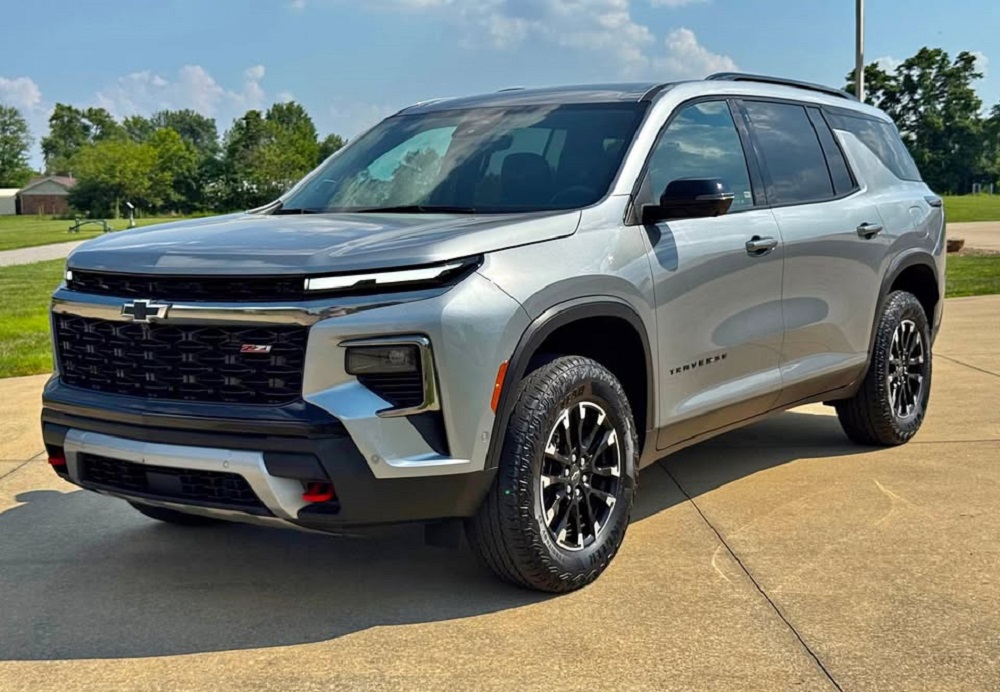
Z71 and RS trims include V92 from the factory. LS and LT still need it added. Skip the package, and the turbo’s early torque doesn’t save you, the rating drops, no exceptions.
Real Tow Ratings by Traverse Generation and Package
| Model years / engine | Tow configuration | Max tow rating | Trims that actually qualify |
|---|---|---|---|
| 2018–2023 3.6L V6 | No V92 | 1,500 lb | LS, LT, RS |
| 2018–2023 3.6L V6 | V92 Trailering | 5,000 lb | High Country, Premier AWD, optioned LT/RS |
| 2024 Limited 3.6L | No V92 | 1,500 lb | Entry trims |
| 2024 Limited 3.6L | V92 Trailering | 5,000 lb | High Country, selected options |
| 2024–2025 2.5L Turbo | No V92 | 1,500 lb | LS, LT |
| 2024–2025 2.5L Turbo | V92 Trailering | 5,000 lb | Z71, RS, optioned LS/LT |
3. Cooling and transmission protection, the real line between towing and overheating
Where heat actually builds once the trailer’s on
Towing stress doesn’t hit at highway speed. It hits crawling up ramps, inching through traffic, or creeping along a grade with a full load. That’s when airflow drops and heat climbs.
On a base Traverse, coolant and trans fluid heat up together because they share a tight, stacked cooling layout. Once the radiator maxes out, the whole system starts climbing, and fast.
Light trailers don’t trigger it right away. But heat stacks gradually, warnings show up late, and easing off the throttle doesn’t undo what’s already soaked in.
What V92 adds to survive sustained load
V92 adds muscle where the stock setup runs out. The radiator grows thicker, the fan pushes more air at low speed, and airflow tuning gives priority to cooling instead of cabin noise. That matters in traffic, on hills, or when crawling with a boat.
Transmission cooling stops riding shotgun. A dedicated plate-and-fin cooler strips heat out of the fluid directly, instead of relying on the radiator’s tank. That keeps temps in the safe zone and shift quality consistent, no softening, no slipping.
Stacked cooling vs. separated circuits, why it matters
Base models use the radiator for everything, engine and trans heat soak into the same core. Under load, that design runs close to its ceiling. Once the radiator falls behind, trans temps keep rising, and that’s where clutches start slipping and seals begin to cook.
V92 breaks that feedback loop. Engine and transmission heat run on separate paths. No more stacking, and no more rolling the dice on a fluid that just came back 40°F hotter than it left.
Cooling and transmission differences that matter while towing
| System | Base Traverse | V92-equipped Traverse | What changes on the road |
|---|---|---|---|
| Radiator | Standard thickness | Heavy-duty, higher capacity | Slower temperature rise in traffic and on grades |
| Cooling fan | Standard output | High-output motors | Stronger airflow at low speed |
| Transmission cooling | In-radiator or small cooler | External plate-and-fin cooler | Lower ATF temperatures |
| Thermal load | Shared engine/trans heat | Separated circuits | More stable operation under sustained pull |
4. Wiring, alternator, and hitch, where reliability holds or fails
Factory hitch vs bolt-on guesswork
A factory V92 Traverse gets a Class III hitch mounted where the body was actually designed to carry stress. It’s tucked tight, clears the fascia, and matches the system’s 5,000-lb tow and 500-lb tongue rating. The structure absorbs the force cleanly, no twist, no sag, no sketchy leverage angles.
Bolt-on hitches hang low, use bracket adapters, and shift force through weaker paths in the unibody. They’ll pull the weight, but not without long-term side effects: flexing, creaks, and rear alignment that starts drifting after a few hard hauls.
The 7-pin connector, where towing gets real
V92 includes a true 7-pin RV-style connector, hardwired into the body control module. That unlocks everything: electric trailer brakes, charge lines, reverse lockout, and clean digital signaling. The truck knows you’re towing, and the brake logic adapts.
Most add-on setups stop at a 4-pin plug, just lights. Tacking on a brake controller later means splices, adapters, and unreliable grounds.
That’s when things start glitching: weak brake signal, false warnings, lights that dim when the AC kicks on. The wiring’s working harder than it should, and not well.
Alternator headroom under trailer load
Towing pulls power in all directions. Trailer brakes, running lights, reverse cameras, climate control, infotainment, safety systems, all feeding off one alternator. The V92 upgrade swaps in a high-output unit that holds steady voltage without dipping into fault territory.
The standard alternator doesn’t quit, it just can’t keep up. That’s when you get flickering lights, brake controller faults, and voltage warnings that vanish when the trailer’s gone. Nothing failed. It just ran out of juice.
Electrical and hitch differences that affect towing reliability
| Feature | Hitch-only setup | Factory V92 setup | What changes in use |
|---|---|---|---|
| Hitch rating | Hardware-dependent | Class III, vehicle-rated | Load paths match design limits |
| Trailer connector | 4-pin flat | 7-pin RV | Brakes, charging, reverse support |
| Brake control | Add-on wiring | Integrated signal paths | Fewer faults, steadier braking |
| Alternator | Standard output | High-output unit | Stable voltage under full load |
5. Chassis, suspension, and traction, what keeps a loaded Traverse in control
Tongue weight, rear squat, and why balance beats brute force
Paper says 5,000 lb trailer, 500 lb tongue. But what hits first is that 500 lb hanging behind the rear axle. On a V92 Traverse, that load compresses the rear suspension and lifts weight off the front tires, removing steering feel and stretching braking distance.
A weight-distribution hitch doesn’t raise the rating, but it spreads that force. Spring bars shift some of the tongue load forward so the front wheels stay planted. That keeps alignment in check and your headlights on the road, not in the trees.
Why the Z71 rides better once you start hauling
The Z71 trim isn’t just about looks. Firmer dampers, a mild lift, and a wider stance all pay off when weight starts shifting. Trailer bounce over bridge joints or expansion gaps doesn’t echo through the cabin like it does on softer trims.
It also helps on bad ramps and unpaved launch points. Uneven ground loads the rear suspension fast, and Z71’s firmer setup resists the squat that throws the whole body off axis.
Twin-clutch AWD, where grip shows up when FWD checks out
Front-drive Traverses struggle when traction disappears, wet ramps, gravel pull-outs, slick marina pavement. That’s when the twin-clutch AWD system earns its paycheck. It doesn’t just split torque left to right, it can send it all to a single rear wheel that’s still biting.
That doesn’t raise capacity, but it changes confidence. Takeoff gets smoother, wheelspin stays in check, and the system holds traction without hammering the brakes to fake grip.
Payload is the real ceiling most drivers hit first
Tow numbers sell. But it’s payload that quietly shuts you down. Seven people, gear in the back, a cooler full of ice, and suddenly you’re out of room before the trailer even hooks up. Tongue weight counts against payload just like passengers do.
AWD models carry less payload than FWD, which tightens the gap even more. That’s how a 4,500-lb trailer can still overload a Traverse. Not because the hitch or engine can’t handle it, but because the rear axle or tires are already tapped.
Example loading scenario with a tow-package Traverse
| Item | Approx. weight | Running total |
|---|---|---|
| Vehicle curb weight (AWD) | ~4,865 lb | 4,865 lb |
| Driver + passengers | ~600 lb | 5,465 lb |
| Cargo in cabin/rear | ~300 lb | 5,765 lb |
| Trailer (loaded) | 4,500 lb | 10,265 lb combined |
| Trailer tongue at ~12% | ~540 lb | Over 500 lb tongue limit |
6. Tow tech and driver aids, the software side of pulling clean
Tow/Haul mode, why shifts stop chasing themselves
Hit Tow/Haul and the Traverse stops trying to save fuel. It holds gears longer on the climb, downshifts sooner on descents, and leans harder on engine braking. That control keeps speed steadier and limits heat from constant shifting.
Leave Tow/Haul off, and the trans plays catch-up, upshifting too early, then scrambling when the hill steepens. That back-and-forth piles on clutch wear and runs fluid temps up fast.
Grade braking and trailer-aware stability logic
When a trailer’s plugged in, braking strategy adjusts. The vehicle preps for descents by leaning on compression braking before your foot hits the pedal. Stability control also opens up slightly, allowing small corrections without full brake grabs that can start trailer sway instead of stopping it.
Base models don’t get that nuance. ESC kicks in after the sway’s already started, not before. Crosswinds and passing semis feel twitchier without that built-in trailer logic.
Factory camera views and hitch guidance that actually help
V92 unlocks hitch alignment overlays and zoomed-in camera angles that show the coupler clearly on screen. You’re lining up solo, no spotter, no guessing. Lights can be checked from the driver’s seat, no back-and-forth, no surprises.
It won’t boost capacity, but it cuts down on mistakes. No more missed plugs, half-dead trailers, or dragging a disconnected brake wire for 6 miles.
Super Cruise trims pull back once the trailer’s on
If your Traverse has Super Cruise, expect some limits with a trailer. Following distance increases, automatic lane changes disable, and the hands-free system gets cautious. It doesn’t shut off, but it stops trying to guess what’s safe with 20 feet of trailer swaying behind you.
That’s by design. Super Cruise stays in play where it helps, but steps back when things could go sideways fast.
Driver-assist behavior with and without a trailer
| Feature | No trailer | Trailer detected |
|---|---|---|
| Tow/Haul mode | Minimal effect | Aggressive shift and braking logic |
| Stability control | Solo vehicle tuning | Trailer-aware thresholds |
| Grade braking | Limited | Active on descents |
| Super Cruise | Full feature set | Larger gaps, no auto lane change |
7. Fuel use, wear, and the grind of towing in the real world
Fuel economy once the trailer’s hooked
Once you’ve got 4,000–5,000 lb riding the hitch, fuel numbers tank, fast. A V92 Traverse dragging that kind of load usually settles in the low teens. Wind resistance punches harder than weight, and tall campers hit mileage harder than flat boats ever will.
The 2.5L turbo tows smoother than the old V6, less downshifting, more low-end pull, but it stays on boost longer. That means steadier torque, louder engine note, and no real mileage edge when you’re in towing conditions.
How towing changes wear patterns
Towing shifts the wear rearward. Brake pads heat up faster, rotors glaze more often, and rear tires scrub hard over bumps. Suspension bushings spend more time compressed. These parts don’t fail in one go, they just wear out sooner, without warning.
Z71 trims with all-terrains feel it more. Off-road tread bites better on slick ramps, but once you add tongue weight and highway miles, those tires chew themselves up faster than standard touring rubber.
What maintenance keeps the system honest
Your oil life monitor doesn’t care that you’re towing. Real trailering demands shorter oil changes, closer brake inspections, and regular checks on hitch torque and trailer wiring. Trans fluid carries the heat history, and towing loads it up, no matter what the “lifetime fill” sticker says.
Cooling gear matters just as much. Fans, hoses, and radiator fins take the brunt of the punishment. When they start slipping, temps climb before the dash ever lights up.
Service interval changes with regular towing
| Component | Typical light use | With regular towing |
|---|---|---|
| Engine oil | 7,500–10,000 mi | ~5,000 mi |
| Transmission fluid | “Lifetime” in literature | 50,000–60,000 mi advisable |
| Rear tires | 40,000–50,000 mi | 25,000–35,000 mi |
| Brakes | 50,000+ mi | 30,000–40,000 mi |
8. Factory tow package vs add-ons, where upgrades help and where they fall short
How to confirm a real V92, not just a hitch
Start with the paperwork. V92 shows up on the window sticker, build sheet, or RPO tag, and it’s usually paired with V08 for heavy-duty cooling. A hitch alone means nothing. Plenty of LS and LT builds hit the road with just a receiver added later, and they’re still rated at 1,500 lb.
This gets messy with used trucks. Two Traverses might look identical from behind, but only one is built to pull real weight. The VIN and RPO tag tell the truth, not the salesperson.
Add-ons that help without chasing the rating
The right upgrades make towing easier without messing with the numbers. A weight-distribution hitch keeps axle loads balanced. A solid brake controller improves modulation and avoids sketchy wiring splices. Extended mirrors matter when your trailer’s wider than the body.
These don’t boost the rating, and they don’t have to. Done right, they reduce wear and stress without asking the chassis to do something it wasn’t built for.
Why you can’t fake the tow package
Slapping on a hitch and a wiring harness doesn’t get you cooling upgrades, alternator capacity, or software tuned for trailer sway. Pulling a full-size camper with a non-V92 Traverse means trans temps climb fast, voltage drops under braking, and stability control reacts late, if at all.
That’s also where warranty denials start stacking up. If a failure traces back to overloaded or out-of-spec use, the automaker walks, and the repair bill lands on you. The V92 package isn’t cosmetic. It’s what keeps the drivetrain alive when things get heavy.
Sources & References
- 2024 Chevy Traverse Towing | with Rick Hendrick Chevrolet.
- 2025 Chevy Traverse Towing Capacity & Engine Specs | South Charlotte Chevrolet
- 2024 Chevy Traverse Limited Towing Capacity – Auburn Chevrolet
- 2026 Chevy Traverse vs. Tahoe: Compare Top SUVs in Oklahoma – Joe Cooper Chevrolet
- Traverse or Tahoe: Which SUV Suits You Best? – Jet Chevrolet
- 2024 Chevy Traverse Towing Capacity – Dale Earnhardt Jr. Chevrolet
- 2025 Chevrolet Traverse Towing Capacity
- New 2025 Chevrolet Traverse Model Research
- 2024 Chevy Traverse – AutoNation Chevrolet Arrowhead
- Radiator & Components for 2024 Chevrolet Traverse Limited – GM OEM Parts Online
- 2025 Chevy Traverse Towing Capacity: Specs & Capabilities – Volume Chevrolet
- 2023 Chevrolet Traverse Towing Capacity | Hendrick Chevrolet Shawnee Mission
- Chevy Traverse MPG Guide – Terry Labonte Chevrolet
- Chevrolet 2.5L LK0 Turbo Engine: Traverse Specs & Towing
- 2025 Chevrolet Traverse Performance
- 2024 Chevy Traverse Towing Capacity – Woodhouse Chevrolet
- 2024 Chevy Traverse Towing Capacity | Classic Chevrolet Nw Expy
- 2025 Chevy Traverse MPG | South Charlotte Chevrolet
- 2024 Chevrolet Traverse Specs | Biggers Chevrolet
- 2024 Chevrolet Traverse Review, Pricing, and Specs – Car and Driver
- What Are The Changes in the 2026 Chevrolet Traverse? Specs, Pricing, & More,
- 2024 Chevy Traverse Towing Capacity – Knox Chevrolet
- Exploring the Capability Features of the 2025 Chevrolet Traverse – Chevrolet of Homewood
- 2024 Chevrolet Traverse Limited AWD Premier – Fitzgerald Subaru Rockville
- How To Choose The Right Heavy Duty Radiator For Your Vehicle | Dolphin Heat Exchanger USA
- What Makes a Heavy Duty Truck Radiator Different from a Standard One?
- Chevrolet Traverse Radiator – Auto Radiators – Autopart Premium Replacement TRQ API Action Crash TYC OSC Automotive AC Delco – 2015 2014 2012 2020 2013 2016 2017 2019 15 14 12 20 13 16 17 19 – PartsGeek
- Radiator & Components for 2025 Chevrolet Traverse | Chevy OEM …
- Radiators Auto Techs Recommend for Heavy-Duty Vehicles – Arnold Motor Supply
- External vs. Radiator-Integrated Transmission Coolers – Transparts Warehouse Inc
- Heavy duty radiator and transmission cooler : r/ChevyTraverse – Reddit
- How To Choose The Correct Size Transmission Cooler – JEGS
- Everything to Know About the High Performance Transmission Cooler
- Transmission Cooler Recommendation for 2016 Chevy Traverse – etrailer.com
- 2025 Chevy Traverse Towing, Cargo, and Infotainment – Carl Black Kennesaw, GA,
- What Towing Features do Chevy Trucks Have? [2025] – Connell Chevrolet
- etrailer | Best 2016 Chevrolet Traverse Trailer Wiring Options – YouTube
- What Is The Towing Capacity For The 2025 Chevrolet Traverse …
- Explore the 2025 Chevy Traverse in PEMBROKE PINES – AutoNation Chevrolet Arrowhead
- 2025 Chevrolet Traverse Towing Capacity
- 2024 Trailering Guide – Chevrolet
- Mount: T-One Vehicle Wiring Harness with 7-Way Trailer Connector on a 2020 Chevrolet Traverse Video | etrailer.com
- For 2018-2023 Chevy Traverse 7 Pin Trailer Wiring RV 7 Way Plug by: Tekonsha,
- 2024 Chevy Traverse Towing Capacity Breakdown – Mauer Chevrolet
- Have factory tow package or after market? | Good Sam Community – 1676751,
- Comparing the GM Tow Package and Aftermarket Tow Package for a 2020 Chevy Traverse | etrailer.com
- 2025 Chevrolet Traverse Trailer Hitch | etrailer.com,
- Should I Get The Factory Towing Package Or Go With An Aftermarket Set Up On A 2022 Chevy Traverse? | etrailer.com,
- Introducing the 2024 Chevrolet Traverse,
- What is the Towing Capacity for the 2024 Chevrolet Traverse?,
- The 2025 Traverse | Mid-Size 3-Row SUV – Chevrolet,
- 2023 Chevy Traverse Towing Capacity – Stingray Chevrolet,
- 2023 Chevy Trailering Guide – Chevrolet,
- Trailering & Towing For Chevy Trucks | Chevrolet,
- 2024 Chevy Silverado HD | 2500 & 3500 | Heavy-Duty Pickup Trucks – AutoNation Chevrolet Doral,
- CHEVROLET – Fox Dealer,
- Trailer-Life-Towing-Guide-2011.pdf – Cheyenne Camping Center,
- Horsepower of the 2024 Chevy Traverse – Freedom Chevrolet,
- Curb Weight of the 2024 Chevy Traverse – South Pointe Chevrolet,
- Super Cruise for Select Vehicles – Chevrolet,
- 2024 Chevy Traverse in Columbus, OH – Dave Gill Chevrolet,
- 2025 Chevrolet Traverse Review: Flawed Crowd-Pleaser – The Drive,
- What is the Difference Between a Tow Package and a Hitch? – GEN-Y Hitch,
- Was told SUV had tow pkg, it doesn’t : r/askcarsales – Reddit,